
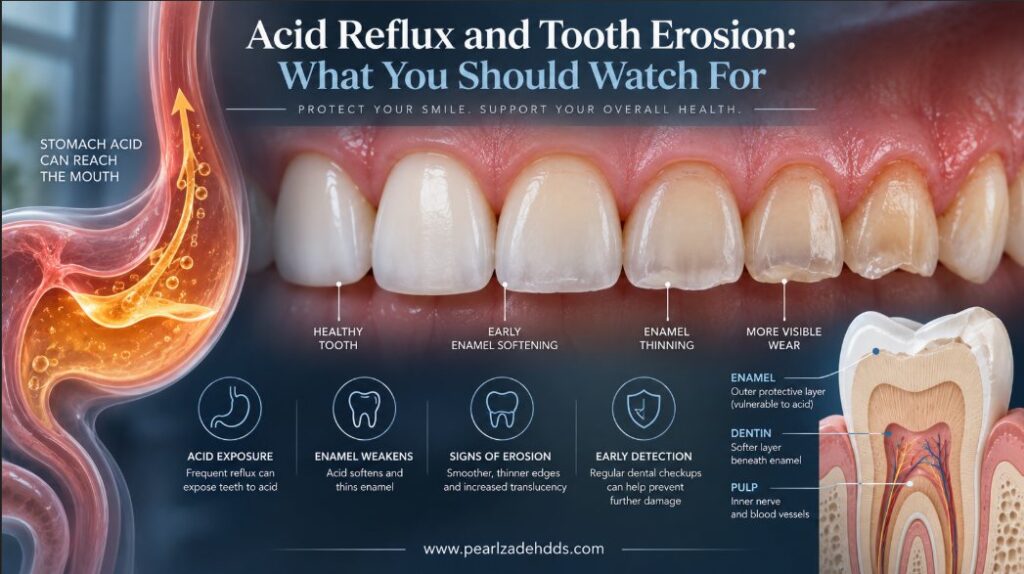
You’ve had reflux for a while now. Lately you’ve noticed your teeth feel a little more sensitive to cold water, and one of your front teeth looks slightly thinner at the edge than it used to. Maybe your teeth seem a shade more yellow, or a small chip has appeared on a tooth that never gave you trouble before.
These changes can point toward tooth erosion, the gradual chemical loss of enamel from repeated acid exposure. Reflux is one possible source of that acid, though not everyone with reflux develops noticeable erosion, and erosion can happen for reasons that have nothing to do with reflux at all.
What Is Tooth Erosion?
Enamel is the hard outer layer covering each tooth, made almost entirely of a mineral called hydroxyapatite. It’s tough, but it isn’t acid-proof. Once oral pH drops low enough, that mineral structure starts to dissolve, a process the American Dental Association describes as erosive demineralization, a progressive and irreversible loss of tooth mineral substance. This is chemical, not mechanical. Grinding wears teeth down through physical contact between opposing surfaces.
Erosion happens through acid dissolving mineral directly, with no contact involved at all. It’s also different from a cavity, which involves bacteria rather than acid alone. Enamel doesn’t regenerate once it’s genuinely lost, which is why repeated acid exposure matters so much more than any single acidic episode. A single exposure is brief and unlikely to cause meaningful damage on its own. The real risk comes from that pattern repeating often enough that your mouth never fully recovers between episodes.
How Can Acid Reflux Damage Your Teeth?
During reflux, stomach acid moves backward up the esophagus and can reach the mouth, briefly dropping oral pH well below the level where enamel mineral stays stable. The ADA lists gastroesophageal reflux among the intrinsic causes of erosion, distinct from extrinsic causes like acidic drinks, citrus fruit, or carbonated soda. That distinction matters clinically. Extrinsic acid tends to affect the front, outer surfaces of teeth first, since that’s where it makes contact. Intrinsic acid coming up from the stomach typically reaches the back surfaces of the upper front teeth first, and if the pattern continues over time, the chewing surfaces of the back teeth can become involved as a later stage. A dentist can sometimes use that progression to help figure out where acid is actually coming from.
It’s worth being honest about how settled this connection actually is. A peer-reviewed review examining the association between GERD and dental erosion noted that only 7 of 32 studies it reviewed found a statistically significant link, and that establishing clear causality has remained difficult given small sample sizes and inconsistent diagnostic criteria across studies. Reflux is a recognized, plausible contributor to erosion, not a guaranteed one, and it’s far from the only cause.
What Does Acid Erosion Look Like?
A handful of changes tend to show up, often gradually enough that patients don’t connect them to reflux at first.
Increased sensitivity
As enamel thins, the dentin underneath, which contains microscopic channels leading toward the nerve, becomes easier to stimulate. This can make cold drinks, hot foods, sweets, and acidic foods all feel more noticeable than they used to.
Changes in tooth shape
More advanced erosion can leave teeth looking shorter, flatter, or thinner at the edges, particularly on the front teeth. The natural texture and slight ridges enamel normally has can smooth out.
Yellowing or a darker appearance
Dentin underneath enamel is naturally more yellow. As enamel thins, more of that color shows through. This looks different from ordinary surface staining from coffee or wine, which sits on top of intact enamel rather than reflecting a change in the tooth’s actual structure.
Rounded or worn edges
Acid softens the outermost layer of enamel before actually dissolving it. That softened surface is more vulnerable to everyday physical forces, which can round off edges that used to be sharper.
Chipping or structural weakness
Weakened enamel can make teeth more prone to chipping, especially when erosion overlaps with grinding, clenching, or an existing crack. Reflux alone doesn’t automatically cause a chipped tooth. It’s the combination of softened structure and everyday mechanical stress that tends to matter most.
Acid Erosion vs. Cavities: What’s the Difference?
Patients often use these terms interchangeably, but the underlying processes are genuinely different. Erosion is a chemical process: acid dissolving mineral directly, with no bacteria involved. Cavities develop through a bacterial process, where oral bacteria metabolize sugars and starches and produce acid as a byproduct, concentrated in the specific spots where plaque accumulates. Erosion tends to affect broader, smoother surfaces, while cavities often start in pits, grooves, and between teeth. You can have one, the other, or both at the same time, and telling them apart usually takes an actual clinical exam rather than a guess based on symptoms alone.
Can Acid Reflux Cause Tooth Sensitivity?
It can, when enamel loss has progressed enough to expose the dentin layer underneath. That exposed dentin tends to react more to cold drinks, hot foods, sweets, acidic foods, and sometimes even brushing itself. Sensitivity has plenty of other possible causes too, including gum recession that exposes a tooth’s root surface, cracks, cavities, and enamel wear unrelated to acid at all. Noticing new sensitivity doesn’t automatically confirm reflux is the cause. It’s simply one detail worth mentioning if you’re also dealing with reflux symptoms.
How Reflux Can Affect Your Teeth at Night
Nighttime reflux deserves particular attention for a few overlapping reasons. Lying down removes gravity’s usual help keeping stomach contents where they belong, which can make reflux episodes more likely or more prolonged. Saliva flow also drops significantly during sleep, and saliva does real protective work while you’re awake, diluting acid, clearing it off tooth surfaces, and buffering pH through its own chemical makeup. A study examining salivary pH and buffering capacity in GERD patients with dental erosion points to that buffering capacity as one of the more clinically relevant factors in how vulnerable someone’s teeth actually are to erosion.
With less saliva working overnight, acid that does reach your mouth has more time sitting against your teeth before anything neutralizes it. Waking with a sour taste, noticeable dry mouth, or morning sensitivity can all reflect that pattern. None of this means every person with nighttime reflux develops dental erosion. It means the timing itself carries some added risk, and persistent nighttime symptoms are worth discussing with an appropriate healthcare professional rather than just tolerating them.
What Should You Do After Acid Reaches Your Mouth?
Brushing right away might seem like the obvious response, but it’s actually one of the less ideal moves. Acid temporarily softens the outer layer of enamel, and brushing while it’s in that state can wear away mineral that would otherwise have had a chance to re-harden. The Journal of the American Dental Association’s own patient guidance on dental erosion specifically recommends rinsing with water or milk and waiting at least an hour before brushing after vomiting, eating acidic food, or drinking acidic beverages.
Rinsing with plain water first helps clear residual acid and gives your saliva a chance to move your mouth back toward a normal pH before you introduce a toothbrush. Beyond that, keep up your normal brushing and flossing routine, use a fluoride toothpaste, and try to limit how often acidic foods and drinks come up throughout the day, since frequency matters more than any single exposure. Following whatever treatment plan your physician has set up for the reflux itself matters just as much as anything happening at the sink. Skip anything unproven, including using baking soda or similarly abrasive substances as a routine habit, since there isn’t reliable dental evidence supporting that as a regular practice.
Can You Prevent Acid Reflux From Damaging Your Teeth?
This really involves two separate efforts working together. On the dental side, consistent daily hygiene, fluoride toothpaste, regular dental exams, appropriate management of sensitivity if it develops, and generally reducing unnecessary acid exposure from food and drink all help protect what enamel you have. None of that addresses where the acid is actually coming from, though. Dental care alone can’t resolve reflux itself. If reflux symptoms are frequent, significant, or simply not improving, that’s a conversation for a physician or another appropriate healthcare professional, not something to manage through dental habits alone.
What If You Already Have Enamel Erosion?
Lost enamel doesn’t grow back on its own, so catching erosion early gives you more options than catching it late. A dentist can monitor changes over time, comparing how your teeth look now against how they looked at a previous visit. What treatment actually involves depends heavily on how much structure has already been lost. In some cases, that means protecting what remains and managing sensitivity. In others, it might mean restoring a tooth that’s been more significantly affected.
Addressing the reflux itself is part of this picture too, since protecting a tooth without addressing ongoing acid exposure just means treating the same problem again later. Not every patient with some erosion needs restorative work. The right approach depends entirely on what’s actually found during an exam.
When Should You See a Dentist?
A dental evaluation is worth scheduling for persistent or worsening tooth sensitivity, visible changes in tooth shape, unusual enamel wear, chipped or weakened teeth, recurring tooth pain, unexplained yellowing that seems tied to thinning enamel, or symptoms that continue even after reflux itself has been addressed. During an exam, a dentist typically looks at:
- Wear patterns
- Areas of exposed dentin
- Sensitivity
- Cracks or chips
- Bite-related wear
- Cavities
- Gum recession
- Other possible causes of tooth damage
That combination of findings is really what determines whether erosion is actually the explanation, rather than something else entirely.
When Should You Discuss Acid Reflux With a Doctor?
Persistent reflux symptoms shouldn’t be managed through dental care alone. Frequent heartburn, regurgitation, a chronic sour taste, or reflux that keeps recurring despite lifestyle changes are all reasons to bring the pattern to a physician or another appropriate healthcare professional. This isn’t about diagnosing GERD from a dental article or laying out a medical treatment plan. It’s simply that dental and medical care genuinely overlap here, and treating the teeth without addressing the reflux itself only solves part of the problem.
Speak With Dr. Pearl Zadeh About Tooth Erosion
If reflux has left you wondering what’s actually happening to your teeth, an exam can tell you far more than guessing at symptoms ever could. Dr. Pearl Zadeh, a member of the American Dental Association and California Dental Association, takes a patient-centered approach to evaluating tooth wear, sensitivity, and the other possible causes behind what you’re noticing, and can help you understand what’s actually going on before recommending anything.
Call (818) 716-6722 or click the button below to schedule a consultation online.
Frequently Asked Questions
Can acid reflux damage your teeth?
Yes, it can contribute to enamel erosion in some patients, though not everyone with reflux develops noticeable dental damage.
How does acid reflux cause tooth erosion?
Stomach acid reaching the mouth during reflux can lower oral pH enough to dissolve enamel mineral gradually, especially with repeated exposure over time.
What does acid erosion look like on teeth?
Common signs include increased sensitivity, teeth that look shorter, flatter, or thinner at the edges, a yellower appearance as dentin shows through, and smoother or rounded edges.
Can acid reflux cause sensitive teeth?
It can, once enamel loss exposes the dentin underneath, though sensitivity has many other possible causes as well.
Can enamel grow back after acid reflux damage?
No. Enamel doesn’t regenerate once it’s genuinely lost, which is why catching erosion early and addressing the underlying acid exposure matters.
This article is for informational purposes only and is not a substitute for professional dental or medical advice. Please schedule a consultation with Pearl Zadeh DDS to discuss your specific situation.