
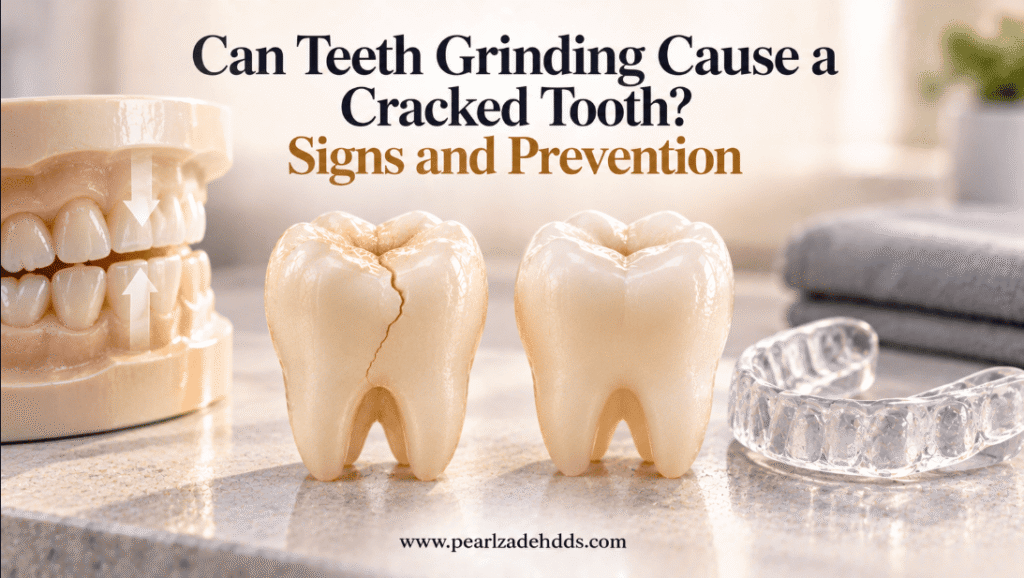
Repeated grinding or clenching, known as bruxism, places ongoing stress on teeth. Over time, this pressure may contribute to enamel wear, chips, or cracks. However, grinding does not always cause a tooth to crack, and it is only one possible cause of tooth damage.
A dental examination can help identify the cause of your symptoms and whether a crack is present. Recognizing the signs of grinding and tooth damage can help you know when to seek an evaluation and discuss ways to reduce stress on your teeth.
How Can Teeth Grinding Damage Teeth?
The National Institute of Dental and Craniofacial Research (NIDCR) is part of the National Institutes of Health. It says bruxism is when a person grinds, clenches, or gnashes teeth. This can happen while awake or asleep.
Repeated pressure can wear down enamel, chip teeth, strain existing restorations, or contribute to cracks. NIDCR lists flattened, chipped, cracked, or loose teeth among possible effects. Mayo Clinic also lists damage to fillings, crowns, and other dental repairs.
The effect varies by person. NIDCR says severe bruxism can lead to damaged teeth, jaw pain, and headache. Grinding does not always cause visible damage.
Grinding is not the only cause of a cracked tooth. Cleveland Clinic notes that ice, hard candy, and popcorn kernels can crack teeth, and an injury to the mouth can also cause damage. Our article on common causes of cracked teeth covers other possible reasons.
Signs You May Be Grinding Your Teeth
Grinding often goes unnoticed. Mayo Clinic says some people may not know they have sleep bruxism until they have tooth or jaw problems. Possible signs include:
- Flattened or worn tooth surfaces.
- Jaw muscle soreness or tightness.
- Jaw discomfort or headaches in the morning.
- A dull headache around the temples.
- Grinding sounds that a sleep partner reports.
Cleveland Clinic lists headaches or facial pain, especially in the morning. These signs do not confirm bruxism on their own. Other conditions can cause jaw pain or headaches. A dental professional can assess what fits.
Signs Grinding May Have Contributed to a Cracked Tooth
A crack can cause different symptoms than general grinding soreness. The American Association of Endodontists (AAE) describes erratic pain when chewing, possibly with the release of biting pressure. Pain can also appear with temperature extremes.
The pain may come and go, and it can be hard to pinpoint. According to the AAE, a dentist may have difficulty locating which tooth is causing the discomfort.
Some cracks cause few or no symptoms. Cleveland Clinic says cracked teeth do not always cause symptoms.
These symptoms overlap with other dental problems, so they cannot confirm a crack. A person may grind without a crack, and a cracked tooth may have another cause. Symptoms alone cannot establish the diagnosis.
How Does a Dentist Check for Grinding and Tooth Cracks?
A dentist reviews your symptoms and dental history. Mayo Clinic says dentists check for tenderness in the jaw muscles or joints. They also look for dental changes, such as flattened, broken, or missing teeth.
The dentist also examines the teeth closely and assesses how they bite together. Further tests may follow when appropriate. Mayo Clinic notes that X-rays of the teeth and jaw may be needed.
Some cracks are difficult to detect on standard X-rays, so a normal result does not always rule out a cracked tooth. Our article on how dentists diagnose a cracked tooth when an X-ray looks normal covers the methods they may use.
How Can You Reduce the Risk of Further Tooth Damage?
Practical measures include:
- Asking a dentist whether a custom night guard is appropriate.
- Avoiding chewing ice and other very hard objects.
- Seeking an assessment for recurring jaw soreness or tooth pain.
- Discussing persistent clenching or grinding with a dental professional.
- Following the dentist’s advice if a crack or weakened tooth has already been identified.
These steps can reduce certain risks. They cannot prevent every crack.
On night guards, Cleveland Clinic says a dentist can make a custom mouth guard to protect your teeth. Mayo Clinic says guards keep the teeth apart during sleep. They may not stop bruxism itself.
A guard can help protect teeth from grinding forces. It does not guarantee that cracks will never occur, and it does not heal an existing crack.
Other management includes identifying possible triggers and improving sleep habits. Mayo Clinic says treating sleep problems may help lessen bruxism. It also advises avoiding stimulating drinks in the evening.
Stress may play a role for some people. Mayo Clinic says relaxation practices may lessen the risk of clenching and grinding. Still, Cleveland Clinic says providers do not know exactly why some people grind and others do not. Relaxation alone may not stop grinding, so seek professional advice about persistent clenching.
What If You Already Have a Cracked Tooth?
Have the tooth assessed rather than relying on a night guard or home remedies alone. Reducing grinding may limit further stress on the tooth. It does not heal an existing crack.
Cleveland Clinic notes that even with treatment, tooth cracks sometimes continue to get bigger or split. The right care depends on the crack’s location, depth, and effect on the tooth.
Our article on cracked tooth treatment with bonding, an onlay, or a crown compares the options. You can also read about whether a cracked tooth can heal on its own and what to do if you have a cracked tooth.
Persistent or recurring tooth pain, pain when biting, or suspected tooth damage warrants a dental assessment. Severe or worsening pain, swelling, or fever with dental symptoms requires prompt care.
Mayo Clinic’s guidance on tooth abscess says to go to the emergency room for trouble breathing or swallowing. It also advises the emergency room for fever with facial swelling when you cannot reach your dentist.
Grinding can contribute to tooth damage, but an examination is needed to find out whether a crack is present. Dr. Pearl Zadeh can examine the teeth, review your symptoms, and discuss what care may be appropriate. You can also read about dental crown treatment at Pearl Zadeh DDS. Crowns are one option dentists may discuss for some cracked teeth.
Call (818) 716-6722 or click the button below to schedule your consultation online.
Frequently Asked Questions
It can contribute. Repeated grinding or clenching places ongoing stress on teeth. Grinding does not always crack a tooth, and cracks have other causes too.
Yes. Mayo Clinic says some people do not know they have sleep bruxism until tooth or jaw problems develop. A sleep partner may notice the sounds, and a dentist may spot wear during an exam.
A night guard can help protect teeth from grinding forces. It does not guarantee that cracks will never occur, and it does not heal an existing crack. Ask your dentist whether one suits you.
Yes. The AAE says cracked-tooth pain may come and go, and Cleveland Clinic says cracks do not always cause symptoms. Less pain does not necessarily mean the crack has healed, so have the tooth assessed.
See a dentist for persistent or recurring tooth pain, pain when biting, or suspected damage. Severe or worsening pain, swelling, or fever with dental symptoms needs prompt care. Trouble breathing or swallowing needs emergency care.
The information above is for informational purposes only and is not a substitute for professional dental advice. Please schedule a consultation with Pearl Zadeh DDS to discuss your specific situation.