
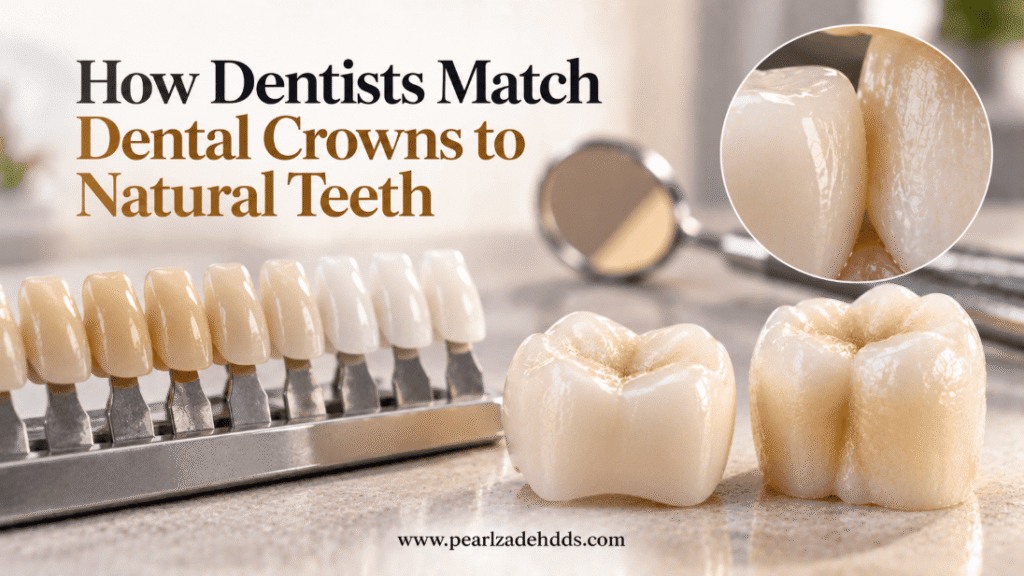
Dentists consider several factors when matching a crown to nearby teeth, including color, brightness, translucency, and surface texture. They use these details to select a shade and provide instructions to the dental laboratory that makes the crown.
The match depends on more than choosing a color from a shade guide. Lighting, crown material, and the way light passes through the crown can all affect how closely it resembles natural teeth.
A crown that looks like a good match in the dental office may appear slightly different in natural daylight or other lighting. Understanding how shade selection works can help you discuss your preferences with your dentist before the crown is made.
How Do Dentists Choose a Crown Shade?
Dentists start by looking at the teeth around the crown. The goal is a shade that suits the intended result, which usually means blending with the neighboring teeth.
A standardized shade guide is a common starting point. It is a set of tooth-shaped tabs in graded shades. The dentist holds tabs beside the tooth and compares them. Some guides group tabs with letters and numbers that stand for hue and chroma.
Visual assessment remains common. Photographs and digital tools can add information. A 2021 review in the Journal of Pharmacy & Bioallied Sciences covers this topic. It says the latest shade-matching devices use digital camera technology. The same review notes that instrumental readings are objective.
The dentist compares the planned crown with the surrounding teeth, not with a tab in isolation. A tab that looks right alone may look different beside neighboring teeth.
How to Prepare for a Shade-Selection Appointment
A few steps can make the visit more useful:
- Mention any plan to whiten your natural teeth.
- Say whether you want a close match to neighboring teeth or have another goal in mind.
- Bring older photos of your smile, if you have them.
- Ask how the dentist will record the shade and share it with the laboratory.
Why Is Matching More Than Choosing a Tooth Color?
A shade name describes only part of what the eye sees. Several qualities work together.
The review defines hue as the feature that separates one color family from another. Value is the relative lightness or darkness of a color. Chroma is the intensity of the hue.
Translucency adds another layer. It describes how much light passes through the tooth or crown. The review lists inadequate translucency mapping in some digital systems as a limitation.
Surface qualities matter too. The review lists luster, glaze, and surface texture among the details a dentist records. A smoother, glossier surface can reflect light differently than a textured one.
For these reasons, two teeth with a similar basic shade can still look different. A natural-looking crown depends on the whole combination, not one number on a guide.
How Lighting Affects Crown Shade Matching
Light changes how color looks. The review explains that under one kind of light, two objects can appear identical. Under another light, they may not.
The review calls natural light the ideal light source. It says to select the shade first in natural daylight. Then the shade is confirmed under fluorescent and incandescent lighting.
That approach reflects daily life. A crown will be seen in offices, homes, and outdoors. Checking more than one light is therefore practical.
A dentist may therefore repeat comparisons instead of relying on one quick glance. The review describes limiting each comparison to about five seconds, with pauses between them.
Photographs and digital tools can add information when they are useful. The dentist still has to judge how the shade will look in the mouth.
How Crown Material Affects the Final Appearance
Porcelain and zirconia are both ceramics. Cleveland Clinic describes pressed ceramic and all-porcelain crowns as mimicking the translucency of natural tooth enamel. It lists zirconia as a ceramic that can withstand heavier forces than other ceramic crowns.
Porcelain and zirconia can differ in optical properties, such as how translucent or opaque they look. Products within each material also vary. Neither material always looks more natural.
The better choice depends on the tooth’s location, the chewing forces it faces, and the space available. Aesthetic goals matter as well. A front tooth may call for more attention to appearance, while a back tooth may face heavier bite forces.
Our article on zirconia versus porcelain crowns compares the two materials in more detail. You can also read about how long porcelain crowns last with proper care.
What Role Does the Dental Laboratory Play?
A dental laboratory fabricates the crown. Cleveland Clinic says a technician uses the dentist’s impressions to create the custom crown.
The dentist also communicates the selected shade and other aesthetic details. These may include translucency, surface texture, and how the crown should look beside neighboring teeth. Photographs can help show these traits.
The review names communication with the technician as a factor in successful shade selection. It adds that digital analysis calls for a laboratory system as well.
The final appearance therefore depends on two things. One is accurate clinical information from the dentist. The other is the technician’s work with the chosen material.
Why a Temporary Crown May Look Different
The dentist places a temporary crown while the laboratory makes the final one. Cleveland Clinic says dentists often use resin for temporary crowns.
A temporary crown may not match the final restoration in shade or surface. Judging the final result by the temporary is therefore unreliable. Ask your dentist what to expect.
Should You Whiten Your Teeth Before Getting a Crown?
It depends on your situation. Discuss any whitening plans with your dentist before the final shade is selected.
The reason is simple. MouthHealthy says whitening will not work on caps, veneers, crowns or fillings. Natural teeth can respond to whitening, but a finished crown does not change the same way.
Timing therefore affects which shade the crown should match. Your dentist can advise whether to whiten first and when to choose the final shade.
Results also vary. MouthHealthy says whiteners may not correct all types of discoloration. Yellow teeth will probably bleach well, it adds. Brown teeth may respond less, and gray-toned teeth may not bleach at all.
Whitening is not the right choice for everyone. Ask whether it suits your teeth.
What If Your New Crown Looks Different From Your Other Teeth?
Contact your dentist and describe what you notice. Differences can arise from shade, translucency, lighting, surface characteristics, or other factors. Avoid assuming the cause.
The dentist can assess the fit, shade, contours, and other relevant factors. Next steps depend on the findings. Some concerns may be addressed with adjustments, while others may need a new crown.
Our article on why a dental crown can look different from other teeth covers possible causes. You can also read about caring for a new crown after placement for advice on the weeks that follow.
Before the final crown is made, discuss your shade preferences and treatment goals with Dr. Pearl Zadeh. Mention any whitening plans and ask how the crown shade will be checked. Learn more about dental crown treatment at Pearl Zadeh DDS.
Call (818) 716-6722 or click the button below to schedule your consultation online.
Frequently Asked Questions
Dentists compare the nearby teeth with a standardized shade guide, usually by eye. Photographs or digital tools may add information. The dentist then sends the chosen shade and other details to the laboratory.
A close match may be achievable. An exact match in every lighting condition cannot be guaranteed. Natural teeth vary, and a crown is a manufactured restoration.
It can. Porcelain and zirconia differ in optical properties, and neither always looks more natural. The best choice depends on the tooth’s location, chewing forces, available space, and appearance goals.
It depends. Whitening works on natural teeth, but a finished crown does not whiten the same way. Talk with your dentist before the final shade is chosen.
Not in a simple way. Whitening will not change a finished crown. Some cases may allow limited surface adjustments, while others may need a new crown. The dentist must assess the crown first.
The information above is for informational purposes only and is not a substitute for professional dental advice. Please schedule a consultation with Pearl Zadeh DDS to discuss your specific situation.