
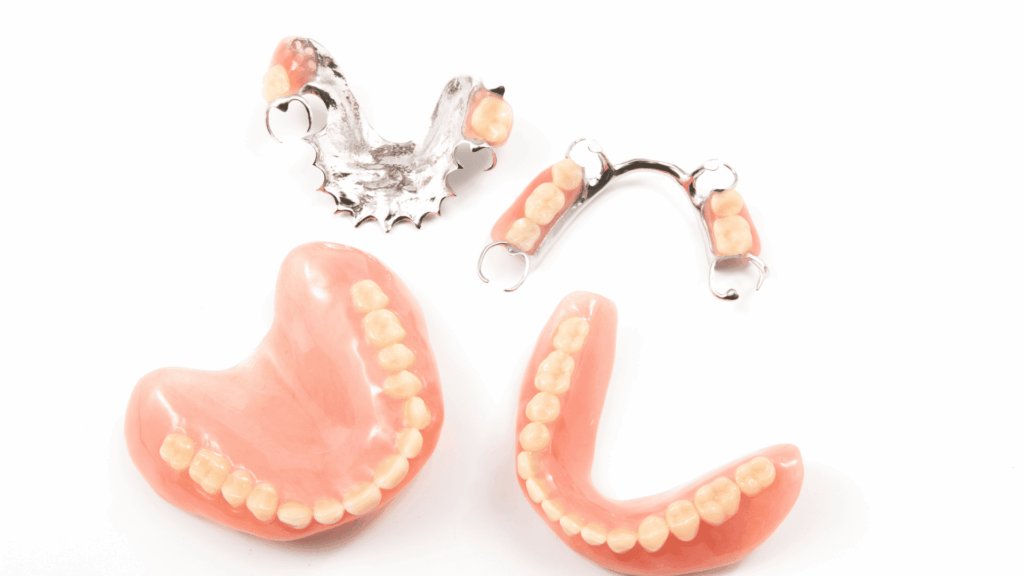
Losing some of your teeth can make everyday tasks like chewing or speaking feel challenging. Partial dentures provide a reliable way to replace missing teeth without affecting the healthy ones you still have. They restore your bite, improve your smile, and help you feel more confident in daily life.
Learning about the different types, how they work, and what to expect, including cost considerations, can make the process easier and help you choose the right solution for your needs.
What Are Partial Dentures?
A partial denture is a removable dental appliance designed to replace one or more missing teeth. Unlike full dentures, partial dentures work alongside your natural teeth.
Partial dentures attach to your existing teeth using clasps or precision attachments. They fill empty spaces, restore chewing and speaking ability, and prevent neighboring teeth from shifting.
Who Can Benefit from Partial Dentures?
Partial dentures are ideal for people who:
- Have lost some but not all teeth
- Notice gaps that make chewing difficult
- Experience shifting of natural teeth
- Want to improve appearance and smile confidence
A dentist can help determine if a partial denture is the right option based on your oral health and dental goals.
Types of Partial Dentures
Different patients need different solutions. Here are the main types:
Traditional / Metal Framework Partial Dentures
These partial dentures use a strong metal framework with clasps that attach directly to your natural teeth. They give stable support for multiple missing teeth and last for years. Patients often choose this type for long-term use when strength and reliability matter most.
Flexible Partial Dentures
Made from lightweight, gum-colored materials, flexible partial dentures bend slightly to fit comfortably over your gums. They are ideal for sensitive mouths and can adapt better to changes in tooth alignment. This type is often preferred for comfort and a more natural look.
Acrylic Partial Dentures
Acrylic partial dentures are made entirely of acrylic and are usually a more affordable, temporary option. They can replace one or several missing teeth and are often used while waiting for a more permanent solution. They can be upgraded later to metal or flexible dentures.
Each type has unique benefits depending on your oral structure, the number of teeth missing, and your personal comfort preferences.
Partial Dentures Cost
Many patients ask about partial dentures cost. Prices can vary based on:
- Materials used (metal, acrylic, flexible)
- Number of teeth being replaced
- Complexity of the dental work
- Level of customization
A general range can help guide expectations, but exact costs are determined during a consultation. We will review your needs and provide a detailed estimate before treatment begins.
How Partial Dentures Work
Partial dentures replace missing teeth and help your mouth function normally. They attach to your natural teeth using clasps or precision attachments, which hold the denture securely in place. By filling the gaps, they restore your ability to chew properly and speak clearly.
In addition, partial dentures support the teeth around the empty space, keeping them from shifting out of alignment. When fitted carefully and cared for daily, partial dentures feel comfortable, stable, and natural for everyday activities.
Woodland Hills Full & Partial Dentures
Benefits of Partial Dentures
Partial dentures offer multiple advantages:
- Restore chewing and speaking ability
- Prevent neighboring teeth from moving
- Improve appearance and smile confidence
- Removable for easy cleaning and maintenance
- Preserve oral health by distributing bite pressure evenly
Schedule Your Partial Dentures Consultation
Missing some teeth can make eating, speaking, and smiling feel harder than it should. Partial dentures provide a reliable way to fill gaps while protecting your remaining teeth, restoring function, and boosting confidence. At Pearl Zadeh DDS in Woodland Hills, we create custom solutions designed to fit comfortably and look natural.
Call (818) 716-6722 or schedule your consultation online today to explore your partial denture options and find the right fit for your smile.
Schedule a ConsultationFrequently Asked Questions
1. Can I eat normally with partial dentures?Yes. Most patients can enjoy a wide variety of foods after an initial adjustment period. Chewing efficiency is restored once you get used to the dentures.
2. Are partial dentures removable?Yes. Partial dentures are designed to be removable for cleaning and daily maintenance.
3. How long do partial dentures last?With proper care, partial dentures can last 5-10 years. Regular dental checkups ensure the fit remains secure.
4. What is the difference between flexible and traditional partial dentures?Flexible partial dentures are made from lightweight, gum-colored materials and are often more comfortable. Traditional metal framework partial dentures are stronger and more durable.
5. How often should partial dentures be adjusted or checked?It is recommended to have dentures evaluated at least once a year. Changes in your mouth over time may require adjustments for comfort and stability.