
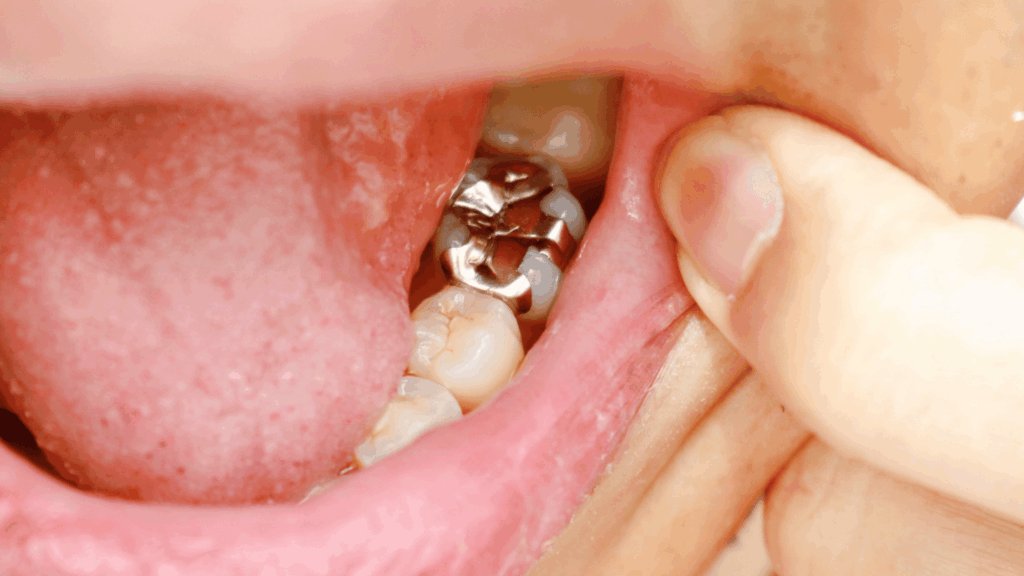
Many people still have old silver fillings that were placed years ago. They may feel completely fine. No pain, no sensitivity, no visible issues. So it’s natural to wonder, do I really need to replace them?
The short answer is, not always. However, no pain does not always mean no problem. Some issues develop slowly and stay hidden until they become more serious. That’s why it’s important to understand what’s happening beneath the surface before deciding whether to keep or replace your fillings.
What Are Old Silver Fillings Made Of?
Silver fillings, also called amalgam fillings, are made from a mix of metals. This includes mercury, silver, tin, and copper. Dentists used them widely because they are strong and can handle heavy chewing forces.
However, amalgam does not bond directly to the tooth. Instead, it sits inside the tooth structure. To keep it in place, more of the natural tooth often needs to be removed during placement. Over time, this can affect how the tooth holds up.
Why a Filling Can Feel Fine but Still Have Problems
It’s easy to assume that no pain means everything is healthy. In reality, many dental issues start quietly.
For example, small gaps can form between the filling and the tooth. Bacteria can enter these spaces and cause decay underneath the filling. You may not feel anything at first because the outer layer of the tooth protects the inner nerves.
In addition, amalgam expands and contracts with temperature changes. Over time, this movement can create stress within the tooth. Small cracks may develop without causing immediate symptoms.
When You May NOT Need to Replace Your Filling
Not every silver filling needs to be replaced. In fact, many can remain stable for years with proper care.
You may not need replacement if:
- The filling is intact and shows no signs of wear
- There are no cracks in the filling or surrounding tooth
- Your dentist does not see decay on X-rays
- The tooth feels stable when you bite
In these cases, regular monitoring is often the best approach. Your dentist can track any changes during routine visits.
When You SHOULD Consider Replacing Old Silver Fillings
Even if your filling does not hurt, certain signs suggest it may be time to replace it.
Cracks or Fractures
Amalgam fillings expand and contract over time. This can stress the tooth and lead to small cracks. If ignored, these cracks can grow and weaken the tooth.
Decay Around or Under the Filling
Bacteria can enter tiny gaps around older fillings. This can cause hidden decay that is not visible without an exam or X-ray.
Worn or Leaking Fillings
Over time, fillings can lose their seal. When this happens, they no longer protect the tooth effectively.
Repeated Repairs on the Same Tooth
If a tooth has already had multiple treatments, its structure may be weaker. Replacing the filling with a more supportive material may help improve long-term stability.
Cosmetic Concerns
Some patients choose mercury amalgam removal to replace dark fillings with tooth-colored materials. This improves the appearance of the smile, especially for visible teeth.
Health and Safety Considerations
Some patients ask about the safety of keeping or removing mercury fillings. Amalgam has been used for many years, and many fillings remain stable without causing issues.
At the same time, patients may choose mercury amalgam removal for personal or health-related reasons. The most important factor is how the removal is performed.
Dentists should follow safety-focused techniques to reduce exposure during the procedure. This ensures the process remains controlled and comfortable.
Repair vs Replace. What Works Better Long Term?
In some cases, a filling can be repaired instead of replaced. However, this depends on the condition of the tooth.
Here’s a simple comparison:
| Option | When It Works Best | Long-Term Consideration |
| Repair | Minor damage or small gaps | May need future treatment |
| Replace | Cracks, decay, or weakened tooth | More stable long-term solution |
If the tooth structure is still strong, repair may be enough. However, if the filling shows signs of failure, replacement often prevents repeated issues.
What Happens During Mercury Amalgam Removal?
When a dentist recommends replacement, the process usually involves removing the old filling and restoring the tooth with a modern material.
During mercury amalgam removal, the dentist:
- Carefully removes the existing filling
- Cleans the area to remove any decay
- Places a new filling, often a tooth-colored composite
Modern materials bond directly to the tooth. This helps create a tighter seal and supports the remaining structure.
Can You Replace All Fillings at Once or Gradually?
This depends on your situation. Some patients prefer to replace fillings over multiple visits. This allows for a more gradual approach.
Others choose to complete treatment in fewer appointments, especially if multiple fillings show signs of wear.
A personalized plan helps determine what works best based on your comfort, schedule, and dental condition.
Signs You Should Book an Evaluation
Even without pain, certain signs suggest it’s time to check your fillings:
- You see dark edges or changes around the filling
- The filling feels rough or uneven
- It has been many years since it was placed
- You feel slight pressure when biting
These signs do not always mean immediate replacement, but they do require attention.
Mercury Amalgam Removal Woodland Hills
Old silver fillings can last for many years, but they should not be ignored just because they feel fine. Early evaluation helps you avoid bigger problems and choose the right treatment at the right time.
Dr. Pearl Zadeh in Woodland Hills provides careful assessments and clear guidance so you can make confident decisions about your dental care.
Call (818) 716-6722 or click the button below to schedule your consultation online and find out if your fillings need attention.
Schedule a ConsultationFrequently Asked Questions
1. Do silver fillings need to be replaced if they don’t hurt?Not always. If the filling is stable and the tooth is healthy, your dentist may recommend monitoring instead of replacing.
2. How long do amalgam fillings last?They can last 10 to 15 years or longer, depending on wear and oral habits.
3. Can decay form under old fillings?Yes. Small gaps can allow bacteria to enter, leading to hidden decay.
4. Is mercury amalgam removal necessary for everyone?No. It depends on the condition of the filling and the patient’s preference.
5. Is it safe to replace multiple fillings at once?Yes, in many cases. Your dentist will recommend the best approach based on your situation.
Related Articles:
1. What Is Mercury Amalgam Removal and Is It Safe?
2. What to Do Before and After Mercury Amalgam Removal
3. How to Know If Your Amalgam Fillings Need Replacement
4. Mercury Fillings vs Composite Fillings. What’s the Difference?