
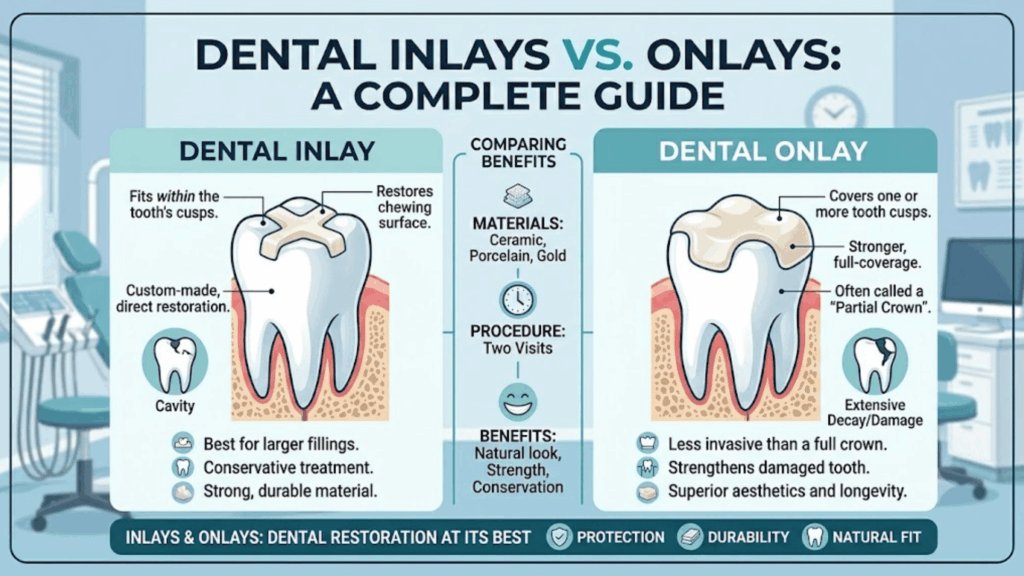
A cavity that is too large for a filling but not severe enough for a crown needs a different approach. Inlays and onlays are designed for these cases.
The choice depends on how much healthy tooth structure remains after decay or an old filling is removed. It is not a preference-based decision. It is based on preservation and long-term strength.
Dr. Pearl Zadeh’s Woodland Hills practice offers dental inlays and onlays to restore teeth while preserving as much natural structure as possible. These restorations help rebuild strength and function while avoiding unnecessary removal of healthy tooth. They also provide a durable option for teeth with moderate damage.
Why Inlays and Onlays Exist as a Separate Category
Tooth cusps take on most of the pressure when you chew. They help spread bite force across the tooth.
A filling simply replaces missing structure inside the tooth. It does not reinforce the outer walls. When a cavity becomes too large, those remaining walls start to flex under pressure. A filling alone cannot prevent that stress.
That repeated flexing often leads to cracks in large fillings. In some cases, it can even crack the surrounding tooth. Inlays and onlays address this by bonding to the tooth and reinforcing its structure. They help the tooth handle chewing forces more evenly.
A crown can also solve this problem, but it requires reducing healthy enamel on all sides. Inlays and onlays preserve more of the natural tooth by treating only the damaged areas.
How Dentists Decide Between a Filling, Inlay, Onlay, or Crown
Dentists base the choice on how much healthy tooth structure remains after removing decay. The strength of the cusps and the size of the damaged area both play a key role.
A filling works when the decay is small and enough natural tooth still supports the structure.
An inlay fits when damage stays within the grooves of the tooth and the cusps remain strong.
An onlay becomes the better option when one or more cusps need support, but the tooth does not require full coverage.
A crown is used when the damage is extensive or when a tooth has undergone root canal treatment. In those cases, the remaining structure often needs full protection.
Treatment decisions can change once the decay is fully removed. Some teeth that seem suitable for a filling may need an onlay after deeper decay becomes visible.
Root canal treated teeth also shift the decision. These teeth tend to be more brittle, so dentists often recommend onlays or crowns for added strength, even when the damage appears moderate at first.
What Is a Dental Inlay?
A dental inlay is a restoration that fits inside the center of a tooth, within the grooves and chewing surface. It does not extend over the cusps of the tooth.
Unlike a regular filling, an inlay is made outside the mouth from a strong material before being bonded into place. This allows for a precise fit and added strength once it is placed.
Because it does not rely on packing material directly into the tooth, an inlay can preserve more natural structure. Dentists often choose it when a filling is too weak, but a crown is not needed.
What Is a Dental Onlay?
A dental onlay extends beyond the central grooves of a tooth and covers one or more cusps. It strengthens areas that are more likely to crack under chewing pressure.
Cusps tend to fracture more often than the center of the tooth. When they lose support, they can flex with every bite. Over time, that stress can lead to a full break, sometimes extending below the gumline.
An onlay protects those weak areas by covering and reinforcing them before damage occurs. It spreads chewing force more evenly across the tooth and the restoration, helping preserve the remaining structure.
Inlays vs Onlays: The Key Differences
| Factor | Inlay | Onlay |
| Coverage area | Stays within the cusps | Extends over one or more cusps |
| Best for | Decay confined to central grooves | Decay or fracture involving a cusp tip |
| Cusp structure | Fully intact, no reinforcement needed | Weakened, needs bonded reinforcement |
| Bite force handling | Tooth’s natural cusps absorb most of the load | Restoration absorbs load across the capped cusp |
| Compared to a crown | Preserves the most natural tooth structure | Preserves more structure than a crown, less than an inlay |
Materials Used in Dental Inlays and Onlays
Material choice affects how a restoration looks and how it wears over time. The long-term success depends more on how well it bonds to the tooth than the material alone.
Porcelain and lithium disilicate ceramic closely resemble natural enamel in color and light reflection. They also handle chewing forces in a way that is similar to natural teeth, which helps protect the opposing tooth. A resin cement bonds the restoration to the tooth, and once it is cured, it forms a strong connection that helps distribute bite pressure evenly.
Composite resin is often used when cost or speed matters. It can sometimes be completed in a single visit. It bonds well to tooth structure but may wear faster in patients who grind or clench their teeth.
Gold works differently. It does not bond chemically to the tooth. Instead, it stays in place through precise shaping and a strong cement layer. This approach has been used for decades and remains reliable because it holds up well over time.
In many cases, the bite matters more than cosmetic preference when choosing a material. Patients who grind their teeth at night often benefit from stronger options like gold or high-strength ceramic.
Same-Day Milled Restorations vs Lab-Made Restorations
Some dentists can complete an inlay or onlay in a single visit using in-office milling systems. After scanning the tooth, the restoration is designed digitally and carved from a ceramic block while the patient waits.
Lab-made restorations take longer because a dental technician builds them in a lab. This allows more control over shade and layering, which can create a closer match to natural enamel in certain cases.
Same-day options work well for back teeth that are not highly visible. Lab-made restorations are often chosen when appearance plays a bigger role, especially in areas that show when you smile.
How the Procedure Actually Works
First Visit
- Your dentist removes decay and any failing existing filling material
- The remaining tooth structure is evaluated to confirm whether an inlay or onlay is still the right call
- A digital scan or physical impression captures the prepared tooth’s exact shape
- A temporary restoration protects the tooth and keeps it functional between visits
Second Visit
- The temporary is removed and the tooth is cleaned of any residue
- The restoration is checked for fit, contact with neighboring teeth, and bite alignment
- The bonding surface is treated, typically etched and primed, to maximize bond strength
- Resin cement secures the restoration, then a curing light hardens it permanently
That bite check matters more than patients usually realize. A restoration sitting even slightly high concentrates force unevenly and can cause pain that has nothing to do with the tooth itself, only the bite.
Why Inlays and Onlays Sometimes Fail
Inlays and onlays are strong restorations, but a few issues can still affect their long-term success.
Bond failure can happen if moisture gets in during placement. Even small amounts of contamination can weaken how well the restoration attaches to the tooth.
Decay can also return at the edges where the restoration meets natural tooth structure. This often develops slowly and may go unnoticed at first.
Heavy grinding or clenching can place extra stress on the restoration. Without a nightguard, this pressure can eventually cause fractures.
Sometimes, failure happens because a cusp was not fully covered when an onlay was needed. That weak area can break later under normal chewing forces.
This is why careful diagnosis matters from the beginning. A tooth that actually needs an onlay may not do well with an inlay, since uncovered cusps remain vulnerable over time.
How Long Do They Actually Last?
Ceramic and gold inlays and onlays often last 15 to 30 years when they are placed well and cared for properly. Composite restorations usually last around 5 to 10 years before signs of wear start to appear.
Longevity depends on bite strength, grinding habits, and how well the edges of the restoration stay sealed over time. A patient who clenches or grinds at night will usually see faster wear compared to someone without those habits.
Regular dental checkups help spot early signs of wear or leakage at the margins. Catching these changes early can prevent more serious problems, like decay forming underneath the restoration.
Caring for an Inlay or Onlay
Daily care plays a big role in how long an inlay or onlay lasts. Brush twice a day using a soft-bristled toothbrush, paying close attention to the gumline around the restoration.
Flossing once a day also matters, since decay often starts between teeth where plaque builds up unnoticed. It helps to avoid habits that put sudden stress on teeth, such as biting ice, hard candy, or popcorn kernels.
If you grind or clench your teeth at night, a nightguard can protect the restoration from excess pressure and reduce long-term wear.
Regular dental cleanings every six months allow your dentist to check the margins and catch early signs of leakage or decay before they become larger problems.
The American Dental Association emphasizes that consistent oral hygiene and routine dental visits help extend the lifespan of bonded restorations like inlays and onlays.
Schedule a Consultation Today
Inlays and onlays can strengthen a damaged tooth while preserving more natural structure, but the right choice depends on what the tooth actually needs after a full evaluation.
Many patients share their experiences through our patient testimonials, highlighting their comfort during treatment and long-term results.
Dr. Pearl Zadeh’s Woodland Hills practice reviews each case carefully before recommending a treatment plan. If you are dealing with a damaged or sensitive tooth, call (818) 716-6722 or click the button below to schedule your consultation online.
Schedule a ConsultationFrequently Asked Questions
1. Why would a dentist choose an onlay instead of just placing a bigger filling?A large filling may not provide enough support for weakened cusps. An onlay reinforces those areas by bonding across the tooth as a single unit.
2. Can an inlay turn into needing an onlay during treatment?Yes. Once decay is removed, the tooth may show more structural damage than expected, which can change the plan to an onlay.
3. Is a crown always the better long-term option than an onlay?Not always. Onlays preserve more natural tooth structure, and teeth with more remaining structure often stay healthier longer.
4. Does grinding my teeth at night affect which material I should choose?Yes. Heavy grinding usually requires stronger materials like gold or high-strength ceramic. A nightguard also helps protect the restoration.
5. Why does the bonding process matter so much?The bond holds the restoration in place and helps distribute bite forces. If moisture affects bonding, the restoration may fail earlier.