
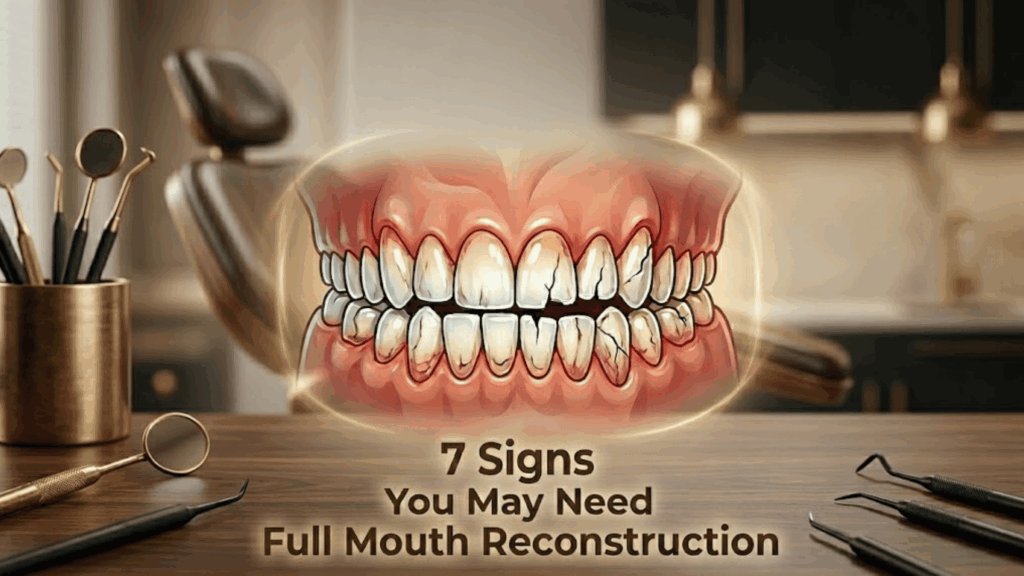
Your teeth and gums can show long-term wear over time. Small issues can build up when treatment gets delayed. In some cases, a single filling or crown cannot fix everything. Full mouth reconstruction treats multiple dental problems together. It focuses on restoring chewing ability, comfort, and everyday function.
Many patients only realize they need it after symptoms become harder to ignore. The seven signs below help you identify when a dental evaluation makes sense.
1. You Experience Chronic Jaw Pain or Headaches
Jaw pain that will not go away often points to a deeper problem. Many patients link this discomfort to temporomandibular joint (TMJ) issues. Misaligned bites place uneven pressure on your jaw joint. Over time, this strain triggers frequent headaches and facial soreness.
According to the National Institute of Dental and Craniofacial Research, TMJ disorders can stem from joint injury, arthritis, or bite problems. If your jaw clicks, locks, or aches daily, your bite may need correction. Full mouth reconstruction can realign your jaw and ease that constant tension.
2. Your Teeth Show Significant Wear or Erosion
Take a close look at your teeth in the mirror. Are they flatter, shorter, or more yellow than before? Enamel erosion happens gradually, often from grinding, acid exposure, or aging. Worn teeth lose their protective layer and become sensitive to hot and cold.
Severe wear changes your bite and facial appearance. It can also expose the inner layers of your teeth, raising your risk for decay. When wear affects most of your teeth, isolated fixes rarely last. A full reconstruction restores proper tooth height and protects what remains.
3. You Are Missing Multiple Teeth
Losing one tooth is a problem. Losing several changes how your whole mouth functions. Gaps shift surrounding teeth out of position. This shifting affects chewing, speech, and even your facial structure over time.
The American Dental Association notes that untreated tooth loss can lead to bone loss and further dental complications. If you are missing multiple teeth, your dentist may recommend implants, bridges, or dentures as part of a complete plan. Reconstructing your bite restores stability across your entire mouth.
4. You Have Ongoing Gum Disease or Bone Loss
Healthy gums hold your teeth firmly in place. When gum disease progresses, it weakens that foundation. Bleeding, swelling, or receding gums signal active infection beneath the surface. The Centers for Disease Control and Prevention reports that untreated gum disease can result in tooth loss and bone deterioration. If bone loss has already occurred, your dentist may combine periodontal treatment with restorative procedures. Addressing gum health early often prevents the need for more extensive reconstruction later.
5. You Struggle to Chew or Speak Comfortably
Eating should not feel difficult or painful. If certain foods cause discomfort, your bite alignment or tooth structure may be compromised. Some patients also notice changes in speech clarity due to missing or misaligned teeth.
These functional problems rarely improve on their own. They tend to worsen as more teeth shift or wear down. Full mouth reconstruction rebuilds your bite so chewing and speaking feel natural again.
6. You Have Multiple Damaged or Decayed Teeth
A single cavity calls for a simple filling. Widespread decay across several teeth is a different situation entirely. Repeated cycles of cavities, root canals, and crowns suggest a larger underlying issue.
Per MedlinePlus, untreated tooth decay can spread and cause infection or tooth loss. When decay affects most of your teeth, full mouth reconstruction offers a coordinated solution. It replaces damaged structures and protects healthy teeth from future harm.
7. You Feel Self-Conscious About Your Smile
Dental problems affect more than oral function. Many patients avoid smiling, speaking up, or socializing because of how their teeth look. Chips, gaps, discoloration, and uneven teeth can chip away at confidence over time.
Full mouth reconstruction often improves both health and appearance together. Some patients also explore dental veneers alongside reconstruction for a refined finish. Restoring your smile can rebuild confidence you thought you lost.
What Happens During Full Mouth Reconstruction
Every treatment plan looks different because every mouth is different. Your dentist will evaluate your bite, gum health, and tooth structure first. From there, treatment may include crowns, implants, bridges, or gum therapy.
To learn more about the process itself, read our breakdown of what full mouth reconstruction involves. Patients often ask how this differs from cosmetic treatment alone. We compare both approaches in our article on full mouth reconstruction versus a smile makeover.
How Long Does Treatment Take?
Timelines vary based on the extent of damage and the procedures involved. Some patients complete treatment in a few months. Others with more complex needs may require treatment over a year. Your dentist will outline a realistic timeline during your consultation.
Is Full Mouth Reconstruction Painful?
Modern dental techniques prioritize comfort throughout treatment. Most procedures use local anesthesia or sedation as needed. Mild soreness after certain steps is normal and typically temporary.
Why Woodland Hills Patients Trust Dr. Pearl Zadeh
Dr. Pearl Zadeh brings years of restorative dentistry experience to every patient case. You can learn more about her background and approach before your first visit by visiting her professional background page. Many patients in Woodland Hills have shared their experiences after completing treatment. Read real patient testimonials to see how full mouth reconstruction has changed their daily lives. Call (818) 716-6722 or click the button below to schedule your consultation online.
Schedule a ConsultationFrequently Asked Questions?
1. What is full mouth reconstruction?Full mouth reconstruction is a treatment plan that restores or replaces most teeth. It combines restorative and cosmetic dental procedures to improve function and comfort.
2. How do I know if I need full mouth reconstruction?You may need it if you have multiple damaged, missing, or worn teeth. Ongoing chewing difficulty or bite problems are also common signs.
3. Can constant tooth pain mean I need full mouth reconstruction?Yes, ongoing tooth pain can signal deeper dental issues. When several teeth are affected, a full reconstruction may be needed instead of single treatments.
4. Is full mouth reconstruction only for severe cases?It is usually recommended for complex dental problems. However, early evaluation helps prevent issues from becoming more severe over time.
5. What treatments are included in full mouth reconstruction?Treatment may include crowns, bridges, veneers, implants, or fillings. Your dentist creates a plan based on your specific dental condition.
Related Articles:
- Full Mouth Reconstruction: What It Is and How It Works
- Full Mouth Reconstruction vs Smile Makeover: What’s the Difference?
- Porcelain Veneers: A Practical Guide for Patients
- Porcelain Crowns Guide: What Patients Need to Know
- Types of Porcelain Bridges: Which Option Is Best for Your Smile?
- Dental Crown vs Filling: When Is a Crown Necessary?