
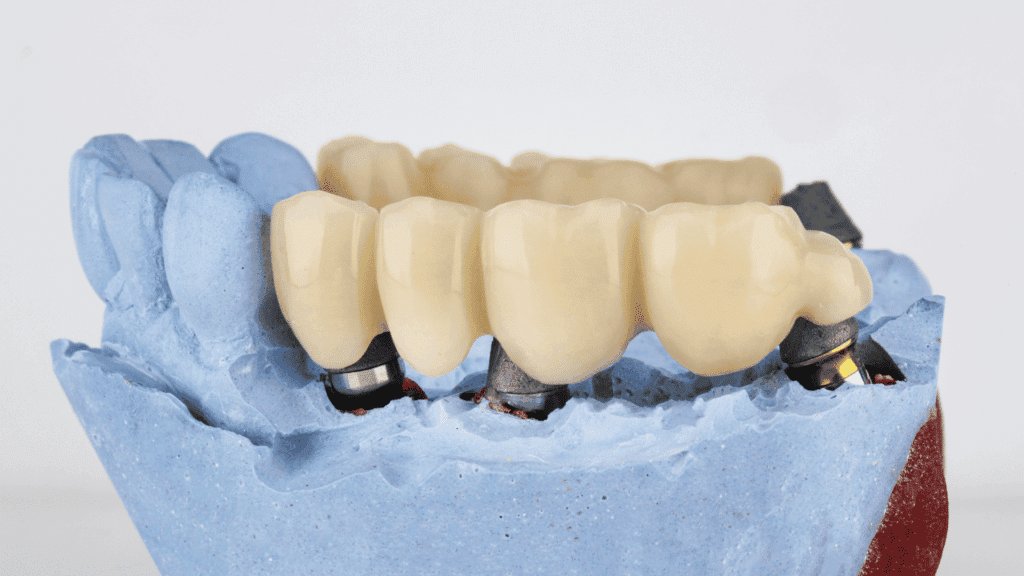
Missing teeth can affect how you chew, speak, and smile with confidence. Over time, gaps may also cause nearby teeth to shift out of place, leading to bite problems and discomfort. A porcelain bridge offers a fixed solution that restores both appearance and function.
However, not all porcelain bridges work the same way. Different designs suit different dental needs. Understanding your options can help you choose the bridge that fits your smile best.
What Is a Porcelain Bridge?
A porcelain bridge replaces one or more missing teeth by filling the empty space with a custom-made artificial tooth. The bridge stays in place by attaching to nearby teeth or dental implants.
Porcelain blends closely with natural enamel, so the bridge looks realistic while restoring your ability to chew and speak clearly. A porcelain teeth bridge also helps maintain the shape of your face and keeps surrounding teeth from drifting into the gap.
Why There Are Different Types of Porcelain Bridges
Every patient has a unique bite, tooth position, and level of chewing pressure. Because of this, dentists use different bridge designs depending on:
- The number of missing teeth
- The strength of nearby teeth
- The location of the gap
- Jawbone support
- Long-term stability needs
Choosing the right type ensures comfort, durability, and a natural appearance.
Woodland Hills Porcelain Bridges
Traditional Porcelain Bridge
A traditional porcelain bridge is the most common option. It uses two crowns placed on the teeth next to the missing space. These crowns hold the replacement tooth securely in between.
This type works well when healthy teeth exist on both sides of the gap. It provides strong support and allows normal chewing.
Best for: One or two missing teeth with solid neighboring teeth
Main benefit: Excellent stability and long-term function
Cantilever Porcelain Bridge
A cantilever bridge attaches to only one supporting tooth instead of two. This design works in areas where only one adjacent tooth is available for support.
Dentists usually recommend this option for locations that do not receive heavy bite pressure. While it can be useful in certain cases, it requires careful planning.
Best for: Gaps with only one healthy support tooth
Main benefit: Preserves more natural teeth
Maryland (Resin-Bonded) Porcelain Bridge
A Maryland bridge uses thin wings bonded to the back of nearby teeth instead of full crowns. This method avoids reshaping healthy teeth and keeps most of the natural enamel intact.
It works best for front teeth, where appearance matters more than chewing force. Because it relies on bonding, it may not suit areas with strong bite pressure.
Best for: Front tooth gaps
Main benefit: Minimal tooth alteration
Implant-Supported Porcelain Bridge
An implant-supported bridge uses dental implants instead of natural teeth for support. Titanium posts placed in the jawbone act like artificial tooth roots. The porcelain bridge then attaches to these implants.
This option works well for patients missing several teeth in a row. It also helps preserve jawbone structure and does not affect neighboring teeth.
Best for: Multiple missing teeth
Main benefit: Long-term strength and bone support
Comparison of Porcelain Bridge Types
| Type of Bridge | Support Method | Best For | Key Advantage |
| Traditional Porcelain Bridge | Two natural teeth | One or two missing teeth | Strong and stable |
| Cantilever Porcelain Bridge | One natural tooth | Limited support areas | Requires only one anchor |
| Maryland Bridge | Bonded wings | Front teeth | Conservative design |
| Implant-Supported Bridge | Dental implants | Multiple missing teeth | Preserves jawbone |
Benefits of Choosing a Porcelain Bridge
Porcelain bridges offer both functional and cosmetic advantages:
- Restores chewing and clear speech
- Keeps nearby teeth from shifting
- Matches natural tooth color
- Supports long-term oral health
- Improves confidence when smiling
A well-fitted porcelain teeth bridge can make everyday activities like eating and speaking feel normal again.
Schedule Your Consultation
Choosing the right porcelain bridge begins with a professional evaluation. At Pearl Zadeh DDS, every treatment plan focuses on comfort, precise digital scanning, and natural-looking results.
If you are ready to restore your smile and replace missing teeth with a custom porcelain bridge, we are here to help.
Call (818) 716-6722 or click the button below to book your consultation online and get started with Pearl Zadeh DDS today.
Schedule a ConsultationFrequently Asked Questions (FAQ)
1. Which porcelain bridge looks the most natural?All porcelain bridges are designed to match natural teeth, but Maryland bridges and implant-supported bridges often provide the most seamless appearance for visible areas.
2. Can a porcelain bridge replace more than one tooth?Yes. Bridges can replace several missing teeth in a row, especially when supported by implants.
3. Is a porcelain bridge permanent?A porcelain bridge is a long-term solution. With proper oral hygiene and dental visits, it can last 10 to 15 years or longer.
4. Does choosing a bridge stop teeth from moving?Yes. A bridge fills the gap and helps prevent nearby teeth from shifting into the empty space.
5. Who is a good candidate for a porcelain teeth bridge?Patients with missing teeth and healthy gums and support teeth usually make good candidates for this treatment.
Related Articles:
- Porcelain Bridges: What to Know Before Your Visit
- Porcelain Bridges vs. Dental Implants: Which Is Right for You?
- Types of Porcelain Bridges: Which Option Is Best for Your Smile?
- When Is a Dental Bridge Better Than an Implant?
- Temporary vs Permanent Dental Bridges: Key Differences and What to Expect
- Signs Your Dental Bridge Needs Replacement