
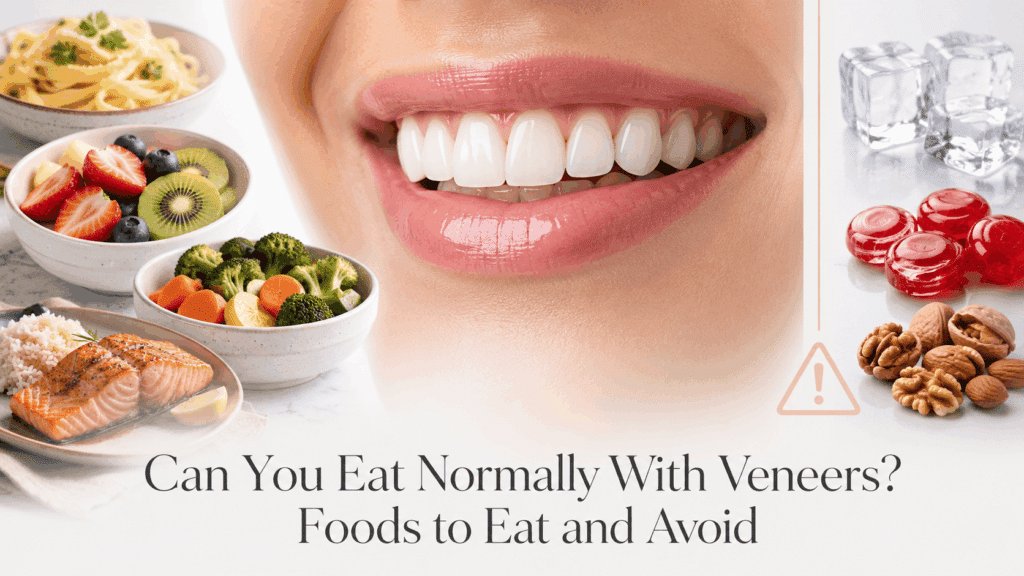
Many patients considering veneers have the same question before moving forward: Will my smile change how I live day to day?
They want to improve the appearance of their teeth, but they also want to know whether veneers will affect simple things like eating their favourite foods, biting comfortably, or enjoying meals without worrying about damage.
The good news is that most patients return to a normal diet after their veneers are placed. Veneers are designed to handle everyday chewing, but they still require the same care and attention you would give your natural teeth.
Eating with veneers is usually easier than many patients expect. Knowing which foods require extra caution and which habits help prevent damage can make adjusting to your new smile much more comfortable.
What Eating Feels Like Right After Placement
The first day or two after getting veneers can feel slightly unfamiliar. Your teeth have a new shape, a new texture, and sometimes a new thickness.
Some patients notice mild sensitivity to hot or cold foods in the first few days. This typically fades as the tooth settles underneath its new covering.
Your bite may also feel slightly different at first. This is normal. Your jaw and tongue need a short adjustment period to learn the new shape of your teeth, especially if several veneers were placed at once.
A new sensation doesn’t mean something went wrong. It simply means your mouth is adapting, the same way it does after any dental change.
Most patients feel fully adjusted within one to two weeks and describe eating with veneers as completely natural after that point.
What to Eat in the First Few Days
Immediately after veneer placement, the bonding cement needs a short period to reach its full strength.
Most dentists recommend softer foods for the first day or two, not because veneers are fragile, but because your mouth may still feel unfamiliar and mild tenderness can make chewing easier with soft textures.
- Soft fruits like banana or ripe melon
- Yogurt or soft cheese
- Pasta, rice, or soft cooked vegetables
- Eggs prepared any way
- Soup or broth
These aren’t permanent restrictions. They give your mouth a short, comfortable adjustment window.
Foods You Can Eat Normally With Veneers
Once the initial adjustment period passes, most patients eat a wide and normal variety of foods without issue.
- Fruits and vegetables, including moderately firm ones like apples and carrots
- Meat and poultry prepared normally
- Bread, pasta, and rice
- Fish and seafood
- Cooked grains and legumes
- Most restaurant and everyday home meals
The goal of a veneer is to look and function like a natural tooth. When placed and cared for correctly, it achieves that in daily eating just as much as in appearance.
Can You Bite Normally With Veneers?
Yes. Veneers bond securely to the front surface of your teeth using a strong dental cement. They’re designed to handle normal biting and chewing forces.
Biting into a sandwich, an apple, or a piece of meat is exactly what veneers are built to handle. Front teeth exist specifically for biting, and veneers don’t change that function.
Where problems arise is when patients treat their veneered front teeth as tools, using them to tear packaging, bite thread, or crack hard objects. Natural teeth can chip from these habits too.
If you grind or clench your teeth, that additional force becomes a more significant factor. More on that below.
Foods and Habits That Increase the Risk of Damage
Veneers don’t require a completely different diet, but a small number of foods and habits consistently create problems worth avoiding.
Very Hard Foods
The biggest risks to veneers are hard foods that concentrate sudden force on a small point of the restoration.
- Biting directly into ice or chewing it as a habit
- Hard candy that requires significant force to break
- Unpopped popcorn kernels
- Hard nuts bitten directly from the shell
These same foods can chip natural teeth too. Veneers simply remove the margin for error that natural enamel has from years of gradual use.
Sticky and Chewy Foods
Very sticky foods create a pulling force when you chew and swallow, which puts stress on the bond between a veneer and the tooth underneath.
- Caramel and toffee
- Extremely sticky candy like taffy
- Chewing very thick gum for extended periods
Most sticky foods eaten in normal quantities don’t cause problems. The issue arises with foods that grip and pull strongly with every bite.
Using Teeth as Tools
This habit damages veneers faster than almost any food can. Biting nails, opening bags or bottles, pulling tags, or holding objects in your teeth all apply uneven lateral force.
Front teeth were designed for controlled, vertical chewing motion. Twisting, levering, or gripping motions work against that design whether veneers are present or not.
Coffee, Tea, Wine, and Staining Foods
One of the most common questions patients ask before getting porcelain veneers is whether they have to give up coffee or red wine.
Porcelain veneers resist staining significantly better than natural enamel does. Their smooth, glazed surface doesn’t absorb pigment the way enamel can after years of exposure.
The catch is that natural teeth alongside the veneers can still stain over time, which creates a color contrast that makes the veneers look different from the surrounding teeth.
Composite veneers, which use resin rather than porcelain, are more porous and can pick up stain gradually, especially with heavy coffee or red wine consumption.
Good oral hygiene, including regular brushing and dental cleanings, goes a long way toward keeping everything looking consistent.
The American Academy of Cosmetic Dentistry notes that porcelain’s glazed surface gives it substantially better color stability than unprotected enamel over time.
Does the Type of Veneer Change What You Can Eat?
Porcelain veneers and composite veneers behave slightly differently at the table.
| Factor | Porcelain Veneers | Composite Veneers |
| Stain resistance | High, glazed surface resists pigment | Moderate, resin can absorb stain over time |
| Hardness | Comparable to natural enamel | Slightly softer, may wear faster under grinding |
| Chipping risk | Can chip under sudden extreme force | Slightly more likely to chip than porcelain |
| Repairability | Usually needs full replacement if chipped | Often repairable in one visit |
For both types, the food restrictions are similar. The main practical difference comes down to staining potential and how repairs are handled if damage does occur.
Veneers and Teeth Grinding
Teeth grinding, known clinically as bruxism, applies repeated, heavy force to every surface of your teeth, including veneers.
Patients who grind at night without a protective night guard carry a higher risk of chipping or fracturing a veneer than patients who don’t grind.
This doesn’t automatically disqualify someone from getting veneers. Many patients who grind are still excellent candidates with proper planning and protection.
If you grind your teeth and are considering veneers, a consultation with Dr. Pearl Zadeh helps clarify whether a night guard or other planning makes veneers a realistic option for you specifically.
Wearing a custom night guard is one of the simplest and most effective ways to protect veneers for patients who clench or grind.
Habits That Protect Veneers Over the Long Term
Most of what protects a veneer long term is exactly what protects natural teeth. The differences are minor.
- Brush twice daily with a non-abrasive toothpaste and a soft bristled toothbrush
- Floss daily, since the gum margin around a veneer still accumulates plaque
- Attend regular cleanings so your dentist checks for wear, margin gaps, or staining
- Wear a night guard if you grind or clench
- Avoid the hard food and tool-use habits mentioned above
- Mention any sensitivity or change in how your bite feels to your dentist promptly
The American Dental Association emphasizes that consistent oral hygiene and routine checkups significantly extend the lifespan of any dental restoration, including veneers.
How Long Veneers Last With Good Habits
Porcelain veneers typically last ten to fifteen years or longer with proper care. Composite veneers generally last five to seven years before needing replacement or significant repair.
Daily eating habits make a real difference in where a patient lands within that range. Someone who avoids ice chewing, wears their night guard, and attends regular checkups often gets significantly more years from their veneers than someone who skips those habits.
Veneer lifespan depends heavily on how well you care for your teeth, maintain good oral hygiene, and avoid habits that place unnecessary stress on your restorations.
Schedule a Consultation With Dr. Pearl Zadeh
Veneers are designed for daily life, including regular meals, everyday snacks, and the foods you enjoy most. While a few simple habits can help protect your veneers over time, most patients find that their diet requires very little adjustment after treatment.
Patients who have gone through the process share their real-world experiences in our patient testimonials, including how eating and caring for their veneers felt before and after treatment.
Dr. Pearl Zadeh‘s Woodland Hills cosmetic dentistry practice takes the time to explain what you can realistically expect before treatment begins, including how veneers may fit into your daily lifestyle.
Call (818) 716-6722 or click the button below to schedule a consultation online and discuss whether veneers are the right option for your smile.
Schedule a ConsultationThis article is for informational purposes only and is not a substitute for professional dental advice. Please schedule a consultation with Dr. Pearl Zadeh to discuss your specific situation.
Frequently Asked Questions
1. Can you eat normally after getting veneers?Yes, after a brief adjustment period of one to two weeks. Most patients describe eating as completely normal once they adapt to the feel of their new teeth.
2. Can veneers come off while eating?It’s uncommon with well bonded veneers, but it can happen with sticky foods, a failing bond, or unusual force. Regular checkups catch early bond issues before they lead to this.
3. Can you eat steak with veneers?Yes. Chewing a normally cooked steak doesn’t place unusual force on veneers. The front teeth bite through it, and the back teeth handle the heavier chewing load.
4. Do you have to avoid coffee with veneers?Not necessarily. Porcelain veneers resist staining well. Heavy daily coffee consumption can still stain natural teeth around the veneers over time, which makes consistent hygiene more important.
5. Can you eat hard foods with porcelain veneers?Most firm foods are fine. Directly biting into ice or very hard candy creates a risk for veneers, just as it does for natural teeth.
Related Articles:
- Porcelain Veneers: A Practical Guide for Patients
- Composite Veneers: Everything You Need to Know
- Porcelain vs Composite Veneers: Choosing the Right Option for Your Smile
- Digital Smile Design for Veneers: How It Helps Plan Your Smile
- No-Prep Veneers and Traditional Veneers: What Is the Difference?
- Veneers for Older Adults: Are They a Good Option?