
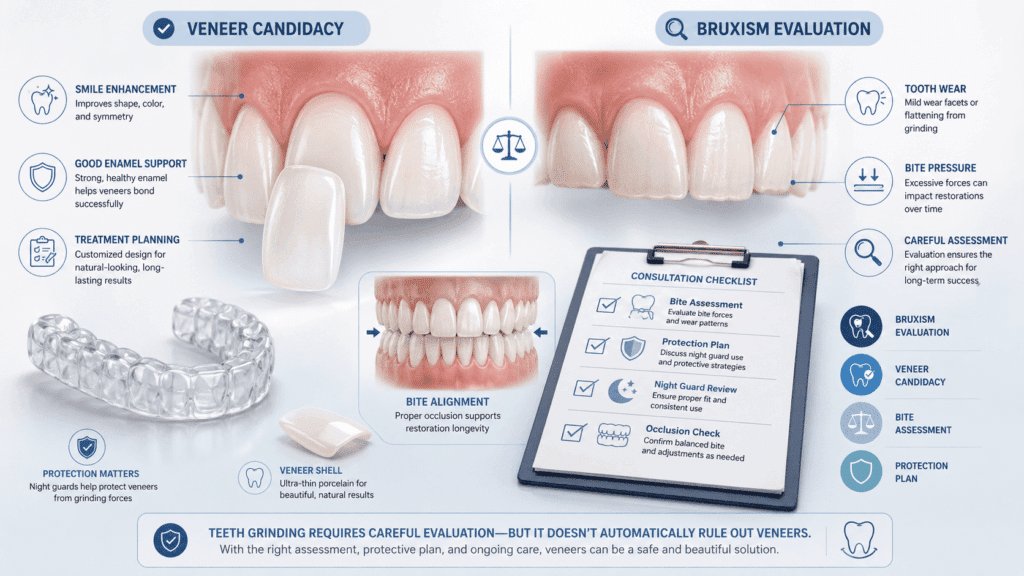
You finally feel ready to improve your smile, then one question changes everything: what if you grind your teeth? It’s a common concern, and many patients wonder whether veneers are still an option after learning they have bruxism. Teeth grinding doesn’t automatically rule out veneer treatment, but it does affect how your dentist plans your care.
Your consultation will focus on more than your smile goals alone. It will also consider your bite, tooth wear, and long-term oral health before recommending the right approach.
What Bruxism Actually Is
Bruxism refers to clenching, grinding, or gnashing your teeth, and it usually happens without you noticing. Cleveland Clinic describes it as a habit that can occur while you’re awake or asleep, and one that can put real strain on your teeth and jaw when it happens often enough. Plenty of people grind occasionally, especially during stressful stretches, without it becoming a lasting problem. The concern comes up more with frequent or forceful grinding over time.
Nighttime Grinding vs Daytime Clenching
Sleep bruxism, the kind that happens at night, tends to be harder to catch since most people aren’t aware they’re doing it. A partner mentioning the sound, or a dentist noticing unusual wear at a checkup, is often how it first gets flagged. Daytime clenching works differently. It’s more often tied to concentration or stress, and some patients notice it themselves once they start paying attention, like catching their jaw tight during a demanding meeting or a difficult drive.
How Grinding Affects Natural Teeth
Over time, frequent grinding can wear down enamel, flatten the biting edges of teeth, and in some cases lead to small chips or cracks. Jaw soreness and morning headaches are common complaints too, since the muscles doing the clenching work overtime while you sleep. None of this happens overnight, and plenty of people grind for years before it becomes noticeable enough to bring up at a dental visit.
How Grinding Can Affect Veneers
Veneers sit on the front surface of a tooth, and like the natural enamel they cover, they can absorb some of the force generated by grinding or clenching. That added pressure can, in some cases, increase the likelihood of chipping, cracking, or a veneer coming loose sooner than it might for a patient who doesn’t grind. This doesn’t mean damage is guaranteed. It means grinding is a factor your dentist weighs carefully when planning treatment and discussing what to expect.
Can You Get Veneers If You Grind Your Teeth?
In many cases, yes. Bruxism alone does not automatically rule out veneers. Your dentist will look at factors like the severity of your grinding, how well you manage it, and the condition of your teeth and bite. A patient with mild, controlled grinding may have a different treatment outlook than someone with severe, untreated bruxism and significant tooth wear.
Your dentist can determine where you fall on that spectrum through an exam, and that evaluation is really what decides candidacy, not the presence of bruxism by itself.
What Your Dentist Evaluates Before Recommending Veneers
A thorough evaluation typically looks at several things together. Bite alignment matters, since an uneven bite can concentrate force unevenly across your teeth. Existing tooth wear gives your dentist a sense of how active and forceful your grinding has been over time, and how your teeth relate to alignment concerns more broadly can factor into that same conversation. Enamel condition, your jaw habits, general oral health, and your specific cosmetic goals all get weighed together, rather than any single factor deciding the outcome on its own.
Why Treating Bruxism Matters Before or Alongside Cosmetic Treatment
Placing veneers over teeth affected by active, unmanaged bruxism can set the treatment up for a harder road ahead. Many dentists recommend addressing or at least stabilizing the grinding first, whether that means a night guard, stress management, or treating an underlying cause like sleep apnea, before finalizing a cosmetic plan. This isn’t about delaying treatment unnecessarily. It’s about giving the veneers a more stable foundation to hold up against.
Will a Night Guard Protect Your Veneers?
A custom night guard, made specifically for your bite, can reduce the direct force your teeth and veneers experience during sleep. Many dentists recommend one for patients with bruxism who move forward with veneers, particularly for grinding that happens at night rather than during the day.
A night guard can reduce the risk of damage, but it cannot eliminate it. Even with consistent use, some force still reaches your teeth. It also will not protect against daytime clenching if you only wear it while sleeping. Your dentist can explain what level of protection you can realistically expect and how consistently you should wear your night guard based on your specific situation.
Porcelain vs Composite Veneers for Patients Who Grind
Porcelain is generally considered more resistant to wear than composite resin, which is part of why it’s often discussed for patients with bruxism. That doesn’t mean composite is automatically off the table, or that porcelain is immune to damage from grinding. Our porcelain veneers guide and composite veneers overview both go into more detail on how each material tends to perform. Some patients also ask about no-prep veneers, which are thinner by design and generally considered less suited to heavier grinding forces, though your dentist can evaluate whether that’s true for your specific case.
What Happens If You Grind After Getting Veneers
If grinding continues after treatment, veneers can wear, chip, or occasionally come loose over time, similar to what can happen with natural teeth under the same forces. This is one of the reasons ongoing management matters, not just before treatment but afterward too. Routine checkups give your dentist a chance to catch early wear before it becomes a bigger repair, and to adjust your night guard or treatment plan if grinding patterns change.
When Another Treatment Might Be Recommended First
For patients with severe, active bruxism and significant existing tooth damage, a dentist may recommend stabilizing the bite or addressing the grinding before moving forward with veneers at all. In some cases, a more conservative option is considered first. Dental bonding compared with veneers is sometimes part of that conversation, since bonding can be simpler and less costly to repair if it’s affected by ongoing grinding. Once your bite and habits are more stable, veneers may become a more reasonable option to revisit.
Lifestyle Habits That May Influence Veneer Longevity
A few everyday habits tend to come up in these conversations. Chewing on ice, pens, or fingernails adds extra force beyond normal biting and can affect both natural teeth and veneers. High caffeine or alcohol intake has been associated with more frequent grinding for some people. Stress management, whether through better sleep, exercise, or simply identifying what triggers daytime clenching, can also play a role in how much force your teeth experience over time. None of these guarantee an outcome on their own, but they’re worth mentioning to your dentist as part of the bigger picture.
Finding a Cosmetic Dentist in Woodland Hills Who Understands Bruxism
Dr. Pearl Zadeh evaluates grinding and clenching as part of a complete workup before recommending veneers, rather than treating bruxism as an automatic disqualifier or ignoring it altogether. That evaluation looks at your bite, tooth wear, and your specific goals for treatment. Patients considering veneers in Woodland Hills can expect that same individualized approach, and our broader overview of cosmetic dentistry in Woodland Hills covers the full range of options if veneers turn out not to be the right first step.
Schedule a Consultation With Dr. Pearl Zadeh
Grinding your teeth doesn’t have to mean crossing veneers off your list before you’ve even had a conversation about it. Whether they’re a reasonable option for you depends on your specific bite, tooth condition, and grinding habits, not a blanket rule that applies to everyone with bruxism.
Dr. Pearl Zadeh and her Woodland Hills team can evaluate your teeth directly and walk you through what’s realistic for your situation, including whether a night guard, treating the grinding first, or moving ahead with veneers makes the most sense.
Call (818) 716-6722 or click the button below to schedule your consultation online.
Schedule a ConsultationFrequently Asked Questions
1. Does grinding your teeth automatically disqualify you from getting veneers?No. Bruxism is one factor among several your dentist considers. Mild or well-managed grinding is generally viewed differently than severe, untreated grinding with significant existing tooth wear.
2. Does teeth grinding damage veneers?It can, particularly if grinding is frequent or forceful and left unmanaged. The added pressure may increase the chance of chipping, cracking, or a veneer loosening sooner than expected, though this varies by patient.
3. Will a night guard fully protect my veneers?A custom night guard can reduce the force on your teeth while you sleep, but it cannot eliminate the risk completely. If you also clench your teeth during the day, your dentist may recommend additional strategies, since wearing a night guard at night will not address daytime habits.
4. Should bruxism be treated before getting veneers?In many cases, addressing or stabilizing grinding first gives cosmetic treatment a more stable foundation. Your dentist can determine whether that applies to your specific situation.
5. Are porcelain veneers stronger than composite for people who grind?Porcelain may resist wear better than composite resin in some cases, so dentists often consider it for patients with bruxism. However, grinding can still damage either material over time.
Related Articles:
- Porcelain Veneers: A Practical Guide for Patients
- Composite Veneers: Everything You Need to Know
- Porcelain vs Composite Veneers: Choosing the Right Option for Your Smile
- No-Prep Veneers and Traditional Veneers: What Is the Difference?
- Preparing for Your Veneers Appointment: A Complete Guide
- Veneers vs Teeth Whitening: Which One Should You Choose?
- Dental Bonding vs Veneers: Which Option Is Right for You?
- Can Veneers Fix Crooked Teeth? What They Can and Can’t Do
- Do Dental Veneers Look Natural or Fake? What Makes the Difference