
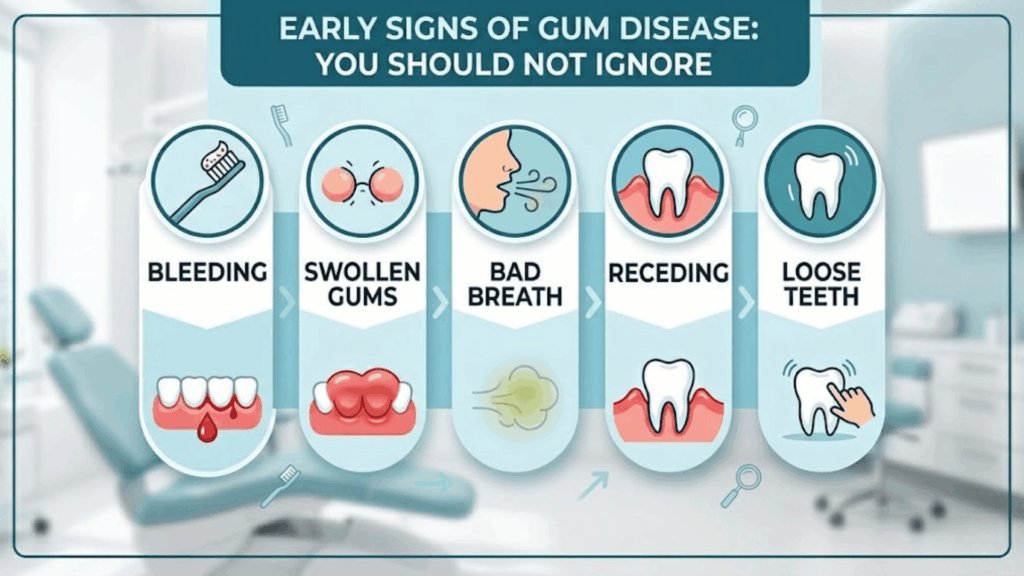
Many patients notice small changes in their mouth before they ever think about a dental visit. A bit of blood when brushing, a slight sensitivity around one tooth, or breath that does not feel fresh later in the day.
These signs are easy to overlook, but they often point to early gum changes that develop quietly over time. Gum disease rarely starts with pain, which is why it can progress before it feels serious.
Dr. Pearl Zadeh and her Woodland Hills team often see patients at this stage, after symptoms have been present for a while. By then, early gum changes may already need professional care to prevent further progression.
Recognizing these signs early can make treatment simpler and help protect long-term gum health.
Why Early Detection Matters So Much
Gum disease often begins as gingivitis, which can still be reversed with proper care. Once it progresses to periodontitis, the damage becomes permanent, especially around the supporting bone.
The timing of treatment makes a real difference. Someone who responds early to bleeding gums may only need a professional cleaning. Waiting too long can lead to more advanced treatment, including deep cleaning or surgical care.
That difference is why small symptoms should never be ignored, even when they do not feel serious at first.
1. Gums That Bleed When You Brush or Floss
Bleeding gums are often the first sign of gum disease, but many people dismiss it as brushing too hard.
Healthy gums should not bleed during normal brushing or flossing. When bleeding does occur, it usually means plaque along the gumline is causing irritation and early inflammation in the tissue.
If bleeding shows up more than occasionally, it is worth paying attention to rather than adjusting your brushing technique and ignoring it.
2. Redness or Swelling Along the Gumline
Healthy gums are usually light pink and feel firm. When inflammation begins, they can look darker in color and appear puffy around the base of the teeth.
This change happens when bacteria along the gumline trigger an immune response. The swelling is part of your body reacting to that irritation.
If the gumline still looks swollen after a few days, even with regular brushing, it may point to early gum disease rather than temporary irritation.
3. Persistent Bad Breath
Bad breath after coffee or certain foods is normal and usually temporary. But breath that returns shortly after brushing can point to a deeper issue.
Bacteria along the gumline can release sulfur compounds that create an unpleasant smell. Mouthwash may cover it for a short time, but it does not remove the bacteria causing it.
If brushing, flossing, and rinsing still do not keep your breath fresh through the day, it may be linked to early gum disease.
4. Gums That Feel Tender or Sore
Sore or tender gums can appear even before any obvious redness or swelling. Some people notice a dull discomfort when chewing harder foods, while others feel sensitivity along the gumline when eating or drinking something cold.
This usually happens when inflammation has already started affecting the gum tissue. As it continues, the irritation can spread and become more noticeable over time.
5. Gums That Appear to Be Pulling Away From Teeth
This sign often points to a more advanced stage of gum disease. Healthy gums normally sit closely around each tooth with little visible space.
When gums begin to recede, more of the tooth surface becomes exposed, and teeth may start to look slightly longer than before. Small spaces can also form between the tooth and gum, which allows bacteria to collect more easily.
Once gum recession begins, it does not reverse on its own and usually needs professional care to manage and stabilize.
6. Loose or Shifting Teeth
Adult teeth should feel firmly stable in the gums. Even slight movement can be a sign that the bone supporting the tooth has started to weaken.
Some patients also notice changes in how their bite feels, almost as if their teeth are no longer lining up the same way. This can happen when the structures holding the teeth in place begin to break down.
Looseness in a tooth should be checked promptly, since it can progress more quickly than other early signs of gum disease.
7. A Bad Taste That Won’t Go Away
A persistent metallic or bitter taste in the mouth can sometimes point to bacteria collecting in gum pockets. It may improve briefly after brushing or rinsing, but often returns within a short time.
This tends to appear alongside bad breath, since both are linked to the same buildup of bacteria below the gumline.
8. Sensitivity to Hot, Cold, or Sweet Foods
Gum recession can expose the root surface of a tooth, which does not have the same protective enamel as the crown. This is why sensitivity may increase even without an obvious cavity.
A sudden sharp feeling when eating or drinking something that never used to cause discomfort can be an early sign of gum-related changes.
If that sensitivity appears suddenly or becomes more noticeable over time, it is worth mentioning at your next dental visit.
9. Pus Between the Teeth and Gums
Pus around the gums is a strong sign that an infection is present. It may appear when gently pressing the area near a tooth or sometimes become visible without any pressure.
This usually means the infection has progressed beyond early gum inflammation and needs professional care.
At this stage, brushing and flossing alone are not enough to resolve the issue, and a dental visit is important to treat the infection properly.
What Causes These Early Warning Signs?
Most early gum changes start with plaque. It forms as a sticky layer of bacteria on the teeth and can build up quickly, even after brushing.
Several everyday factors make this buildup more likely. Inconsistent brushing or flossing, skipping professional cleanings, smoking or vaping, and dry mouth from certain medications can all contribute. Health conditions like diabetes and hormonal changes during pregnancy or menopause can also increase sensitivity in the gums. Some people are simply more prone to inflammation due to genetics.
The American Dental Association notes that plaque buildup is the main driver behind gum disease at every stage. Keeping it under control through daily cleaning and regular dental visits remains the most effective way to prevent progression.
How Dr. Pearl Zadeh Checks for Early Gum Disease
At a routine visit, Dr. Pearl Zadeh measures the space between the gums and each tooth using a small periodontal probe. This helps identify changes that are not always visible during a basic visual exam.
In a healthy mouth, these spaces are usually shallow, around one to three millimeters. Deeper measurements can indicate early inflammation or bone loss, even before noticeable symptoms appear.
X-rays are also used to assess bone levels beneath the gums, giving a clearer picture of overall support around each tooth. Together, these evaluations help detect gum disease at an early stage, often before it becomes more advanced.
What to Do the Moment You Spot a Warning Sign
If you notice early symptoms, the best step is to schedule a dental visit rather than waiting for them to go away on their own.
Daily care also matters in the meantime. Brushing twice a day with a soft-bristled toothbrush helps reduce plaque along the gumline, and flossing once a day keeps buildup between teeth under control. Cutting back on frequent sugary snacks and drinks can also reduce irritation in the gums.
Tobacco use can slow healing and make early signs harder to notice, so avoiding it supports better gum health. Regular cleanings every six months, or more often if you have a history of gum issues, also play an important role in prevention.
The CDC notes that consistent brushing and flossing remain the most effective ways to control plaque between dental visits.
When a Symptom Needs Prompt Attention
Some symptoms should be checked sooner rather than later. These include pus around the gums, a tooth that feels loose, swelling that spreads beyond a small area, or pain that affects chewing or sleep.
At this stage, the issue may have progressed beyond early inflammation. Prompt care can still make a major difference and may help prevent more extensive treatment later.
Speak With a Dentist About Your Gum Health
Early signs of gum disease are often easy to overlook, especially when they do not cause pain. The concern is that waiting can allow a mild issue to progress into something more involved.
Dr. Pearl Zadeh’s Woodland Hills practice evaluates gum health through detailed periodontal screenings for both new and returning patients. If you have noticed any changes, scheduling a visit can help you understand what is going on and address it early, when treatment is still straightforward.
Call (818) 716-6722 or click the button below to schedule your consultation online.
Schedule a ConsultationFrequently Asked Questions
1. Can early gum disease reverse on its own?Mild gingivitis can often improve with better brushing and flossing habits. Even so, a professional cleaning is important to remove hardened plaque that cannot be cleared at home.
2. How often should I watch for these signs?It helps to be aware of your gums whenever you brush or floss. Small changes can develop gradually, so regular attention makes them easier to notice early.
3. Is bleeding during flossing always a bad sign?Not always. Mild bleeding can happen if you have not flossed regularly. If it continues beyond several days to a week, it may indicate ongoing inflammation.
4. Can stress affect gum health?Yes. Stress can weaken the body’s immune response, making it harder to control bacteria already present along the gumline.
5. Do electric toothbrushes help prevent these signs?Electric toothbrushes can remove plaque more consistently than manual brushing for many people. When used twice daily with proper technique, they may help reduce the risk of early gum inflammation.