
Composite fillings are designed to harden during the appointment using a curing light, which means the material is already set before you leave the dental chair.
Even so, what you can eat and when depends more on comfort than on the filling itself. Numbness and temporary sensitivity often play a bigger role in the first few hours.
In the first few hours, it helps to be mindful of chewing on the treated side until normal sensation returns.
When Can You Eat After a Composite Filling?
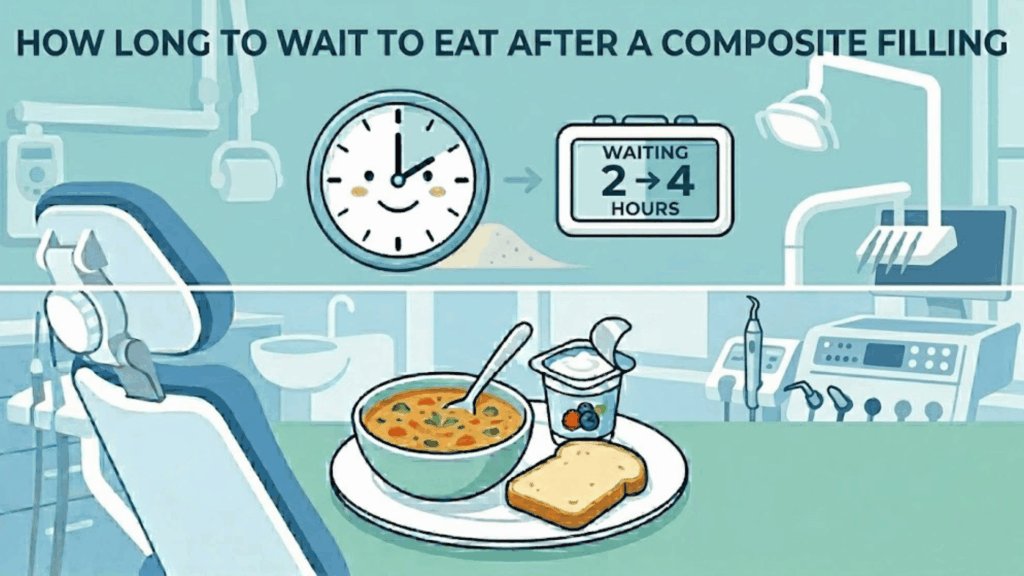
You can usually eat once the numbness wears off, typically within two to four hours after treatment.
At that point, the filling itself is fully set. The waiting period is mainly about avoiding accidental biting or injury while local anesthesia is still active.
Why the Wait Is About Numbness, Not the Filling
Local anesthesia numbs the treated area, including the teeth and surrounding soft tissues like the lips, cheeks, and sometimes the tongue.
While the area is numb, it becomes difficult to feel pressure, temperature, or pain in a normal way. This is why people sometimes bite the cheek or tongue without realizing it.
These small injuries can lead to soreness or swelling that lasts for a few days once the numbness wears off.
Hot food and drinks can also be risky during this time, since reduced sensation makes it harder to notice when something is too hot.
Why Composite Resin Hardens Differently
Composite resin contains a light-sensitive material that begins to set when exposed to a curing light.
During treatment, the dentist applies the material in thin layers and cures each layer before adding the next. This allows the filling to harden fully while it is being placed.
Unlike older metal fillings, composite does not require time outside the dental chair to set. The hardening process is completed during the appointment itself.
If you want a closer look at how the bonding process works, our composite filling guide covers the full steps from preparation to placement.
How Long Numbness Typically Lasts
| Anesthesia Type | Typical Numbness Duration |
| Standard local anesthesia | 2 to 4 hours |
| Anesthesia with epinephrine | Can last slightly longer due to constricted blood flow |
| Lower jaw injections | Often longer than upper jaw injections |
| Children or smaller patients | Sometimes shorter, but varies by individual response |
Lower jaw fillings often stay numb longer than upper jaw fillings, since the nerve block used for lower teeth affects a wider area of the lip and chin.
What to Eat Once Feeling Returns
Once numbness wears off, it’s best to start with softer foods that are easy to chew and gentle on the treated area.
- Soup, broth, or other warm (not hot) liquids
- Yogurt, mashed potatoes, or scrambled eggs
- Soft fruits such as banana or cooked apple
- Pasta or rice that doesn’t require much chewing
The filling itself is fully set at this point. The reason for choosing softer foods is mainly comfort, since the tooth and surrounding area may still feel slightly sensitive after treatment.
Foods to Avoid for the First Day
It’s best to avoid foods that place extra stress on the treated tooth during the first 24 hours.
- Ice, hard candy, or anything that requires strong biting pressure
- Sticky foods like caramel or taffy that can pull on the filling
- Very hot foods or drinks until normal sensation returns
- Crunchy foods such as nuts or hard chips on the treated side
After the first day, most patients can return to their normal diet without restrictions.
What If Your Bite Feels Off After Eating?
If a filling is even slightly higher than the surrounding tooth, it can place extra pressure on that spot each time you bite down.
Because the area is still numb right after treatment, this may not be noticeable at first. Once normal sensation returns, some patients notice soreness on a specific tooth or a feeling that the bite no longer fits together properly.
If this happens, it’s usually easy to correct. A quick bite adjustment at the dental office can smooth out the contact and relieve the pressure within minutes.
Sensitivity After Eating: What’s Normal and What Isn’t
Mild sensitivity to hot, cold, or sweet foods is common for a few days after a composite filling. It usually improves on its own as the tooth adjusts.
Sharp pain that lasts more than 10 to 15 seconds after eating is less typical and should be checked by a dentist.
If discomfort is getting worse instead of gradually improving, it may be related to how the filling is biting together or whether the restoration needs adjustment. Our article on when a composite filling should be replaced outlines the specific signs worth watching for.
What If You Accidentally Eat Too Soon?
Biting your cheek or tongue while still numb is fairly common and usually not serious, but it can feel sore once the numbness wears off.
If this happens, a gentle rinse with warm salt water can help keep the area clean while it heals over the next day or two.
If a new filling feels loose or becomes chipped while the area is still numb, it’s best to contact your dentist rather than waiting for your next appointment.
If the filling comes out entirely, our guide on what to do if a composite filling falls out walks through the right steps to take immediately.
What If Your Bite Feels Off After Eating?
If a filling is even slightly higher than the surrounding tooth, it can put extra pressure on that spot each time you bite down.
Right after treatment, this may not be noticeable because the area is still numb. Once sensation returns, some patients feel soreness on a specific tooth or notice that their bite feels slightly uneven.
If this happens, it’s usually easy to fix. A quick bite adjustment at the dental office can correct the contact and relieve the pressure within minutes.
Speak with Dr. Pearl Zadeh About Your Composite Filling
If you have recently had a composite filling or are unsure about any part of your recovery, a quick check-in can help clear things up early.
Dr. Pearl Zadeh’s Woodland Hills practice provides clear aftercare guidance for every patient and can assess any discomfort, bite changes, or sensitivity after treatment.
Schedule a visit to make sure your filling is healing as expected and your bite feels completely normal. Call (818) 716-6722 or click the button below to schedule your consultation.
Schedule a ConsultationFrequently Asked Questions
1. Can I drink water right after a filling?Yes. Cool or room-temperature water is generally safe to drink, even while the area is still numb.
2. How soon can I drink coffee or hot tea?It is best to wait until the numbness wears off, usually within two to four hours. This helps prevent accidental burns to your lips, cheeks, or tongue.
3. Does the type of filling material change the waiting time?No. Composite resin hardens during the procedure, so the waiting period is related to the anesthesia rather than the filling material itself.
4. Why does my dentist’s advice differ from what I read online?The amount of numbness, the area being treated, and the type of procedure can vary from patient to patient. Your dentist’s instructions are based on your specific situation.
5. Can I chew gum the same day as a filling?It is usually best to wait until the numbness has worn off and your bite feels normal. If the tooth feels sensitive after treatment, waiting until the next day may be more comfortable.