
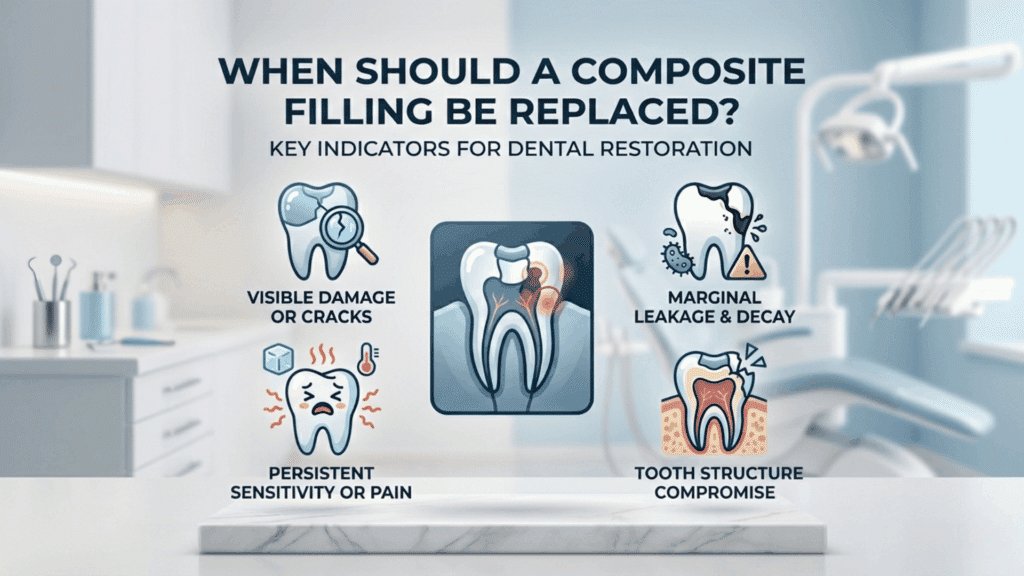
My filling looks fine, so how do I know if it needs to be replaced?” This is one of the most common questions patients ask during routine exams. It makes sense. Composite fillings blend in with the tooth, so changes are not always easy to notice.
Composite fillings do not last forever. Many work well for years, but chewing forces, changes in the surrounding tooth, and natural wear on the material all affect how long they hold up. By the time a filling becomes painful, the issue has often been developing for some time. Spotting early signs can make treatment simpler and help prevent bigger problems later.
How Long Do Composite Fillings Usually Last?
Most composite fillings last around 5 to 10 years, although this is not a fixed rule. Some remain in good condition for 15 years or longer, while others may show wear much earlier.
Longevity depends on several factors. Larger fillings tend to wear faster because they cover more surface area and take on more chewing force. Fillings on back teeth also wear down more quickly since those teeth handle most of the grinding and chewing.
Oral hygiene plays an important role as well. Plaque that builds up around the edges of a filling can speed up breakdown and increase the risk of decay forming underneath.
Teeth grinding or clenching places even more stress on composite fillings. This condition, known as bruxism, can cause early wear or small fractures. In these cases, a night guard can help protect both the filling and the natural tooth structure.
Why Composite Fillings Need Replacement
Fillings do not fail for a single reason, and age alone is not always the main factor.
Over time, normal wear can gradually affect a composite filling. Daily chewing can thin the material, create small cracks, or cause the edges to separate slightly from the tooth. When that seal starts to break down, the filling no longer protects the tooth in the same way.
Recurrent decay is one of the most common reasons for replacement. Bacteria can enter small gaps around the edges of an older filling and cause new decay underneath or beside it. This often develops quietly and may not cause symptoms until it is more advanced. In many cases, it is first detected on dental X-rays.
Cracks and fractures also play a role. A filling can crack from biting force, grinding, or long-term stress. In some cases, the tooth itself may fracture around the filling, which affects the stability of the entire restoration.
Replacing a filling is not about removing old dental work for the sake of it. The goal is to protect the tooth underneath and address small issues before they turn into larger problems.
Signs Your Composite Filling May Need Replacement
Some signs are easy to notice. Others are subtle and only become clear during a dental exam.
Persistent Sensitivity
Mild sensitivity right after a filling is normal and usually settles within a few weeks. But if a tooth becomes sensitive months or years later, it is worth paying attention. Sensitivity to hot, cold, or sweet foods that lingers after the trigger is gone can sometimes point to decay under the filling or a weakening seal between the tooth and restoration.
Pain When Biting
Pain when you bite or chew on a specific tooth often signals a change in the filling or tooth structure. It may come from a small crack, an uneven bite, or movement in the filling itself. This discomfort can feel mild at first and come and go, but it often becomes more noticeable over time.
Visible Cracks or Chips
You may notice a chip or feel a rough edge when you run your tongue over the tooth. In some cases, a small crack may develop in the filling. While this does not always mean the tooth is in immediate danger, it does suggest the filling is no longer providing full protection.
Rough or Worn Edges
Composite fillings can slowly wear down over time. If a filling that once felt smooth now feels rough, uneven, or slightly raised, it may need evaluation. Worn edges can also collect plaque more easily, which increases the risk of decay around the area.
Food Frequently Getting Stuck
If food keeps getting trapped in the same spot, the edge of the filling may have started to break down. Small gaps at the margins allow food and bacteria to collect, which can lead to decay if not addressed.
Discoloration Around the Filling
Composite material can stain over time from coffee, tea, and other foods. However, a dark line or shadow right along the edge of a filling can sometimes indicate decay. Not every stain means a problem, but it is worth having checked to be sure.
A Loose Filling
If a filling feels loose or a piece breaks off, it needs prompt attention. An open area exposes the tooth to bacteria, which can lead to decay developing quickly. Even without pain, it is best to have it evaluated as soon as possible.
Can a Composite Filling Be Repaired Instead?
Not every issue with a composite filling means it needs full replacement. In some cases, a dentist can repair the existing filling instead of removing it completely.
Small chips at the edge of a filling can often be smoothed or built back up with composite material, especially when the underlying tooth is still healthy. Minor surface wear without decay or damage at the margins may also only need monitoring rather than immediate treatment.
When decay develops under or around the filling, when a crack runs through the restoration, or when the tooth itself fractures, replacement is usually the better option. Repairing a filling in these cases would not address the underlying problem.
This decision is not something patients can usually make on their own. A dentist will assess the tooth, check the edges of the filling, and review X-rays before recommending repair or replacement. In some cases where the damage is more extensive, a dental crown may be the more suitable option.
What Happens If You Ignore a Failing Filling?
Leaving a damaged or failing filling in place often allows a small issue to grow over time.
When the seal around a filling breaks down, bacteria can reach the tooth underneath. Decay can spread in areas that are harder to clean and not fully visible. What starts as a small problem at the edge of a filling can gradually move deeper into the tooth. In some cases, this may eventually affect the nerve and lead to the need for root canal treatment.
Delaying care can also limit treatment options. A filling that could have been replaced early may later require a crown if too much tooth structure is lost. In more advanced cases, the tooth may become too damaged to restore.
This is not meant to create concern. The key point is simple. Addressing a failing filling early usually means a smaller and more straightforward treatment compared to waiting until symptoms become more obvious.
How Dentists Check Whether a Filling Needs Replacement
A proper evaluation of a composite filling involves more than a quick look. Dentists use several methods to understand the full condition of the tooth and the restoration.
A visual exam is usually the first step. The dentist examines the filling under good lighting and sometimes magnification to look for cracks, chips, discoloration, or signs that the edges are breaking down.
Dental X-rays help detect problems that cannot be seen directly. Decay can form under or around a filling without visible signs, and X-rays often reveal these changes early. They can also show deeper issues involving the tooth root or surrounding bone.
The bite is also checked. If a filling is slightly too high or uneven, it can create extra pressure when you chew. Over time, this can contribute to discomfort or wear on the tooth.
Dentists may also gently check the edges of the filling to see whether the seal is still intact. In some cases, sensitivity testing helps assess how the nerve inside the tooth is responding.
Diagnosis always comes from combining these findings. A single sign on its own does not give the full picture, which is why self-checks at home can only go so far.
When to Schedule an Evaluation
You do not need to wait until a tooth becomes painful to have a filling checked. In many cases, early signs show up long before discomfort begins.
It is a good idea to schedule a visit if you notice any of the following changes:
- New or worsening sensitivity to hot, cold, or sweet foods
- Pain or discomfort when chewing on a specific tooth
- A visible chip, crack, or rough edge around a filling
- Food that keeps getting trapped in the same spot
- Any change in how a filling feels when you run your tongue over it or bite down
Catching these issues early often leads to simpler treatment. A filling replaced during a routine visit is usually straightforward. The same tooth left untreated until decay spreads underneath the filling may require more complex care later on.
How to Make Composite Fillings Last Longer
Good daily habits can significantly extend the life of composite fillings.
Brush twice a day with fluoride toothpaste and floss daily, especially around existing fillings where plaque tends to build up. Regular professional cleanings also help remove deposits that brushing alone cannot fully clear.
If you grind or clench your teeth, ask your dentist about a custom night guard. Grinding places heavy pressure on both natural teeth and fillings, and a well-fitted guard can reduce that long-term wear.
It is also important to avoid habits that place unnecessary stress on restorations. Chewing ice, biting fingernails, or using teeth to open packaging can all cause sudden damage, even to fillings that are otherwise in good condition.
Routine dental exams play a key role as well. Most patients benefit from check-ups every six months. These visits allow the dentist to catch early signs of wear, decay, or bite changes before they become noticeable problems.
If you have older silver amalgam fillings and are thinking about replacement, you may also find it helpful to read about the differences between mercury and composite fillings.
Schedule a Composite Filling Evaluation
Composite fillings are durable and effective, but they are not permanent. Most last for many years with proper care, and some last well beyond a decade. Even so, they can wear down over time, develop small gaps at the edges, or allow decay to form underneath if they are not monitored regularly.
It is better not to wait for pain before getting a filling checked. Pain often appears later, once the problem has already progressed. Regular dental exams help catch these issues early, when treatment is simpler and less involved.
If you are concerned about an existing composite filling, Dr. Pearl Zadeh can evaluate it and recommend whether it needs monitoring, repair, or replacement. Call (818) 716-6722 or click the button below to schedule your consultation online.
Schedule a ConsultationFrequently Asked Questions
1. How often should composite fillings be replaced?There is no fixed schedule for replacing composite fillings. Replacement depends on the condition of the filling and the tooth, not age alone. Some fillings show wear within 5 to 7 years, while others remain in good condition for 15 years or longer. During routine exams, your dentist checks each filling and recommends replacement only when it is needed.
2. Can a composite filling last 20 years?Yes, in some cases. Small fillings in low-stress areas of the mouth can last 20 years or more, especially with good oral hygiene and regular dental care. However, this is not typical. Lifespan depends on the size of the filling, its location, bite forces, and the condition of the surrounding tooth over time.
3. How do I know if my filling is failing?Signs can include new or worsening sensitivity to hot, cold, or sweet foods, pain when biting, food getting stuck in the same area, rough or sharp edges, visible darkening around the margin, or a filling that feels loose or partially broken. In some cases, a failing filling shows no symptoms and is only detected during an exam or on X-rays.
4. Can a dentist repair a composite filling instead of replacing it?Sometimes. Small chips or minor surface wear can often be repaired by adding composite material if the tooth and margins are still healthy. Full replacement is usually needed when decay is present, the filling has cracked through, or the seal between the filling and tooth has broken down. Your dentist will decide the best option after examining the area.
5. What happens if I leave a damaged filling untreated?A damaged filling can allow bacteria to enter and cause decay underneath it. Over time, this decay can spread deeper into the tooth and lead to more complex treatment, such as a root canal or a crown. In severe cases, the tooth may become difficult to save. Treating problems early usually keeps the procedure simpler and less invasive.