
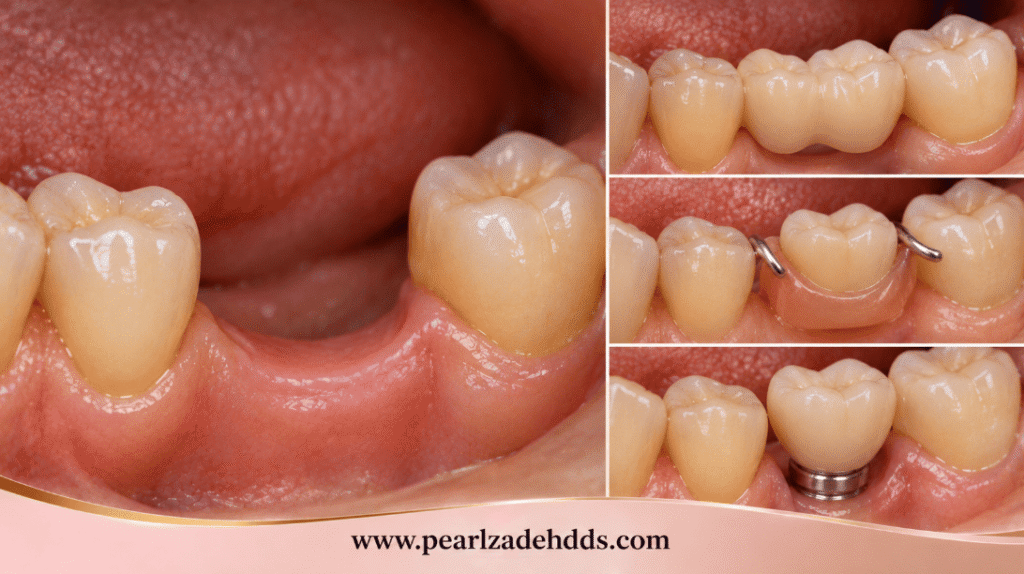
Losing a molar can affect more than the appearance of your smile. You may notice changes when chewing, especially if the gap affects how your teeth meet.
A porcelain bridge, partial denture, or dental implant may replace the missing tooth. However, these options differ in how they work and what they require from the surrounding teeth and gums.
The right choice depends on your dental condition and what each option involves. A consultation can help clarify which treatments may suit your situation.
Why Does a Missing Molar Matter?
Cleveland Clinic explains that molars are the main chewing teeth. They help crush and grind food. Losing a molar can affect how a patient chews.
Cleveland Clinic also explains that tooth loss can lead to complications without treatment. These may include shifting teeth, jawbone loss, and bite changes.
These effects are possible, not inevitable. They vary between patients. A dentist can assess the effects of tooth loss in each case.
What Are the Main Options for Replacing a Missing Molar?
Three common options can replace a missing molar. Each has different requirements and considerations.
Porcelain Dental Bridge
A traditional dental bridge uses crowns on the teeth beside the gap. An artificial tooth sits between them to fill the space, according to Cleveland Clinic.
Cleveland Clinic explains that the dentist removes some enamel from the supporting teeth. This preparation is irreversible.
Dr. Pearl offers all-porcelain, metal-free bridges. Learn more about porcelain bridges and what to know before a visit.
Cleveland Clinic recommends cleaning beneath a bridge daily. Patients can use floss threaders or interproximal brushes. Decay or trauma affecting the supporting teeth can also weaken the bridge.
Partial Denture
A removable partial denture replaces one or more missing teeth. The ADA explains that these appliances usually have replacement teeth attached to pink or gum-colored plastic bases.
A partial denture may require less preparation of neighboring teeth than a traditional bridge. However, the ADA notes that crowns on natural teeth can sometimes improve a partial denture’s fit. The dentist can determine whether this is necessary.
The ADA also advises patients to have poorly fitting dentures adjusted by a dentist. Read about dental bridges vs. dentures to compare these options.
Dental Implant
A dental implant is an artificial tooth root placed in the jaw. It supports a replacement tooth, according to the American Academy of Periodontology.
The organization explains that healthy gums and sufficient bone support are necessary for implant treatment.
Dr. Pearl does not place dental implants. Patients considering this option would need an evaluation from a qualified implant provider.
How Do the Main Options Compare?
The table below sets the three options side by side.
| Option | What it involves | Points to discuss |
| Porcelain bridge | Crowns on the neighboring teeth hold an artificial tooth in the gap | Condition of the supporting teeth, enamel removal, and daily cleaning under the bridge |
| Partial denture | A removable appliance replaces one or more missing teeth | Fit, adjustments, daily cleaning, and whether crowns on natural teeth are needed |
| Dental implant | An artificial root is placed in the jaw to support a replacement tooth | Gum health, bone support, placement in the jawbone, and a qualified implant provider |
No option suits every patient. Each one asks something different of the patient and the surrounding teeth.
Does Every Missing Molar Need to Be Replaced?
Not necessarily. The effects of a missing molar vary between patients. Cleveland Clinic notes that losing one tooth without replacing it may increase the risk of further tooth loss.
The decision depends on the patient’s bite, neighboring teeth, and comfort.
A dentist can examine the area and discuss the risks of each option. This includes the possible effects of leaving the gap untreated.
What Factors May Affect Which Option Suits You?
A dentist may consider several factors during an examination:
- The condition of the teeth beside the gap.
- The health of the gums.
- The amount of bone support in the jaw.
- The patient’s bite and chewing habits.
- The patient’s overall health and treatment goals.
These factors help determine which options may be suitable. A dental examination can clarify which considerations apply.
What Should You Ask at a Consultation?
These questions can help patients prepare for a consultation:
- Which options may suit my missing molar?
- Will any neighboring teeth need preparation?
- How should I clean and care for each option?
- What are the risks of waiting?
- Would another provider need to handle any part of the treatment?
Schedule a Consultation With Dr. Pearl
Replacing a missing molar involves more than filling the gap. The condition of the surrounding teeth, gums, and bite can affect which option is suitable. Dr. Pearl Zadeh DDS can examine the area and discuss porcelain bridge and partial denture options. She can also explain the factors to consider before choosing a treatment.
Call (818) 716-6722 or click the button below to schedule your consultation online.
Frequently Asked Questions
Not always. The effects vary from patient to patient. A dentist can evaluate the area and explain the options.
It depends on the patient. Cleveland Clinic says tooth loss can lead to shifting teeth, bone loss, and bite changes. These effects are not certain.
Neither is better for everyone. A bridge is fixed in place, while a partial denture is removable. The right choice depends on the patient’s teeth and goals.
No. Dr. Pearl does not place implants. Patients who want to explore implants would need a qualified implant provider.
Start with an exam. The dentist can review the neighboring teeth, gums, and bite, then explain which options may fit.
The information above is for informational purposes only and is not a substitute for professional dental advice. Please schedule a consultation with Pearl Zadeh DDS to discuss your specific situation.