
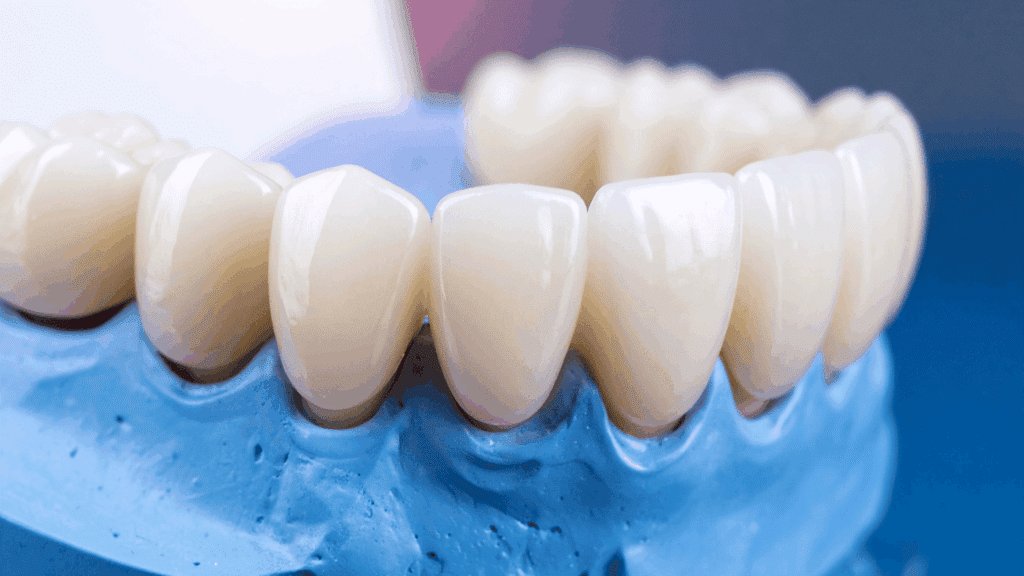
Missing teeth can affect more than your smile. Chewing becomes uneven, speech may change slightly, and surrounding teeth can shift over time. A porcelain bridge provides a fixed, natural-looking solution that restores function and appearance.
Before scheduling your visit, it helps to understand how this treatment works, who it’s for, and what to expect.
What is a Porcelain Bridge?
A porcelain bridge is a dental restoration that fills the gap left by one or more missing teeth. It uses natural-looking porcelain to replace missing teeth, while the surrounding teeth or implants serve as anchors.
This type of restoration not only restores your bite but also helps protect your remaining teeth from shifting and uneven pressure. Many patients prefer a porcelain teeth bridge because it blends seamlessly with natural enamel and resists staining.
Who is a Candidate for a Porcelain Bridge?
Not everyone with a missing tooth needs a bridge, but several signs indicate it may be the right choice:
- Noticeable gaps in the smile
- Difficulty chewing certain foods
- Nearby teeth starting to shift
- Changes in bite or jaw comfort
Patients need healthy supporting teeth or implants to anchor the bridge. A thorough dental exam ensures the bridge will fit securely and last for years.
Woodland Hills Porcelain Bridges
Types of Porcelain Bridges
| Type | How It Works | Best For | Key Benefit |
| Traditional Porcelain Bridge | Crowns on both sides hold a replacement tooth | One or two missing teeth | Strong and stable for everyday chewing |
| Cantilever Porcelain Bridge | Anchored to a single tooth | Areas with lighter bite pressure | Requires only one supporting tooth |
| Maryland (Resin-Bonded) Bridge | Thin wings attach to the back of nearby teeth | Small gaps near front teeth | Minimal alteration of natural teeth |
| Implant-Supported Porcelain Bridge | Anchored on dental implants | Multiple missing teeth in a row | Protects jawbone and preserves surrounding teeth |
Benefits of a Porcelain Bridge
A porcelain bridge offers both cosmetic and functional improvements for patients with missing teeth. It helps restore balance to your bite while keeping your smile looking natural.
- Restores comfortable chewing and natural speech by filling the space left by missing teeth
- Helps keep nearby teeth from shifting into the gap and changing your bite
- Matches the color and shape of natural teeth for a smooth, realistic appearance
- Supports long-term oral health by reducing uneven pressure on surrounding teeth
- Provides a durable solution that can last 10 to 15 years or longer with proper care
- A porcelain teeth bridge improves both confidence and daily comfort while protecting the function of your smile
What to Expect During the Porcelain Bridge Process
- Examination and Planning
The dentist examines teeth and gums and uses digital scans or X rays to plan the bridge. The best type of porcelain bridge is recommended for your specific bite and tooth spacing. - Preparing Supporting Teeth
Adjacent teeth are gently shaped to support the bridge. Digital scans ensure accurate measurements without messy impressions. - Temporary Bridge
A temporary restoration protects the area while the custom porcelain teeth bridge is fabricated. Eating and speaking usually remain comfortable. - Custom Bridge Fabrication
A dental lab uses the digital scans to craft a bridge that matches your bite and natural tooth color. - Final Placement
The temporary bridge is removed, and the permanent one is fitted. Minor adjustments ensure stability and comfort. - Ongoing Care
Instructions are provided on brushing, flossing, and care around the bridge. With proper maintenance, a porcelain bridge can last over a decade.
Caring for Your Porcelain Bridge
Daily care plays a big role in keeping your porcelain bridge strong, clean, and comfortable for years to come.
- Brush at least twice a day to remove plaque from the bridge and surrounding teeth, and floss carefully around the bridge to prevent gum irritation
- Avoid biting directly on very hard foods such as ice, hard candy, or nuts, since these can place extra pressure on the bridge
- Visit your dentist regularly so the bridge and supporting teeth can be checked for wear, looseness, or hidden decay
- Choose a non-abrasive toothpaste to protect the smooth surface of the porcelain and keep it looking natural
- Proper care helps your porcelain teeth bridge last longer while keeping your bite healthy and your smile clean
Schedule Your Porcelain Bridge Consultation
If you are missing one or more teeth and want a stable, natural-looking solution, a porcelain bridge may be a great option. At Pearl Zadeh DDS, each bridge is planned with care and designed using digital scans for an accurate and comfortable fit.
Call (818) 716-6722 or schedule your consultation online today to take the first step toward restoring your smile.
Schedule a ConsultationFrequently Asked Questions (FAQ)
1. How long does a porcelain teeth bridge usually last?With proper care, a porcelain teeth bridge can last between 10 and 15 years or longer. Daily brushing, flossing around the bridge, and regular dental visits help protect the supporting teeth and gums, which directly affects how long the bridge remains strong and secure.
2. Is a porcelain bridge better than leaving a missing tooth untreated?Yes, replacing a missing tooth with a porcelain bridge helps prevent nearby teeth from shifting out of position. It also keeps your bite balanced and reduces strain on surrounding teeth. Leaving a gap untreated can lead to chewing problems, jaw discomfort, and changes in facial shape over time.
3. Does getting a porcelain bridge hurt?The procedure is usually comfortable for most patients. Dentists use local anesthesia during tooth preparation, so pain is minimal. Some mild sensitivity may occur after placement, but it typically fades within a few days as your mouth adjusts to the new bridge.
4. Can a porcelain bridge help prevent jawbone loss?While a porcelain bridge restores chewing function and keeps teeth in place, it does not replace the tooth root. For patients missing multiple teeth, combining a porcelain bridge with dental implants can help preserve jawbone density. The implants act like natural roots, stimulating the bone and preventing the shrinking that can occur over time.
5. Who is a good candidate for a porcelain bridge?A good candidate is someone with one or more missing teeth and healthy surrounding teeth or sufficient bone support. Patients who maintain good oral hygiene and do not have active gum disease often see the best long-term results with a porcelain bridge.