
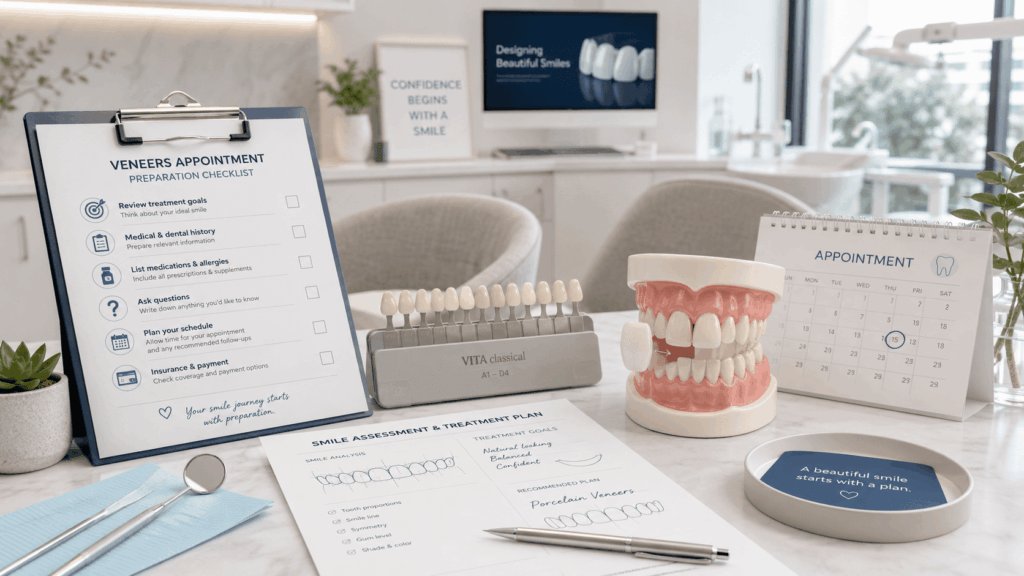
Getting veneers is a decision that usually comes with a lot of questions. You may want to know what happens during the first consultation, how your dentist evaluates your smile, or what steps come before the final placement. Knowing what to expect ahead of time can help you have a more productive conversation with your dentist and feel more prepared for the process.
From your first appointment to the final placement, each step gives your dentist a chance to understand your goals, assess your teeth, and create a treatment plan that fits your needs.
Why Preparing for Your Veneers Appointment Matters
Veneers involve more decisions than most patients expect going in: material, shade, shape, and how many teeth to treat. Walking into your first appointment with even a rough sense of your goals tends to make that conversation more productive, and it helps you follow along once your dentist starts explaining the options that fit your teeth.
Preparation doesn’t mean you need every decision made ahead of time. Your dentist will guide you through most of it. It simply means you’re not starting from zero once you sit in the chair. If you’re comparing veneers in Woodland Hills against other cosmetic options, understanding the general process before your first visit can make that decision easier.
What Happens During Your Veneers Consultation
Most veneer treatment starts with a consultation focused on conversation and evaluation, not any actual tooth preparation. This is where your dentist gathers the information needed to recommend an appropriate plan.
Talking Through Your Smile Goals
Your dentist will likely ask what you want to change about your smile, such as color, shape, spacing, or a combination of concerns. Bringing photos of smiles you like can help you explain your goals more clearly. Examples of what you would like to improve can also give your dentist a better understanding of your expectations.
Your consultation will also cover how many teeth you want to treat. Veneers can address a single tooth or multiple teeth, depending on your goals and dental needs. If you are considering a broader smile change, learning what a smile makeover includes can help you understand how veneers may fit into a larger treatment plan.
Evaluating Your Oral Health First
Before recommending veneers, your dentist typically examines your teeth and gums and may take x-rays or photos depending on your history. Active decay, gum disease, or a significant bite problem generally needs attention first, since a veneer placed over an unhealthy tooth may not hold up as expected. This evaluation is also where your dentist helps determine whether porcelain, composite, or a combination fits your case. Our porcelain veneers guide and our composite veneers overview both go into more detail on what each material generally involves.
Questions Worth Asking Before You Move Forward
A short list of questions can make your consultation more productive and help you leave with a clearer picture of what’s ahead:
- How many teeth do you recommend treating, and why that number specifically?
- Which material fits my goals, budget, and the condition of my teeth?
- Roughly how much enamel will be removed, and is that amount typical for my case?
- What should I expect my temporary veneers to look and feel like?
- What happens if I’m not happy with the shade or shape once I see the temporaries?
Not every dentist answers these the same way, and that’s fine. The goal is simply having the information before treatment starts rather than discovering it along the way.
How to Prepare Physically and Mentally for the Visit
You do not need to make major physical preparations before a veneers consultation. However, a few simple steps can help you get more from your visit. If your dentist plans to discuss shade matching, arrive with your teeth in their usual condition. Avoid whitening strips or heavily pigmented foods right before your appointment, since your natural tooth color helps guide shade discussions.
It also helps to think about your goals before you arrive. You do not need to decide on an exact look beforehand. Veneer treatment involves a conversation between you and your dentist, and your dentist’s evaluation helps determine suitable options. Bringing a list of questions, even simple ones, can help you cover important details during your consultation.
What Happens When Your Teeth Are Prepared
If you move forward with treatment, a separate appointment (or a later part of the same visit, depending on your dentist’s process) is typically used to prepare your teeth.
Understanding Enamel Removal
For porcelain veneers, your dentist may remove a thin layer of enamel from the front surface of each treated tooth. The amount often measures less than half a millimeter, but it depends on your teeth and treatment plan. This step helps the veneer fit properly and create a natural appearance.
The American Dental Association notes that veneer treatment is generally not considered reversible once enamel removal occurs. Understanding this before treatment can help you make an informed decision. Composite veneers may require less enamel removal in some cases, depending on your specific needs. Your dentist can explain what applies to your teeth.
Dentists often use local anesthesia during enamel preparation. Most patients feel pressure rather than pain, although some may notice temporary sensitivity afterward.
Wearing Temporary Veneers
Your dentist customizes your permanent veneers, and the process often takes one to two weeks. During this time, you may wear temporary veneers to protect your prepared teeth. Temporary veneers can also provide a preview of the planned length and shape, although they may not look exactly like your final veneers.
If the shape or length does not feel right, tell your dentist during this stage. Discussing adjustments before your permanent veneers are completed can make it easier to address your concerns.
Choosing Your Shade and Shape
Shade selection typically happens during your consultation or your preparation appointment, depending on your dentist’s process. Rather than matching veneers exactly to your current tooth color, many patients choose a shade that’s noticeably brighter, though how bright depends on what looks natural against your skin tone and the rest of your smile.
If you’re still deciding between materials, comparing porcelain and composite veneers side by side can help clarify which fits your goals and budget before your consultation. Shape and length work similarly. Your dentist may use digital imaging or a mock-up to give you a general preview, though final results can vary once the lab has custom crafted each veneer.
Caring for Your Smile Around Your Appointments
In the days before your appointment, continue your normal oral hygiene routine rather than making drastic changes. If your consultation includes shade matching, limiting heavily pigmented foods and drinks like coffee, tea, or red wine for a day or two beforehand may help. Your natural tooth color plays a role when your dentist discusses shade options.
After your dentist places your permanent veneers, care usually looks similar to caring for natural teeth. Continue brushing, flossing, and attending routine checkups. Your dentist may also recommend avoiding habits like biting your nails or chewing very hard foods, as these habits can affect veneer condition over time. Veneer maintenance and replacement needs vary from person to person. Your dentist can explain what to expect based on your specific case.
Finding the Right Cosmetic Dentist in Woodland Hills
A dentist’s experience with veneers matters as much as the material itself. This becomes especially important when matching shades, shaping veneers, and making the preparation process comfortable. Dr. Pearl Zadeh takes a cosmetic-focused approach to veneer treatment for patients in Woodland Hills. Her team supports each step, from your first consultation to your final placement appointment.
If you are exploring cosmetic dentistry beyond veneers, our Woodland Hills cosmetic dentistry services cover a wider range of treatment options.
Schedule Your Veneers Consultation With Dr. Pearl Zadeh
Getting ready for a veneers appointment doesn’t need to feel like a guessing game. Knowing the general steps ahead of time, and coming in with a few questions, tends to make the whole process feel more collaborative from the start.
Dr. Pearl Zadeh and her Woodland Hills team can walk you through your options, answer your questions directly, and help you understand what a treatment plan built around your specific teeth and goals might look like.
Call (818) 716-6722 or click the button below to schedule your veneers consultation online.
Schedule a ConsultationFrequently Asked Questions
1. How long does the veneers process take from consultation to final placement?This typically spans a few weeks in total, though it depends on how many teeth are involved, your dentist’s process, and the dental lab’s timeline for fabricating your veneers.
2. Will I feel pain during tooth preparation?Local anesthesia is generally used during this step, so most patients feel pressure rather than pain. Some mild sensitivity in the days afterward is possible and typically manageable.
3. Can I eat normally with temporary veneers?Generally yes, though your dentist may suggest avoiding very hard or sticky foods that could dislodge a temporary. Ask your dental team for guidance specific to your temporaries.
4. What if I don’t like the shade once I see my temporary veneers?Mention it to your dentist as soon as possible. Adjustments are typically easier to make before the permanent veneers are finished at the lab than after they’ve already been fabricated.
5. How many appointments does getting veneers usually take?Most patients need at least two appointments: one for consultation and preparation, and one for final placement. Some dentists split these into three visits depending on the case.
Related Articles:
- Porcelain Veneers: A Practical Guide for Patients
- Composite Veneers: Everything You Need to Know
- Porcelain vs Composite Veneers: Choosing the Right Option for Your Smile
- Veneers vs Teeth Whitening: Which One Should You Choose?
- Dental Bonding vs Veneers: Which Option Is Right for You?
- Do Dental Veneers Look Natural or Fake? What Makes the Difference