
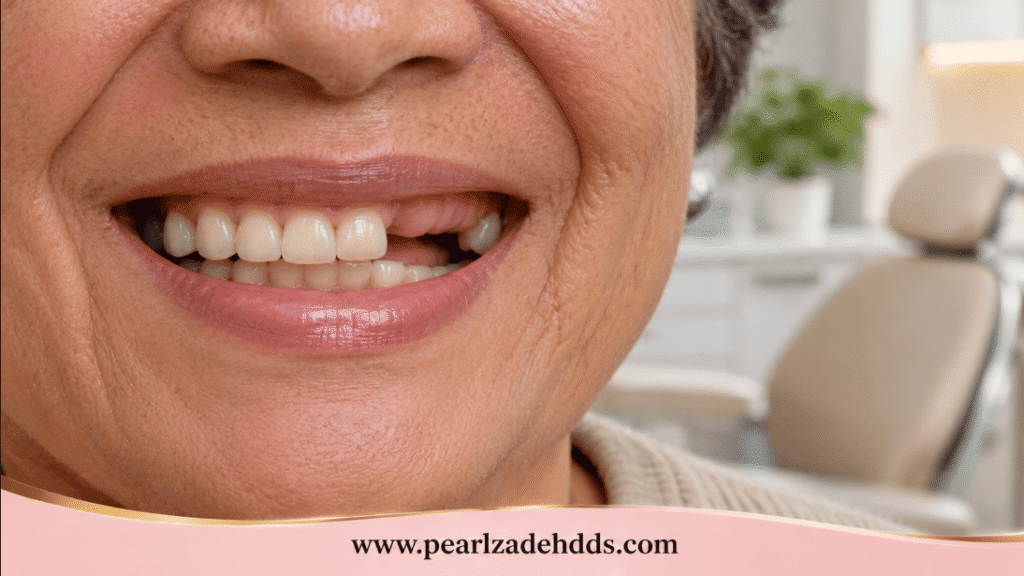
Losing several teeth can affect everyday activities. Chewing may become difficult, and missing front teeth can change speech. Some people also feel self-conscious about visible gaps.
The remaining teeth may shift into spaces left by missing teeth. This can change how the upper and lower teeth meet when biting.
Three common options are removable partial dentures, fixed dental bridges and implant-supported restorations. Some treatment plans combine these approaches. The suitable option depends on the number and location of missing teeth, the condition of the remaining teeth, gum health and available bone support.
Why Does Replacing Multiple Missing Teeth Matter?
Several missing teeth can affect more than the appearance of a smile. Cleveland Clinic explains that untreated tooth loss can lead to several complications. However, these effects vary. Not every patient experiences the same problems.
A dentist may assess the following areas:
- Chewing and food choices: Missing teeth can make it harder to break down certain foods. Patients may avoid foods that require more chewing, which can affect their diet and nutrition.
- Speech: Teeth help form certain sounds. Missing front teeth, in particular, may affect pronunciation or make some words harder to enunciate.
- Position of remaining teeth: Neighboring teeth may move into open spaces. This can affect spacing, contact between teeth and the way the bite functions.
- Bite balance: Missing teeth can change how the upper and lower teeth meet. This may place uneven pressure on the remaining teeth.
- Jawbone changes: The jawbone receives stimulation from tooth roots during normal chewing. After tooth loss, the bone in that area may gradually shrink.
These possible effects do not mean every missing tooth requires replacement. The decision depends on the location of the gaps, oral health, function and the patient’s needs. A dental examination helps determine whether treatment would provide a meaningful benefit.
What Are the Options for Replacing Multiple Missing Teeth?
The main options differ in how they stay in place, which structures support them and how patients care for them. The number and location of missing teeth help determine which designs may work.
Partial Dentures
A removable partial denture replaces several missing teeth in the upper or lower jaw. Cleveland Clinic describes it as an appliance that patients can remove when needed. The American Dental Association (ADA) explains that removable partial dentures generally have replacement teeth attached to pink or gum-colored plastic bases.
The design depends on the teeth being replaced and the support available in the mouth. Some partial dentures use metal clasps that connect to remaining natural teeth. Others use different connectors or precision attachments. These designs can provide different levels of retention and appearance. The ADA explains some of these options in its article on partial dentures.
Some designs may also require crowns on natural teeth to improve support or accommodate attachments. The dentist considers the condition and position of the remaining teeth before choosing a design.
Daily care is important. Patients should remove and clean the denture as instructed, brushing away food deposits and plaque. The ADA advises against using regular toothpaste because some formulas can scratch denture materials. Patients should also clean their remaining natural teeth and gums.
The fit may change as the gum tissue and underlying bone change. A denture that once fitted comfortably may begin to move, rub or create sore spots. The dentist can assess whether an adjustment, reline or replacement is needed. Patients should not attempt to reshape or repair the appliance themselves.
For a closer look at the differences between fixed and removable options, see the practice’s article on dental bridges versus dentures.
Multiple Dental Bridges
A traditional dental bridge uses crowns placed over supporting teeth to hold replacement teeth in the gap. These supporting teeth are called abutment teeth. Preparing them usually involves removing some natural tooth structure so the crowns can fit.
Cleveland Clinic explains that a bridge can replace one missing tooth or several teeth in a row. Many traditional bridges replace one to three consecutive teeth, although some designs may replace longer gaps. The number of teeth a bridge can replace depends on its design and the strength of its supporting structures.
This matters when several teeth are missing. A single bridge cannot span every gap safely. If missing teeth are in separate areas, the dentist may consider separate bridges or another restoration plan.
The supporting teeth also need careful assessment. They must have enough strength and stability to carry the bridge. Teeth with significant decay, damage or reduced support may not be suitable abutments. Placing a bridge on weak supporting teeth can increase the risk of complications.
Dr. Pearl offers all-porcelain, metal-free bridges. Patients can learn more about porcelain bridges and what to know before a visit, including the different designs used for tooth replacement. The choice depends on the location of the missing teeth, the bite and the condition of the supporting teeth.
Implant-Supported Restorations
A dental implant is an artificial tooth root placed in the jawbone to support a replacement tooth. The American Academy of Periodontology explains that implants can support individual crowns, bridges and other restorations.
An implant-supported bridge rests on implants rather than relying on natural teeth beside the gap. This may be an option when several consecutive teeth are missing. The number and position of implants depend on the restoration design and the patient’s anatomy.
Implant treatment requires an assessment of the jawbone, gums and overall oral health. The American Academy of Periodontology notes that healthy gums and sufficient bone support are important factors in implant treatment. Some patients may need additional procedures before implant placement. Others may not be suitable candidates.
Implants are not appropriate for every patient, and treatment involves surgery and a healing period. A qualified implant provider can assess whether this approach is suitable and explain the expected treatment stages.
Dr. Pearl does not place dental implants. Patients interested in this option would need an evaluation from an appropriate implant provider.
Combining Different Replacement Options
A patient does not always need the same type of restoration throughout the mouth. A treatment plan may use a fixed bridge in one area and a removable partial denture elsewhere. Another patient may have an implant-supported restoration in one location and a bridge in another.
These combinations depend on the location of the missing teeth and the condition of the supporting structures. For example, a bridge may work in an area with suitable supporting teeth, while a partial denture may replace teeth missing in a separate area.
The dentist must assess how each restoration will function alongside the others. The combined plan should account for the patient’s bite, chewing patterns, oral health and ability to maintain each restoration. Not every combination is appropriate for every patient.
What Factors Affect Which Option May Suit You?
A dentist considers several factors together when planning treatment. The number of missing teeth alone does not determine which restoration will work.
- Number of missing teeth: A bridge can replace a limited span of consecutive teeth. Several missing teeth may require more than one restoration or a different design.
- Location and pattern of tooth loss: A row of missing teeth presents different planning needs from gaps in separate areas. The position of each gap affects the available support.
- Condition of the remaining teeth: Natural teeth supporting a traditional bridge need adequate strength and stability. Decay, cracks or reduced support may affect whether they can serve as abutments.
- Gum health: Gum disease and inflammation can affect the health of supporting teeth and surrounding tissues. These problems may need attention before restorative treatment.
- Available jawbone support: Implant placement requires adequate bone support. Changes in the jawbone and gum ridge can also affect how a removable partial denture fits.
- Bite and chewing function: The dentist assesses how the upper and lower teeth meet and where chewing forces fall. A restoration must work with the existing bite.
- Medical and dental history: Previous dental procedures, current health conditions and certain medications may affect treatment choices and healing.
- Patient preferences and treatment goals: Some patients prefer a fixed restoration, while others are comfortable removing an appliance for cleaning. Appearance, maintenance and treatment requirements also influence the decision.
A consultation helps connect these factors to the available options. The dentist can explain which treatments are suitable and where limitations may apply.
Can You Replace Multiple Missing Teeth at Once?
Some patients can receive several replacement teeth within a relatively short treatment period. Others need treatment in stages. The timing depends on the condition of the mouth and the procedures involved.
Before placing restorations, the dentist may need to address problems such as tooth decay, gum disease or damaged supporting teeth. These conditions can affect the stability and health of the final restoration.
The type of restoration also affects the schedule. A traditional bridge involves preparing supporting teeth and fitting the completed bridge. A partial denture requires impressions or scans, fabrication and fitting appointments. Implant-supported treatment involves surgery and healing before the final restoration can be completed.
Patients should not assume that all missing teeth can be replaced during one appointment. Dr. Pearl can explain the proposed treatment sequence after examining the teeth, gums and bite.
What Questions Should You Ask Before Choosing a Treatment?
A consultation is a good opportunity to understand why a particular restoration has been recommended. These questions can help patients compare the treatment plans:
- Which replacement options are suitable for the location and number of my missing teeth?
- Why do you recommend this option over the alternatives?
- Will any remaining teeth need preparation or additional treatment?
- How could each option affect my chewing and bite?
- What daily cleaning and maintenance will the restoration require?
- Will I need treatment from another dental provider?
- What limitations or possible complications should I consider?
- What could happen if I delay replacing these teeth?
- How many appointments might treatment involve?
- What expenses should I expect beyond the initial treatment?
Ask the dentist to explain the benefits and limitations of each suitable option. A written treatment plan can also help clarify the proposed procedures, appointments and fees.
Schedule a Consultation With Dr. Pearl
Replacing several missing teeth requires a plan that considers the remaining teeth, gum health and bite. Dr. Pearl Zadeh can examine these areas and discuss whether porcelain bridges or partial dentures may suit your needs.
If another procedure is needed, she can explain when an evaluation from a different dental provider may be appropriate.
Call (818) 716-6722 or click the button below to schedule your consultation online.
Frequently Asked Questions
Yes. Cleveland Clinic says partial dentures replace several missing teeth in the upper or lower jaw. A dentist decides whether the design suits the patient’s remaining teeth.
Yes, within limits. Cleveland Clinic says a bridge most commonly replaces one to three teeth in a row. Teeth missing in separate areas may need a different plan.
Effects vary. Cleveland Clinic says tooth loss can lead to bone loss, shifting teeth, bite changes, and speech changes. Not every patient experiences all of them.
Sometimes. A plan may combine bridges, partial dentures, and implant-supported restorations. Implant treatment requires a qualified implant provider.
Dentists review the number and location of missing teeth, the remaining teeth, gums, jawbone, bite, and health history. Patient goals also count. An exam shows which options may fit.
The information above is for informational purposes only and is not a substitute for professional dental advice. Please schedule a consultation with Pearl Zadeh DDS to discuss your specific situation.