
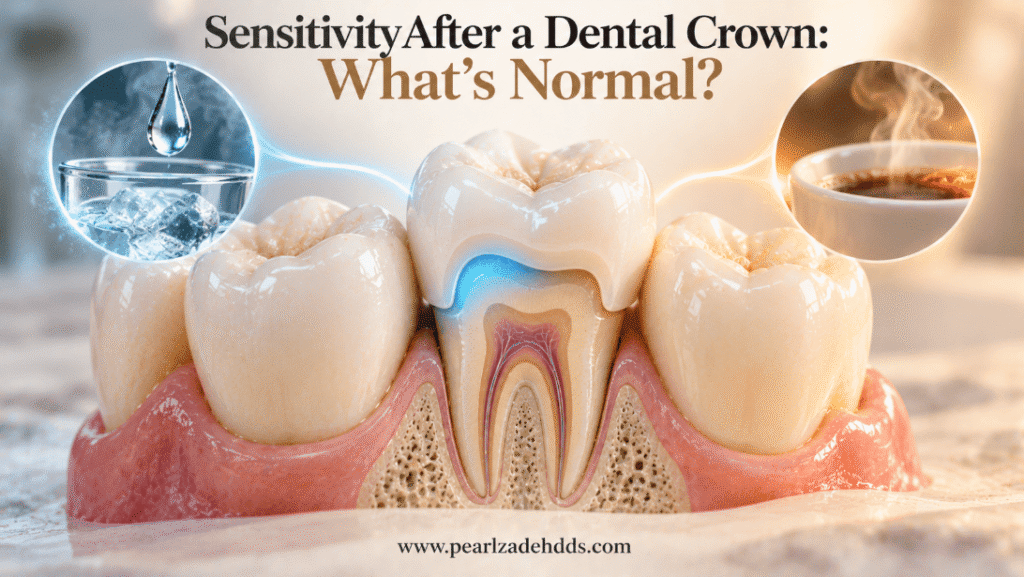
Your new crown looks right, but the tooth feels off. A cold drink may sting. Hot coffee may send a jolt. Chewing may feel tender, or the gum around the tooth may ache.
Some of these sensations can occur after crown treatment. The cause and the expected course vary, so the type and pattern of your symptoms matter. Mild sensitivity that is improving differs from pain that is severe, lingering, or getting worse. Your dentist can evaluate any symptom that concerns you.
Is Tooth Sensitivity Normal After a Dental Crown?
It can occur. Preparing a tooth for a crown means reshaping it. That can irritate the tooth for a time, and the tooth may react to temperature or pressure.
A 2019 literature review of 43 articles covers sensitivity after fixed prosthesis treatment. It notes that prepared vital teeth go through a pulpal inflammatory process during preparation. That response can be transient or persist. The authors called the evidence on mechanism and prevention not conclusive.
The American Association of Endodontists (AAE) says recent dental work may inflame the tooth’s pulp, causing a temporary symptom. It advises a dentist or endodontist to check the tooth if pain persists or worsens.
Not every patient has sensitivity. It does not always fade on its own. The tooth’s condition before treatment can shape how it reacts. Severity and pattern help separate mild, improving sensitivity from symptoms that need attention.
What Does Sensitivity After a Crown Feel Like?
Patients describe several patterns:
- Sensitivity to cold drinks or foods.
- Sensitivity to hot foods or beverages.
- Brief discomfort when biting or chewing.
- Tenderness around the treated tooth.
MouthHealthy is the ADA’s consumer site. It describes sensitive teeth as pain from a sip of hot coffee or a taste of ice cream. You may notice one pattern or several. Symptoms may come only with certain triggers, or they may seem to come and go. These symptoms can have different causes. No single symptom proves a specific diagnosis.
Why Is My Tooth Sensitive After a Crown?
Several explanations are possible. Your dentist can sort out which one fits:
- Irritation after tooth preparation and restorative treatment.
- Temporary inflammation of the dental pulp, the tissue inside the tooth.
- Changes in how the tooth responds to temperature.
- A crown or bite-related issue that needs assessment.
- An existing crack, decay, or another underlying tooth problem.
- Gum or surrounding tissue irritation.
Some of these have support. The AAE says a crack, decay, or a loose filling may cause sharp pain on biting. MouthHealthy lists decay, fractured teeth, worn fillings, and gum disease among causes of sensitivity.
Gum irritation near the crown edge can add tenderness. Bleeding gums are a separate concern from tooth sensitivity. Our article on bleeding gums after a dental crown covers it.
Pulp inflammation can be temporary or can persist, so the course varies. Sensitivity does not automatically mean the crown was poorly made. It does not automatically mean the tooth needs a root canal. The exam findings decide what comes next.
How Long Does Sensitivity Last After a Crown?
No single timeline applies to everyone. Duration depends on the tooth’s condition before treatment, the procedure, and the nature of your symptoms. Other individual factors play a role too.
Offices give different guidance. One student-written handout from the University of the Pacific dental school says some discomfort is expected. It says that discomfort usually fades in a couple of days. The handout asks patients to call if sensitivity lasts beyond a few days. Treat that as one example, not a rule for your tooth. Teeth that were inflamed, cracked, or deeply restored before treatment may respond differently from healthier teeth. Your dentist knows your history and can set expectations for your tooth.
Pattern matters more than a day count. The AAE describes lingering pain after hot or cold foods as a possible sign of pulp damage. It says this pain typically lasts more than 30 seconds. The page advises seeing a dentist or endodontist as soon as possible. A Journal of the Canadian Dental Association article describes irreversible pulpitis. Its listed symptoms include intense, lingering pain to temperature changes and spontaneous pain. Only a dentist can make that diagnosis.
Brief sensitivity that gradually improves differs from pain that lingers after a temperature trigger. Pain with no obvious trigger deserves attention, and so does pain that grows more intense. These descriptions do not let you diagnose yourself.
Is Sensitivity Different With Temporary and Permanent Crowns?
A temporary crown protects the prepared tooth while the permanent crown is made. Temporary crowns can differ from permanent ones in material, shape, and cement. The tooth may feel different at each stage.
The Pacific handout offers one example. For a temporary, it says sensitivity to cold or pressure may occur once the anesthetic wears off. A final crown differs, the handout says. It may feel tight, and hot or cold sensitivity may appear.
Follow your dentist’s instructions for each stage. Contact the office if a temporary crown loosens or falls out. A loose temporary may leave the tooth exposed. Call as well if your symptoms concern you. Mention any sensitivity you noticed during the temporary stage at your permanent crown visit.
What Can Help With Sensitivity After a Crown?
These steps are cautious and practical:
- Follow your dentist’s aftercare instructions.
- Avoid foods or drinks that reliably trigger discomfort while the tooth is sensitive.
- Choose comfortable foods if chewing is uncomfortable.
- Keep brushing gently and cleaning between your teeth daily.
- Ask your dentist or pharmacist about over-the-counter pain relief, given your health conditions and medications.
Give the tooth time to settle, but do not ignore changes. Note what you feel each day so you can describe it clearly.
Skip home remedies. MouthHealthy warns against placing aspirin on an aching tooth or gums because it may burn the tissue. Do not stop cleaning around the tooth. Never file or adjust the crown yourself.
When Should You Contact Your Dentist?
Call if you notice any of the following:
- Severe pain, or pain that is getting worse.
- Sensitivity that persists or lingers after a hot or cold trigger.
- Pain that begins without an obvious trigger.
- Pain when you bite.
- Swelling near the tooth or in the gum.
- A crown that feels loose or looks damaged.
When you call, describe the trigger, how long the pain lasts, and which tooth hurts. Those details help your dentist decide how soon to see you.
Mild sensitivity that is steadily improving usually needs no alarm. Still, you can always ask. Seek emergency medical care for facial swelling with trouble breathing or swallowing. Mayo Clinic advises going to the emergency room for trouble breathing or swallowing. It also advises it for facial swelling with fever when you cannot reach your dentist.
How Does a Dentist Evaluate Sensitivity After a Crown?
Not every patient needs every step. Your dentist may do the following:
- Ask when symptoms started and what triggers them.
- Examine the crown, the tooth, and the surrounding gums.
- Check your bite if the symptoms suggest a contact issue.
- Test the tooth’s response to temperature or other stimuli when appropriate.
- Take dental X-rays when indicated.
Your dentist may also look for decay or a crack, since either can cause similar symptoms.
X-rays can reveal damage or disease not visible during an exam, according to MouthHealthy. The right frequency depends on each patient. Per the AAE, cracked-tooth pain may come and go, which can make the source hard to find.
The findings show whether the symptoms reflect normal post-treatment irritation, the crown, or another dental problem. Your dentist can refer you to a specialist when the findings call for it. Ask what the exam found and what happens next, since treatment depends on the cause.
Can Sensitivity Mean Something Is Wrong With the Crown?
Sensitivity alone does not show that a crown is defective. The crown, the tooth underneath, the bite, and the surrounding tissues may all need review.
A dentist-focused article in Dental Economics says patients sometimes return with sensitivity, pain, or a bite that feels off. It adds that the cause is frequently a high spot on the new restoration.
An adjustment may help when an exam finds excessive bite contact. It will not address every cause of sensitivity. Other findings call for different care. Persistent sensitivity can also trace back to the tooth rather than the crown. That is why an exam looks at both.
How Can You Care for Your Crown While the Tooth Recovers?
Keep the routine simple. MouthHealthy advises brushing twice a day with a soft-bristled brush and ADA-accepted fluoride toothpaste. Clean between your teeth daily. Brush gently around the crown edge. Healthy gums support the tooth beneath the crown, so daily cleaning matters.
Follow any instructions for a temporary crown. Avoid habits that can damage restorations, such as biting ice or hard objects. Tell your dentist if you grind your teeth, since MouthHealthy says a dentist may recommend a night guard. Keep your recommended dental visits. Mention new symptoms at those visits, even if they seem minor.
For more detail, see our article on caring for a new dental crown.
Sensitivity After a Crown Depends on the Tooth and the Pattern
Mild sensitivity may occur after crown placement, but the cause and duration vary. Contact your dentist if symptoms are severe, persistent, worsening, or otherwise concerning. Dr. Pearl Zadeh evaluates crowns, addresses concerns after placement, and provides individualized restorative care. You can learn more about dental crown treatment at Pearl Zadeh DDS.
Call (818) 716-6722 or click the button below to schedule your consultation online.
Frequently Asked Questions
Some sensitivity can occur, especially after tooth preparation. It is not guaranteed, and it is not always harmless. Severe, persistent, or worsening symptoms deserve an exam.
No timeline fits everyone. Mild sensitivity that steadily improves differs from pain that lingers or intensifies. Follow your dentist’s advice and call if you are unsure.
The tooth may be irritated after treatment. Other causes include decay, a crack, or gum irritation. Only an exam can show which applies.
Pain on biting deserves a call. A bite contact issue is one possible cause, and a crack or other tooth problem is another. Your dentist can check.
Call for severe, persistent, worsening, or spontaneous pain, or pain that lingers after hot or cold. Also call for swelling, a loose crown, or damage.
The information above is for informational purposes only and is not a substitute for professional dental advice. Please schedule a consultation with Pearl Zadeh DDS to discuss your specific situation.