
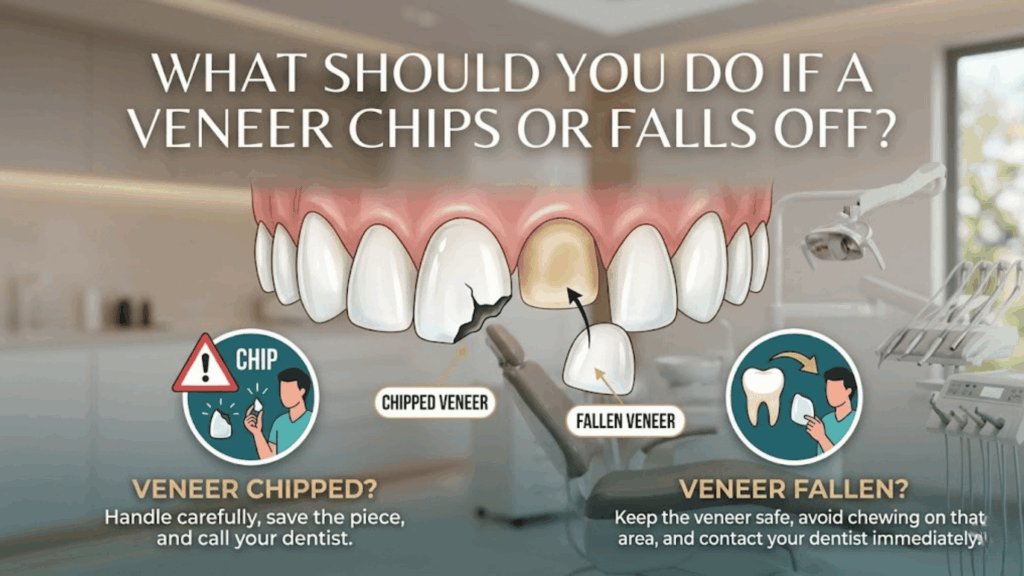
A chipped or dislodged veneer can feel urgent, especially when it involves a front tooth. In many cases, the situation is still manageable with prompt care.
The tooth underneath is often still healthy. The main concern is protecting it from sensitivity, damage, or further wear. What you do right after it happens can affect the outcome.
Some veneers can be reattached if they remain intact and the tooth surface is in good condition. Others may need replacement if the bond has failed or the veneer has cracked. A dental exam helps determine the right approach.
Immediate steps matter, including how the veneer is handled and how quickly dental care is scheduled. Treatment decisions depend on the condition of the veneer and the underlying tooth.
First Steps: What to Do Right Away
Stay calm and avoid chewing on the affected tooth. A damaged veneer is rarely a true emergency, but it still needs prompt attention to protect the tooth underneath.
If possible, locate any pieces of the veneer and store them in a clean container or small bag. In some cases, the original veneer can be reused if it remains intact. Even broken fragments can help the dentist assess the extent of the damage.
Contact your dentist as soon as possible to explain what happened and arrange an appointment. Most chipped veneers do not require same-day emergency care, but it is still important to be seen within a few days. Early evaluation helps prevent further damage and reduces the risk of exposing the tooth.
How to Care for a Damaged Veneer Before Your Visit
A damaged veneer can leave the underlying tooth sensitive to temperature and pressure. Simple care at home can help reduce discomfort until your dental visit.
Rinsing with warm salt water helps keep the area clean and can ease irritation. Try to avoid chewing on the affected side, and choose soft foods that do not require heavy biting. If the edge feels sharp, dental wax can be placed over the area to protect your cheek and tongue. This is available at most pharmacies and provides temporary comfort.
Over-the-counter pain relief may help if sensitivity develops. It also helps to avoid very hot or very cold foods and drinks until the tooth is evaluated.
Do not use household adhesives or super glue on the veneer. These substances can damage the tooth surface and make proper repair more difficult.
What to Avoid After a Veneer Chips or Falls Off
Some actions can make a damaged veneer more difficult to repair.
Do not try to reattach the veneer at home. Proper bonding requires dental materials and controlled conditions, and incorrect attempts can damage the tooth or lead to swallowing the veneer.
It is also important not to delay care. Leaving the tooth exposed for too long can increase sensitivity and raise the risk of decay or further damage. The area becomes more vulnerable to bacteria once the veneer is off or chipped.
Can Your Dentist Repair a Veneer?
In many cases, a damaged veneer can be repaired or replaced depending on the extent of the issue.
Your dentist will first examine the veneer and the underlying tooth. This includes checking how the bite comes together and identifying what caused the damage.
If the veneer is intact and has come off cleanly, it can often be reattached. This process is called rebonding and works best when the surface is undamaged.
Small chips may be repaired with tooth-colored composite material. This allows minor damage to be corrected without replacing the entire veneer.
When a veneer is cracked or structurally compromised, replacement is usually the better option. This involves taking a new impression or digital scan to create a custom restoration over two visits.
Repair or Replacement: What to Expect
Your dentist will discuss the best option with you. Here is a clear comparison of the two approaches.
| Feature | Composite Repair | Replacing the Veneer |
| When it is used | Small chips, minor edge fractures | Large breaks, cracks, or poor fit |
| Procedure | Done in one visit; adds material to the tooth | Requires two visits; involves new impressions and lab work |
| Durability | A good temporary fix; may not last as long | Provides a long-term, durable solution |
| Cost | More affordable as a quick fix | Higher cost due to lab fabrication and materials |
Long-Term Care for Your Veneers
Veneers can last for many years when they are cared for properly. Daily habits play a major role in protecting both the veneers and the natural teeth underneath.
A custom night guard is often recommended for patients who grind their teeth. It helps reduce pressure during sleep and protects the veneers from unnecessary stress.
It is also important to avoid using teeth as tools. Biting hard objects like ice, pens, or hard candy can increase the risk of chips or cracks.
Good oral hygiene supports long-term stability. Regular brushing and flossing help keep the gumline healthy and reduce the risk of decay around the edges of the veneer.
Routine dental visits allow early detection of small issues. Minor problems such as edge wear or loosening can often be managed before they progress.
When to Seek Immediate Help
Most veneer problems can wait a short time for a scheduled visit, but some symptoms need faster attention.
Severe or increasing pain should be evaluated as soon as possible. The same applies if you notice swelling, signs of infection, or ongoing bleeding around the tooth or gums.
A loose tooth or a veneer that comes off after a strong impact to the face also needs prompt assessment. These situations may involve deeper damage that requires immediate care.
Schedule Your Consultation with Dr. Pearl
A chipped veneer can feel stressful, but modern dentistry offers effective solutions. The key is acting quickly and contacting your dentist. Do not try to fix it yourself. Professional care protects your tooth and restores your smile.
Dr. Pearl Zadeh and her team are here to help. We specialize in repairing and replacing damaged veneers. We use advanced materials for natural-looking results, and we also focus on identifying the underlying cause. This helps prevent the problem from recurring.
Call our office at (818) 716-6722 or click the button below to schedule a consultation. Let us help you protect your smile.
Schedule a ConsultationFrequently Asked Questions
1. Can a dentist reattach a veneer that fell off?Yes, dentists can often rebond an intact veneer. The success depends on the condition of the tooth and the veneer. It also requires a clean, dry surface for the new bond.
2. Is a chipped veneer a dental emergency?No, a chipped veneer is not a true emergency. You can protect the tooth at home. Still, you should book an appointment with your dentist within a few days.
3. Can a dentist fix a chipped veneer without replacing it?Yes, for small chips, a dentist can use composite resin to repair the damage. This is a quick and less expensive option.
4. What happens if a veneer falls off and I swallow it?You will simply pass the veneer naturally. Contact your dentist to schedule a repair appointment.
5. How can I prevent my veneers from chipping in the future?Wear a custom night guard if you grind your teeth. Avoid chewing on hard objects. Practice good oral hygiene. Visit your dentist for regular checkups.