
You just whitened your teeth, and now every meal feels like a risk. Coffee in the morning, pasta sauce at dinner, a glass of red wine on the weekend. Plenty of people leave a whitening appointment convinced that one wrong bite will undo the whole thing.
It will not. The first week after whitening does not require an extreme diet, and the research on this is clearer than most people expect. The advice to spend a week eating only pale food is repeated widely, but it has less evidence behind it than its confidence suggests. What follows is what actually matters during that week, including where sensitivity fits in, which is a different question from staining.
What Can You Eat After Teeth Whitening?
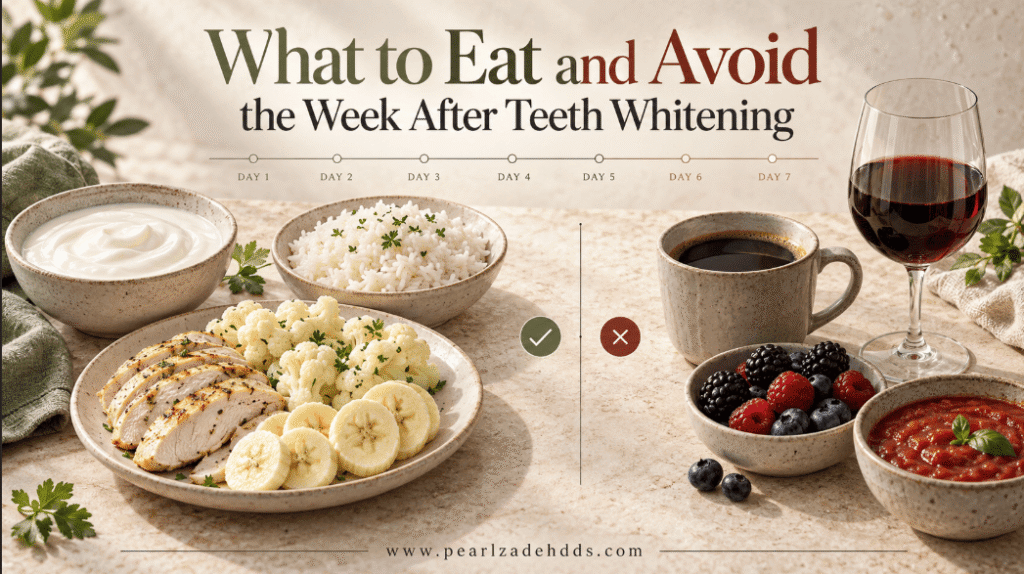
Most of what you normally eat is fine. If you want gentler options in the first day or two, plainer foods tend to feel comfortable: chicken, fish, eggs, rice, pasta, potatoes, bananas, plain yogurt, cheese, oatmeal, and water. Room-temperature foods are often easier if your teeth feel reactive.
Plenty of everyday foods that are not pale raise no real concern either. Apples, cucumbers, most vegetables, milk, and cheese are not meaningful staining risks. Crunchy raw vegetables and water are genuinely useful during any week, whitening or not, since they encourage saliva flow and help clear debris.
These are practical suggestions, not medical requirements. Nobody needs to live on white rice for a week to protect a whitening result, and framing the week that way tends to cause more stress than it prevents staining.
What Foods Should You Limit During the First Week?
The foods and drinks people usually have in mind are the deeply pigmented ones: coffee, black tea, red wine, dark sauces including tomato and soy, berries, beets, curry, and cola or other dark sodas.
The reason these get singled out is straightforward. They contain chromogens, deeply colored compounds that bind readily to the thin protein layer coating your enamel. That is the same mechanism that stained teeth in the first place, over months and years of exposure.
Choosing to go lighter on these for a few days is a reasonable precaution if it makes you feel better about your investment. It is worth being clear, though, that avoiding them has not been shown to be necessary for whitening to work. That distinction matters, and the next section covers why.
What About Coffee After Teeth Whitening?
You can drink coffee after whitening. Two separate things get tangled together in this question, and they are worth separating.
Coffee is pigmented, so over months and years it contributes to staining on anyone’s teeth, whitened or not. That is a long-term maintenance issue, not a first-week emergency. Coffee is also usually hot, and hot drinks can be uncomfortable if whitening has left your teeth temporarily sensitive. If your teeth feel reactive, letting coffee cool slightly or drinking it through a straw for a few days tends to help more than giving it up entirely. Finishing a cup within a reasonable stretch rather than nursing it across a whole morning also limits how long pigment stays in contact with your teeth. None of this is required. It simply helps if staining is on your mind.
Can You Drink Tea or Wine After Whitening?
Both are fine to drink, with the same caveats. Black tea is comparably pigmented to coffee, while herbal and green teas are generally lighter in color. Tea also contains tannins, which is part of why it stains as readily as it does over time. Red wine is pigmented and acidic, which is a combination that can feel uncomfortable on sensitive teeth in the days right after treatment. White wine is not a staining concern in the same way, though it is still acidic.
If you would rather be cautious for a few days, rinsing with water afterward and not sipping slowly over hours both reduce how long pigment sits against your teeth. Neither is a rule you must follow.
What Foods Can Make Your Teeth Feel Sensitive?
Sensitivity is a genuinely different concern from staining, and it is the more common reason people feel uncomfortable in the first few days. The American Dental Association identifies temporary tooth sensitivity and gum irritation as the most commonly reported side effects of whitening.
If you experience it, very hot and very cold items are the usual triggers: ice water, hot coffee or soup, ice cream. Acidic foods and drinks such as citrus, vinegar-based dressings, and carbonated drinks can also feel sharp. Very sweet foods bother some people too.
This does not mean these foods cause sensitivity or that everyone needs to avoid them. Many patients experience no sensitivity at all, and those who do often find it fades within a few days. If you do, favoring room-temperature and less acidic options for a few days is a practical response to how you actually feel rather than a precaution everyone should take. This is the one area where adjusting what you eat has a clear purpose: your own comfort. It is not about protecting the whitening result.
Do You Really Need a White Diet for Seven Days?
No, and this is where the evidence is genuinely worth knowing. A 2024 systematic review and meta-analysis set out to answer exactly this question. Reviewing 17 studies, including five clinical trials, the authors found no statistically significant color differences between patients who followed a restricted diet and those who did not, at any point during at-home bleaching or one month after finishing. The same held for in-office treatment one month afterward. Their conclusion was direct: dietary restrictions are not necessary during or after bleaching procedures. That covered both at-home and in-office treatment.
A separate network meta-analysis published in the Journal of Dentistry reached a similar conclusion from seven clinical trials. Summarizing that review, ADA News reported that patients who followed a white diet experienced comparable color changes to those who drank grape juice, coffee, tea, wine and cola or followed an unrestricted diet.
Worth being careful here, because it is easy to swing from one myth to the opposite one. This research does not say pigmented foods never stain teeth. It says restricting them during and immediately after bleaching did not measurably improve the whitening outcome in these trials. Over the longer run, what you drink regularly still affects how your teeth look.
Both reviews are worth reading on their own terms. The network meta-analysis drew on seven clinical trials out of more than a thousand records screened, a reminder that this question has been studied less extensively than the confidence of typical advice would suggest. The 2024 review included 17 documents in total, but 12 of those were laboratory studies, and only the clinical trial data went into its meta-analysis. That distinction matters, because laboratory conditions expose enamel samples to pigment far more intensely than a normal diet does.
It also does not mean your aftercare instructions are pointless. If your dentist gave you specific guidance based on your treatment and your teeth, follow it. General patient anxiety about ruining results with one cup of coffee is what the evidence should relieve.
What Should You Do If You Accidentally Eat or Drink Something That Stains?
Nothing dramatic. One glass of red wine or one bowl of tomato pasta does not undo whitening. Given what the research above found across entire treatment periods, a single meal is not going to reverse your result. The trials that compared restricted and unrestricted diets were not measuring one lapse; participants ate and drank pigmented items throughout, and the outcomes still came out comparable.
If you want to do something practical, rinse your mouth with water afterward and carry on with your normal brushing and flossing routine. Ordinary oral hygiene matters considerably more here than any dietary rule, and it is worth not losing sight of that while focusing on food.
One caution that does have a basis: after something acidic, wine or citrus for example, it is generally better to rinse with water and wait a while before brushing rather than brushing straight away. Enamel is temporarily softened after an acid exposure. That applies to everyone, not only people who have just whitened.
When Can You Return to Your Normal Diet?
There is no biological switch that flips on day seven. The one-week frame is a common convention rather than a documented deadline, and the research above found no measurable diet effect even during active treatment. If you have been avoiding certain foods and feel fine, there is no particular moment you need to wait for.
The more useful framing is that your first few days are about comfort, particularly if you have any sensitivity, while your longer-term habits influence how your results hold up. Our article on how long whitening results last covers that longer view, including how diet, tobacco use, and oral hygiene all factor into maintenance. That is a separate question from what to eat this week.
When Should You Contact Your Dentist?
Whitening sensitivity typically remains temporary and settles within a few days. Contact your dentist if your symptoms do not follow that pattern. Persistent sensitivity, pain instead of brief sensitivity, or ongoing gum irritation may need attention. The same applies to any symptom that feels more severe than expected. Our guide to whitening with sensitive teeth explains how dentists manage sensitivity, including for people who experience it regularly.
If your results came out more limited than you expected, diet is unlikely to be the explanation. Our breakdown of why whitening sometimes doesn’t work covers the reasons that actually tend to be responsible, including the type of discoloration involved and existing dental restorations.
Speak With Dr. Pearl Zadeh About Whitening
You do not need to fear food after whitening. Sensible choices in the first few days can keep you comfortable, especially if your teeth feel sensitive, but a strict long-term diet is not the goal and the evidence does not support one.
If you have questions about aftercare, sensitivity, or whether professional whitening is a good fit for your teeth, Dr. Pearl Zadeh can talk it through with you. Call (818) 716-6722 or click the button below to schedule your consultation online.
Frequently Asked Questions
Most of your normal diet is fine. If your teeth feel sensitive, room-temperature and less acidic foods tend to be more comfortable for a few days.
No food is strictly off-limits. Some people choose to go lighter on deeply pigmented items like coffee, red wine, and dark sauces, though research has not shown this is necessary.
Yes. If your teeth feel sensitive, letting it cool slightly may help. Coffee contributes to staining over the long term rather than ruining a fresh result.
No. Systematic reviews of clinical trials found no significant difference in whitening outcomes between patients who restricted their diet and those who did not.
There is no evidence-based deadline. Many people choose a few cautious days, but avoidance has not been shown to change the outcome.
This article is for informational purposes only and is not a substitute for professional dental advice. Please schedule a consultation with Pearl Zadeh DDS to discuss your specific situation.