
You’ve decided to get a second opinion. That part felt manageable. Now you’re sitting in your car in the parking lot, and a different kind of question shows up: what actually happens once you walk in there? Do you need to bring anything? Will they take new X-rays? Are you supposed to decide something on the spot?
A second opinion is usually a conversation and an evaluation, not an appointment where you’re pressured to pick a new dentist or commit to treatment right then. Here’s what the actual visit tends to look like.
What Is a Dental Second Opinion?
Another dentist reviews your dental situation and the treatment you’ve already been recommended, then offers an additional professional perspective on it. That dentist might agree with the original recommendation, suggest a different approach, recommend gathering more information first, walk through alternatives you hadn’t considered, or in some situations suggest monitoring rather than immediate treatment. Our broader look at when to seek a second opinion covers the reasoning behind that decision in more depth. A second opinion isn’t set up to hunt for something wrong with your first dentist’s plan. It’s simply another set of eyes on your specific situation.
What Should You Bring to the Appointment?
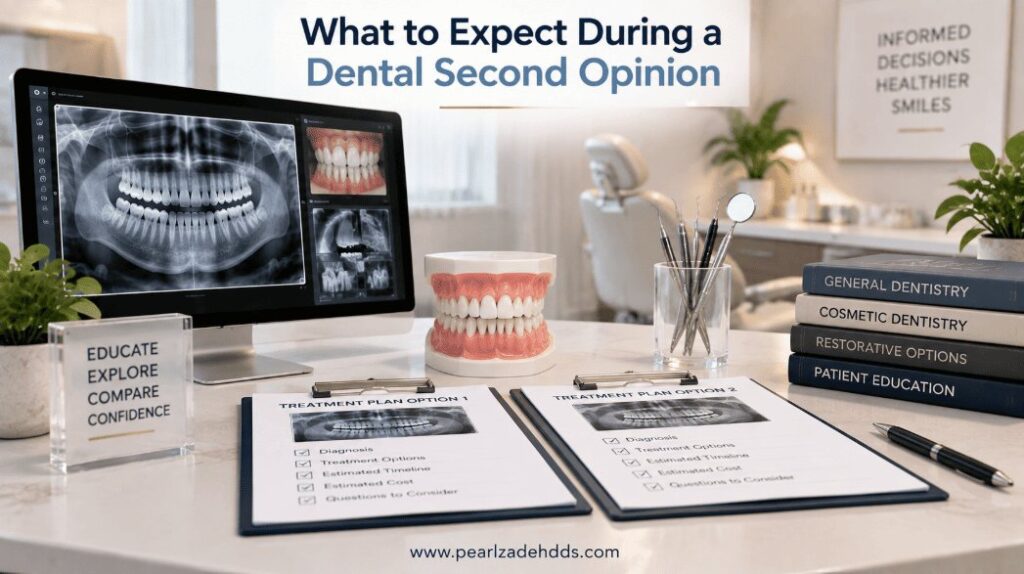
Having the right information on hand makes the visit more useful. That generally includes recent dental X-rays, any treatment plan you’ve already received, your dental records, a list of current medications if that’s relevant to your situation, information about previous dental work, details about your symptoms or concerns, and the specific questions you want answered. The dentist won’t necessarily need every single record you have. Bringing what’s genuinely relevant is enough. You don’t need to track down your entire dental history before you’re allowed to schedule.
Will You Need New X-Rays?
It depends on what you already have. If recent, high-quality X-rays exist, the dentist reviewing your case may be able to work directly from those, especially if your original office can transfer them ahead of time. New imaging sometimes makes sense if your existing images aren’t available, are outdated, are incomplete, or simply don’t show the specific area that needs evaluation. Nobody should be ordering imaging you don’t actually need just as a formality.
What Happens When You First Arrive?
The appointment usually starts with a conversation rather than jumping straight into an exam. Expect questions about why you’re seeking another opinion, what treatment was actually recommended, any symptoms you’re currently experiencing, your previous dental treatment, and what specifically concerns you about the proposed plan. This part is meant to feel like a real conversation, not an interrogation.
Will the Dentist Examine Your Teeth?
Usually, yes, when a direct look at your actual condition matters for the evaluation. Depending on what’s being reviewed, that might include your teeth, your gums, any existing restorations, your bite, visible tooth wear, whatever area is causing discomfort, and your jaw movement if that’s relevant to the situation. How much of an exam happens depends heavily on the type of treatment being reviewed. A second opinion on a single filling looks different from one covering several teeth.
Will the Dentist Review Your Existing Treatment Plan?
Yes, and this is usually a central part of the visit. The dentist can walk through the recommended treatment and discuss what problem it’s actually meant to address. That might involve looking at the diagnosis itself, the recommended procedures, the treatment sequence, any existing dental work in the area, possible alternatives, and what outcome you can realistically expect. This is common territory for significant restorative work, including proposed crowns or bridges. Reviewing a treatment plan doesn’t automatically mean rejecting it. Plenty of reviews end with the plan making just as much sense as it did originally.
Can a Second Dentist Give You a Different Treatment Plan?
Yes, sometimes. Dentists can approach the exact same problem differently while still working from an identical diagnosis. Differences often show up in the materials used, the treatment sequence, timing, how many procedures are involved, a more conservative versus a more extensive approach, or whether treatment gets staged over time. A different recommendation doesn’t automatically mean the first dentist was wrong. It often just reflects a genuinely different, reasonable way of approaching the same situation.
What Questions Should You Ask?
A few genuinely useful questions to bring with you: What problem are we actually treating? Is treatment necessary right now? What happens if I wait? Are there alternatives worth considering? What are the benefits and downsides of each option? How will this treatment affect my teeth and bite? How long should it realistically last? What maintenance will I need afterward? What are the possible risks? And is there anything else I should be asking before I decide?
Can You Ask About Less Invasive Options?
Yes, when that’s genuinely appropriate for your situation. Reasonable questions include whether a tooth could simply be monitored instead of treated right away, whether a smaller restoration might work, whether treatment could be staged rather than done all at once, whether different restorative materials are available, or whether a different sequence makes sense. This doesn’t mean conservative treatment is automatically the better choice. The right option depends entirely on your actual dental condition, not a general preference for doing less.
What If the Second Opinion Agrees With the First?
That can genuinely be reassuring, and it doesn’t mean the visit was pointless. A second opinion doesn’t need to produce a different diagnosis to be useful. Agreement can help you feel more confident about the diagnosis itself, the proposed treatment, the timing, the alternatives you were given, and what outcome to expect. Confirmation is a legitimate, valuable result, not a consolation prize.
What If the Two Opinions Are Very Different?
Ask both dentists directly why they recommend their specific approach, what problem each plan is actually addressing, why one option might be preferable to the other, what happens if treatment gets delayed, and what the risks and long-term expectations genuinely are. If your situation is particularly complex, a specialist consultation can sometimes add another useful layer of perspective. Don’t default to whichever plan sounds easier or happens to cost less without actually understanding why the two recommendations differ.
Will You Be Pressured to Start Treatment?
You should feel comfortable asking questions and taking reasonable time to consider significant dental treatment. A second-opinion consultation is meant to give you room to ask questions and actually understand your options, not to rush you into a decision. Every practice runs its consultations a little differently, so this isn’t a claim about how every office operates. The American Dental Association’s own guidance on informed consent frames it as an ongoing conversation rather than simply a signature on a form, which is the standard a good consultation should actually meet.
How Long Does a Dental Second Opinion Take?
There’s no single length that applies to every appointment. It depends on how complex your dental situation is, whether an examination is actually needed, what records and imaging are already available, how many procedures are being reviewed, and how many questions you have. A straightforward review can move quickly. A second opinion on extensive treatment naturally takes longer.
Do You Have to Choose the Second Dentist?
No. Getting a second opinion doesn’t obligate you to transfer your care anywhere. You can use the consultation purely to gather information, then decide what actually feels right for you afterward, whether that means staying with your original dentist, moving forward with the second one, or taking more time before deciding anything.
What Happens After the Consultation?
You might leave with a clearer understanding of your diagnosis, confirmation of the original recommendation, additional treatment options you hadn’t considered, questions worth bringing back to your current dentist, or in some cases a recommendation for specialist evaluation. Whatever you walk away with, it’s worth taking real time to compare what you were told before making any major decision.
How Should You Compare What You Were Told?
A simple framework helps when you’re weighing two recommendations against each other:
- Diagnosis: are both dentists actually treating the same problem?
- Treatment goal: what is each plan trying to accomplish?
- Alternatives: were different options actually discussed?
- Timing: does treatment need to happen immediately?
- Longevity: how long is the proposed treatment expected to last?
- Maintenance: what will you need to do afterward?
- Risks: what are the possible complications or limitations?
- Cost: what does the quoted price actually include?
Price is worth considering alongside the treatment itself, not as a separate, standalone factor.
When Is a Second Opinion Especially Useful?
A few situations tend to make a second opinion particularly worthwhile: extensive treatment plans, multiple procedures, major restorative work, full-mouth reconstruction, cosmetic treatment involving irreversible changes such as veneers, significant bite changes, an unclear diagnosis, conflicting recommendations, or treatment you simply don’t fully understand yet. None of this means routine dental care needs a second opinion attached to it.
What to Expect From a Good Second Opinion
A genuinely useful consultation should leave you with a clearer picture of what’s actually happening, why treatment was recommended in the first place, what real options exist, what happens if you wait, and what outcomes you can reasonably expect. The goal is clarity, not necessarily a different treatment plan. Sometimes those turn out to be the same thing. Often they aren’t, and that’s fine too.
Speak With Dr. Pearl Zadeh About Your Dental Treatment Options
You deserve to actually understand your dental treatment before making a significant decision about it. Dr. Pearl Zadeh, a member of the American Dental Association and California Dental Association, can review your dental concerns, examine your teeth and bite when appropriate, discuss your treatment options, and answer your questions about recommended care.
Call (818) 716-6722 or use the website’s consultation booking option.
Frequently Asked Questions
Do I need to bring anything to a dental second opinion?
Recent X-rays, your existing treatment plan, and relevant dental records make the visit more useful, though the dentist may not need everything you have.
Will I need new X-rays for a second opinion?
It depends on whether your existing images are recent, complete, and available. New imaging is only necessary when the existing images don’t cover what needs evaluation.
Am I obligated to switch dentists after a second opinion?
No. A second opinion is simply a chance to gather more information. You decide what to do with it afterward.
What if the second dentist agrees with my original treatment plan?
That’s a genuinely useful outcome. Confirmation can give you more confidence in the diagnosis and plan you were originally given.
How long does a second opinion appointment usually take?
It varies based on the complexity of your case, whether an exam is needed, and how many questions you bring. There’s no fixed length that applies to everyone.
This article is for informational purposes only and is not a substitute for professional dental advice. Please schedule a consultation with Pearl Zadeh DDS to discuss your specific situation.