
A gap between your teeth can be a small detail that affects how you feel about your smile. You may have lived with it for years, or you may have noticed it changing recently.
The good news is that you have more than one cosmetic option. Dental bonding and veneers can both improve the appearance of gaps, but they solve the problem in very different ways. The right choice depends on the size of the gap, your tooth structure, and the type of result you want to achieve.
How Bonding Closes a Gap
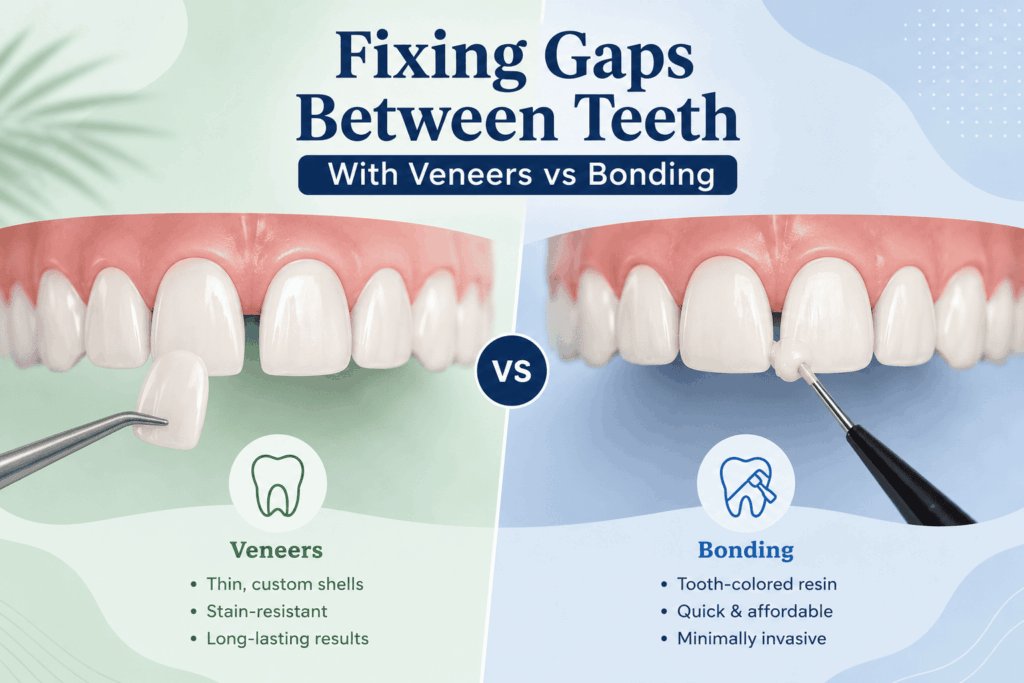
Dental bonding uses a tooth-coloured composite resin that your dentist applies directly to the teeth beside the gap. Your dentist carefully shapes the material to add width and improve tooth proportions.
After shaping the resin, your dentist hardens it with a curing light and polishes the surface. This helps the bonding blend with your natural teeth.
Bonding usually requires little to no enamel removal, which makes it a more conservative cosmetic option. Many patients complete treatment in a single appointment.
Because bonding adds material to the tooth surface, it often works best for smaller gaps. It can also help when patients need minor shape corrections or small cosmetic improvements.
How Veneers Close a Gap
Veneers approach gap correction in a different way. Instead of adding material directly to the tooth, your dentist places a custom-made shell over the front surface.
The veneer design can slightly change tooth width and shape to create a more balanced smile. Your dentist plans the size and proportions carefully so the teeth look natural together.
Our porcelain veneers guide and composite veneers overview explain how each material works and what patients can expect from each option.
Traditional veneers usually require removing a thin layer of enamel. This allows the veneer to sit naturally against the tooth instead of appearing bulky.
Veneer treatment often requires multiple visits, including planning, preparation, and final placement. Because veneers change the visible shape of the tooth, they can help create a more complete smile transformation when several cosmetic concerns exist.
Veneers vs Bonding for Gaps: Key Differences
The table below summarizes the general differences between the two approaches specifically as they relate to closing a gap. Individual results vary based on your teeth and treatment plan.
| Consideration | Bonding | Veneers |
| How it closes the gap | Composite resin is added to the edges of the teeth bordering the gap | Custom shells are made slightly wider than the natural tooth to fill the space |
| Tooth preparation | Minimal to none | Typically involves removing a thin layer of enamel |
| Visits typically needed | Often one | Usually two or more |
| Typical durability | Generally shorter, varies by habits and maintenance | Generally longer, particularly with porcelain |
| Stain resistance | More prone to staining over time | Porcelain generally resists stains well |
| Reversibility | Often considered more conservative | Generally not considered reversible |
| Best-suited gaps | Small to moderate gaps, especially isolated ones | Larger gaps, or gaps addressed alongside other cosmetic goals |
Neither option is universally better for every gap. Each tends to fit different situations, which is part of why an in-person evaluation matters more than a general preference for one approach.
What Determines Which Option Fits Your Gap?
A dentist looks at your entire smile before recommending bonding or veneers. The best option depends on why the gap exists, your tooth condition, and the result you want.
Size of the Gap
The size of your gap plays a major role in treatment planning. Smaller gaps often respond well to bonding because your dentist only needs to add a small amount of material.
Larger gaps may require more careful planning. Adding too much composite resin can sometimes make teeth look wider than natural.
Cleveland Clinic notes that gaps between teeth, also called diastema, often involve cosmetic concerns. However, a new or changing gap may sometimes relate to gum problems. Your dentist can evaluate the cause before recommending treatment.
What Is Causing the Gap?
The reason behind the gap matters as much as its size. Some gaps develop because teeth and jaw size do not match. These cases may respond well to cosmetic treatment.
Other gaps may connect to habits like tongue thrusting or changes in gum health. Your dentist may need to address these factors first. This helps reduce the chance of the gap returning after treatment.
Tooth Shape and Alignment
A gap rarely exists as the only cosmetic concern. Some patients also have teeth that look small, uneven, or differently shaped.
Veneers can sometimes address several concerns at once because they change the visible shape of the tooth. Bonding focuses more on adding small amounts of material where needed.
Enamel Condition
Your dentist checks your enamel before recommending veneers. Veneers need a stable tooth surface for proper bonding.
Bonding usually requires less change to your natural tooth structure. This makes it a more conservative choice for many minor corrections.
Bite Forces
Your bite affects how well cosmetic treatment holds up over time. The pressure between your upper and lower teeth can place stress on bonding or veneers.
Patients who grind or clench may put more stress on their restorations. Bonding may chip more easily under heavy pressure. Porcelain veneers often provide greater durability, but no material can resist all damage from excessive force.
Your Overall Smile Goals
Your goals help determine which option makes the most sense. If you only want to close a small gap, bonding may provide the improvement you need.
Some patients may also consider veneers for one or two teeth to create a more balanced appearance.
If you want to change tooth colour, shape, and several areas of your smile, veneers may fit better as part of a larger cosmetic plan.
Existing Dental Work
Previous dental work can influence your treatment options. Old fillings, crowns, or bonding near the gap may affect colour matching and overall appearance.
Your dentist reviews these restorations before recommending a treatment approach. This helps create a result that blends naturally with your existing smile.
When Bonding Is Often the Better Fit
Bonding often works well for smaller gaps between teeth that are otherwise healthy and similar in colour. It allows your dentist to add small amounts of composite resin and improve tooth shape without major changes.
Many patients choose bonding because it offers a more conservative approach. It may also suit those who want a quicker improvement or prefer not to alter their enamel.
Because dentists can adjust or repair bonding more easily, it can appeal to patients who want a simple first step before considering more involved treatment.
When Veneers Are Often the Better Fit
Veneers may suit patients with larger gaps or multiple cosmetic concerns. They can change tooth shape, colour, and proportions at the same time.
Patients who want a more complete smile transformation often consider veneers because they offer more control over the final appearance.
If you are comparing veneer materials, our comparison of porcelain and composite veneers explains the differences in more detail.
Can a Single Veneer or Bonding Close Just One Gap?
In many cases, yes. A single gap does not always require treatment across the entire smile.
Your dentist can focus on the affected teeth and match the colour, shape, and proportions carefully. Our discussion of getting veneers on just one tooth explains how dentists approach smaller cosmetic corrections.
What About Very Large Gaps?
Very wide gaps can present different challenges. Adding enough bonding material or making veneers wider may affect how natural the teeth look.
In these situations, your dentist may discuss orthodontic treatment. Braces or clear aligners can physically move teeth closer together before or instead of cosmetic treatment.
The best approach depends on your bite, tooth position, and overall smile goals.
Combining Gap Closure With a Broader Smile Makeover
Sometimes, a gap is only one part of a larger cosmetic concern. You may also want to improve tooth colour, shape, or overall smile balance.
Our overview of what a smile makeover typically includes explains how dentists combine different cosmetic treatments into one personalised plan.
Your dentist can help you decide whether treating only the gap or addressing multiple concerns makes more sense.
How Cost Factors Into the Decision
Bonding usually costs less than veneers because it requires less material, fewer appointments, and no dental laboratory process. However, the lowest upfront cost does not always represent the best long-term value.
Bonding may need adjustments or repairs over time, while veneers involve a larger initial investment. Your dentist considers your goals, treatment needs, and expected maintenance when comparing options.
The total cost depends on factors such as the number of teeth treated, chosen material, and case complexity. A consultation provides a more accurate estimate than a general comparison.
Choosing a Cosmetic Dentist in Woodland Hills
Closing a gap successfully requires careful planning. Your dentist needs to consider your tooth shape, bite, smile goals, and overall oral health.
A cosmetic dentist should recommend treatment based on your specific needs rather than using the same approach for every patient.
Patients considering veneers in Woodland Hills can expect a personalised evaluation before choosing between bonding, veneers, or other options. our overview of cosmetic dentistry in Woodland Hills explains the broader treatments available if your smile goals extend beyond gap closure.
Schedule a Consultation With Dr. Pearl Zadeh
The right choice between bonding and veneers depends on your gap, tooth condition, and smile goals. A personalised evaluation can help you understand which option fits your needs.
Dr. Pearl Zadeh and her Woodland Hills team can examine your smile and explain whether bonding, veneers, or another treatment approach can help you achieve your goals.
Call (818) 716-6722 or click the button below to schedule your consultation online.
Schedule a ConsultationFrequently Asked Questions
1. Is bonding or veneers better for closing a gap?Neither is universally better. Bonding tends to suit smaller, isolated gaps and a more conservative approach, while veneers often fit larger gaps or cases involving other cosmetic goals. Your dentist can evaluate which fits your specific situation.
2. How long does bonding for a gap typically last?Bonding’s lifespan varies based on habits, oral hygiene, and maintenance, and it’s generally shorter than veneers. Touch-ups or repairs over time are common and usually straightforward.
3. Can veneers close a large gap?Often, yes, though very large gaps can sometimes require orthodontic treatment first or instead, since building up too much width with a veneer alone may look disproportionate.
4. Does closing a gap with bonding hurt?Bonding is generally not painful and typically doesn’t require anesthesia, since it usually involves little to no alteration of the tooth itself.
5. Will veneers for a gap look natural?Often, yes, when shade and proportion are planned carefully. Your dentist evaluates how a proposed veneer width and shade will look next to your other teeth before finalizing the design.
Related Articles:
- Porcelain Veneers: A Practical Guide for Patients
- Composite Veneers: Everything You Need to Know
- Porcelain vs Composite Veneers: Choosing the Right Option for Your Smile
- No-Prep Veneers and Traditional Veneers: What Is the Difference?
- Preparing for Your Veneers Appointment: A Complete Guide
- Veneers vs Teeth Whitening: Which One Should You Choose?
- Dental Bonding vs Veneers: Which Option Is Right for You?
- Can Veneers Fix Crooked Teeth? What They Can and Can’t Do
- Do Dental Veneers Look Natural or Fake? What Makes the Difference