
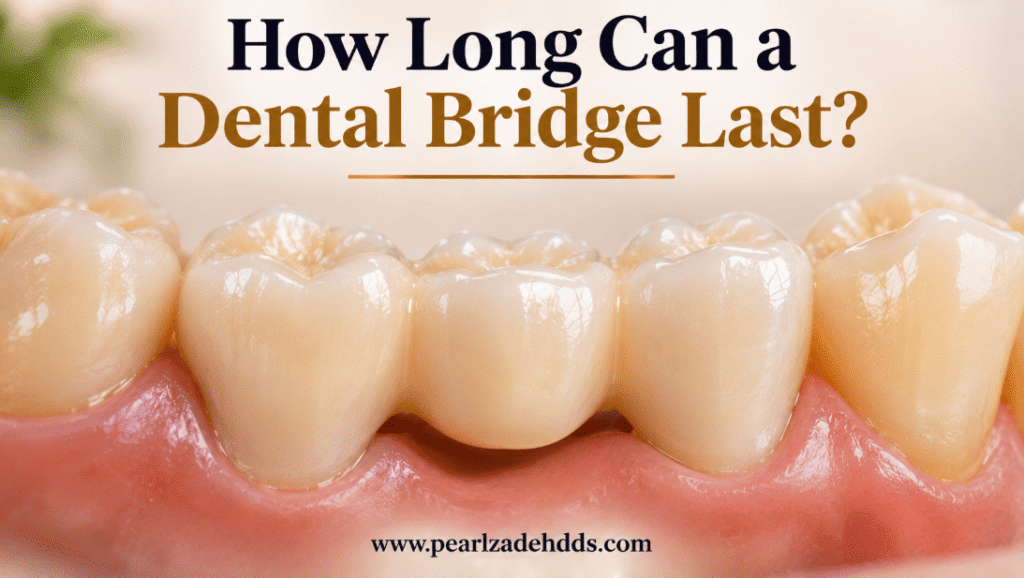
How long a dental bridge lasts depends on several factors. These include its design and materials, the condition of the supporting teeth, oral hygiene, and daily habits. Many bridges remain in place for years, but their lifespan varies from person to person.
Daily cleaning and regular dental checkups also matter. They help keep the bridge and supporting teeth healthy and allow the dentist to spot problems before they become more serious.
How Long Does a Dental Bridge Usually Last?
Cleveland Clinic estimates that dental bridges typically last five to 15 years. Some may last longer with proper care.
This range is a general estimate, not a fixed replacement schedule. A bridge’s lifespan depends on several factors, including:
- Supporting teeth: Decay or damage to the teeth holding the bridge can affect its stability.
- Gum health: Healthy gums help support the teeth beneath and around the bridge.
- Daily care: Regular brushing and cleaning beneath the bridge help limit plaque buildup.
- Dental checkups: Routine examinations allow the dentist to spot wear, damage, or other problems.
A bridge does not need replacement simply because it has been in place for a certain number of years. The dentist checks its condition and recommends replacement when wear, damage, or problems with the supporting teeth make it necessary.
Does the Type of Dental Bridge Affect How Long It Lasts?
Yes. Bridge design affects how it is supported, how chewing forces are distributed, and what maintenance it may need. The different types of porcelain bridges have different structures and uses.
Traditional Dental Bridges
A traditional bridge uses crowns placed over the natural teeth on either side of the gap. Cleveland Clinic explains that this design is generally used when healthy supporting teeth are present on both sides of the missing tooth.
The bridge depends on these teeth for support. Decay, damage, or gum problems affecting them can also affect the bridge.
Cantilever Bridges
A cantilever bridge is supported by a crown on one side of the gap rather than both sides. Cleveland Clinic notes that this design is not as strong as a traditional bridge.
Since one supporting tooth carries the chewing forces, the amount and direction of pressure on that tooth matter when deciding whether this design is suitable.
Maryland Bridges
A Maryland bridge uses thin wings bonded to the backs of neighboring teeth. Cleveland Clinic notes that this design may not withstand the chewing forces placed on back teeth.
Maryland bridges are also called resin-bonded bridges. An NIH database summarizes a review that reported technical complications, including debonding, with these bridges. Debonding occurs when the bridge loses its bond to the supporting teeth, which may require repair or further treatment.
Implant-Supported Bridges
An implant-supported bridge attaches to dental implants rather than relying on natural teeth for support. Its maintenance and possible complications differ from those of tooth-supported bridges.
Dr. Pearl does not perform implant surgery. Patients considering this option should discuss implant placement and restoration with a qualified implant provider.
What Factors Affect the Lifespan of a Dental Bridge?
Several factors can affect how long a dental bridge stays in good condition:
- Oral hygiene: Plaque buildup around the supporting teeth and gumline can contribute to decay and gum problems.
- Supporting teeth: Decay, fractures, or other damage can weaken the natural teeth that hold a traditional bridge.
- Gum health: Healthy gums help support the teeth around the bridge.
- Bite pressure: Heavy chewing forces, clenching, and grinding can put extra stress on a bridge. Mayo Clinic lists fillings, crowns, and other dental repairs among the things severe teeth grinding can damage.
- Material and construction: Bridge materials have different physical properties, but no single material guarantees a longer lifespan.
- Fit and placement: The fit of the bridge and the condition of the supporting teeth affect how well it functions.
- Daily habits: Chewing ice or biting hard objects can chip or damage dental restorations.
Does a Porcelain Dental Bridge Last as Long as Other Materials?
Porcelain is a tooth-colored material commonly used in dental bridges. However, its lifespan depends on more than the material itself. The bridge design, supporting teeth, bite pressure, and daily care all play a part.
The American Dental Association lists gold, alloys, porcelain, and combinations of these materials as options for dental restorations. Cleveland Clinic also explains that dentists can make custom bridges to match the shade of natural teeth. You can read more about porcelain bridges and what to know before your visit.
Porcelain bridges can chip, wear, or sustain other damage over time. There is no basis for saying they always last longer or shorter than metal-based alternatives.
Dr. Pearl’s practice offers porcelain dental bridges and focuses on metal-free ceramic restorations. During a consultation, she can assess the condition of the supporting teeth and discuss suitable options.
How Can You Make a Dental Bridge Last Longer?
Daily care helps keep a dental bridge and its supporting teeth in good condition. These habits can help:
- Brush twice a day with a soft-bristled toothbrush.
- Clean beneath the replacement tooth every day.
- Use a floss threader or super floss to reach beneath the bridge.
- Consider a water flosser as an additional cleaning aid.
- Brush carefully around the supporting teeth and gumline.
- Attend regular dental examinations and professional cleanings.
- Avoid chewing ice or hard objects that could damage the bridge.
- Ask your dentist about a custom night guard if you grind or clench your teeth.
Cleveland Clinic recommends cleaning beneath a bridge daily with a floss threader or an interdental brush. It also advises avoiding very hard or chewy foods, as well as habits such as chewing ice, pens, or fingernails.
If you grind or clench your teeth, a night guard may help protect your teeth and dental restorations from excessive pressure. These habits reduce some risks, but they cannot prevent every problem or guarantee how long a bridge will last.
When Might a Dental Bridge Need Repair or Replacement?
Certain changes may indicate that a dental bridge needs attention:
- The bridge feels loose or shifts when you bite.
- You notice visible cracks or chips.
- Pain or sensitivity develops around the supporting teeth.
- Food repeatedly gets trapped beneath the bridge.
- The bridge no longer feels comfortable when you bite.
- Your gums become swollen or continue to bleed.
These signs do not necessarily mean the bridge needs replacement. A dentist must examine the bridge, supporting teeth, and surrounding gums to determine the cause. Depending on the condition, an adjustment, repair, or replacement may be appropriate.
Our article on signs that a dental bridge may need replacement explains some changes to watch for.
Do not try to repair, tighten, or adjust a loose bridge yourself. If replacement is recommended, you can also seek a second opinion before proceeding with a crown or bridge.
How Often Should a Dental Bridge Be Checked?
Even if a dental bridge feels comfortable, regular dental examinations help check for changes that may not be easy to notice at home. During an examination, the dentist can assess:
- The bridge’s fit and stability.
- The supporting teeth and surrounding gums.
- Signs of decay or damage.
- Changes in the bite or wear on the restoration.
- Any concerns that may need treatment.
The recommended examination schedule depends on your oral health and dental needs. Dr. Pearl can advise how often your bridge should be checked.
Schedule a Consultation With Dr. Pearl About Your Dental Bridge
A dental examination allows Dr. Pearl to check your bridge, supporting teeth, and surrounding gums. She can discuss any signs of wear or damage and whether the bridge needs an adjustment, repair, or replacement.
Dr. Pearl Zadeh DDS offers porcelain dental bridges in Woodland Hills, California. Whether you already have a bridge or are considering one, you can schedule a consultation to discuss your dental needs.
Call (818) 716-6722 or click the button below to schedule your consultation online.
Frequently Asked Questions
Cleveland Clinic reports an average of five to 15 years, with some lasting longer. That figure is an estimate, not a guarantee. Design, supporting teeth, care, and habits all shift the result.
For some patients, possibly. Cleveland Clinic says some bridges last even longer than the average with proper care and maintenance. No one can promise a specific number of years.
Porcelain restorations can wear, chip, or be damaged over time. How quickly depends on the bite, the supporting teeth, the design, and maintenance. Regular examinations help track the bridge’s condition.
Sometimes. The answer depends on the damage and on the health of the supporting teeth. A dentist must examine the bridge first. Patients should not attempt repairs themselves.
It supports the bridge and the supporting teeth. Cleveland Clinic advises daily cleaning underneath with floss threaders or interproximal brushes. Cleaning cannot prevent every complication or guarantee a lifespan.
The information above is for informational purposes only and is not a substitute for professional dental advice. Please schedule a consultation with Pearl Zadeh DDS to discuss your specific situation.