
A toothbrush can leave your teeth feeling clean without leaving your gums sore afterward. If your bristles look worn out quickly, your gums feel tender after brushing, or certain teeth have become more sensitive, your brushing pressure may be part of the reason.
The problem is not brushing thoroughly. Your teeth and gums need regular plaque removal. The issue is how much force you use to get there. Pressure, brushing technique, the type of toothbrush, and the condition of your gums and enamel can all affect how your mouth responds.
Clues That You May Be Using Too Much Pressure
Your toothbrush and your mouth can give you useful clues. Look at what happens during and after brushing rather than focusing on one symptom alone.
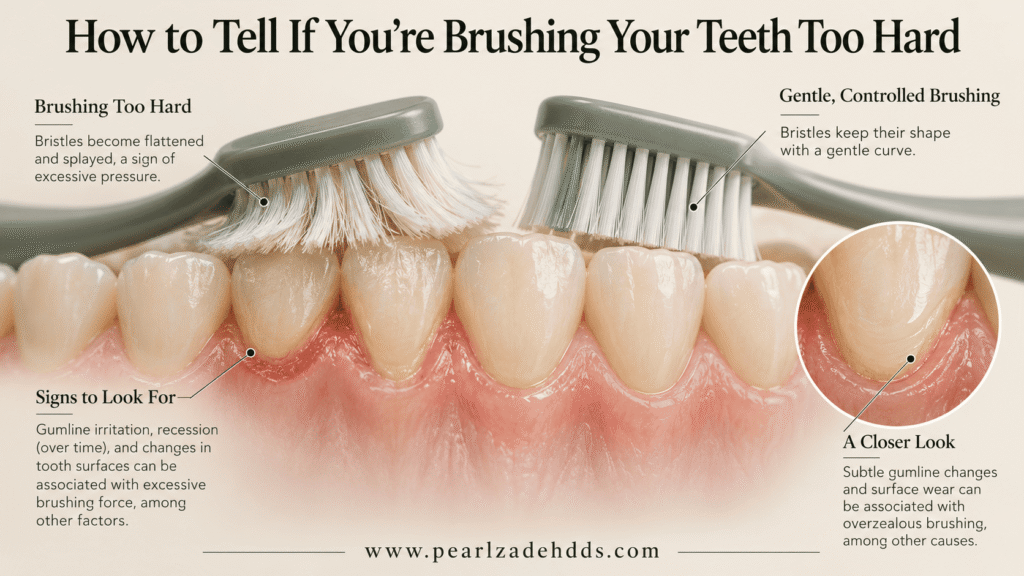
Bristles that flatten or splay quickly can suggest that you are applying more force than necessary. Gum irritation or tenderness after brushing can be another clue. You may also notice sensitivity around certain teeth or visible changes near the gumline.
Some people notice that their gums appear to sit lower around certain teeth. Others find themselves gripping the toothbrush tightly and pressing it firmly against their teeth because lighter brushing feels like it is not doing enough.
None of these signs proves that brushing pressure is the cause. Gum inflammation, recession, enamel wear, and tooth sensitivity can have other causes. The pattern matters more than any single sign.
Can Brushing Too Hard Damage Your Gums?
Excessive mechanical force can contribute to gum irritation. In some cases, it can also contribute to recession over time. It helps to separate a few different things. Temporary irritation after a rough brushing session is not the same as gum recession. Inflammation caused by plaque buildup is different from mechanical trauma. Periodontal disease is a separate condition with its own causes. Naturally thin gum tissue can also make someone more prone to recession, regardless of brushing habits. Aggressive brushing is not the sole cause of gum recession. Recession can have several contributing factors, and brushing force is only one of them.
Can Brushing Too Hard Wear Down Your Enamel?
Enamel is the hard outer layer of a tooth. Dentin is the softer layer underneath it. Tooth wear can involve more than one factor at once. Mechanical abrasion from a toothbrush is one contributor. Acidic exposure from food and drinks is another. Abrasive toothpaste can play a role as well. Existing enamel loss can make a tooth more vulnerable to further wear. Brushing technique itself matters too. Ordinary brushing does not automatically wear away healthy enamel. It is not accurate to say that brushing too hard simply scrapes enamel off. The reality usually involves several factors working together over time.
Why Are My Teeth Sensitive If I Brush Too Hard?
Sensitivity can occur when dentin becomes exposed or when the gumline shifts. This does not automatically mean you have been brushing too hard. Several other things can cause sensitivity too. Gum recession from other causes. Enamel wear unrelated to brushing. Exposed root surfaces. Recent whitening treatments. Cavities, cracks, and other dental conditions. If whitening is part of the picture, our guide to teeth whitening for sensitive teeth covers that angle separately. Avoid diagnosing the cause yourself, since the wrong assumption can delay the right treatment.
What Does a Toothbrush Look Like If You Brush Too Hard?
Your toothbrush can offer a practical clue. Excessive force can cause bristles to flare outward. It can cause them to flatten sooner than expected. Bristles can bend permanently in one direction. Wear can also happen unevenly across the brush head. Compare this with a toothbrush that wears down gradually and evenly through normal use. Bristle condition alone cannot diagnose your brushing pressure. It is still a useful clue worth paying attention to.
How Much Pressure Should You Use When Brushing?
There is no single, universally agreed-upon pressure measurement to aim for. Brushing should feel controlled and gentle rather than forceful. Use enough pressure to keep the bristles in contact with your tooth surfaces and gumline. You should not need to scrub aggressively to feel clean. Some electric toothbrushes include a pressure sensor. This feature can alert you when you are pressing too hard, which may help some people recognize the habit. Not everyone needs an electric toothbrush to brush appropriately. It is simply one tool that can help certain people.
Is a Soft-Bristled Toothbrush Better for Your Gums?
Soft-bristled toothbrushes are commonly recommended by dental professionals. According to the American Dental Association, firm or medium-strength bristles may cause damage to your gums and enamel. Brush type is only one part of the picture, though. Technique, pressure, and brushing frequency matter too. So does toothpaste choice, including options like nano-hydroxyapatite toothpaste. The current condition of your teeth and gums plays a role as well. Soft bristles do not automatically prevent recession or enamel wear on their own. They are one piece of a larger routine.
Does Brushing Harder Remove More Plaque?
More pressure does not necessarily mean better plaque removal. Technique and thorough coverage matter more than force. Aggressive scrubbing can actually become counterproductive. It can cause discomfort that leads someone to avoid certain areas, leaving plaque behind in those spots. The goal is effective plaque disruption across every surface, not maximum force in a few areas. Habits like chewing xylitol gum between meals can support plaque control, but they do not replace brushing itself.
How Should You Brush Without Scrubbing Too Hard?
A few practical steps can help. Use a soft-bristled toothbrush. The American Dental Association recommends a 45-degree angle at the gumline, with short, gentle back-and-forth strokes. Clean all tooth surfaces systematically so nothing gets skipped. Avoid forceful scrubbing motions. Reach the inside, outside, and chewing surfaces of every tooth. Brush for about two minutes, twice a day. Replace your toothbrush once the bristles start to look worn. What you do right after brushing matters too, including whether you should rinse after brushing. No single brushing motion works identically for every person, so adjust these steps to fit your own mouth comfortably.
What If Your Gums Bleed When You Brush?
Bleeding does not automatically mean you are brushing too hard. It can happen for a few different reasons. Plaque-related gum inflammation is a common cause. Brushing technique can play a role. Existing gum problems can contribute as well. Other oral health conditions are possible too. If bleeding continues despite gentle brushing and consistent oral hygiene, a dental evaluation can help identify the cause. Our article on early signs of gum disease you should not ignore covers other warning signs worth watching for.
Can Brushing Too Hard Cause Gum Recession?
Brushing force can be one contributing factor to gum recession. It is rarely the only one. Gum tissue anatomy plays a role for some people. Periodontal disease is a separate and common cause. Tooth position can make certain areas more prone to recession. Physical trauma and other mechanical factors can contribute too. Brushing more gently will not reverse recession that has already happened. Once recession occurs, the right approach depends on its cause and how severe it is.
What If You Already Have Sensitive Teeth or Receding Gums?
People with existing sensitivity or exposed root surfaces often need to be more careful with brushing pressure. Gentler brushing alone will not fix an underlying dental problem, though. It helps to identify why the sensitivity or recession is present in the first place. Changing your entire routine drastically, without knowing the cause, is not usually the right first step. A dentist can help you figure out what is actually going on before you make major changes.
Can an Electric Toothbrush Help You Stop Brushing Too Hard?
Some electric toothbrushes include pressure sensors. These alert you when you are applying excessive force during brushing. This feature may help people who struggle to judge their own pressure by feel alone. An electric toothbrush does not automatically guarantee proper technique, though. You can still brush too hard, or miss areas, with any type of toothbrush. The right choice comes down to which tool helps you brush consistently and comfortably.
How Often Should You Replace Your Toothbrush?
Worn bristles clean differently than fresh ones and may become less effective over time. The American Dental Association recommends replacing your toothbrush every three to four months. Replace it sooner if the bristles look frayed or worn before then.
What If Brushing Hurts?
Brushing should not require painful pressure to feel effective. Persistent pain deserves attention, not just a change of toothbrush. A few different experiences are worth distinguishing. Mild gum tenderness after a rough brushing session. Sensitivity that is triggered specifically by brushing. Pain concentrated in one particular tooth. Pain that persists well beyond the moment of brushing. Pain associated with swelling or other symptoms. The exact cause is not something to diagnose from these details alone.
When Should You See a Dentist?
A few signs are worth a dental evaluation. Persistent gum bleeding that does not improve. Visible gum recession. Ongoing sensitivity that does not settle down. Exposed root surfaces. Pain concentrated in one tooth. Changes in the shape or appearance of a tooth. Suspected enamel or tooth wear. Symptoms that continue even after you adjust your brushing technique. A dental exam can help distinguish brushing-related wear from gum disease, decay, cracks, erosion, or other causes.
Talk to Dr. Pearl Zadeh About Your Brushing Routine
Effective brushing is about consistent plaque removal, not force. A gentle, controlled technique and a suitable toothbrush can help protect your teeth and gums. That keeps your daily routine effective without added risk.
If you have persistent sensitivity, bleeding, recession, or pain, do not assume brushing pressure is the cause. Dr. Pearl Zadeh and her Woodland Hills team can help determine what is actually going on.
Call (818) 716-6722 or click the button below to schedule your consultation online.
Frequently Asked Questions
Common clues include bristles that flatten or splay quickly, gum tenderness after brushing, sensitivity near certain teeth, and gripping the brush tightly out of habit. One clue alone is not proof, so look at the overall pattern.
Signs include worn or splayed bristles, gum irritation, visible wear along the gumline, and gums that appear to pull away from certain teeth. Several of these signs can also have other causes.
It can contribute to irritation and, in some cases, recession over time. It is not the only possible cause, since gum tissue type, periodontal disease, and other factors can contribute as well.
Mechanical abrasion from brushing can be one contributor to tooth wear, but it usually works alongside other factors like acidic exposure, abrasive products, and existing enamel condition. Ordinary brushing does not wear away healthy enamel on its own.
It can, if dentin becomes exposed or the gumline changes. Sensitivity has many other possible causes too, so it should not be assumed to come from brushing pressure alone.
This article is for informational purposes only and is not a substitute for professional dental advice. Please schedule a consultation with Pearl Zadeh DDS to discuss your specific situation.