
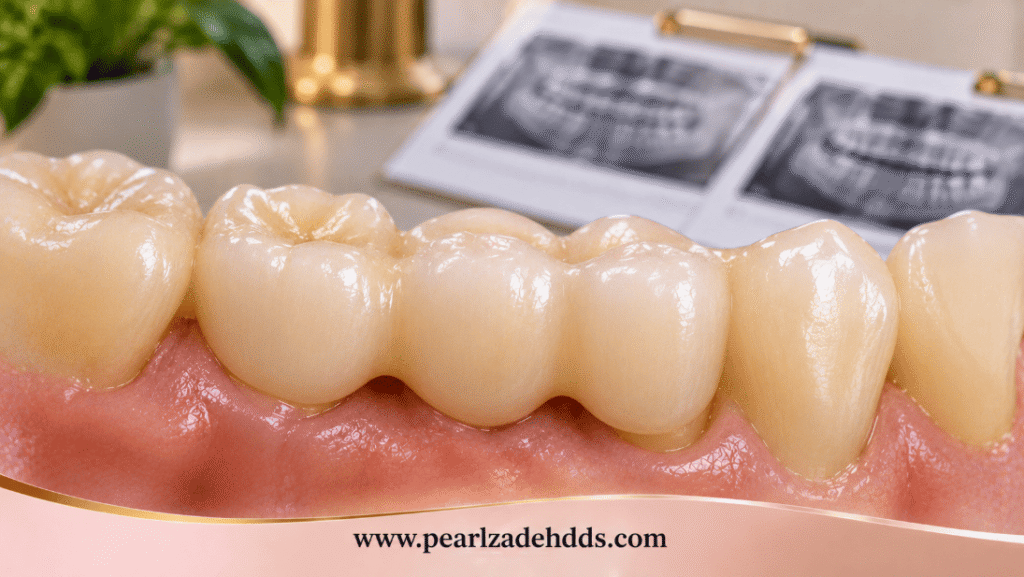
Hearing that you may need a dental bridge can raise several questions. You may wonder about the procedure, supporting teeth, cost, and other options.
Some patients seek a second opinion before getting a dental bridge. They may want more information before agreeing to an irreversible procedure.
Another dentist can review the recommendation and discuss whether a bridge suits your needs. A second opinion does not mean the first dentist was wrong. It gives you another professional assessment.
When Should You Consider a Second Opinion Before Getting a Dental Bridge?
A second opinion may help if:
- You are unsure why the dentist recommended a dental bridge.
- You have questions about preparing neighboring teeth for a traditional bridge.
- The dentist presented only one treatment option.
- You have concerns about the supporting teeth.
- You have questions about the bridge’s appearance, fit, or maintenance.
- The treatment plan involves several teeth or extensive restorative work.
- Different dentists have given you different recommendations.
These situations do not mean the original recommendation is wrong. They may simply mean you need more information. Not every dental bridge recommendation requires a second opinion.
Why Is It Important to Understand the Reason for a Dental Bridge?
A dental bridge replaces one or more missing teeth. Its design determines how the dentist supports it, often with neighboring teeth.
Before agreeing to treatment, ask the dentist:
- Which missing teeth will the bridge replace?
- Why do you recommend a bridge?
- Are the neighboring teeth healthy enough to support it?
- Does the proposed bridge design suit my dental condition?
- How will I clean and maintain the bridge?
Traditional bridges require the dentist to prepare the supporting teeth. Cleveland Clinic explains that the dentist removes some enamel during this process. It also confirms that this change is irreversible. Ask about the reasons for this preparation and any suitable alternatives before proceeding.
Front tooth bridges also involve appearance-related considerations. Read about dental bridges for front teeth to learn more.
What Can a Second Dentist Evaluate?
A second-opinion consultation may include an assessment of:
- The location and number of missing teeth.
- The condition of neighboring teeth.
- Gum health and supporting structures.
- Existing crowns, fillings, and other restorations.
- Bite and chewing function.
- Suitable bridge designs and other tooth replacement options.
- Existing X-rays, photographs, and dental records.
The dentist may request additional examinations or X-rays. A second opinion provides an independent assessment, not simply confirmation of the first recommendation.
What Questions Should You Ask Before Getting a Dental Bridge?
These questions can help you prepare for a dental bridge consultation:
- Why do you recommend a dental bridge for my situation? Ask how the bridge would replace your missing teeth and address your dental needs.
- Which type of bridge would suit me, and why? Different designs use different supporting structures.
- Will you need to reshape my neighboring teeth? Traditional bridges usually require preparation of the supporting teeth.
- Are my supporting teeth healthy enough for a bridge? Decay, cracks, and gum problems may affect their ability to support it.
- What other options can replace my missing tooth? Suitable alternatives depend on your oral health.
- How should I maintain the bridge? Cleaning beneath a bridge requires extra care.
- What complications or problems should I know about? Ask about possible risks before agreeing to treatment.
- What could happen if I wait before getting treatment? The answer depends on your dental condition.
What Are the Alternatives to a Traditional Dental Bridge?
The available options depend on your oral health and dental needs. Not every option suits every patient.
Maryland Bridge
A Maryland bridge uses small wings bonded to the backs of neighboring teeth. Cleveland Clinic explains that dentists typically use this design to replace front teeth. Your dentist can assess whether it suits your situation.
Partial Denture
A removable partial denture replaces one or more missing teeth. It may require less preparation of neighboring teeth than a traditional bridge. However, the design may include attachments to natural teeth.
The ADA explains that crowns on natural teeth can sometimes improve the fit of a removable partial denture.
You can also compare dental bridges and dentures to understand their differences.
Dental Implant With a Crown
An implant-supported crown replaces a missing tooth without using neighboring natural teeth for support. Suitability depends on factors such as bone and gum health.
Dr. Pearl does not perform dental implant placement. Patients considering this option may need an evaluation from a qualified implant provider.
Dr. Pearl Zadeh DDS offers porcelain bridges and partial dentures. You can explore the types of porcelain bridges to compare their designs.
What Should You Bring to a Second-Opinion Appointment?
Dental records help another dentist review the original recommendation. Bring these items if available:
- Recent dental X-rays.
- The proposed treatment plan.
- A written treatment estimate.
- Records of previous dental procedures.
- A list of your questions and concerns.
The second dentist may still need to examine your teeth or request additional records. The ADA notes that previous dentists may have your existing X-rays. A new dentist may request copies instead of ordering new images.
Does Getting a Second Opinion Mean Delaying Dental Bridge Treatment?
No. Seeking another opinion does not automatically mean delaying treatment.
The timing depends on your dental condition and the reason for the recommended bridge. Contact a dentist promptly if you have pain, swelling, or signs of infection. Do not postpone urgent dental care while seeking another opinion.
Ask your dentist whether waiting is appropriate for your situation.
Schedule a Consultation With Dr. Pearl
If you have questions about a recommended dental bridge, Dr. Pearl Zadeh DDS can examine your teeth, gums, and bite. She can also discuss porcelain bridge options and explain whether they may suit your dental needs.
Call (818) 716-6722 or click the button below to schedule your consultation online.
Frequently Asked Questions
Yes. Patients often want more information before a significant procedure. It is a reasonable step, though not every patient needs one.
Sometimes. Dentists may weigh options differently or find different details during an exam. A different view does not mean either dentist is wrong. It can show another path to discuss.
It may be worth considering. Preparing teeth for a traditional bridge cannot be undone. A patient with questions may want answers first.
Yes. Another dentist can review options such as a Maryland bridge, a partial denture, or an implant-supported crown. Suitability varies by patient.
Not always. The new dentist may ask for copies of existing images. Whether new X-rays are needed is the dentist’s decision.
The information above is for informational purposes only and is not a substitute for professional dental advice. Please schedule a consultation with Pearl Zadeh DDS to discuss your specific situation.