
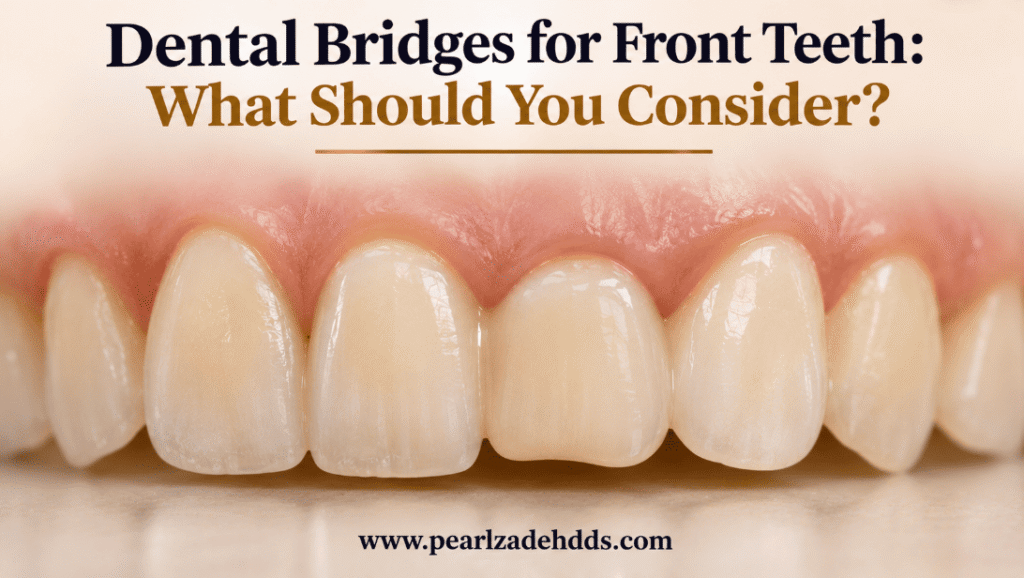
Replacing a missing front tooth is different from replacing a back tooth. Front teeth are visible when a person smiles, laughs, or speaks, so their appearance matters.
A dental bridge for a front tooth needs to look natural while functioning properly. The supporting teeth, surrounding gums, bite, and day-to-day comfort also matter.
A bridge is not the right choice for every missing front tooth. Knowing how it works, what affects its appearance, and which factors influence suitability can help patients discuss their options with a dentist.
Why Do Dental Bridges for Front Teeth Require Special Consideration?
A dental bridge replaces a missing tooth by filling the gap with an artificial tooth. Depending on the design, it may rely on neighboring teeth for support. When the gap is near the front of the mouth, appearance becomes an important part of treatment planning.
Several factors need attention:
- Visibility: Front teeth are easy to see when speaking or smiling.
- Color and shape: The replacement tooth should blend with the neighboring teeth.
- Gumline: The surrounding gum tissue affects how natural the bridge looks.
- Function: Front teeth help with biting into food and producing certain speech sounds.
Cleveland Clinic explains that missing teeth can affect eating and speaking, and that dental bridges provide a natural-looking way to replace them. The treatment plan needs to account for both appearance and function.
What Should You Consider Before Getting a Front Tooth Bridge?
Several factors help determine whether a bridge is suitable and how natural it may look.
Color and Natural Appearance
A natural tooth has more than one shade. Its translucency, particularly near the edges, and its surface texture also affect how it looks in different lighting.
These details matter when matching a replacement tooth to the surrounding teeth. A bridge that looks slightly different in color or brightness may stand out, even when its shape is close.
The dentist considers the neighboring teeth when selecting the shade and planning the restoration. An exact match cannot be guaranteed, but careful shade selection can help the bridge blend with the smile.
Shape, Size, and Symmetry
The replacement tooth should have a shape and size that suit the surrounding teeth. Its length, width, and outline all affect the overall appearance.
Symmetry is another consideration, particularly when replacing one of the front teeth. Differences in tooth length or width can make the replacement more noticeable.
The dentist assesses the gap alongside the neighboring teeth and considers how the replacement will look within the smile.
Gumline and Surrounding Tissues
The gum tissue around a front tooth bridge affects its appearance and fit. An uneven gumline, recession, or changes in the tissue around the missing tooth can make the replacement look less natural.
Gum health also matters for the supporting teeth. Plaque buildup around the bridge and gumline can contribute to inflammation and decay if the area is not cleaned properly. Cleveland Clinic discusses these risks in its guide to dental bridges.
The dentist checks the surrounding tissues before recommending a bridge and can explain whether any gum-related concerns need attention first.
Supporting Teeth
A traditional dental bridge relies on neighboring teeth for support. These teeth are called abutment teeth.
Cleveland Clinic explains that preparing these teeth involves removing some enamel so crowns can fit over them. This removal is irreversible, so the condition of the supporting teeth deserves careful consideration.
The dentist checks for decay, fractures, existing fillings or crowns, and other signs of damage. The supporting teeth need to be strong enough to hold the bridge. Otherwise, they may not be suitable for this type of restoration.
Bridge Design and Available Options
The design of a front tooth bridge depends on the gap, the supporting teeth, and the patient’s bite. Two options a dentist may consider are:
- Traditional fixed bridge: Crowns fit over prepared supporting teeth on either side of the gap.
- Maryland bridge: A replacement tooth is attached to a framework with wings that bond to the backs of neighboring teeth.
A Maryland bridge may be considered for certain missing front teeth. Cleveland Clinic notes that dentists commonly use this design in the front of the mouth because it may not withstand the chewing forces placed on back teeth.
Neither design is suitable for every patient. The dentist considers the condition of the neighboring teeth, available enamel for bonding, bite forces, and other clinical factors before recommending an option.
Our article on types of porcelain bridges explains the different designs in more detail.
Can a Dental Bridge Look Natural on Front Teeth?
A natural-looking front tooth bridge depends on several details:
- Shade selection.
- Tooth shape and proportions.
- Translucency and surface texture.
- The appearance of the surrounding gumline.
- The fit of the restoration.
Before making the bridge, the dentist examines the neighboring teeth and considers how the replacement will look within the smile. For a traditional bridge, Cleveland Clinic explains that impressions are taken and sent to a dental laboratory. A temporary bridge may be placed while the permanent restoration is being made.
An exact shade match or appearance cannot be guaranteed. However, careful planning and fitting help the replacement tooth blend with the surrounding teeth.
Can a Front Tooth Bridge Affect Speech or Comfort?
A new dental bridge may feel different at first. The tongue and lips need time to adjust to changes in the front of the mouth. Some patients may also notice temporary changes in speech.
Tooth position, bridge design, and fit can affect how the restoration feels. Cleveland Clinic notes that a bridge should feel similar to natural teeth once the patient has adjusted to it.
Persistent discomfort, difficulty speaking, or a bite that feels uneven should not be ignored. A dentist can check the fit and determine whether an adjustment or further treatment is needed.
How Do You Care for a Dental Bridge on Front Teeth?
A front tooth bridge needs regular cleaning, just like the rest of your teeth. These habits help keep the restoration and surrounding teeth in good condition:
- Brush twice daily with a soft-bristled toothbrush and fluoride toothpaste. The National Institute of Dental and Craniofacial Research (NIDCR) recommends brushing twice a day.
- Clean around the bridge and supporting teeth, especially along the gumline.
- Use a floss threader or another cleaning aid recommended by your dentist. The NIDCR explains that floss threaders help guide floss around fixed bridges.
- Follow your dentist’s cleaning instructions for your specific bridge.
- Attend regular dental examinations.
- Avoid biting hard objects such as ice, pens, or fingernails with your front teeth.
Our article on how to clean under a dental bridge properly explains how to reach the area beneath the replacement tooth.
Good home care helps protect the bridge and supporting teeth, but it cannot prevent every problem or guarantee a particular lifespan.
Is a Dental Bridge Right for Your Missing Front Tooth?
A front tooth bridge may be suitable for some patients, but the decision depends on several factors:
- The number and location of the missing teeth.
- The condition of the neighboring teeth.
- The health of the surrounding gums.
- The patient’s bite and chewing habits.
- Individual dental needs and preferences.
A dentist can assess these factors to determine whether a traditional bridge, a Maryland bridge, or another tooth replacement option is appropriate.
Dr. Pearl Zadeh DDS offers porcelain dental bridges in Woodland Hills, California.
Schedule a Consultation With Dr. Pearl
If you are considering a bridge for a missing front tooth, Dr. Pearl can discuss the available options and explain what each may involve. You can also ask about the materials, expected appearance, and care requirements.
Call (818) 716-6722 or click the button below to schedule your consultation online.
Frequently Asked Questions
A bridge is one possible option for some patients. Suitability depends on the neighboring teeth, the gums, and the bite. A dental examination confirms what fits.
They can. Shade, shape, and fit all affect the result. Dentists aim for a natural look, but no one can guarantee an exact match.
A traditional bridge uses crowns over prepared supporting teeth. The Maryland design relies on a framework or wings bonded to the backs of supporting teeth. Each suits different situations.
It can. Some patients need a short adjustment period. Speech difficulty that continues should be checked by a dentist.
A floss threader or similar aid lets floss pass beneath the replacement tooth. Gentle motions protect the gums. The dentist can recommend the right tools.
The information above is for informational purposes only and is not a substitute for professional dental advice. Please schedule a consultation with Pearl Zadeh DDS to discuss your specific situation.