
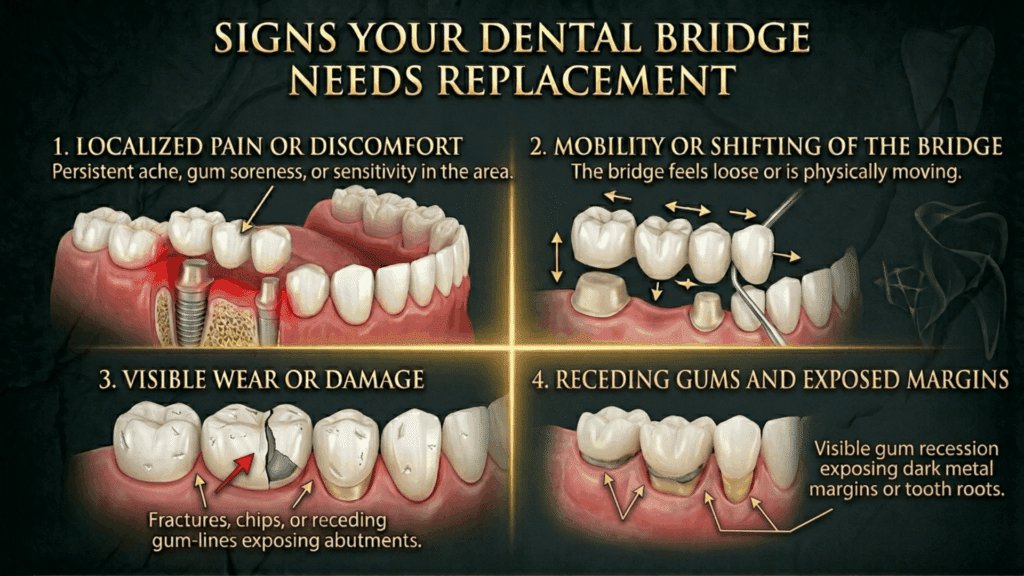
A dental bridge carries a lot of daily work. It handles chewing, biting, and constant pressure every time you eat or speak. Over time, that stress shows up in small ways first. A slight shift while chewing. Food starting to collect in places that used to stay clean. A mild edge that feels different on your tongue.
Most patients do not notice anything dramatic at the beginning. The bridge still looks fine, so the changes feel easy to ignore. But underneath, the fit and the supporting teeth can slowly change.
A bridge rarely fails suddenly. It usually breaks down step by step.
A bridge that no longer feels stable
A healthy bridge should feel like part of your natural teeth. You should not sense movement when you bite down or floss around it.
When stability changes, patients often describe a slight rocking sensation or a feeling that something is “not sitting right.” That feeling matters. It often means the cement layer has weakened or one of the supporting teeth has changed shape due to decay or pressure.
Even a small amount of movement creates space where bacteria can enter. Once that happens, the supporting teeth lose protection.
Sensitivity or discomfort while chewing
Pain around a bridge does not always start as sharp discomfort. In many cases, it begins as mild sensitivity when chewing harder foods or drinking something cold.
This usually points to an issue under the bridge rather than the bridge itself. Decay can form under the crown. A supporting tooth can develop a crack. In some cases, the bite may shift slightly and place uneven pressure on one side.
The key detail here is change. A bridge that suddenly feels different during chewing is sending a signal that something underneath is no longer stable.
Food getting trapped more often
Food should not constantly collect under a dental bridge. When it starts happening regularly, it usually means the seal between the bridge and the tooth has changed.
Small gaps can form over time as the materials wear or as gums shift. Once those gaps appear, food and bacteria move in easily. Patients often notice that floss catches or shreds in the same area repeatedly.
That repeated trapping is not just an annoyance. It increases the risk of gum irritation and decay under the supporting crowns.
Bad breath that stays in one area
Daily brushing and flossing usually control general mouth odor. However, when a bridge starts to fail, bad breath can linger around that specific area even after cleaning.
This happens when bacteria get trapped underneath or around the margins of the bridge. The area becomes harder to clean properly, especially if the fit has changed slightly.
Patients sometimes notice a sour taste or a smell that keeps coming back in the same spot. That pattern often points to a problem under the restoration, not just surface plaque.
Gum changes around the bridge
Healthy gums sit firmly around a bridge and stay pink and firm. When a bridge begins to fail, the gums often react first.
You may see redness, mild swelling, or bleeding when brushing near the bridge. In other cases, the gums start pulling away slightly from the edge of the restoration.
That recession exposes small margins where bacteria collect more easily. Over time, this can affect both comfort and the health of the supporting teeth.
Gum changes around a bridge rarely improve on their own. They usually signal an underlying fit or hygiene problem.
Visible wear, chips, or cracks
Dental bridges are strong, but they are not immune to damage. Years of chewing can wear down the surface or create small chips in the porcelain.
A small chip may not seem urgent at first. The bridge still functions, and there is no pain. However, cracks tend to spread with continued pressure.
Once the structure weakens, bacteria can enter through small openings. That is when deeper problems start developing under the bridge.
Changes in the way your bite feels
Your bite should feel even and balanced when a bridge is working properly. You should not feel one side hitting earlier than the other or notice new pressure points.
When the bite changes, it often means the bridge has worn down or the supporting teeth have shifted slightly. This imbalance places extra stress on certain teeth and can lead to jaw discomfort over time.
Some patients also start clenching more without realizing it because the bite no longer feels smooth.
Supporting teeth start to weaken
A bridge depends completely on the teeth holding it in place. If those teeth develop decay or cracks, the bridge loses stability.
The challenge is that decay under crowns is not always visible. It can progress quietly until symptoms appear. By that stage, the supporting tooth may already need more advanced treatment.
This is one of the main reasons dentists monitor bridges closely during routine exams.
Age of the bridge starts to matter
Most dental bridges last around 5 to 15 years, depending on care and bite forces. As they age, the materials slowly wear down and the margins become less precise.
Even if the bridge still feels fine, older restorations deserve closer checks. Small changes in fit or bite pressure often start long before visible damage appears.
What happens if you wait too long
A bridge rarely fails in isolation. When problems start, they usually affect the supporting teeth as well.
Delaying treatment can allow decay, infection, or structural damage to spread under the bridge. In some cases, the supporting teeth become too weak to hold a new restoration.
At that point, treatment often becomes more complex and may involve additional procedures beyond a simple replacement.
When to get it checked
Any change in comfort, bite, or cleanliness around a bridge is worth a dental exam. Even mild symptoms can point to early failure under the surface.
A quick evaluation and X-ray often reveal issues that cannot be seen in the mirror.
Protect Your Teeth Before the Damage Spreads
Dental bridges often fail gradually, not suddenly. Small changes in comfort, fit, or gum health usually appear before major complications develop.
At Pearl Zadeh DDS, Dr. Pearl takes a careful, preventive approach to monitoring and treating dental bridge issues before they become more serious.
If your bridge feels loose, traps food constantly, causes discomfort, or no longer feels natural while chewing, it is worth getting it checked before the supporting teeth become damaged.
Early treatment can often prevent infections, fractures, and more extensive dental work later.
If you think your dental bridge may need repair or replacement, call (818) 716-6722 or click the button below to schedule your consultation online.
Schedule a ConsultationFrequently Asked Questions
1. How do I know if my dental bridge needs replacement?You may need a replacement if your bridge feels loose, traps food often, causes discomfort while chewing, or shows visible wear such as chips or cracks. Even small changes in how the bridge feels can signal problems underneath that need a dental check.
2. Can a loose dental bridge be fixed without replacing it?Sometimes yes. If the supporting teeth remain healthy and the issue comes from weakened cement, a dentist may be able to recement the bridge. However, if decay, damage, or poor fit exists underneath, replacement becomes the safer option.
3. Why does food keep getting stuck under my dental bridge?Food trapping usually happens when small gaps form between the bridge and the gums or supporting teeth. This can develop over time as the bridge wears or as the gums shift. It often indicates that the seal is no longer tight and needs evaluation.
4. What happens if I ignore a failing dental bridge?A failing bridge can allow bacteria to reach the supporting teeth. Over time, this may lead to decay, gum disease, infections, or even tooth loss. Once the supporting teeth weaken, replacing the bridge becomes more complex.
5. How often should a dental bridge be checked by a dentist?Most dental bridges should be checked during regular dental visits, typically every six months. These checkups help detect early signs of wear, leakage, or decay before they turn into more serious problems.