
You feel pressure around your cheeks and upper jaw, but you can’t quite tell where it’s coming from. Maybe your teeth feel sore when you bite down. Maybe your nose is congested. Or maybe your jaw has been tense lately.
Sinus problems and TMJ pain can feel surprisingly similar, especially around the cheeks, face, and upper jaw. The difference often comes down to the symptoms that appear alongside the pain, not simply where you feel it.
Why TMJ Pain and Sinus Pain Can Feel Similar
Both can involve discomfort around your cheeks, temples, upper jaw, general facial area, and the region near your ears. Nearby nerves and structures sit close enough together that pinpointing the actual source based on location alone is genuinely difficult, even for the person experiencing it.
What Does TMJ Pain Usually Feel Like?
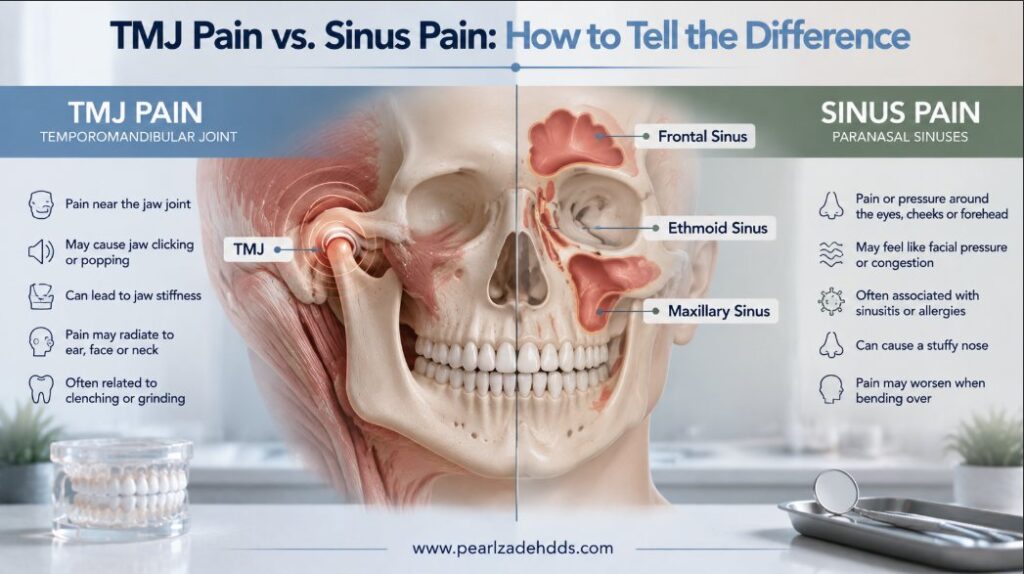
Common patterns include jaw soreness, pain while chewing, pain when opening your mouth, jaw stiffness, tender jaw muscles, clicking or popping, difficulty opening your mouth fully, facial discomfort near the jaw joint itself, and symptoms that seem to worsen with clenching or grinding. None of these confirm anything definitively on their own. TMJ disorders can involve the jaw joints, the surrounding chewing muscles, or both together.
What Does Sinus Pain Usually Feel Like?
Common sinus-related symptoms include facial pressure, nasal congestion, a runny nose, a reduced sense of smell, pressure around the cheeks or forehead, symptoms that get worse with congestion, and in some cases discomfort in the upper teeth. A peer-reviewed review of maxillary sinus conditions lists facial pain or pressure, nasal congestion, nasal discharge, a persistent bad or foul smell, and postnasal drip among the more common symptoms associated with sinus-related conditions. Sinus conditions can genuinely create pressure that feels like it involves your upper teeth, which is exactly where this gets confusing.
TMJ Pain vs. Sinus Pain: Common Differences
Pain With Chewing
Jaw-related pain tends to become more noticeable when you’re chewing or actively moving your jaw.
Nasal Symptoms
Congestion, nasal discharge, or a reduced sense of smell point more toward something sinus-related.
Jaw Movement
Stiffness, clicking, popping, or difficulty opening your mouth fully tend to accompany TMJ-related problems specifically.
Facial Pressure
Sinus-related discomfort often feels more like genuine pressure, particularly around the cheeks or forehead.
Tooth Pain
Both dental problems and sinus issues can create upper tooth discomfort. Tooth pain doesn’t automatically point to a dental cause.
Morning Jaw Soreness
Waking up with a sore jaw can happen with nighttime clenching or grinding, though morning soreness alone doesn’t prove bruxism is actually happening.
Can Sinus Problems Cause Upper Tooth Pain?
Yes, sometimes. Inflammation or pressure in the maxillary sinus area, located just above your upper back teeth, can sometimes be felt as discomfort in those same teeth. Mayo Clinic notes that if a dentist rules out a dental cause for a toothache, a medical evaluation for a possible sinus condition is a reasonable next step. Tooth pain can just as easily come from an actual dental cause, though. If tooth pain persists or shows up alongside other dental symptoms, a dental evaluation is worth pursuing.
Can TMJ Problems Feel Like Sinus Pressure?
Jaw or jaw-muscle discomfort can sometimes be felt in nearby areas of your face, which can create a sensation that resembles pressure. It wouldn’t be accurate to say TMJ problems commonly cause true sinus pressure, though. There’s a real difference between a general feeling of facial pressure and actual sinus inflammation or congestion, even when the two can feel surprisingly similar in the moment.
Can Teeth Grinding Make the Difference Harder to Recognize?
It genuinely can. Clenching and grinding cause jaw muscle soreness and facial discomfort, and some patients interpret that discomfort as a sinus problem or an unrelated headache instead. Our discussion of stress and teeth grinding goes further into that connection. Over time, grinding can also affect your teeth directly, which our discussion of how teeth grinding damages teeth over the years covers in more depth.
What About Tooth Pain?
Tooth pain deserves particular attention here, since it can come from several genuinely different places: tooth decay, a crack, a dental infection, gum problems, or discomfort referred from a sinus issue. A dentist can evaluate your actual teeth to determine whether a dental source is involved. This isn’t something to work out on your own from home.
When Should You See a Dentist?
A dental evaluation makes sense when:
- Jaw pain keeps returning
- Chewing causes discomfort
- Your jaw feels stiff
- Your mouth doesn’t open normally
- Tooth pain persists
- A tooth becomes sensitive without an obvious reason
- Jaw symptoms show up alongside clenching or grinding
- Facial pain continues even after sinus symptoms have improved
- You’re genuinely unsure whether the discomfort is dental or jaw-related
Not every facial pain problem requires a dentist, but these particular patterns are reasonable prompts.
When Should You See a Doctor?
Medical evaluation tends to make more sense when your symptoms lean heavily toward a sinus or respiratory issue: significant nasal congestion, persistent nasal discharge, fever, facial pressure alongside respiratory symptoms, symptoms that persist or get worse, or sinus problems that keep recurring. Severe or genuinely concerning symptoms may call for prompt medical care rather than waiting to see how things develop.
What If You’re Not Sure Which One It Is?
You don’t need to work out the diagnosis yourself. A dentist can evaluate your teeth, gums, jaw muscles, bite, and jaw movement directly. If what they find points toward a non-dental cause, you may simply be advised to pursue medical evaluation next. The goal is identifying what’s actually likely going on, not forcing every symptom into a dental explanation just because you started with a dentist. When jaw-related findings do turn out to be part of the picture, conservative management is often where things start, though that’s a separate conversation from the differential question itself.
What Happens During a Dental Evaluation?
Expect questions about:
- When the pain started
- Where it occurs
- Whether chewing makes it worse
- Whether your jaw clicks or feels stiff
- Whether there’s tooth sensitivity
- Whether you clench or grind
- Whether you’ve had any recent dental procedures
- Whether sinus symptoms are also present
Your dentist may then examine your:
- Teeth
- Gums
- Bite
- Jaw movement
- Jaw muscles
- The TMJ area itself
Imaging sometimes gets recommended when appropriate, though not every patient needs X-rays or advanced imaging as a matter of routine.
What If Your Sinus Symptoms Improve but the Jaw Pain Remains?
That’s worth another look. If your congestion and sinus pressure clear up but jaw or tooth discomfort sticks around, a dental evaluation may genuinely help. This doesn’t automatically prove a TMJ or dental cause on its own. It just means the remaining symptom deserves its own separate look rather than being assumed to fade along with the sinus issue.
What If the Pain Gets Worse When You Chew?
Jaw movement and chewing place real stress on your jaw muscles and joints, which can make jaw-related pain more noticeable. Tooth problems can become more noticeable with biting too, for entirely different reasons. Chewing pain alone can’t tell you which one you’re actually dealing with. If it persists, that’s a reasonable prompt for an evaluation rather than something to keep monitoring indefinitely on your own.
What If the Pain Is Mostly in the Upper Teeth?
Upper tooth discomfort specifically can have several possible sources: sinus pressure, tooth decay, a crack, an infection, or another dental problem entirely, and several of these can feel remarkably similar. A dental examination helps determine whether your teeth themselves actually look and test healthy, which narrows the possibilities considerably.
Can You Have Both a Sinus Problem and TMJ Symptoms?
Yes. Having one condition doesn’t prevent you from also experiencing the other. It’s entirely possible to have sinus congestion and jaw muscle tension happening at the same time, as two separate things rather than one causing the other. Without more specific evidence in your particular case, it isn’t accurate to assume one condition is responsible for the other.
What Can You Do While You Figure Out the Cause?
A few conservative steps can help in the meantime. Avoid excessive gum chewing. Skip opening your mouth unnecessarily wide. Pay attention to whether you’re clenching during the day. Choose softer foods temporarily if chewing hurts. Follow whatever medical advice applies to your sinus symptoms specifically. Keep a rough note of when the pain shows up. Aggressive jaw exercises or treatments aren’t something to start without an actual evaluation, and any medication decisions are worth discussing with whichever professional is treating the relevant symptom.
When Facial Pain Needs Prompt Attention
A few situations call for prompt medical or dental care rather than waiting things out:
- Significant facial swelling
- Difficulty breathing or swallowing
- High fever with severe facial or dental pain
- Rapidly worsening swelling
- Severe pain following facial trauma
- Other symptoms that feel genuinely urgent or unusual
Most facial discomfort doesn’t fall into this category, but these particular situations are worth knowing.
Look at the Whole Pattern, Not Just Where It Hurts
TMJ pain and sinus pain can genuinely overlap, particularly around the cheeks and upper jaw. Jaw movement, chewing discomfort, stiffness, clicking, and muscle soreness tend to point toward TMJ-related problems. Congestion, nasal symptoms, facial pressure, and respiratory symptoms tend to point more toward a sinus issue. Symptoms can still overlap in individual cases, though, and persistent pain shouldn’t be self-diagnosed either way. When the source isn’t clear, a professional evaluation can help narrow down what’s actually causing the discomfort.
Speak With Dr. Pearl Zadeh About Your Facial or Jaw Pain
Facial, jaw, and upper tooth discomfort can have several possible causes. If you’re unsure whether your symptoms involve your teeth, your jaw, or something else entirely, a dental evaluation can help assess the dental and jaw-related possibilities. Dr. Pearl Zadeh, a member of the American Dental Association and California Dental Association, can evaluate your teeth, bite, jaw movement, and related symptoms, and can recommend appropriate next steps when further medical evaluation may be needed.
Call (818) 716-6722 or click the button below to schedule a consultation online.
Frequently Asked Questions
How can I tell if my jaw pain is TMJ or a sinus problem?
Jaw stiffness, clicking, and pain that worsens with chewing tend to point toward TMJ, while nasal congestion, discharge, and facial pressure tend to point toward sinus issues. Symptoms can overlap, so persistent discomfort is worth having evaluated.
Can a sinus infection cause tooth pain?
Yes, particularly in the upper back teeth near the maxillary sinuses. If a dentist rules out a dental cause, a sinus-related origin is worth discussing with a doctor.
Can TMJ cause sinus-like pressure?
TMJ or jaw muscle discomfort can feel like pressure in nearby facial areas, but it doesn’t typically cause true sinus inflammation or congestion.
Should I see a dentist or a doctor for facial pain?
It depends on your symptoms. Jaw stiffness, chewing pain, or tooth-specific discomfort are reasons to see a dentist, while significant congestion, discharge, or fever point more toward a medical evaluation.
Can I have both TMJ symptoms and a sinus problem at the same time?
Yes. Having one doesn’t rule out the other, and they can occur together without one necessarily causing the other.
This article is for informational purposes only and is not a substitute for professional dental or medical advice. Please schedule a consultation with Pearl Zadeh DDS to discuss your specific situation, and seek prompt medical care for any urgent or severe symptoms.