
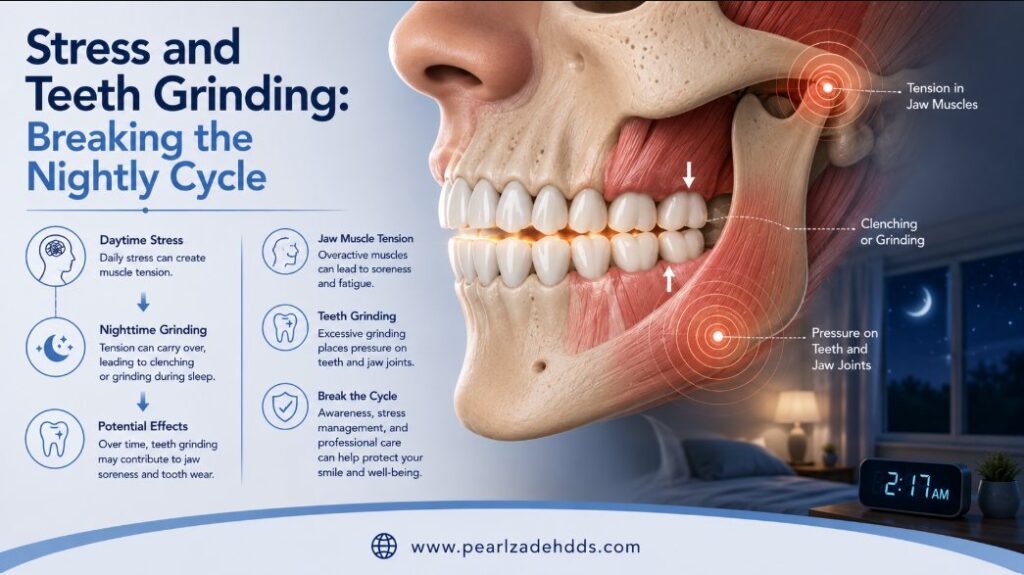
You wake up with a sore, tight jaw after a stressful day. Your teeth feel more sensitive than usual, and your partner says they heard you grinding during the night. Now you’re wondering whether all that tension followed you into sleep.
It might have. Stress can contribute to teeth clenching and grinding in some people, especially during periods of ongoing tension. But stress isn’t the only possible reason you grind your teeth, and figuring out what’s behind it matters if your teeth or jaw are starting to suffer.
What Is Teeth Grinding?
Dentists call this bruxism, and it covers two related things. Grinding is when your teeth actually slide or rub against each other. Clenching is when your jaw muscles tighten forcefully, sometimes without much visible tooth movement. Both can happen while you’re asleep or while you’re awake. Plenty of people have no idea they grind or clench at night, simply because it happens while they’re unconscious. The signs usually show up elsewhere, a sore jaw, sensitive teeth, a comment from a partner, long before anyone notices the actual grinding.
Can Stress Cause Teeth Grinding?
Stress can be one factor that contributes to teeth grinding or clenching in some people. Periods of increased stress sometimes coincide with more noticeable jaw tension or grinding, though stress isn’t the only possible contributor here. A systematic review published in the Journal of Oral & Facial Pain and Headache looked specifically at psychosocial factors, including stress, anxiety, and depression, in relation to bruxism, and found evidence connecting these factors to grinding across a substantial body of research. That’s meaningfully different from saying stress causes teeth grinding outright. Sleep-related factors, certain medications, other habits, and various health conditions may also play a role. This isn’t meant to be an exhaustive rundown of every possible cause. It’s simply a reminder that stress is part of a bigger picture, not the whole picture.
Why Does Stress Show Up in Your Jaw?
Some people respond to stress by tightening their jaw muscles without ever noticing they’re doing it, the same way others might hunch their shoulders or clench their fists. In people who already grind or clench, that muscle activity can continue right through sleep. This may contribute to morning jaw soreness, facial muscle fatigue, temple discomfort, tooth sensitivity, headaches, or a general sense of jaw tightness. Every one of these symptoms can also come from something else entirely, so none of them confirms grinding on its own.
How Do You Know If You Grind Your Teeth at Night?
You may never actually notice the grinding itself, since it happens while you’re asleep. A few signs tend to point in that direction:
- Waking with a sore or tired jaw
- Tooth sensitivity
- Flattened or worn tooth surfaces
- Chipped teeth
- Jaw stiffness
- Temple discomfort
- Indentations on your tongue or the inside of your cheek
- A partner mentioning grinding sounds
- Noticeably more jaw tension during stressful stretches
None of these prove bruxism definitively on their own. A dentist can actually look for signs of tooth wear and other evidence that points toward grinding.
What Happens to Your Teeth When You Grind?
Repeated grinding can lead to tooth wear over time, flattened chewing surfaces, small cracks, chipping, increased sensitivity, and in some cases damage to existing dental work. This isn’t meant to sound alarming. Most grinding doesn’t cause dramatic damage overnight. It’s a gradual process, and how much wear actually shows up depends heavily on how often and how forcefully you grind.
Can Teeth Grinding Affect Your Jaw?
Repeated clenching and grinding places extra workload on your jaw muscles, which can show up as jaw soreness, muscle fatigue, clicking or popping, pain while chewing, or difficulty opening your mouth comfortably. Grinding doesn’t automatically mean you have a TMJ disorder, though the two can genuinely overlap for some patients. If jaw symptoms are part of what you’re noticing alongside grinding, that broader connection is worth understanding.
Why Does Grinding Sometimes Get Worse During Stressful Periods?
People sometimes clench more during periods of tension, worry, or intense concentration, even without realizing it in the moment. Daytime habits like this can sometimes carry over into nighttime grinding too. A demanding stretch at work, a major life change, anxiety before something important, long hours of focused concentration, or a run of poor sleep can all coincide with more noticeable grinding. This doesn’t mean reducing stress alone will fix the underlying habit. It’s more that stress can act as one thing tipping the scale.
Can Stress Reduction Help With Teeth Grinding?
For some people, yes, reducing stress may help ease clenching or general muscle tension, though it’s not a guaranteed fix. A few practical habits worth trying: keeping a consistent bedtime routine, actually getting enough sleep, taking short breaks during stressful stretches at work, paying attention to when you’re clenching during the day, practicing some form of relaxation before bed, and addressing ongoing sources of stress where that’s realistically possible. None of this replaces a conversation with your dentist if grinding is already affecting your teeth or jaw.
What Is the Best Position for Your Jaw During the Day?
When you’re not eating or speaking, your teeth generally don’t need to stay pressed together. A relaxed jaw means your lips are gently closed, your teeth are slightly apart, and your jaw muscles aren’t actively working. Simply noticing when you catch yourself clenching during the day, at your desk, in traffic, scrolling your phone, can make you more aware of a habit that often runs on autopilot.
Can a Night Guard Help With Stress-Related Grinding?
A night guard may help protect your teeth from the physical effects of grinding and can be appropriate for some patients. What it generally doesn’t do is eliminate the underlying tendency to clench or grind in the first place. The right appliance should be selected based on your specific teeth, your bite, your grinding pattern, and your overall dental health, not chosen off a shelf without any of that in mind.
Are Store-Bought Night Guards Good Enough?
Sometimes, depending on the situation. Fit genuinely matters here, since a poorly fitting appliance can be uncomfortable or simply not suited to your bite. Our comparison of custom and store-bought night guards goes further into the practical differences between the two if you’re weighing your options.
Can Teeth Grinding Cause Headaches?
Grinding and jaw muscle tension may contribute to headaches for some people, and morning headaches sometimes show up alongside nighttime clenching. Headaches have plenty of possible causes beyond your jaw, though, so it wouldn’t be accurate to say grinding explains every morning headache you have. Our deeper look at TMJ and chronic headaches covers that connection in more detail.
What About Jaw Clicking?
Grinding and jaw tension can occur alongside clicking or popping, but clicking on its own doesn’t automatically mean you have a serious TMJ disorder. Our discussion of TMJ and jaw clicking goes further into what that sound can and can’t tell you. If you’re dealing with painful clicking, locking, or real difficulty moving your jaw, that’s worth discussing with a dentist rather than watching and waiting.
When Should You Talk to Your Dentist?
A few situations are worth bringing up rather than assuming they’ll resolve on their own:
- Persistent morning jaw soreness
- Tooth sensitivity without an obvious cause
- Noticeable tooth wear
- Chipped or cracked teeth
- Frequent headaches alongside jaw symptoms
- Pain when chewing
- Painful clicking or popping
- Jaw locking
- Difficulty opening your mouth
- A partner regularly noticing nighttime grinding
A dentist can look for signs of bruxism and assess your teeth, jaw, bite, and any existing dental work together. Our guide to when jaw symptoms warrant a dental evaluation goes further into that distinction.
What Can a Dentist Check?
An evaluation typically covers:
- Tooth wear
- Cracks or chips
- Tooth sensitivity
- Jaw movement
- Jaw muscle tenderness
- Your bite
- Any existing restorations
- Other signs of clenching or grinding
Your dentist looks at these findings alongside what you’re actually experiencing and your history, not any single finding in isolation. One worn tooth doesn’t prove nighttime grinding by itself. The overall pattern is what actually tells the story.
Can You Break the Nightly Grinding Cycle?
Managing bruxism often involves more than one single step. Depending on your situation, that might mean addressing:
1. Possible contributing factors
2. Daytime clenching habits
3. Sleep and stress patterns
4. Tooth protection
5. Any jaw symptoms
6. Underlying dental issues
The right combination varies from person to person. Stress management alone isn’t a guaranteed cure, but it can genuinely be one useful piece of a larger approach.
Stress May Be Part of the Picture
Stress can contribute to clenching and grinding for some people, but it isn’t the only possible factor at play. Repeated grinding can affect your teeth and place real strain on your jaw muscles over time. Paying attention to stress, daytime clenching, sleep habits, and any dental symptoms can help you start noticing your own patterns. If grinding is frequent or already causing problems with your teeth or jaw, a dental evaluation can help figure out what’s actually happening and whether protection or treatment makes sense for you.
Speak With Dr. Pearl Zadeh About Teeth Grinding
Stress may contribute to teeth grinding, but persistent grinding can have several contributing factors working together. Dr. Pearl Zadeh, a member of the American Dental Association and California Dental Association, can evaluate your teeth, bite, jaw, and signs of grinding, then discuss appropriate ways to protect your teeth and manage related symptoms.
Call (818) 716-6722 or click the button below to schedule a consultation online.
Frequently Asked Questions
Can stress really cause teeth grinding?
Stress can be one factor that contributes to grinding or clenching in some people, though it isn’t the only possible cause. Sleep patterns, habits, and other health factors can play a role too.
How do I know if I’m grinding my teeth at night?
Common signs include waking with a sore jaw, tooth sensitivity, visible tooth wear, or a partner mentioning grinding sounds. A dentist can look for physical evidence during an exam.
Will reducing stress stop my teeth grinding?
It may help some people reduce clenching or jaw tension, but it isn’t a guaranteed fix. Grinding often has more than one contributing factor.
Can a night guard stop the underlying urge to grind?
Not necessarily. A night guard can help protect your teeth from the physical effects of grinding, but it doesn’t usually eliminate the underlying tendency to clench or grind.
When should I see a dentist about teeth grinding?
Persistent jaw soreness, noticeable tooth wear, chipped teeth, painful clicking, or a partner regularly noticing grinding are all reasonable reasons to schedule an evaluation.
This article is for informational purposes only and is not a substitute for professional dental advice. Please schedule a consultation with Pearl Zadeh DDS to discuss your specific situation.