
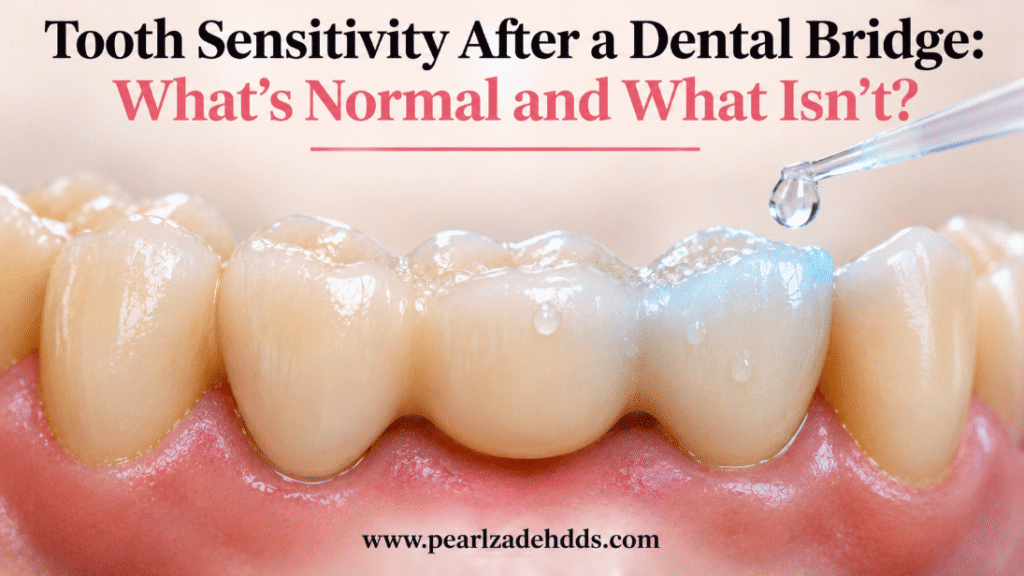
A new dental bridge fills the gap left by missing teeth, but a cold drink or a firm bite can still cause discomfort. Tooth sensitivity after a dental bridge can be unexpected, especially when the restoration itself feels secure.
Some patients notice sensitivity when eating, drinking, or chewing after treatment. The symptoms may be temporary, but their severity and duration matter.
Several factors can explain this discomfort, including tooth preparation, gum irritation, and changes in the bite. Sensitivity does not automatically mean the bridge is damaged, but symptoms that persist or worsen should be checked by a dentist.
Is Tooth Sensitivity Normal After Getting a Dental Bridge?
Some sensitivity can occur after bridge placement, particularly when natural teeth have been prepared to support a traditional bridge. However, not every patient experiences it.
Mild, temporary symptoms may include:
- Sensitivity to hot or cold foods and drinks.
- Tenderness around the supporting teeth.
- Slight discomfort when chewing.
- Mild gum soreness around the bridge.
The recovery period varies depending on the condition of the supporting teeth, the treatment performed, and the individual patient’s response.
Why Do Teeth Feel Sensitive After a Dental Bridge?
Sensitivity after bridge placement can have several explanations. The following are some possible causes.
Tooth Preparation
A traditional bridge requires the supporting teeth to be shaped so the crowns can fit over them. Cleveland Clinic explains that this involves removing some enamel, which cannot grow back.
Preparing the teeth may expose the more sensitive layer underneath the enamel, called dentin. This can contribute to sensitivity, particularly when exposed to hot, cold, or sweet foods and drinks.
Temporary Irritation of the Dental Pulp
The dental pulp is the soft inner tissue of a tooth. According to Cleveland Clinic, it contains nerves, blood vessels, and connective tissue.
Dental treatment can sometimes irritate the pulp, causing inflammation and sensitivity. Mild irritation may settle over time, but persistent or worsening symptoms need a dentist’s assessment.
Gum Irritation Around the Bridge
The gums may feel tender after bridge placement as the surrounding tissues recover from treatment. Mild soreness can occur during this period.
However, ongoing inflammation, bleeding, or swelling should not automatically be considered part of normal healing. Cleveland Clinic lists sore or bleeding gums among the reasons to contact a dentist.
Changes in the Bite
A bridge that sits slightly too high may make contact before the other teeth when biting down. This can place extra pressure on the supporting teeth and cause discomfort when chewing.
A dentist can check how the teeth come together and adjust the bridge if needed.
An Underlying Problem With a Supporting Tooth
Sensitivity may also come from a problem that existed before the bridge was placed or developed afterward. A supporting tooth may have decay, a crack, or other damage.
An abutment tooth is the natural tooth that supports a bridge. If it develops a problem, the tooth itself may become sensitive and the bridge’s support may be affected. A dental examination can help identify the source.
How Long Does Sensitivity Last After a Dental Bridge?
Sensitivity does not follow the same timeline for everyone. The type of treatment and condition of the supporting teeth can affect recovery.
Cleveland Clinic notes that it takes an average of one to two weeks for the teeth and gums to heal. This is a general estimate, not a guarantee that all sensitivity will disappear within that period. Some patients may need more time before the bridge feels completely natural.
- Mild sensitivity may gradually improve as the teeth and surrounding tissues recover.
- Some patients experience discomfort for longer than others.
- Sensitivity that persists, worsens, or develops after an initial period of comfort should be checked by a dentist.
What’s Normal and What Isn’t? Signs to Watch For
Some mild symptoms may occur during recovery, particularly if they gradually improve.
Symptoms that may be temporary:
- Mild sensitivity to hot or cold foods and drinks.
- Slight tenderness around the supporting teeth.
- Minor discomfort that improves over time.
Symptoms that need dental assessment:
- Severe or worsening pain.
- Sensitivity that persists without improvement.
- Pain that occurs without an obvious trigger or wakes you at night.
- Lingering pain after hot or cold foods and drinks.
- Pain when biting or chewing.
- Swelling, persistent gum bleeding, or signs of infection.
- A bridge that feels loose or no longer fits properly.
These symptoms do not establish a specific diagnosis. A dentist can examine the bridge and supporting teeth to determine what is causing the discomfort.
What Can You Do at Home to Reduce Sensitivity?
A few simple measures may help manage mild sensitivity while the area recovers:
- Brush gently with a soft-bristled toothbrush.
- Consider using a desensitizing toothpaste made for sensitive teeth. The American Dental Association explains that these toothpastes help block the transmission of sensation from the tooth surface to the nerve.
- Avoid very hot or cold foods and drinks if they trigger discomfort.
- Choose softer foods temporarily if chewing causes tenderness.
- Avoid chewing hard or sticky foods around the bridge.
- Continue cleaning gently around the bridge and supporting teeth. Our article on how to clean under a dental bridge properly explains which tools can help.
- Follow your dentist’s post-treatment instructions.
Do not apply aspirin, alcohol, household glue, or other unapproved substances directly to the teeth or gums. These measures are for mild symptoms only. Persistent or worsening sensitivity needs professional assessment.
When Should You Contact Your Dentist?
Contact your dentist promptly if you notice any of the following:
- Sensitivity that does not improve.
- Increasing discomfort.
- Pain when biting.
- Persistent or spontaneous tooth pain.
- Swelling or signs of infection.
- Changes in how the bridge fits.
Cleveland Clinic lists pain when chewing and sore or bleeding gums among the reasons to schedule a dental visit.
Facial swelling accompanied by difficulty breathing or swallowing requires emergency medical care. Do not wait for a dental appointment. Mayo Clinic advises patients with these symptoms to go to the emergency room.
Can a Dentist Fix Sensitivity After a Dental Bridge?
Treatment depends on what is causing the sensitivity. A dentist may:
- Check the bite and adjust the bridge if it makes premature contact with other teeth.
- Examine the supporting teeth and surrounding gums.
- Check the bridge’s fit and margins, which are the edges where it meets the supporting teeth.
- Treat decay, cracks, or other underlying dental problems.
- Recommend further testing or treatment if needed.
Sensitivity does not automatically mean the bridge must be removed or replaced. In some cases, an adjustment or treatment of the supporting tooth may be enough. Other problems require a different approach.
Schedule a Consultation With Dr. Pearl
If you are experiencing sensitivity after getting a dental bridge, Dr. Pearl Zadeh DDS can help determine whether the restoration or an underlying dental problem needs attention.
Her Woodland Hills, California practice offers porcelain dental bridges for patients who need tooth replacement.
Call (818) 716-6722 or click the button below to schedule your consultation online.
Frequently Asked Questions
Some mild, temporary sensitivity can occur, especially in prepared supporting teeth. Not every patient has it, and not all discomfort is normal. Persistent or worsening symptoms need an exam.
It varies. Cleveland Clinic gives a general average of one to two weeks for healing. Sensitivity that persists, worsens, or appears later should be checked.
Possible causes include a bite that touches too early, gum irritation, or a problem with a supporting tooth. A dentist must examine the bridge to know which applies. Pain when biting deserves an appointment.
Mild sensitivity that gradually improves is often less concerning. Severe pain, lingering pain, or symptoms that wake you at night should be assessed. An exam can find the cause.
It can, mainly through the prepared supporting teeth. Gentle brushing and a desensitizing toothpaste may help mild cases. A dentist should evaluate sensitivity that does not settle.
The information above is for informational purposes only and is not a substitute for professional dental advice. Please schedule a consultation with Pearl Zadeh DDS to discuss your specific situation.