
Some sensitivity after a composite filling is common, even though the cavity has been treated.
In most cases, the discomfort follows a short pattern and improves within a few days. Occasionally, pain can indicate something that needs a simple adjustment from your dentist.
Not every case requires intervention, but persistent or worsening pain should be checked to ensure the tooth is healing properly.
Why a Filled Tooth Can Still Hurt at All
Drilling can create heat and vibration that irritate the nerve inside the tooth, even after the decay has been fully removed.
The nerve, known as the pulp, sits at the center of the tooth and can become sensitive when it’s disturbed. This often leads to mild soreness that lasts a few days while the tissue settles.
Deeper cavities, especially those closer to the pulp, tend to cause more noticeable sensitivity after treatment.
Normal Pain Patterns After a Filling
Sensitivity to Cold
Cold sensitivity is the most common reaction after a filling. It occurs because the nerve inside the tooth remains temporarily reactive while it settles.
The sensation is usually sharp but brief and fades within seconds after the cold stimulus is removed. In most cases, it improves within one to two weeks.
Sensitivity to Pressure While Chewing
Some mild soreness when biting is common in the first few days, especially after deeper fillings.
This should gradually improve each day. If the discomfort increases instead of easing, it may need a bite adjustment.
Sensitivity to Sweet Foods
Sweet foods can sometimes trigger a similar response to cold sensitivity because the nerve is still adjusting after treatment.
This typically follows the same timeline and fades as the tooth settles.
Pain Patterns That Aren’t Normal
Not all post-filling discomfort is part of the normal healing process. Some symptoms can indicate that the filling or bite needs adjustment.
- Sharp pain that lasts more than fifteen seconds after a trigger
- Discomfort that worsens instead of gradually improving
- Throbbing pain that appears without any clear cause or disrupts sleep
- Sharp pain when biting down on a specific tooth or spot
- Pain that begins several days after the filling rather than immediately
When these patterns appear, the issue is often related to how the bite fits, how the filling bonded, or in some cases irritation of the nerve.
When the Bite Is the Actual Problem
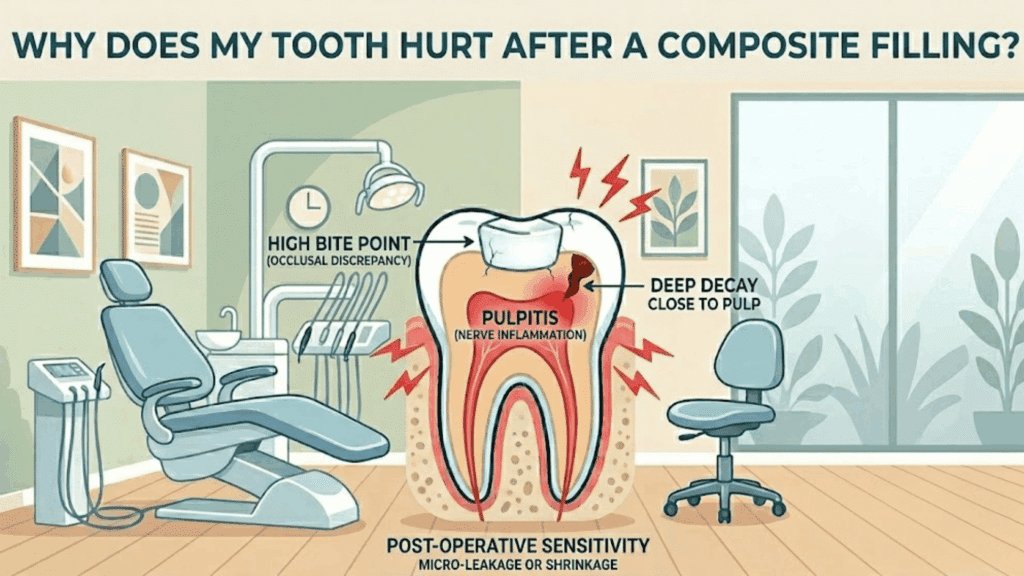
If a filling is even slightly too high, it can place extra pressure on one specific point each time you bite.
This is often not noticeable right after treatment while the area is still numb. Once normal sensation returns, the discomfort usually becomes clearer within a day or two of eating.
The pain tends to stay focused on a single tooth and is most noticeable when biting, rather than during normal temperature changes.
A quick bite adjustment can correct this in minutes and usually resolves the discomfort completely.
When the Pulp Reacts More Than Expected
Very deep cavities can come close to the pulp, which sometimes leads to a stronger inflammatory response after treatment.
In many cases, this settles within one to two weeks as the irritation reduces. In some cases, however, the nerve does not recover and continues to worsen over time.
When this happens, the pain often becomes more intense instead of improving. It may linger, appear without clear triggers, or start to wake you up at night. This pattern is known as irreversible pulpitis.
At that stage, root canal treatment is needed to remove the inflamed nerve tissue and preserve the remaining tooth structure.
Could the Filling Itself Be the Problem?
If the seal around a filling is not complete, bacteria can sometimes get underneath and start causing decay again, even when the surface looks normal.
Pain in these cases usually develops slowly rather than appearing immediately after treatment.
A cracked or slightly dislodged filling can also expose the tooth to air or pressure, which may trigger sudden sensitivity when chewing or breathing in cold air.
If a filling feels loose or the discomfort is persistent, our article on when a composite filling should be replaced explains the warning signs in more detail. If the filling comes out entirely, our guide on what to do if a composite filling falls out walks through the next steps.
Timeline: What to Expect Day by Day
| Timeframe | What’s Typical |
| Day 1 | Numbness, mild soreness once feeling returns, possible cold sensitivity |
| Days 2 to 4 | Cold and pressure sensitivity, gradually improving |
| Days 5 to 14 | Sensitivity continues fading, should feel noticeably better than day 1 |
| Beyond 2 weeks | Pain should be gone. Persistent pain warrants a follow up visit |
Pain that gradually fades over a few days usually settles without any further treatment.
If the discomfort starts getting worse instead of improving, especially after the first few days, it should be checked by a dentist.
What You Can Do at Home While It Settles
Most mild post-filling discomfort can be managed at home while the tooth adjusts.
- Take over-the-counter pain relief as directed on the label
- Avoid chewing on the treated side for a day or two
- Skip very hot, cold, or sweet foods while sensitivity is present
- Use a soft-bristled toothbrush around the area to prevent irritation
- Pay attention to whether symptoms are improving or getting worse each day
Tracking the pattern of pain is often more useful than the pain itself. Improvement usually points to normal healing, while worsening symptoms can signal that something needs adjustment.
When to Call Your Dentist
Some symptoms suggest the tooth needs a professional check rather than more time.
- Pain that is worse on day three than it was on day one
- Throbbing pain that appears without a clear trigger or wakes you up
- Sharp pain when biting on one specific spot
- Noticeable swelling in the gum near the treated tooth
- Pain that continues beyond two to three weeks without improvement
Contacting your dentist early usually means a simple adjustment can resolve the issue. Delaying care when symptoms are progressing can sometimes lead to more involved treatment later.
Speak with a Dentist If Your Pain Isn’t Improving
Most post-filling discomfort improves within one to two weeks without additional treatment.
If pain is not following that pattern or is getting worse instead of better, a quick dental check can help identify whether the bite or the tooth itself needs attention.
Dr. Pearl Zadeh’s Woodland Hills practice can assess lingering sensitivity and make simple adjustments when needed. Schedule a visit if your symptoms are not improving as expected. Call (818) 716-6722 or click the button below to schedule your consultation.
Schedule a ConsultationFrequently Asked Questions
1. Is it normal for a filling to hurt more on day two than day one?A slight increase in sensitivity can happen as the numbness fully wears off. Pain that continues to worsen after the second or third day is not typical.
2. Can a filling cause pain in a different tooth?Yes, in some cases. Tooth pain can sometimes feel like it is coming from a nearby tooth, which is known as referred pain.
3. How do I know if I need a root canal instead of just waiting it out?Pain that throbs at night, continues to worsen, or lasts beyond two weeks should be evaluated by a dentist. These patterns may indicate deeper nerve involvement.
4. Can grinding my teeth at night make filling pain worse?Yes. Teeth grinding can increase pressure on a newly treated tooth, which may worsen sensitivity and also affect how long the filling lasts. A nightguard can help reduce this strain.
5. Does the size of the filling affect how much pain I’ll have?Generally, yes. Larger or deeper fillings are closer to the nerve, which can lead to more noticeable sensitivity during the healing period.
Related Articles:
- What Is a Composite Filling? A Simple Guide for Patients
- When Should a Composite Filling Be Replaced?
- Mercury Fillings vs Composite Fillings. What’s the Difference?
- Dental Inlays vs Onlays vs Fillings: What’s the Difference?
- What to Do If a Composite Filling Falls Out
- How Long to Wait to Eat After a Composite Filling