Pearl Zadeh DDS

Author: tech@seosavvylawyer.com

  • Dental Anxiety in Children: How Parents Can Help

    Dental Anxiety in Children: How Parents Can Help

    Many children feel nervous before a dental visit. They may worry about unfamiliar sounds, new people, or what might happen during the appointment. For some children, that fear can become strong enough that they avoid or resist dental care altogether.

    The good news is that dental anxiety in children is common, and parents can play an important role in helping their child feel more comfortable. The way you prepare your child at home, the dentist you choose, and the approach used during the visit can all shape how they view dental care in the future.

    Why Do Children Develop Dental Anxiety?

    A dental office can feel unfamiliar to a child. Bright lights, new sounds, dental instruments, and being asked to sit still while someone examines their mouth can create anxiety, especially during early visits.

    A difficult past experience can also contribute to dental fear. A painful procedure, a rushed appointment, or feeling like they had little control during a visit may affect how a child approaches future dental care.

    Children can also develop fears by hearing other people describe negative dental experiences. Comments from siblings, classmates, or family members can influence how they expect a dental visit to feel before they ever experience it themselves.

    For many children, the biggest challenge is feeling a lack of control. They may not understand what the dentist is doing or why certain steps are necessary. Giving children simple explanations and allowing them to ask questions can help them feel more prepared and comfortable.

    Signs Your Child May Have Dental Anxiety

    Some signs of dental anxiety appear before your child even reaches the dental office. They may ask to skip the appointment, complain of feeling unwell, or become upset when you mention the dentist.

    During the visit, an anxious child may cry, hold tightly onto a parent, avoid opening their mouth, or struggle to sit still in the chair. Repeated questions about whether something will hurt may also signal that your child feels worried about the experience.

    Physical signs can happen too. A child may appear tense, have sweaty hands, or seem unable to relax once the appointment begins. Recognizing these signs early helps parents and dentists create a more comfortable experience.

    How Parents Can Prepare a Child for the Dentist

    How you talk about the dentist at home can influence how your child approaches the visit. Using a calm, positive, and neutral tone helps your child feel that the appointment is a normal part of staying healthy.

    Avoid using words that may create fear, such as “shot,” “drill,” or “hurt.” Even when parents use these words to reassure their child, they can introduce worries that were not there before. Instead, explain what will happen using simple and clear language. For example, telling your child that the dentist will count their teeth and take pictures of their mouth gives them a better idea of what to expect.

    Books and short videos about dental visits can also help children become familiar with the experience before their appointment. If your child feels nervous, starting with a routine checkup instead of waiting until treatment is needed can help them build confidence with dental care gradually.

    What Should Parents Avoid Saying Before a Dental Visit?

    Some common phrases meant to comfort children can accidentally increase their worry. Saying “it won’t hurt” may introduce the idea of pain before your child has even thought about it. Telling a child “don’t be scared” may also make them feel that their emotions are something they should hide.

    It is usually more helpful to acknowledge their feelings and explain what will happen. Instead of making promises about what the visit will or will not involve, describe the appointment in simple terms. Saying “the dentist is going to look at your teeth and count them” gives your child a clear expectation without adding unnecessary fear.

    How Dentists Help Children With Dental Anxiety

    A dentist who regularly works with anxious children focuses on creating a calm and predictable experience. The tell-show-do approach is one technique many dental teams use. The dentist explains what a tool does, shows it to the child, and then uses it only after the child understands what will happen.

    Clear explanations before each step can help children feel more comfortable during treatment. Giving children small choices, such as choosing a toothpaste flavor during a cleaning, can also help them feel more involved in the appointment.

    If a child becomes overwhelmed, taking a short break can help them regain confidence before continuing. Building trust takes time, and positive experiences over multiple visits can help children develop a more comfortable relationship with dental care.

    Can Sedation Help Children With Dental Anxiety?

    Sedation may be an option for children with significant dental anxiety, but dentists usually consider it only after evaluating the child’s individual needs. Nitrous oxide, sometimes called laughing gas, is one option some dentists use for children because it provides mild relaxation, wears off quickly, and allows the child to remain awake and responsive during the appointment.

    Whether sedation is appropriate depends on several factors, including your child’s age, anxiety level, overall health, and the type of treatment needed. A dentist evaluates each situation individually rather than using sedation as a standard approach for every nervous child. Sharing your child’s complete medical history is important because certain health conditions and medications may affect which options are suitable.

    How to Make Your Child’s First Dental Visit Easier

    Timing can play an important role in how your child handles a dental visit. Many children do better with a morning appointment, when they feel rested and are less likely to be tired or hungry.

    If the dental office allows it, bringing a comfort item, such as a small stuffed animal or favorite blanket, may help your child feel more relaxed in a new environment. Your own approach matters too. Children often notice the emotions of the adults around them, so maintaining a calm and reassuring tone can help create a more positive experience.

    After the appointment, praise your child for their effort, regardless of how the visit went. Recognizing small steps, such as sitting in the chair or allowing the dentist to complete an exam, can help build confidence for future visits.

    When Should Parents Seek Help for Severe Dental Anxiety?

    Some nervousness before a dental visit is normal and often improves as children become more familiar with the experience. However, if fear causes your child to avoid necessary dental care or prevents them from completing routine visits, it may be time to seek additional support.

    Strong reactions, such as prolonged crying, difficulty calming down, or intense distress during appointments, are worth discussing with a dentist who has experience treating anxious children. A previous negative dental or medical experience may also require a slower, more supportive approach.

    Working with a dental team that understands childhood dental anxiety can help create a more comfortable path toward regular care.

    Finding an Anxiety-Friendly Dentist for Your Child in Woodland Hills

    Parents in Woodland Hills looking for support with childhood dental anxiety often want more than reassurance. They want a dentist who listens to their concerns and takes the time to make the visit feel more comfortable for their child.

    Dr. Pearl Zadeh works with anxious patients through clear communication, a supportive approach, and a comfortable office environment designed to help nervous patients feel more at ease. For children who feel worried about dental visits, having a dental team that understands fear and takes time to build trust can help create more positive experiences with dental care over time.

    If you’re deciding whether a dental practice is the right fit for your family, our guide on choosing a dentist for dental anxiety covers questions worth asking before scheduling. You can also learn more about sedation options in our article on sedation dentistry for dental anxiety.

    Schedule a Consultation With Dr. Pearl Zadeh

    Choosing a dental team that understands anxiety can help your child feel more comfortable with dental visits. Dr. Pearl Zadeh and her Woodland Hills team take time to listen to concerns, explain each step clearly, and create a supportive experience for nervous patients.

    Call or text (818) 716-6722 or click the button below to schedule your consultation online.

    Schedule a Consultation

    Frequently Asked Questions

    Why is my child afraid of the dentist?

    Many children develop dental anxiety because of unfamiliar sounds, new sensations, or a previous uncomfortable experience. Hearing about someone else’s negative dental visit or feeling a lack of control during an appointment can also contribute to fear.

    How can I calm my child before a dental appointment?

    Use a calm and positive tone when talking about the visit. Avoid scary words like “shot,” “drill,” or “hurt,” and explain what will happen using simple language. Books or short videos about dental visits can also help your child become more familiar with the experience beforehand.

    Should I tell my child about dental procedures beforehand?

    Yes, but keep the explanation simple and factual. Telling your child what to expect, such as the dentist counting their teeth or taking pictures of their mouth, can reduce uncertainty and help them feel more prepared.

    Can children receive sedation for dental anxiety?

    In some cases, yes. Nitrous oxide, sometimes called laughing gas, may be an option for some children with dental anxiety because it provides mild relaxation and wears off quickly. A dentist evaluates each child individually based on their age, health history, anxiety level, and the treatment needed.

    What age should children start seeing a dentist?

    Many dental organizations recommend scheduling a child’s first dental visit within six months after their first tooth appears, and no later than their first birthday. Early visits help children become familiar with the dental office and allow dentists to monitor their oral health from an early age.

    How do dentists help children with dental anxiety?

    Dentists who work with anxious patients use techniques such as tell-show-do, explaining each step before starting treatment, offering small choices when possible, and allowing breaks when a child feels overwhelmed. These approaches can help children feel more comfortable during dental visits.

    Related Reading

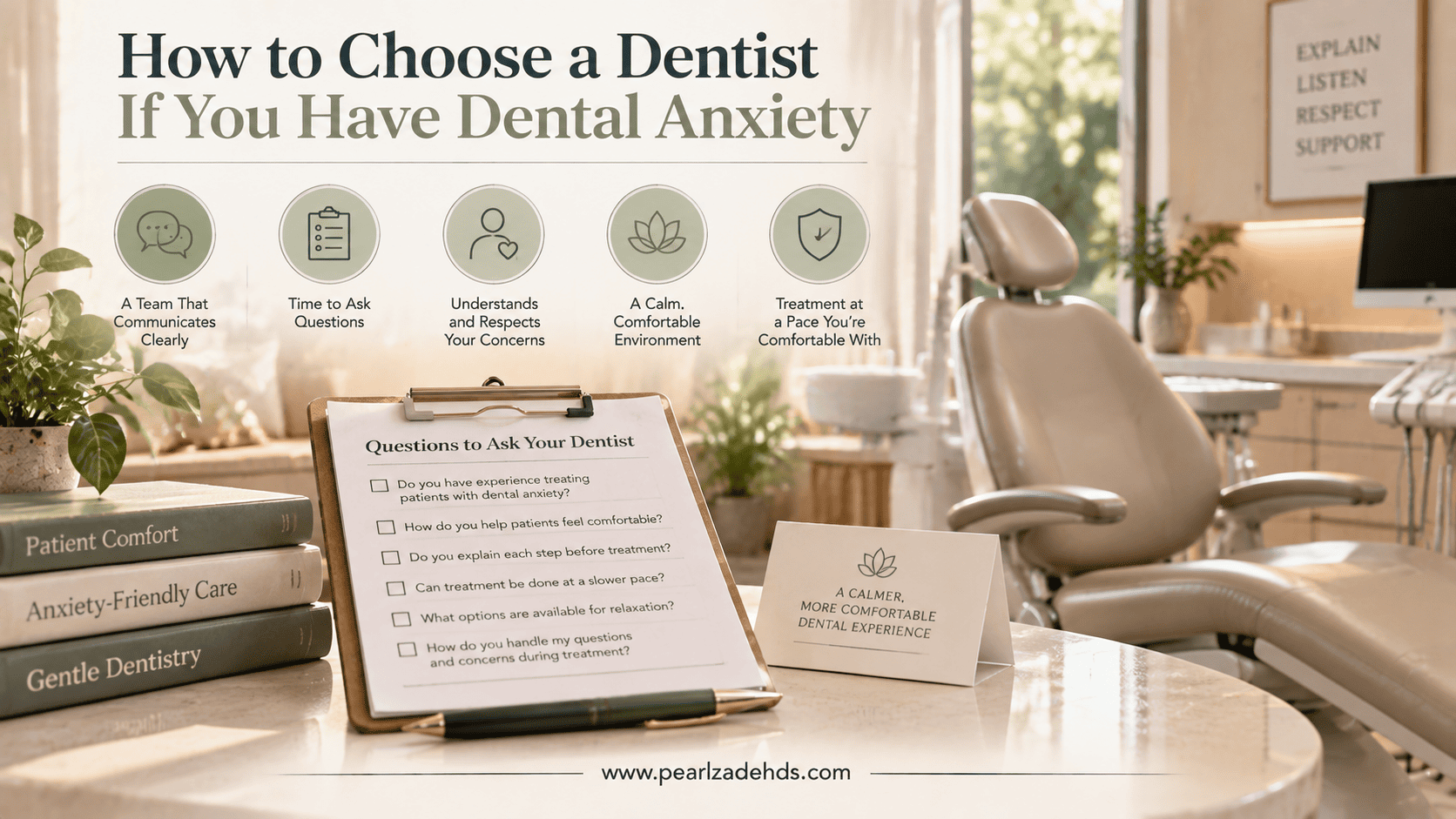
  • How to Choose a Dentist If You Have Dental Anxiety

    How to Choose a Dentist If You Have Dental Anxiety

    How to Choose a Dentist If You Have Dental Anxiety

    Dental anxiety can make a routine dental visit feel overwhelming. Some patients worry about pain, previous experiences, or feeling uncomfortable during treatment. Others delay appointments for months or even years because the thought of visiting the dentist creates too much stress.

    If this sounds familiar, you are not alone. Many patients experience some level of fear or anxiety around dental care. Finding a dentist who understands these concerns can change the entire experience.

    Not every dental office approaches anxious patients the same way. A supportive dental team focuses on communication, comfort, and helping you feel in control throughout your visit.

    When choosing a dentist for dental anxiety, look beyond the services offered. Pay attention to how the dentist communicates, how the team responds to your concerns, and what comfort options are available.

    What Makes a Dentist Right for Anxious Patients?

    A dentist who works well with anxious patients does more than provide reassurance. They create an environment where you feel comfortable asking questions, expressing concerns, and taking treatment at a pace that works for you.

    Here are some signs to look for when choosing a dentist for dental anxiety.

    They Explain Each Step Before Treatment Begins

    Many anxious patients feel nervous because they do not know what will happen next. A dentist who understands anxiety explains the procedure before starting and lets you know what sensations you may experience.

    For example, they may explain what a tool does, why it is needed, and what you may feel during that part of treatment. This simple communication can reduce uncertainty and help you feel more prepared.

    They Give You Control During Your Appointment

    Feeling a lack of control is a common concern among patients with dental anxiety. A supportive dentist gives you ways to pause treatment if you feel uncomfortable.

    Many dental offices use a simple hand signal that lets patients communicate when they need a break. Knowing you can stop at any time can make the appointment feel much less stressful.

    They Ask About Your Dental History and Concerns

    A dentist who takes anxiety seriously will ask about your previous dental experiences before beginning treatment.

    A painful procedure, a negative experience in the past, or fear passed down from someone else can affect how you feel about dental visits today. Sharing these concerns allows your dentist to adjust their approach and create a more comfortable experience.

    They Discuss Sedation Options When Appropriate

    Sedation is not necessary for every patient with dental anxiety. However, having different comfort options available can make treatment easier for patients who feel extremely nervous.

    A dentist who openly discusses options such as nitrous oxide, oral sedation, or IV sedation shows that they recognize anxiety as a genuine concern.

    Dr. Pearl Zadeh’s approach to dental anxiety focuses on clear communication, patient comfort, and offering sedation options when they are appropriate for the patient’s needs. You can learn more about her approach to helping anxious patients through her dental anxiety and comfort services.

    Questions to Ask Before Choosing a Dentist for Dental Anxiety

    Before scheduling your first appointment, a quick phone call can tell you a lot about how a dental office supports anxious patients.

    The way the team responds to your questions can help you decide if the practice feels like the right fit.

    Do You Treat Patients With Dental Anxiety Regularly?

    A dental office experienced with anxious patients should be comfortable answering this question. Look for specific examples of how they help nervous patients rather than a simple response that everyone is welcome.

    A good answer may include communication techniques, flexible appointment pacing, or available comfort options.

    What Sedation Options Do You Offer?

    Ask what sedation methods are available and how each option works. A dentist experienced with anxious patients should explain the differences between options such as nitrous oxide, oral sedation, and IV sedation.

    They should also explain which patients may benefit from each option and what to expect before and after treatment.

    Can I Take Breaks During Treatment?

    Patients with dental anxiety often feel better when they know they can pause during a procedure.

    Ask whether the office allows breaks and how the team handles situations where a patient needs a moment before continuing.

    What Happens If I Need to Stop During a Procedure?

    A supportive dental team should have a clear process for this situation. They should respect your request, check how you are feeling, and discuss the next step without making you feel pressured.

    How Does Your Team Communicate With Nervous Patients?

    The dentist is only one part of your experience. The front desk team, dental assistants, and hygienists also play an important role.

    Ask how the entire team helps nervous patients feel comfortable. Look for answers that mention clear explanations, patience, and regular check-ins during appointments.

    How the Dental Office Environment Affects Anxiety

    The environment of a dental office can influence how comfortable you feel before treatment even begins.

    Sounds, smells, and certain sights may remind some patients of previous dental experiences. A practice that considers these details can help create a calmer visit.

    Waiting Room Atmosphere

    A welcoming reception area can make the first few minutes of your appointment feel easier. A friendly team, clear communication, and a calm environment can help reduce stress before treatment begins.

    Treatment Room Comfort

    Small details inside the treatment room can make a difference for anxious patients. Some dental offices provide options such as headphones, calming music, or a quieter treatment approach for patients who are sensitive to sounds.

    The Dental Team’s Approach

    A caring dental team creates consistency throughout your visit. The way the receptionist answers your call, the way assistants explain procedures, and the way the dentist communicates all contribute to your overall experience.

    Reviewing a practice’s team page before your appointment can help you become familiar with the people who will be involved in your care. You can learn more about Dr. Pearl Zadeh’s dental team on the team page.

    Communication and Patient Control During Dental Appointments

    For many anxious patients, fear increases when they feel like they have no control over what is happening. A dentist who understands dental anxiety focuses on communication and gives patients a clear way to express their concerns during treatment.

    Simple steps, such as explaining procedures beforehand, allowing breaks, and checking in throughout the appointment, can make the experience feel much more comfortable.

    The Tell-Show-Do Approach

    Many dentists use a communication technique called the tell-show-do approach when treating nervous patients.

    The process is simple:

    • Tell: Explain what will happen and why it is needed.
    • Show: Demonstrate the tool, process, or sensation before starting.
    • Do: Begin treatment only after the patient understands what to expect.

    This approach reduces surprises, which can be a major source of anxiety during dental visits. When patients know what is coming next, they often feel more prepared and relaxed.

    Using Stop Signals During Treatment

    A stop signal gives patients a way to pause treatment whenever they need a moment.

    For example, many dental offices use a simple hand signal that tells the dentist to stop. This allows the patient to communicate discomfort without needing to speak while treatment is underway.

    Having this option can help anxious patients feel more comfortable because they know they remain involved in decisions about their care.

    Regular Check-Ins During Procedures

    A dentist who treats anxious patients does not focus only on completing the procedure. They also pay attention to how the patient is feeling throughout the appointment.

    Regular check-ins, such as asking if you are comfortable or if you need a short break, help create a more supportive experience.

    Your comfort should be part of the treatment process, not something the team considers only after a problem occurs.

    Sedation Options for Patients With Dental Anxiety

    Sedation is not needed for every patient with dental anxiety. However, it can be a helpful option for people who feel extremely nervous, have avoided dental care for years, or need longer procedures.

    Understanding the available options can help you have a more informed discussion with your dentist.

    Nitrous Oxide for Dental Anxiety

    Nitrous oxide, often called laughing gas, is a mild sedation option used to help patients feel more relaxed during dental treatment.

    The gas is delivered through a small mask and begins working within a few minutes. According to the American Dental Association, nitrous oxide can help reduce anxiety and discomfort when used appropriately by trained dental professionals.

    One benefit of nitrous oxide is that its effects wear off quickly after treatment. Many patients can return to their normal activities shortly after their appointment.

    Oral Sedation for Nervous Dental Patients

    Oral sedation involves taking prescribed medication before a dental appointment to help you feel calmer during treatment.

    This option provides a deeper level of relaxation compared with nitrous oxide. Some patients may feel drowsy or remember very little about their procedure afterward.

    Because the medication takes longer to wear off, patients typically need someone to drive them home after their appointment.

    IV Sedation for Severe Dental Anxiety

    IV sedation provides a deeper level of relaxation and may be considered for patients with severe dental anxiety or those undergoing longer procedures.

    During IV sedation, the patient receives medication through a vein and is monitored throughout treatment. This option should only be provided by qualified professionals with appropriate training and monitoring protocols.

    How to Choose the Right Sedation Option

    The right sedation choice depends on several factors, including your anxiety level, the type of treatment you need, and your overall health.

    A dentist should explain the benefits, risks, and expectations of each option before recommending a treatment plan. Sedation should be a shared decision based on your comfort and individual needs.

    If you are considering sedation for dental anxiety, you can learn more about how sedation dentistry helps with dental anxiety.

    How Dentists Help Nervous Patients Feel More Comfortable

    Sedation is only one part of helping anxious patients feel at ease. Many dentists use additional techniques to make appointments more manageable.

    Distraction Techniques During Dental Treatment

    Distraction can help shift your focus away from the sounds or sensations of dental treatment.

    Some patients feel more comfortable listening to music or using headphones during their appointment. Other practices may offer calming entertainment options to help patients stay relaxed.

    Breathing Techniques Before and During Appointments

    Controlled breathing can help your body respond differently to stressful situations.

    Taking slow breaths, focusing on steady breathing patterns, and practicing relaxation techniques before an appointment may help reduce feelings of nervousness.

    Building Trust Through Smaller Steps

    Patients with significant dental anxiety may feel more comfortable starting with a simple consultation, exam, or cleaning before scheduling more complex treatment.

    This allows you to become familiar with the dental team, understand the process, and build confidence before moving forward with additional care.

    Reading patient experiences through Dr. Pearl Zadeh’s testimonials can also help you learn how other patients felt about their visits.

    Signs a Dental Office May Not Be the Right Fit for Your Anxiety

    Finding the right dentist is not only about the services offered. It is also about how the practice responds to your concerns.

    Some warning signs include:

    Rushed Explanations

    If the dentist or dental team starts treatment without explaining what will happen, you may not feel comfortable or prepared.

    An anxiety-friendly practice takes time to answer questions and explain each step.

    Dismissive Responses About Fear

    Dental anxiety is a real concern. If a dental office minimizes your fears or makes you feel uncomfortable discussing them, it may not be the right environment for you.

    Limited Flexibility During Appointments

    Patients with anxiety may need additional time, breaks, or a slower approach during treatment.

    A practice that cannot adjust its approach may not provide the level of support you need.

    Unclear Information About Sedation Options

    If a dentist cannot clearly explain available sedation options or answer your questions, it may indicate that anxiety management is not a regular part of their patient care approach.

    How Anxious Patients Can Prepare for a Dental Visit

    Preparing before your appointment can make the experience feel more manageable.

    Schedule Your Appointment During a Comfortable Time

    Choose a time when you are less likely to feel rushed or overwhelmed. Some patients prefer morning appointments because they do not have to spend the entire day worrying about the visit.

    Tell the Dental Team About Your Anxiety Before Your Appointment

    Let the office know about your anxiety when scheduling your visit. This gives the team time to prepare and adjust the appointment experience based on your needs.

    Bring Someone You Trust

    If the dental office allows it, having a family member or friend accompany you can provide additional support before your appointment.

    Practice Relaxation Techniques Before Your Visit

    Simple techniques such as deep breathing, taking a walk, or listening to calming music before your appointment may help you arrive feeling more relaxed.

    Ask for a Tour Before Treatment

    Some patients feel more comfortable when they know what to expect. Asking to visit the office, meet the team, or see the treatment area before your procedure can reduce uncertainty and make your first visit easier. You can also read about what to expect at your first visit to become familiar with the practice before you arrive.

    Schedule a Consultation With Dr. Pearl Zadeh

    Choosing a dentist who understands dental anxiety can make a significant difference in your experience. Dr. Pearl Zadeh and her team provide anxiety-friendly dental care in Woodland Hills with a focus on clear communication, patient comfort, and personalized treatment plans.

    Whether you feel nervous about routine visits or have avoided dental care for years, discussing your concerns before treatment can help you find an approach that works for you. You can learn more about Dr. Pearl Zadeh’s approach and experience on the About Dr. Pearl Zadeh page.

    Call or text (818) 716-6722 or click the button below to schedule your consultation online.

    Schedule a Consultation

    Frequently Asked Questions

    How do I find a dentist who is good with anxiety?

    Start by asking directly during a phone call or consultation whether the practice regularly treats anxious patients. Look for specific answers about sedation, communication methods, and patient control, not just a general reassurance that everyone is welcome.

    What should I ask a dentist before scheduling an appointment?

    Ask what sedation options are available, whether you can take breaks during treatment, how the team communicates during procedures, and what happens if you need to stop mid-appointment. Their answers will tell you whether the practice is set up for anxious patients.

    Can dentists help patients with severe dental anxiety?

    Yes. Dentists experienced with anxiety can offer a combination of communication strategies, sedation options, and flexible scheduling to help even patients with severe fear complete necessary treatment safely and comfortably.

    What sedation options are available for nervous dental patients?

    Common options include nitrous oxide for mild to moderate anxiety, oral sedation for deeper relaxation, and IV sedation for more significant anxiety or longer procedures. Your dentist can help determine which option fits your needs and medical history.

    How can I make my dental appointment less stressful?

    Tell the office about your anxiety when you book, schedule during a low-stress time of day, use distraction methods like headphones during treatment, and agree on a stop signal with your dentist before the appointment begins.

  • Can Sedation Dentistry Help With Dental Anxiety?

    Can Sedation Dentistry Help With Dental Anxiety?

    For some patients, the hardest part of a dental visit happens before they even reach the office. Fear of pain, previous negative experiences, unfamiliar sounds, or feeling out of control during treatment can make scheduling an appointment feel overwhelming.

    Some patients delay care for months or even years because dental anxiety becomes a barrier. They know they need treatment, but the thought of sitting in the dental chair creates too much stress.

    Sedation dentistry can help some patients feel calmer and more comfortable during treatment. It does not remove every concern, and it is not the right option for everyone. However, for patients with significant anxiety, it can make dental care feel more manageable.

    Sedation works best when combined with a supportive dental team, clear communication, and a treatment approach that respects your comfort level.

    What Is Sedation Dentistry?

    Sedation dentistry uses medication to help patients relax during dental procedures. The level of sedation depends on the type used and can range from mild relaxation to a deeper state where patients remember very little about their appointment.

    Sedation is different from general anesthesia. Most dental sedation methods allow patients to continue breathing independently and respond when the dentist speaks to them.

    The goal of sedation is not always to make a patient sleep. Instead, it helps reduce fear, tension, and stress so patients can receive necessary dental care more comfortably.

    How Does Sedation Help Patients With Dental Anxiety?

    Dental anxiety can develop for different reasons. Some patients fear pain, while others feel nervous because of past experiences, the sound of dental instruments, or the feeling of not being in control.

    Sedation can help by reducing the body’s stress response during treatment. Patients may feel calmer, less aware of certain sensations, and better able to complete procedures they may have avoided in the past.

    However, sedation is only one part of anxiety management. A dentist who takes time to explain procedures, answer questions, and adjust the pace of treatment can make an equally important difference.

    You can learn more about ways dentists support nervous patients, including communication techniques and comfort options, on our dental anxiety and comfort page.

    Can Sedation Dentistry Help If You Avoid the Dentist Because of Fear?

    Some patients do not avoid the dentist because they do not care about their oral health. They avoid appointments because anxiety has become too difficult to manage.

    Over time, delaying dental visits can allow small concerns to become larger problems. For these patients, sedation dentistry may provide a way to return to dental care without feeling overwhelmed.

    A dentist may recommend starting with a consultation or a simple appointment before moving forward with treatment. This gives you a chance to discuss your concerns, understand your options, and decide what approach feels right.

    Sedation is not about forcing a patient through a procedure. It is about creating a more comfortable environment where patients feel supported throughout their care.

    Who May Benefit From Sedation Dentistry?

    Sedation is not only for patients with severe dental phobia. It may help patients who experience different challenges during dental visits.

    You may benefit from discussing sedation options with your dentist if you:

    • Have avoided dental appointments because of fear or anxiety.
    • Had a difficult or painful dental experience in the past.
    • Have a strong gag reflex that makes treatment uncomfortable.
    • Need a longer procedure or multiple treatments.
    • Feel extremely nervous about dental instruments, sounds, or sensations.
    • Have difficulty sitting still during treatment.

    Not every anxious patient needs sedation. Some patients feel comfortable with communication, breaks, and other relaxation techniques alone. A dentist can help determine which approach matches your needs.

    Different Types of Dental Sedation

    Sedation dentistry includes several options. The right choice depends on your anxiety level, the type of procedure, your medical history, and your dentist’s recommendation.

    The most common dental sedation options include nitrous oxide, oral sedation, and IV sedation.

    Nitrous Oxide Dentistry

    Nitrous oxide, commonly called laughing gas, is one of the mildest forms of dental sedation. Patients breathe the gas through a small mask placed over the nose.

    It usually takes effect within a few minutes and creates a relaxed feeling while allowing patients to remain awake and responsive during treatment.

    According to the American Dental Association, nitrous oxide combined with oxygen is considered a safe and effective method for helping manage anxiety and discomfort when used appropriately by trained dental professionals.

    One benefit of nitrous oxide is that the effects wear off quickly after treatment. Many patients return to their normal activities shortly afterward. Your dentist can advise whether driving yourself home is appropriate based on your specific situation.

    Oral Sedation Dentistry

    Oral sedation involves taking prescribed medication before your dental appointment. It provides a deeper level of relaxation compared with nitrous oxide.

    Patients may feel drowsy, calm, or less aware of the procedure. Some people remember very little about their appointment afterward.

    Because oral sedation remains in your system longer, you will need someone to drive you home. Your dentist will provide instructions about how to prepare before your appointment.

    IV Sedation Dentistry

    IV sedation delivers medication directly into the bloodstream, allowing the provider to adjust the level of sedation during treatment.

    This option may be considered for patients with significant dental anxiety or those undergoing longer procedures. Some patients remain responsive during IV sedation, while others remember very little about the appointment afterward.

    IV sedation requires careful monitoring and should only be provided by a trained dental professional who follows appropriate safety protocols.

    How Dentists Decide Which Sedation Option Is Right for You

    Choosing the right sedation method depends on more than how nervous you feel about visiting the dentist. Your dentist will consider several factors, including your anxiety level, the type of treatment you need, your medical history, current medications, and previous experiences with dental care.

    Before recommending sedation, a dentist should discuss your concerns and explain why a specific option may be suitable for your situation. They should also review the benefits, possible risks, and what you can expect before, during, and after treatment.

    Sedation should never be treated as a standard solution for every anxious patient. The best approach combines the right level of sedation with communication, trust, and a treatment plan that matches your comfort level.

    What Happens Before a Sedation Dentistry Appointment?

    Before your appointment, your dentist will review your health history and ask about any medical conditions, medications, allergies, or previous reactions to sedation.

    You may also receive instructions depending on the type of sedation planned. For example, some patients may need to avoid eating or drinking for a specific period before certain types of sedation.

    Your dental team will also explain what to expect during the procedure and answer any questions you have. Knowing the process beforehand can reduce some of the uncertainty that contributes to dental anxiety.

    If you receive oral sedation or IV sedation, you will need someone available to drive you home after your appointment.

    What Does Sedation Feel Like During a Dental Procedure?

    The experience depends on the type of sedation you receive.

    With nitrous oxide, most patients remain awake and aware but feel more relaxed during treatment. The effects are usually mild and wear off quickly after the gas is stopped.

    With oral sedation, patients often feel more relaxed and drowsy. Some people remain aware of what is happening, while others remember very little afterward.

    With IV sedation, patients usually experience a deeper level of relaxation. Some may respond during treatment but have limited memory of the appointment afterward.

    Throughout the procedure, your dentist and team monitor your response and make adjustments when needed to keep you comfortable and safe.

    Is Sedation Dentistry Safe?

    Sedation dentistry is considered safe when it is provided by a trained dental professional who properly evaluates the patient beforehand and follows appropriate monitoring procedures.

    Like any medical treatment, sedation has potential risks. These risks can vary depending on your overall health, the type of sedation used, and the complexity of your procedure.

    This is why your dentist should review your medical history and discuss your options before recommending sedation. A thorough consultation helps determine whether sedation is appropriate for your situation.

    Questions to Ask Before Choosing Sedation Dentistry

    Before deciding on sedation, ask your dentist questions that help you understand the process and feel comfortable with your choice.

    Consider asking:

    • What type of sedation do you recommend for my anxiety level and procedure?
    • Why do you think this option is right for me?
    • What should I expect to feel during treatment?
    • How will I be monitored during the appointment?
    • What are the possible side effects?
    • Will I need someone to drive me home?
    • How long will recovery take?

    A dentist who takes time to answer your questions clearly shows that your comfort and safety are part of the treatment plan.

    Reading patient testimonials can also help you understand how other people experienced care at the practice and whether the team helped them feel comfortable during their visits.

    How Dentists Help Anxious Patients Feel Comfortable Beyond Sedation

    Sedation can help reduce anxiety, but it is only one part of creating a positive dental experience. Many anxious patients benefit from a combination of communication, patience, and practical comfort measures.

    Clear Communication Before and During Treatment

    Knowing what will happen next can reduce fear. Dentists who explain each step before starting a procedure help patients feel more prepared and in control.

    Taking Breaks When Needed

    A simple hand signal or agreed-upon pause can give anxious patients reassurance that they can stop if they feel overwhelmed.

    A Supportive Dental Team

    Every interaction matters, from the first phone call to the appointment itself. A calm and understanding team can make patients feel more comfortable throughout the entire process.

    You can learn more about the people who support patients at every stage of care on the Dr. Pearl Zadeh team page.

    How to Prepare for a Sedation Dentistry Appointment

    Preparing ahead of time can make your visit feel more predictable and less stressful.

    Before your appointment:

    • Tell the dental office about your anxiety when scheduling your visit.
    • Follow all instructions provided before sedation.
    • Arrange transportation if your sedation type requires it.
    • Write down questions or concerns you want to discuss.
    • Avoid delaying care because of fear. A conversation with your dentist is the first step toward finding a solution.

    If visiting a new dental office feels overwhelming, learning more about the practice beforehand can help. You can view Dr. Pearl Zadeh’s approach and learn about the office environment before your visit.

    Choosing an Anxiety-Friendly Dentist in Woodland Hills

    Finding the right dentist involves more than looking for sedation options. Many anxious patients want a dental team that listens, explains procedures clearly, and respects their comfort throughout treatment.

    For patients in Woodland Hills, Dr. Pearl Zadeh focuses on creating a supportive dental experience through clear communication, patient education, and personalized treatment planning. Her approach includes discussing sedation options when appropriate and helping patients choose a level of care that fits their needs.

    You can learn more about Dr. Pearl Zadeh’s approach to patient care on the about Dr. Pearl Zadeh page.

    Schedule a Consultation With Dr. Pearl Zadeh

    Dental anxiety should not prevent you from getting the care you need. Dr. Pearl Zadeh and her team in Woodland Hills take time to understand your concerns, explain your options, and create a treatment approach based on your comfort level.

    If you have questions about sedation dentistry or want to discuss your options, call or text (818) 716-6722 or click the button below to schedule your consultation online.

    Schedule a Consultation

    Frequently Asked Questions

    What is sedation dentistry?

    Sedation dentistry uses medication to help patients relax during dental procedures. Depending on the type used, sedation can range from mild relaxation with nitrous oxide to deeper relaxation with oral or IV sedation.

    Can sedation dentistry help with dental anxiety?

    Yes. Sedation can help many anxious patients feel calmer during dental treatment. It works best when combined with a supportive dental team, clear communication, and a treatment plan that addresses the patient’s concerns.

    Is sedation dentistry safe?

    Sedation dentistry is generally safe when a trained provider reviews your health history, chooses the appropriate option, and monitors you during treatment. Your dentist can explain the risks and benefits based on your individual situation.

    What types of sedation are used in dentistry?

    The most common options include nitrous oxide, oral sedation, and IV sedation. Each option provides a different level of relaxation and may be recommended depending on your anxiety level and treatment needs.

    Can I drive myself home after dental sedation?

    It depends on the type of sedation used. Many patients can drive after nitrous oxide because the effects wear off quickly. Oral sedation and IV sedation usually require someone else to drive you home.

    Related Reading