
Pearl Zadeh DDS

Author: tech@seosavvylawyer.com

  • Signs Your Dental Bridge Needs Replacement
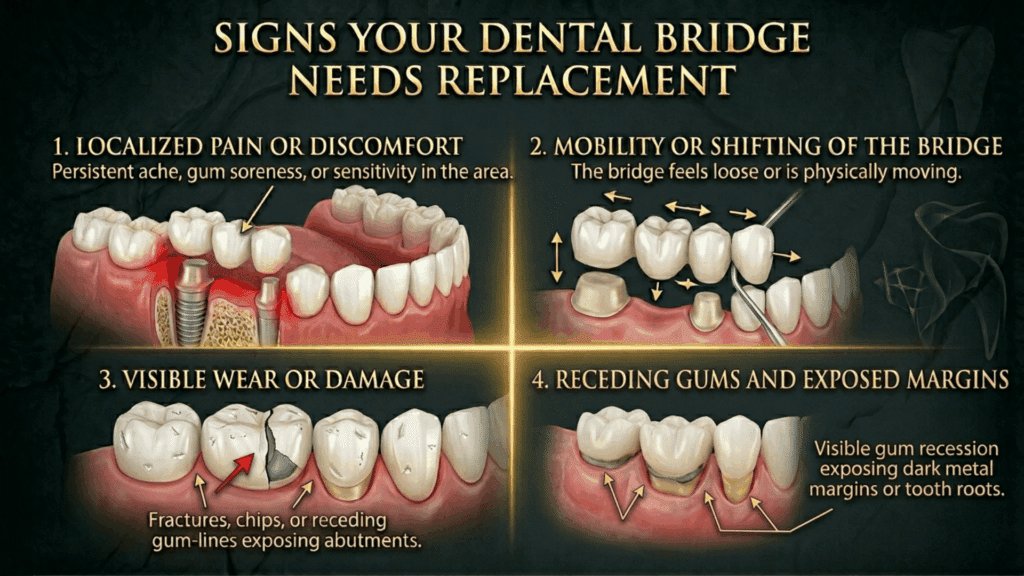
    Signs Your Dental Bridge Needs Replacement

    Signs Your Dental Bridge Needs Replacement

    A dental bridge carries a lot of daily work. It handles chewing, biting, and constant pressure every time you eat or speak. Over time, that stress shows up in small ways first. A slight shift while chewing. Food starting to collect in places that used to stay clean. A mild edge that feels different on your tongue.

    Most patients do not notice anything dramatic at the beginning. The bridge still looks fine, so the changes feel easy to ignore. But underneath, the fit and the supporting teeth can slowly change.

    A bridge rarely fails suddenly. It usually breaks down step by step.

    A bridge that no longer feels stable

    A healthy bridge should feel like part of your natural teeth. You should not sense movement when you bite down or floss around it.

    When stability changes, patients often describe a slight rocking sensation or a feeling that something is “not sitting right.” That feeling matters. It often means the cement layer has weakened or one of the supporting teeth has changed shape due to decay or pressure.

    Even a small amount of movement creates space where bacteria can enter. Once that happens, the supporting teeth lose protection.

    Sensitivity or discomfort while chewing

    Pain around a bridge does not always start as sharp discomfort. In many cases, it begins as mild sensitivity when chewing harder foods or drinking something cold.

    This usually points to an issue under the bridge rather than the bridge itself. Decay can form under the crown. A supporting tooth can develop a crack. In some cases, the bite may shift slightly and place uneven pressure on one side.

    The key detail here is change. A bridge that suddenly feels different during chewing is sending a signal that something underneath is no longer stable.

    Food getting trapped more often

    Food should not constantly collect under a dental bridge. When it starts happening regularly, it usually means the seal between the bridge and the tooth has changed.

    Small gaps can form over time as the materials wear or as gums shift. Once those gaps appear, food and bacteria move in easily. Patients often notice that floss catches or shreds in the same area repeatedly.

    That repeated trapping is not just an annoyance. It increases the risk of gum irritation and decay under the supporting crowns.

    Bad breath that stays in one area

    Daily brushing and flossing usually control general mouth odor. However, when a bridge starts to fail, bad breath can linger around that specific area even after cleaning.

    This happens when bacteria get trapped underneath or around the margins of the bridge. The area becomes harder to clean properly, especially if the fit has changed slightly.

    Patients sometimes notice a sour taste or a smell that keeps coming back in the same spot. That pattern often points to a problem under the restoration, not just surface plaque.

    Gum changes around the bridge

    Healthy gums sit firmly around a bridge and stay pink and firm. When a bridge begins to fail, the gums often react first.

    You may see redness, mild swelling, or bleeding when brushing near the bridge. In other cases, the gums start pulling away slightly from the edge of the restoration.

    That recession exposes small margins where bacteria collect more easily. Over time, this can affect both comfort and the health of the supporting teeth.

    Gum changes around a bridge rarely improve on their own. They usually signal an underlying fit or hygiene problem.

    Visible wear, chips, or cracks

    Dental bridges are strong, but they are not immune to damage. Years of chewing can wear down the surface or create small chips in the porcelain.

    A small chip may not seem urgent at first. The bridge still functions, and there is no pain. However, cracks tend to spread with continued pressure.

    Once the structure weakens, bacteria can enter through small openings. That is when deeper problems start developing under the bridge.

    Changes in the way your bite feels

    Your bite should feel even and balanced when a bridge is working properly. You should not feel one side hitting earlier than the other or notice new pressure points.

    When the bite changes, it often means the bridge has worn down or the supporting teeth have shifted slightly. This imbalance places extra stress on certain teeth and can lead to jaw discomfort over time.

    Some patients also start clenching more without realizing it because the bite no longer feels smooth.

    Supporting teeth start to weaken

    A bridge depends completely on the teeth holding it in place. If those teeth develop decay or cracks, the bridge loses stability.

    The challenge is that decay under crowns is not always visible. It can progress quietly until symptoms appear. By that stage, the supporting tooth may already need more advanced treatment.

    This is one of the main reasons dentists monitor bridges closely during routine exams.

    Age of the bridge starts to matter

    Most dental bridges last around 5 to 15 years, depending on care and bite forces. As they age, the materials slowly wear down and the margins become less precise.

    Even if the bridge still feels fine, older restorations deserve closer checks. Small changes in fit or bite pressure often start long before visible damage appears.

    What happens if you wait too long

    A bridge rarely fails in isolation. When problems start, they usually affect the supporting teeth as well.

    Delaying treatment can allow decay, infection, or structural damage to spread under the bridge. In some cases, the supporting teeth become too weak to hold a new restoration.

    At that point, treatment often becomes more complex and may involve additional procedures beyond a simple replacement.

    When to get it checked

    Any change in comfort, bite, or cleanliness around a bridge is worth a dental exam. Even mild symptoms can point to early failure under the surface.

    A quick evaluation and X-ray often reveal issues that cannot be seen in the mirror.

    Protect Your Teeth Before the Damage Spreads

    Dental bridges often fail gradually, not suddenly. Small changes in comfort, fit, or gum health usually appear before major complications develop.

    At Pearl Zadeh DDS, Dr. Pearl takes a careful, preventive approach to monitoring and treating dental bridge issues before they become more serious.

    If your bridge feels loose, traps food constantly, causes discomfort, or no longer feels natural while chewing, it is worth getting it checked before the supporting teeth become damaged.

    Early treatment can often prevent infections, fractures, and more extensive dental work later.

    If you think your dental bridge may need repair or replacement, call (818) 716-6722 or click the button below to schedule your consultation online.

    Schedule a Consultation

    Frequently Asked Questions

    1. How do I know if my dental bridge needs replacement?

    You may need a replacement if your bridge feels loose, traps food often, causes discomfort while chewing, or shows visible wear such as chips or cracks. Even small changes in how the bridge feels can signal problems underneath that need a dental check.

    2. Can a loose dental bridge be fixed without replacing it?

    Sometimes yes. If the supporting teeth remain healthy and the issue comes from weakened cement, a dentist may be able to recement the bridge. However, if decay, damage, or poor fit exists underneath, replacement becomes the safer option.

    3. Why does food keep getting stuck under my dental bridge?

    Food trapping usually happens when small gaps form between the bridge and the gums or supporting teeth. This can develop over time as the bridge wears or as the gums shift. It often indicates that the seal is no longer tight and needs evaluation.

    4. What happens if I ignore a failing dental bridge?

    A failing bridge can allow bacteria to reach the supporting teeth. Over time, this may lead to decay, gum disease, infections, or even tooth loss. Once the supporting teeth weaken, replacing the bridge becomes more complex.

    5. How often should a dental bridge be checked by a dentist?

    Most dental bridges should be checked during regular dental visits, typically every six months. These checkups help detect early signs of wear, leakage, or decay before they turn into more serious problems.
    Related Articles:

    1. Porcelain Bridges: What to Know Before Your Visit
    2. Types of Porcelain Bridges: Which Option Is Best for Your Smile?
    3. Porcelain Bridges vs. Dental Implants: Which Is Right for You?
    4. When Is a Dental Bridge Better Than an Implant?
    5. Porcelain Crowns Guide: What Patients Need to Know

  • Are Amalgam Fillings Leaky? What Dr. Pearl Zadeh’s Dental Office Wants You to Know

    Are Amalgam Fillings Leaky? What Dr. Pearl Zadeh’s Dental Office Wants You to Know

    If you have silver-colored amalgam fillings, or you’re considering dental restorations, you might be asking: Are amalgam fillings leaky? This question is more important than it sounds. The integrity of your fillings directly affects your oral health, preventing bacteria from entering your teeth and causing further decay.

    At Dr. Pearl Zadeh’s dental office, where we strongly oppose the use of amalgam fillings, we want to explain why amalgam fillings can be problematic when it comes to leakage, what that means for your teeth, and why mercury-free alternatives like composite fillings are safer and more effective.

    What Does It Mean When We Say a Filling Is “Leaky”?

    When dentists refer to a “leaky” filling, they’re talking about microleakage, the tiny gaps or spaces that can form between the filling material and your tooth structure. These gaps allow saliva, bacteria, and food particles to seep under the filling.

    Over time, this can lead to:

    • Tooth sensitivity
    • Recurrent decay (cavities forming beneath the filling)
    • Tooth discoloration
    • Inflammation or infection of the tooth pulp

    Microleakage is a common problem that can compromise the longevity and safety of a dental filling.

    Are Amalgam Fillings Prone to Leakage?

    The Truth About Amalgam Fillings and Leakage

    Yes, amalgam fillings can be leaky, and here’s why:

    • Lack of Adhesion: Unlike modern composite fillings that chemically bond to your tooth, amalgam fillings do not adhere to the tooth structure. They rely on mechanical retention, meaning the dentist has to carve the tooth into a shape that physically holds the filling in place.
    • Metal Expansion and Contraction: Amalgam expands and contracts with changes in temperature (hot and cold foods), which can cause the filling to loosen over time. This movement creates gaps between the filling and the tooth.
    • Corrosion Over Time: Amalgam fillings undergo corrosion, which can initially help seal the edges but eventually leads to breakdown and increased microleakage.
    • Tooth Structure Removal: To place an amalgam filling, more healthy tooth material often needs to be removed to accommodate its shape. This weakens the tooth and increases the risk of fractures that worsen leakage.

    Why Is Leakage a Serious Concern?

    Leaky fillings can lead to multiple dental problems:

    1. Recurrent Decay Under the Filling

    Bacteria and acids can sneak through microscopic gaps, causing new decay underneath the filling, often undetectable until it becomes severe.

    2. Tooth Sensitivity and Pain

    Leaking fillings can expose sensitive parts of the tooth to temperature changes or pressure, leading to discomfort.

    3. Cracks and Fractures

    As the amalgam filling shifts with temperature, it can cause the surrounding tooth to crack, which may necessitate more invasive treatments like crowns or even extraction.

    4. Mercury Exposure

    When fillings degrade and leak, tiny mercury particles or vapor can be released. This is especially concerning for patients wary of mercury exposure.

    How Do Composite Fillings Compare When It Comes to Leakage?

    Composite fillings, the mercury-free alternative Dr. Pearl Zadeh strongly recommends, perform better against microleakage due to several key factors:

    • Chemical Bonding: Composite resins bond directly to the tooth, sealing margins tightly to prevent leakage.
    • Less Tooth Removal: Composites require minimal drilling, preserving more natural tooth structure and reducing fracture risk.
    • Thermal Expansion Similar to Teeth: Composite materials expand and contract at a rate similar to natural teeth, reducing gap formation.
    • Durability and Flexibility: Modern composites are strong and slightly flexible, maintaining the seal longer.

    Signs Your Amalgam Filling May Be Leaking

    It’s important to recognize symptoms of leaky amalgam fillings so you can seek prompt dental care:

    • Persistent tooth sensitivity to hot, cold, or sweet foods
    • A metallic or unusual taste in your mouth
    • Dark staining or discoloration around the edges of a filling
    • Toothache or unexplained pain in a previously filled tooth
    • Visible cracks or rough edges on the filling

    If you notice any of these signs, scheduling a dental evaluation with Dr. Pearl Zadeh is essential.

    What Can You Do If You Have Leaky Amalgam Fillings?

    At Dr. Pearl Zadeh’s dental office, we take a proactive approach to protect your oral health:

    1. Comprehensive Examination

    We assess the condition of your existing fillings using advanced diagnostic tools to detect leakage or decay.

    2. Safe Removal of Amalgam Fillings

    If necessary, we safely remove your amalgam fillings using protocols that minimize mercury exposure, including rubber dams, high-volume suction, and air filtration.

    3. Replacement with Mercury-Free Fillings

    We replace amalgam with biocompatible composite or ceramic fillings that bond securely to your tooth and prevent leakage.

    4. Regular Monitoring

    Routine check-ups allow us to monitor all restorations, catch early signs of leakage, and maintain your oral health.

    Conclusion: Why Avoiding Leaky Amalgam Fillings Matters for Your Health

    Amalgam fillings are prone to leakage due to their lack of adhesion, thermal expansion, and corrosion over time. This leakage can lead to recurrent decay, sensitivity, fractures, and even mercury exposure, risks that Dr. Pearl Zadeh’s dental office works hard to prevent.

    Choosing mercury-free composite fillings offers a safer, more durable, and aesthetically pleasing alternative that minimizes leakage and supports long-term oral health.

    If you’re concerned about your existing amalgam fillings or want to explore healthier options, contact Dr. Pearl Zadeh’s office today to schedule a consultation. Together, we’ll protect your smile with the safest, most effective dental care available.

    Key Takeaways:

    • Amalgam fillings can be leaky due to poor bonding and metal expansion.
    • Leakage leads to decay, sensitivity, fractures, and potential mercury exposure.
    • Composite fillings bond tightly to teeth, reducing leakage risk.
    • Early detection and safe removal of leaking amalgam fillings are crucial.
    • Dr. Pearl Zadeh’s office specializes in mercury-free dentistry for your health.

  • Why Are My Gums Bleeding After a Dental Crown?

    Why Are My Gums Bleeding After a Dental Crown?

    Why Are My Gums Bleeding After a Dental Crown

    Seeing blood when you brush or floss after getting a dental crown can feel worrying. Many patients expect the tooth to feel better after treatment, not create a new problem.

    In most cases, mild gum irritation can happen right after crown placement. However, bleeding that continues or gets worse is not something to ignore. The cause usually comes down to how the gums reacted during treatment, how the crown fits, or how the area is cleaned afterward.

    Knowing the cause helps you decide whether it will settle on its own or needs a dental check.

    What Happens to Gums During a Dental Crown Procedure

    A dental crown procedure involves shaping the tooth so the crown can fit properly. In many cases, this work happens very close to the gumline.

    To complete the process, the gums may be gently moved or slightly irritated. A temporary crown may also press against the gum tissue while the final crown is being made.

    Because of this, the gums can feel sensitive for a short period. Small amounts of bleeding during the first few days may come from this temporary irritation, especially while brushing.

    Is It Normal for Gums to Bleed After a Dental Crown?

    Light bleeding right after crown placement can happen, especially if the gums were inflamed before treatment or if they were adjusted during the procedure.

    In healthy healing cases:

    • Bleeding is mild
    • It improves within a few days
    • Gum sensitivity slowly reduces

    However, gums should not keep bleeding after the initial healing phase. If bleeding continues beyond one to two weeks, something else is usually contributing to the problem.

    Common Causes of Bleeding Gums After a Dental Crown

    Bleeding gums after a crown are usually linked to one or more of the following causes.

    Gum Irritation from Placement

    The gum tissue may react to dental instruments or pressure from the crown during placement. This irritation can lead to short-term inflammation and bleeding.

    Crown Edge Too Close to the Gumline

    If the crown margin sits too deep or too close to the gums, it can irritate the tissue every time you brush or chew.

    Over time, this constant contact can lead to:

    • Redness
    • Swelling
    • Bleeding while brushing

    Plaque Buildup Around the Crown

    Even a well-placed crown can trap plaque if it is difficult to clean.

    When bacteria collect around the gumline, the gums become inflamed. This condition, often early gingivitis, is one of the most common reasons for bleeding.

    Changes in Oral Hygiene After Treatment

    Some patients avoid brushing near the crown because it feels sensitive. While this is understandable, it can lead to plaque buildup very quickly.

    Less cleaning means more irritation, which can cause bleeding to continue or worsen.

    Existing Gum Disease Before the Crown

    Sometimes the crown is not the real cause. If gum disease was already present, the area may continue to bleed even after treatment.

    In these cases, the crown simply makes an existing problem more noticeable.

    Bleeding Gums After Crown Placement. When Should You Worry?

    Not all bleeding is serious, but certain signs should not be ignored.

    You should get your crown checked if you notice:

    • Bleeding that lasts longer than two weeks
    • Gum swelling that does not improve
    • Pain when chewing or brushing
    • A bad taste near the crown
    • Redness that spreads instead of improving

    These signs often indicate irritation that needs adjustment or treatment, not just time to heal.

    Schedule a Consultation

    Treatment Options for Bleeding Gums

    The right treatment depends on the cause.

    Improved Cleaning Around the Crown

    If plaque buildup is the issue, better brushing and flossing often improve the gums within days. Dentists may also recommend a professional cleaning.

    Crown Adjustment

    If the crown edge is irritating the gums or sitting too close, a small adjustment can reduce pressure and stop bleeding.

    Gum Treatment

    If inflammation is more advanced, targeted gum care may be needed to reduce infection and restore gum health.

    Crown Replacement (Rare Cases)

    If the crown does not fit properly and continues to irritate the gums, replacing it may be necessary for long-term comfort.

    How to Care for Gums After a Dental Crown

    Good home care plays a big role in healing and preventing bleeding.

    • Brush gently twice a day
    • Clean along the gumline carefully
    • Floss once daily around the crown
    • Use a soft-bristled toothbrush
    • Avoid aggressive brushing near the crown

    These habits help reduce inflammation and support healthy gums.

    Dental Crown and Gum Health. What You Should Know

    A dental crown itself does not cause gum disease. The issue usually comes from how the crown fits or how the area is cleaned afterward.

    When the crown is properly placed and maintained, gums should stay healthy and stable over time. That is why follow-up care is just as important as the procedure itself.

    When to See a Dentist

    You should book a dental visit if:

    • Bleeding continues beyond two weeks
    • Gums feel sore or swollen
    • The crown feels uncomfortable when biting
    • You notice persistent irritation or bad taste

    Early evaluation helps prevent small issues from becoming bigger problems.

    At our office, we carefully evaluate crown fit and gum health to identify the exact cause of bleeding and correct it with precise adjustments when needed.

    Don’t Ignore Ongoing Bleeding

    Bleeding gums after a dental crown are often a sign that something needs attention, not something to wait out. In many cases, the solution is simple once the cause is identified.

    If symptoms continue, a proper evaluation helps protect both your crown and your gum health.

    Dr. Pearl Zadeh in Woodland Hills provides detailed assessments and careful adjustments to restore comfort and prevent long-term irritation.

    Call (818) 716-6722 or click the button below to schedule your consultation online.

    Schedule a Consultation

    Frequently Asked Questions

    1. Is it normal for gums to bleed after a dental crown?

    Mild bleeding can happen briefly, but it should improve quickly. Ongoing bleeding is not normal.

    2. How long does gum bleeding last after crown placement?

    Usually a few days. If it lasts longer than one to two weeks, it should be checked.

    3. Can a crown cause gum problems?

    Yes, if it does not fit properly or is difficult to clean.

    4. Why do my gums hurt around my new crown?

    It may be due to irritation, pressure, or plaque buildup.

    5. Can a crown be fixed if it irritates the gums?

    Yes. Many cases improve with simple adjustments or better cleaning techniques.

    Related Articles:

    1. Porcelain Crowns Guide: What Patients Need to Know
    2. Metal Crowns: What Patients Should Know
    3. 7 Signs You Might Need a Porcelain Crown
    4. Is It Normal to Have Pain a Month After a Dental Crown?

  • A Guide To Using Essential Oils For Healthy Teeth & Gums

    A Guide To Using Essential Oils For Healthy Teeth & Gums

    Good oral hygiene is essential for healthy teeth and gums. Traditional dental treatments such as brushing and flossing can sometimes be ineffective and even lead to more severe problems if not done properly. Fortunately, natural alternatives like essential oils can help promote a healthier mouth. This guide will explain how to use essential oils for healthy teeth and gums so you can enjoy a brighter smile!

    Dental Health Benefits of Essential Oils

    Essential oils have many beneficial properties when it comes to dental health. These essential oils can help fight bacteria that cause cavities and gum disease, reduce inflammation in the gums, promote healing from injury or infection, and help freshen breath. Some of the most common oils used for oral care include tea tree oil, peppermint oil, clove oil, and oregano oil.

    How to Use Essential Oils for Dental Health

    The easiest way to use essential oils is by adding a few drops to your toothbrush when brushing your teeth. You can also mix them with a carrier oil such as coconut or almond oil and apply it directly onto the gums before rinsing with water. Finally, you can also create a mouthwash by combining several drops of essential oil with water.

    Dental Care Products with Essential Oils

    Many products on the market contain essential oils, such as toothpaste, mouthwashes, and gels. These products can be purchased in stores or online and should always be used according to the directions provided on the packaging. If a product contains essential oils, it’s important to check the label before using it to ensure it doesn’t have any other ingredients that could cause irritation or sensitivity in your mouth.

    Dental Health Routine with Essential Oils

    When incorporating essential oils into your dental health routine, it’s important to use them consistently and in moderation. Start by brushing twice a day with toothpaste that contains essential oils. You can add one or two drops of essential oil directly onto your toothbrush before brushing. Additionally, you can create a mouthwash with a few drops of essential oil and water for rinsing after meals or at night before bedtime. Finally, apply the diluted oil directly onto your gums using cotton swabs.

    Dental Hygiene Tips for Using Essential Oils

    It’s important to be aware of the possible side effects when using essential oils for dental health. Some of these include burning, irritation, or sensitivity in the mouth and throat. It’s also important to never ingest essential oils as they can be toxic if swallowed. Additionally, it’s best to consult a qualified healthcare practitioner before using essential oils on children and pregnant or breastfeeding women.

    Final Words

    Essential oils can be a great addition to your oral hygiene routine and help promote healthier teeth and gums by fighting bacteria, reducing inflammation, and promoting healing and freshening breath. Just remember that essential oils should always be used with caution, in moderation, and according to directions given on product labels.

    1. How often should I use essential oils for dental health?

    It’s best to use essential oils when brushing your teeth twice a day and creating a mouthwash with water and one or two drops of oil. Additionally, you can apply the diluted oil directly onto your gums if needed.

    2. Are there any side effects I should be aware of when using essential oils?

    Yes, some common side effects may include burning, irritation, or sensitivity in the mouth and throat. It’s important to consult your healthcare provider before using essential oils on children and pregnant or breastfeeding women.

    3. Can I ingest essential oils for dental health?

    No, it’s not recommended to ingest essential oils as they can be toxic if swallowed.

  • What Causes Dental Anxiety? Understanding Why You Feel Afraid of the Dentist

    What Causes Dental Anxiety? Understanding Why You Feel Afraid of the Dentist

    Maybe you’ve canceled a dental appointment more than once. Maybe you’ve avoided booking altogether, even though you know you should get your teeth checked. For many people with dental anxiety, the hardest part isn’t understanding that dental care matters. It’s getting past the fear that shows up before they even step into the office.

    Dental anxiety can feel difficult to explain, especially to someone who has never experienced it. You may know your dentist is there to help, but that doesn’t always stop the nervousness, worry, or physical stress that comes with the idea of treatment.

    Understanding where your fear comes from can make it easier to manage. While some people can point to a specific experience that started their anxiety, others may have several reasons behind it. Knowing what triggers your fear can help you communicate your concerns, prepare for appointments, and find a dentist who knows how to support anxious patients.

    What Is Dental Anxiety?

    Dental anxiety refers to feelings of fear, worry, or uneasiness related to dental visits or treatment. For some people, it may feel like mild nervousness before a cleaning. For others, it can create enough distress that they delay or avoid dental care.

    Dental anxiety is different from the normal nerves many people feel before a medical appointment. Some patients experience physical signs of anxiety, such as a racing heartbeat, sweaty palms, muscle tension, or a feeling of uneasiness. These reactions may begin days before an appointment, or even when thinking about scheduling a visit.

    Why Do People Develop Dental Anxiety?

    Dental anxiety does not always come from one specific cause. For many patients, it develops from a combination of past experiences, personal fears, and how they perceive dental treatment.

    Previous Painful or Negative Dental Experiences

    A difficult dental experience, such as a painful procedure, a rushed appointment, or feeling unheard by a previous dentist, can affect how someone views future visits. However, not everyone who has an uncomfortable appointment develops long-term dental anxiety.

    For some patients, especially those who had unpleasant dental experiences earlier in life, that memory can influence how they feel about returning to the dentist years later.

    Fear of Pain or Discomfort

    Worrying about pain is one of the most common reasons people feel nervous about dental treatment. Sometimes the anticipation of discomfort feels worse than the appointment itself.

    Not knowing what will happen during a procedure can also increase anxiety. Having your dentist explain each step beforehand can help reduce uncertainty and make the experience feel more manageable.

    Fear of Losing Control

    A dental visit can feel uncomfortable because patients often have limited control during treatment. You may need to sit still, keep your mouth open, and trust someone else while they work in an area you cannot see.

    For some people, this feeling of vulnerability contributes significantly to dental anxiety. Having a dentist who explains each step, checks in regularly, and allows you to communicate when you need a break can help restore a sense of control.

    Fear of Needles, Dental Tools, or Sounds

    Certain sights and sounds in a dental office can trigger anxiety. The appearance of needles, the sound of dental instruments, or unfamiliar sensations may feel intimidating, even for people who have never had a negative dental experience.

    These reactions are common and do not always come from a specific traumatic event. Sometimes, unfamiliar situations alone can create fear.

    Feeling Embarrassed About Oral Health

    Some people avoid the dentist because they worry about being judged. They may feel embarrassed about missing appointments, changes in their teeth, or concerns they have ignored for years.

    This fear of judgment can make returning to care feel even harder. However, many dental practices regularly see patients who are returning after long gaps and focus on helping them move forward.

    General Anxiety or Stress

    Some people who experience anxiety in other areas of life may also feel more nervous about dental visits. Stress related to medical appointments, social situations, or daily responsibilities can sometimes contribute to dental anxiety.

    Dental anxiety does not look the same for everyone. Understanding your own triggers can help you and your dentist create a more comfortable approach to care.

    Can Dental Anxiety Develop After Avoiding the Dentist for Years?

    Yes, dental anxiety can become stronger after avoiding dental care for a long time. When appointments get delayed, many people start worrying about what the dentist might find, and that uncertainty can make returning feel even more difficult.

    Avoiding the dentist may make the first visit back feel overwhelming, but it often starts more simply than patients expect. In many cases, the first appointment focuses on a conversation, understanding your concerns, and evaluating your oral health before discussing any treatment. Our article on how to overcome fear of the dentist after avoiding care for years explains what you can expect during that first visit back.

    What Are the Signs of Dental Anxiety?

    Dental anxiety can look different for everyone, but certain signs are common. Some people feel nervous days or even weeks before an appointment. Others find themselves canceling or postponing visits because the thought of going feels too stressful.

    Physical symptoms can happen alongside these feelings. You may notice a faster heartbeat, muscle tension, sweating, or a feeling of uneasiness as the appointment gets closer. Some patients also struggle to relax during treatment, especially if they feel uncomfortable or unsure about what will happen next.

    Constantly worrying about what the dentist may find is another common experience, even when there are no obvious dental problems causing concern.

    These signs do not automatically mean someone has a dental anxiety disorder. However, noticing these patterns can help you explain your concerns and work with your dentist on a more comfortable approach.

    Is Dental Anxiety the Same as Dental Phobia?

    Not exactly, although people often use these terms interchangeably. Dental anxiety can range from mild nervousness before an appointment to stronger feelings of fear that make dental visits difficult.

    Dental phobia generally refers to a more intense fear of dental care. According to the Cleveland Clinic, dentophobia involves an extreme fear of dentists or dental procedures that may lead someone to avoid care completely, even when treatment is needed.

    The difference matters because each person may need different levels of support. Some patients manage dental anxiety with clear communication, reassurance, and comfort techniques. Others with more severe fear may benefit from additional options, such as sedation, alongside a supportive dental approach.

    Can Dental Anxiety Be Treated?

    Many people find that dental anxiety becomes easier to manage with the right support. The goal is not always to remove every feeling of fear, but to make dental care feel more comfortable and possible.

    Dentists who work with anxious patients often use several approaches together. Explaining each step before treatment, allowing breaks when needed, and creating a clear way to communicate during the appointment can help patients feel more in control.

    Building trust over time can also make future visits easier. For some patients, starting with a simple consultation or exam before moving into treatment helps rebuild confidence gradually.

    For patients with stronger anxiety, sedation may be an option worth discussing. Our article on sedation dentistry for dental anxiety explains how sedation works and when it may be considered as part of an anxiety management plan.

    How Can a Dentist Help Someone With Dental Anxiety?

    A dentist who works well with anxious patients starts by listening. Understanding what triggers your fear, whether it’s a past experience, a concern about pain, a feeling of losing control, or general nervousness, helps shape a more comfortable approach to care.

    Clear explanations, a slower pace, and giving patients a chance to ask questions can make appointments feel more manageable. Some dentists also use comfort techniques, such as agreeing on a stop signal, explaining each step before treatment, or taking breaks when needed.

    Not every dental office approaches anxiety in the same way, which is why finding a dentist who understands your concerns matters. Our guide on choosing a dentist for dental anxiety covers questions you can ask before scheduling an appointment.

    Can Sedation Help With Dental Anxiety?

    Sedation can help some patients manage dental anxiety, but it isn’t necessary for everyone. The right option depends on your anxiety level, medical history, and the type of treatment you need.

    Nitrous oxide provides a mild form of sedation that wears off quickly and may help patients who feel nervous about routine care. For patients with stronger anxiety or longer procedures, oral sedation or IV sedation may be considered after a dentist reviews their individual situation.

    You can learn more about your options in our articles on sedation dentistry for dental anxiety, oral sedation dentistry for anxious patients, IV sedation dentistry, and dental sedation safety.

    When Should You Talk to a Dentist About Dental Anxiety?

    You don’t need to wait until dental anxiety starts affecting your health before bringing it up. Mentioning your concerns during a consultation gives your dentist a chance to adjust the appointment around your needs from the beginning.

    Talking openly about what makes you uncomfortable can help your dentist decide on the right pace, communication style, and comfort measures for your visit. Even mild anxiety is worth mentioning if it affects how you feel about getting dental care.

    Schedule a Consultation With Dr. Pearl Zadeh

    Understanding your dental anxiety is an important first step, but you don’t have to figure out the next step alone. Dr. Pearl Zadeh and her Woodland Hills team take time to understand nervous patients’ concerns and create a more comfortable experience based on their needs.

    Call or text (818) 716-6722 or click the button below to schedule your consultation online.

    Schedule a Consultation

    Frequently Asked Questions

    Why am I suddenly afraid of the dentist?

    New or sudden dental anxiety can happen after an uncomfortable dental experience, during stressful periods in life, or after a long gap between visits. Not knowing what to expect can also make an upcoming appointment feel more intimidating. Talking with your dentist can help identify what may be contributing to the fear.

    Is dental anxiety normal?

    Yes. Dental anxiety is common, and many people experience some level of nervousness before dental visits. It can range from mild worry before an appointment to stronger fear that affects whether someone seeks dental care.

    Can dental anxiety go away?

    For many patients, dental anxiety becomes easier to manage over time, especially with positive experiences and a dentist who understands their concerns. It may not disappear completely for everyone, but the right approach can help make visits feel more manageable.

    Why do I feel anxious before dental appointments?

    Anxiety before a dental visit can come from several things, including fear of discomfort, a previous negative experience, embarrassment about oral health, or uncertainty about what will happen during the appointment.

    Can a bad dental experience cause fear years later?

    Yes. A difficult dental experience can affect how someone feels about future appointments, especially if it involved pain, fear, or feeling like they had little control during treatment.

    Is dental anxiety the same as dental phobia?

    Not exactly. Dental anxiety can range from mild nervousness to more intense fear. Dental phobia generally refers to a more severe fear that may cause someone to avoid dental care completely, even when treatment is needed.

    Related Reading

  • How to Prepare for a Dental Appointment When You Have Anxiety

    How to Prepare for a Dental Appointment When You Have Anxiety

    You already know dental visits make you anxious. Maybe you have an appointment coming up, and the closer it gets, the harder it becomes to stop thinking about it. This isn’t about explaining why you feel this way. It’s about the practical steps you can take before your appointment to feel calmer and more prepared when you arrive.

    If you’re still trying to understand what you’re experiencing, our guide on dental anxiety explains the difference between normal nervousness and stronger feelings of fear around dental care. If this is your first visit after avoiding the dentist for years, our guide on overcoming fear of the dentist after years away covers that situation in more detail. This article focuses on what you can do when you already have an appointment scheduled and want to feel better prepared.

    Why Preparation Can Make a Real Difference

    A lot of dental anxiety comes from uncertainty: not knowing what will happen, how long the appointment will take, or how much control you’ll have during treatment. Preparation won’t remove every worry, but it can make the experience feel more predictable.

    Knowing what to expect, planning how to communicate your concerns, and deciding what support you need beforehand can help the appointment feel less overwhelming. Instead of feeling like treatment is simply happening to you, you can approach it as something you are actively involved in.

    Preparation looks different for everyone. Some patients feel better after a simple conversation with the dental office beforehand. Others need several small steps over time before they feel comfortable. Both approaches are normal.

    Tell Your Dentist You’re Anxious Before You Arrive

    What to Say When You Call to Schedule

    You don’t need a perfect explanation. A simple statement like, “I feel anxious about dental visits,” or “I haven’t been to the dentist in a while and I’m nervous,” gives the dental team important information before your appointment.

    Letting the office know ahead of time may help them understand your concerns and prepare for your visit. Depending on the practice, they may suggest extra time for discussion or make notes so the dentist knows what matters most to you.

    Sharing Your Dental History and Past Experiences

    If a previous appointment was difficult, mentioning it can help your dentist understand what may have contributed to your anxiety. You don’t need to share details you are uncomfortable discussing.

    Even a short explanation, such as “I had a painful experience with an injection before,” can help your dental team approach your care differently and explain each step more clearly.

    Questions to Ask Before Your Appointment

    Asking a few questions before your visit can reduce some of the uncertainty that often makes dental anxiety feel worse.

    • What will happen during this specific appointment, step by step?
    • How long is the visit expected to take?
    • Can we agree on a signal if I need a short break?
    • Will you explain what you’re doing as we go?
    • What options do I have if I start feeling uncomfortable during treatment?

    Not every dental office handles anxious patients in exactly the same way, and that’s okay. The goal is to understand what to expect before your appointment begins, rather than having to figure everything out in the moment.

    Choosing the Right Appointment Time

    The time of day you choose can affect how you feel before a dental visit. Some patients prefer morning appointments because they spend less time anticipating the appointment throughout the day. Others feel more comfortable later in the day when they have time to prepare.

    There is no single appointment time that works best for everyone. Think about when you usually feel most calm and choose a time that fits your routine.

    It may also help to avoid scheduling your appointment immediately before or after something stressful, such as an important work meeting. Leaving yourself some extra time before and after the visit can help you avoid feeling rushed.

    What to Bring With You

    A few simple items may help make your visit feel more comfortable:

    • Headphones, so you can listen to music, a podcast, or other audio if your dentist allows it during treatment
    • A small stress ball or fidget item to use while waiting or when appropriate
    • A written list of questions or concerns, especially if anxiety makes it harder to remember details during the appointment
    • A current medication list or relevant medical information, especially if you are visiting a new dental office
    • Sunglasses, if bright overhead lights bother you and your dentist allows them during your procedure

    None of these items are required. They are simply tools some patients find helpful. Your dental team can also suggest what may work best based on the type of treatment you need.

    How to Mentally Prepare Before You Walk In

    The time before your appointment can influence how you feel when you arrive. Small choices beforehand may help you feel more settled and prepared.

    Some patients find that limiting caffeine before a dental visit helps reduce feelings of nervousness, especially if caffeine already makes them feel restless or increases their heart rate. Eating a light meal beforehand, unless your dentist gives you different instructions for your procedure, may also help you avoid feeling lightheaded during longer appointments.

    Arriving a little early instead of rushing through the door gives you time to adjust to the environment before treatment begins. Some patients also find simple breathing exercises helpful while waiting, such as slow breaths with a longer exhale to encourage relaxation.

    Techniques That May Help Calm Nerves Before and During Treatment

    Different approaches work for different people, and no single technique works for everyone. Some patients find deep breathing, grounding exercises, listening to music through headphones, or focusing on a calming mental image helpful before or during their visit.

    The American Dental Association recognizes practical comfort measures such as agreeing on a hand signal to pause treatment, using distraction techniques, and communicating your concerns with the dental team. What helps one person may not help another, so finding the strategies that fit you may take some trial and adjustment.

    For patients with more significant dental anxiety, some dental offices may offer options such as nitrous oxide or other forms of sedation for certain procedures. Whether sedation is appropriate depends on factors such as your health history, the treatment involved, and a discussion with your dentist.

    Building a Comfort Plan With Your Dental Team

    A comfort plan is a simple agreement between you and your dental team about how to handle anxiety during your appointment. It may include a hand signal to request a pause, planned breaks during longer procedures, or asking your dentist to explain each step before starting.

    Comfort plans work best when your requests are specific. Saying, “Please let me know before you begin each step,” gives your dental team a clear way to support you. A general request like “please be gentle” may not tell them exactly what would help.

    Many dentists who regularly treat anxious patients are familiar with these conversations and can help you decide what type of support would make your visit more comfortable.

    What to Expect During Your Appointment

    Knowing the general flow of your visit can reduce some of the uncertainty that often increases anxiety. Many appointments begin with a conversation about your dental history, your concerns, and what you hope to accomplish during the visit.

    From there, your dentist will usually explain the planned steps before starting, especially if you mention that knowing what happens next helps you feel more comfortable.

    If you start feeling overwhelmed, let your dental team know. Depending on the procedure and situation, they may be able to pause, answer questions, or adjust the approach to help you feel more comfortable. Every office works a little differently, so if you are unsure what your appointment will involve, asking beforehand can help you feel more prepared.

    Schedule a Consultation With Dr. Pearl Zadeh

    Preparing for a dental appointment when you have anxiety can feel challenging, but you do not have to plan everything alone. Dr. Pearl Zadeh and her Woodland Hills team take time to listen to patient concerns, answer questions, and discuss comfort options before treatment begins.

    If you have questions about your upcoming visit or want to discuss ways to make your appointment feel more manageable, contact the office to schedule a consultation.

    Call or text (818) 716-6722 or click the button below to schedule your consultation online.

    Schedule a Consultation

    Frequently Asked Questions

    How far in advance should I tell my dentist I’m anxious?

    Ideally, mention it when you schedule your appointment. However, telling the team when you arrive is still helpful. Giving the office more notice may allow them to better understand your concerns before treatment begins.

    What if I get too anxious to go through with the appointment?

    Tell your dental team as soon as you notice your anxiety becoming difficult to manage. Depending on your situation, they may be able to adjust the appointment, focus on discussion first, or create a different plan that feels more manageable.

    Can I bring someone with me to my appointment?

    Many dental offices allow a support person in the waiting area, while some may allow them in the treatment room depending on the procedure and office policies. It is best to ask before your visit.

    Is it normal to feel anxious even for a routine cleaning?

    Yes. Anxiety does not always depend on how complex a procedure is. Some patients feel nervous about routine cleanings, checkups, or simply being in a dental setting.

    Will my dentist think I’m overreacting if I mention my anxiety?

    No. Dental anxiety is something dental teams encounter regularly. Sharing your concerns helps your dentist understand your needs and adjust communication or comfort measures when appropriate.

    Related Reading

  • How to Overcome Fear of the Dentist After Avoiding Care for Years

    How to Overcome Fear of the Dentist After Avoiding Care for Years

    You have been meaning to schedule a dental appointment for a while. Every time you think about it, something holds you back. Maybe it is a bad experience from years ago. Maybe you are worried about what the dentist will find. Or maybe the thought of sitting in the dental chair simply makes you anxious.

    Whether it has been three years or more than a decade, you are not the only person who has put off dental care. Dentists regularly help patients who are returning after a long break. For most people, the hardest part is making that first appointment. Once they are back in the office, they often realize the experience was not nearly as stressful as they expected.

    Why Do People Avoid the Dentist for Years?

    People delay dental care for many different reasons. A painful procedure in the past can leave a lasting impression, even if it happened years ago. Some people feel embarrassed about the condition of their teeth, while others have a fear of needles, dental instruments, or even the sounds and smells of a dental office. Financial concerns, a busy schedule, or other life priorities can also cause routine visits to fall behind.

    Whatever the reason, avoiding the dentist often makes the fear feel bigger over time. The longer you wait, the easier it becomes to keep putting it off. Before you know it, months have turned into years.

    How Dental Anxiety Gets Worse When Care Is Delayed

    Avoiding the dentist rarely makes the anxiety disappear. Instead, it often creates more uncertainty. You may start wondering if a small problem has become something more serious, even without any obvious symptoms.

    Delaying routine care can also allow minor dental problems to progress. A cavity that could have been treated with a simple filling may eventually require more extensive treatment. The same can happen with gum disease or damaged restorations. This is not meant to scare you. It is simply one of the reasons dentists encourage regular checkups whenever possible.

    What Happens During Your First Dental Visit After Years Away?

    Many people expect their first appointment back to involve immediate treatment. In reality, it usually begins with a conversation.

    Your dentist will want to understand your dental history, any concerns you have, and what kept you away from care. This information helps your dental team create an approach that matches your comfort level.

    The Initial Exam

    The first visit typically includes a thorough examination of your teeth, gums, and overall oral health. X-rays may also be taken to identify problems that cannot be seen during a visual exam, such as decay between teeth, bone loss, or issues beneath existing dental work.

    Reviewing Your Results Together

    Once the examination is complete, your dentist will explain the findings in clear, straightforward language. If treatment is recommended, you will have the opportunity to discuss your options and ask questions.

    Rather than trying to complete everything at once, many dentists prefer to divide treatment into smaller, manageable visits. This approach can help patients feel more comfortable and less overwhelmed.

    No Judgment About the Time Away

    One concern many patients share is being judged for missing dental appointments.

    In reality, dentists regularly care for people who have not been seen in years. Their priority is understanding your current oral health and helping you move forward, not focusing on how long it has been since your last visit.

    What If You Are Worried About What the Dentist Will Find?

    Many patients delay making an appointment because they assume the news will be worse than it actually is.

    Sometimes there are cavities or signs of gum disease that need treatment. Other times, patients are relieved to learn their oral health is better than they expected. The only way to know is through a professional examination.

    If treatment is needed, finding the problem now is usually better than waiting even longer. Addressing issues early often means simpler, less invasive treatment and can help prevent more complex dental problems later.

    How an Anxiety-Friendly Dentist Helps Nervous Patients

    For patients with dental anxiety, the experience often depends as much on the dentist’s approach as the treatment itself.

    Dentists who regularly care for nervous patients understand that trust takes time to build. They explain each step before it happens, encourage questions, and check in throughout the appointment instead of rushing from one procedure to the next.

    You should also feel comfortable asking for a break whenever you need one. Something as simple as agreeing on a hand signal can help you feel more in control during treatment.

    For patients who need additional support, sedation may also be an option. The right approach depends on your level of anxiety, your medical history, and the treatment being performed. If you are unsure what to look for in a dentist, our article on choosing a dentist for dental anxiety explains the questions worth asking before you schedule your first appointment.

    How to Prepare for Returning to the Dentist After a Long Break

    Taking a few simple steps before your appointment can make the experience feel much more manageable.

    Tell the Office About Your Anxiety

    When you schedule your appointment, let the office know it has been a while since your last visit. Share any concerns or past experiences that make you nervous. Giving the team this information ahead of time allows them to adjust your visit and make you feel more comfortable from the moment you arrive.

    Choose the Right Appointment Time

    Pick a time when you are least likely to feel rushed or distracted. Many people prefer morning appointments because they spend less time worrying throughout the day.

    Write Down Your Questions

    It is easy to forget what you wanted to ask once you are sitting in the dental chair. Writing your questions down beforehand helps you leave the appointment with the answers you need.

    Start With a Consultation

    If you are feeling overwhelmed, ask whether your first visit can focus on an examination and conversation instead of treatment. Meeting the dentist, discussing your concerns, and understanding your oral health can make future appointments feel much less intimidating.

    Ask About Sedation Options

    If fear has kept you away for years, it is worth asking whether sedation could make treatment easier. Learning about your options before your visit can help you feel more prepared and confident when discussing them with your dentist.

    Can Sedation Help Patients Who Have Avoided the Dentist for Years?

    Sedation is not necessary for everyone, but knowing it is available often gives patients the confidence to finally schedule an appointment.

    Nitrous oxide, commonly called laughing gas, provides light relaxation and wears off within minutes after treatment. If you would like to learn more, read our guide on nitrous oxide for dental anxiety and how it helps nervous patients feel more comfortable during treatment.

    For patients with more significant anxiety, oral sedation and IV sedation offer deeper levels of relaxation. The right option depends on your medical history, your comfort level, and the treatment you need. Your dentist should review each option with you and recommend the one that best fits your situation rather than taking a one-size-fits-all approach.

    Rebuilding Confidence Takes Time

    Most people do not overcome years of dental fear in a single appointment, and that is completely normal.

    Many patients begin with an examination or routine cleaning before moving on to more involved treatment. Each positive experience makes the next visit feel a little easier.

    Seeing the same dentist and team also helps. Familiar faces, predictable communication, and knowing what to expect gradually replace the uncertainty that often fuels dental anxiety. If you are wondering what that experience is like, reading patient testimonials can provide reassurance from people who once felt the same way.

    Schedule a Consultation With Dr. Pearl Zadeh

    Taking the first step is often the hardest part. Once you are through the door, you will likely wonder why you waited so long.

    Dr. Pearl Zadeh and her team understand that returning to the dentist after years away can feel overwhelming. Every visit begins with listening to your concerns, explaining your options clearly, and moving at a pace that feels comfortable for you.

    Call or text (818) 716-6722 or click the button below to get started.

    Schedule a Consultation

    Frequently Asked Questions

    Can I go to the dentist if I have not been in years?

    Yes. Dentists regularly care for patients who have not had a dental visit in many years. Your first appointment usually focuses on evaluating your oral health, discussing your concerns, and creating a treatment plan that feels manageable.

    Will my dentist judge me for avoiding dental care?

    A good dentist will not. Their priority is helping you improve your oral health from today forward, not criticizing the time that has passed since your last visit.

    How should I prepare for my first dental appointment after a long break?

    Tell the office about your anxiety when scheduling, choose a low-stress appointment time, write down your questions, and consider starting with a consultation instead of treatment if that feels more comfortable.

    Can sedation help with dental anxiety?

    Yes. Many patients benefit from nitrous oxide, oral sedation, or IV sedation. Your dentist will recommend an option based on your anxiety level, medical history, and planned treatment.

  • Nitrous Oxide for Dental Anxiety: How Laughing Gas Helps Nervous Patients

    Nitrous Oxide for Dental Anxiety: How Laughing Gas Helps Nervous Patients

    For many patients, the hardest part of a dental appointment happens before treatment even begins. Fear of pain, unfamiliar sounds, or previous negative experiences can make even a routine visit feel stressful.

    Nitrous oxide, commonly known as laughing gas, is one option dentists use to help anxious patients feel more relaxed during dental procedures. It does not put you to sleep, and you remain awake and able to communicate with your dentist throughout treatment.

    While nitrous oxide is not the right choice for everyone, it can help many nervous patients feel more comfortable and confident about receiving the care they need.

    What Is Nitrous Oxide in Dentistry?

    Nitrous oxide is a mild sedative gas that dentists use to help patients relax during dental procedures. It is mixed with oxygen and delivered through a small mask placed over the nose.

    Commonly called laughing gas, nitrous oxide has been used in dentistry for many years because it provides relaxation without putting patients to sleep. You remain awake, can communicate with your dentist, and can respond to questions throughout your appointment.

    Unlike deeper forms of sedation, nitrous oxide wears off quickly after treatment. Once the gas is stopped, your body begins clearing it within a short period of time.

    How Does Nitrous Oxide Help With Dental Anxiety?

    Dental anxiety can come from many sources. Some patients worry about pain, while others feel uncomfortable because of dental sounds, past experiences, or not knowing what will happen next.

    Nitrous oxide helps by creating a calmer state during treatment. Many patients feel less tense, less overwhelmed, and more able to sit comfortably through their appointment.

    The effects are different for everyone. Some patients feel relaxed within a few minutes, while others notice a lighter calming effect. Your dentist can adjust the amount based on how you respond during treatment.

    Nitrous oxide works best when combined with other anxiety management techniques, such as clear explanations, regular check-ins, and a dental team that respects your comfort level.

    What Does Nitrous Oxide Feel Like During a Dental Appointment?

    Most patients describe nitrous oxide as a light, calming sensation. Some feel a sense of warmth, mild tingling, or a relaxed feeling in their body.

    You will not lose consciousness during nitrous oxide sedation. You can hear your dentist, answer questions, and communicate if you need a break.

    Some patients enjoy the relaxed feeling, while others notice only a small change. Both responses are normal. The goal is not to make you unaware of the appointment, but to help reduce the stress that makes dental treatment difficult.

    One advantage of nitrous oxide is that you remain involved in your care while feeling more comfortable.

    Who Can Benefit From Nitrous Oxide Dentistry?

    Nitrous oxide can be helpful for patients who feel nervous about dental care but want to remain awake and involved during treatment.

    Dentists may recommend discussing nitrous oxide if you:

    Feel Anxious During Dental Visits

    Some patients feel nervous before every appointment, even for routine cleanings or exams. Nitrous oxide may help reduce that tension and make visits easier to manage.

    Have a Strong Gag Reflex

    A sensitive gag reflex can make certain dental procedures uncomfortable. Relaxation from nitrous oxide may help some patients tolerate treatment more comfortably.

    Feel Nervous About Dental Sounds or Procedures

    The sound of dental instruments or the feeling of unfamiliar procedures can trigger anxiety. Nitrous oxide may help reduce the stress associated with these sensations.

    Need a Longer Appointment

    Longer procedures can feel overwhelming for anxious patients. Nitrous oxide may help patients stay relaxed while completing necessary treatment.

    Have Avoided Dental Care Because of Fear

    Some patients delay dental visits for years because anxiety keeps them away. Nitrous oxide may help make returning to dental care feel less intimidating.

    Who Should Avoid Nitrous Oxide?

    Nitrous oxide is safe for many patients, but it may not be appropriate in every situation.

    Before recommending nitrous oxide, your dentist will review your medical history, current medications, and any health concerns that could affect treatment.

    Certain medical conditions or personal circumstances may require additional evaluation before using nitrous oxide. If another option is more suitable, your dentist can discuss alternatives based on your needs.

    A proper consultation helps ensure sedation is chosen for the right reasons and used safely.

    Nitrous Oxide vs Other Dental Sedation Options

    Nitrous oxide is one of several sedation options available in dentistry. The best choice depends on your anxiety level, the procedure you need, and your overall health.

    Sedation Option How It Works Awareness Level Recovery Time
    Nitrous Oxide A gas mixed with oxygen and delivered through a nasal mask Awake and able to communicate Effects wear off quickly
    Oral Sedation Prescribed medication taken before treatment Relaxed and may remember less of the appointment Requires someone to drive you home
    IV Sedation Medication delivered through a vein for deeper relaxation Reduced awareness during treatment Requires transportation and recovery time

    Nitrous oxide is often chosen for patients who want help managing anxiety while still staying awake and responsive. Patients with higher levels of fear or those undergoing longer procedures may need a different sedation approach.

    Your dentist can explain the differences and help determine which option fits your situation.

    What Happens During a Nitrous Oxide Appointment?

    Knowing what happens before, during, and after nitrous oxide sedation can make the experience feel more predictable, especially if dental visits already make you nervous.

    Before Treatment

    Before using nitrous oxide, your dentist reviews your health history, current medications, and any concerns you have about the appointment.

    This is also the time to discuss previous dental experiences, specific fears, or anything that makes you feel uncomfortable during treatment. Sharing these details helps the dental team adjust the appointment to better support your needs.

    During Treatment

    A small mask is placed over your nose, and you breathe in a mixture of nitrous oxide and oxygen. Within a few minutes, many patients begin to feel calmer and more relaxed.

    You remain awake and able to communicate with your dental team throughout the procedure. Your dentist can adjust the amount of gas based on how you respond and check that you remain comfortable during treatment.

    After Treatment

    Once your procedure is complete, the nitrous oxide is stopped and you breathe oxygen for a short period. This helps remove any remaining gas from your system.

    The effects of nitrous oxide usually wear off quickly. Many patients feel normal shortly after treatment, although your dentist will let you know when it is safe to return to your usual activities based on your individual situation.

    Is Nitrous Oxide Safe for Dental Anxiety?

    Nitrous oxide is one of the most commonly used sedation methods in dentistry. According to the American Dental Association, nitrous oxide combined with oxygen can be used safely to help manage anxiety and discomfort when administered by trained dental professionals.

    Safety begins with proper evaluation before treatment. Your dentist will review your medical history, discuss any concerns, and monitor your response throughout the appointment.

    The amount of nitrous oxide can be adjusted during treatment based on your comfort level. This allows the dental team to provide the level of relaxation that is appropriate for your needs.

    Questions to Ask Before Choosing Nitrous Oxide Dentistry

    Before choosing nitrous oxide, asking a few questions can help you feel more comfortable with the decision.

    Consider asking:

    • Is nitrous oxide a good option based on my health history and anxiety level?
    • What will I feel during the appointment?
    • How quickly does nitrous oxide begin working?
    • Will I still need local anesthesia for pain control?
    • How will my comfort be monitored during treatment?
    • How soon can I return to normal activities afterward?

    A dentist who takes time to explain these details and answer your concerns helps create a more comfortable experience.

    You can also learn more about Dr. Pearl Zadeh’s approach to dental anxiety or read patient testimonials to see how other patients experienced care.

    Choosing a Dentist for Dental Anxiety in Woodland Hills

    For many nervous patients, choosing a dentist is about more than finding sedation options. They want a team that listens, explains each step, and gives them a sense of control during treatment.

    Dr. Pearl Zadeh helps anxious patients in Woodland Hills feel more comfortable by combining clear communication, patient-focused care, and sedation options when appropriate.

    Nitrous oxide may be a helpful option for some patients, but it is not the right choice for everyone. A consultation allows your dentist to understand your concerns and recommend an approach that fits your comfort level and treatment needs.

    You can learn more about Dr. Pearl Zadeh’s approach to patient care and the team that supports patients throughout their visits on the team page.

    Schedule a Consultation

    Frequently Asked Questions

    What is nitrous oxide used for in dentistry?

    Nitrous oxide is used as a mild sedative to help patients relax during dental procedures. It’s commonly used for patients with dental anxiety, a strong gag reflex, or general nervousness about treatment.

    Can laughing gas help with dental anxiety?

    Yes, for many patients. Nitrous oxide reduces the physical signs of anxiety, like a racing heart or tense muscles, which makes it easier to sit through a procedure calmly. Results vary between patients.

    Does nitrous oxide put you to sleep?

    No. Nitrous oxide keeps you fully awake and able to respond to your dentist throughout the appointment. It produces a relaxed, floating feeling rather than unconsciousness.

    Is nitrous oxide safe for dental procedures?

    Nitrous oxide has a strong safety record when administered by a trained dental professional who reviews your health history and monitors you during treatment. Certain health conditions may make it less suitable, which is why screening matters.

    Can I drive after getting laughing gas at the dentist?

    Usually, yes. Nitrous oxide wears off within minutes after the mask is removed, and most patients feel back to normal quickly enough to drive themselves home.

    Related Reading

  • Fear of Dental Needles: How Dentists Help Nervous Patients

    Fear of Dental Needles: How Dentists Help Nervous Patients

    Some patients delay a cleaning by a week. Others avoid dental visits for years, and fear of needles can be one reason behind that decision. Fear of dental needles is a common concern among patients who postpone care they know they need. It can also be misunderstood because people often group it together with general dental anxiety rather than recognizing it as a separate fear.

    Understanding why this fear develops and learning how dentists can help may make future visits feel more manageable.

    What Is Dental Needle Anxiety?

    Dental needle anxiety refers to fear or distress specifically related to dental injections. Some patients feel comfortable throughout most of an appointment and only become anxious when an injection is mentioned. Others feel nervous as soon as they schedule a visit because they know an injection may be part of the treatment.

    This differs from broader dental anxiety or dental phobia, which can involve multiple triggers, including the sound of dental tools, the environment of the office, or feeling a lack of control during treatment. Needle-related fear can happen on its own or alongside other forms of dental anxiety. The Cleveland Clinic lists needles and other dental-related triggers among factors that may contribute to dental phobia.

    Some patients worry about seeing the needle, feeling the injection, or anticipating discomfort beforehand. Others are more concerned about pain, losing control during treatment, or a previous experience that affected how they view dental care today. These concerns can overlap, but they are not always driven by the same underlying fear.

    Why Are Some People Afraid of Dental Needles?

    There is no single reason someone develops a fear of dental needles. Different experiences, expectations, and personal concerns can all play a role. Common factors include:

    • Fear of pain or discomfort, even when the expected sensation may not match the actual experience
    • A previous negative experience with an injection, whether dental or medical
    • Fear of seeing the needle itself
    • Feeling a loss of control during treatment
    • General anxiety around medical or dental procedures
    • Childhood experiences that shaped expectations around injections

    Not every patient can identify exactly where their fear started, and they do not need to fully understand the cause before seeking help. Many people experience a combination of factors, while others simply know that injections make them uncomfortable.

    Signs You May Have Dental Needle Anxiety

    A few patterns are common among patients who experience dental needle anxiety:

    • Feeling nervous for days before an appointment when you know an injection may be involved
    • Delaying or avoiding dental care to avoid the possibility of an injection
    • A racing heart or physical tension when injections are mentioned
    • Feeling anxious simply discussing injections, even outside of an appointment
    • Difficulty relaxing in the dental chair once numbing or injections become part of the conversation

    These signs do not confirm dental needle anxiety on their own. They are simply patterns worth discussing with a dentist, since they can help shape how your visit is planned.

    How Dentists Help Patients Who Fear Needles

    Dentists who work with anxious patients often use a combination of communication and comfort techniques based on each person’s needs.

    Discussing the fear before treatment begins is often the first step. Knowing in advance that a patient feels anxious about injections gives the dental team a chance to plan ahead and adjust the visit accordingly. Many dentists explain each step before doing it, including what they are about to do, what the patient may feel, and how long that step may take.

    A slower, patient-centered pace can also help some patients feel more comfortable. This may include pausing between steps, checking in more often, or taking extra time before giving an injection. Agreeing on a stop signal, such as raising a hand, gives patients a way to request a pause without needing to explain themselves during treatment.

    On the technical side, dentists often apply topical numbing gel before an injection, which may reduce the initial sensation for some patients. They may also use a slower injection technique or other comfort-focused methods designed to improve the experience. This does not mean every injection will feel completely painless. It means dentists have techniques that may make injections more tolerable, and they can help determine which approaches fit each patient.

    A comfort plan brings these strategies together. Instead of using the same approach for everyone, the plan reflects what a specific patient needs, whether that means more explanation before each step, additional breaks, or a quieter treatment environment.

    Can Dental Sedation Help With Needle Anxiety?

    Sedation may be an option for some patients with significant needle anxiety, though it isn’t necessary for everyone. Whether it makes sense depends on the patient’s overall health, the procedure involved, and how they’ve responded to non-sedation approaches in the past. Sedation dentistry for dental anxiety covers this in more depth, including how a dentist evaluates whether it’s appropriate.

    Options range from lighter approaches, like nitrous oxide, to oral sedation for patients who need a deeper level of calm, up to IV sedation for more involved cases. Every option comes with its own considerations, and understanding dental sedation safety beforehand is a reasonable step before deciding whether it’s right for you.

    How to Prepare for a Dental Appointment If You Have a Fear of Dental Needles

    A few practical steps tend to make the biggest difference before an appointment that involves an injection:

    • Tell the dental office about your fear before the appointment, not just once you’re in the chair
    • Ask specific questions about the injection process, including what to expect and how long it takes
    • Agree on a signal you can use if you need a pause during the injection or treatment
    • Practice a calming technique, like slow breathing, in the days or hours before the visit
    • Bring headphones or another comfort item if that’s helped in the past

    For a broader look at getting ready for an appointment when anxiety is part of the picture, how to prepare for a dental appointment when you have anxiety walks through additional steps beyond the ones specific to needle fear.

    When Should You Talk to a Dentist About Needle Anxiety?

    You do not have to wait until the fear starts affecting your ability to seek care before mentioning it. Bringing it up early, even if the anxiety still feels manageable, gives your dental team more opportunity to plan ahead rather than trying to adjust once you are already feeling overwhelmed.

    Open communication often works best when it continues throughout your care, not just as a one-time conversation. Many dentists who work with anxious patients appreciate knowing about these concerns early, since it allows them to adjust the visit according to your comfort needs.

    Choosing a Dentist Who Understands Dental Anxiety in Woodland Hills

    Patients with a fear of dental needles may feel more comfortable with a dentist who listens carefully, explains procedures clearly, and adjusts the pace based on individual concerns rather than following a fixed routine.

    That approach applies to dental anxiety broadly, not just needle-specific fear. It often comes down to small moments: how an injection is introduced, whether a stop signal is respected, and whether questions receive clear answers instead of simple reassurance.

    If you’re evaluating a new dental office in Woodland Hills, our guide on how to choose a dentist if you have dental anxiety covers questions worth asking before your first visit.

    Dr. Pearl Zadeh and her team take time to understand patients who feel anxious about needles and injections, then discuss comfort options before treatment begins. No approach can guarantee a completely anxiety-free visit, but a dentist who listens and adapts to your concerns can help build trust and make future visits feel more manageable.

    Schedule a Consultation

    Frequently Asked Questions

    Why am I scared of dental injections?

    Reasons vary widely. Common ones include fear of pain, a past negative experience, discomfort with losing control, or general anxiety around medical procedures. Many people have more than one contributing factor, and that’s normal.

    How can dentists make injections more comfortable?

    Common approaches include applying a topical numbing gel before the injection, using a slower injection technique, explaining each step in advance, and agreeing on a signal to pause if needed. What helps most varies from patient to patient.

    Does a dental injection hurt?

    Many patients feel some sensation, though topical numbing and careful technique can reduce it for some people. It’s not accurate to say injections are painless, but many patients find them more manageable than expected once numbing takes effect.

    Can I tell my dentist I am afraid of needles?

    Yes, and doing so before treatment starts typically helps. It gives your dentist the chance to adjust pacing, explain each step, and plan comfort measures ahead of time rather than during the appointment.

    Can sedation help with fear of dental needles?

    Sedation may help some patients, depending on the severity of the fear, the procedure, and overall health history. It isn’t required for everyone, and a dentist can help evaluate whether it’s a reasonable option for you.

    Related Reading

  • Dental Anxiety vs Dental Phobia: What’s the Difference?

    Dental Anxiety vs Dental Phobia: What Is the Difference?

    If you’ve canceled a dental appointment more than once, you already know the feeling. Your stomach tightens the moment the reminder text comes in. You tell yourself this time will be different, then find a reason to push it back another month. Maybe another year.

    You’re not being dramatic, and you’re not the only one who feels this way. What you might not know is that there’s a real difference between the kind of nervousness most people feel before a cleaning and a fear so intense it keeps someone out of the dentist’s chair for a decade. Understanding where your own experience falls, dental anxiety, or something closer to a true phobia, can change how you approach getting care again.

    This isn’t about labeling yourself. It’s about understanding your fear well enough to talk about it, and finding a dentist who knows how to work with it rather than around it.

    What Is Dental Anxiety?

    Dental anxiety is the unease or apprehension many people feel before or during a dental visit. It’s typically described as a response to the unknown: not knowing exactly what a procedure will feel like, worrying about pain, or feeling a general loss of control while sitting in the chair.

    Common symptoms include a racing heart, sweaty palms, tension in the shoulders, or a knot in the stomach that shows up the night before an appointment. Some people feel it only during certain procedures, like injections or drilling. Others feel it from the moment they walk through the door.

    Dental anxiety is extremely common. Research cited by dental researchers suggests that a large share of adults, by some estimates more than half, experience some degree of dental anxiety at one point or another. The National Institute of Dental and Craniofacial Research (NIDCR) notes that roughly 10 to 20 percent of people experience dental fear significant enough to affect their care at some point in their lives.

    Importantly, dental anxiety usually doesn’t stop someone from going to the dentist altogether. Appointments might get pushed back, or a person might need extra reassurance once they’re in the chair, but most people with dental anxiety still find a way to get treatment when it’s needed. This is one of the clearest markers that separates anxiety from phobia, which we’ll get into shortly.

    What Is Dental Phobia?

    Dental phobia, sometimes called dentophobia or odontophobia, is a more intense and often more disruptive experience than general dental anxiety. Where anxiety tends to be a manageable discomfort, phobia is closer to a specific phobia disorder, a recognized category within mental health that involves a fear disproportionate to any actual danger.

    According to Cleveland Clinic, dentophobia involves an extreme fear that is out of proportion to the real risk of the situation. People with dental phobia may avoid dental care entirely, even when they’re in pain, even when they know avoidance is making things worse. That avoidance isn’t a lack of willpower. It’s the defining feature of a phobia response.

    The difference often comes down to what happens in the body and mind when a dental visit is even mentioned. Someone with dental anxiety might feel nervous but still book the appointment. Someone with dental phobia may feel genuine panic at the thought, avoid scheduling at all, or arrive at the office and be unable to walk through the door.

    It’s worth being clear here: only a licensed healthcare provider, typically a physician or psychologist, can formally diagnose a specific phobia. This article can help you understand the general difference, but it isn’t a diagnostic tool. If what you’re feeling sounds like it may go beyond ordinary nervousness, that’s worth discussing with a doctor or mental health professional as well as your dentist.

    Dental Anxiety vs Dental Phobia: Key Differences

    Both conditions can make dental visits difficult, but they tend to differ in intensity, physical response, and how much they interfere with daily life and oral health.

    Aspect Dental Anxiety Dental Phobia
    Intensity Mild to moderate unease Intense, often overwhelming fear
    Physical symptoms Sweating, tension, mild racing heart Panic symptoms, nausea, trembling, difficulty breathing
    Avoidance Delays appointments but usually still attends May avoid dental care indefinitely
    Emotional response Worry, nervousness, dread Genuine panic, dread that can border on terror
    Impact on oral health May lead to some missed cleanings Can lead to significant, long-term neglect of care

    These aren’t rigid categories. Fear tends to exist on a spectrum, and where any one person falls can shift depending on the day, the procedure, or even the dental office itself.

    Signs You May Have Dental Anxiety or Dental Phobia

    There isn’t a single checklist that draws a hard line between the two, but certain patterns tend to show up more with one than the other. You may recognize some of these in yourself:

    Canceling or rescheduling appointments more than once, sometimes without a clear reason you’d admit to the front desk. A racing heart or shortness of breath that starts well before you’re anywhere near the dentist’s office. Trouble sleeping the night before a scheduled visit. A sense of embarrassment about how strong your reaction feels compared to what you assume other people experience. A fear of losing control once you’re in the chair, particularly during procedures that involve numbing or extended time with your mouth open. Difficulty sitting through even a routine cleaning without needing breaks.

    If these feelings are uncomfortable but manageable, and you still attend most of your appointments, they generally point toward dental anxiety. When fear keeps you from booking dental care or causes physical symptoms that prevent you from walking into the office, the pattern may be more consistent with dental phobia. Many people in this situation have stayed away from the dentist for years. If that sounds familiar, our guide on how to overcome fear of the dentist after avoiding care for years explains what you can expect when you’re ready to return.

    Why the Difference Matters

    Dental anxiety and dental phobia often benefit from different approaches, which is part of why the distinction matters beyond simple terminology.

    For many patients with dental anxiety, clear communication and a slower pace can go a long way. Knowing what to expect at each step, having the option to pause, and building trust with a dentist over a few visits often makes future appointments easier.

    Dental phobia can require more structured support. That might mean a longer initial consultation focused purely on conversation, a gradual, step-by-step introduction to the office and equipment before any treatment begins, or coordination with a mental health provider for someone whose fear meets the criteria for a diagnosed phobia. Sedation options are sometimes part of the picture as well, depending on the individual and the procedure involved.

    No single approach works for everyone, and no dentist can promise that any one technique will eliminate fear completely. What tends to help is a plan built around the specific person rather than a generic system applied to every anxious patient the same way.

    How Dentists Help Patients With Different Levels of Dental Fear

    A dentist who regularly treats anxious and phobic patients typically draws from a handful of tools, adjusted based on what the individual patient needs.

    Communication tends to come first. Many dentists use a “tell-show-do” approach, explaining a step, showing the instrument or process, then proceeding only once the patient feels ready. Establishing a stop signal, often as simple as raising a hand, gives patients a sense of control they may not have had at previous appointments elsewhere.

    Pacing matters too. For patients with significant fear, a first visit might involve nothing more than a conversation and a tour of the treatment room. Comfort options like noise-canceling headphones, weighted blankets, or simply dimmer lighting can also make a noticeable difference for some patients, though responses vary from person to person.

    Sedation may be appropriate for certain patients and procedures, depending on the level of anxiety, the complexity of the treatment, and a patient’s overall health history. Options range from nitrous oxide, which can help many nervous patients relax during shorter procedures, to oral sedation for patients who need a deeper level of calm, to IV sedation for more involved cases. Every sedation decision depends on the individual, and your dentist will evaluate what’s appropriate based on your medical history and the treatment planned. If you’re weighing whether sedation dentistry could help with your particular anxiety, that’s a conversation worth having directly with your dental team, and it helps to go in understanding what to know about dental sedation safety beforehand.

    Treatment for dental fear, in short, is never one-size-fits-all. What helps one patient may do little for another, and a good dental team treats that variation as normal rather than an inconvenience.

    When Should You Talk to a Dentist?

    Sooner tends to be better than later, and earlier than you might think.

    Mentioning your anxiety before treatment begins, ideally during scheduling or at the very start of your first visit, gives your dental team time to adjust their approach before you’re already in the chair. It also means small accommodations, extra time, a slower pace, a clear signal system, can be built into the appointment from the start instead of added after something feels overwhelming.

    There’s no need to have the right words prepared. Something as simple as “I get really anxious at the dentist and I’m not sure why” gives a good provider enough to work with. You don’t need to justify the fear or explain where it came from unless you want to.

    Choosing the Right Dentist if You Have Dental Anxiety

    Not every dental office is set up to work well with anxious or phobic patients, and that’s worth acknowledging rather than glossing over. A few qualities tend to make a real difference.

    Look for a dentist who asks about your comfort before diving into treatment, not just as a formality but as part of how the visit is structured. A practice that offers a range of comfort and sedation options, rather than a single default approach, usually signals more experience with fearful patients. Reviews or conversations that mention patience, clear explanations, and a willingness to slow down are good signs. So is a team that doesn’t rush you toward treatment on the first visit if you’re not ready.

    If you’re not sure where to start, this guide on choosing a dentist when you have dental anxiety walks through the specific questions worth asking before you commit to a practice.

    Schedule a Consultation With Dr. Pearl Zadeh

    Understanding whether what you’re feeling is dental anxiety or something closer to dental phobia is often the first real step toward getting comfortable care again. It’s not about forcing yourself through it alone.

    Dr. Pearl Zadeh has built her practice in Woodland Hills around the idea that patient comfort starts with listening first and treating second. She stays current with modern approaches to patient care and comfort dentistry through ongoing involvement with organizations including the American Dental Association, the California Dental Association, and the Academy of General Dentistry, along with her work as an Invisalign provider. That kind of continued education tends to show up in the small things, like how a first visit is structured for someone who hasn’t seen a dentist in years.

    If you’ve been putting off care because of anxiety or a fear that feels bigger than that, understanding what causes dental anxiety in the first place can be a useful starting point before your visit. From there, a consultation gives you the chance to talk through your specific concerns before any treatment is planned.

    Call or text (818) 716-6722 or click the button below to schedule your consultation online.

    Schedule a Consultation

    Frequently Asked Questions

    Is dental anxiety the same as dental phobia?

    No. Dental anxiety is a common, generally manageable nervousness about dental visits. Dental phobia is a more intense, often diagnosable fear that can prevent someone from seeking care altogether.

    How do I know if I have dental phobia?

    Only a qualified healthcare provider can diagnose a specific phobia. Signs that lean toward phobia include avoiding dental care entirely, panic at the thought of an appointment, or physical symptoms severe enough to prevent you from entering the office.

    Can dental anxiety become dental phobia?

    For some people, yes. Untreated or repeatedly reinforced dental anxiety, especially after a difficult experience, can intensify over time. This doesn’t happen to everyone, and the progression depends on the individual.

    Can dentists treat patients with dental phobia?

    Many dentists do work with phobic patients, often using a slower pace, extended consultations, and sometimes sedation options. Severe cases may also benefit from coordinated care with a mental health provider.

    Can sedation help with dental phobia?

    Sedation may help some patients manage fear during treatment, depending on the individual and the procedure. It’s generally considered on a case-by-case basis rather than a universal solution.

    Related Reading