
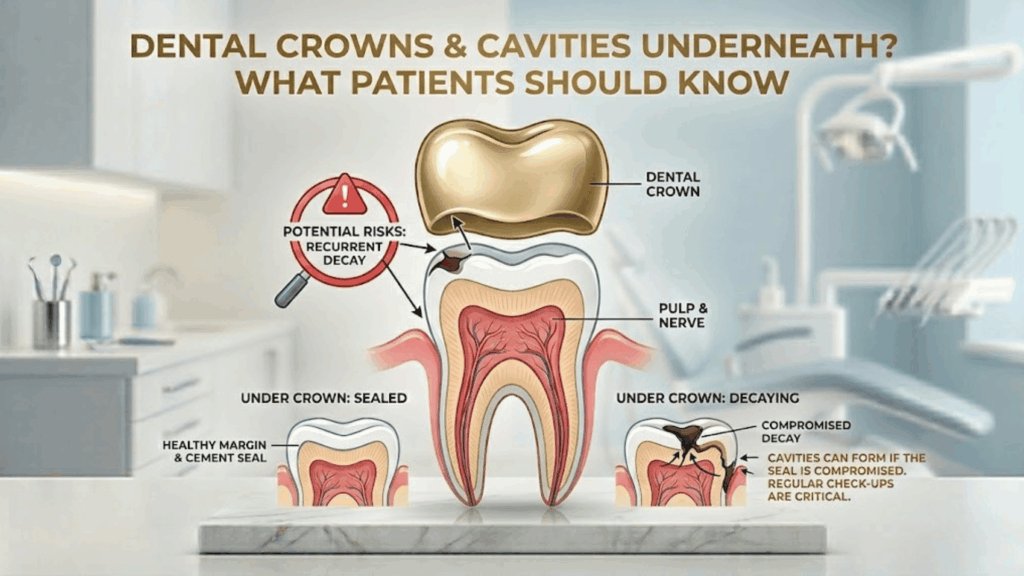
A dental crown covers and protects a damaged tooth. Many patients assume that once a crown is placed, the tooth is fully safe from decay. However, that is not always the case.
Decay can still develop under a dental crown, and it is more common than people expect. In fact, it is one of the main reasons crowns eventually fail. With regular care and dental checkups, these problems can often be caught early before they become more serious.
To understand it properly, it helps to look at how decay forms under a crown, what warning signs may appear, and what a dentist can do to treat it.
Can a Crown Actually Get a Cavity?
Yes, it can happen. A dental crown is made from materials like porcelain or metal, and these do not decay. However, the natural tooth underneath the crown is still vulnerable.
The most common problem area is the margin, where the crown meets the gumline. If plaque and bacteria collect there, decay can develop on the underlying tooth.
So, when patients ask whether a crown can get a cavity, the answer is simple. The crown itself cannot decay, but the tooth underneath it can.
How Does Decay Develop Under a Crown?
Decay needs three things to develop: bacteria, sugar, and time. When bacteria in your mouth feed on sugars, they produce acid. That acid gradually breaks down tooth structure.
Under a crown, decay usually starts at the margin. If the crown does not fit perfectly, or if the seal wears down over time, a tiny gap can form. Bacteria get into that gap and begin working on the exposed tooth surface below.
In addition, crowns do not protect you from gum recession. As the gumline pulls back, the root surface becomes exposed. That area has no enamel, so it is especially susceptible to decay.
Old or worn crowns are also at higher risk. The cement used to hold the crown in place can break down over many years. Once that happens, bacteria have an easier path to the tooth underneath.
Common Causes of Decay Under a Crown
Several factors can increase the risk of a dental crown cavity forming. Here are the most common ones:
- Poor oral hygiene around the crown area
- A loose or ill-fitting crown that allows bacteria to enter
- A crown that is many years old and has worn margins
- Gum recession that exposes the tooth root near the crown
- A diet high in sugary or acidic foods and drinks
- Dry mouth, which reduces the protective effect of saliva
- Skipping regular dental cleanings and checkups
It is also worth noting that the type of crown material matters. If you want to understand the differences, our Porcelain Crowns Guide and Metal Crowns: What Patients Should Know explain how each option compares in terms of fit, durability, and long-term performance.
Warning Signs You Should Not Ignore
Decay under a crown does not always cause obvious symptoms right away. However, there are signs that something may be wrong. Pay attention to the following:
- Tooth sensitivity to hot, cold, or sweet foods near the crown
- A dull or throbbing ache around a crowned tooth
- Pain when you bite down or chew
- Visible darkening or discoloration around the base of the crown
- A crown that feels loose or slightly mobile
- Bad breath or a bad taste that does not go away
Some patients also notice lingering pain after a crown is placed. If that discomfort does not settle, it is worth getting it checked. Our article on pain after a dental crown covers this in more detail.
Even if you have no symptoms at all, decay can still be present. X-rays at your regular dental visits are the only reliable way to detect decay that is hidden under a crown.
What Your Dentist Will Do
If your dentist suspects decay under dental crown, they will take an X-ray to assess how far the decay has spread. The treatment will depend on what they find.
In some cases, the decay is limited to the margin. Your dentist may be able to remove the crown carefully, clean out the decay, and place a new crown over the tooth.
If the decay has reached deeper into the tooth structure or is close to the nerve, a root canal may be necessary before placing a new crown.
In more severe situations, the tooth may not be salvageable. However, this outcome is much less common when decay is caught early.
This is also why delaying action is a bad idea. If you already know your crown is damaged or older and you have not had it looked at, our article on what happens if you delay replacing a damaged crown explains the risks involved.
If your dentist determines you need a new crown, they will also consider whether a filling might be a better fit for your specific situation. Our article on Dental Crown vs Filling: When Is a Crown Necessary? walks through that decision in plain language.
Crown Failure Signs to Watch For
Not all crown problems involve decay. However, certain crown failure signs often go hand in hand with underlying tooth damage. Watch for:
- Cracks or chips in the crown material
- A crown that repeatedly comes loose or falls off
- A change in your bite that feels off
- Swelling or tenderness in the gum around the crown
- A visible gap forming between the crown and the gumline
Any of these signs are worth a call to your dental office. Catching problems early gives you more treatment options and generally costs less in the long run.
You might also want to review the 7 signs you might need a porcelain crown if you are unsure whether your current restoration is still doing its job.
How to Prevent Decay Under a Crown
Prevention is always easier than treatment. A few consistent habits can significantly reduce your risk of tooth decay under crown:
- Brush twice a day with a fluoride toothpaste
- Floss daily, paying close attention to the area around each crown
- Use a soft-bristled toothbrush to avoid irritating the gumline
- Rinse with an antibacterial or fluoride mouthwash
- Limit sugary snacks, sodas, and acidic drinks
- Stay hydrated to support healthy saliva production
- Visit your dentist every six months for cleanings and X-rays
Regular professional cleanings remove plaque buildup that your toothbrush simply cannot reach. Your dentist can also check the condition of your crown margins at each visit.
If you have older metal fillings in other teeth, it is also worth discussing whether they need attention. Decay can sometimes spread from a compromised filling to a nearby crowned tooth.
Our articles on mercury fillings vs composite fillings and whether to replace old silver fillings cover what to consider if older restorations are in the picture.
Schedule a Consultation with Dr. Pearl Zadeh
If you have a dental crown and suspect something may be wrong, a professional evaluation can provide clear answers. Decay under a crown is often easier to treat when it is detected early.
Dr. Pearl Zadeh provides comprehensive crown evaluations and restorative dental care. If you have noticed sensitivity, discomfort, a loose crown, or other changes, call (818) 716-6722 or click the button below to schedule a consultation.
Schedule a ConsultationRelated Articles:
- When Should a Composite Filling Be Replaced?
- Mercury Fillings vs Composite Fillings. What’s the Difference?
- Dental Crown vs Filling: When Is a Crown Necessary?
- Should You Replace Old Silver Fillings Even If They Don’t Hurt?
- What Happens If You Delay Replacing a Damaged Crown?
- Is It Normal to Have Pain a Month After a Dental Crown?