
You wake up with your jaw feeling tired again. Your partner says you were grinding your teeth again last night. So you start looking for a night guard and quickly find plenty of options online and at the pharmacy, some for surprisingly little money. Then you check the price of a custom night guard from a dentist and wonder why the difference is so large.
Both are designed to sit between your teeth while you sleep. But they aren’t made the same way, and the difference goes beyond price. Fit, bite, comfort, material, and how your dentist monitors the appliance can all matter when you’re wearing it night after night.
What Is a Custom Night Guard?
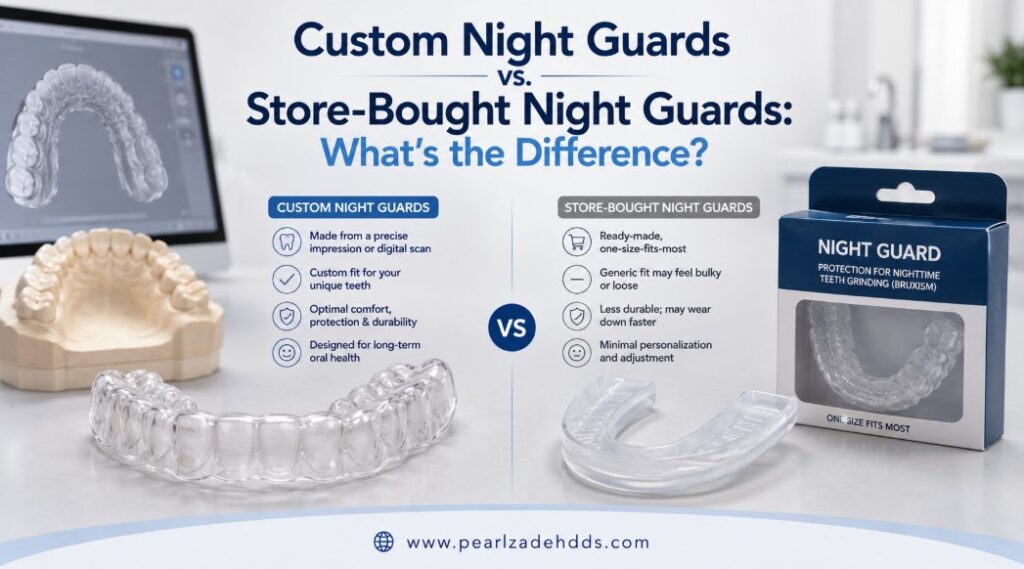
A custom night guard is made specifically for your teeth, not selected from a shelf. Your dentist evaluates your bite before recommending one, then has it fabricated to fit your mouth precisely. If something feels off once you’re wearing it, your dentist can actually adjust it, which isn’t something you can do with a generic product. The design itself can take your specific dental situation into account, whether that’s existing dental work, how you grind, or your bite relationship. Not every custom appliance looks or works identically. What you actually get depends on what your teeth and grinding pattern call for.
What Is a Store-Bought Night Guard?
Two main types show up at pharmacies and online. Stock guards come ready-made in predetermined shapes and sizes, no molding required. Boil-and-bite guards use a material you soften in hot water and then bite into shape yourself at home. Both are considerably more accessible than a custom appliance, and both usually cost less. What neither one offers is a dentist’s detailed assessment of your individual bite before you start wearing it. That’s not a criticism so much as a description of how they’re made.
Custom vs. Store-Bought: What’s Actually Different?
A handful of practical things tend to separate these two categories:
- How well the appliance actually fits
- How it interacts with your bite
- Comfort
- Thickness
- How well it stays in place
- Whether it can be adjusted
- How long it holds up
- The material used
- How easy it is to sleep with
- Whether a professional is keeping an eye on how it’s working for you
It wouldn’t be accurate to say custom guards always last longer across the board. Durability really depends on the material, the design, your own habits, and how heavily you grind. The next few sections go through the specifics that actually matter.
Does Fit Really Matter, and Are Store-Bought Guards Bad for Your Teeth?
A night guard sits in your mouth for hours while you sleep, so fit matters more than it might for something you only wear briefly. An appliance that feels loose, bulky, uncomfortable, or poorly positioned can be genuinely hard to tolerate night after night. A randomized controlled trial comparing over-the-counter and custom bite splints found that patients using the self-fitted, over-the-counter version had more difficulty getting the fit to a clinically acceptable standard than those using a custom appliance. That doesn’t mean every store-bought guard is bad for your teeth. Plenty of patients use one without major problems. What it does mean is that a store-bought appliance doesn’t come with the individualized assessment and adjustment a professionally made one does. Fitting over your teeth isn’t the same thing as fitting your bite correctly. Persistent discomfort, poor retention, or your bite feeling different are reasons to have the appliance actually looked at, not proof that it’s damaging you.
Can a Night Guard Change Your Bite?
A night guard sits directly between your upper and lower teeth, so it naturally affects how they contact each other while you’re wearing it. A properly selected appliance should be appropriate for your specific dental situation to begin with. If you notice your bite feeling different after you take the appliance out, new jaw discomfort, persistent tooth soreness, or trouble getting your teeth to come together the way they normally do, stop guessing and talk to your dentist. This doesn’t mean store-bought guards routinely cause permanent bite changes. It means any of these specific signs are worth a real evaluation rather than assuming they’ll sort themselves out.
What About Comfort?
A custom appliance is built around your specific teeth rather than a generic shape close enough to fit most people. That distinction tends to matter most for patients who struggle with bulkiness, looseness, gagging, pressure concentrated on certain teeth, trouble actually falling asleep with something in their mouth, or an appliance that just won’t stay put. None of this means a custom guard feels perfectly comfortable the moment you put it in. Most patients still need some adjustment period getting used to wearing one, custom or not.
What About People With Heavy Teeth Grinding?
How severe your grinding actually is changes what you need. Someone who occasionally clenches during a stressful week has different needs than someone grinding heavily enough to visibly damage their teeth. Signs pointing toward more significant grinding include flattened or worn tooth surfaces, chipped teeth, morning jaw soreness, headaches, tooth sensitivity, jaw fatigue, and cracked dental work. Our discussion of how teeth grinding damages teeth over the years goes further into what that wear can actually look like. Nighttime grinding can sometimes relate to sleep-disordered breathing too, though grinding on its own doesn’t mean you have a sleep-related breathing issue. That’s a separate question worth its own conversation if it applies to you.
What If You Have Crowns, Veneers, or Other Dental Work?
Existing dental work makes appliance selection a more individual decision. Crowns, veneers, bridges, fillings, and other restorations all factor into how an appliance should actually be designed. Your dentist may need to weigh your restorations, your bite, and your overall dental condition together when figuring out what makes sense. This doesn’t mean everyone with a crown or veneer automatically needs a custom guard. It means it’s one more factor worth considering rather than assuming a generic option will work fine regardless.
What If You Have Jaw Clicking or TMJ Symptoms?
A night guard isn’t automatically the answer to every jaw problem. If you’re already dealing with jaw clicking, jaw pain, limited opening, locking, jaw fatigue, or a bite that feels different than usual, those symptoms are worth discussing with a dentist before you pick out any appliance. Our discussion of TMJ and jaw clicking goes further into what those symptoms can and can’t tell you on their own. A night guard isn’t a cure for TMJ disorders, and assuming one will fix an underlying jaw problem isn’t a safe assumption to make on your own.
Custom Night Guards and Occlusal Splints
You’ll hear terms like night guard, occlusal splint, bite guard, and bruxism appliance used somewhat interchangeably in everyday conversation, and that’s not entirely wrong. Our overview of occlusal splints goes further into how appliances can actually differ in design and purpose even when the terminology overlaps. Not every night guard on the market, or even every custom one, is clinically identical to another.
What About Boil-and-Bite Guards Specifically?
Patients reach for these for understandable reasons: lower upfront cost, easy access without scheduling anything, no dental appointment required, and they can genuinely work as a temporary option in the right situation. The limitations are worth knowing too. The fit depends heavily on how well you actually mold the material yourself. They aren’t individually fabricated from a dental impression or digital scan. They can’t be professionally adjusted the way a custom appliance can. And some patients find them too bulky or simply hard to tolerate through a full night’s sleep. None of this adds up to a blanket recommendation either way. It depends on what you actually need it for.
Cost and Lifespan: What Actually Varies
There’s no single price that applies to every custom night guard, since cost depends on the type of appliance, the material used, the laboratory involved, the specific dental office, whether adjustments end up being needed, and whether an exam is required beforehand. The point isn’t simply that custom guards cost more. It’s understanding what that cost is actually paying for.
Lifespan varies just as much, shaped by how severely you grind, how often you clench, the appliance material, your cleaning habits, how consistently you wear it, and whether it gets damaged along the way. A few signs suggest it’s time for an evaluation or replacement: cracks, significant wear, holes or thin spots, a fit that’s changed, persistent discomfort, or an appliance that no longer stays in place. There’s no single fixed replacement schedule that applies to every patient here either.
Can You Sleep With a Store-Bought Guard Every Night?
Plenty of people do exactly this without incident. The more useful question isn’t really whether nightly use is allowed. It’s whether the appliance actually fits well, stays comfortable, and remains appropriate for your specific dental situation over time. If you’re planning to wear a store-bought guard every night to manage significant grinding, that ongoing use is a reasonable moment to have a dentist take a look, mainly because significant grinding tends to benefit from an individualized assessment either way. None of this means you need to stop using an over-the-counter guard immediately. It just means regular, long-term use is worth checking in about rather than assuming indefinitely.
When Should You See a Dentist Before Buying a Night Guard?
A few situations are worth a professional evaluation before you pick anything out:
- Significant or frequent teeth grinding
- Chipped or worn teeth
- A cracked tooth
- Existing crowns, veneers, or extensive dental work
- Jaw pain
- Persistent jaw clicking along with other symptoms
- Morning headaches or jaw soreness
- A bite that feels different
- Previous problems with a night guard
- An appliance that causes discomfort or won’t stay in place
None of this is meant to sound alarming. It’s about getting an actual look at your situation rather than guessing your way through it.
Custom vs. Store-Bought: Which One Is Right for You?
A store-bought guard may genuinely appeal to someone who:
- Wants a lower-cost option
- Needs something right away
- Has mild or occasional symptoms
- Has no known bite or jaw concerns
A custom appliance tends to make more sense when:
- Grinding is frequent or significant
- Tooth wear is already noticeable
- Existing restorations need to be factored in
- Generic guards haven’t worked out well
- Comfort and fit are major sticking points
- A dentist has identified a specific bite or jaw-related concern
These are general considerations to think through, not a diagnosis of what you specifically need.
Questions to Ask Before Choosing a Night Guard
If you’re unsure which type to choose, these questions can help you have a more useful conversation with your dentist:
- How severe is my teeth grinding?
- Is my grinding already causing tooth damage?
- Does my bite need to be evaluated before I choose a guard?
- Would a store-bought guard be appropriate for me?
- Would a custom night guard be a better fit for my teeth?
- Do my crowns, veneers, or other restorations affect which guard I should use?
- How should I clean and store the appliance?
- How often should I have the night guard checked or replaced?
- What should I do if my bite feels different after wearing it?
So, Which Night Guard Is Right for You?
Store-bought night guards can be convenient and affordable, but they aren’t designed around your individual teeth and bite the way a custom appliance is. A custom guard offers a professionally planned fit that can actually be evaluated and adjusted as part of your ongoing dental care. Which one makes sense for you depends on how severe your grinding is, your dental health, any existing restorations, comfort, and what you specifically need, not simply which option costs less upfront.
Speak With Dr. Pearl Zadeh About a Night Guard
Choosing a night guard isn’t only about price. Fit, how severely you grind, existing dental work, your bite, jaw symptoms, and comfort can all matter. Dr. Pearl Zadeh, a member of the American Dental Association and California Dental Association, can evaluate your teeth and bite and discuss whether a custom appliance or another option makes sense for your situation.
Call (818) 716-6722 or click the button below to schedule a consultation online.
Frequently Asked Questions
Do I really need a custom night guard, or is a store-bought one fine?
It depends on your situation. Mild, occasional grinding with no bite or jaw concerns may be fine with a store-bought option, while significant grinding, existing dental work, or jaw symptoms are reasons to have a dentist evaluate what actually fits your needs.
Are custom night guards worth the extra cost?
For patients with significant grinding, existing restorations, or comfort issues with generic guards, the individualized fit and ability to adjust the appliance often justify the cost. It isn’t a universal requirement for every patient.
Can a boil-and-bite guard damage my teeth?
Not automatically. Many patients use them without major problems, though the fit depends on how well the material is molded, and it doesn’t come with a dentist’s individualized bite assessment.
How do I know if my store-bought night guard isn’t working well?
Persistent discomfort, poor retention, a bite that feels different, or the appliance not staying in place are all reasons to have it evaluated rather than continuing to use it as is.
Should I see a dentist before buying any night guard?
It’s worth it if you have significant grinding, tooth damage, existing crowns or veneers, jaw pain, or previous problems with a night guard. For mild, occasional symptoms, it’s a reasonable option to discuss but not always essential first.
This article is for informational purposes only and is not a substitute for professional dental advice. Please schedule a consultation with Pearl Zadeh DDS to discuss your specific situation.