
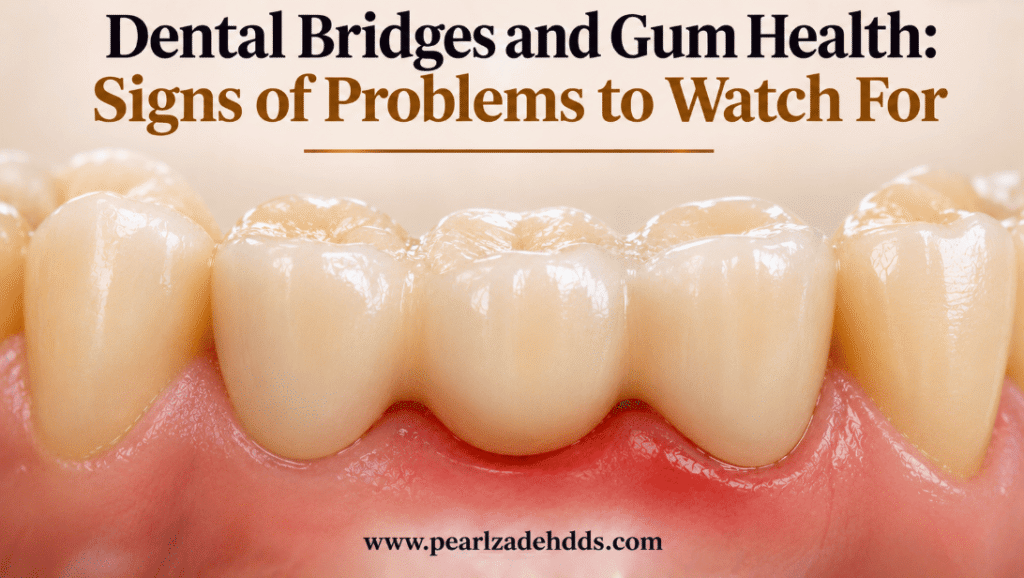
A dental bridge can remain in place for years, but the gums around it need ongoing care. Poor cleaning, plaque buildup, and problems with the supporting teeth can affect the surrounding gum tissue.
A bridge replaces missing teeth, but it does not remove the need to care for the gums. Redness, swelling, tenderness, or bleeding should not be ignored. These symptoms can have several causes, including plaque buildup, gum disease, or problems with the bridge’s fit. A dental examination can help identify the source.
How Does a Dental Bridge Affect Gum Health?
A fixed bridge replaces missing teeth using the teeth on either side of the gap for support. The replacement tooth sits close to the gum tissue, while the supporting teeth meet the gums at their edges.
Plaque can collect around the margins of a bridge. These are the areas where the restoration meets the supporting teeth. Cleveland Clinic explains that without proper cleaning, plaque and bacteria can cause gum inflammation or cavities.
Food particles can also collect underneath the replacement tooth, especially when the area is difficult to reach with a toothbrush or floss. Without regular cleaning, this buildup may irritate the surrounding gums.
A dental bridge does not automatically cause gum disease. Its fit, daily cleaning, and the health of the supporting teeth all play a role in keeping the surrounding gums healthy.
What Gum Problems Can Occur Around a Dental Bridge?
Changes in the gums around a bridge can have different causes. Some common signs include redness, bleeding, recession, and ongoing irritation.
Redness and Swelling
Inflamed gums may look red or swollen and feel tender. The NIDCR identifies red, swollen, or tender gums as possible signs of gum disease.
Plaque buildup can contribute to this inflammation, but other conditions may cause similar symptoms. A dentist can examine the area to determine what is happening.
Bleeding Gums
Gums that bleed during brushing or cleaning may be inflamed. Occasional bleeding should not be dismissed, especially when it keeps happening.
Cleveland Clinic lists sore or bleeding gums among the reasons to contact a dentist about a dental bridge. A dental examination can help determine whether plaque buildup, gum disease, or another issue is responsible.
Gum Recession Around a Dental Bridge
Gum recession occurs when gum tissue pulls away from the teeth, exposing more of the tooth surface or its roots.
Around a bridge, recession may expose more of a supporting tooth and change the appearance of the gumline. Possible causes include brushing too hard, plaque or tartar buildup, and gum disease. Recession does not necessarily mean the bridge is faulty.
Food Trapping and Gum Irritation
Food can collect beneath the replacement tooth or around the bridge margins. When these areas are difficult to clean, trapped debris may irritate the nearby gums.
If food repeatedly gets stuck in the same area, the dentist can check whether the bridge’s shape, fit, or the surrounding teeth are contributing to the problem.
Persistent Bad Breath or Unpleasant Taste
Food debris, plaque buildup, and gum problems can contribute to persistent bad breath or an unpleasant taste.
The NIDCR lists persistent bad breath among the possible signs of gum disease. However, these symptoms can have other causes, so they should be assessed alongside any changes in the gums.
Can a Dental Bridge Cause Gum Disease?
A dental bridge does not directly cause gum disease. However, problems with its fit or difficulty cleaning around it can allow plaque to accumulate and irritate the gums.
Several factors may contribute to gum problems around a bridge:
- Inadequate plaque removal.
- Food and debris collecting around the restoration.
- Bridge margins that are difficult to clean.
- Existing gum disease.
- Difficulty cleaning around the supporting teeth.
- Irregular dental examinations.
Gum disease affects the tissues and bone that support natural teeth. When those teeth hold a traditional bridge in place, their health also affects the restoration’s stability.
Not everyone with a dental bridge develops gum disease. Regular cleaning and dental examinations help reduce the risk.
How Can You Keep Your Gums Healthy Around a Dental Bridge?
Daily care and regular dental visits help keep the gums around a bridge healthy.
- Brush twice daily with a soft-bristled toothbrush.
- Clean around the bridge and supporting teeth carefully.
- Use a floss threader or another suitable interdental aid as recommended by the dentist.
- Follow the dentist’s instructions for cleaning beneath the restoration.
- Attend regular dental examinations and professional cleanings.
- Report persistent bleeding, swelling, or irritation.
A water flosser may provide additional cleaning for some patients. Cleveland Clinic explains that it should complement, rather than replace, string floss. Ask the dentist whether it is suitable for your bridge.
For step-by-step instructions, see how to clean under a dental bridge properly. Even with good daily care, gum problems can still develop.
When Should You See a Dentist About Your Gums?
Arrange a dental examination if you notice:
- Persistent gum redness or swelling.
- Bleeding during brushing or flossing.
- Gum tenderness or discomfort.
- Visible gum recession.
- Persistent bad breath or an unpleasant taste.
- Changes in how the bridge fits.
- Pain around the supporting teeth.
Some symptoms need more prompt attention. Contact a dentist promptly if you notice pus or discharge around the gums, significant swelling, worsening pain, or other signs of infection.
Facial or neck swelling accompanied by difficulty breathing or swallowing requires emergency medical care. Mayo Clinic advises patients with these symptoms to go to the emergency room. Do not wait for a dental appointment.
Can Gum Problems Affect the Stability of a Dental Bridge?
Yes. Advanced gum disease can damage the tissues and bone that support natural teeth.
The NIDCR explains that this damage may cause teeth to become loose or shift. If those teeth support a traditional bridge, changes in their stability can affect the restoration as well.
Gum irritation alone does not mean a bridge is failing. A dentist needs to examine the supporting teeth, surrounding gums, and bridge before determining whether there is a problem. You can also read about the signs a dental bridge needs replacement.
Schedule a Consultation With Dr. Pearl
Dr. Pearl Zadeh DDS can examine the gums, supporting teeth, and bridge to assess signs of irritation, gum disease, or other concerns.
Her practice in Woodland Hills, California, offers porcelain dental bridges.
Call (818) 716-6722 or click the button below to schedule your consultation online.
Frequently Asked Questions
Not simply by being present. Inflammation can develop when plaque or food collects around the bridge and the area is not cleaned well. Bridge fit can also play a role.
Plaque buildup, trapped food, gum disease, and bridge fit are all possible causes. Symptoms alone cannot show which one applies. A dental examination can.
Not necessarily. Bleeding can signal gum inflammation, and ongoing bleeding should be checked. Cleveland Clinic lists sore, bleeding gums as a reason to call the dentist.
Yes. Recession can happen around natural teeth and bridges alike. It has several causes and does not automatically mean the bridge is poorly fitted.
Brush twice daily with a soft-bristled toothbrush. Clean around and under the bridge as the dentist recommends. Keep regular examinations and cleanings. These steps help but cannot guarantee results.
The information above is for informational purposes only and is not a substitute for professional dental advice. Please schedule a consultation with Pearl Zadeh DDS to discuss your specific situation.