
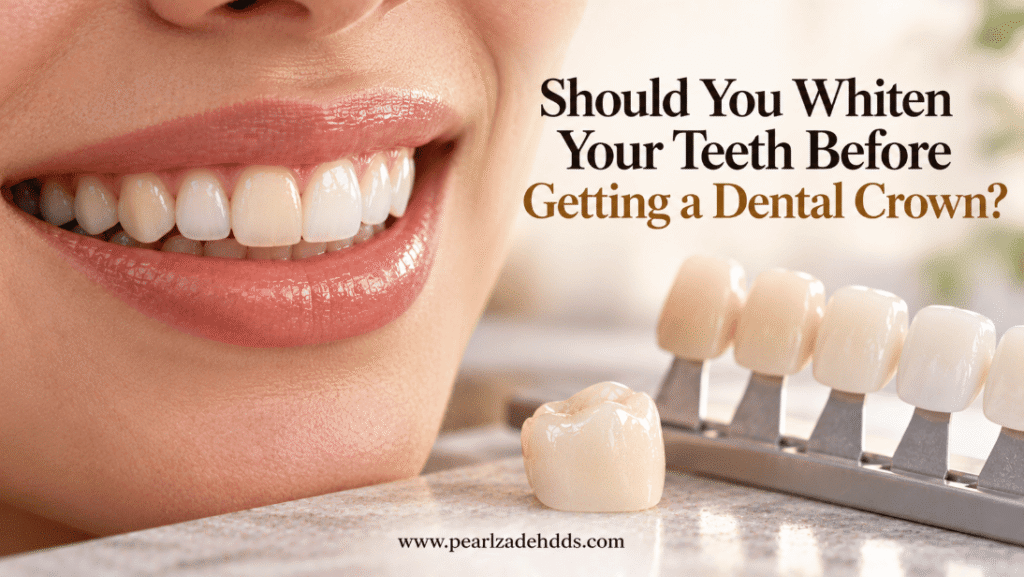
Whitening your teeth before getting a dental crown can be a good option if you want a lighter smile. Whitening first allows the dentist to select a crown shade that matches your teeth after treatment.
Porcelain and zirconia crowns do not respond to whitening products like natural teeth. If you whiten your surrounding teeth after the crown is made, the crown may look darker than the teeth next to it.
Whitening is not suitable for everyone, so a dental evaluation can help determine whether it is right for you and when to schedule it before crown treatment.
Why Whitening Before a New Crown Can Matter
A dentist typically chooses a crown shade by looking at the natural teeth around it. If those teeth later become lighter, the crown stays exactly as it was made.
The American Dental Association (ADA) notes that restorations generally do not change color during whitening. That could result in differences between natural teeth and restorations.
Treatment order solves much of this problem. Whitening first lets the dentist select the crown shade from the teeth as they will look afterward. Doing it second means the crown was matched to teeth that have since changed.
Not every patient wants whitening. Some prefer to keep their natural shade, and the crown can be matched to it. The goal is the color you want, not the lightest color possible.
Even with good planning, no dentist can promise an exact match. The result depends on your natural tooth color, the crown material, and your clinical needs.
How Dentists Select a Crown Shade
A crown has to blend with the natural teeth beside it, so the dentist studies those teeth. Cleveland Clinic says dentists can match porcelain-fused-to-metal crowns to the shade of your own teeth. Many dentists compare the teeth with a shade guide and pass that information to the lab.
Lighting, the tooth’s natural translucency, and the crown material can all affect how a shade looks. That is why the dentist selects the shade from the teeth as they currently appear.
Do Dental Crowns Whiten Like Natural Teeth?
No. The ADA says only natural teeth can be whitened, not tooth-colored restorations. It lists crowns among the restorations the bleaching agent does not affect. MouthHealthy, the ADA’s consumer site, says whitening will not work on caps, veneers, crowns, or fillings.
Natural teeth contain stains that bleaching agents can lighten. Crown materials are different. Porcelain and zirconia are ceramics made in a lab. They carry their shade from the day they are fabricated.
Cleveland Clinic says all-ceramic and porcelain crowns mimic the appearance of tooth enamel more than any other crown type. It describes zirconia as a popular, durable ceramic. Dr. Pearl’s article on zirconia versus porcelain crowns compares the two materials.
Because a crown’s shade is set when it is made, whitening cannot adjust it later. Planning the shade correctly the first time matters more.
How Long Should You Wait to Get a Crown After Whitening?
No single waiting period fits every patient. The right timing depends on the patient, the whitening method, the condition of the tooth, and the treatment plan.
A dentist may recommend allowing the shade to stabilize before choosing the final crown color. That way, the shade reflects how your teeth look once they settle, not how they look right after whitening.
Follow your dentist’s recommendation instead of choosing a date on your own. Starting whitening without telling your dentist about an upcoming crown can complicate the plan.
Temporary Crowns Versus Final Crowns
A temporary crown and a final crown serve different purposes. Cleveland Clinic says that while you wait on your final crown, your dentist places a temporary one. The page adds that crown placement usually requires two appointments.
The final crown’s shade is selected as part of the restorative process. Not every temporary crown must be color-matched after whitening. Your dentist decides based on the tooth and the plan.
Cleveland Clinic says the dentist checks the shape, color, and fit of the new crown at the second visit.
What If You Already Have a Crown?
Whitening your natural teeth around an existing crown can change how the two compare. Natural teeth may become lighter, while the crown keeps its original shade.
The ADA notes that patient expectations may not be met without addressing cosmetic issues with existing restorations. Whitening does not lighten the crown, and ordinary whitening treatment cannot change it.
Cleveland Clinic adds that lab studies suggest whiteners may react chemically with ceramic crowns. Those studies did not involve living teeth. Still, ask your dentist before using whitening products around a crown.
If your crown already looks different from your other teeth, Dr. Pearl’s article on why a dental crown can look different from other teeth explains common reasons.
Should Everyone Whiten Before Getting a Crown?
No. Whitening is not suitable for everyone, and a dentist should assess your oral health first. The ADA supports educating the public to consult a licensed dentist about whether whitening is appropriate. Several factors can affect that decision:
- Tooth sensitivity, which can be a side effect of whitening.
- Untreated cavities.
- Gum problems.
- Existing restorations, which will not change color.
- The cause of the discoloration.
Cleveland Clinic advises getting teeth healthy before starting whitening. It adds that tackling concerns like gum disease or cavities beforehand is also important. Temporary sensitivity and gum irritation are common with whitening, per the same page.
Color matters too. MouthHealthy says yellow teeth will probably bleach well, while teeth with gray tones may not bleach at all. It adds that whitening will not be effective if medications or a tooth injury caused the discoloration. A dentist can help identify the cause before you invest in whitening.
A dental evaluation also helps decide whether whitening makes sense alongside a crown. You can read about teeth whitening at Pearl Zadeh DDS before your visit.
How Dr. Pearl Zadeh Plans Crown Shade and Treatment
Crown planning starts with a conversation. Tell Dr. Pearl what shade you want before the final crown is made, and mention any whitening you are considering.
Dr. Pearl considers your natural tooth color, the crown material, and your clinical needs. Your preferred shade matters, along with what is realistic for your teeth.
The crown process typically involves two appointments. The permanent crown is placed after it has been fabricated.
You can read more about dental crown treatment at Pearl Zadeh DDS. For advice on daily care after placement, see the article on caring for your new dental crown.
Choosing the crown shade before treatment helps the dentist plan for a result that complements your smile, whether you whiten your teeth first or keep their natural color.
Call (818) 716-6722 or click the button below to schedule your consultation online.
Frequently Asked Questions
If whitening is appropriate, finishing it before the final crown shade is selected may help the crown match. A dentist should evaluate your teeth and plan first, since whitening does not suit everyone.
No. Whitening products affect natural teeth, not crowns. Lightening the teeth beside a crown can make the crown look darker by comparison.
No single period applies to everyone. Timing depends on the patient, the whitening method, the tooth’s condition, and the treatment plan. Follow your dentist’s recommendation.
Sometimes, if a dentist finds whitening suitable. The crown will keep its shade, so the contrast with your natural teeth may increase. Ask your dentist before starting.
A dentist can select the crown shade after whitening, which may help the crown blend in. An exact match cannot be guaranteed, because results depend on natural tooth color, crown material, and clinical needs.
The information above is for informational purposes only and is not a substitute for professional dental advice. Please schedule a consultation with Pearl Zadeh DDS to discuss your specific situation.