
You bite into a sandwich and notice one tooth touches before the others. Or your teeth no longer meet the way they did a few weeks ago.
A bite can change gradually or after dental treatment, an injury, or tooth loss. A different sensation does not always mean something is wrong. However, a change that persists or affects chewing deserves attention.
Dentists use the term occlusion to describe how the upper and lower teeth meet. Several factors can affect this contact, including tooth position, dental restorations, and changes in the supporting gums and bone.
Knowing what to watch for can help you decide when to schedule a dental examination.
What Does a Normal Bite Feel Like?
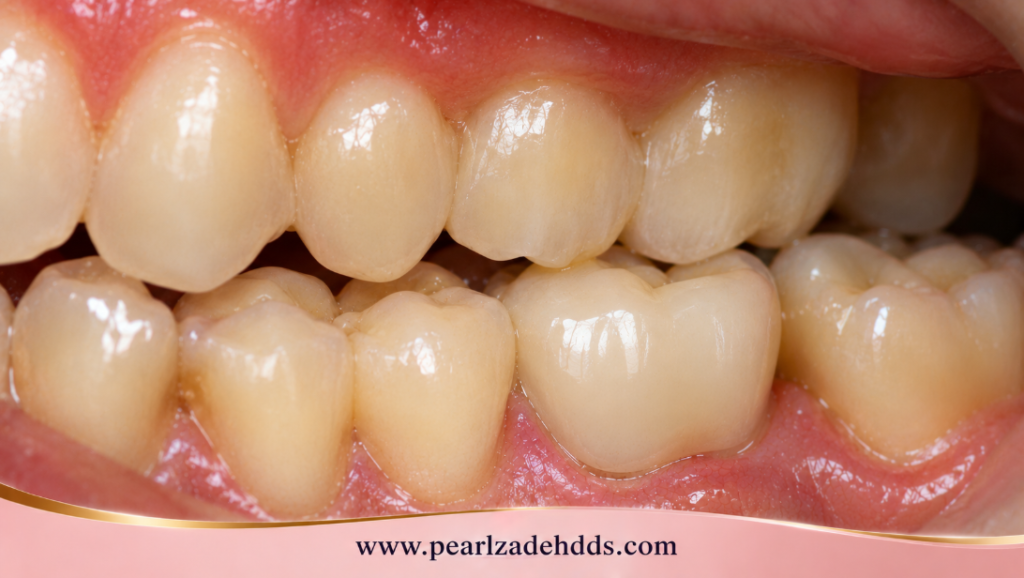
A comfortable bite allows you to close your teeth without pain or noticeable interference. The upper front teeth usually overlap the lower front teeth slightly. Your back teeth meet in a way that helps you chew food.
You should not have to shift your jaw or favor one side just to bring your teeth together comfortably.
The Cleveland Clinic describes malocclusion as a misalignment of the teeth or jaws. However, not every difference in tooth alignment requires treatment. Cleveland Clinic explains the different types of malocclusion.
Normal tooth contact also varies from person to person. Your teeth do not need to touch in exactly the same way on both sides.
What matters is whether your bite feels comfortable and remains consistent. A noticeable change from your usual bite may deserve an examination, even if your teeth look straight.
Signs Your Bite May Have Changed
Bite changes do not always cause pain. You may first notice a difference when chewing, closing your mouth, or bringing your teeth together.
Watch for these signs.
1. One Tooth Seems to Touch First
You may feel one tooth making contact before the others when you close your mouth. Some people describe this as a high spot or a tooth that feels too tall.
This sensation can occur after a filling, crown, or other dental treatment. Your mouth may need a short adjustment period. However, a tooth that continues to feel high after the numbness wears off should be checked.
An uneven contact can make chewing uncomfortable. It may also cause you to shift your jaw to avoid the tooth.
2. Your Teeth Meet Differently Than Before
You may notice that your front teeth no longer touch as they used to. Your back teeth may also meet differently when you close your mouth.
These changes can develop gradually. You might notice them while eating, speaking, or brushing your teeth.
Pay attention to when the change began. A new sensation after dental treatment may have a different cause from one that develops without an obvious trigger.
3. Chewing Feels Uneven or Uncomfortable
You may find yourself chewing more on one side. Certain foods may also feel harder to bite or break down.
Several dental problems can affect chewing comfort. A cracked tooth, untreated decay, gum problems, or a poorly fitting restoration may change how pressure feels when you bite.
Do not assume that uneven chewing always means your bite is misaligned. A dental examination can help identify the cause.
4. New Gaps or Tooth Shifting Appear
A new gap between teeth or a tooth that looks more tilted may indicate movement. You might also notice that food gets trapped in a space that was not there before.
Changes in tooth position can affect how your upper and lower teeth meet. Gum disease, missing teeth, and other factors may contribute to this movement.
A dentist can check whether the change affects your bite or points to another dental concern.
5. Your Bite Feels Different After Dental Treatment
Fillings, crowns, bridges, and dentures can affect how your teeth meet. A restoration that sits too high may create an uncomfortable contact when you close your mouth.
Some awareness of a new restoration is normal at first. However, you should not have to adjust your jaw or avoid certain teeth when chewing.
If the bite still feels uneven after the numbness wears off, contact your dentist. Do not try to adjust the restoration yourself.
6. You Notice New Tooth Wear or Damage
Flattened edges, small chips, cracks, or uneven tooth surfaces can affect how your teeth contact each other.
Grinding and clenching may contribute to this damage. The Mayo Clinic lists flattened, fractured, chipped, and loose teeth among the possible signs of bruxism.
Not every worn tooth indicates a bite problem. However, new or worsening damage deserves an examination, especially if you also notice changes when chewing.
7. Your Jaw Feels Uncomfortable When Chewing
Jaw discomfort can occur alongside a change in how your teeth meet. You may notice muscle tension, soreness, or discomfort near the jaw joints.
However, jaw symptoms do not automatically point to a bite problem. Tooth conditions, muscle strain, and temporomandibular disorders can cause similar symptoms.
The National Institute of Dental and Craniofacial Research explains that research does not support the belief that a bad bite or orthodontic treatment causes temporomandibular disorders (TMD). It also notes that painless jaw clicking is common and usually does not need treatment.
Persistent jaw pain, locking, or difficulty opening and closing your mouth deserves an examination. Your dentist can assess whether the problem involves your teeth, jaw muscles, or joints.
What Can Cause Your Bite to Change?
Several dental and oral health conditions can affect how your teeth meet. Sometimes, more than one factor contributes to the change.
Tooth Movement
Teeth can shift over time. Changes in the supporting tissues, tooth loss, and natural movement may affect their position.
Teeth can also move after orthodontic treatment, particularly if you stop wearing a prescribed retainer. Even small changes in position may affect how your teeth contact each other.
Missing Teeth
A missing tooth can affect more than the appearance of your smile. Nearby teeth may gradually tilt or move into the empty space. The opposing tooth may also shift toward the gap.
These changes can affect chewing and the way your teeth meet. The Cleveland Clinic lists missing teeth among the possible contributors to malocclusion.
Read more about how missing teeth affect your bite over time.
Dental Restorations
A filling, crown, bridge, or denture can change your bite if it does not fit properly. A restoration that sits too high may contact the opposing tooth before the surrounding teeth meet.
MedlinePlus lists poorly fitting fillings, crowns, dental appliances, retainers, and braces among possible causes of malocclusion.
If your bite feels different after treatment, contact your dentist for an assessment. A small adjustment may be needed, depending on the restoration and the cause of the discomfort.
Grinding and Clenching
Grinding or clenching places repeated pressure on your teeth. Over time, this may wear down tooth surfaces or cause chips and fractures.
The Mayo Clinic identifies tooth damage as a possible complication of bruxism. However, not everyone who grinds their teeth develops significant wear or bite changes.
If you notice new damage, jaw soreness, or changes in tooth contact, your dentist can check for signs of grinding and discuss suitable treatment.
Gum Disease and Changes in Supporting Bone
Your gums and the bone beneath them help hold your teeth in position. Advanced gum disease can damage these supporting structures.
The National Institute of Dental and Craniofacial Research explains that severe gum disease can destroy the bone supporting the teeth. This may cause teeth to loosen or shift.
A change in tooth position can affect your bite. Bleeding gums, gum recession, persistent bad breath, or loose teeth also deserve dental attention.
Learn more about gum disease and its effects on oral health.
Jaw and Joint Conditions
Problems involving the jaw muscles or temporomandibular joints can affect how your jaw moves. You may feel as though your teeth meet differently, even when their positions have not changed.
Jaw discomfort and clicking can also occur without a dental bite problem. Your dentist can assess the symptoms and determine whether further evaluation is needed.
Tooth Damage
A chipped, cracked, or broken tooth may change the way your teeth come together. Even a small change in the tooth’s surface can affect contact during chewing.
Damage may result from an injury, untreated decay, or repeated pressure from grinding. A dentist can examine the tooth and determine whether it needs treatment.
Can a New Crown or Filling Change Your Bite?
Yes. A new filling or crown can change how your teeth meet. The restoration creates a new surface that contacts the opposing tooth.
You may notice some difference at first. Your tongue can detect small changes in shape, while numbness may make it harder to judge how your teeth meet. Mild sensitivity can also occur after treatment.
However, persistent uneven contact should not be ignored. A restoration that sits too high may place extra pressure on one tooth. You may feel discomfort when biting or chewing.
Dentists often use thin marking paper to check where the teeth touch. The paper leaves marks on contact points. Your dentist also asks how your bite feels. If one area makes contact too early, a small adjustment may help.
Do not try to adjust a restoration yourself. Home adjustments can damage the restoration or the underlying tooth.
An unfamiliar sensation does not automatically mean something went wrong. Some differences settle as you get used to the restoration. Others need a minor adjustment. Read more about why a crown may feel too high or uneven.
How Does a Dentist Evaluate a Bite Change?
MedlinePlus notes that dentists often identify alignment problems during routine dental examinations. When you report a change in your bite, your dentist may check several things.
- When the change began: Your dentist may ask whether it followed dental treatment, an injury, or tooth loss.
- Other symptoms: Pain, sensitivity, jaw discomfort, and difficulty chewing can help narrow down the cause.
- Tooth condition: The examination may include tooth positions, restorations, worn surfaces, cracks, and missing teeth.
- Bite contacts: Your dentist checks where the upper and lower teeth meet when you close your mouth.
- Gum health: The dentist examines the gums and supporting structures around the teeth.
- Dental X-rays: Imaging may help when the examination suggests an underlying problem. Not every patient needs X-rays.
- Referral: Your dentist may recommend another provider if the problem requires specialist assessment.
The examination findings determine whether you need treatment, monitoring, or further evaluation. Not every bite change requires an adjustment or orthodontic treatment.
When Should You See a Dentist?
A persistent bite change usually calls for a dental appointment. However, certain symptoms need attention sooner.
Schedule an Evaluation If
- Your teeth consistently meet differently than before.
- Chewing feels uneven or uncomfortable.
- A new crown or filling feels too high.
- Your teeth appear to be shifting.
- You notice unusual wear, chips, or cracks.
- The change continues or becomes more noticeable.
Seek Prompt Dental Attention If
- You have significant tooth pain.
- A tooth becomes loose or suddenly shifts.
- You notice swelling or other signs of infection.
- An injury damages a tooth.
Facial swelling accompanied by difficulty breathing or swallowing requires emergency care. Call 911 or go to the nearest emergency department.
Can a Changed Bite Be Corrected?
Treatment depends on what caused the change. Some patients need a small adjustment, while others may need treatment for an underlying dental problem. Not every change requires correction.
High or uneven restorations. A dentist may adjust a restoration that makes contact too early. If the restoration is damaged or does not fit properly, replacement may be necessary.
Cracked or worn teeth. A damaged tooth may need a suitable restoration, such as a crown, depending on the extent of the damage.
Gum disease. Treating gum disease helps address problems affecting the tissues and bone that support your teeth.
Missing teeth. Replacing a missing tooth can help restore contact between the teeth. Dr. Pearl offers porcelain bridges and partial dentures. The appropriate option depends on the gap, surrounding teeth, and your oral health.
Tooth position. Orthodontic treatment may help when tooth position affects the bite. Related articles discuss Invisalign for complex bite corrections and what patients should know about open bites.
Grinding or clenching. Your dentist can check for signs of grinding and discuss ways to protect your teeth from further wear or damage.
Schedule a Consultation With Dr. Pearl
Dr. Pearl Zadeh can examine your teeth, existing restorations, and bite contacts. She can then discuss the findings and recommend suitable care. Depending on the cause, this may involve monitoring, adjusting a restoration, or restorative treatment.
Call (818) 716-6722 or click the button below to schedule your consultation online.
Frequently Asked Questions
Yes. Teeth can shift or wear down over time, and the supporting tissues can change. Missing teeth and dental work may also affect how your teeth meet. Age alone does not explain every change, so a noticeable difference deserves an examination.
A sudden change may follow a new filling or crown, a chipped or cracked tooth, or tooth loss. The cause may be minor, but persistent changes or discomfort should be checked by a dentist.
Yes. A new restoration changes the surface that meets the opposing tooth. Some initial awareness is common. However, a restoration that continues to feel too high should be checked by your dentist.
It can. Grinding may wear down or damage teeth and restorations, which can affect how they meet. However, not everyone who grinds their teeth develops noticeable bite changes or serious complications.
Some minor differences may settle as you adjust to a new restoration. Changes caused by tooth movement, wear, or damage may need treatment. A dental examination can help determine the cause.
The information above is for informational purposes only and is not a substitute for professional dental advice. Please schedule a consultation with Pearl Zadeh DDS to discuss your specific situation.