
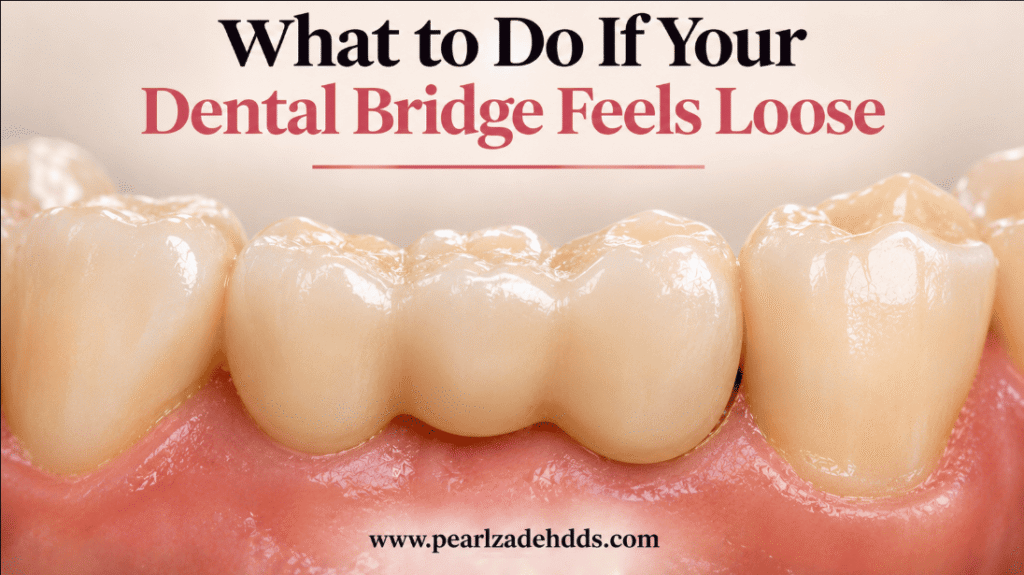
Dental bridges are designed to stay securely in place. If yours moves, feels different when you bite, or seems to lift away from the supporting teeth, it may need attention.
Knowing what to do if your dental bridge feels loose can help prevent further damage to the bridge or supporting teeth. Avoid pulling or trying to adjust it yourself.
A loose bridge does not automatically need replacement. A dental examination can help identify the cause and determine whether the bridge can be resecured, repaired, or needs replacement.
What Does a Loose Dental Bridge Feel Like?
Patients describe a loose dental bridge in different ways. Common signs include:
- Movement when chewing or biting.
- A feeling that the bridge is lifting away from the gums or supporting teeth.
- A change in how the bridge fits.
- Food getting trapped around or underneath the bridge.
- Clicking or unusual movement while eating.
- Discomfort or tenderness around the supporting teeth.
These signs can have several causes. A dental examination is needed to determine why the bridge feels loose.
Why Does a Dental Bridge Feel Loose?
A bridge can become unstable because of problems with the cement, supporting teeth, gums, or the restoration itself. The dentist needs to identify the cause before recommending treatment.
Dental Cement Has Weakened
Cleveland Clinic explains that dentists use dental cement to bond bridges in place. Over time, the bond may weaken, causing the bridge to lose retention. This means it may no longer stay securely attached to the supporting teeth.
However, weakened cement is only one possible cause.
Decay Around a Supporting Tooth
A traditional bridge relies on natural teeth on either side of the gap. These supporting teeth are called abutments.
Decay can develop around an abutment tooth and affect the bridge’s support. Cleveland Clinic notes that decay or trauma to an abutment tooth can weaken the bridge.
Changes in the Supporting Teeth
A supporting tooth may crack, wear down, or lose strength. Cleveland Clinic notes that an abutment tooth that cannot adequately support a bridge may fracture.
Damage to the supporting tooth can affect the stability of the bridge attached to it.
Gum Disease or Changes in Gum Health
Gum disease affects the tissues that support the teeth. According to the NIDCR, advanced gum disease can destroy the supporting bone. This may cause teeth to loosen or shift.
Gum disease does not automatically mean a bridge will become loose. However, inflammation or damage around the supporting teeth can affect their stability.
Damage to the Bridge
A crack, fracture, or other damage to the bridge itself can affect its fit and stability. Some damage may be visible, while other problems require a dental examination to identify.
Bite Pressure or Teeth Grinding
Repeated pressure can place extra strain on a bridge and its supporting teeth. Clenching, grinding, and an uneven bite can all contribute to that pressure.
Mayo Clinic notes that severe bruxism, or repeated teeth grinding and clenching, can damage crowns and other dental restorations. A dentist can examine the bite and look for signs of wear to determine whether excessive pressure may be contributing to the problem.
What Should You Do If Your Dental Bridge Feels Loose?
A few precautions can help protect the bridge and supporting teeth until the dentist examines it:
- Contact your dentist promptly to arrange an examination.
- Avoid chewing on the side with the loose bridge.
- Choose softer foods until the dentist evaluates it.
- Avoid sticky, hard, or chewy foods that could pull on the bridge.
- Do not wiggle, pull, or repeatedly test the bridge with your fingers or tongue.
- If the bridge comes off completely, keep it in a clean, secure container and bring it to your appointment.
Continue gentle oral hygiene around the area, but do not force anything underneath the bridge. Our article on how to clean under a dental bridge properly explains which tools can help with daily cleaning.
Do not wait for a loose bridge to fall out. Contact your dentist when you notice movement or a change in fit.
Can You Temporarily Secure a Loose Dental Bridge at Home?
No. Household glue, superglue, and other adhesives should never be used to reattach a dental bridge. Avoid trying to secure it with over-the-counter products, too.
A bridge placed at the wrong angle may affect your bite or put pressure on the supporting teeth and gums.
If the bridge comes off, do not force it back into place. Keep it in a clean container and contact your dentist for instructions.
Can a Loose Dental Bridge Be Repaired or Recemented?
The appropriate treatment depends on why the bridge became loose, whether it is damaged, and the condition of the supporting teeth. After an examination, the dentist may recommend one of the following:
- Recementing: This may be suitable if the bridge is intact, the supporting teeth are healthy, and the fit remains appropriate. Cleveland Clinic explains that a dentist can often recement a loose bridge.
- Repair: Certain types of minor damage may be repairable, depending on the bridge material and the location of the damage.
- Replacement: A new bridge may be needed if the existing one has significant damage or the supporting teeth can no longer provide adequate support. Our article on signs a dental bridge needs replacement explains some of the reasons this may be necessary.
- Treatment of supporting teeth or gums: Decay, fractures, or gum disease may need attention before the bridge can be secured or replaced.
A loose bridge does not always need replacement, but recementing is not suitable in every case. The dentist’s examination determines which treatment is appropriate.
When Should You Seek Urgent Dental Care?
A loose bridge should be checked by a dentist, but certain symptoms need faster attention. Contact a dentist urgently if you experience:
- Significant or worsening pain.
- Swelling around the gums or face.
- Pus or other signs of infection.
- Fever alongside dental symptoms.
- A bridge that has come completely off and is causing pain or injury.
Swelling and fever can indicate an infection. Mayo Clinic advises prompt dental care for symptoms of a tooth abscess. If you cannot reach a dentist, seek emergency care for fever accompanied by facial swelling.
Trouble breathing or swallowing requires immediate medical attention. Do not wait for a dental appointment. Go to the emergency room if you experience either symptom, as advised by Mayo Clinic. Rapidly spreading swelling in the face or neck also requires emergency medical care.
How Can You Prevent Problems With a Dental Bridge?
Good daily care and regular dental visits can help keep a bridge and its supporting teeth healthy:
- Brush twice daily with a soft-bristled toothbrush.
- Clean around and underneath the bridge with suitable dental cleaning aids.
- Follow your dentist’s advice on floss threaders or water flossers.
- Attend regular dental examinations.
- Address decay and gum problems early.
- Avoid chewing ice or very hard objects.
- Discuss teeth grinding or clenching with your dentist.
These habits can help reduce the risk of damage and other problems, but they cannot guarantee that a bridge will never loosen or need repair.
Schedule a Consultation With Dr. Pearl
If your dental bridge feels loose, Dr. Pearl Zadeh DDS can examine the bridge and its supporting teeth to identify the cause and discuss suitable treatment options. Her practice in Woodland Hills, California, offers porcelain dental bridges.
Call (818) 716-6722 or click the button below to schedule your consultation online.
Frequently Asked Questions
Usually it calls for a prompt visit, not an emergency room trip. Severe pain, facial swelling, fever, or trouble breathing or swallowing need faster care. Breathing or swallowing problems need emergency medical help.
Sometimes. Cleveland Clinic says dentists can often recement a loose bridge. Whether that works depends on the bridge, the supporting teeth, and the fit.
Soft foods on the opposite side are the safer choice until the dentist checks the bridge. Sticky, hard, and chewy foods can pull on it.
Keep the bridge in a clean, secure container and call the dentist. Do not force it back into place or use adhesive. Bring the bridge to the appointment.
No. Some bridges can be recemented or repaired, and some problems involve the supporting teeth or gums instead. A dentist decides after an examination.
The information above is for informational purposes only and is not a substitute for professional dental advice. Please schedule a consultation with Pearl Zadeh DDS to discuss your specific situation.