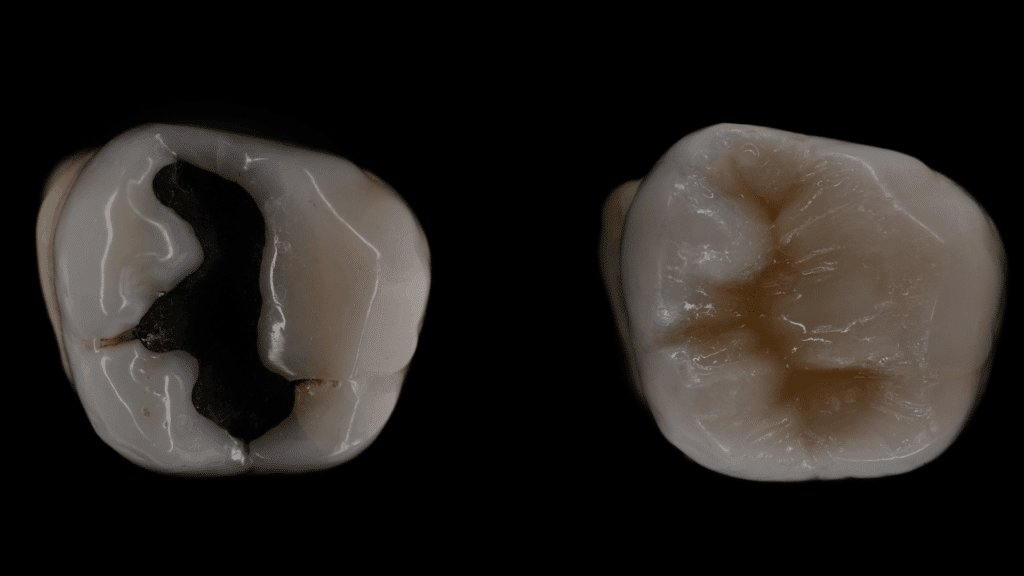
Understanding these differences helps you choose the option that fits your needs, not just in the short term, but for long-term comfort and oral health.
What Are Mercury (Amalgam) Fillings?
Mercury fillings, also known as amalgam fillings, are made from a mix of metals, including mercury, silver, tin, and copper. Dentists have used them for many years because they are strong and can handle heavy chewing pressure.
However, amalgam fillings do not bond directly to the tooth. Instead, they sit within the tooth structure, which may require removing more healthy tooth material to keep the filling in place.
What Are Composite Fillings?
Composite fillings use a tooth-colored resin material that blends with your natural teeth. Unlike amalgam, composite bonds directly to the tooth surface.
This bonding allows dentists to preserve more of the natural tooth structure. As a result, the restoration feels more secure and looks more natural.
Key Differences Between Mercury and Composite Fillings
Feature
Mercury (Amalgam) Fillings
Composite Fillings
Appearance
Silver, noticeable
Tooth-colored, blends naturally
Bonding
Does not bond to tooth
Bonds directly to tooth
Tooth Preparation
Requires removing more tooth structure
Preserves more natural tooth
Durability
Very strong under pressure
Durable but depends on location
Expansion
Expands and contracts with temperature
More stable with less expansion
Aesthetics
Not ideal for visible areas
Ideal for front and visible teeth
Appearance and Aesthetics
One of the biggest differences is how the fillings look. Amalgam fillings have a silver color, which makes them noticeable when you talk or smile.
Composite fillings match the color of your natural teeth. Because of this, they blend in and create a more natural appearance. Many patients prefer this option, especially for visible areas.
Strength and Durability
Amalgam fillings are known for their strength. They work well for back teeth that handle heavy chewing.
Composite fillings are also durable, but their performance depends on the size and location of the filling. With proper placement and care, they can last many years.
However, composite materials rely on proper bonding. This means the dentist’s technique plays a key role in long-term success.
Impact on Tooth Structure
Amalgam fillings often require removing more of the natural tooth to hold the material in place. Over time, this can weaken the remaining structure.
Composite fillings bond directly to the tooth, which allows for a more conservative approach. This helps preserve more healthy tooth structure and supports long-term strength.
Sensitivity and Comfort
Some patients notice sensitivity with amalgam fillings because the metal expands and contracts with temperature changes. This movement can create small gaps over time.
Composite fillings tend to be more stable. Since they bond to the tooth, they create a tighter seal, which can reduce sensitivity in many cases.
Longevity and Maintenance
Both types of fillings can last for many years with proper care. Amalgam may last longer in high-pressure areas, while composite offers a balance between durability and aesthetics.
Regular checkups are important for both. Dentists monitor for wear, cracks, or leakage to ensure the filling continues to protect the tooth.
Which Option Is Right for You?
The right choice depends on your specific needs. If strength under heavy pressure is the main concern, amalgam may still be considered in some cases.
However, many patients prefer composite fillings because they look natural and preserve more of the tooth. They also fit well with modern dental approaches that focus on both function and appearance.
A professional evaluation helps determine which option will work best for your situation.
Make the Right Choice for Your Smile
Choosing between mercury and composite fillings is not just about appearance. It also affects how your teeth function and how long your restoration lasts.
At Pearl Zadeh DDS, Dr. Pearl Zadeh offers both mercury (amalgam) and composite filling options based on your specific needs. She takes time to evaluate your teeth, explain each option clearly, and recommend what works best for your long-term oral health.
Call (818) 716-6722 or click the button below to schedule your consultation online and find the right solution for your smile.
Are composite fillings better than mercury fillings? Composite fillings offer better aesthetics and preserve more tooth structure, but the best option depends on your specific case.
Do mercury fillings need to be replaced? Not always. Dentists usually replace them if they show signs of damage, wear, or leakage.
Are composite fillings durable? Yes. With proper care, they can last many years, especially when placed correctly.
Do composite fillings look natural? Yes. They are designed to match your natural tooth color and blend in seamlessly.
Is it safe to replace old mercury fillings? Yes, when done using proper safety protocols by an experienced dentist.
How Holistic Dentistry Can Improve Your Oral Health and Overall Well-being
Pearl Zadeh DDSHolistic Dentistry
Have you ever considered holistic dentistry as an option for improving your oral health? Holistic dentistry is a holistic approach to caring for your teeth, gums, and supporting structures that take into account not only the physical aspects but also the emotional and spiritual wellbeing of the patient. This holistic approach can provide many benefits regarding oral health and overall wellbeing. In this article, we will discuss how holistic dentistry can improve your oral health and general wellbeing.
What is Holistic Dentistry?
Holistic dentistry is a form of dental care that considers the entire person, mind, body, emotions, and spirit, when treating tooth decay and gum disease. Holistic dentists are trained to look at patients’ overall health and seek to treat their physical problems and any underlying emotional and spiritual issues contributing to dental problems.
Benefits of holistic dental care
One of the most significant benefits of holistic dental care is its holistic approach. By considering all aspects of a patient’s health, holistic dentists can address problems before they become more serious and help to prevent future oral health issues. Additionally, holistic dentistry focuses on using natural treatments, such as herbs and vitamins, rather than relying on potentially toxic chemicals or artificial materials that could cause further harm.
How holistic dentistry can improve your oral health
Holistic dentists use a variety of holistic treatments to improve and prevent the progression of oral health issues. These holistic treatments can help reduce pain and inflammation and treat the infection. Holistic dentists also ensure that any underlying emotional or spiritual issues are addressed to provide holistic care for the patient’s overall wellbeing.
How holistic dentistry can improve your overall wellbeing
In addition to providing physical benefits, holistic dentistry is also beneficial for improving overall wellbeing. Holistic treatment encourages patients to take an active role in their healthcare, which can lead to increased self-esteem and improved mental health. Additionally, holistic dental care often focuses on natural treatments that can help reduce stress and improve relaxation, leading to improved physical health.
What holistic dentists offer
Holistic dentists offer a range of holistic treatments, including dietary changes, herbal remedies, and lifestyle modifications. They may also provide nutritional counseling or refer patients to other holistic practitioners, such as naturopaths or chiropractors, to ensure they receive comprehensive holistic care. Holistic dentists also strive to create an atmosphere of trust and understanding between themselves and their patients so that both parties feel comfortable discussing any concerns or questions they may have.
Holistic dental treatments available
Some of the holistic treatments offered by dentists include dietary changes that focus on nutrient-dense, anti-inflammatory foods that can improve oral health, holistic therapies for gum disease such as herbs and vitamins, and lifestyle modifications such as reducing stress and increasing physical activity. Holistic dentists may also offer nutritional counseling to help patients make healthier diet choices or refer them to holistic practitioners who specialize in holistic dental care.
Benefits of holistic dentistry
The holistic approach used by holistic dentists has numerous benefits, including improved oral health, a decrease in pain and inflammation, reduced risk of infection, increased self-esteem due to an active role in one’s healthcare, and improved mental and physical wellbeing due to natural treatments that reduce stress and promote relaxation. Additionally, holistic dental care offers greater patient satisfaction due to the holistic approach and personalized care.
Find a holistic dentist
Finding a holistic dentist can be done by searching online for holistic dentists in your area or asking friends and family who have had holistic dental treatments in the past. Additionally, some holistic practitioners offer free consultations so that you can discuss your needs with them before beginning treatment. Choosing a holistic dentist you trust and feel comfortable working with will ensure a successful relationship between you and your holistic practitioner.
The Bottom Line
Holistic dentistry offers numerous benefits for both oral health and overall wellbeing. By taking an active role in one’s healthcare, holistic dental care encourages patients to make healthier lifestyle choices while providing holistic treatments that reduce pain, inflammation, and infection. Additionally, holistic dental care can improve overall wellbeing by reducing stress and promoting relaxation through natural treatments.
1. What is holistic dentistry?
Holistic dentistry is an approach to dental care that focuses on treating the whole person rather than just their teeth or mouth. Holistic dentists use holistic treatments such as dietary changes, herbal remedies, and lifestyle modifications to provide comprehensive treatment for the patient’s overall wellbeing.
2. What are the benefits of holistic dentistry?
The holistic approach used by dentists offers numerous benefits, including improved oral health, decreased pain and inflammation, reduced risk of infection, increased self-esteem due to an active role in one’s healthcare, and improved mental and physical wellbeing.
3. How do I find a holistic dentist?
You can search online for holistic dentists in your area or ask friends and family who have previously had holistic dental treatments. Additionally, some holistic practitioners offer free consultations so that you can discuss your needs with them before beginning treatment.
Now accepting NEW patients for dental mercury removal.
Please call us 818.672.1071 for any insurance questions.
We take PPO insurance. Sorry no HMO.
Do you have dental mercury removal that needs to be done safely?
Would you like a dentist who practices mercury safe dentistry in Woodland Hills?
A large filling may contain as much mercury as a thermometer, and mercury is a powerful poison. Studies have shown that mercury is more toxic than lead, cadmium or arsenic.Over time, the mercury in your fillings can be released as a vapor, which is easily absorbed into your body fat, liver and spleen.If you currently have amalgam fillings in your mouth, you could be suffering from mercury toxicity.
If you are concerned about or unhappy with your amalgam fillings for any reason, we invite to come in for a Consultation.
Dr. Pearl Zadeh will
Examine your teeth,
Answer all of your questions, and
Help you work out a treatment plan designed to maximize the health and longevity of your smile
Alternatives to Amalgam Fillings
Safe, healthy options for mercury free restorations include:
All porcelain restorations
Porcelain-covered gold restorations
Bonded porcelain restorations
Composite resin
Cast gold restorations
Mercury free and mercury safe dentistry is part of Pearl Zadeh’s holistic approach to the health of your teeth and to your overall health as well.
To find out more about our mercury-free dental practice in Woodland Hills, call us today to make an appointment!
Please contact us by phone or complete the appointment request form. 818.672.1071
I have been going to Dr. Pearl and her staff for about 2 years and have exceptional service. I don’t know of anyone who likes going to the dentist and I’m one of those follks.
How to Safely Remove Amalgam Fillings: Expert Advice from Dr. Pearl Zadeh’s Dental Office
Pearl Zadeh DDSHolistic Dentistry
If you have silver-colored amalgam fillings, you may be concerned about the mercury they contain and want to know how to safely remove them. At Dr. Pearl Zadeh’s dental office, we understand these concerns and prioritize your health by offering safe, expert removal of amalgam fillings.
Removing amalgam fillings requires careful planning and specialized techniques to minimize mercury exposure and protect your overall well-being. This article will guide you through the safest methods for amalgam removal, explain why professional care is essential, and detail what to expect during the process.
Why Should You Consider Removing Amalgam Fillings?
Amalgam fillings contain approximately 50% mercury, a known neurotoxin. Although the mercury vapor released from fillings is low under normal conditions, concerns about long-term exposure and potential health effects have led many patients to seek removal.
Here’s why Dr. Pearl Zadeh recommends removing amalgam fillings safely:
Reduce mercury exposure: Limit inhalation or ingestion of mercury vapor and particles.
Improve aesthetics: Remove unsightly silver fillings for a natural, white smile.
Prevent further health risks: Especially important for pregnant women, children, and individuals with sensitivities.
The Risks of Improper Amalgam Filling Removal
Removing amalgam fillings is not as simple as drilling out the old material. If done incorrectly, it can increase mercury exposure dramatically, releasing toxic vapor and particles into the mouth and environment.
Risks include:
Inhalation of mercury vapor and fine mercury particles
Mercury absorption through the lungs and digestive tract
Contamination of the dental office environment
Damage to the tooth structure if excessive drilling is used
For these reasons, only highly trained dentists with specialized protocols should perform amalgam removal.
How Does Dr. Pearl Zadeh’s Office Ensure Safe Amalgam Filling Removal?
At Dr. Pearl Zadeh’s dental office, we use strict, proven safety measures designed to protect your health during amalgam removal. Dr. Pearl Zadeh follows IAOMT SMART training protocol as she is a SMART trained dentist. In addition, she follows Hal Huggins protocol as she was trained by him.
1. Use of a Rubber Dam
A rubber dam is a thin, flexible sheet that isolates the tooth being treated. This prevents mercury particles from mixing with your saliva and reduces the risk of swallowing or inhaling toxic material.
2. High-Volume Suction and Air Filtration
We employ high-volume suction devices positioned near the tooth to immediately capture mercury vapor and debris. Additionally, advanced air filtration systems purify the treatment room’s air to limit contamination.
3. Specialized Drilling Techniques
Instead of removing the filling all at once, Dr. Zadeh removes it in chunks to minimize heat and mercury vapor release. The filling is cut into large pieces, reducing airborne mercury.
4. Patient and Staff Protection
We provide oxygen via a nasal mask to reduce inhalation of any mercury vapors. Staff members also wear protective equipment to ensure everyone’s safety.
5. Pre- and Post-Treatment Protocols
Patients are advised on steps to support detoxification before and after removal, including hydration and nutrition to help the body eliminate toxins.
What to Expect During Your Amalgam Filling Removal Appointment
Understanding the procedure helps ease any anxiety. Here’s a general overview:
Initial Consultation: Dr. Pearl Zadeh will evaluate your dental and medical history, inspect your fillings, and discuss your goals and concerns.
Treatment Planning: A customized removal plan will be created, focusing on safety and preservation of tooth structure.
Removal Procedure: During the appointment, rubber dams, high-volume suction, and other safety measures are applied. The amalgam is removed carefully using specialized drills.
Replacement with Mercury-Free Materials: After removal, the cavity is cleaned and restored with biocompatible, tooth-colored composite fillings or ceramics.
Follow-Up Care: Dr. Zadeh will monitor healing and help ensure optimal oral health after treatment.
Benefits of Professional Safe Amalgam Removal
Minimized Mercury Exposure: Expert techniques reduce health risks.
Healthier Teeth: Composite fillings bond to your tooth and preserve natural structure.
Peace of Mind: Knowing your fillings were removed safely under professional care.
What to Avoid When Considering Amalgam Removal
DIY removal or unqualified practitioners, this is dangerous and can increase mercury exposure.
Ignoring safety protocols during removal.
Delaying consultation if you suspect your amalgam fillings are deteriorating or causing health issues.
Conclusion: Prioritize Your Health with Safe Amalgam Filling Removal
If you’re concerned about the mercury in your amalgam fillings, it’s important to approach removal thoughtfully and professionally. At Dr. Pearl Zadeh’s dental office, we are committed to the safest, most effective amalgam filling removal process, using advanced protocols that protect your health every step of the way.
Don’t risk your health with unsafe practices. Contact Dr. Pearl Zadeh today to schedule a consultation and learn how we can help you safely transition to mercury-free, natural-looking restorations that protect your smile and overall well-being.
Key Takeaways:
Amalgam fillings contain mercury, which can be toxic if improperly handled.
Safe removal requires specialized equipment, protocols, and expertise.
Dr. Pearl Zadeh’s office uses rubber dams, high-volume suction, and advanced techniques to minimize mercury exposure.
Mercury-free composite fillings are healthier, safer, and more aesthetically pleasing replacements.
Always consult with a qualified dentist for amalgam removal.
Are Amalgam Fillings Leaky? What Dr. Pearl Zadeh’s Dental Office Wants You to Know
Pearl Zadeh DDSHolistic Dentistry
If you have silver-colored amalgam fillings, or you’re considering dental restorations, you might be asking: Are amalgam fillings leaky? This question is more important than it sounds. The integrity of your fillings directly affects your oral health, preventing bacteria from entering your teeth and causing further decay.
At Dr. Pearl Zadeh’s dental office, where we strongly oppose the use of amalgam fillings, we want to explain why amalgam fillings can be problematic when it comes to leakage, what that means for your teeth, and why mercury-free alternatives like composite fillings are safer and more effective.
What Does It Mean When We Say a Filling Is “Leaky”?
When dentists refer to a “leaky” filling, they’re talking about microleakage, the tiny gaps or spaces that can form between the filling material and your tooth structure. These gaps allow saliva, bacteria, and food particles to seep under the filling.
Over time, this can lead to:
Tooth sensitivity
Recurrent decay (cavities forming beneath the filling)
Tooth discoloration
Inflammation or infection of the tooth pulp
Microleakage is a common problem that can compromise the longevity and safety of a dental filling.
Are Amalgam Fillings Prone to Leakage?
The Truth About Amalgam Fillings and Leakage
Yes, amalgam fillings can be leaky, and here’s why:
Lack of Adhesion: Unlike modern composite fillings that chemically bond to your tooth, amalgam fillings do not adhere to the tooth structure. They rely on mechanical retention, meaning the dentist has to carve the tooth into a shape that physically holds the filling in place.
Metal Expansion and Contraction: Amalgam expands and contracts with changes in temperature (hot and cold foods), which can cause the filling to loosen over time. This movement creates gaps between the filling and the tooth.
Corrosion Over Time: Amalgam fillings undergo corrosion, which can initially help seal the edges but eventually leads to breakdown and increased microleakage.
Tooth Structure Removal: To place an amalgam filling, more healthy tooth material often needs to be removed to accommodate its shape. This weakens the tooth and increases the risk of fractures that worsen leakage.
Why Is Leakage a Serious Concern?
Leaky fillings can lead to multiple dental problems:
1. Recurrent Decay Under the Filling
Bacteria and acids can sneak through microscopic gaps, causing new decay underneath the filling, often undetectable until it becomes severe.
2. Tooth Sensitivity and Pain
Leaking fillings can expose sensitive parts of the tooth to temperature changes or pressure, leading to discomfort.
3. Cracks and Fractures
As the amalgam filling shifts with temperature, it can cause the surrounding tooth to crack, which may necessitate more invasive treatments like crowns or even extraction.
4. Mercury Exposure
When fillings degrade and leak, tiny mercury particles or vapor can be released. This is especially concerning for patients wary of mercury exposure.
How Do Composite Fillings Compare When It Comes to Leakage?
Composite fillings, the mercury-free alternative Dr. Pearl Zadeh strongly recommends, perform better against microleakage due to several key factors:
Chemical Bonding: Composite resins bond directly to the tooth, sealing margins tightly to prevent leakage.
Less Tooth Removal: Composites require minimal drilling, preserving more natural tooth structure and reducing fracture risk.
Thermal Expansion Similar to Teeth: Composite materials expand and contract at a rate similar to natural teeth, reducing gap formation.
Durability and Flexibility: Modern composites are strong and slightly flexible, maintaining the seal longer.
Signs Your Amalgam Filling May Be Leaking
It’s important to recognize symptoms of leaky amalgam fillings so you can seek prompt dental care:
Persistent tooth sensitivity to hot, cold, or sweet foods
A metallic or unusual taste in your mouth
Dark staining or discoloration around the edges of a filling
Toothache or unexplained pain in a previously filled tooth
Visible cracks or rough edges on the filling
If you notice any of these signs, scheduling a dental evaluation with Dr. Pearl Zadeh is essential.
What Can You Do If You Have Leaky Amalgam Fillings?
At Dr. Pearl Zadeh’s dental office, we take a proactive approach to protect your oral health:
1. Comprehensive Examination
We assess the condition of your existing fillings using advanced diagnostic tools to detect leakage or decay.
2. Safe Removal of Amalgam Fillings
If necessary, we safely remove your amalgam fillings using protocols that minimize mercury exposure, including rubber dams, high-volume suction, and air filtration.
3. Replacement with Mercury-Free Fillings
We replace amalgam with biocompatible composite or ceramic fillings that bond securely to your tooth and prevent leakage.
4. Regular Monitoring
Routine check-ups allow us to monitor all restorations, catch early signs of leakage, and maintain your oral health.
Conclusion: Why Avoiding Leaky Amalgam Fillings Matters for Your Health
Amalgam fillings are prone to leakage due to their lack of adhesion, thermal expansion, and corrosion over time. This leakage can lead to recurrent decay, sensitivity, fractures, and even mercury exposure, risks that Dr. Pearl Zadeh’s dental office works hard to prevent.
Choosing mercury-free composite fillings offers a safer, more durable, and aesthetically pleasing alternative that minimizes leakage and supports long-term oral health.
If you’re concerned about your existing amalgam fillings or want to explore healthier options, contact Dr. Pearl Zadeh’s office today to schedule a consultation. Together, we’ll protect your smile with the safest, most effective dental care available.
Key Takeaways:
Amalgam fillings can be leaky due to poor bonding and metal expansion.
Leakage leads to decay, sensitivity, fractures, and potential mercury exposure.
Composite fillings bond tightly to teeth, reducing leakage risk.
Early detection and safe removal of leaking amalgam fillings are crucial.
Dr. Pearl Zadeh’s office specializes in mercury-free dentistry for your health.
What Are the Side Effects of Mercury Filling Removal?
Pearl Zadeh DDSHolistic Dentistry
If you are thinking about removing your old silver fillings, you probably have a few concerns about what the process involves. Most patients want to know what side effects to expect and whether the treatment is actually safe.
The reality is that most people handle mercury filling removal without major issues. Some mild discomfort can happen, but it is usually temporary. What matters most is how the removal is done. A dentist who follows strict safety protocols, such as those recommended by the International Academy of Oral Medicine and Toxicology (IAOMT), takes specific steps to reduce exposure during treatment.
In this article, you will learn what you may feel before, during, and after the procedure, what is considered normal, and when it makes sense to contact your dentist.
Why Patients Worry About Mercury Filling Removal
Amalgam fillings contain about 50 percent mercury by weight. That fact alone makes many patients uneasy. Online forums and mixed opinions only add to the confusion.
Some of the concern is based on real science. Mercury is a known neurotoxin, and there is ongoing research and discussion about long-term exposure from dental fillings. At the same time, a lot of what people read online is overstated or not placed in proper context.
What many patients do not realize is that the removal process itself is where exposure can increase if it is not handled correctly. Drilling out an amalgam filling can release mercury vapor and tiny particles. Without proper protection, those particles can be inhaled or swallowed.
What Side Effects Can Occur After Mercury Filling Removal?
Most patients experience only mild and temporary effects after mercury filling removal. These usually settle on their own within a short time.
Mild Tooth Sensitivity
Some sensitivity is normal after any filling replacement. The tooth has been worked on, and it needs time to adjust.
You may notice discomfort when eating or drinking something hot, cold, or sweet. This usually improves within a few days to a couple of weeks.
If sensitivity does not improve or gets worse, it is best to check in with your dentist.
Gum Irritation
The gums around the treated tooth may feel slightly sore after the appointment. This is a normal response to dental treatment.
It usually settles within a day or two. During this time, gentle brushing and avoiding very hot or spicy foods can help reduce irritation.
Jaw Soreness
Keeping your mouth open for an extended period can strain the jaw muscles. This can happen with any longer dental procedure.
Some patients feel mild soreness or stiffness for a short time after treatment. A warm compress and softer foods can help ease this discomfort.
Temporary Bite Changes
When a filling is replaced, the new restoration may feel slightly different at first. The bite may need a small adjustment as your teeth settle.
This is common and easy to fix. A quick adjustment at a follow-up visit usually resolves it. If something feels off, it is better to mention it early so it does not lead to ongoing discomfort.
Emotional Relief and Peace of Mind
Some patients notice a sense of relief after completing the procedure. This is especially common in people who have worried about their fillings for a long time.
It is not a medical effect of the treatment. It is simply how people often feel after resolving something they have been thinking about for years.
Are Detox Symptoms Normal After Amalgam Removal?
Some patients report symptoms like headaches, fatigue, or feeling a bit “off” after amalgam removal. You may also come across the term “mercury detox” online and wonder if this is something to expect.
The honest answer is that there is no strong scientific consensus linking these symptoms directly to mercury release after removal. People’s experiences vary widely. Some feel completely normal after the procedure, while others notice short-term changes that may be related to stress, sensitivity to dental work, or the effects of local anesthesia wearing off.
What is well understood is that proper safety protocols reduce exposure during the removal process. That helps limit what the body comes into contact with at the time of treatment.
If you do not feel well after your appointment, it is worth paying attention to it. Rest, drink water, and contact your dentist if symptoms feel strong or do not improve within a couple of days. It is also important to discuss any existing health concerns before treatment so your dentist can plan appropriately.
How Safe Removal Protocols Reduce Potential Side Effects
IAOMT-based protocols focus on one main goal: reducing exposure to mercury during removal. Each step is designed to control where particles or vapor could be released and limit contact with the patient.
Here is what these steps involve in practice.
Activated Charcoal Before Treatment
Some practices may recommend activated charcoal before the procedure. The idea is that it may help bind small particles in the digestive tract if any are accidentally swallowed.
This step is optional and not used in every clinic. It is only one part of a wider safety approach.
Protective Barriers
Patients are covered with protective barriers during treatment. This helps prevent any particles from settling on the skin, face, or clothing.
It is a simple step, but it reduces unnecessary contact with debris outside the mouth.
Dental Dam Protection
A dental dam is a thin rubber sheet placed around the tooth being treated. It isolates the area completely.
This helps prevent fragments from entering the throat or being swallowed during removal. Many dentists consider this an essential part of safe amalgam removal.
Cooling the Filling During Removal
Heat can increase mercury vapor release. For this reason, water is used continuously during drilling to keep the filling cool.
This reduces vapor formation and helps control exposure during the procedure.
High-Volume Evacuation Systems
Special high-volume suction devices are used to remove vapor, particles, and aerosol directly from the mouth.
These systems are stronger than standard dental suction and help capture material at the source.
Dental Air-Vac Technology
Additional suction tools may be placed closer to the mouth or nose area. These help capture anything that escapes the main evacuation system.
This adds another layer of control during the procedure.
Alternative Oxygen Source
Some patients breathe through a nasal oxygen or filtered air system during removal. This reduces exposure to airborne particles around the mouth.
It also helps patients feel more comfortable during longer procedures.
Air Ionization and Ventilation
Proper airflow in the treatment room helps reduce airborne particles. Some clinics also use air ionization systems to support cleaner air during procedures.
This protects both the patient and the dental team.
Thorough Rinsing After Removal
Once the filling is removed, the mouth is thoroughly rinsed and cleaned. This helps clear any remaining particles before the procedure is completed.
It is a simple final step that supports overall cleanliness after treatment.
Why IAOMT Protocols Matter
The IAOMT is a group of dental and medical professionals who study and promote safer approaches to amalgam removal. Their guidelines are based on years of research focused on reducing exposure for patients, dentists, and clinical staff.
The key issue with amalgam removal is not the filling itself, but what happens when it is disturbed. Drilling into an amalgam filling without proper protection can release more mercury than leaving it untouched.
This is where protocols make a difference. They are designed to control exposure at each step of the process so that removal is done in a more controlled and safer way.
A little preparation can make the appointment more comfortable and predictable. Before your visit, it helps to go over your medical history with your dentist, including any conditions you have and any medications or supplements you are taking.
Some dentists may suggest basic nutritional support before and after treatment, depending on your individual case. They discuss this with you on a case-by-case basis.
It is also a good idea to keep your schedule light after the procedure, especially if several fillings are being removed. Most patients feel fine afterward, but having time to rest is still helpful.
On the day of your appointment, eat a normal light meal unless instructed otherwise. Wear something comfortable, and arrange transport if you expect to feel tired or if sedation is part of your treatment plan.
When Should You Contact Your Dentist After Treatment?
Most patients feel only mild and temporary discomfort after amalgam removal. Still, there are a few situations where it is best to check in with your dentist.
You should contact your dental office if you notice pain that does not improve after a few days or starts to get worse instead of better. Swelling in the gums, jaw, or face that does not go down is also worth reporting.
If your bite feels off and causes discomfort when you chew, you usually need a small adjustment. This is common after a filling replacement and is easy to fix, but you should not ignore it.
It is also important to reach out if you notice signs that could suggest infection, such as increasing pain, fever, or any unusual discharge from the area.
Some patients also experience sensitivity for a short period after the new restoration is placed. If this continues for more than a few weeks, it should be reviewed.
In general, if something does not feel right to you, it is better to call and ask. You do not need to second-guess it.
Most patients do well after mercury amalgam removal. The most common effects include mild sensitivity, slight gum tenderness, and short-term jaw soreness. Serious complications are rare, especially when the procedure is done with proper care.
The main difference is technique. How the fillings are removed affects how much exposure occurs during treatment. A dentist who uses protective barriers, high-volume suction, controlled cooling, and other IAOMT-recommended steps manages the process very differently from a standard removal without those safeguards.
Dr. Pearl Zadeh follows IAOMT-recommended mercury amalgam removal protocols designed to maximize safety and comfort for every patient. From protective barriers and high-volume evacuation to proper cooling and thorough post-removal rinsing, every step is taken with your wellbeing in mind.
If you are ready to discuss your fillings and find out whether removal is the right choice for you, we are here to help.
Call (818) 716-6722 or click the button below to schedule your consultation online.
1. What are the most common side effects of mercury filling removal?
Most patients notice mild tooth sensitivity, some gum tenderness around the treated area, and short-term jaw soreness from keeping the mouth open during the procedure. These are common after many dental treatments and usually settle within a few days to a couple of weeks.
2. How long does sensitivity last after amalgam removal?
Sensitivity to hot, cold, or sweet foods often improves within a few days. For some patients, it can take a few weeks for the tooth and surrounding tissue to fully settle. If sensitivity lasts longer than about four weeks or starts to worsen, it is best to have the area checked by your dentist.
3. Can mercury filling removal make you sick?
When a dentist removes mercury fillings using proper safety protocols, most patients do not experience illness. Concerns about exposure relate to the removal process itself, which is why safety steps matter during treatment. Some patients notice short-term symptoms such as tiredness or headaches, but these are usually mild and temporary. If anything feels unusual or lasts longer than expected, contact your dentist for a check.
4. Are IAOMT protocols necessary for amalgam removal?
IAOMT protocols play a key role in biological and mercury-safe dentistry because they reduce exposure during removal. Without these precautions, drilling into amalgam releases mercury vapor and particles. These steps help control exposure for the patient, dentist, and staff during treatment. Many dentists see them as an important part of safe practice.
5. Is mercury filling removal safe?
Mercury filling removal is safe when a dentist uses the right technique and precautions. Dentists use protective barriers, high-volume suction, cooling during drilling, and proper air management in the treatment room to control exposure. If you have specific health concerns, talk with your dentist before treatment so they can adjust the approach if needed.
If you’ve ever searched for a Woodland Hills dentist and come across the term holistic dentistry, you may have felt curious, and maybe a little skeptical. I often meet patients who are intrigued by holistic care but unsure what it really means. Some worry it’s “too alternative,” while others assume it’s not grounded in science.
As a holistic dentist who also practices biomimetic dentistry and cosmetic dentistry, I believe in combining modern science with a whole-body perspective. Holistic dentistry isn’t about rejecting conventional care, it’s about expanding it. Let’s clear up the most common myths so you can decide if this approach is right for you.
Myth #1: Holistic Dentistry Isn’t Scientifically Based
The Truth: It’s Rooted in Evidence-Based Dentistry
One of the biggest misconceptions is that holistic dentistry relies on unproven or fringe methods. In reality, holistic dentistry uses the same scientific foundation as traditional dentistry, with an added focus on how oral health impacts the rest of the body.
Holistic dentistry emphasizes:
Biocompatible materials
Minimally invasive techniques
Evidence-based prevention strategies
The oral-systemic health connection
As a biomimetic dentist, I rely heavily on research-backed methods that preserve natural tooth structure and support long-term function. Holistic care is not “alternative science”, it’s thoughtful, integrative dentistry.
Myth #2: Holistic Dentists Don’t Do Cosmetic Dentistry
The Truth: Holistic Dentistry and Cosmetic Dentistry Work Beautifully Together
Some patients assume that choosing a holistic dentist means sacrificing aesthetics. In fact, holistic dentistry often enhances cosmetic results because it prioritizes balance, symmetry, and natural form.
A holistic approach to cosmetic dentistry considers:
Facial harmony and smile dynamics
Non-toxic, biocompatible materials
Conservative tooth preparation
Long-term oral health outcomes
As a cosmetic dentist, my goal is to create smiles that look natural and feel healthy, not just immediately, but for years to come. Beauty and wellness are not separate; they’re deeply connected.
Myth #3: Holistic Dentistry Is Only About Removing Metal Fillings
The Truth: It’s About Prevention, Preservation, and Whole-Body Health
While safe mercury amalgam removal is part of holistic dentistry, it’s only one small aspect. Holistic care is much broader and focuses on preventing dental problems before they become complex.
Holistic dentistry includes:
Early detection of cracks and decay
Biomimetic restorations that strengthen teeth
Gum health and inflammation management
Airway and bite evaluation
Nutrition and lifestyle guidance as it relates to oral health
As a Woodland Hills dentist, I see holistic dentistry as proactive rather than reactive, designed to protect your health at every level.
Myth #4: Holistic Dentistry Is More Expensive and Less Practical
The Truth: It’s an Investment in Long-Term Health
It’s true that holistic dentistry may use advanced materials and techniques, but that doesn’t mean it’s impractical or excessive. In many cases, holistic dentistry can reduce the need for repeated dental work by addressing problems at their root.
Long-term benefits include:
Fewer replacement restorations
Stronger, more durable teeth
Reduced risk of chronic inflammation
Improved overall well-being
As a biomimetic dentist, I focus on solutions that last. When dentistry is done thoughtfully the first time, it often saves time, cost, and discomfort in the long run.
Myth #5: Holistic Dentistry Is Only for “Health Enthusiasts”
The Truth: It’s for Anyone Who Values Thoughtful, Personalized Care
You don’t need to follow a specific lifestyle or belief system to benefit from holistic dentistry. This approach is for anyone who wants dentistry that is:
Conservative and personalized
Mindful of whole-body health
Focused on prevention and education
Aligned with modern science
Many patients choose holistic care simply because they want a dentist who listens, explains options clearly, and considers how dental decisions affect their overall health.
If you’re looking for a Woodland Hills dentist who sees you as more than just a set of teeth, holistic dentistry may be exactly what you’ve been searching for.
How Biomimetic Dentistry Fits Into Holistic Care
Biomimetic dentistry is a natural extension of holistic principles. Rather than drilling and replacing large portions of the tooth, biomimetic techniques aim to restore teeth in a way that mimics natural strength and flexibility.
This approach allows us to:
Preserve as much natural tooth structure as possible
Reduce the risk of cracks and fractures
Restore teeth in layers that behave like enamel and dentin
Improve comfort and longevity
When holistic dentistry and biomimetic dentistry work together, patients benefit from care that respects both biology and biomechanics.
Choosing the Right Holistic Dentist in Woodland Hills
Not all dentists who use the term “holistic” practice it in the same way. When choosing a holistic dentist, look for someone who:
Uses evidence-based techniques
Takes time to understand your health history
Explains treatment options clearly
Values conservative and preventive care
Integrates cosmetic, restorative, and biomimetic dentistry seamlessly
The right provider will help you feel informed, empowered, and confident in your care.
Final Thoughts: Holistic Dentistry Is Dentistry with Intention
Holistic dentistry isn’t about extremes, it’s about intention. It’s about choosing materials, techniques, and treatments that support your oral health while respecting your overall well-being.
Key Takeaways:
Holistic dentistry is grounded in science
It complements cosmetic and biomimetic dentistry
It focuses on prevention and long-term health
It’s practical, personalized, and patient-centered
It’s ideal for anyone seeking thoughtful dental care
If you’re curious about holistic dentistry or wondering how it could benefit you, I invite you to take the next step. Schedule a consultation, ask questions, and explore a dental experience designed around you.
As your trusted Woodland Hills dentist, I’m here to help you achieve a healthy, balanced smile, one that supports your whole body, not just your teeth.
What You Need To Know Before Visiting A Holistic Dentist
Pearl Zadeh DDSHolistic Dentistry
Are you considering visiting a Holistic Dentist? Holistic dentistry is an approach to dental care that looks at the entire body, not just the teeth and gums. Holistic dentists believe that overall health starts in your mouth, so they focus on preventive care and natural treatments. This article explains holistic dentistry’s benefits and how you can find a reputable Holistic Dentist.
What Is Holistic Dentistry?
Holistic dentistry is an approach to dental care that concentrates on physical and emotional well-being. It considers the impact of oral health on general health and wellness and their interaction. Holistic dentists believe that the mouth and body are connected, so they take a holistic approach to treatment. Holistic dentistry uses natural, non-toxic treatments, such as herbal remedies or homeopathic solutions, whenever possible. Holistic Dentists also use biomimetic dentistry, which focuses on repairing teeth in their natural form while preserving healthy parts of the tooth whenever possible.
Benefits Of Holistic Dentistry
Holistic dentistry offers many benefits for its patients. One of the main advantages is improved overall health and wellness due to better oral health. Holistic dentists focus on preventing dental problems rather than treating them once they occur. It can help you avoid costly and painful procedures in the future. Holistic dentistry also emphasizes the use of natural, non-toxic treatments and procedures. To reduce exposure to potentially toxic substances, holistic dental practitioners strive to avoid synthetic materials such as mercury fillings whenever possible. Holistic Dentists are also dedicated to providing individualized care that considers a patient’s lifestyle, medical history, and other factors to ensure the best possible outcome.
Finding A Holistic Dentist
When looking for a Holistic Dentist, it is crucial to do some research beforehand. Look for reviews online or ask your friends and family if they have any advice or recommendations. Make sure you read up on their policies and philosophies before making an appointment so that you know what to expect. Holistic Dentists may be more expensive than traditional dentists, so make sure you can afford their fees before committing to an appointment. You should also ask if they offer payment plans or other financing options.
The Bottom Line
Holistic Dentistry offers many benefits for natural, non-toxic treatments and preventive care. Holistic dentists focus on the overall health of their patients rather than just treating isolated symptoms. When searching for a Holistic Dentist, it is essential to do your research beforehand to find a reputable practitioner who will provide individualized care at an affordable price.
1. What is Holistic Dentistry?
Holistic Dentistry is an approach to dental care that looks at the entire body, not just the teeth and gums. Holistic dentists believe that overall health starts in your mouth, so they focus on preventive care and natural treatments.
2. What are some of the benefits of Holistic Dentistry?
Holistic dentistry offers many benefits for its patients, including improved overall health and wellness due to better oral health and natural, non-toxic treatments and procedures. Holistic dentists also strive to provide individualized care based on a patient’s lifestyle and medical history.
3. How can I find a reputable Holistic Dentist?
When looking for a Holistic Dentist, it is important to do your research beforehand. Look for reviews online or ask friends and family if they have any advice or recommendations. Make sure you read up on their policies and philosophies before making an appointment so that you know what to expect. Holistic dentists may be more expensive than traditional dentists, so make sure you can afford their fees before making an appointment. You should also ask if they offer payment plans or other financing options.
Why IAOMT Protocols Matter in Mercury Amalgam Removal
Pearl Zadeh DDSHolistic Dentistry
Many patients today ask about the safety of removing old silver fillings. These fillings, also called mercury amalgam fillings, contain a mix of metals including mercury. While they were once common, more people now choose to replace them with tooth-colored materials. Because mercury can be released as vapor during removal, the process must be handled with special care.
This is where IAOMT protocols play an important role. These guidelines help dentists remove mercury amalgam fillings in a safer way for both patients and dental staff.
What Are IAOMT Protocols?
IAOMT stands for the International Academy of Oral Medicine and Toxicology. It is an organization made up of dental, medical, and research professionals who focus on biocompatible and science-based dental care.
IAOMT protocols provide step-by-step safety guidelines for mercury amalgam removal. Their goal is to reduce exposure to mercury vapor and particles during the procedure. These standards are based on scientific research and are followed by dentists who receive specific training in safe removal techniques.
Why Mercury Amalgam Removal Requires Special Care
When a mercury filling is drilled or removed, heat and friction can release small amounts of mercury vapor and particles. Without protective measures, these can be inhaled or swallowed by the patient or dental team.
Standard filling removal methods do not always address this risk. That is why IAOMT protocols exist. They focus on controlling mercury exposure instead of simply removing the filling.
Key Safety Measures Used in IAOMT Mercury Amalgam Removal
Dentists who follow IAOMT protocols use several important steps to improve safety during mercury amalgam removal:
Protective barriers are placed over the patient’s face and clothing to prevent particles from contacting skin or eyes.
A dental dam isolates the tooth being treated so mercury debris does not enter the mouth or throat.
High-volume suction removes mercury particles and vapor as soon as they are released.
Cooling with water and air helps reduce heat and lowers the amount of mercury vapor produced.
Air filtration and ventilation systems clean the surrounding air during the procedure.
Alternative air sources, such as oxygen through a nasal cannula, allow patients to breathe clean air while the filling is removed.
These steps work together to create a safer treatment environment.
IAOMT protocols focus on limiting how much mercury the patient may inhale or swallow. They also help keep the dental room cleaner during the procedure. This careful approach supports both physical comfort and peace of mind.
Patients often feel more confident knowing their dentist follows established safety standards instead of using routine filling removal methods.
Benefits of Choosing an IAOMT-Trained Dentist
Choosing a dentist trained in IAOMT mercury amalgam removal offers several advantages:
Knowledge of safety-focused procedures
Use of specialized equipment for mercury control
A structured and careful treatment process
Clear communication about each step of removal
This approach allows the dentist to replace old metal fillings with modern tooth-colored materials in a controlled and responsible way.
Many patients wonder about the safety and process of mercury amalgam removal. Amalgam fillings, often called “silver fillings,” have been used for decades to restore teeth. While durable and cost-effective, some patients choose to replace them for cosmetic reasons, health concerns, or when fillings show signs of wear.
At Pearl Zadeh DDS in Woodland Hills, we follow strict safety protocols to ensure removal is precise, comfortable, and safe.
What Are Mercury Amalgam Fillings?
Mercury amalgam fillings are made from a blend of metals, including silver, tin, copper, and mercury. They were widely used because they are strong, durable, and relatively inexpensive.
Over time, however, these fillings can crack, leak, or discolor teeth. Some patients also prefer mercury-free alternatives for aesthetic or personal reasons.
Why Do Patients Consider Mercury Amalgam Removal?
There are several reasons people choose to remove amalgam fillings:
Aesthetic concerns: Dark metal fillings can show when you smile or talk.
Health considerations: Some patients prefer to replace mercury-containing fillings.
Damaged or failing fillings: Cracked or leaking fillings can compromise oral health.
Upgrading to modern materials: Tooth-colored composite or porcelain fillings improve appearance and function.
How Mercury Amalgam Removal Works
Removing mercury amalgam fillings is a careful process designed to minimize exposure and protect surrounding teeth. Here’s how it works:
Isolation and protection, We place barriers and use high-volume suction to prevent debris or mercury from entering the mouth.
Digital assessment, X-rays or scans help assess the extent of the filling and guide safe removal.
Step-by-step removal, The amalgam is removed in small pieces to reduce stress on the tooth.
Replacement, The cavity is restored with composite fillings, porcelain inlays, or other safe dental materials.
Using these measures, removal is both safe and precise, preserving as much natural tooth structure as possible.
At Pearl Zadeh DDS in Woodland Hills, patient safety is the top priority during mercury amalgam removal. Dr. Pearl follows IAOMT and Huggins Alliance protocols to protect patients, staff, and herself. Protective barriers, a dental dam, and high-volume suction reduce contact with mercury particles.
Water and air sprays keep the fillings cool, while an alternative oxygen source ensures safe breathing. The office also uses an air filtration system to capture any vapors. After removal, the mouth is thoroughly rinsed and cleaned to complete the process safely.
Replacing old mercury fillings provides multiple advantages:
Improves smile appearance with tooth-colored restorations.
Reduces risk of cracks or leaks in old fillings.
Replaces metal with safer, biocompatible materials.
Supports long-term oral health by protecting teeth from further decay.
A properly removed and replaced filling can restore both function and confidence in your smile.
Aftercare and Maintenance
After amalgam removal, caring for your new fillings is simple:
Brush at least twice a day and floss around the treated teeth.
Avoid very hard foods on the new filling for a few days.
Attend regular dental checkups to monitor the restoration.
Report any sensitivity or discomfort promptly.
With proper care, modern restorations can last many years while keeping your teeth healthy.
Who Should Consider Mercury Amalgam Removal?
Patients who may benefit include:
Those with cracked, worn, or leaking amalgam fillings.
Individuals replacing old fillings for cosmetic reasons.
Patients concerned about mercury exposure.
Anyone looking to upgrade to safer, tooth-colored materials while preserving oral health.
A professional exam can determine whether removal is appropriate and safe for your teeth.
Schedule a Consultation
If you’re thinking about mercury amalgam removal, Pearl Zadeh DDS in Woodland Hills offers careful, personalized treatment focused on comfort, precision, and natural-looking results.
Call (818) 716-6722 or book your consultation online today to discuss your options and get your teeth safely restored without metal fillings.
Most patients feel minimal discomfort. Local anesthesia keeps the area numb during the procedure.
2. Can children or pregnant patients safely undergo removal?
Yes, but special precautions are taken. Your dentist will discuss timing and safety measures.
3. What materials are used to replace amalgam fillings?
Safe alternatives include composite resin and porcelain, both of which match your natural tooth color.
4. How long does the procedure take?
Dentists usually complete single-tooth removals in one visit, while removing multiple fillings may require additional appointments.
5. How long do mercury-free fillings last after removal?
Modern tooth-colored fillings, such as composite or porcelain, offer long-lasting durability when you care for them properly. Brush and floss daily and visit your dentist for regular checkups to keep them strong, maintain their appearance, and support long-term oral health.