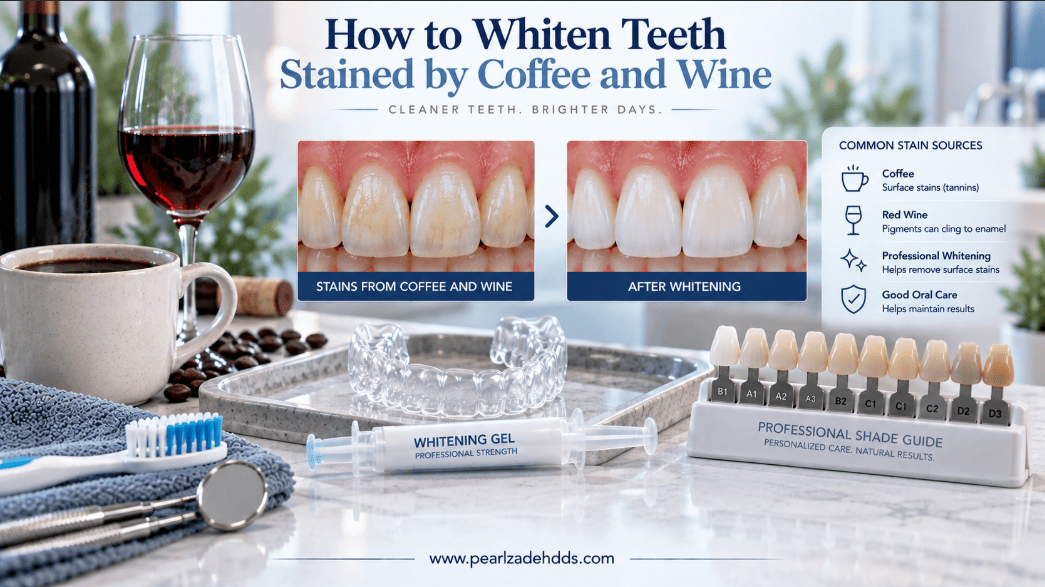
You notice it in photos before you notice it in the mirror. Your teeth look a little more yellow than they used to, maybe with a faint gray tint if wine is part of your regular routine. Coffee and wine are both genuinely known contributors to tooth staining, and if you’ve been drinking either regularly for years, some visible change is understandable rather than surprising.
The real question is whether these particular stains can actually be whitened, and if so, what approach actually makes sense. That depends on more than just how many cups or glasses you’ve had over the years.
Why Do Coffee and Wine Stain Your Teeth?
Both beverages contain compounds called chromogens, deeply pigmented substances that bind to a thin protein layer on your teeth called the pellicle. Coffee’s staining potential comes largely from its tannins and related plant compounds, while red wine combines tannins with its own natural pigments in a way that tends to bind especially well.
A peer-reviewed study on dental staining from beverages tested how a range of beverages stained actual tooth enamel, alongside a chlorhexidine rinse used in the study protocol. Black tea and red wine produced the highest staining among the beverages tested, with coffee also causing significant discoloration compared to water.
Interestingly, white wine produced staining comparable to plain water, suggesting the deep pigment in red wine, not the alcohol or acidity alone, is doing most of the work. Since the study measured staining alongside a chlorhexidine rinse rather than in an ordinary mouth, the exact numbers may not translate directly to everyday coffee or wine drinking, though the relative pattern, red wine and dark tea staining more than lighter drinks, matches what dentists generally observe in practice.
Staining tends to build up gradually with repeated exposure, especially alongside other staining habits or inconsistent brushing. Someone drinking coffee occasionally with a consistent brushing routine is unlikely to see the same buildup as someone drinking several cups daily with a less consistent routine. Not everyone who drinks coffee or wine develops noticeable staining. How visible it becomes varies from person to person.
Can Whitening Remove Coffee and Wine Stains?
Often, at least partially, particularly when the staining sits on the surface of your enamel rather than deeper within the tooth. Surface staining, sometimes called extrinsic staining, tends to respond reasonably well to whitening. Deeper, intrinsic discoloration behaves differently, and your natural tooth color or existing dental restorations can also contribute to what you’re actually seeing in the mirror.
Results genuinely depend on the cause, severity, and depth of your specific discoloration, not simply how much coffee or wine you’ve consumed over the years. Our discussion of common reasons whitening doesn’t work goes further into why some staining responds better than others.
Does Professional Teeth Whitening Work for Coffee and Wine Stains?
It often can, particularly for surface staining that hasn’t been complicated by deeper discoloration or existing dental work. A dental evaluation helps determine whether your specific staining is the kind likely to respond well before you commit to treatment.
Professional teeth whitening starts with that evaluation rather than guessing at what product might work. This isn’t a promise of a specific result. It’s a more informed starting point than trial and error.
Can Whitening Toothpaste Remove Coffee and Wine Stains?
It can help with milder surface staining through its cleaning action, gently lifting some of the pigment sitting on your enamel as you brush. This isn’t the same mechanism as professional bleaching, which chemically changes the color of the tooth rather than simply cleaning its surface. Brushing harder or more aggressively isn’t a better solution here. It mainly risks irritating your gums or wearing at your enamel without meaningfully improving the actual stain.
Should You Get a Dental Cleaning Before Whitening?
Cleaning and whitening actually serve different purposes. A professional cleaning removes plaque, calculus, and surface deposits that have built up over time, while whitening changes the actual color of your tooth structure. Someone with a layer of surface buildup might see disappointing whitening results simply because the whitening agent has to work through that buildup first, which is one reason these two steps often get discussed together even though they aren’t interchangeable.
A dentist may recommend evaluating your overall oral health before starting cosmetic whitening, partly to make sure nothing else needs attention first. That said, not every patient needs a cleaning immediately before whitening. Whether it makes sense depends on when you were last seen and what your teeth actually look like.
What If Coffee and Wine Stains Do Not Respond to Whitening?
If whitening produced less change than you expected, a few explanations are worth considering. The discoloration may extend deeper than the surface. Your teeth may simply have a naturally darker underlying shade that whitening can’t fully overcome. Enamel characteristics, including thickness and translucency, can affect how your teeth appear regardless of staining. The stain you’re seeing may not actually be the primary source of the color at all, especially if you’ve had years of buildup alongside natural aging happening at the same time.
Existing restorations, if any are visible, generally don’t respond to whitening the way natural teeth do. Simply reaching for a stronger whitening product isn’t the answer when one of these factors is actually behind your results. Our discussion of common reasons whitening doesn’t work goes further into each of these possibilities.
How to Prevent Coffee and Wine From Staining Your Teeth
A few realistic habits can meaningfully reduce staining without requiring you to give up either beverage entirely. Rinsing with plain water after drinking coffee or wine helps clear some of the pigment before it has a chance to settle into the pellicle layer on your teeth. Regular brushing and flossing matters more than any single habit, since consistent removal of surface buildup keeps new staining from accumulating as quickly, and it also keeps the surface of your enamel smoother, which gives new pigment less to grip onto.
Avoiding prolonged sipping, letting a single cup or glass linger for hours rather than finishing it in one sitting, reduces how long your teeth actually stay in contact with staining compounds. A straw can help somewhat with cold coffee drinks, though it’s less practical for wine or hot coffee. Keeping up with regular dental appointments lets your dentist catch and address buildup before it becomes a visible concern. None of these habits completely prevents staining on their own, and how much any individual habit actually helps varies from person to person.
Can You Drink Coffee After Teeth Whitening?
It’s reasonable to be more cautious about staining beverages for a period after whitening, since your teeth can be more receptive to picking up new pigment right afterward. There’s no single universally agreed waiting period here, so any specific number of hours you see online is worth taking with some skepticism unless it comes directly from your treatment instructions.
Our discussion of how long teeth whitening lasts goes further into what affects that timeline. Recommendations can genuinely vary depending on the whitening method used and your specific situation, so it’s worth asking directly rather than assuming a number you found online applies to you.
Can You Drink Wine After Teeth Whitening?
The same general caution applies. Wine, particularly red wine, can contribute to new staining, and continued exposure shortly after whitening may affect how well your results hold up, especially since your teeth may be temporarily more receptive to picking up pigment right after treatment.
There’s no arbitrary safe number of hours or days that applies universally here either, despite what various product packaging or websites might claim with more confidence than the evidence actually supports. The practical takeaway is being mindful rather than avoiding wine entirely, and checking with your dentist about your own treatment’s specific guidance rather than following a generic rule you found online.
What About Coffee, Wine, Crowns, Veneers, and Fillings?
Natural teeth and dental restorations respond to whitening differently. Whitening doesn’t simply lighten every material in your mouth the way it lightens natural enamel. Crowns, veneers, and fillings generally stay at their original shade regardless of what whitening does to the teeth around them. If your natural teeth become noticeably lighter after whitening, an existing restoration can end up looking mismatched by comparison, even if it was well matched originally.
Our discussion of whitening before veneers or crowns covers that timing question in more depth. This doesn’t mean a restoration automatically needs replacing after whitening. It simply explains a mismatch whitening itself won’t fix on its own.
What If You Have Sensitive Teeth?
Whitening can cause temporary sensitivity for some people, regardless of whether coffee or wine is part of your routine. If you already deal with sensitivity, discussing your specific approach with a dentist beforehand often leads to a more comfortable experience.
Our discussion of teeth whitening for sensitive teeth and our look at whether whitening can damage enamel both go further into what’s actually happening. Sensitivity on its own doesn’t mean your enamel has been damaged.
How Long Will Whitening Results Last If You Drink Coffee or Wine?
Results aren’t permanent, and continued exposure to staining beverages can affect how long your results actually hold up. There’s no specific duration that applies to every patient here. How long results last depends on your individual habits, oral care routine, overall diet, and the specific whitening method you used. Our discussion of how long teeth whitening lasts covers what actually affects that timeline in more depth.
When Should You See a Dentist About Tooth Discoloration?
Discoloration that’s persistent, unusual, uneven, or simply doesn’t match what you’d expect from ordinary coffee or wine staining deserves an actual evaluation. Not every change in tooth color comes from something you drink. Changes in gum health can sometimes play a role too.
Our discussion of early signs of gum disease covers what else is worth watching for. None of this can be determined from color alone. A dentist can assess the likely cause of your specific discoloration before recommending any cosmetic treatment.
Get a Clearer Plan for Coffee and Wine Stains
Coffee and wine can leave stubborn stains, but whitening is not the right approach for every type of discoloration. A dental evaluation can help identify what is affecting your tooth color and whether professional whitening is likely to help.
Dr. Pearl Zadeh can assess your smile, discuss your whitening goals, and recommend an approach based on your teeth and existing dental work.
Call (818) 716-6722 or click the button below to schedule your consultation online.
Frequently Asked Questions
Can coffee stains be removed from teeth?
Often, at least partially, particularly when the staining is on the surface rather than deeper within the tooth structure.
Can red wine stains be removed from teeth?
Surface staining from red wine can often be reduced with whitening, though results depend on how deep the discoloration actually is.
What is the best way to whiten teeth stained by coffee?
There isn’t one universal best option. The right approach depends on the severity of the staining, your sensitivity, and your overall oral health.
Does whitening toothpaste remove coffee stains?
It can help with milder surface staining through its cleaning action, though it doesn’t work the same way as professional bleaching.
Can professional teeth whitening remove wine stains?
Often, yes, for surface staining, though a dental evaluation helps determine whether your specific discoloration is likely to respond well.
This article is for informational purposes only and is not a substitute for professional dental advice. Please schedule a consultation with Pearl Zadeh DDS to discuss your specific situation.