Pearl Zadeh DDS

Author: tech@seosavvylawyer.com

  • Veneers for Older Adults: Are They a Good Option?
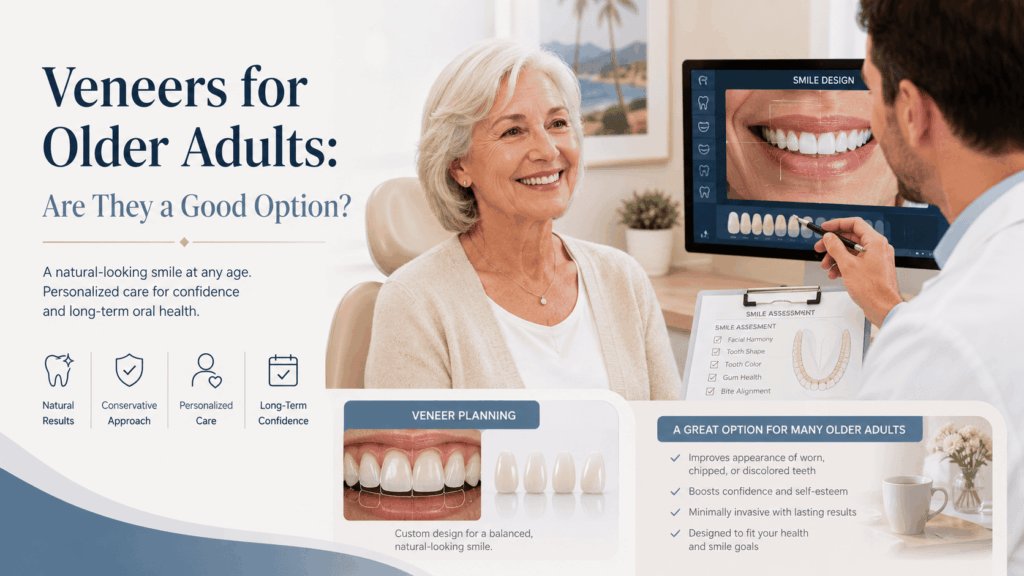
    Veneers for Older Adults: Are They a Good Option?

    Veneers for Older Adults

    After years of putting your smile goals aside, you may finally feel ready for veneers. Then a question often appears: does age change your chances of success?

    Concerns about thinner enamel, changing gums, or previous dental issues can make the decision feel uncertain. However, age alone does not determine whether veneers make sense. Your current oral health, tooth condition, and smile goals matter far more than your age.

    Does Age Disqualify Anyone From Getting Veneers?

    No specific age automatically prevents someone from getting veneers. Your dentist looks at your gum health, enamel condition, bite, and overall oral health first.

    A 70-year-old with healthy gums and strong teeth may qualify more easily than a younger patient with untreated dental problems. Age gives your dentist useful context, but it does not make the decision alone.

    How Teeth and Gums Change With Age

    Your teeth and gums change over time, and those changes can affect veneer planning. A thorough evaluation helps your dentist determine what approach fits your smile.

    Enamel Thinning and Wear

    Years of chewing, acidic foods, drinks, and grinding can gradually wear enamel. Teeth may become shorter, more sensitive, or easier to chip as enamel becomes thinner.

    Veneers rely on the existing tooth structure for support. Your dentist checks how much healthy enamel remains before recommending treatment.

    Gum Recession

    Some people experience gum recession as they get older. This process exposes more of the tooth root and can change the appearance of the gumline.

    Gum recession can also affect veneer design. Your dentist needs to consider the gumline carefully to create a natural-looking result.

    Healthy gums provide an important foundation for cosmetic treatment, so your dentist may address gum concerns before planning veneers.

    Tooth Color Changes

    Teeth often develop a darker or more yellow appearance over time. This happens partly because enamel becomes thinner and reveals more of the naturally darker dentin underneath.

    This change does not mean you have poor oral hygiene. Your dentist considers your natural tooth colour during shade planning, especially when treating only certain teeth.

    What Dentists Evaluate Before Recommending Veneers for Older Patients

    A dentist does not use age alone to determine veneer candidacy. Instead, they evaluate several factors that affect your smile, oral health, and treatment outcome.

    Gum and Periodontal Health

    Healthy, stable gums create a stronger foundation for veneer treatment. If you have active gum disease, your dentist may recommend treating it before cosmetic work.

    Inflamed or unstable gum tissue can affect how veneers look and function over time. Advanced periodontal disease can also weaken the bone supporting your teeth. Your dentist considers this when evaluating whether veneers are appropriate.

    Bite and Wear Patterns

    Years of chewing, grinding, or clenching can change how your teeth meet. These habits can also affect how much pressure your teeth handle.

    Your dentist evaluates your bite and wear patterns before designing veneers. This helps them choose materials and designs that suit your specific needs.

    Dry Mouth and Medications

    Dry mouth, also called xerostomia, becomes more common with age. Certain medications for conditions like blood pressure, depression, and allergies can contribute to it.

    Cleveland Clinic notes that dry mouth can increase the risk of tooth decay and gum disease. This matters because decay near a veneer’s edge can affect the restoration over time.

    If dry mouth affects you, your dentist may suggest managing it before or alongside cosmetic treatment.

    Existing Restorations

    Many older adults have existing dental work, including fillings, crowns, or previous cosmetic treatments. These restorations can influence shade matching, treatment planning, and the final appearance.

    Your dentist reviews your existing restorations before deciding which teeth need treatment. They also consider how new veneers will blend with your current smile.

    Overall Medical History

    Your overall health can influence how your dentist plans treatment. Conditions such as diabetes or certain heart conditions may affect healing and gum health.

    Some medications may also influence your treatment plan. Sharing your complete medical history helps your dentist create a safer approach.

    Can Veneers Be Placed if You Have Gum Recession?

    In many cases, yes. However, the extent of recession and the condition of your gums matter.

    Mild or moderate gum recession does not always prevent veneer treatment. Your dentist can design veneers around your existing gumline when appropriate.

    More severe recession may require treatment before cosmetic work begins. Your dentist may also involve a periodontist in more complex cases.

    Gum recession does not automatically rule out veneers. A proper evaluation can show whether veneers fit your specific situation.

    Addressing Oral Health Concerns Before Cosmetic Treatment

    If you have gum disease, decay, or other oral health concerns, your dentist will usually address those first. This applies regardless of age.

    This approach does not delay cosmetic treatment without reason. Veneers need a healthy foundation to function well over time. Treating underlying problems first helps protect your smile investment.

    For many older patients, treatment planning may take longer than the veneer placement itself.

    Do Older Adults Need a Different Veneer Approach?

    Sometimes, but not always. Some older patients want to correct one specific concern, such as a chipped tooth or noticeable discolouration. Others want to improve several teeth for a broader smile change.

    Our discussion of getting veneers on just one tooth and our guide to veneers on top and bottom teeth explain how dentists plan treatment size. These considerations apply at any age, but older patients may also factor in existing dental work and long-term goals.

    A full smile makeover can be an option, but it does not suit every patient exploring veneers.

    Porcelain vs Composite: Does Age Change the Choice?

    Age alone does not determine whether porcelain or composite veneers fit better. However, factors that can change with age may influence the decision. These include enamel condition, bite pressure, and existing restorations.

    Our porcelain veneers guide and composite veneers overview explain what each material involves. our comparison of porcelain and composite veneers also covers the differences in more detail.

    Your dentist considers these factors alongside your goals and oral health. They do not choose a material simply because of your age.

    Cost also plays a role in the decision. Veneer costs vary based on the number of teeth treated, selected material, and case complexity. Our breakdown of what affects porcelain veneer costs explains the factors that influence pricing.

    Setting Realistic Expectations

    Veneers can create a noticeable improvement in your smile, but they cannot guarantee a specific outcome. Your existing teeth, gum health, and bite all influence the final result.

    A thorough consultation helps you understand what veneers can realistically achieve. It also helps you explore options that fit your needs.

    For many older patients, the goal is not a completely different smile. Instead, they want a refreshed and balanced version of their existing smile.

    Choosing a Cosmetic Dentist in Woodland Hills for Mature Smiles

    Dr. Pearl Zadeh evaluates each patient’s gum health, enamel condition, bite, and medical history before recommending treatment. She considers factors that may become more important as patients get older.

    Her approach focuses on your current oral health and smile goals rather than assumptions based on age. Patients considering veneers in Woodland Hills can expect a detailed evaluation before treatment recommendations.

    our overview of cosmetic dentistry in Woodland Hills explains other available options if veneers are not the best first choice.

    Once you have a treatment plan, our guide to preparing for a veneers appointment explains what to expect before your visit.

    Schedule a Consultation With Dr. Pearl Zadeh

    Veneers may or may not suit your smile goals at this stage of life. Your dentist needs to evaluate your gums, teeth, and oral health before making a recommendation.

    Dr. Pearl Zadeh and her Woodland Hills team can assess your smile and create a personalised plan based on your needs. They consider your starting point, goals, and available treatment options.

    Call (818) 716-6722 or click the button below to schedule your consultation online.

    Schedule a Consultation

    Frequently Asked Questions

    1. Am I too old to get veneers?

    Generally, no. Age alone doesn’t disqualify anyone. What matters more is the health of your gums, the condition of your enamel, your bite, and your overall oral health, which your dentist evaluates individually.

    2. Can I get veneers if I have gum recession?

    In many cases, yes, depending on how significant the recession is. Mild to moderate recession can often be planned around, while more advanced cases may need treatment first.

    3. Do veneers work differently for older patients?

    Not fundamentally, though older patients often have factors like enamel wear, existing restorations, or gum changes that shape the treatment plan differently than they might for a younger patient.

    4. Will dry mouth affect my veneer candidacy?

    It can be a factor, since dry mouth increases the risk of decay around a veneer’s margin. Your dentist may recommend managing dry mouth as part of your overall treatment plan.

    5. Do I need to fix my gums before getting veneers?

    If active gum disease or significant instability is present, addressing it first is generally recommended, regardless of age. A stable, healthy foundation tends to support a longer-lasting result.

    Related Articles:

    1. Porcelain Veneers: A Practical Guide for Patients
    2. Composite Veneers: Everything You Need to Know
    3. Porcelain vs Composite Veneers: Choosing the Right Option for Your Smile
    4. No-Prep Veneers and Traditional Veneers: What Is the Difference?
    5. Preparing for Your Veneers Appointment: A Complete Guide
    6. Veneers vs Teeth Whitening: Which One Should You Choose?
    7. Dental Bonding vs Veneers: Which Option Is Right for You?
    8. Can Veneers Fix Crooked Teeth? What They Can and Can’t Do
    9. Do Dental Veneers Look Natural or Fake? What Makes the Difference
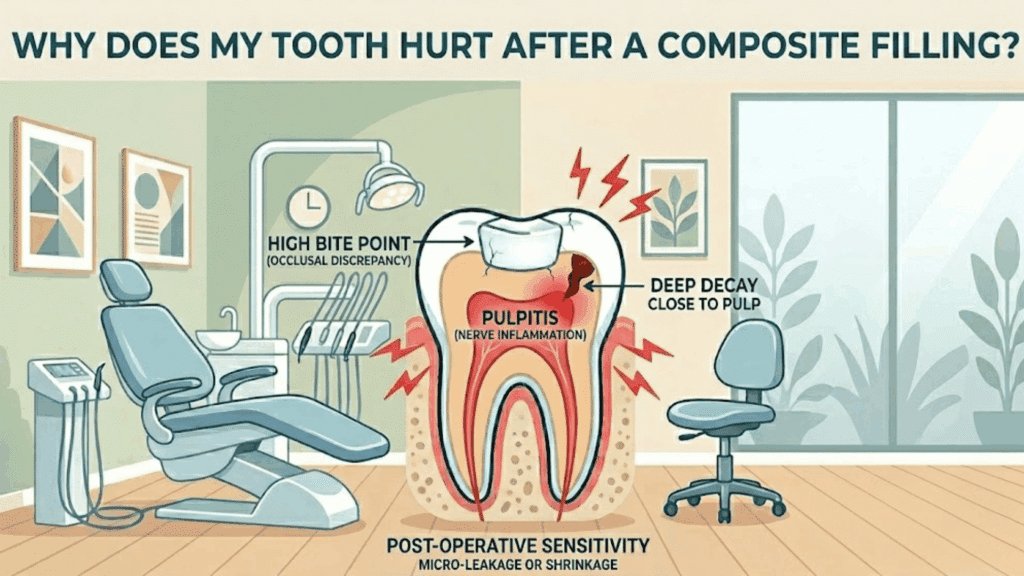
  • Why Does My Tooth Hurt After a Composite Filling?

    Why Does My Tooth Hurt After a Composite Filling?

    Why Does My Tooth Hurt After a Composite Filling

    Some sensitivity after a composite filling is common, even though the cavity has been treated.

    In most cases, the discomfort follows a short pattern and improves within a few days. Occasionally, pain can indicate something that needs a simple adjustment from your dentist.

    Not every case requires intervention, but persistent or worsening pain should be checked to ensure the tooth is healing properly.

    Why a Filled Tooth Can Still Hurt at All

    Drilling can create heat and vibration that irritate the nerve inside the tooth, even after the decay has been fully removed.

    The nerve, known as the pulp, sits at the center of the tooth and can become sensitive when it’s disturbed. This often leads to mild soreness that lasts a few days while the tissue settles.

    Deeper cavities, especially those closer to the pulp, tend to cause more noticeable sensitivity after treatment.

    Normal Pain Patterns After a Filling

    Sensitivity to Cold
    Cold sensitivity is the most common reaction after a filling. It occurs because the nerve inside the tooth remains temporarily reactive while it settles.

    The sensation is usually sharp but brief and fades within seconds after the cold stimulus is removed. In most cases, it improves within one to two weeks.

    Sensitivity to Pressure While Chewing
    Some mild soreness when biting is common in the first few days, especially after deeper fillings.

    This should gradually improve each day. If the discomfort increases instead of easing, it may need a bite adjustment.

    Sensitivity to Sweet Foods
    Sweet foods can sometimes trigger a similar response to cold sensitivity because the nerve is still adjusting after treatment.

    This typically follows the same timeline and fades as the tooth settles.

    Pain Patterns That Aren’t Normal

    Not all post-filling discomfort is part of the normal healing process. Some symptoms can indicate that the filling or bite needs adjustment.

    • Sharp pain that lasts more than fifteen seconds after a trigger
    • Discomfort that worsens instead of gradually improving
    • Throbbing pain that appears without any clear cause or disrupts sleep
    • Sharp pain when biting down on a specific tooth or spot
    • Pain that begins several days after the filling rather than immediately

    When these patterns appear, the issue is often related to how the bite fits, how the filling bonded, or in some cases irritation of the nerve.

    When the Bite Is the Actual Problem

    If a filling is even slightly too high, it can place extra pressure on one specific point each time you bite.

    This is often not noticeable right after treatment while the area is still numb. Once normal sensation returns, the discomfort usually becomes clearer within a day or two of eating.

    The pain tends to stay focused on a single tooth and is most noticeable when biting, rather than during normal temperature changes.

    A quick bite adjustment can correct this in minutes and usually resolves the discomfort completely.

    When the Pulp Reacts More Than Expected

    Very deep cavities can come close to the pulp, which sometimes leads to a stronger inflammatory response after treatment.

    In many cases, this settles within one to two weeks as the irritation reduces. In some cases, however, the nerve does not recover and continues to worsen over time.

    When this happens, the pain often becomes more intense instead of improving. It may linger, appear without clear triggers, or start to wake you up at night. This pattern is known as irreversible pulpitis.

    At that stage, root canal treatment is needed to remove the inflamed nerve tissue and preserve the remaining tooth structure.

    Could the Filling Itself Be the Problem?

    If the seal around a filling is not complete, bacteria can sometimes get underneath and start causing decay again, even when the surface looks normal.

    Pain in these cases usually develops slowly rather than appearing immediately after treatment.

    A cracked or slightly dislodged filling can also expose the tooth to air or pressure, which may trigger sudden sensitivity when chewing or breathing in cold air.

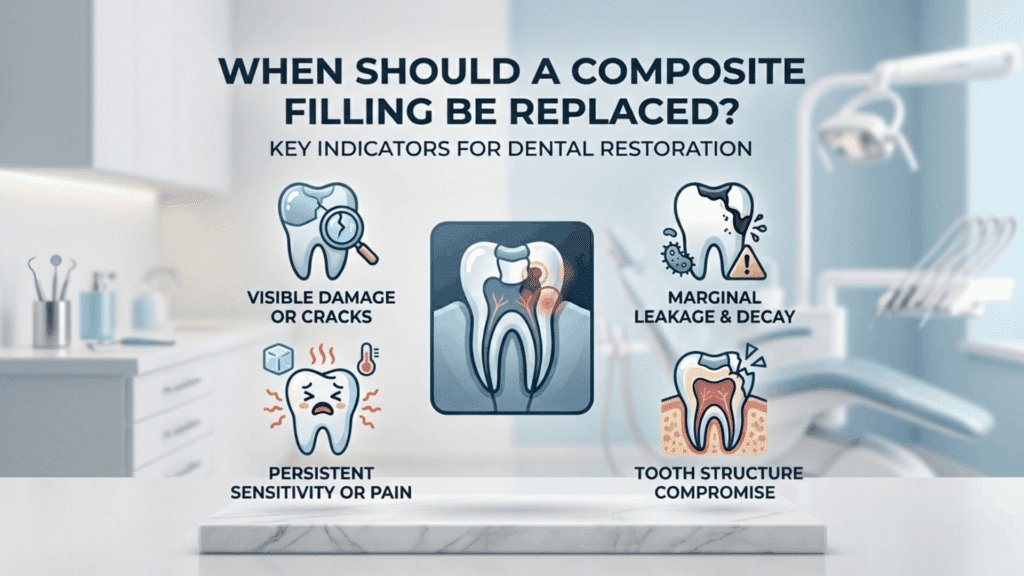
    If a filling feels loose or the discomfort is persistent, our article on when a composite filling should be replaced explains the warning signs in more detail. If the filling comes out entirely, our guide on what to do if a composite filling falls out walks through the next steps.

    Timeline: What to Expect Day by Day

    Timeframe What’s Typical
    Day 1 Numbness, mild soreness once feeling returns, possible cold sensitivity
    Days 2 to 4 Cold and pressure sensitivity, gradually improving
    Days 5 to 14 Sensitivity continues fading, should feel noticeably better than day 1
    Beyond 2 weeks Pain should be gone. Persistent pain warrants a follow up visit

    Pain that gradually fades over a few days usually settles without any further treatment.

    If the discomfort starts getting worse instead of improving, especially after the first few days, it should be checked by a dentist.

    What You Can Do at Home While It Settles

    Most mild post-filling discomfort can be managed at home while the tooth adjusts.

    • Take over-the-counter pain relief as directed on the label
    • Avoid chewing on the treated side for a day or two
    • Skip very hot, cold, or sweet foods while sensitivity is present
    • Use a soft-bristled toothbrush around the area to prevent irritation
    • Pay attention to whether symptoms are improving or getting worse each day

    Tracking the pattern of pain is often more useful than the pain itself. Improvement usually points to normal healing, while worsening symptoms can signal that something needs adjustment.

    When to Call Your Dentist

    Some symptoms suggest the tooth needs a professional check rather than more time.

    • Pain that is worse on day three than it was on day one
    • Throbbing pain that appears without a clear trigger or wakes you up
    • Sharp pain when biting on one specific spot
    • Noticeable swelling in the gum near the treated tooth
    • Pain that continues beyond two to three weeks without improvement

    Contacting your dentist early usually means a simple adjustment can resolve the issue. Delaying care when symptoms are progressing can sometimes lead to more involved treatment later.

    Speak with a Dentist If Your Pain Isn’t Improving

    Most post-filling discomfort improves within one to two weeks without additional treatment.

    If pain is not following that pattern or is getting worse instead of better, a quick dental check can help identify whether the bite or the tooth itself needs attention.

    Dr. Pearl Zadeh’s Woodland Hills practice can assess lingering sensitivity and make simple adjustments when needed. Schedule a visit if your symptoms are not improving as expected. Call (818) 716-6722 or click the button below to schedule your consultation.

    Schedule a Consultation

    Frequently Asked Questions

    1. Is it normal for a filling to hurt more on day two than day one?

    A slight increase in sensitivity can happen as the numbness fully wears off. Pain that continues to worsen after the second or third day is not typical.

    2. Can a filling cause pain in a different tooth?

    Yes, in some cases. Tooth pain can sometimes feel like it is coming from a nearby tooth, which is known as referred pain.

    3. How do I know if I need a root canal instead of just waiting it out?

    Pain that throbs at night, continues to worsen, or lasts beyond two weeks should be evaluated by a dentist. These patterns may indicate deeper nerve involvement.

    4. Can grinding my teeth at night make filling pain worse?

    Yes. Teeth grinding can increase pressure on a newly treated tooth, which may worsen sensitivity and also affect how long the filling lasts. A nightguard can help reduce this strain.

    5. Does the size of the filling affect how much pain I’ll have?

    Generally, yes. Larger or deeper fillings are closer to the nerve, which can lead to more noticeable sensitivity during the healing period.

    Related Articles:

    1. What Is a Composite Filling? A Simple Guide for Patients
    2. When Should a Composite Filling Be Replaced?
    3. Mercury Fillings vs Composite Fillings. What’s the Difference?
    4. Dental Inlays vs Onlays vs Fillings: What’s the Difference?
    5. What to Do If a Composite Filling Falls Out
    6. How Long to Wait to Eat After a Composite Filling

  • Can Invisalign Change Your Jawline or Face Shape?

    Can Invisalign Change Your Jawline or Face Shape?

    Can Invisalign Change Your Jawline or Face Shape

    Many people begin Invisalign treatment hoping to straighten their teeth. However, during the process, some patients notice something else too. Their smile looks different, their profile appears more balanced, or their jawline seems more defined.

    That often leads to an important question:

    Can Invisalign actually change your jawline or face shape?

    The short answer is yes, but only to a certain extent.

    Invisalign can influence facial appearance because teeth and jaw positioning play a major role in overall facial structure. However, the changes are usually subtle and depend heavily on the type of orthodontic issue being treated.

    Some patients may notice a more symmetrical smile or improved facial balance. Others may experience very little visible facial change at all.Understanding what Invisalign can and cannot change helps set realistic expectations before treatment begins.

    How Teeth and Jaw Alignment Affect Facial Appearance

    Your teeth do far more than help you chew.

    They also support:

    • Your lips
    • Cheeks
    • Smile shape
    • Lower facial profile
    • Jaw positioning

    When teeth are misaligned, the surrounding facial structures can appear uneven or unbalanced.

    For example:

    • Severe overbites may make the chin appear recessed
    • Underbites may create a more prominent lower jaw
    • Narrow dental arches can affect smile width
    • Crowded teeth may influence lip support
    • Bite problems can alter lower facial proportions

    Because Invisalign moves teeth and can improve bite alignment, some facial changes may naturally occur during treatment.

    Can Invisalign Actually Change Your Jawline?

    In some cases, yes.

    However, Invisalign does not directly reshape bone structure in adults the way surgery can.

    Instead, Invisalign changes how the teeth fit together and how the jaw positions itself during biting and resting. These adjustments can create the appearance of a more balanced jawline.

    Patients Most Likely to Notice Jawline Changes

    Jawline improvements are more noticeable in patients with:

    • Overbites
    • Underbites
    • Deep bites
    • Crossbites
    • Significant crowding
    • Poor bite alignment

    For example, correcting a deep overbite may reduce strain in the lower face and create a more proportional appearance between the upper and lower jaw.

    Similarly, improving an underbite may soften an overly prominent lower jaw appearance.

    Invisalign Can Improve Facial Symmetry

    Facial symmetry plays a major role in how people perceive attractiveness and balance.

    When teeth are crooked or the bite shifts unevenly, facial symmetry may appear slightly off.

    Invisalign can improve symmetry by:

    • Centering the bite
    • Correcting uneven spacing
    • Aligning dental arches
    • Improving smile balance

    Although the changes are often subtle, many patients notice their smile and lower face appear more harmonious after treatment.

    Schedule a Consultation

    Changes Are Usually More Noticeable in the Lower Face

    If Invisalign affects facial appearance, the changes typically occur in the lower third of the face.

    This area includes:

    • Lips
    • Chin
    • Jawline
    • Lower cheeks

    That is because orthodontic treatment primarily affects tooth positioning and bite relationships rather than the forehead or upper facial structure.

    For example:

    Overbite Correction

    Correcting an overbite may improve chin visibility and reduce the appearance of a “sunken” lower face.

    Arch Expansion

    Widening narrow arches can create a fuller smile and slightly broader appearance around the mouth.

    Bite Stabilization

    Balancing the bite may improve muscle tension around the jaw and cheeks.

    Can Invisalign Make Your Face Look Slimmer?

    Some patients report their face appears slimmer during or after Invisalign treatment.

    This can happen for several reasons.

    Improved Jaw Position

    When the bite becomes more balanced, the jaw may rest more naturally.

    Changes in Muscle Activity

    Patients with clenching or uneven bite pressure sometimes develop enlarged jaw muscles. As bite issues improve, those muscles may relax slightly.

    Smile Width and Facial Proportions

    Straighter teeth and broader smile arches can change how facial proportions are perceived visually.

    However, Invisalign is not a weight-loss treatment and should not be viewed as a cosmetic facial slimming procedure.

    Can Invisalign Create a Sharper Jawline?

    In some situations, Invisalign may help the jawline appear more defined.

    This is usually an indirect result of:

    • Improved bite alignment
    • Better chin positioning
    • Reduced lower facial strain
    • Enhanced facial symmetry

    The effect tends to be more noticeable in patients who originally had bite problems affecting their lower facial profile.

    Still, Invisalign cannot dramatically sculpt the jawline like surgery, fillers, or major weight loss can.

    Invisalign vs Jaw Surgery. Understanding the Difference

    One of the biggest misconceptions online is that Invisalign can completely transform facial bone structure. In reality, Invisalign primarily moves teeth and improves bite alignment. It does not significantly reshape the facial skeleton in adults.

    What Invisalign Can Do What Invisalign Cannot Do
    Move teeth into better alignment Significantly widen adult jaw bones
    Improve bite alignment Reshape the facial skeleton
    Improve smile symmetry Correct severe skeletal jaw discrepancies alone
    Improve lower facial balance Replace jaw surgery in major cases
    Slightly influence facial appearance Dramatically alter bone structure

    For patients with severe jaw alignment issues, orthodontists may recommend:

    • Jaw surgery
    • Combined orthodontic treatment
    • Braces with surgical correction

    Invisalign works best for dental movement and bite correction rather than major skeletal reconstruction.

    Teenagers May Notice More Facial Changes Than Adults

    Younger patients sometimes experience more visible facial changes during orthodontic treatment because their bones are still developing.

    In teenagers:

    • Jaw growth may still be active
    • Facial bones are more adaptable
    • Orthodontic guidance can influence development patterns

    Adults can still experience cosmetic improvements, but the changes are usually more limited to tooth position and bite correction.

    What Invisalign Cannot Fix

    It is important for patients to have realistic expectations.

    Invisalign cannot correct every facial concern.

    For example, Invisalign will not:

    • Eliminate a naturally weak chin
    • Remove facial fat
    • Lift sagging skin
    • Correct major asymmetry caused by skeletal structure
    • Replace cosmetic surgery

    Some online before-and-after photos can create unrealistic expectations because lighting, weight changes, camera angles, and facial expressions also affect appearance.

    A good orthodontist explains expected outcomes honestly before treatment begins.

    Why Some Patients Notice Facial Changes Quickly

    Patients often become more aware of their appearance during Invisalign treatment because:

    • Teeth are changing gradually
    • Smiles become more aligned
    • Photos look different
    • Confidence improves
    • Swelling or muscle tension decreases

    Even small orthodontic improvements can make the face appear more balanced overall. Sometimes the psychological effect of liking your smile more also changes how you carry yourself and smile in photos.

    Invisalign and TMJ-Related Facial Tension

    Some patients with bite problems also experience jaw tension or TMJ discomfort.

    When Invisalign improves bite alignment, certain patients notice:

    • Less jaw strain
    • Reduced clenching
    • Improved muscle balance
    • Less facial tension

    In some cases, that can slightly soften an overly tense or bulky jaw appearance.

    However, Invisalign is not a guaranteed TMJ treatment. Jaw pain has many possible causes, and proper diagnosis is important.

    How Orthodontists Evaluate Facial Changes Before Invisalign

    Experienced Invisalign providers look at more than just crooked teeth.

    They also evaluate:

    • Facial proportions
    • Bite relationship
    • Smile width
    • Chin position
    • Lip support
    • Jaw function
    • Profile balance

    The goal is not simply straight teeth. A well-planned Invisalign case should support both oral function and facial harmony whenever possible.

    Are Facial Changes Permanent After Invisalign?

    The dental and bite changes from Invisalign can last long term if patients maintain their results properly.

    However, retainers are essential.

    Without retention, teeth may gradually shift again over time.

    That can affect:

    • Smile alignment
    • Bite stability
    • Overall facial balance

    Most orthodontists recommend nighttime retainers after treatment to protect the final result.

    Find Out What Invisalign Can Change for Your Smile

    Invisalign can improve facial balance and jawline appearance, especially in patients with bite or alignment issues. Most changes come from better tooth positioning and improved symmetry rather than major skeletal changes.

    For some patients, the difference is subtle. For others, correcting bite problems can noticeably improve lower facial proportions and overall appearance.

    The best way to understand what Invisalign may change in your case is through a professional evaluation and customized treatment plan.

    If you’re considering Invisalign and want to learn how treatment may affect your smile, bite, and facial appearance, call (818) 716-6722 or click the button below to schedule your consultation online.

    Schedule a Consultation

    Frequently Asked Questions

    1. Can Invisalign make your jawline sharper?

    In some cases, yes. Invisalign may improve jawline appearance indirectly by correcting bite alignment and improving facial balance.

    2. Does Invisalign change face shape permanently?

    The dental changes can last long term with proper retainer use. However, facial aging and natural changes still occur over time.

    3. Can Invisalign fix a weak chin?

    Invisalign cannot fully correct a naturally weak chin caused by skeletal structure. However, correcting an overbite may improve chin appearance slightly.

    4. Why does my face look different during Invisalign?

    As teeth shift and the bite changes, facial proportions and smile balance may change subtly. Some patients also notice reduced muscle tension around the jaw.

    5. Can Invisalign widen your smile?

    Yes. In some cases, Invisalign can expand dental arches slightly, creating a broader and fuller smile appearance.

    Related Articles:

    1. Invisalign for Mild vs Severe Cases. What’s the Difference?
    2. Invisalign vs. Clear Aligners: What Woodland Hills Adults Need to Know
    3. Common Mistakes Invisalign Patients Make and How to Avoid Them
    4. Can Invisalign Fix Overbite, Underbite, and Crowded Teeth?
    5. Retainers After Invisalign. Why They Matter and How to Care for Them
    6. How Invisalign Treatment Works Step by Step
    7. Can Invisalign Close Gaps Between Teeth? What to Expect

  • Porcelain Bridges vs. Dental Implants: Which Is Right for You?

    Porcelain Bridges vs. Dental Implants: Which Is Right for You?

    Porcelain Bridges vs. Dental Implants

    Missing teeth affect more than your appearance. They can make chewing difficult, change how your bite feels, and even impact jaw health over time. Two common ways to replace missing teeth are porcelain bridges and dental implants. Each has advantages, and understanding the differences can help you choose the right solution for your smile.

    What is a Porcelain Bridge?

    A porcelain bridge is a fixed dental restoration that fills the gap left by one or more missing teeth. It uses the teeth on either side of the empty space as support, holding a replacement tooth securely in place. Porcelain closely matches natural tooth color, providing a seamless appearance while restoring chewing and speaking ability.

    A porcelain teeth bridge is often chosen for its natural look, shorter treatment time, and ability to restore bite function without surgery.

    Woodland Hills Porcelain Bridges

    What is a Dental Implant?

    A dental implant replaces the tooth root as well as the visible crown. A small titanium post is placed in the jawbone, which acts like a natural root, supporting a custom crown.

    Implants prevent bone loss in the jaw, maintain tooth alignment, and offer a long-lasting, stable solution that feels like your natural tooth. Unlike bridges, implants do not rely on neighboring teeth for support.

    Key Differences Between Porcelain Bridges and Implants

    Feature Porcelain Bridge Dental Implant
    Support Anchored to adjacent teeth Anchored in jawbone
    Procedure Minimal surgery, usually two visits Surgical placement, longer healing
    Impact on Teeth Requires reshaping of nearby teeth Does not affect neighboring teeth
    Appearance Matches natural teeth Matches natural teeth
    Longevity 10-15 years with care 20+ years with care
    Bone Health Does not prevent bone loss Preserves jawbone density

    Advantages of Porcelain Bridges

    Porcelain bridges offer several practical benefits:

    • Treatment is faster and often requires fewer visits than implants
    • Less invasive since no surgery is needed for most cases
    • Blends naturally with surrounding teeth for a realistic appearance
    • Often a lower initial cost compared to implants

    Advantages of Dental Implants

    Dental implants provide a long-term solution with distinct benefits:

    • Preserves jawbone density, preventing shrinking over time
    • Does not require altering adjacent teeth
    • Provides exceptional stability and strength for chewing
    • Feels and functions like a natural tooth

    Who Should Consider a Porcelain Bridge?

    A porcelain bridge works well for patients with healthy adjacent teeth and minor to moderate gaps. It’s ideal if you want a faster treatment or prefer to avoid surgery. Bridges are also practical when multiple implants are not feasible due to bone density or cost considerations.

    Who Should Consider a Dental Implant?

    Dental implants are best for patients who want a long-term solution, especially if multiple teeth are missing or if preserving jawbone health is a priority. Patients need sufficient bone in the jaw or may require bone grafting. Implants are excellent for those seeking a restoration that feels completely natural and does not affect neighboring teeth.

    Schedule a Consultation

    Factors to Help You Decide

    When choosing between a porcelain bridge and a dental implant, consider:

    • Oral health and bone density
    • Number of missing teeth
    • Budget and long-term investment
    • Treatment time and healing
    • Personal comfort and preference

    A consultation with a dentist helps evaluate these factors and determine the best solution for your individual needs.

    Schedule Your Consultation

    If you’re considering a porcelain bridge or dental implant, a personalized consultation is the best way to decide which option suits your smile. At Pearl Zadeh DDS, we provide careful planning, precise digital scanning, and expert placement to restore both function and appearance.

    Call (818) 716-6722 or book your consultation online today to take the first step toward a confident, complete smile.

    Schedule a Consultation

    Frequently Asked Questions (FAQ)

    1. Which lasts longer, a bridge or an implant?

    Dental implants generally last longer, often 20 years or more, while porcelain bridges usually last 10-15 years with proper care.

    2. Does a bridge damage healthy teeth?

    A bridge requires reshaping the adjacent teeth to hold it in place. Implants do not affect neighboring teeth.

    3. Can I get an implant if I have missing bone?

    Yes, with a bone graft, many patients can safely receive implants even if bone density is low.

    4. How soon can I eat normally after each procedure?

    Bridges usually allow normal eating shortly after placement, while implants require a healing period for the post to fuse with the jawbone.

    5. Are implants or bridges more affordable?

    Bridges typically cost less upfront, but implants offer a longer-lasting solution that may save money over time.

    Related Articles:

    1. Porcelain Bridges: What to Know Before Your Visit
    2. Types of Porcelain Bridges: Which Option Is Best for Your Smile?
    3. Porcelain Bridges vs. Dental Implants: Which Is Right for You?
    4. When Is a Dental Bridge Better Than an Implant?
    5. Porcelain Crowns Guide: What Patients Need to Know
    6. Signs Your Dental Bridge Needs Replacement
    7. Temporary vs Permanent Dental Bridges: Key Differences and What to Expect

  • What to Do Before and After Mercury Amalgam Removal

    What to Do Before and After Mercury Amalgam Removal

    Mercury amalgam removal is a process that requires planning and proper care. Preparing ahead of time and following the right steps after treatment can help reduce discomfort and support healing. Knowing what to do before and after your appointment also helps protect your oral health and ensures a smoother experience.

    This guide explains how to prepare for mercury amalgam removal and how to care for your mouth afterward.

    Why Preparation Matters for Mercury Amalgam Removal

    Mercury amalgam fillings release small amounts of vapor when they are disturbed during removal. For this reason, dentists follow safety-focused protocols to limit exposure. Preparation helps your body handle the procedure better and allows your dentist to work carefully and efficiently.

    In addition, good aftercare supports healing and protects the new tooth-colored filling placed in the treated area.

    Mercury Amalgam Removal in Woodland Hills

    What to Do Before Mercury Amalgam Removal

    Schedule a Consultation

    Your first step is a dental visit to evaluate your existing fillings. During this appointment, the dentist will:

    • Examine your teeth and gums
    • Review your medical and dental history
    • Explain the mercury amalgam removal process
    • Discuss replacement options such as composite or porcelain fillings

    This visit helps create a treatment plan that fits your needs.

    Follow Pre-Appointment Instructions

    Before your procedure, your dental office may give you specific guidance. This may include:

    • Eating a light meal before your visit
    • Letting the office know about any medications or supplements you take
    • Avoiding alcohol or smoking before treatment

    These steps help your body stay stable during the appointment.

    Prepare Your Body and Routine

    Simple habits can make a difference:

    • Drink plenty of water the day before
    • Get enough sleep
    • Plan time to rest after your visit if needed

    Being well-rested and hydrated supports your recovery.

    What Happens During Mercury Amalgam Removal

    During the procedure, your dentist uses safety measures to reduce mercury exposure. These may include protective barriers, strong suction systems, and careful cooling of the filling while removing it.

    Once the old filling is taken out, a tooth-colored restoration is placed to protect the tooth and restore its function. Most single-tooth removals are completed in one visit, though several fillings may require more than one appointment.

    Schedule a Consultation

    What to Do After Mercury Amalgam Removal

    Immediate Aftercare

    Right after your visit:

    • Avoid eating until numbness wears off
    • Stick to soft foods for the first day
    • Do not chew directly on the treated tooth for several hours

    These steps help prevent irritation and protect the new filling.

    Oral Care After Treatment

    Good hygiene keeps the area clean and healthy:

    • Brush gently around the treated tooth
    • Floss carefully once soreness fades
    • Use a non-abrasive toothpaste

    Keeping the area clean helps your mouth heal properly.

    Supporting Recovery

    After treatment, focus on simple habits:

    • Drink water throughout the day
    • Eat easy-to-chew foods
    • Watch for unusual pain or swelling

    Most patients return to normal routines quickly.

    Benefits of Proper Before and After Care

    Proper care before and after mercury amalgam removal helps your mouth heal safely and supports the long-term health of your teeth:

    • Reduces discomfort: Following instructions can prevent soreness and irritation.
    • Supports faster healing: Gentle care and rest allow the treated area to recover quickly.
    • Protects new restorations: Tooth-colored fillings last longer when the area is cared for properly.
    • Maintains oral health: Good hygiene prevents infection and keeps surrounding teeth healthy.

    When to Contact Your Dentist After Removal

    Even with careful removal, you should reach out to your dentist if any issues arise:

    • Persistent pain: Pain that doesn’t improve may indicate irritation or sensitivity.
    • Swelling or redness: Could be a sign of inflammation or infection.
    • Difficulty chewing or biting: Issues may suggest the new filling needs adjustment.
    • Loose or damaged filling: Prompt attention prevents further damage to the tooth.

    Book Your Mercury Amalgam Removal Consultation

    If you are considering mercury amalgam removal, Pearl Zadeh DDS in Woodland Hills provides careful, safety-focused treatment with your comfort in mind.

    Each visit includes thoughtful planning, modern techniques, and tooth-colored restorations that look and feel natural.

    Call (818) 716-6722 or book your consultation online today to review your options and start your path to metal-free, healthier dental care.

    Schedule a Consultation

    Frequently Asked Questions

    1. Can mercury amalgam removal affect overall health?

    Mercury exposure from old fillings is generally low, but removing them safely reduces any risk of vapor or particle inhalation. Following proper safety protocols helps protect your mouth, lungs, and overall health during the procedure.

    2. Is mercury amalgam removal painful?

    Most patients feel little to no discomfort. Local anesthesia ensures the area is numb, and careful techniques minimize irritation. After the procedure, mild sensitivity is normal and usually resolves within a day or two.

    3. How long does a typical mercury amalgam removal take?

    Removing a single filling can often be completed in one appointment. Multiple fillings may require additional visits to ensure each is removed safely and replaced with a tooth-colored restoration.

    4. Will my tooth look natural after removal?

    Yes. After the old filling is removed, a tooth-colored restoration such as composite or porcelain is placed. This matches the surrounding teeth in shade and shape, restoring a natural appearance and bite.

    5. How can I reduce exposure during mercury amalgam removal?

    Following safety protocols helps protect both patient and dental staff. This includes using protective barriers, dental dams, high-volume suction, and ventilation systems. Patients also breathe through an oxygen source during the procedure for added safety.

    Related Articles:

    1. What Is Mercury Amalgam Removal and Is It Safe?
    2. Why IAOMT Protocols Matter in Mercury Amalgam Removal

  • Getting Veneers on Top and Bottom Teeth: What to Know

    Getting Veneers on Top and Bottom Teeth: What to Know

    Getting Veneers on Top and Bottom Teeth

    You’ve decided you want a smile makeover, and now you’re stuck on a question that never came up in the before-and-after photos you’ve been saving: do your bottom teeth need veneers too, or will treating the top row be enough?

    It’s a fair question, and the answer depends on more than personal preference. It comes down to how your specific smile behaves when you talk, laugh, and smile naturally, not just how it looks in a still photo.

    What It Means to Get Veneers on Both Arches

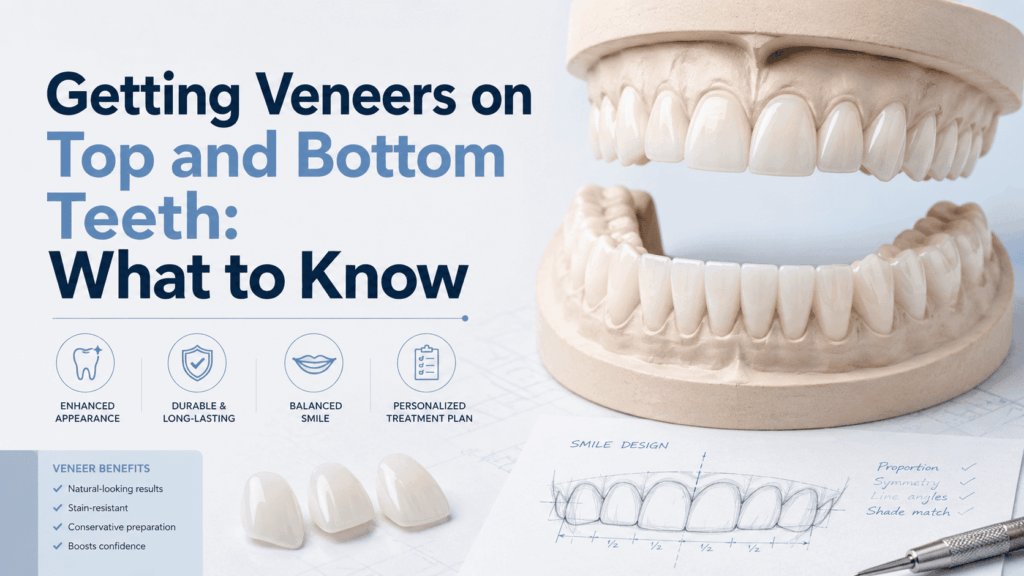
    Getting veneers on top and bottom teeth means treating visible teeth in both the upper and lower arch as part of one coordinated plan, rather than focusing on the upper teeth alone. This isn’t automatically part of every smile makeover, and it isn’t a sign that a patient’s case is more severe than someone getting upper veneers only. It’s simply a different scope, chosen based on what a specific smile actually needs to look balanced.

    Why Many Smile Makeovers Focus Mainly on Upper Teeth

    For a lot of people, the upper front teeth do most of the visual work during a natural smile. Many patients show only their upper teeth, or upper teeth with a small amount of lower tooth visible, when they smile normally. Because of this, treating the upper arch alone is often enough to noticeably change how a smile looks and feels, without extending treatment further than necessary.

    This pattern isn’t universal, though. Some people show more of their lower teeth than average, whether due to how their lips rest, how their teeth are positioned, or simply how they smile. For these patients, stopping at the upper arch can leave a visible mismatch between a bright, refreshed top row and a lower row that still shows its original wear or color.

    Why Some Patients Consider Veneers on Both Top and Bottom

    A handful of situations tend to bring the lower teeth into the conversation. Some patients want a more comprehensive transformation and don’t want any visible tooth left untouched. Others notice a real color difference between their upper and lower teeth, sometimes because lower teeth stain more stubbornly due to more constant exposure to saliva and less benefit from whitening treatments. Patients who show a fair amount of lower tooth structure when smiling or speaking sometimes prefer treating both arches so the whole visible smile reads as consistent, rather than only the top half looking refreshed.

    Significant cosmetic concerns, such as noticeable wear, chips, or unevenness affecting several lower teeth, can also be a reason to include them in the plan. The unifying theme across these situations is a desire for one consistent, balanced appearance across everything that shows when the patient talks and smiles, not simply treating more teeth for its own sake.

    When Treating Lower Teeth May Improve Overall Balance

    Balance is really the key word here. A dentist isn’t just checking whether lower teeth are visible at all. They’re evaluating whether leaving them untreated would create a visible inconsistency once the upper teeth are refreshed. If your lower teeth are in reasonably good shape, similar in shade to the newly planned upper veneers, and not particularly visible during normal conversation, many patients are satisfied stopping at the upper arch. If the difference would be noticeable, treating some or all of the lower teeth may create a more cohesive result.

    When a Dentist May Recommend Treating Fewer Teeth

    Just as some patients end up needing both arches treated, others are steered toward a smaller plan than they originally expected. If your lower teeth are healthy, well-matched in color, and rarely visible, adding veneers there may not meaningfully change your smile’s appearance and would extend treatment without a clear benefit. Our breakdown of how many veneers a smile makeover typically involves goes further into how dentists narrow down a plan to the teeth that genuinely need it, rather than defaulting to every visible tooth.

    How Dentists Decide Which Teeth Should Receive Veneers

    Deciding whether a plan should include lower teeth, and which specific teeth in either arch, comes down to a detailed evaluation rather than a general rule. A few factors carry real weight in that decision.

    Smile Width and How Much Tooth Shows

    Some smiles reveal more teeth toward the back, while others show mostly the front four to six teeth per arch. A wider smile with more visible teeth on both the top and bottom naturally brings more of the lower arch into the conversation than a narrower smile would.

    Lip Movement and Speech

    A dentist typically watches how your lips move at rest, during a natural smile, and while you’re speaking, since these moments can reveal different amounts of upper and lower tooth structure. Some patients show very little lower tooth at rest but reveal quite a bit more while talking, which matters for planning.

    Tooth Proportions, Shape, and Size

    Lower front teeth are naturally smaller and sit closer together than upper front teeth. This affects the available space and how your dentist shapes the veneers. Proper design helps prevent a bulky or unnatural appearance next to neighbouring teeth.

    Existing Restorations

    Old fillings, crowns, or bonding on lower teeth can affect whether your dentist includes them in a veneer plan. This matters especially when existing restorations have changed colour or no longer match the planned shade.

    Tooth Color

    If your lower teeth are much darker than the planned shade for your upper veneers, the difference may become more noticeable after treatment. This is one reason dentists may recommend including some lower teeth in the treatment plan.

    Bite Relationship Between Upper and Lower Teeth

    How your upper and lower teeth meet when you close your mouth affects veneer design and material choice for either arch. Patients with a deep bite may have limited space between their upper and lower teeth. In these cases, dentists may recommend thinner veneers or a different approach to reduce excess pressure.

    If your bite involves noticeable misalignment rather than a cosmetic concern, our guide on veneers and crooked teeth explains when veneers may help and when orthodontic treatment may come first.

    Signs of Wear or Grinding

    Both upper and lower teeth are affected by grinding and clenching, and existing wear patterns give a dentist useful information about how forcefully your bite comes together. Our discussion of veneers for patients who grind their teeth covers how bruxism factors into candidacy and planning across both arches, not just the upper teeth.

    Overall Oral Health

    Active decay, gum disease, or other untreated dental issues typically need to be addressed before cosmetic treatment on either arch. A healthy foundation across your whole mouth matters more to a lasting result than which specific teeth receive veneers.

    Upper Veneers vs Lower Veneers: Key Differences

    Upper and lower veneers aren’t simply mirror images of the same treatment. The table below summarizes some general differences worth understanding, though your specific case is what ultimately shapes the plan.

    Consideration Upper Veneers Lower Veneers
    Visibility Typically the most visible teeth during a smile Often less visible when smiling, more visible when speaking or laughing
    Common reasons for treatment Discoloration, chips, gaps, and overall smile appearance Wear, stubborn discoloration, or visible unevenness during speech
    Planning considerations Smile width, lip position, and proportion relative to the face Available space, tooth size, and how they’ll look next to upper teeth
    Bite considerations Involved in how the bite closes and distributes force Often carry concentrated bite force, requiring careful evaluation

    Lower veneers in particular tend to require additional planning, since they sit on smaller teeth, interact directly with the opposing arch during every bite, and are seen differently depending on whether you’re smiling, talking, or at rest.

    Does Every Visible Tooth Need a Veneer?

    No. A visible tooth does not automatically need treatment. If a tooth already has a suitable shape, size, and colour compared with nearby teeth, your dentist may not recommend a veneer. Treatment plans usually focus on teeth that create a cosmetic concern or noticeable difference, rather than every visible tooth by default.

    Materials for Upper and Lower Veneers

    Both arches can generally receive porcelain or composite veneers. Material choice often depends on durability expectations, cosmetic goals, and the condition of the teeth being treated. It does not usually depend only on which arch needs veneers.

    Our porcelain veneers guide and composite veneers overview explain what each material involves. Our comparison of porcelain and composite veneers also covers the differences in more detail. Some dentists may use different materials within one treatment plan. For example, they may recommend porcelain for upper teeth and another option for lower teeth based on bite forces and cosmetic goals.

    Alternatives and Combined Treatments

    Veneers aren’t always the only piece of a smile makeover, upper or lower. Teeth whitening can sometimes address general discoloration without veneers at all, particularly on teeth that are otherwise well-shaped. Dental bonding may handle a minor chip or gap on a lower tooth without the more involved process a veneer requires. Orthodontic treatment may be worth discussing first if the concern is more about tooth position than color or shape. Combining these approaches, rather than defaulting to veneers on every visible tooth, is part of what a thorough smile makeover planning process looks like. Some patients achieve their goals with fewer veneers than they originally expected once these combined options are on the table.

    Are Upper and Lower Veneers Treated at the Same Time?

    This depends on your dentist’s process and the complexity of your case. Some practices treat both arches within the same overall timeline, staging preparation and placement so the process moves efficiently. Others prefer to complete one arch first, evaluate how it looks and feels, and then move to the second arch with that information in hand. Neither approach is inherently better, and your dentist can walk you through which sequence makes sense for your specific plan.

    Planning Your Smile Makeover in Woodland Hills

    Dr. Pearl Zadeh evaluates smile width, lip movement, bite relationship, and tooth condition across both arches before recommending whether a plan should include upper teeth alone or both top and bottom. Her approach to cosmetic treatment planning focuses on what your specific smile needs rather than defaulting to a broader plan than necessary. Patients considering veneers in Woodland Hills can expect that same individualized evaluation, and our overview of cosmetic dentistry in Woodland Hills covers the fuller range of options if your plan ends up combining veneers with other treatments.

    Once your plan is set, our guide to preparing for a veneers appointment walks through what to expect, whether your treatment involves one arch or both.

    Schedule a Consultation With Dr. Pearl Zadeh

    Whether your smile makeover should include your upper teeth or both arches depends on your smile, not a general assumption. A personalised evaluation helps determine what a balanced, natural-looking result requires for you.

    Dr. Pearl Zadeh and her Woodland Hills team can evaluate your smile width, bite, and tooth condition. They can help you decide whether upper veneers, lower veneers, or a combination approach fits your goals.

    Call (818) 716-6722 or click the button below to schedule your consultation online.

    Schedule a Consultation

    Frequently Asked Questions

    1. Can you get veneers on both top and bottom teeth?

    Yes, in many cases. Whether this makes sense for you depends on how visible your lower teeth are, their current color and condition, and your overall smile goals.

    2. Do most people need veneers on their lower teeth?

    Not necessarily. Many patients achieve their goals with upper veneers alone, since the upper teeth tend to be more visible during a natural smile. Some patients do benefit from including lower teeth, depending on their specific smile pattern.

    3. How many veneers are needed for a full smile makeover?

    This varies by patient and depends on smile width, tooth proportions, color, and personal goals rather than a fixed number that applies to everyone.

    4. Are upper veneers enough for a natural-looking smile?

    Often, yes, particularly for patients whose lower teeth are healthy, reasonably well-matched in color, and not especially visible when smiling or speaking. Your dentist can evaluate whether this applies to your specific smile.

    5. Do bottom veneers affect your bite?

    They can, since lower teeth interact directly with the upper teeth during every bite. Your dentist evaluates your bite relationship carefully before recommending lower veneers to help avoid uneven pressure or premature wear.

  • What Happens If You Delay Replacing a Damaged Crown?

    What Happens If You Delay Replacing a Damaged Crown?

    What Happens If You Delay Replacing a Damaged Crown

    Dental crowns protect weakened teeth, restore chewing function, and help prevent further structural damage. However, crowns do not last forever. Over time, they can crack, loosen, wear down, or develop problems around the edges.

    Many patients delay replacing a damaged crown because the tooth may not hurt immediately. Others assume a small chip or loose feeling is not serious enough to require urgent attention. Unfortunately, waiting too long can turn a relatively simple dental issue into a much larger problem.

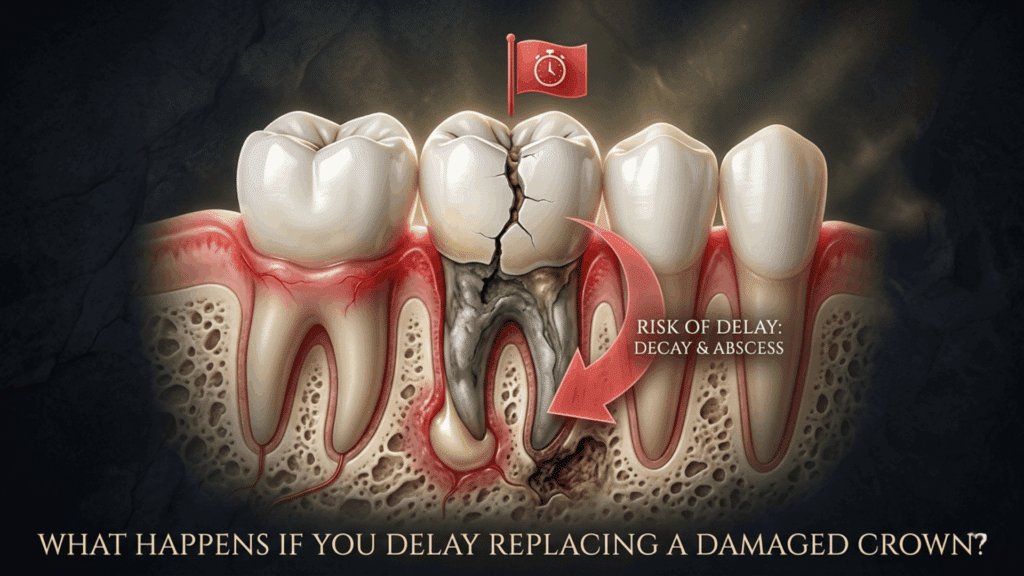
    A damaged dental crown no longer protects the tooth properly. Once that protective barrier fails, bacteria, pressure, and daily chewing forces can begin affecting the underlying tooth structure.

    Understanding what happens when you delay crown replacement can help you avoid more expensive and invasive treatment later.

    What Counts as a Damaged Dental Crown?

    Not all crown problems look dramatic. Some issues start subtly and gradually worsen over time.

    A crown may need replacement if it becomes:

    • Cracked
    • Chipped
    • Loose
    • Worn down
    • Broken
    • Leaking around the edges
    • Uncomfortable while chewing
    • Discolored near the gum line

    Sometimes the crown itself still looks intact, but the tooth underneath develops decay or structural damage.

    That is why even minor symptoms deserve professional evaluation.

    Why a Dental Crown Matters So Much

    A dental crown acts like a protective shell over a weakened tooth.

    Dentists often place crowns after:

    • Root canal treatment
    • Large fillings
    • Cracked teeth
    • Severe tooth decay
    • Dental implants
    • Broken teeth

    Without proper protection, these teeth become much more vulnerable to fracture and bacterial invasion.

    Once a crown becomes damaged, the underlying tooth loses much of that protection.

    1. Bacteria Can Enter Under the Crown

    One of the biggest risks of delaying crown replacement is bacterial leakage.

    When a crown cracks or loosens, tiny gaps can form between the crown and the tooth.

    Those openings allow:

    • Food particles
    • Saliva
    • Oral bacteria

    to enter underneath the restoration.

    Unfortunately, decay beneath a crown often develops silently. Many patients do not notice symptoms until the cavity becomes advanced.

    By that point, the tooth may require:

    • A root canal
    • Extensive rebuilding
    • Tooth extraction

    Early replacement helps prevent bacteria from reaching deeper tooth structures.

    2. The Tooth Can Crack Further

    A damaged crown cannot distribute biting pressure properly.

    As a result, the tooth underneath absorbs more stress during:

    • Chewing
    • Grinding
    • Clenching
    • Daily bite pressure

    Small structural weaknesses can quickly become major fractures.

    For example, a tooth with a cracked crown may initially only need a crown replacement. However, if the tooth fractures deeper below the gum line, the dentist may no longer be able to save it.

    That can eventually lead to tooth extraction and replacement with:

    Replacing a damaged crown early often prevents this chain reaction.

    3. Tooth Decay Can Spread Rapidly

    Decay underneath a crown behaves differently than a typical cavity.

    Since the crown covers most of the tooth, the damage often remains hidden from view.

    Meanwhile, bacteria continue spreading beneath the restoration.

    Patients may only notice symptoms when they experience:

    • Sensitivity
    • Pain while chewing
    • Swelling
    • Bad taste
    • Gum irritation

    At that stage, the decay may already involve the nerve of the tooth.

    In some cases, dentists must remove both the crown and large portions of damaged tooth structure before rebuilding the area.

    4. Gum Problems May Develop Around the Crown

    A damaged or poorly fitting crown can also irritate surrounding gum tissue.

    When the crown margin no longer fits properly, plaque and bacteria accumulate more easily around the edges.

    That increases the risk of:

    • Gum inflammation
    • Bleeding gums
    • Gum recession
    • Chronic irritation
    • Periodontal infection

    Additionally, bacteria trapped around the crown may create persistent bad breath or unpleasant taste.

    Healthy crown margins help protect both the tooth and the surrounding gums.

    5. Bite Problems Can Get Worse

    Even small crown damage can affect how your bite functions.

    For example:

    • A cracked crown may change pressure distribution
    • A loose crown may shift slightly during chewing
    • A worn-down crown may alter bite height

    Over time, these changes can create:

    • Jaw discomfort
    • Tooth sensitivity
    • Uneven tooth wear
    • Clenching habits
    • TMJ-related strain

    Patients sometimes focus only on the damaged crown itself and overlook how it affects the entire bite system.

    6. A Loose Crown Can Fall Off Completely

    Loose crowns rarely tighten back on their own.

    Instead, they usually continue weakening until they eventually detach.

    When a crown falls off completely, the exposed tooth becomes extremely vulnerable.

    That tooth may experience:

    • Sensitivity to temperature
    • Pain while chewing
    • Rapid decay exposure
    • Increased fracture risk

    Additionally, if the crown remains off for too long, surrounding teeth may gradually shift position.

    That movement can complicate crown replacement later because the original crown may no longer fit correctly.

    7. Delaying Treatment Often Increases Costs

    Many patients postpone crown replacement hoping to avoid dental expenses.

    Ironically, waiting often leads to more complex and expensive treatment.

    For example:

    Early Treatment Delayed Treatment
    Crown replacement Root canal + crown
    Minor repair Tooth extraction
    Simple recementing Dental implant
    Limited decay removal Extensive tooth reconstruction

    Addressing problems early usually preserves more natural tooth structure and lowers long-term treatment costs.

    How Long Can You Safely Wait?

    There is no universal timeline because every situation differs.

    However, patients should never ignore:

    • Pain
    • Looseness
    • Cracks
    • Visible damage
    • Swelling
    • Bite changes
    • Sensitivity around a crown

    Even if symptoms seem mild, the underlying problem may still progress silently.

    The earlier your dentist evaluates the crown, the better the chance of saving the tooth with conservative treatment.

    Signs Your Crown May Need Immediate Attention

    Certain symptoms deserve prompt dental evaluation.

    Persistent Pain

    Pain often signals decay, infection, or structural damage beneath the crown.

    Crown Movement

    A crown should never feel loose or unstable.

    Swelling Around the Tooth

    Swelling may indicate infection.

    Bad Odor or Taste

    This can occur when bacteria collect under a leaking crown.

    Difficulty Chewing

    Pressure discomfort may signal cracks or bite imbalance.

    Visible Cracks or Chips

    Even small visible damage can weaken the entire restoration.

    Can a Damaged Crown Be Repaired Instead of Replaced?

    Sometimes, yes.

    Minor cosmetic chips may allow simple repair. In other cases, dentists can recement a crown if:

    • The crown remains structurally sound
    • The underlying tooth stays healthy
    • The fit remains accurate

    However, replacement becomes necessary when the crown has:

    • Major cracks
    • Poor fit
    • Decay underneath
    • Structural instability
    • Advanced wear

    A clinical examination and dental X-rays help determine the best option.

    What Happens During Crown Replacement?

    The process depends on the condition of the tooth underneath.

    Your dentist may:

    1. Remove the old crown
    2. Evaluate the underlying tooth
    3. Remove decay if present
    4. Rebuild damaged tooth structure if needed
    5. Take digital or physical impressions
    6. Place a temporary crown
    7. Fit the final custom crown

    If the underlying tooth remains healthy, replacement may be relatively straightforward.

    However, delayed treatment often increases complexity.

    How to Make Dental Crowns Last Longer

    Although crowns eventually wear over time, proper care significantly improves longevity.

    Maintain Good Oral Hygiene

    Brush and floss carefully around crown margins.

    Avoid Excessive Grinding

    Nightguards help protect crowns from clenching and grinding forces.

    Attend Regular Dental Exams

    Routine visits help dentists detect small problems before they become major ones.

    Avoid Using Teeth as Tools

    Opening packages or chewing hard objects increases fracture risk.

    Address Small Symptoms Early

    Minor discomfort today may prevent major treatment later.

    Get Your Damaged Crown Evaluated Early

    Delaying replacement of a damaged crown can lead to far more than cosmetic concerns.

    Once a crown loses its seal or structural stability, the underlying tooth becomes vulnerable to decay, fractures, infection, and bite complications. What starts as a small crack or loose feeling can eventually result in root canal treatment, tooth loss, or the need for a dental implant.

    The earlier you address crown damage, the more treatment options you typically have available. Early intervention also helps preserve natural tooth structure and reduces the risk of more invasive procedures later.

    If you suspect your dental crown is damaged, loose, or no longer fitting properly, call (818) 716-6722 or click the button below to schedule your consultation online.

    Schedule a Consultation

    Frequently Asked Questions

    1. How do I know if my dental crown needs to be replaced?

    A dental crown may need replacement if you notice pain, sensitivity, looseness, visible cracks, swelling around the tooth, or discomfort while chewing. In some cases, decay develops underneath the crown without obvious symptoms, which is why regular dental exams are important.

    2. What happens if I ignore a cracked dental crown?

    Ignoring a cracked crown can allow bacteria to enter underneath the restoration and damage the tooth. Over time, this may lead to decay, infection, tooth fractures, root canal treatment, or even tooth loss if the damage becomes severe.

    3. Can a loose dental crown become an emergency?

    Yes. A loose crown can shift while chewing or fall off completely, leaving the tooth exposed and vulnerable to fracture and infection. If the crown comes off, patients should contact their dentist as soon as possible to avoid further damage.

    4. Is it cheaper to repair a damaged crown early?

    Usually, yes. Early treatment may only require a simple repair or crown replacement. However, delaying treatment can lead to more expensive procedures such as root canals, tooth reconstruction, extractions, or dental implants.

    5. Can tooth decay develop under a dental crown?

    Yes. Even though crowns protect teeth, bacteria can still enter underneath damaged or poorly fitting crowns. Since the decay often stays hidden beneath the restoration, patients may not notice the problem until it becomes more advanced.

    Related Articles:

    1. Porcelain Crowns Guide: What Patients Need to Know
    2. Metal Crowns: What Patients Should Know
    3. 7 Signs You Might Need a Porcelain Crown
    4. Removable vs. Fixed Dentures: Key Differences You Should Know
    5. Full Mouth Reconstruction: What It Is and How It Works

  • How Long Does It Take to Adjust to New Dentures?

    How Long Does It Take to Adjust to New Dentures?

    How Long Does It Take to Adjust to New Dentures

    Most people adapt to full or partial dentures within about four to eight weeks, though the exact timeline can vary.

    Adjustment is not only about comfort. The muscles in your mouth, speech patterns, and saliva flow all need time to adapt to something new.

    The process usually happens in stages, and some patients adjust faster depending on fit, consistency of wear, and daily habits.

    Why Adjustment Takes Weeks, Not Days

    Your tongue, cheeks, and lips are used to moving around natural teeth in very specific patterns.

    A denture changes those patterns, even when it closely matches the shape of your original teeth. Your muscles need time to adapt to that new space and movement.

    This adjustment period is normal. It doesn’t mean anything is wrong with the denture, just that the mouth is adapting to a new way of functioning.

    The First 48 Hours

    The first two days are usually when the adjustment feels most noticeable, even with a well-fitted denture.

    Saliva production often increases at first, as the mouth reacts to something new resting against the tissues. A sense of fullness is also common, even when the denture fits correctly.

    Some patients notice mild gagging with upper dentures, especially when they extend toward the soft palate. Speech can also feel slightly different until the tongue and lips adjust to the new shape.

    This early phase is temporary. Saliva levels and comfort typically settle within a few days as the mouth becomes accustomed to the denture.

    Week One: Sore Spots and Speech Adjustment

    Sore spots are common during the first week, even when a denture is well fitted. As the mouth begins to adapt, certain areas of the gums may feel more pressure than others, especially along the gum ridge.

    These spots are usually identified and adjusted during follow-up visits by relieving pressure in the specific areas causing irritation. This process is straightforward and typically resolves discomfort quickly.

    Speech also takes some adjustment during this stage. The tongue interacts differently with the roof of the mouth, which can affect sounds like “S” and “T” at first.

    Reading aloud for a few minutes each day can help the tongue adapt more quickly. Speaking a bit slower and practicing in private before conversations often makes the transition feel smoother within a short time.

    Weeks Two to Four: Eating Gets Easier

    Chewing is often one of the slower parts of adjusting to dentures, since they don’t function the same way natural teeth do.

    Natural teeth transfer bite force directly into the jawbone through the root. Dentures, on the other hand, rest on the gums and spread pressure across a broader surface.

    Because of this difference, biting into firmer foods can feel less stable at first, even when the denture fits correctly. The muscles simply need time to learn how to apply pressure more evenly.

    • Start with soft foods cut into small pieces
    • Chew slowly and try to use both sides of your mouth evenly
    • Avoid biting directly into harder foods with the front teeth at first
    • Reintroduce firmer foods gradually as control improves

    By the end of this stage, most patients are able to handle a wider range of foods comfortably, although very hard or sticky textures may still take a bit more time.

    Month Two and Beyond: Full Adaptation

    By six to eight weeks, most patients no longer think of their denture as something separate from their mouth.

    Speech feels more natural again, with improved clarity and a return to normal speaking pace. Chewing also becomes more automatic, with less conscious effort needed to position food correctly.

    Some patients reach this stage sooner, especially if they previously wore a partial denture or other removable appliance.

    Why Immediate Dentures Follow a Different Timeline

    An immediate denture is placed right after tooth removal, so the patient does not go without teeth during the healing period. A conventional denture is made only after the gums have fully healed, which usually takes four to six weeks.

    Because healing continues after extractions, the shape of the gums and underlying bone gradually changes. This can affect how an immediate denture fits over time.

    As a result, additional adjustments are often needed during the healing phase, and some patients may require a reline once the tissues have fully settled.

    Our article on full denture costs and what to expect explains the difference between immediate and conventional dentures in more detail, including how each approach affects treatment planning.

    Why Partial Dentures Sometimes Adjust Faster

    Partial dentures sit alongside natural teeth, which gives the tongue and cheeks more familiar reference points during adjustment.

    Because some natural teeth remain in place, patients often experience less disorientation compared to full dentures.

    That said, clasps or attachments used to secure a partial denture can take some getting used to. These components vary depending on the design and may feel slightly different in daily use.

    Our guide on partial denture types and how they work explains the different attachment styles and what patients can expect with each option.

    Why Some People Adjust to Dentures Faster Than Others

    Speeds Adjustment Slows Adjustment
    Practicing speech and chewing daily Avoiding the denture out of discomfort
    Attending follow up adjustment visits promptly Ignoring persistent sore spots
    Starting with soft foods and progressing gradually Jumping straight to hard or sticky foods
    Prior experience with a removable partial No prior experience with any removable appliance
    Well controlled overall oral health Significant bone loss affecting denture stability

    When to Call Your Dentist During Adjustment

    Most denture-related discomfort improves as your mouth adapts. If symptoms are not improving or a specific area becomes increasingly uncomfortable, it is worth scheduling a follow-up visit.

    • A sore spot that does not improve after a few days
    • Sharp pain in one specific area rather than general tenderness
    • A denture that feels loose or shifts noticeably while talking or eating
    • Difficulty with speaking or chewing that is not gradually improving from week to week

    Adjustment visits are a routine part of denture care and are often needed as the mouth adapts to a new appliance. Small changes to pressure points or fit can make a noticeable difference in comfort.

    Caring for New Dentures During Adjustment

    Good denture care helps keep your mouth comfortable while you adjust to wearing a new appliance.

    • Remove and rinse the denture after eating to clear food particles
    • Brush the denture daily with a denture-specific cleaner rather than regular toothpaste
    • Soak the denture overnight using the solution recommended by your dentist
    • Clean your gums and tongue gently each day, even if you no longer have natural teeth
    • Attend scheduled follow-up visits so your dentist can monitor fit and make adjustments when needed

    Consistent cleaning and regular follow-up care can help prevent irritation and support a smoother adjustment process.

    Removable Dentures vs Fixed Options

    Adjustment tends to feel different depending on whether a denture is removable or fixed to the jawbone.

    Fixed options are anchored more securely in place, which means there is less movement for the mouth to adapt to during everyday speaking and chewing. Removable dentures, on the other hand, require the lips, cheeks, and tongue to adjust to a device that can shift slightly during use.

    Our comparison of removable versus fixed denture options explains the differences in more detail and helps clarify which approach may suit different patient needs.

    Speak with Dr. Pearl Zadeh About Your Dentures

    Adjusting to dentures takes time, but the right fit and design make a significant difference from the beginning.

    If you are considering full or partial dentures, Dr. Pearl Zadeh’s Woodland Hills practice can evaluate your needs and recommend the most suitable option for comfort, function, and long-term oral health.

    Call (818) 716-6722 or click the button below to schedule your consultation.

    Schedule a Consultation

    Frequently Asked Questions

    1. Will my dentures ever feel completely natural?

    Most patients reach a point where they can speak and eat comfortably without thinking much about their dentures. However, they will still feel slightly different from natural teeth.

    2. Why do my dentures feel loose some days and tight other days?

    Small changes like gum tissue swelling, hydration, and time of day can affect how a denture sits, even when the fit itself has not changed.

    3. Can denture adhesive help during the adjustment period?

    Yes. Some patients use adhesive temporarily for added stability and confidence while they adjust. Long-term dependence may indicate that the fit needs to be reviewed.

    4. Is it normal to lose weight while adjusting to dentures?

    Some patients eat less during the first couple of weeks while they adapt to chewing. This usually improves once comfort and confidence return.

    5. Do older patients take longer to adjust than younger patients?

    Not necessarily. Adjustment depends more on muscle adaptation, oral anatomy, and prior denture experience than age alone.

    Related Articles:

    1. Full Dentures: Cost, Materials, and What to Expect
    2. Partial Dentures: Types, Cost, and How They Work
    3. Removable vs. Fixed Dentures: Key Differences You Should Know

  • Repairing or Replacing Old Bonding: What to Expect

    Repairing or Replacing Old Bonding: What to Expect

    Repairing or Replacing Old Bonding

    You catch your reflection and notice that your smile looks slightly different. The bonding that once blended naturally with your teeth now appears darker, feels rough against your tongue, or shows a small chip along the edge.

    Changes like this do not always mean the bonding has failed. Composite bonding naturally changes over time as it experiences daily use. Sometimes a small adjustment or repair can restore the appearance. In other cases, replacing the bonding may create a better result.

    The right choice depends on the condition of the bonding, the health of the tooth underneath, and what you want your smile to look like today.

    Why Dental Bonding Changes Over Time

    Dental bonding uses a tooth-coloured composite resin designed to repair or improve the appearance of a tooth. Although the material is durable, it does not behave exactly like natural enamel or porcelain.

    Composite resin is slightly softer than these materials. Over the years, normal chewing, biting forces, and everyday habits can gradually affect its appearance and texture.

    Several factors can contribute to changes in older bonding, including:

    • Frequent exposure to coffee, tea, red wine, or other staining foods and drinks
    • Teeth grinding or clenching that places extra pressure on the material
    • Normal wear from chewing and daily use
    • Changes in the surrounding natural teeth over time

    These changes do not necessarily mean the original bonding was unsuccessful. Like many dental restorations, bonding requires maintenance because your teeth and materials continue to experience daily stress.

    If you want to understand how bonding is placed initially, our step-by-step look at the bonding procedure explains the planning, shaping, and finishing involved.

    Signs Your Bonding May Need Attention

    Old bonding does not always need replacement immediately. However, certain changes can indicate that it is time for your dentist to evaluate the restoration.

    The Bonding Feels Rough or Uneven

    A bonded tooth should feel smooth against your tongue. If the surface starts feeling rough, raised, or different from your natural teeth, the material may have experienced surface wear.

    Minor texture changes may sometimes be polished or adjusted. Your dentist can determine whether the bonding still has enough strength or needs further treatment.

    The Colour No Longer Matches

    Composite resin can absorb stains over time. Coffee, tea, tobacco exposure, and other staining habits may gradually affect the shade of older bonding.

    Unlike natural teeth, composite material does not respond to whitening treatments in the same way. If the bonding has become noticeably darker than the surrounding teeth, replacement may provide a better colour match.

    The Bonding Has Chipped or Cracked

    Small chips along the edge of bonding are common, especially on front teeth that experience repeated biting forces.

    A minor chip may only require a simple repair. Larger damage may require replacing more of the restoration, especially if the underlying tooth structure also needs attention.

    Your Smile Goals Have Changed

    Sometimes the bonding itself remains functional, but your expectations change over time.

    You may want a different tooth shape, a brighter shade, or a more complete smile improvement than the original bonding provided. In these cases, your dentist may discuss whether repairing the bonding or replacing it with another cosmetic option better fits your goals.

    This differs from a new chip caused by sudden damage. Our guide to bonding for chipped teeth explains how dentists approach those situations.

    What Affects How Long Bonding Lasts

    The lifespan of dental bonding varies from patient to patient. One person’s bonding may continue looking natural for many years, while another person’s repair may need attention sooner.

    Several factors influence how well bonding holds up over time.

    The location of the tooth matters. Front teeth usually experience less chewing pressure than back teeth, but they are more visible when changes occur. A small chip, edge wear, or colour difference may become noticeable sooner on front teeth because they are part of your smile.

    Bite forces also play an important role. Patients who grind or clench their teeth place additional stress on bonded areas. This repeated pressure can increase the risk of wear, cracks, or chips over time.

    Daily habits can affect the material too. Biting ice, chewing hard foods, or using your teeth to open packages places unnecessary pressure on bonding. Avoiding these habits helps protect both the restoration and your natural teeth.

    Your oral care routine matters as well. Regular brushing, flossing, and routine dental visits help protect the tooth underneath the bonding. Good oral health also reduces the risk of problems that could affect the restoration.

    Staining habits may change how bonding looks. Composite resin can absorb colour from coffee, tea, red wine, and tobacco over time. Since bonding does not whiten like natural enamel, stains may become more noticeable as the years pass.

    Changes in your natural teeth can affect the overall appearance. Your surrounding teeth may naturally change colour or wear slightly with age. Sometimes older bonding stands out because the rest of your smile has changed, not because the bonding itself has deteriorated.

    How a Dentist Evaluates Old Bonding

    Before recommending repair or replacement, your dentist examines both the bonding and the tooth beneath it.

    During the evaluation, your dentist checks:

    • The condition of the bonding material
    • Any chips, cracks, or rough areas
    • How well the colour and shape match nearby teeth
    • Whether decay or damage has developed underneath
    • How your bite affects the bonded tooth

    Your dentist also considers habits that may have contributed to the changes, such as teeth grinding or clenching.

    The age of the bonding alone does not determine whether it needs replacement. A well-maintained restoration may remain functional for years, while newer bonding may need attention if it experiences heavy wear or damage.

    When Repair Is Often the Right Approach

    Repair may be the better option when the concern is small and the tooth underneath remains healthy.

    For example, your dentist may repair older bonding if it has:

    • A small chip along the edge
    • Minor surface roughness
    • Slight shape changes
    • A small area that needs cosmetic refinement

    A repair usually involves adding fresh composite resin to the affected area, reshaping it, and polishing the surface so it blends with the existing bonding.

    This approach works best when the original bonding still provides a stable foundation and the issue is mainly cosmetic. It allows your dentist to restore the appearance without replacing the entire restoration.

    When Replacement May Make More Sense

    Replacing old bonding may become the better option when the restoration has reached a point where a small repair will no longer create the result you want.

    Your dentist may discuss replacement if the bonding has:

    • Significant wear or damage
    • Deep staining that does not blend well with your smile
    • Multiple repairs that have changed the shape or appearance
    • A cosmetic result that no longer matches your goals

    Replacement may also make sense when your expectations have changed since the original treatment. For example, you may want a different tooth shape, more length, or a more noticeable smile improvement than the original bonding provided.

    In these situations, starting with a fresh restoration can give your dentist more control over the final appearance. It avoids repeatedly adding material to an older restoration that may no longer provide the ideal foundation.

    If your original bonding helped close a gap and that area has changed over time, your dentist may consider whether a different approach would create a better long-term result. Our comparison of veneers and bonding for closing gaps explains how these options differ.

    Can Stained Bonding Be Whitened?

    No. Traditional whitening treatments do not change the colour of composite bonding in the same way they change natural teeth.

    Whitening products work by breaking down stains within natural enamel. Composite resin does not respond to whitening agents in the same way, which means the bonded area may remain the same shade while the surrounding teeth become lighter.

    This can sometimes make older bonding look more noticeable after whitening. A patient may expect the bonding to blend better, but the colour difference can become easier to see.

    If you are planning to whiten your teeth, your dentist may recommend completing whitening first. This allows the new bonding shade to match your updated smile rather than your previous tooth colour.

    What Happens During a Bonding Repair?

    A bonding repair is usually a simple and conservative process. Your dentist first evaluates whether the existing restoration can support additional composite material.

    If repair is appropriate, your dentist may:

    1. Prepare the worn or damaged area to help the new material attach.
    2. Apply fresh composite resin to rebuild the affected section.
    3. Shape the material so it matches the existing tooth contour.
    4. Polish the area to create a smooth, natural finish.

    Many repairs take less time than replacing the entire restoration because your dentist can preserve the healthy portions of the existing bonding.

    What Happens During a Bonding Replacement?

    Replacing bonding involves removing the older composite material and creating a new restoration from the beginning.

    Your dentist first removes the existing bonding and examines the tooth underneath. This allows them to check the health of the enamel and identify any issues that may have developed over time.

    The process then follows the same general principles as new bonding:

    • Selecting a shade that matches your smile
    • Applying composite resin in layers
    • Sculpting the shape carefully
    • Polishing the final surface

    Starting fresh gives your dentist a clean foundation. This can be especially helpful when the old bonding has significant staining, repeated repairs, or a shape that no longer fits your cosmetic goals.

    When Another Cosmetic Option Might Fit Better Than Rebonding

    Replacing old bonding can also be a good time to reconsider whether bonding still matches your long-term goals.

    If your bonding has needed several repairs, or if you now want larger cosmetic changes, your dentist may discuss other options. For example, veneers may provide more control over tooth colour, shape, and proportions when multiple cosmetic concerns are involved.

    This does not mean veneers are automatically the better choice. The right option depends on your tooth structure, bite, oral health, and the result you want to achieve.

    Our porcelain veneers guide and composite veneers overview explain what these treatments involve. Our comparison of bonding and veneers also covers the differences between these approaches in more detail.

    If your goals involve several areas of your smile, our overview of what a smile makeover typically includes explains how treatments such as bonding, veneers, and whitening may work together.

    How Cost Factors Into Repair or Replacement

    The cost of repairing or replacing bonding depends on the details of your specific case.

    Several factors can affect the overall investment, including:

    • The number of teeth involved
    • The extent of the damage or wear
    • Whether your dentist can repair the existing bonding or needs to replace it
    • Whether additional cosmetic treatments are part of the plan

    A small repair on one tooth and a full replacement involving multiple teeth require very different levels of time and treatment.

    Online estimates can provide general information, but they cannot account for the condition of your existing bonding or the needs of your smile. A consultation allows your dentist to evaluate the restoration directly and provide a more accurate recommendation.

    Choosing a Cosmetic Dentist in Woodland Hills for Bonding Repairs

    Choosing between repairing and replacing old bonding requires more than looking at the restoration itself. Your dentist also needs to evaluate the tooth underneath, your bite, and your overall cosmetic goals.

    Dr. Pearl Zadeh takes this detailed approach when evaluating older bonding and cosmetic concerns. Her goal is to help patients understand their options and choose a treatment that fits their smile, rather than recommending a more involved procedure without a clear reason.

    Patients considering cosmetic dental treatment can also review our overview of cosmetic dentistry in Woodland Hills to learn about other available options.

    Schedule a Consultation With Dr. Pearl Zadeh

    If your bonding no longer looks or feels the way it once did, that does not always mean something has gone wrong. Cosmetic dental work changes over time, and an evaluation can help you understand what options are available.

    Dr. Pearl Zadeh and her Woodland Hills team can examine your existing bonding and discuss whether a repair, replacement, or another cosmetic approach best fits your smile and goals.

    Call (818) 716-6722 or click the button below to schedule your consultation online.

    Schedule a Consultation

    Frequently Asked Questions

    1. How do I know if my bonding needs to be repaired or replaced?

    A dentist can evaluate the extent of the wear, staining, or damage, along with the health of the tooth underneath, to determine which approach fits your situation. Minor issues often just need a repair, while significant wear or repeated problems may call for replacement.

    2. How long does dental bonding typically last?

    Bonding is often cited in a range of roughly three to ten years, though this varies considerably based on location in the mouth, bite forces, habits, and how well it’s cared for over time.

    3. Can bonding be whitened if it becomes stained?

    Generally, no. Composite resin doesn’t respond to whitening treatments the way natural enamel does. Stained bonding is usually addressed by replacing the material rather than trying to whiten it.

    4. Is repairing bonding cheaper than replacing it?

    Often, yes, since a repair typically involves less material and less time than a full replacement. Exact cost depends on the extent of the issue, which your dentist can evaluate directly.

    5. Can old bonding be replaced with a veneer instead?

    In many cases, yes, particularly if you’re looking for more durability or a broader cosmetic change. Your dentist can evaluate whether your tooth is a good candidate for that transition.

    Related Articles:

    1. Dental Bonding for Chipped Teeth: What Patients Can Expect
    2. Fixing Gaps Between Teeth With Veneers vs Bonding
    3. Dental Bonding vs Veneers: Which Option Is Right for You?
    4. How Dental Bonding Works: The Procedure Step by Step

  • When Should a Composite Filling Be Replaced?

    When Should a Composite Filling Be Replaced?

    When Should a Composite Filling Be Replaced

    My filling looks fine, so how do I know if it needs to be replaced?” This is one of the most common questions patients ask during routine exams. It makes sense. Composite fillings blend in with the tooth, so changes are not always easy to notice.

    Composite fillings do not last forever. Many work well for years, but chewing forces, changes in the surrounding tooth, and natural wear on the material all affect how long they hold up. By the time a filling becomes painful, the issue has often been developing for some time. Spotting early signs can make treatment simpler and help prevent bigger problems later.

    How Long Do Composite Fillings Usually Last?

    Most composite fillings last around 5 to 10 years, although this is not a fixed rule. Some remain in good condition for 15 years or longer, while others may show wear much earlier.

    Longevity depends on several factors. Larger fillings tend to wear faster because they cover more surface area and take on more chewing force. Fillings on back teeth also wear down more quickly since those teeth handle most of the grinding and chewing.

    Oral hygiene plays an important role as well. Plaque that builds up around the edges of a filling can speed up breakdown and increase the risk of decay forming underneath.

    Teeth grinding or clenching places even more stress on composite fillings. This condition, known as bruxism, can cause early wear or small fractures. In these cases, a night guard can help protect both the filling and the natural tooth structure.

    Why Composite Fillings Need Replacement

    Fillings do not fail for a single reason, and age alone is not always the main factor.

    Over time, normal wear can gradually affect a composite filling. Daily chewing can thin the material, create small cracks, or cause the edges to separate slightly from the tooth. When that seal starts to break down, the filling no longer protects the tooth in the same way.

    Recurrent decay is one of the most common reasons for replacement. Bacteria can enter small gaps around the edges of an older filling and cause new decay underneath or beside it. This often develops quietly and may not cause symptoms until it is more advanced. In many cases, it is first detected on dental X-rays.

    Cracks and fractures also play a role. A filling can crack from biting force, grinding, or long-term stress. In some cases, the tooth itself may fracture around the filling, which affects the stability of the entire restoration.

    Replacing a filling is not about removing old dental work for the sake of it. The goal is to protect the tooth underneath and address small issues before they turn into larger problems.

    Signs Your Composite Filling May Need Replacement

    Some signs are easy to notice. Others are subtle and only become clear during a dental exam.

    Persistent Sensitivity

    Mild sensitivity right after a filling is normal and usually settles within a few weeks. But if a tooth becomes sensitive months or years later, it is worth paying attention. Sensitivity to hot, cold, or sweet foods that lingers after the trigger is gone can sometimes point to decay under the filling or a weakening seal between the tooth and restoration.

    Pain When Biting

    Pain when you bite or chew on a specific tooth often signals a change in the filling or tooth structure. It may come from a small crack, an uneven bite, or movement in the filling itself. This discomfort can feel mild at first and come and go, but it often becomes more noticeable over time.

    Visible Cracks or Chips

    You may notice a chip or feel a rough edge when you run your tongue over the tooth. In some cases, a small crack may develop in the filling. While this does not always mean the tooth is in immediate danger, it does suggest the filling is no longer providing full protection.

    Rough or Worn Edges

    Composite fillings can slowly wear down over time. If a filling that once felt smooth now feels rough, uneven, or slightly raised, it may need evaluation. Worn edges can also collect plaque more easily, which increases the risk of decay around the area.

    Food Frequently Getting Stuck

    If food keeps getting trapped in the same spot, the edge of the filling may have started to break down. Small gaps at the margins allow food and bacteria to collect, which can lead to decay if not addressed.

    Discoloration Around the Filling

    Composite material can stain over time from coffee, tea, and other foods. However, a dark line or shadow right along the edge of a filling can sometimes indicate decay. Not every stain means a problem, but it is worth having checked to be sure.

    A Loose Filling

    If a filling feels loose or a piece breaks off, it needs prompt attention. An open area exposes the tooth to bacteria, which can lead to decay developing quickly. Even without pain, it is best to have it evaluated as soon as possible.

    Can a Composite Filling Be Repaired Instead?

    Not every issue with a composite filling means it needs full replacement. In some cases, a dentist can repair the existing filling instead of removing it completely.

    Small chips at the edge of a filling can often be smoothed or built back up with composite material, especially when the underlying tooth is still healthy. Minor surface wear without decay or damage at the margins may also only need monitoring rather than immediate treatment.

    When decay develops under or around the filling, when a crack runs through the restoration, or when the tooth itself fractures, replacement is usually the better option. Repairing a filling in these cases would not address the underlying problem.

    This decision is not something patients can usually make on their own. A dentist will assess the tooth, check the edges of the filling, and review X-rays before recommending repair or replacement. In some cases where the damage is more extensive, a dental crown may be the more suitable option.

    What Happens If You Ignore a Failing Filling?

    Leaving a damaged or failing filling in place often allows a small issue to grow over time.

    When the seal around a filling breaks down, bacteria can reach the tooth underneath. Decay can spread in areas that are harder to clean and not fully visible. What starts as a small problem at the edge of a filling can gradually move deeper into the tooth. In some cases, this may eventually affect the nerve and lead to the need for root canal treatment.

    Delaying care can also limit treatment options. A filling that could have been replaced early may later require a crown if too much tooth structure is lost. In more advanced cases, the tooth may become too damaged to restore.

    This is not meant to create concern. The key point is simple. Addressing a failing filling early usually means a smaller and more straightforward treatment compared to waiting until symptoms become more obvious.

    How Dentists Check Whether a Filling Needs Replacement

    A proper evaluation of a composite filling involves more than a quick look. Dentists use several methods to understand the full condition of the tooth and the restoration.

    A visual exam is usually the first step. The dentist examines the filling under good lighting and sometimes magnification to look for cracks, chips, discoloration, or signs that the edges are breaking down.

    Dental X-rays help detect problems that cannot be seen directly. Decay can form under or around a filling without visible signs, and X-rays often reveal these changes early. They can also show deeper issues involving the tooth root or surrounding bone.

    The bite is also checked. If a filling is slightly too high or uneven, it can create extra pressure when you chew. Over time, this can contribute to discomfort or wear on the tooth.

    Dentists may also gently check the edges of the filling to see whether the seal is still intact. In some cases, sensitivity testing helps assess how the nerve inside the tooth is responding.

    Diagnosis always comes from combining these findings. A single sign on its own does not give the full picture, which is why self-checks at home can only go so far.

    When to Schedule an Evaluation

    You do not need to wait until a tooth becomes painful to have a filling checked. In many cases, early signs show up long before discomfort begins.

    It is a good idea to schedule a visit if you notice any of the following changes:

    • New or worsening sensitivity to hot, cold, or sweet foods
    • Pain or discomfort when chewing on a specific tooth
    • A visible chip, crack, or rough edge around a filling
    • Food that keeps getting trapped in the same spot
    • Any change in how a filling feels when you run your tongue over it or bite down

    Catching these issues early often leads to simpler treatment. A filling replaced during a routine visit is usually straightforward. The same tooth left untreated until decay spreads underneath the filling may require more complex care later on.

    How to Make Composite Fillings Last Longer

    Good daily habits can significantly extend the life of composite fillings.

    Brush twice a day with fluoride toothpaste and floss daily, especially around existing fillings where plaque tends to build up. Regular professional cleanings also help remove deposits that brushing alone cannot fully clear.

    If you grind or clench your teeth, ask your dentist about a custom night guard. Grinding places heavy pressure on both natural teeth and fillings, and a well-fitted guard can reduce that long-term wear.

    It is also important to avoid habits that place unnecessary stress on restorations. Chewing ice, biting fingernails, or using teeth to open packaging can all cause sudden damage, even to fillings that are otherwise in good condition.

    Routine dental exams play a key role as well. Most patients benefit from check-ups every six months. These visits allow the dentist to catch early signs of wear, decay, or bite changes before they become noticeable problems.

    If you have older silver amalgam fillings and are thinking about replacement, you may also find it helpful to read about the differences between mercury and composite fillings.

    Schedule a Composite Filling Evaluation

    Composite fillings are durable and effective, but they are not permanent. Most last for many years with proper care, and some last well beyond a decade. Even so, they can wear down over time, develop small gaps at the edges, or allow decay to form underneath if they are not monitored regularly.

    It is better not to wait for pain before getting a filling checked. Pain often appears later, once the problem has already progressed. Regular dental exams help catch these issues early, when treatment is simpler and less involved.

    If you are concerned about an existing composite filling, Dr. Pearl Zadeh can evaluate it and recommend whether it needs monitoring, repair, or replacement. Call (818) 716-6722 or click the button below to schedule your consultation online.

    Schedule a Consultation

    Frequently Asked Questions

    1. How often should composite fillings be replaced?

    There is no fixed schedule for replacing composite fillings. Replacement depends on the condition of the filling and the tooth, not age alone. Some fillings show wear within 5 to 7 years, while others remain in good condition for 15 years or longer. During routine exams, your dentist checks each filling and recommends replacement only when it is needed.

    2. Can a composite filling last 20 years?

    Yes, in some cases. Small fillings in low-stress areas of the mouth can last 20 years or more, especially with good oral hygiene and regular dental care. However, this is not typical. Lifespan depends on the size of the filling, its location, bite forces, and the condition of the surrounding tooth over time.

    3. How do I know if my filling is failing?

    Signs can include new or worsening sensitivity to hot, cold, or sweet foods, pain when biting, food getting stuck in the same area, rough or sharp edges, visible darkening around the margin, or a filling that feels loose or partially broken. In some cases, a failing filling shows no symptoms and is only detected during an exam or on X-rays.

    4. Can a dentist repair a composite filling instead of replacing it?

    Sometimes. Small chips or minor surface wear can often be repaired by adding composite material if the tooth and margins are still healthy. Full replacement is usually needed when decay is present, the filling has cracked through, or the seal between the filling and tooth has broken down. Your dentist will decide the best option after examining the area.

    5. What happens if I leave a damaged filling untreated?

    A damaged filling can allow bacteria to enter and cause decay underneath it. Over time, this decay can spread deeper into the tooth and lead to more complex treatment, such as a root canal or a crown. In severe cases, the tooth may become difficult to save. Treating problems early usually keeps the procedure simpler and less invasive.

    Related Articles:

    1. Mercury Fillings vs Composite Fillings. What’s the Difference?
    2. Dental Crown vs Filling: When Is a Crown Necessary?
    3. Should You Replace Old Silver Fillings Even If They Don’t Hurt?