In the past decade there has been a dramatic interest in cosmetic dentistry. We all realize that having a healthy, bright, beautiful smile enhances our appearance and allows us to smile with confidence. Thanks to the advances in modern cosmetic dentistry, we are able to improve our teeth and smiles with quick, painless and surprisingly affordable treatments.
What can cosmetic dental treatments do?
Change the size, shape, and alignment of certain teeth.
Fill in unattractive spaces between teeth.
Improve or correct bites.
Lighten or brighten the color of teeth.
Repair decayed, broken, cracked, or chipped teeth.
Replace missing teeth.
Replace old, unattractive dental treatments.
Remember, your smile speaks before you even say a word!
Veneers are one of the most popular cosmetic dentistry treatments available, thanks to their ability to change the appearance of your smile quickly and effectively. If you have minor cracks and chips on your teeth, discoloration, or minor shape or spacing issues, dental veneers will cover those problems and give you an aesthetically pleasing smile. As with any kind of dental treatment, if you are considering veneers, you probably are wondering how long they will last. Here is what you need to know.
Veneers 101
Veneers are thin, wafer-like shells that are bonded to the front of your teeth. They are made of porcelain, and are custom-designed to match the shape and shade you desire. Your dentist will work with you to create your veneers so that they address the concerns you have with your teeth while blending seamlessly with your natural teeth. Your dentist may recommend veneers to correct misshapen or worn teeth, crooked or widely spaced teeth, and severe discoloration that does not respond to whitening treatments. Veneers can also be used to create a more uniform smile if your teeth are noticeably different in size.
It usually takes two visits to get veneers. During the first visit, your dentist will remove a small amount of tooth enamel to make room for the veneers. He or she will make impressions of your mouth so that your veneers can be custom-sized. Your dentist will also help you choose the color of your veneers during this visit. At your second appointment, your veneers will be bonded to your teeth after any necessary adjustments are made.
The Longevity of Dental Veneers
There are many factors that impact the longevity of veneers, including how you care for them and your overall oral health. Typically, veneers last for five to 10 years, though many people are able to get many more years out of them. Following your dentist’s care plan will dramatically increase the lifespan of your veneers.
To care for your veneers, maintain a high-quality oral hygiene routine, including brushing at least twice per day with a soft-bristled toothbrush and flossing at least once daily. Visit your dentist at least twice per year for a professional cleaning and check-up. If you grind your teeth, talk to your dentist about using a mouthguard to protect your veneers.
Could veneers give you the smile you’ve always wanted? Find out if you’re a good candidate for dental veneers by scheduling a consultation with Pearl Zadeh, DDS.
Preserving Your Smile: The Power of Minimally Invasive Dentistry by Dr. Pearl Zadeh
Pearl Zadeh DDSCosmetic Dentistry
Preserving Your Smile: The Power of Minimally Invasive Dentistry
Your smile is one of your most valuable assets, and protecting it should always come first. As dentistry advances, we now have the ability to treat dental issues more conservatively than ever before. This approach, known as minimally invasive dentistry, allows us to restore health and beauty while preserving as much of your natural tooth structure as possible.
As a cosmetic and restorative dentist, I believe less is often more. My goal is to achieve long-lasting results with the least amount of alteration to your natural teeth. In this article, I’ll share what minimally invasive dentistry means, how it benefits your oral health, and the treatments that make this modern approach possible.
What Is Minimally Invasive Dentistry?
Minimally invasive dentistry (MID) is a philosophy centered around prevention, early detection, and conservative treatment. Instead of waiting for problems to worsen and require major restorations, we intervene early, using advanced tools and techniques that protect natural tooth structure.
The Core Principles of Minimally Invasive Dentistry
Prevention first: Stopping decay and disease before they start through hygiene, fluoride, and sealants.
Early detection: Using advanced imaging and diagnostic tools to identify small issues early.
Conservation: Preserving healthy enamel and dentin whenever possible.
Precision treatment: Using microscopically precise methods to treat only the damaged areas.
This patient-centered approach combines cutting-edge technology with gentle care, resulting in stronger, healthier smiles that stand the test of time.
Why Preservation Matters
Natural enamel is one of the strongest materials in your body, and once it’s gone, it doesn’t grow back. Every time we remove part of a tooth, even for a filling or crown, we permanently alter its structure.
By embracing minimally invasive methods, we:
Reduce the need for extensive restorations later.
Maintain tooth strength and resilience.
Lower the risk of sensitivity and secondary decay.
Create restorations that look and feel more natural.
In short, minimally invasive dentistry focuses on preserving what nature gave you, not replacing it unnecessarily.
https://www.aobmd.org
Modern Tools That Make It Possible
Minimally invasive dentistry wouldn’t be possible without today’s advanced technologies. These tools allow us to diagnose, plan, and treat with unprecedented precision.
1. Digital Imaging & 3D Scanning
Digital X-rays and 3D scanners help identify even the smallest areas of decay or cracks, long before they become visible to the naked eye. They also eliminate the need for messy impressions and reduce radiation exposure.
2. Laser Dentistry
Dental lasers are revolutionizing how we treat both hard and soft tissues. Lasers can remove decay, reshape gums, and even treat periodontal disease, often without anesthesia or discomfort. They also promote faster healing and reduce the risk of infection.
3. Air Abrasion Technology
Instead of using a traditional drill, air abrasion uses a fine stream of particles to gently remove decayed areas. This technique is quiet, comfortable, and perfect for small cavities, especially for children or patients with dental anxiety.
4. Magnification and Microscopy
High-powered magnification and dental microscopes enable me to work with extreme precision, preserving more healthy tooth while ensuring a perfect seal for restorations.
Minimally Invasive Treatments for a Healthier Smile
Here are some of the most common ways we use minimally invasive techniques in my practice:
1. Preventive Care and Early Intervention
The foundation of minimally invasive dentistry is prevention. Professional cleanings, fluoride treatments, and sealants are simple, painless ways to stop cavities before they begin.
We also focus on patient education, teaching you how to maintain proper oral hygiene at home so that small issues don’t develop into big problems.
2. Conservative Fillings
When decay does occur, smaller cavities can often be treated with tooth-colored composite fillings that bond directly to enamel. These materials require minimal drilling and blend seamlessly with your natural teeth.
3. Inlays and Onlays
When more of the tooth needs to be restored but a full crown isn’t necessary, inlays and onlays are the ideal middle ground. These custom restorations strengthen the tooth while preserving more natural structure than a crown would.
4. Porcelain Veneers and Bonding
For cosmetic concerns like chips, discoloration, or uneven teeth, porcelain veneers or composite bonding can transform your smile without extensive reshaping. Today’s ultra-thin veneers require minimal or no reduction of enamel, yet deliver beautiful, natural results.
5. Laser Gum Contouring
For patients with uneven or “gummy” smiles, soft-tissue lasers allow precise reshaping of gumlines, without scalpels, sutures, or long recovery times. The result is a balanced, harmonious smile with minimal discomfort.
6. Guided Implant Placement
Even in restorative dentistry, minimal invasiveness plays a key role. Using 3D imaging and digital planning, dental implants can be placed with pinpoint accuracy, reducing trauma to surrounding tissue and shortening recovery times.
Benefits Beyond the Dental Chair
Minimally invasive dentistry isn’t just about techniques, it’s about the overall experience and long-term health outcomes.
Here’s what my patients appreciate most:
Less discomfort: Gentle, precise treatments often mean little to no pain or need for anesthesia.
Natural aesthetics: Your smile looks authentic because we preserve natural enamel and structure.
Lower long-term costs: By preventing major problems, you save on future dental work.
Greater peace of mind: Knowing your care is as conservative as possible builds confidence and trust.
Is Minimally Invasive Dentistry Right for You?
Almost every patient can benefit from a minimally invasive approach. However, the right treatment depends on your dental health, goals, and lifestyle.
You might be an excellent candidate if you:
Want to preserve your natural teeth as much as possible
Prefer gentle, comfortable dental care
Have mild to moderate decay or damage
Are interested in cosmetic improvements with minimal alteration
During your consultation, we’ll discuss your unique needs and create a customized treatment plan that reflects both your goals and the most conservative path to get there.
The Future of Dentistry Is Gentle, Smart, and Precise
As dental technology continues to evolve, our ability to care for teeth in the most precise, least invasive ways only gets better. Minimally invasive dentistry represents the future of oral care, one where prevention, precision, and preservation take center stage.
It’s about keeping your smile healthy, functional, and beautiful for decades, not just fixing problems when they arise.
Ready to Experience Minimally Invasive Dentistry?
Your smile deserves the best care, care that respects and preserves the natural beauty of your teeth. If you’re ready to explore the benefits of minimally invasive dentistry in Woodland Hills, I invite you to schedule a consultation at my office. Together, we’ll create a plan that enhances your oral health while keeping your treatment comfortable, conservative, and long-lasting.
Dr. Pearl Zadeh, DDS Cosmetic & Restorative Dentistry Woodland Hills, CA
What Are the Steps That Go Into a Cosmetic Veneer Case?
Pearl Zadeh DDSCosmetic Dentistry
If you’ve ever admired a smile that looks natural, confident, and effortlessly beautiful, there’s a good chance cosmetic veneers played a role. Yet many patients I meet in my practice feel unsure about what the veneer process actually involves. Is it rushed? Is it invasive? Will the results look like them?
As a Woodland Hills dentist, I believe that a successful veneer case is not just about placing porcelain on teeth, it’s about careful planning, conservative preparation, and a deep respect for biology. As a holistic dentist and biomimetic dentist, I approach veneers as a collaboration between science, artistry, and your individual goals. Let’s walk through the step-by-step process so you know exactly what to expect.
Step 1: The Initial Consultation and Smile Conversation
Listening Comes First
Every cosmetic veneer case begins with a conversation, not a procedure. During your consultation, I take time to understand:
What you like and dislike about your smile
Your dental and health history
Any functional concerns, such as wear or bite issues
Your expectations for the final result
As a cosmetic dentist, I never believe in one-size-fits-all smiles. Your veneers should complement your facial features, personality, and lifestyle.
This step also allows us to determine whether veneers are the best solution, or if another cosmetic or restorative option would better serve your goals.
Step 2: Comprehensive Oral Health Evaluation
A Healthy Foundation Is Essential
Before considering veneers, your mouth must be healthy. As a holistic dentist, I evaluate more than just the appearance of your teeth.
This assessment includes:
Gum health and inflammation
Existing restorations and decay
Tooth structure and enamel quality
Bite alignment and wear patterns
Signs of clenching or grinding
If any issues are present, we address them first. Veneers should enhance healthy teeth, not mask underlying problems.
Step 3: Smile Design and Treatment Planning
Designing a Smile That Looks Like You
Once we confirm you’re a good candidate, we move into detailed smile design. This is where cosmetic dentistry becomes both technical and artistic.
Planning may include:
Digital imaging and photography
Tooth shape and proportion analysis
Color selection based on skin tone and facial features
Consideration of lip movement and smile line
As a biomimetic dentist, I also plan veneers in a way that preserves as much natural tooth structure as possible. Conservative design leads to stronger, longer-lasting results.
Step 4: Diagnostic Mock-Up and Preview
Seeing Your Smile Before It’s Final
One of the most exciting, and reassuring, steps in a veneer case is the mock-up. This allows you to preview your new smile before anything permanent is done.
A mock-up helps:
Visualize shape, length, and symmetry
Ensure comfort with speech and bite
Fine-tune aesthetics based on your feedback
This step empowers you to be part of the design process. As your Woodland Hills dentist, I want you to feel confident and excited, not uncertain.
Step 5: Conservative Tooth Preparation
Respecting Your Natural Teeth
Modern veneer dentistry is far more conservative than many people realize. As a biomimetic dentist, my goal is to preserve natural enamel whenever possible.
Tooth preparation may involve:
Minimal reshaping of the enamel
Avoiding aggressive reduction
Protecting tooth strength and flexibility
This approach not only supports long-term health but also improves the bond and durability of your veneers.
Step 6: Temporary Veneers (When Needed)
Protecting and Previewing
In many cases, temporary veneers are placed while your custom porcelain veneers are being crafted.
Temporaries serve several important purposes:
Protect prepared teeth
Allow you to “test drive” your smile
Provide an opportunity for adjustments
Maintain comfort and aesthetics
Your feedback during this phase is invaluable and helps guide the final details.
Step 7: Custom Veneer Fabrication
Precision Meets Artistry
Your final veneers are custom-made by a skilled dental laboratory using high-quality porcelain. This process is meticulous and tailored to your unique smile.
The lab focuses on:
Natural translucency and depth
Precise color layering
Smooth contours and lifelike texture
As a cosmetic dentist, I work closely with the lab to ensure your veneers look natural, not flat or artificial.
Step 8: Final Veneer Placement and Bonding
The Moment It All Comes Together
When your veneers are ready, we carefully place and evaluate them before final bonding.
This appointment includes:
Checking fit, color, and alignment
Ensuring comfort and proper bite
Making any final refinements
Secure bonding using advanced adhesive techniques
Biomimetic bonding allows veneers to integrate seamlessly with your natural teeth, supporting strength and longevity.
Step 9: Bite Evaluation and Final Adjustments
Function Matters as Much as Beauty
A beautiful smile must also function well. After placement, I carefully assess how your teeth come together.
We evaluate:
Bite balance
Speech and comfort
Jaw movement and pressure points
This step is essential to protect your veneers and ensure long-term success.
When veneers are planned and placed with holistic and biomimetic principles, the results are more than cosmetic. They support:
Tooth strength and longevity
Gum health and comfort
Natural aesthetics
Overall oral balance
This philosophy allows cosmetic dentistry to enhance, not compromise, your health.
Final Thoughts: Veneers Done Thoughtfully Make All the Difference
A cosmetic veneer case is a journey, not a single appointment. When each step is approached with intention, precision, and care, the results can be transformative, both visually and emotionally.
Key Takeaways:
Veneers begin with careful planning and communication
Health and function come before aesthetics
Conservative, biomimetic techniques protect your teeth
Previewing your smile builds confidence
Long-term care ensures lasting results
If you’re considering veneers and want a thoughtful, personalized approach, I invite you to schedule a consultation. As a cosmetic dentist, holistic dentist, and biomimetic dentist in Woodland Hills, I’m here to help you achieve a smile that feels as good as it looks.
Your smile deserves care that honors both its beauty and its biology.
Restoring Your Worn Smile to a Vibrant, Youthful, Fully Functional & Esthetic Smile
Pearl Zadeh DDSCosmetic Dentistry
Restoring Your Worn Smile to a Vibrant, Youthful, Fully Functional & Esthetic Smile
By Dr. Pearl Zadeh, Woodland Hills Cosmetic Dentist
A worn smile can affect far more than your appearance, it can change the way your teeth fit together, strain your jaw, and make daily function less comfortable. Many patients tell me they feel like their smile has “aged faster than they have,” or that their teeth no longer reflect the energy and confidence they feel inside. The truth is, worn teeth are incredibly common, and the transformation that comes from restoring them is often life-changing.
As a Woodland Hills cosmetic dentist, my goal is to help patients understand why their teeth have worn down and how we can rebuild them into a healthy, youthful, and beautifully functional smile that enhances both comfort and confidence.
Why Teeth Wear Down Over Time
Tooth wear rarely happens overnight. It’s usually the result of years of subtle changes or habits that gradually break down enamel. Some of the most common causes include:
Grinding or clenching (bruxism): Often stress-related and commonly occurring during sleep.
Acid erosion: From acidic foods, beverages, or stomach acid.
Bite imbalances: When the teeth don’t come together properly, certain areas wear faster.
Aging: Natural wear over time, especially without preventive care.
Old dental work: Worn or failing restorations that no longer protect the teeth.
When wear becomes severe, it can flatten the biting surfaces, shorten your teeth, and cause your entire bite to collapse slightly. This affects not only how your smile looks, but also how it functions.
Signs Your Smile Is Becoming Worn
Many patients don’t realize the extent of their wear until they begin to experience symptoms such as:
Chipping or cracking
Sensitivity or thinning enamel
Difficulty chewing comfortably
Jaw fatigue or tension
A “collapsed” or older-looking smile
Darker, shorter, or uneven teeth
These changes may feel gradual, but they are signals that your teeth need support before more significant damage occurs.
Rebuilding a Worn Smile: A Thoughtful, Comprehensive Approach
Restoring worn teeth is not just about “making them look better.” It requires a deep understanding of how the teeth, bite, and jaw work together. My approach focuses on both functional stability and natural esthetics, ensuring results that look beautiful and feel comfortable for years to come.
Identifying the cause helps ensure the wear does not return after the smile is restored.
Step 2: Designing Your New Bite
Rebuilding a worn smile often means recreating the original height of your teeth. This is called restoring vertical dimension, and when done correctly, it can:
Open the bite to a more natural position
Reduce jaw tension
Improve chewing function
Soften facial lines around the mouth
Create a more youthful overall appearance
This step is carefully planned with digital imaging, models, and bite analysis to ensure comfort and precision.
Step 3: Restoring Each Tooth with Strong, Natural-Looking Materials
Depending on the amount of wear, I may use a combination of:
Porcelain crowns
Veneers
Bonding
Onlays or overlays
These restorations rebuild lost structure while protecting the teeth from future wear. High-strength ceramics allow us to recreate the natural translucency and shape of youthful teeth, blending artistry with long-term durability.
What Makes This Transformation So Effective?
Your teeth regain the shape and proportions they once had.
Your bite functions smoothly and comfortably again.
Your smile looks brighter, healthier, and naturally rejuvenated.
Patients often describe feeling like they’ve “gotten years back” in both appearance and comfort.
Step 4: Protecting Your New Smile
Once your smile is restored, we put a plan in place to keep it healthy and strong. This often includes:
A custom nightguard to prevent grinding
Regular checkups to monitor your bite
Minor habit adjustments (diet, posture, sleep)
Gentle hygiene routines that protect enamel and restorations
Creating long-term stability is just as important as the restoration itself.
The Emotional Impact of Restoring a Worn Smile
One of the most rewarding parts of my work as a Woodland Hills cosmetic dentist is witnessing the moment a patient sees their rejuvenated smile for the first time. Restoring worn teeth doesn’t just improve function, it restores the sense of vitality and confidence that a healthy smile brings.
Patients tell me they:
Smile more naturally
Feel more comfortable meeting people
Experience less jaw tension
Enjoy eating again
Look refreshed and youthful without appearing “done” or artificial
A restored smile truly enhances both quality of life and self-confidence.
Is Full-Mouth Rehabilitation Right for You?
You may be a good candidate for worn-smile restoration if you notice:
Short, flat, or chipped teeth
Increased sensitivity
Difficulty chewing
Headaches or jaw tension
Teeth that look aged or irregular
Past dental work that has worn down
A thorough evaluation will help determine whether you need a few restorations or a more comprehensive approach.
https://aacd.com
Conclusion: Your Smile Can Be Renewed, Beautifully and Comfortably
You don’t have to live with worn, aging, or uncomfortable teeth. With modern cosmetic and restorative dentistry, we can rebuild your smile into something vibrant, youthful, functional, and uniquely yours. My approach focuses on compassion, precision, and results that feel as good as they look.
If you’re ready to experience a healthier, more confident smile, I would love to help. As a trusted Woodland Hills cosmetic dentist, I welcome you to schedule a consultation so we can explore the best path toward restoring your smile and your confidence.
✨ Your most vibrant smile is still ahead, let’s rebuild it together.
Dental Bonding vs Veneers: Which Option Is Right for You?
Pearl Zadeh DDSCosmetic Dentistry
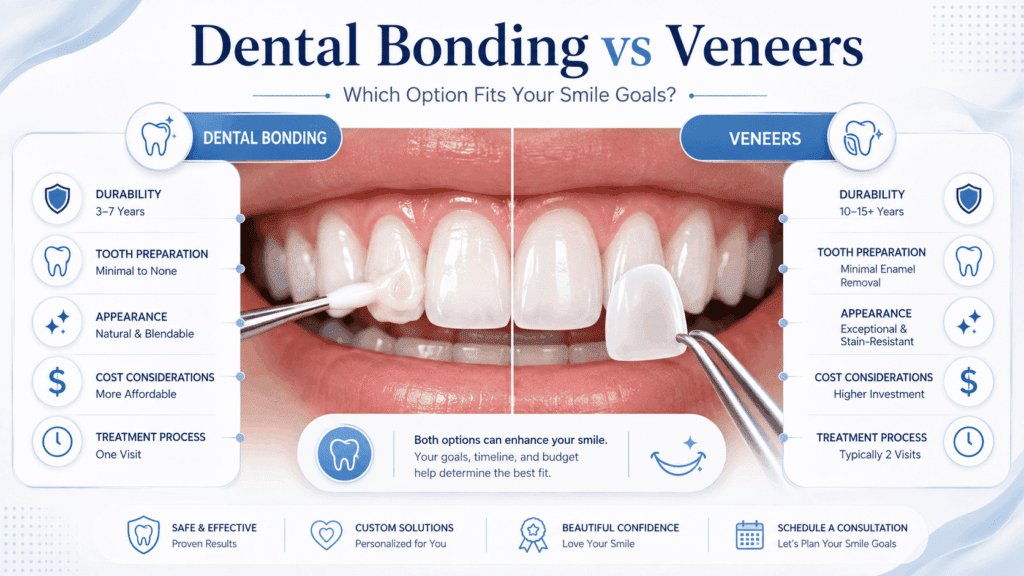
Many people considering a smile makeover end up deciding between dental bonding and veneers. Both can improve chipped, worn, discolored, or uneven teeth, but they aren’t interchangeable. They differ in appearance, durability, tooth preparation, cost, and the types of cosmetic concerns they tend to address best.
Understanding those differences can help you have a more informed conversation with your dentist about which option fits your smile goals.
What Is Dental Bonding?
Dental bonding uses composite resin, a tooth-colored material also used for certain fillings, that a dentist applies directly to the tooth. The dentist shapes the resin by hand and hardens it with a curing light, often completing the treatment in a single visit.
Bonding is generally considered a minimally invasive option because it typically requires little to no removal of existing enamel. Dentists commonly use it to improve the appearance of chipped teeth, small gaps, minor shape concerns, and some stains that whitening may not fully address.
What Are Dental Veneers?
Veneers are thin, custom-made shells that a dentist bonds to the front surface of a tooth to improve its appearance. They are typically made from porcelain or composite resin, and each material comes with different benefits and considerations.
Porcelain veneers generally offer greater durability and stain resistance, while composite veneers often cost less and may require fewer appointments. Our practical guide to porcelain veneers and our overview of composite veneers explain these options in more detail.
To place veneers, a dentist may need to remove a small amount of enamel so the veneer fits properly and blends naturally with the surrounding teeth. Because this process can involve changes to the tooth structure, dentists generally consider veneers a long-term cosmetic treatment rather than a reversible option. Veneers can address several cosmetic concerns, including tooth shape, size, and color, depending on the patient’s needs.
Dental Bonding vs Veneers: Key Differences
The table below summarizes how bonding and veneers typically compare. Actual results vary by patient, material, and clinical circumstances.
Factor
Dental Bonding
Veneers
Material
Tooth-colored composite resin
Porcelain or composite shells
Appearance
Natural-looking, though shade and shine may differ slightly from enamel over time
Highly natural-looking, particularly with porcelain; often used for more uniform results
Tooth preparation
Minimal to none; little enamel removed
Typically requires removing a thin layer of enamel
Durability
Generally less durable; more prone to chipping under heavy bite forces
Generally more durable, especially porcelain, though not indestructible
Stain resistance
More prone to staining over time, particularly composite
Porcelain typically resists stains well; composite veneers stain more easily
Longevity
Often several years, commonly cited around 3 to 10 years depending on care and habits
Often cited in the 10 to 20 year range with proper care, depending on material
Repairability
Usually simple to repair or touch up in one visit
Repairs are more involved and may require replacing the veneer
Cost
Generally lower upfront cost per tooth
Generally higher upfront cost, particularly for porcelain
Treatment time
Often completed in a single visit
Typically requires two or more visits for preparation and placement
Best uses
Minor chips, small gaps, small shape corrections
Multiple cosmetic concerns, larger smile makeovers, more significant discoloration
Neither option is universally better. Each has situations where it tends to make more sense, which is part of why an individual evaluation matters more than a general rule.
When Dental Bonding May Be the Better Choice
Bonding is often considered a reasonable starting point for minor chips, small gaps, or small corrections to a tooth’s shape. It tends to appeal to younger patients or anyone who prefers a more conservative treatment before committing to something more permanent.
Cost is also a factor for many patients, since bonding generally costs less upfront per tooth than veneers. That said, whether bonding is appropriate for a specific tooth still depends on a clinical evaluation, including bite forces and the extent of the cosmetic concern.
When Veneers May Be the Better Choice
Dentists may consider veneers when patients have multiple cosmetic concerns, are planning a broader smile makeover, or have discoloration that does not respond well to whitening. Veneers may also be an option for teeth with visible wear when a patient wants a more uniform cosmetic result. The best approach depends on the condition of the teeth, the patient’s goals, and what a dentist finds during an evaluation.
For patients weighing a broader transformation, our Woodland Hills veneers page outlines what that process generally looks like from consultation through placement.
Pros and Cons of Dental Bonding
Bonding tends to be less expensive, faster to complete, and more conservative in terms of tooth structure, since it generally preserves most of the natural tooth. It can typically be adjusted or touched up in a single visit if something chips or needs refining.
On the other hand, composite resin is generally less durable than porcelain and can be more prone to staining or chipping over time, particularly for patients who clench, grind, or bite their nails. It may also not hold up as well under heavy bite forces without regular maintenance.
Pros and Cons of Veneers
Veneers, especially porcelain, tend to offer strong durability and stain resistance, along with a more uniform, controlled cosmetic result across several teeth at once. Many patients find the appearance closely resembles natural enamel.
The tradeoffs often include a higher upfront cost, a treatment process that may involve permanent changes to the tooth structure, and more complex repairs if a veneer becomes damaged. In some cases, replacing the veneer may be the recommended option rather than making a simple repair. Veneers also require ongoing care, and patients should understand that they may need replacement in the future.
How Long Do Bonding and Veneers Last?
Bonding is often cited in the range of roughly three to ten years, while porcelain veneers are more commonly cited in the ten to twenty year range. These figures are general references rather than guarantees, and actual results vary widely based on oral hygiene, diet, grinding or clenching habits, bite forces, and how consistently a patient keeps up with maintenance and dental visits.
According to the American Dental Association, certain habits, like biting fingernails, chewing on hard objects, or frequent exposure to staining foods and drinks, can affect how well a veneer holds up over time. The same general principle applies to bonded teeth.
Can Bonding Be Replaced With Veneers Later?
Some patients choose bonding first because it offers a more conservative way to improve their smile. If their goals change later, or if the tooth needs a different type of correction, they can discuss whether veneers may be an appropriate option. The right approach depends on the condition of the tooth, the reason bonding was originally chosen, and the patient’s overall goals. A dentist can evaluate whether a tooth with existing bonding may be suitable for veneers in the future.
How to Decide Which Option Is Right for You
Dentists typically weigh several factors together rather than looking at cost or appearance alone. This usually includes your smile goals, the current condition of the tooth structure, your bite, habits like grinding or clenching, budget, and overall oral health.
Because these factors interact, the right option for one patient may not be the right one for another, even if the cosmetic concern looks similar on the surface. That’s part of why a personalized evaluation tends to lead to a more predictable outcome than choosing based on general information alone.
Choosing a Cosmetic Dentist in Woodland Hills
Dr. Pearl Zadeh works with Woodland Hills patients considering both dental bonding and veneers, helping them choose an option based on their individual smile goals rather than a one-size-fits-all approach. She discusses the benefits and limitations of each treatment, explains what patients can realistically expect, and recommends conservative options when they make sense. If you’re also considering whitening as an alternative or addition to cosmetic treatment, our guide on veneers vs teeth whitening covers how these options compare.
For patients specifically comparing veneer materials, porcelain vs composite veneers covers that decision in more depth. You can also learn more about cosmetic dentistry with Dr. Pearl Zadeh in Woodland Hills and the range of options available beyond bonding and veneers.
Schedule a Cosmetic Consultation With Dr. Pearl Zadeh
Choosing between dental bonding vs veneers usually comes down to your specific goals, tooth structure, and budget, not a one-size-fits-all answer. The most reliable way to figure out which fits your smile is a personalized evaluation rather than assuming one option is right before your teeth are actually examined.
Dr. Pearl Zadeh and her Woodland Hills team can walk you through both options, explain realistic expectations for each, and recommend a conservative starting point where appropriate.
Call (818) 716-6722 or click the button below to schedule your cosmetic consultation online.
Generally, yes. Bonding typically costs less per tooth upfront than veneers, particularly porcelain. Actual pricing depends on the number of teeth involved and the complexity of the case.
2. Does dental bonding look as natural as veneers?
Dental bonding can create a natural-looking improvement, especially for smaller cosmetic corrections. However, composite resin may not replicate the shine and translucency of natural enamel as closely as porcelain, particularly over time. Many patients achieve satisfying results with bonding when it matches their specific needs and expectations.
3. Which lasts longer, bonding or veneers?
Porcelain veneers generally last longer than dental bonding. Dental bonding often lasts around 3 to 10 years, while porcelain veneers commonly last 10 to 20 years or longer with good care. However, lifespan varies based on factors such as oral hygiene, bite habits, and everyday wear, so your dentist can give you a more personalized expectation.
4. Do veneers damage teeth?
Placing veneers typically involves removing a thin layer of enamel, which makes the process not considered reversible. When performed appropriately, this is a standard part of the process rather than damage, though it’s a permanent change worth understanding beforehand.
5. Is bonding reversible?
Dentists often describe bonding as a minimally invasive treatment because it usually requires little to no enamel removal. However, it isn’t always fully reversible in every case. Your dentist can explain what applies to your specific tooth.
In the past decade there has been a dramatic interest in cosmetic dentistry. We all realize that having a healthy, bright, beautiful smile enhances our appearance and allows us to smile with confidence. Thanks to the advances in modern cosmetic dentistry, we are able to improve our teeth and smiles with quick, painless and surprisingly affordable treatments.
What can cosmetic dental treatments do?
Change the size, shape, and alignment of certain teeth.
Fill in unattractive spaces between teeth.
Improve or correct bites.
Lighten or brighten the color of teeth.
Repair decayed, broken, cracked, or chipped teeth.
Replace missing teeth.
Replace old, unattractive dental treatments.
Remember, your smile speaks before you even say a word!
Veneers are one of the most popular cosmetic dentistry treatments available, thanks to their ability to change the appearance of your smile quickly and effectively. If you have minor cracks and chips on your teeth, discoloration, or minor shape or spacing issues, dental veneers will cover those problems and give you an aesthetically pleasing smile. As with any kind of dental treatment, if you are considering veneers, you probably are wondering how long they will last. Here is what you need to know.
Veneers 101
Veneers are thin, wafer-like shells that are bonded to the front of your teeth. They are made of porcelain, and are custom-designed to match the shape and shade you desire. Your dentist will work with you to create your veneers so that they address the concerns you have with your teeth while blending seamlessly with your natural teeth. Your dentist may recommend veneers to correct misshapen or worn teeth, crooked or widely spaced teeth, and severe discoloration that does not respond to whitening treatments. Veneers can also be used to create a more uniform smile if your teeth are noticeably different in size.
It usually takes two visits to get veneers. During the first visit, your dentist will remove a small amount of tooth enamel to make room for the veneers. He or she will make impressions of your mouth so that your veneers can be custom-sized. Your dentist will also help you choose the color of your veneers during this visit. At your second appointment, your veneers will be bonded to your teeth after any necessary adjustments are made.
The Longevity of Dental Veneers
There are many factors that impact the longevity of veneers, including how you care for them and your overall oral health. Typically, veneers last for five to 10 years, though many people are able to get many more years out of them. Following your dentist’s care plan will dramatically increase the lifespan of your veneers.
To care for your veneers, maintain a high-quality oral hygiene routine, including brushing at least twice per day with a soft-bristled toothbrush and flossing at least once daily. Visit your dentist at least twice per year for a professional cleaning and check-up. If you grind your teeth, talk to your dentist about using a mouthguard to protect your veneers.
Could veneers give you the smile you’ve always wanted? Find out if you’re a good candidate for dental veneers by scheduling a consultation with Pearl Zadeh, DDS.