Dazzle With The Shade Of Your Teeth This Christmas!
Pearl Zadeh DDSDentistry
Are you thinking about whitening your teeth to make your smile look better this Christmas? Food, drinks, smoking, and getting older are all things that can make your teeth look dull and dirty. Getting your teeth whitened can make you look younger and give you a beautiful smile.
When it comes to whitening our teeth, our dentist can give us different professional options, ranging from whitening at home to getting results right away at the dentist’s office. Let’s discuss these choices to determine which is best for you.
Opalescence Whitening Tray On-the-Go
Opalescence Go is a professional alternative to over-the-counter whiteners like Crest Whitestrips that you can use at home. This product can be used as soon as you take it out of the box. They are sleek and comfortable and come in a clear tray that is easy to hide. This means that they can fit any smile. For the best results, you would wear the tray for 15 to 20 minutes for 5 to 10 days.
Professional Tooth Whitening With Whitening Gel
The whitening gel can give professional results when used with trays that fit the shape of your teeth and gums. Carbamide peroxide and hydrogen peroxide are often used to make teeth whiter, and they can easily get into the hard tissues of the teeth.
Teeth Whitening In The Office
This is a great choice for people who want to see results immediately and get a head start on their journey to whiter teeth. It’s perfect for people who have a big event coming up and want to brighten their smile. With teeth whitening products, your dentist will whiten your teeth in the office using a special gel with a special ingredient that makes your teeth whiter.
In-office whitening is done safely and painlessly with a strong gel that shows results immediately. This differs from whitening systems you can use at home, which use low doses of whitening agents. Your dentist will choose two products to use at home as touch-ups after your treatment.
Advantages Of Professional Teeth Whitening
There aren’t any bad things about getting your teeth whiter. You can’t go wrong by making your teeth look better. So, here are some of the benefits of making your smile brighter:
Through Whitening
Professional teeth whitening is significant because you can count on it. Dentists are experts in teeth, after all, so they know exactly what to do. On the other hand, whitening your teeth at home won’t work either. What’s the point of waiting for a product to work for weeks if your teeth look the same when you’re done?
Treatments That Work
When you buy a teeth-whitening kit in a store, you need to know precisely what you’re getting or if it’s good for your teeth. In-office teeth whitening is more reliable and gives you peace of mind that your teeth are in good hands. This is why you should have a professional whiten your teeth.
You can’t take the chance that the wrong product will hurt your smile even more. It’s better to take the safe and effective path you already know.
An Increase In Confidence
A new smile can make a huge difference in how you feel about yourself. Your teeth will look great, and you won’t have to worry about your appearance.
You can’t hide your teeth, and until you get them whitened, you have to deal with the fact that they aren’t as white as they could be. The good news is that you don’t have to be afraid to talk or smile because there is something you can do about it.
Quicker Results
On the other hand, professional teeth whitening can change your whole smile in just one hour. You won’t have to wait weeks to see a difference in how your teeth look, which is excellent. Things you buy in a store might be cheaper, but you get what you pay for.
Not only that, but you could wait a long time to get whiter teeth and still get average results. When you whiten your teeth at the dentist’s office, you can be sure you’ll be happy with the results.
Enhanced Appearance
Your whole look can change when you get a new smile. It can make you look younger and even make wrinkles less noticeable. Why wouldn’t you want to whiten your teeth and look better if you could?
People see your teeth first when they look at you because they are part of your face. So, when you whiten your teeth, you not only change your style but also improve your whole look.
The Bottom Line
Your dentist is there to tell you what to do, keep an eye on your progress, and help you with any problems. Ask your dentist about these three options for Opalescence to determine which is best for you. Now is the time to get that white, beautiful smile you’ve always wanted. You can visit a cosmetic dentist for the best cosmetic dentistry-related treatment nearby.
1. How Can I Get My Teeth To Stay White?
Tired of using whitening strips or going to the dentist to have your teeth whitened? Then it would help if you thought about getting dental veneers. Dental veneers are a great way to whiten your teeth permanently, so you won’t have to use whitening strips or treatments again.
2. What Causes Teeth To Be So Yellow?
The most common things that cause teeth to change color are drinking coffee, tea, and wine. When these things get into the enamel of your teeth, they can make them change color over time. Smoking: One of the main reasons for yellow or brown teeth is smoking; stains from smoking can be hard to eliminate.
The Future is Now: The Use of AI Technology in a Dental Office
Pearl Zadeh DDSDentistry
The Future is Now: The Use of AI Technology in a Dental Office
Imagine walking into a dental office where your diagnosis is faster, your treatment plan more accurate, and your overall experience smoother, all thanks to artificial intelligence (AI). This isn’t science fiction. AI technology is already transforming dental practices across the globe.
From improving diagnostic precision to streamlining administrative tasks, AI is helping dental professionals deliver better care, faster and more efficiently. In this article, we’ll explore how AI is being used in dental offices today, what benefits it offers patients and practitioners alike, and what the future might hold.
How Is AI Used in a Dental Office?
Artificial intelligence in dentistry isn’t about replacing dentists, it’s about enhancing their capabilities. Here are the main ways AI is being used in modern dental offices:
1. AI in Dental Diagnostics
One of the most powerful applications of AI is in diagnostic imaging. Dental AI software can analyze X-rays, 3D scans, and intraoral images with remarkable accuracy.
What it does:
Detects cavities (caries), fractures, bone loss, and infections
Flags abnormalities that may be missed by the human eye
Compares historical data for changes over time
Example: AI platforms like Overjet and Pearl are FDA-approved tools that analyze dental radiographs in real time, offering insights within seconds. This helps dentists confirm their findings or spot issues earlier.
Benefits:
Faster and more accurate diagnoses
Reduced human error
Enhanced patient trust through visual, AI-backed reports
2. Treatment Planning and Case Presentation
AI can support dentists in creating highly personalized treatment plans.
How it helps:
Maps out ideal treatment sequences based on patient history and current condition
Suggests options for restorative or cosmetic procedures
Creates 3D simulations to show expected outcomes
This is especially useful in orthodontics, where AI-driven platforms like Invisalign’s ClinCheck software use predictive modeling to forecast tooth movement and treatment length.
3. AI-Powered Scheduling and Office Management
AI isn’t just clinical, it’s also transforming the business side of dentistry.
Smart scheduling tools use machine learning to:
Optimize appointment slots
Reduce no-shows through predictive analytics
Suggest ideal follow-up times for specific procedures
Revenue cycle management tools powered by AI can also:
Verify insurance coverage in real time
Automate billing and coding
Reduce administrative workload
4. Virtual Assistants and Patient Communication
Think of AI chatbots or voice assistants like Siri or Alexa, but tailored for dentistry.
AI can:
Answer patient questions 24/7
Handle appointment requests or reminders
Provide post-op care instructions
Collect feedback automatically
This improves patient experience while reducing the time staff spend on routine calls and emails.
5. Clinical Decision Support
AI tools can assist clinicians with evidence-based decision-making.
For example, AI systems can:
Suggest alternative treatments based on success rates
Alert clinicians to drug interactions or contraindications
Analyze large datasets from similar cases to guide decisions
This kind of decision intelligence can be particularly valuable for complex or rare cases.
Benefits of Using AI in a Dental Practice
Implementing AI technology in your dental office can lead to measurable improvements in both patient outcomes and practice efficiency.
For Patients:
Faster, more accurate diagnoses
Customized treatment plans
Improved communication and transparency
Reduced wait times
For Dental Professionals:
Enhanced diagnostic support
Streamlined workflows
Less time on admin, more time with patients
Data-driven decisions for better care
Is AI Replacing Dentists?
This is a common concern, but the answer is no.
AI is not here to take over. It’s here to assist. While AI can process data faster and more consistently than a human, it lacks the nuanced understanding, empathy, and manual skills that only a trained dental professional can provide.
Think of AI as a powerful tool, not a replacement. It enhances clinical judgment, improves operational efficiency, and allows dental professionals to focus more on patient care.
What Does It Take to Integrate AI in a Dental Office?
Implementing AI doesn’t mean overhauling your entire practice overnight. Many AI solutions are designed to integrate with existing dental software, such as:
Practice management systems (Dentrix, Eaglesoft, Open Dental)
Imaging software
Patient communication platforms
Key steps include:
Assess your needs Identify where AI could offer the most impact, diagnostics, scheduling, billing?
Choose the right tools Look for FDA-cleared AI software with proven results and strong customer support.
Train your team Ensure your staff understands how to use the tools and communicate the benefits to patients.
Educate your patients Patients may be intrigued, or skeptical. Explain how AI enhances their care and privacy is protected.
What’s Next? The Future of AI in Dentistry
As AI continues to evolve, we can expect even more advanced applications:
Predictive analytics for patient outcomes and disease progression
Robotics integration for surgical assistance
Real-time chairside decision-making tools
Voice-command charting and documentation
AI will also play a critical role in teledentistry, making remote consultations more robust and accessible.
Conclusion: Embracing AI for a Smarter Dental Practice
The use of AI technology in a dental office isn’t just a trend, it’s a strategic move toward better patient care and smarter business operations. From enhancing diagnostics to automating office tasks, AI allows dental professionals to work more efficiently and deliver a superior patient experience.
At Dr. Pearl Zadeh DDS, we’re committed to staying ahead of the curve. We’ve integrated AI-powered tools to ensure every patient receives accurate, timely, and personalized care.
Ready to see the future of dentistry in action? Contact us today to schedule your appointment or request a demo of our AI-enhanced services. Let’s redefine your dental experience, together.
In the past decade there has been a dramatic interest in cosmetic dentistry. We all realize that having a healthy, bright, beautiful smile enhances our appearance and allows us to smile with confidence. Thanks to the advances in modern cosmetic dentistry, we are able to improve our teeth and smiles with quick, painless and surprisingly affordable treatments.
What can cosmetic dental treatments do?
Change the size, shape, and alignment of certain teeth.
Fill in unattractive spaces between teeth.
Improve or correct bites.
Lighten or brighten the color of teeth.
Repair decayed, broken, cracked, or chipped teeth.
Replace missing teeth.
Replace old, unattractive dental treatments.
Remember, your smile speaks before you even say a word!
It’s natural to be self-conscious when you smile and desire to hide crooked, damaged, discolored, or missing teeth. Allow a smile to bring happiness and beauty to the rest of the world. Dr. Pearl, a Moorpark cosmetic dentist, can help you achieve a healthy, bright smile.
Uneven teeth, gaps, discolouration, misalignment, and chipped or broken teeth are just a few of the cosmetic issues that porcelain veneers may quickly address. Veneers are a fantastic way to fix a smile that isn’t quite right.
In today’s world, dental replacements are a tried-and-true method of replacing missing teeth. In Moorpark and the surrounding areas, Dr. Pearl is an expert in the placement, care, and restoration of dental crown replacements.
We’re excited to help you gain a better understanding of your dental health.
During your appointment, Dr. Pearl will do a comprehensive examination and discuss the results with you.
A dental consultation entails a comprehensive examination of all areas of your dental and oral health, not only if you have visible gum disease or tooth damage.
Dr. Pearl will evaluate the following: The status of the restorations at the moment (crowns, fillings) Missing teeth, signs of deterioration the position of the teeth Each tooth is held in place by the gums and bone. Gums, tongue, and throat are all affected (checking for tumors, cysts) The muscles and joint of the jaw Observed differences between visits
Dr. Pearl will ask you questions about your overall health and any medical concerns you may have throughout the session. This allows her to tailor treatment for specific illnesses such as diabetes. Cosmetic dentistry, she believes, is essential to the success of her profession as well as the health of her patients.
Dealing with dental treatment phobia
Listening to patients and learning about their problems and fears is an important aspect of the session, especially for new patients. Patients who are afraid of going to the dentist can be certain that their pain management, sedation, and treatment speed needs will be addressed.
If residents of Moorpark and the surrounding areas require a sympathetic dentist who understands their concern, they can turn to Dr. Pearl. She’s been practicing holistic dentistry for decades and understands the value of this component of dental care in reducing dental anxiety and aversion.
Patients must feel at ease and confident in the manner in which their dental requirements will be fulfilled, according to her.
As a result, people will not delay seeing the dentist until the problem has worsened.
According to our caring dentist and staff, the most advantageous patient is one who is well-informed.
Dr. Pearl will take the time to explain everything to you and address any concerns or questions you may have regarding a surgery.
Dr. Pearl can assist you with teeth whitening, oral hygiene, crown replacements, gum disease, veneers, cosmetic dentistry, and other dental procedures.
She believes in listening carefully to her patients and learning about their worries and objectives.
We are convinced that our clinic will provide you with everything you need in a compassionate, competent, and professional dental practice.
We’re confident that you’ll be able to find Moorpark family, emergency, and cosmetic dentistry right here.
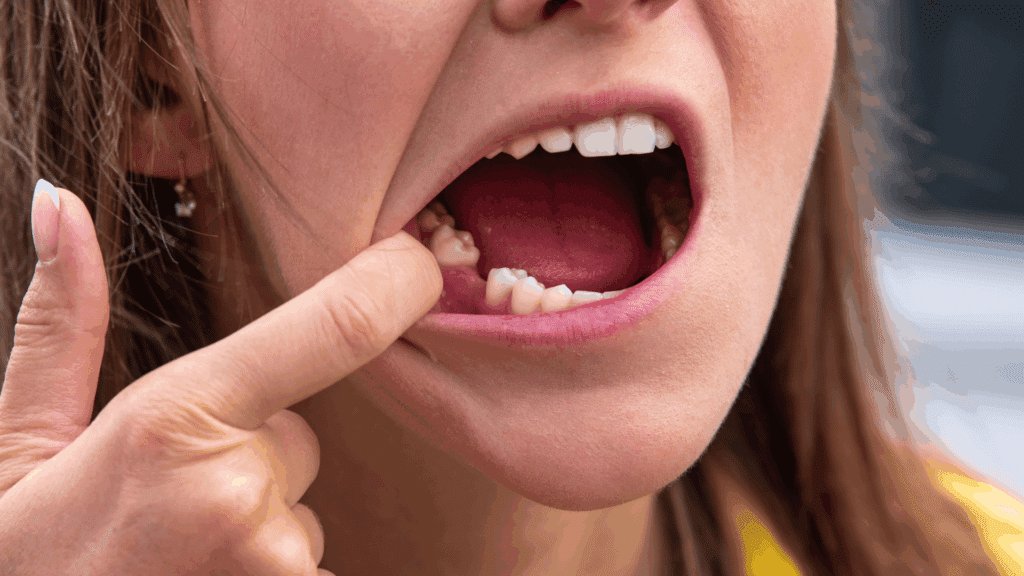
Many people think missing teeth are mainly a cosmetic issue. While appearance certainly matters, the bigger concern often involves what happens beneath the surface over time.
A missing tooth changes far more than your smile.
Once a tooth disappears, the surrounding teeth, jawbone, bite alignment, and chewing patterns begin adapting to that empty space. Unfortunately, those changes rarely improve oral health. In most cases, they gradually create additional dental problems that become harder and more expensive to treat later.
Some patients lose a tooth and feel fine for months or even years. However, the absence of immediate pain does not mean the bite remains stable.
Knowing how missing teeth affect your bite helps explain why dentists recommend replacing missing teeth sooner rather than later.
Your Bite Depends on Balance
Your bite works like a connected system.
Every tooth supports surrounding teeth and helps distribute chewing pressure evenly across the mouth. Upper and lower teeth also stabilize each other during biting and chewing.
When one tooth disappears, that balance changes immediately.
The remaining teeth must suddenly handle forces they were not designed to absorb alone. Over time, the mouth begins compensating for the missing space.
Those compensations often create long-term problems involving:
Tooth shifting
Bite misalignment
Jaw strain
Uneven tooth wear
Bone loss
Difficulty chewing
Even losing a single tooth can eventually affect the entire bite system.
Teeth Naturally Shift Into Empty Spaces
One of the most common consequences of tooth loss is tooth movement.
Teeth constantly experience small pressures from:
Chewing
Swallowing
Tongue movement
Jaw function
Normally, neighboring teeth stabilize each other. However, once a tooth goes missing, nearby teeth lose that support.
As a result, adjacent teeth may begin:
Tilting
Drifting
Rotating
Leaning into the gap
This shifting may happen slowly, which is why many patients do not notice it right away.
However, over time, even small movements can significantly alter bite alignment.
Opposing Teeth Can Over-Erupt
Missing teeth also affect the tooth directly above or below the empty space.
Normally, opposing teeth contact each other during chewing, which helps maintain proper positioning.
Without that contact, the opposing tooth may gradually move outward into the gap. Dentists call this supraeruption or over-eruption.
For example:
A missing lower molar may allow the upper molar above it to drift downward
A missing upper tooth may allow the lower tooth to rise upward
Over-erupted teeth can create several problems:
Bite interference
Tooth sensitivity
Gum exposure
Increased wear
Difficulty restoring the missing tooth later
This process often complicates future dental treatment because the bite no longer fits together properly.
Missing Teeth Change How You Chew
Most patients naturally avoid chewing on the side with the missing tooth.
At first, this may feel harmless. However, uneven chewing patterns place extra pressure on certain teeth and jaw muscles.
Over time, this imbalance can contribute to:
Excessive tooth wear
Jaw fatigue
Muscle tension
Bite instability
Cracked teeth
Patients sometimes develop habits they do not even realize they have. For example, consistently chewing on one side may overload specific teeth for years before symptoms appear.
The longer the imbalance continues, the more stress the bite system absorbs.
Bite Changes Can Lead to TMJ Problems
Your temporomandibular joints (TMJ) help coordinate jaw movement during speaking, chewing, and swallowing.
When missing teeth alter bite alignment, the jaw joints may also begin functioning differently.
This does not mean every missing tooth causes TMJ disorder. However, long-term bite instability can increase strain on the jaw muscles and joints.
Some patients eventually notice:
Jaw clicking
Jaw pain
Facial tension
Headaches
Difficulty chewing
Limited jaw movement
The risk becomes higher when multiple teeth are missing or when bite collapse progresses over time.
Bone Loss Begins After Tooth Loss
One of the most important changes happens below the gums.
Tooth roots stimulate the jawbone whenever you chew. That stimulation helps maintain healthy bone density.
Once a tooth disappears, the jawbone in that area no longer receives normal stimulation.
As a result, the body begins reabsorbing bone tissue gradually.
This process can lead to:
Shrinking jawbone volume
Changes in facial structure
Reduced support for neighboring teeth
Difficulty placing dental implants later
Bone loss often progresses silently. Many patients do not realize how much bone disappeared until they seek tooth replacement years later.
Missing Teeth Can Accelerate Tooth Wear
An uneven bite changes how chewing pressure spreads across the mouth.
Certain teeth may suddenly absorb more force than before.
This increased pressure can lead to:
Flattened enamel
Cracked teeth
Chipped restorations
Tooth sensitivity
Fractures
Patients who grind or clench their teeth often experience even faster wear after tooth loss because the bite no longer distributes forces evenly.
Over time, the bite may gradually collapse further as more teeth become damaged.
Speech Can Change Over Time
Teeth play an important role in speech clarity, especially front teeth.
Missing teeth may affect pronunciation of sounds involving:
“S”
“F”
“T”
“V”
Some patients adapt quickly, while others develop speech difficulties or altered tongue positioning.
As teeth shift further over time, speech changes may become more noticeable.
Facial Structure May Gradually Change
Many patients do not realize missing teeth can eventually affect facial appearance.
When multiple teeth remain missing for years, bone loss and bite collapse may contribute to:
Sunken facial appearance
Reduced lip support
Thinner facial profile
Premature facial aging
Shortened lower face height
These changes tend to develop gradually, especially when several back teeth are missing.
The effect often becomes more visible after long-term untreated tooth loss.
Missing Back Teeth Still Matter
Some patients ignore missing molars because they are less visible when smiling.
However, back teeth handle most chewing pressure.
Losing molars can significantly affect:
Bite stability
Chewing efficiency
Jaw alignment
Pressure distribution
Additionally, missing back teeth often increase stress on the front teeth, which are not designed for heavy chewing forces.
Over time, front teeth may begin wearing down or shifting as compensation occurs.
Replacing Missing Teeth Helps Protect the Bite
Replacing missing teeth helps restore balance within the mouth before more changes occur.
Among these options, dental implants provide one major advantage because they stimulate the jawbone similarly to natural tooth roots.
That helps reduce ongoing bone loss.
Why Early Treatment Matters
The longer a tooth remains missing, the more the bite changes.
Early tooth replacement often allows for:
Simpler treatment
Better bite preservation
Less tooth shifting
Reduced bone loss
Lower risk of future complications
Waiting several years may require additional procedures such as:
Orthodontics
Bone grafting
Bite reconstruction
Gum treatment
In other words, delaying treatment usually increases complexity.
Some Bite Changes Happen Slowly and Silently
One reason patients delay treatment is because the changes often occur gradually.
You may not notice:
Slight tooth drifting
Minor bite shifts
Early bone loss
Uneven pressure changes
However, dentists can often identify these problems early during routine exams and X-rays.
Addressing missing teeth before major bite collapse develops usually leads to better long-term outcomes.
Restore Your Bite Before More Problems Develop
Missing teeth affect much more than appearance alone. Over time, they can change how your teeth fit together, how your jaw functions, and how pressure spreads throughout your bite.
As teeth shift, bone loss develops, and chewing patterns change, the risk of additional dental problems continues increasing. What begins as one missing tooth can eventually affect the stability of the entire mouth.
Replacing missing teeth early helps protect your bite, preserve jawbone health, and reduce the risk of future complications.
If you are missing one or more teeth and want to explore your treatment options, call (818) 716-6722 or click the button below to schedule your consultation online.
1. How quickly do teeth start shifting after a tooth is lost?
Teeth can begin shifting within a few weeks to months after a tooth is lost. The speed depends on bite pressure, location of the missing tooth, and overall dental health. In many cases, small movements happen gradually, so patients do not notice them right away.
2. What happens if I don’t replace a missing tooth?
If you don’t replace a missing tooth, nearby teeth may drift into the empty space, the opposing tooth may over-erupt, and your bite may slowly become misaligned. Over time, this can also lead to bone loss, uneven chewing, and increased stress on other teeth.
3. Can one missing tooth really affect my entire bite?
Yes. Even a single missing tooth can disrupt bite balance. Since every tooth works as part of a system, the loss of one tooth can change how pressure distributes across the mouth and lead to shifting, wear, and long-term alignment changes.
4. Is bone loss after tooth loss permanent?
Bone loss in the jaw can become permanent if it is not treated early. Once the jawbone starts shrinking due to lack of stimulation, it may continue to deteriorate over time. Dental implants can help preserve bone by providing stimulation similar to a natural tooth root.
5. What is the best way to replace a missing tooth?
The best option depends on your situation. Dental implants are often preferred because they replace both the tooth and root, helping maintain bone health. Bridges and partial dentures may also be suitable depending on the number of missing teeth, bone condition, and bite alignment.
In the past decade there has been a dramatic interest in cosmetic dentistry. We all realize that having a healthy, bright, beautiful smile enhances our appearance and allows us to smile with confidence. Thanks to the advances in modern cosmetic dentistry, we are able to improve our teeth and smiles with quick, painless and surprisingly affordable treatments.
What can cosmetic dental treatments do?
Change the size, shape, and alignment of certain teeth.
Fill in unattractive spaces between teeth.
Improve or correct bites.
Lighten or brighten the color of teeth.
Repair decayed, broken, cracked, or chipped teeth.
Replace missing teeth.
Replace old, unattractive dental treatments.
Remember, your smile speaks before you even say a word!
Veneers are one of the most popular cosmetic dentistry treatments available, thanks to their ability to change the appearance of your smile quickly and effectively. If you have minor cracks and chips on your teeth, discoloration, or minor shape or spacing issues, dental veneers will cover those problems and give you an aesthetically pleasing smile. As with any kind of dental treatment, if you are considering veneers, you probably are wondering how long they will last. Here is what you need to know.
Veneers 101
Veneers are thin, wafer-like shells that are bonded to the front of your teeth. They are made of porcelain, and are custom-designed to match the shape and shade you desire. Your dentist will work with you to create your veneers so that they address the concerns you have with your teeth while blending seamlessly with your natural teeth. Your dentist may recommend veneers to correct misshapen or worn teeth, crooked or widely spaced teeth, and severe discoloration that does not respond to whitening treatments. Veneers can also be used to create a more uniform smile if your teeth are noticeably different in size.
It usually takes two visits to get veneers. During the first visit, your dentist will remove a small amount of tooth enamel to make room for the veneers. He or she will make impressions of your mouth so that your veneers can be custom-sized. Your dentist will also help you choose the color of your veneers during this visit. At your second appointment, your veneers will be bonded to your teeth after any necessary adjustments are made.
The Longevity of Dental Veneers
There are many factors that impact the longevity of veneers, including how you care for them and your overall oral health. Typically, veneers last for five to 10 years, though many people are able to get many more years out of them. Following your dentist’s care plan will dramatically increase the lifespan of your veneers.
To care for your veneers, maintain a high-quality oral hygiene routine, including brushing at least twice per day with a soft-bristled toothbrush and flossing at least once daily. Visit your dentist at least twice per year for a professional cleaning and check-up. If you grind your teeth, talk to your dentist about using a mouthguard to protect your veneers.
Could veneers give you the smile you’ve always wanted? Find out if you’re a good candidate for dental veneers by scheduling a consultation with Pearl Zadeh, DDS.
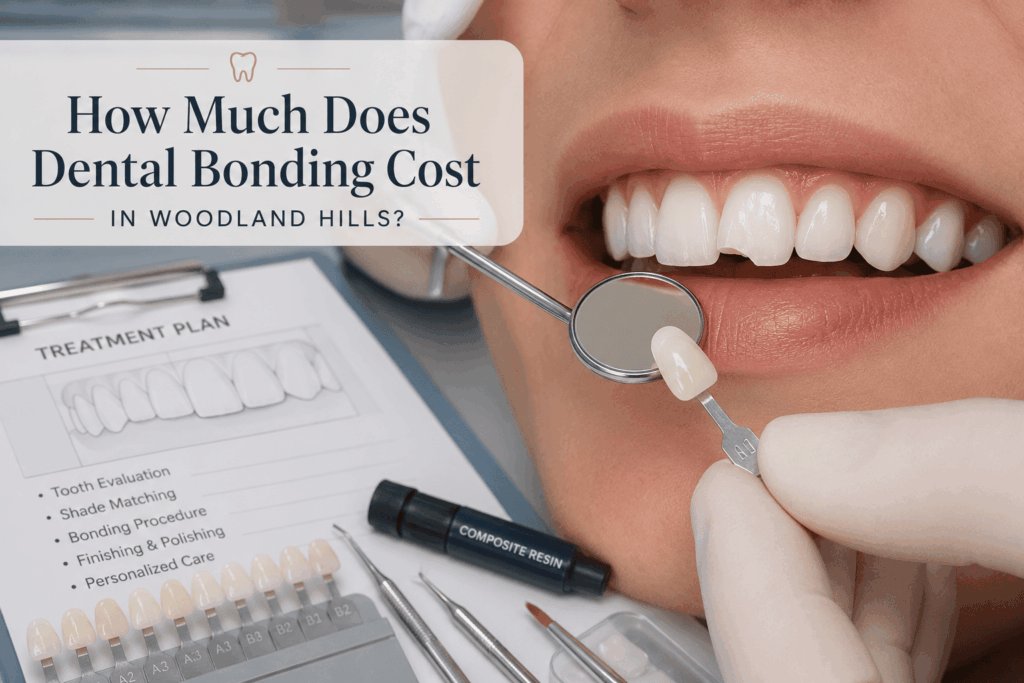
How Much Does Dental Bonding Cost in Woodland Hills?
Pearl Zadeh DDSCosmetic Dentistry
You want to repair a chipped tooth, close a small gap, or improve the appearance of one tooth that has bothered you for years. Naturally, one of your first questions is, “How much will it cost?”
The answer can feel frustrating. One website gives a low figure, another quotes something much higher, and neither explains why.
That’s because dental bonding does not have a single standard price. Every treatment is customised. The final cost depends on your teeth, your cosmetic goals, and the amount of work needed to create a natural-looking result. A personalised examination is the only reliable way to understand what your treatment is likely to involve.
Why There Isn’t a Fixed Price for Dental Bonding
Dental bonding is very different from a routine cleaning or examination. Dentists do not perform the same procedure on every patient.
Every bonded restoration is designed around the individual tooth. Your dentist considers its shape, size, colour, position, bite, and the cosmetic result you want to achieve before recommending treatment.
Two patients may both ask about repairing a chipped front tooth. One may need a simple edge repair that takes very little reshaping. The other may need the tooth rebuilt, colour matched, and blended with neighbouring teeth. Although both treatments involve bonding, they require very different amounts of planning and clinical work.
This is why responsible cosmetic dentists avoid giving exact prices before examining your smile.
Why You Cannot Compare Your Cost With Someone Else’s
Many patients ask friends what they paid or search online for average prices. While understandable, those comparisons rarely provide useful information.
Your friend’s treatment reflects their teeth, not yours.
Even two chips that appear similar can require different treatment. One may involve only enamel, while another extends deeper into the tooth. One patient may have excellent enamel for bonding, while another may have older restorations that change the treatment plan.
The same principle applies to cosmetic goals. One patient simply wants to repair damage. Another wants to improve tooth shape, symmetry, and colour at the same time.
Although both patients receive dental bonding, they are paying for different procedures.
What Actually Affects the Cost of Dental Bonding
Several factors influence the final treatment plan. Understanding them helps explain why dental bonding does not have a fixed fee.
Number of Teeth Being Treated
Treating one tooth is naturally simpler than treating several.
Each bonded tooth requires individual shade selection, careful shaping, finishing, and polishing. As more teeth become involved, the amount of planning and clinical time increases.
Not every bonding procedure requires the same amount of work.
Repairing a tiny corner chip often involves a small amount of composite resin and minimal reshaping. Rebuilding a larger section of a tooth requires additional layering, sculpting, and polishing to recreate its natural contours.
Larger corrections also demand greater precision because the repaired tooth must continue to look balanced with the surrounding teeth.
Repairing Existing Bonding or Starting Again
Older bonding does not always require complete replacement.
Sometimes your dentist can repair a small chip or refresh part of the restoration without removing the existing composite. In other situations, replacing the bonding creates a stronger and more predictable result.
Others require careful artistic shaping to recreate natural curves, edges, and proportions.
For example, rebuilding a front tooth that catches the light every time you smile often requires far more precision than repairing a small area that rarely shows.
That additional detail requires more time, which naturally influences treatment complexity.
One of the biggest factors patients rarely think about is colour matching.
Natural teeth contain subtle variations in shade, translucency, and brightness. Composite resin must blend with those variations rather than appear as a single flat colour.
Some smiles are straightforward to match. Others require more careful shade selection and detailed finishing to make the bonding disappear into the surrounding teeth.
This attention to detail often determines whether bonding looks obvious or completely natural.
Additional Cosmetic Treatment
Bonding sometimes forms part of a larger cosmetic plan.
Some patients combine bonding with whitening. Others receive bonding on one tooth while improving neighbouring teeth with veneers or other cosmetic treatments.
When several procedures happen together, your dentist plans them as one coordinated treatment rather than several unrelated appointments.
Your Overall Smile Goals
Your expectations influence treatment planning just as much as your teeth.
Some patients simply want to repair a small chip. Others hope to improve symmetry, reshape several teeth, or refresh their entire smile.
Those goals affect the amount of planning, shaping, and finishing required.
Your dentist also considers your bite. If you grind or clench your teeth, additional planning may help protect the restoration over time. Similar considerations appear in our discussion of veneers for patients who grind their teeth, since bite forces influence many cosmetic treatments.
Why Preserving Natural Tooth Structure May Simplify Treatment
Dental bonding is considered a conservative cosmetic treatment because it usually adds material rather than removing significant tooth structure.
When a tooth has healthy enamel and a stable foundation, your dentist often has more flexibility when shaping and placing the composite resin. This can make the treatment process more straightforward.
However, teeth with larger areas of damage, previous restorations, or other concerns may require additional planning. Your dentist may need to consider how those factors affect the strength, appearance, and long-term stability of the restoration.
How Bonding Compares With Veneers From a Planning Perspective
Dental bonding and veneers can address similar cosmetic concerns, but they use different approaches.
Bonding usually requires less preparation, fewer appointments, and no laboratory fabrication. This often makes it a more conservative and accessible option for smaller cosmetic changes.
Veneers involve custom-made shells that cover the front surface of the tooth. They require additional planning, material selection, and fabrication, which typically increases the overall treatment investment.
Cost is only one part of the decision. Your dentist also considers your tooth structure, cosmetic goals, bite, and the type of result you want to achieve. Our comparison of bonding and veneers explains the differences between these options in more detail.
Does Insurance Cover Dental Bonding?
Insurance coverage for dental bonding depends largely on the reason for treatment.
Some plans may provide benefits when bonding repairs a damaged tooth, such as one affected by a chip or decay. However, many cosmetic procedures, such as changing the shape or appearance of healthy teeth, may not receive coverage.
The American Dental Association notes that dental benefits vary widely between insurance plans. Reviewing your policy or contacting your insurance provider is the best way to understand what your plan covers.
Why Online Price Estimates Rarely Apply to You
Online cost estimates often combine many different types of bonding cases into one general number.
A small repair on one front tooth is very different from replacing older bonding on several teeth. The amount of material needed, the time required, and the level of cosmetic detail can vary significantly between patients.
Other factors, including location, dentist experience, and case complexity, also influence treatment fees. A general online estimate cannot account for the details that make your situation unique.
Why a Consultation Matters More Than a Quick Number
A consultation gives your dentist the opportunity to examine your tooth, understand your goals, and determine what type of treatment makes sense.
During this evaluation, your dentist can assess the condition of your tooth, explain your options, and provide a more accurate estimate based on your specific needs.
Instead of relying on a general price found online, a personalised consultation gives you information that applies to your actual smile.
Choosing a Cosmetic Dentist in Woodland Hills
A transparent treatment plan starts with a detailed evaluation, not a rushed estimate.
Dr. Pearl Zadeh and her Woodland Hills team take the time to evaluate each patient’s teeth, discuss their goals, and explain why a specific treatment approach may be recommended. This helps patients understand the reasoning behind their treatment plan before making a decision.
Schedule a Consultation With Dr. Pearl Zadeh
The most accurate answer to what dental bonding will cost starts with your individual smile, not a general online estimate.
Dr. Pearl Zadeh and her Woodland Hills team can evaluate your tooth, discuss your goals, and create a personalised treatment plan with an estimate based on your specific situation.
Call (818) 716-6722 or click the button below to schedule your consultation online.
This article is for informational purposes only and is not a substitute for professional dental advice. Please schedule a consultation with Dr. Pearl Zadehto discuss your specific situation.
Frequently Asked Questions
1. How much does dental bonding cost?
Cost depends on your specific tooth, the extent of the correction, and your treatment goals. A consultation allows your dentist to evaluate your situation and provide a personalized estimate rather than a general figure.
2. Why do bonding prices vary so much online?
Online figures are typically broad averages that combine very different cases, from small touch-ups to full replacements. They rarely reflect what a specific patient’s treatment will actually involve.
3. Is bonding cheaper than veneers?
Generally, bonding involves less material and fewer visits than veneers, which often makes it a more conservative investment. Actual cost for either option depends on the specific treatment plan involved.
4. Does repairing bonding cost less than replacing it?
Often, yes, since a repair typically involves less material and time than removing old bonding and starting over. Your dentist can evaluate which approach fits your situation during a consultation.
5. Can I get an exact price without a consultation?
Not accurately. A meaningful estimate requires an evaluation of your specific tooth and goals, since bonding varies significantly from one patient’s case to another.
Why IAOMT Protocols Matter in Mercury Amalgam Removal
Pearl Zadeh DDSHolistic Dentistry
Many patients today ask about the safety of removing old silver fillings. These fillings, also called mercury amalgam fillings, contain a mix of metals including mercury. While they were once common, more people now choose to replace them with tooth-colored materials. Because mercury can be released as vapor during removal, the process must be handled with special care.
This is where IAOMT protocols play an important role. These guidelines help dentists remove mercury amalgam fillings in a safer way for both patients and dental staff.
What Are IAOMT Protocols?
IAOMT stands for the International Academy of Oral Medicine and Toxicology. It is an organization made up of dental, medical, and research professionals who focus on biocompatible and science-based dental care.
IAOMT protocols provide step-by-step safety guidelines for mercury amalgam removal. Their goal is to reduce exposure to mercury vapor and particles during the procedure. These standards are based on scientific research and are followed by dentists who receive specific training in safe removal techniques.
Why Mercury Amalgam Removal Requires Special Care
When a mercury filling is drilled or removed, heat and friction can release small amounts of mercury vapor and particles. Without protective measures, these can be inhaled or swallowed by the patient or dental team.
Standard filling removal methods do not always address this risk. That is why IAOMT protocols exist. They focus on controlling mercury exposure instead of simply removing the filling.
Key Safety Measures Used in IAOMT Mercury Amalgam Removal
Dentists who follow IAOMT protocols use several important steps to improve safety during mercury amalgam removal:
Protective barriers are placed over the patient’s face and clothing to prevent particles from contacting skin or eyes.
A dental dam isolates the tooth being treated so mercury debris does not enter the mouth or throat.
High-volume suction removes mercury particles and vapor as soon as they are released.
Cooling with water and air helps reduce heat and lowers the amount of mercury vapor produced.
Air filtration and ventilation systems clean the surrounding air during the procedure.
Alternative air sources, such as oxygen through a nasal cannula, allow patients to breathe clean air while the filling is removed.
These steps work together to create a safer treatment environment.
IAOMT protocols focus on limiting how much mercury the patient may inhale or swallow. They also help keep the dental room cleaner during the procedure. This careful approach supports both physical comfort and peace of mind.
Patients often feel more confident knowing their dentist follows established safety standards instead of using routine filling removal methods.
Benefits of Choosing an IAOMT-Trained Dentist
Choosing a dentist trained in IAOMT mercury amalgam removal offers several advantages:
Knowledge of safety-focused procedures
Use of specialized equipment for mercury control
A structured and careful treatment process
Clear communication about each step of removal
This approach allows the dentist to replace old metal fillings with modern tooth-colored materials in a controlled and responsible way.
Removable vs. Fixed Dentures: Key Differences You Should Know
Pearl Zadeh DDSRestorative
Choosing the right denture option can make a big difference in your comfort, confidence, and daily routine. Both removable and fixed dentures replace missing teeth and improve your ability to eat and speak. However, they work in very different ways.
Understanding how each option functions, how they feel, and what care they require can help you make a better decision before scheduling a consultation.
What Are Removable Dentures?
Removable dentures are dental appliances that you can take out for cleaning and sleeping. They come in both full and partial versions, depending on how many teeth are missing.
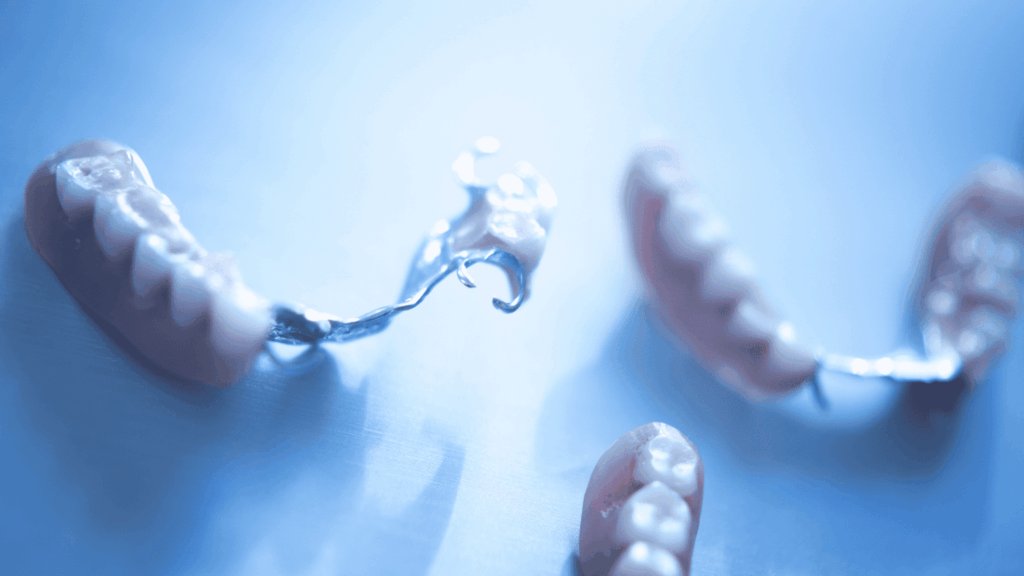
Removable partial dentures attach to your natural teeth using small clasps or connectors. They fill gaps while keeping your remaining teeth in place. Many patients choose this option because it does not require surgery and is easier to adjust over time.
These dentures help restore chewing and speech, but they may move slightly during use, especially in the beginning.
What Are Fixed Dentures?
Fixed dentures stay in place and cannot be removed by the patient. Dentists usually support them with dental implants or anchor them to natural teeth. Because of this, they feel more like real teeth.
Fixed dentures provide strong biting power and do not shift when talking or eating. They also help protect the jawbone from bone loss. This option often works best for patients who want a long-term and stable solution.
Key Differences Between Removable and Fixed Dentures
The table below shows how removable and fixed dentures compare in daily use.
Feature
Removable Dentures
Fixed Dentures
Stability
May shift slightly when eating or speaking
Stay firmly in place
Comfort
Takes time to adjust
Feels closer to natural teeth
Cleaning
Removed for daily cleaning
Cleaned like natural teeth
Appearance
Natural look but visible clasps sometimes show
Very natural and seamless
Longevity
May need replacement sooner
Designed for long-term use
Eating
Some food limits at first
Allows stronger chewing
Surgery
No surgery required
Often needs dental implants
Types of Removable Partial Dentures
Not all partial dentures are the same. Different designs suit different needs.
Traditional Metal Framework Partial Dentures
These use a metal base with clasps that attach to natural teeth. They offer strong support and last for many years. Patients often choose them for long-term use when strength matters most.
Flexible Partial Dentures
Flexible partial dentures use lightweight, gum-colored materials that bend slightly for comfort. They work well for sensitive mouths and provide a more natural appearance. Many patients prefer them because they feel softer and less bulky.
Acrylic Partial Dentures
Acrylic partial dentures are usually a temporary or budget-friendly option. Dentists often use them while preparing for a more permanent solution. They replace missing teeth but do not last as long as other types.
Cost Differences to Consider
Many patients ask about partial dentures cost and fixed denture pricing. Costs vary based on several factors, including:
Number of teeth being replaced
Materials used
Complexity of treatment
Need for implants or extra procedures
A general range can guide expectations, but exact pricing depends on your specific needs. During a consultation, we will review your condition and provide a clear estimate before treatment begins.
Who Is a Good Candidate for Each Option?
Removable dentures often work well for patients who still have healthy natural teeth and want a non-surgical solution. They are also helpful for those looking for a lower upfront cost.
Fixed dentures suit patients who want a stable and long-lasting option. Good bone health is important when implants support the dentures. Lifestyle, comfort, and budget also play a role in choosing the right option.
If you are missing teeth and considering dentures, Pearl Zadeh DDS in Woodland Hills can help you explore your options. We provide personalized care and guide you through removable and fixed denture solutions designed for comfort and natural appearance.
Call (818) 716-6722 or book your consultation online today to find the right denture option for your smile.
Yes. Most patients can eat normally with partial dentures after a short adjustment period. Starting with soft foods helps during the first few days.
2. What is the difference between flexible and fixed dentures?
A flexible partial denture is removable and bends slightly for comfort. Fixed dentures stay in place and feel more like natural teeth.
3. Which option looks more natural?
Fixed dentures usually look more natural because they do not use visible clasps. However, modern removable partial dentures can also blend in well with your smile.
4. How long do dentures last?
Removable dentures may last several years with proper care. Fixed dentures can last much longer when supported by implants and maintained with good oral hygiene.
5. Do fixed dentures require special care compared to removable dentures?
Yes. Fixed dentures stay in place and are cleaned like natural teeth using brushing and flossing. Removable dentures need to be taken out daily for cleaning. Both options require regular dental visits to check fit, comfort, and overall oral health.
If you are unhappy with your smile, you may be a good candidate for veneers. Veneers are thin pieces of porcelain that are bonded to the front surface of your teeth. They can improve the appearance of your teeth by changing their color, shape, and size.
What are Veneers?
If you are unhappy with your smile, you may be a candidate for veneers. Veneers are thin shells of porcelain that are bonded to the front of your teeth. This can help improve the appearance of your smile by hiding any flaws or imperfections.
Veneers can be used to correct a wide variety of cosmetic dental issues, such as:
gaps between teeth
misshapen or chipped teeth
discoloration or staining
permanently stained or yellowed teeth
Veneers are an ideal solution for people who want to improve the appearance of their smile without undergoing extensive dental work. The procedure is relatively simple and can be completed in just a few visits to the dentist.
If you are considering veneers in Woodland Hills, it is important to consult with a qualified cosmetic dentist to discuss if this treatment is right for you.
Benefits of Getting Veneers
There are many benefits that come along with getting veneers. For one, veneers can help restore your smile to perfection. If you have chipped, cracked, or stained teeth, veneers can cover up those imperfections and give you the perfect smile you’ve always wanted.
Another benefit of getting veneers is that they are a very durable option. They can last for many years with proper care and maintenance. Additionally, veneers are stain-resistant, so you won’t have to worry about your teeth yellowing over time.
If you’re looking for a way to boost your confidence and improve your smile, consider getting veneers. With their many benefits, they’re sure to give you the results you desire!
Types of Veneers
There are two types of veneers: direct and indirect.
Direct veneers are made from a mold of your teeth and applied directly to your teeth.
Indirect veneers are made from a mold of your teeth and then sent to a lab to be created. Once the veneers are ready, they will be applied to your teeth.
Both types of veneers are made from porcelain or ceramic.
Porcelain is the more expensive option, but it is also more durable and looks more natural.
Ceramic is less expensive but not as durable or natural looking.
The type of veneer you choose will depend on your budget and your needs. If you need a quick fix and don’t mind spending a little extra, direct veneers may be the best option for you. If you want something that looks more natural and will last longer, indirect veneers are the way to go.
How to Choose the Right Veneer for You?
When you are considering veneers, it is important to choose the right type for your needs. There are two main types of veneers: composite and porcelain.
Composite Veneers: Composite veneers are made from a mixture of plastic and ceramic materials. They are less expensive than porcelain veneers and can be applied directly to the teeth. However, they are not as durable as porcelain veneers and may not last as long.
Porcelain Veneers: Porcelain veneers are made from thin sheets of porcelain that are bonded to the front of the teeth. They are more expensive than composite veneers but they are also more durable and natural looking. Porcelain veneers can last for many years with proper care.
When choosing between composite and porcelain veneers, it is important to consider your budget as well as your aesthetic goals. If you want a more affordable option, composite veneers may be right for you. If you want a longer lasting solution with a more natural look, porcelain veneers may be a better choice.
Care and Maintenance of Your Dental Veneers
Assuming you have already had your veneers placed, congratulations! Veneers are a fantastic way to restore your smile to perfection. But like all dental work, they require proper care and maintenance to keep them looking their best. Here are a few tips on how to take care of your new veneers:
Brush and floss regularly
Just because you have veneers doesn’t mean you can neglect your oral hygiene! Be sure to brush at least twice a day and floss once a day to keep your teeth and gums healthy.
See your dentist regularly
It’s important to see your dentist for routine checkups and cleanings even if you have veneers. This will help ensure that your veneers stay in good shape and that your mouth stays healthy overall.
Avoid biting or chewing hard objects
Biting or chewing on hard objects (think: ice, hard candy, etc.) can damage or break your veneers. So be sure to avoid these things altogether.
Be careful with whitening products
If you want to whiten your teeth, talk to your dentist first. Some whitening products can damage or discolor veneers, so it’s best to get the okay from a professional before using any type of whitening product.
Conclusion
Veneers are a great way to instantly restore your smile and improve the look of your teeth. Veneers can help correct discoloration, chips, gaps and other imperfections in your smile quickly, easily and painlessly. With proper care, veneers can last for decades with little to no maintenance required. So if you’re looking for a quick fix that will dramatically improve the look of your smile, veneers may be the perfect solution!
FAQs
Q: What are dental veneers?
A: Veneers are wafer-thin, porcelain shells that are bonded to the front of your teeth. They are used to improve the appearance of your smile by changing the shape, size, and color of your teeth.
Q: How long do veneers last?
A: Veneers can last for many years with proper care. However, they may need to be replaced or repaired over time.
Q: How much do veneers cost?
A: The cost of veneers varies depending on the type of veneer, the number of teeth being treated, and the dentist performing the procedure.
Q: Are there any risks associated with veneers?
A: There are some risks associated with veneers, such as tooth sensitivity and damage to the underlying tooth structure. However, these risks are usually minor and can be avoided with proper care.
What You Need To Know Before Visiting A Holistic Dentist
Pearl Zadeh DDSHolistic Dentistry
Are you considering visiting a Holistic Dentist? Holistic dentistry is an approach to dental care that looks at the entire body, not just the teeth and gums. Holistic dentists believe that overall health starts in your mouth, so they focus on preventive care and natural treatments. This article explains holistic dentistry’s benefits and how you can find a reputable Holistic Dentist.
What Is Holistic Dentistry?
Holistic dentistry is an approach to dental care that concentrates on physical and emotional well-being. It considers the impact of oral health on general health and wellness and their interaction. Holistic dentists believe that the mouth and body are connected, so they take a holistic approach to treatment. Holistic dentistry uses natural, non-toxic treatments, such as herbal remedies or homeopathic solutions, whenever possible. Holistic Dentists also use biomimetic dentistry, which focuses on repairing teeth in their natural form while preserving healthy parts of the tooth whenever possible.
Benefits Of Holistic Dentistry
Holistic dentistry offers many benefits for its patients. One of the main advantages is improved overall health and wellness due to better oral health. Holistic dentists focus on preventing dental problems rather than treating them once they occur. It can help you avoid costly and painful procedures in the future. Holistic dentistry also emphasizes the use of natural, non-toxic treatments and procedures. To reduce exposure to potentially toxic substances, holistic dental practitioners strive to avoid synthetic materials such as mercury fillings whenever possible. Holistic Dentists are also dedicated to providing individualized care that considers a patient’s lifestyle, medical history, and other factors to ensure the best possible outcome.
Finding A Holistic Dentist
When looking for a Holistic Dentist, it is crucial to do some research beforehand. Look for reviews online or ask your friends and family if they have any advice or recommendations. Make sure you read up on their policies and philosophies before making an appointment so that you know what to expect. Holistic Dentists may be more expensive than traditional dentists, so make sure you can afford their fees before committing to an appointment. You should also ask if they offer payment plans or other financing options.
The Bottom Line
Holistic Dentistry offers many benefits for natural, non-toxic treatments and preventive care. Holistic dentists focus on the overall health of their patients rather than just treating isolated symptoms. When searching for a Holistic Dentist, it is essential to do your research beforehand to find a reputable practitioner who will provide individualized care at an affordable price.
1. What is Holistic Dentistry?
Holistic Dentistry is an approach to dental care that looks at the entire body, not just the teeth and gums. Holistic dentists believe that overall health starts in your mouth, so they focus on preventive care and natural treatments.
2. What are some of the benefits of Holistic Dentistry?
Holistic dentistry offers many benefits for its patients, including improved overall health and wellness due to better oral health and natural, non-toxic treatments and procedures. Holistic dentists also strive to provide individualized care based on a patient’s lifestyle and medical history.
3. How can I find a reputable Holistic Dentist?
When looking for a Holistic Dentist, it is important to do your research beforehand. Look for reviews online or ask friends and family if they have any advice or recommendations. Make sure you read up on their policies and philosophies before making an appointment so that you know what to expect. Holistic dentists may be more expensive than traditional dentists, so make sure you can afford their fees before making an appointment. You should also ask if they offer payment plans or other financing options.