Pearl Zadeh DDS

Author: tech@seosavvylawyer.com

  • 5 Myths About Holistic Dentistry, Clarified

    5 Myths About Holistic Dentistry, Clarified

    If you’ve ever searched for a Woodland Hills dentist and come across the term holistic dentistry, you may have felt curious, and maybe a little skeptical. I often meet patients who are intrigued by holistic care but unsure what it really means. Some worry it’s “too alternative,” while others assume it’s not grounded in science.

    As a holistic dentist who also practices biomimetic dentistry and cosmetic dentistry, I believe in combining modern science with a whole-body perspective. Holistic dentistry isn’t about rejecting conventional care, it’s about expanding it. Let’s clear up the most common myths so you can decide if this approach is right for you.


    Myth #1: Holistic Dentistry Isn’t Scientifically Based

    The Truth: It’s Rooted in Evidence-Based Dentistry

    One of the biggest misconceptions is that holistic dentistry relies on unproven or fringe methods. In reality, holistic dentistry uses the same scientific foundation as traditional dentistry, with an added focus on how oral health impacts the rest of the body.

    Holistic dentistry emphasizes:

    • Biocompatible materials
    • Minimally invasive techniques
    • Evidence-based prevention strategies
    • The oral-systemic health connection

    As a biomimetic dentist, I rely heavily on research-backed methods that preserve natural tooth structure and support long-term function. Holistic care is not “alternative science”, it’s thoughtful, integrative dentistry.


    Myth #2: Holistic Dentists Don’t Do Cosmetic Dentistry

    The Truth: Holistic Dentistry and Cosmetic Dentistry Work Beautifully Together

    Some patients assume that choosing a holistic dentist means sacrificing aesthetics. In fact, holistic dentistry often enhances cosmetic results because it prioritizes balance, symmetry, and natural form.

    A holistic approach to cosmetic dentistry considers:

    • Facial harmony and smile dynamics
    • Non-toxic, biocompatible materials
    • Conservative tooth preparation
    • Long-term oral health outcomes

    As a cosmetic dentist, my goal is to create smiles that look natural and feel healthy, not just immediately, but for years to come. Beauty and wellness are not separate; they’re deeply connected.


    Myth #3: Holistic Dentistry Is Only About Removing Metal Fillings

    The Truth: It’s About Prevention, Preservation, and Whole-Body Health

    While safe mercury amalgam removal is part of holistic dentistry, it’s only one small aspect. Holistic care is much broader and focuses on preventing dental problems before they become complex.

    Holistic dentistry includes:

    • Early detection of cracks and decay
    • Biomimetic restorations that strengthen teeth
    • Gum health and inflammation management
    • Airway and bite evaluation
    • Nutrition and lifestyle guidance as it relates to oral health

    As a Woodland Hills dentist, I see holistic dentistry as proactive rather than reactive, designed to protect your health at every level.


    Myth #4: Holistic Dentistry Is More Expensive and Less Practical

    The Truth: It’s an Investment in Long-Term Health

    It’s true that holistic dentistry may use advanced materials and techniques, but that doesn’t mean it’s impractical or excessive. In many cases, holistic dentistry can reduce the need for repeated dental work by addressing problems at their root.

    Long-term benefits include:

    • Fewer replacement restorations
    • Stronger, more durable teeth
    • Reduced risk of chronic inflammation
    • Improved overall well-being

    As a biomimetic dentist, I focus on solutions that last. When dentistry is done thoughtfully the first time, it often saves time, cost, and discomfort in the long run.


    Myth #5: Holistic Dentistry Is Only for “Health Enthusiasts”

    The Truth: It’s for Anyone Who Values Thoughtful, Personalized Care

    You don’t need to follow a specific lifestyle or belief system to benefit from holistic dentistry. This approach is for anyone who wants dentistry that is:

    • Conservative and personalized
    • Mindful of whole-body health
    • Focused on prevention and education
    • Aligned with modern science

    Many patients choose holistic care simply because they want a dentist who listens, explains options clearly, and considers how dental decisions affect their overall health.

    If you’re looking for a Woodland Hills dentist who sees you as more than just a set of teeth, holistic dentistry may be exactly what you’ve been searching for.


    How Biomimetic Dentistry Fits Into Holistic Care

    Biomimetic dentistry is a natural extension of holistic principles. Rather than drilling and replacing large portions of the tooth, biomimetic techniques aim to restore teeth in a way that mimics natural strength and flexibility.

    This approach allows us to:

    • Preserve as much natural tooth structure as possible
    • Reduce the risk of cracks and fractures
    • Restore teeth in layers that behave like enamel and dentin
    • Improve comfort and longevity

    When holistic dentistry and biomimetic dentistry work together, patients benefit from care that respects both biology and biomechanics.

    Home


    Choosing the Right Holistic Dentist in Woodland Hills

    Not all dentists who use the term “holistic” practice it in the same way. When choosing a holistic dentist, look for someone who:

    • Uses evidence-based techniques
    • Takes time to understand your health history
    • Explains treatment options clearly
    • Values conservative and preventive care
    • Integrates cosmetic, restorative, and biomimetic dentistry seamlessly

    The right provider will help you feel informed, empowered, and confident in your care.


    Final Thoughts: Holistic Dentistry Is Dentistry with Intention

    Holistic dentistry isn’t about extremes, it’s about intention. It’s about choosing materials, techniques, and treatments that support your oral health while respecting your overall well-being.

    Key Takeaways:

    • Holistic dentistry is grounded in science
    • It complements cosmetic and biomimetic dentistry
    • It focuses on prevention and long-term health
    • It’s practical, personalized, and patient-centered
    • It’s ideal for anyone seeking thoughtful dental care

    If you’re curious about holistic dentistry or wondering how it could benefit you, I invite you to take the next step. Schedule a consultation, ask questions, and explore a dental experience designed around you.

    As your trusted Woodland Hills dentist, I’m here to help you achieve a healthy, balanced smile, one that supports your whole body, not just your teeth.
    The International Academy of Oral Medicine and Toxicology

  • Preparing for Your Veneers Appointment: A Complete Guide

    Preparing for Your Veneers Appointment: A Complete Guide

    Preparing for Your Veneers Appointment

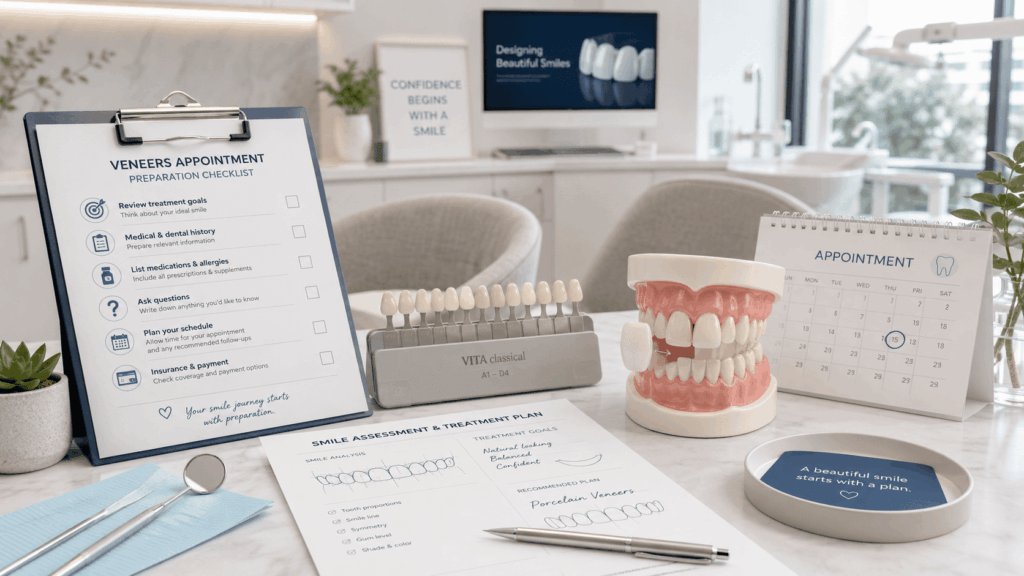
    Getting veneers is a decision that usually comes with a lot of questions. You may want to know what happens during the first consultation, how your dentist evaluates your smile, or what steps come before the final placement. Knowing what to expect ahead of time can help you have a more productive conversation with your dentist and feel more prepared for the process.

    From your first appointment to the final placement, each step gives your dentist a chance to understand your goals, assess your teeth, and create a treatment plan that fits your needs.

    Why Preparing for Your Veneers Appointment Matters

    Veneers involve more decisions than most patients expect going in: material, shade, shape, and how many teeth to treat. Walking into your first appointment with even a rough sense of your goals tends to make that conversation more productive, and it helps you follow along once your dentist starts explaining the options that fit your teeth.

    Preparation doesn’t mean you need every decision made ahead of time. Your dentist will guide you through most of it. It simply means you’re not starting from zero once you sit in the chair. If you’re comparing veneers in Woodland Hills against other cosmetic options, understanding the general process before your first visit can make that decision easier.

    What Happens During Your Veneers Consultation

    Most veneer treatment starts with a consultation focused on conversation and evaluation, not any actual tooth preparation. This is where your dentist gathers the information needed to recommend an appropriate plan.

    Talking Through Your Smile Goals

    Your dentist will likely ask what you want to change about your smile, such as color, shape, spacing, or a combination of concerns. Bringing photos of smiles you like can help you explain your goals more clearly. Examples of what you would like to improve can also give your dentist a better understanding of your expectations.

    Your consultation will also cover how many teeth you want to treat. Veneers can address a single tooth or multiple teeth, depending on your goals and dental needs. If you are considering a broader smile change, learning what a smile makeover includes can help you understand how veneers may fit into a larger treatment plan.

    Evaluating Your Oral Health First

    Before recommending veneers, your dentist typically examines your teeth and gums and may take x-rays or photos depending on your history. Active decay, gum disease, or a significant bite problem generally needs attention first, since a veneer placed over an unhealthy tooth may not hold up as expected. This evaluation is also where your dentist helps determine whether porcelain, composite, or a combination fits your case. Our porcelain veneers guide and our composite veneers overview both go into more detail on what each material generally involves.

    Questions Worth Asking Before You Move Forward

    A short list of questions can make your consultation more productive and help you leave with a clearer picture of what’s ahead:

    • How many teeth do you recommend treating, and why that number specifically?
    • Which material fits my goals, budget, and the condition of my teeth?
    • Roughly how much enamel will be removed, and is that amount typical for my case?
    • What should I expect my temporary veneers to look and feel like?
    • What happens if I’m not happy with the shade or shape once I see the temporaries?

    Not every dentist answers these the same way, and that’s fine. The goal is simply having the information before treatment starts rather than discovering it along the way.

    How to Prepare Physically and Mentally for the Visit

    You do not need to make major physical preparations before a veneers consultation. However, a few simple steps can help you get more from your visit. If your dentist plans to discuss shade matching, arrive with your teeth in their usual condition. Avoid whitening strips or heavily pigmented foods right before your appointment, since your natural tooth color helps guide shade discussions.

    It also helps to think about your goals before you arrive. You do not need to decide on an exact look beforehand. Veneer treatment involves a conversation between you and your dentist, and your dentist’s evaluation helps determine suitable options. Bringing a list of questions, even simple ones, can help you cover important details during your consultation.

    What Happens When Your Teeth Are Prepared

    If you move forward with treatment, a separate appointment (or a later part of the same visit, depending on your dentist’s process) is typically used to prepare your teeth.

    Understanding Enamel Removal

    For porcelain veneers, your dentist may remove a thin layer of enamel from the front surface of each treated tooth. The amount often measures less than half a millimeter, but it depends on your teeth and treatment plan. This step helps the veneer fit properly and create a natural appearance.

    The American Dental Association notes that veneer treatment is generally not considered reversible once enamel removal occurs. Understanding this before treatment can help you make an informed decision. Composite veneers may require less enamel removal in some cases, depending on your specific needs. Your dentist can explain what applies to your teeth.

    Dentists often use local anesthesia during enamel preparation. Most patients feel pressure rather than pain, although some may notice temporary sensitivity afterward.

    Wearing Temporary Veneers

    Your dentist customizes your permanent veneers, and the process often takes one to two weeks. During this time, you may wear temporary veneers to protect your prepared teeth. Temporary veneers can also provide a preview of the planned length and shape, although they may not look exactly like your final veneers.

    If the shape or length does not feel right, tell your dentist during this stage. Discussing adjustments before your permanent veneers are completed can make it easier to address your concerns.

    Choosing Your Shade and Shape

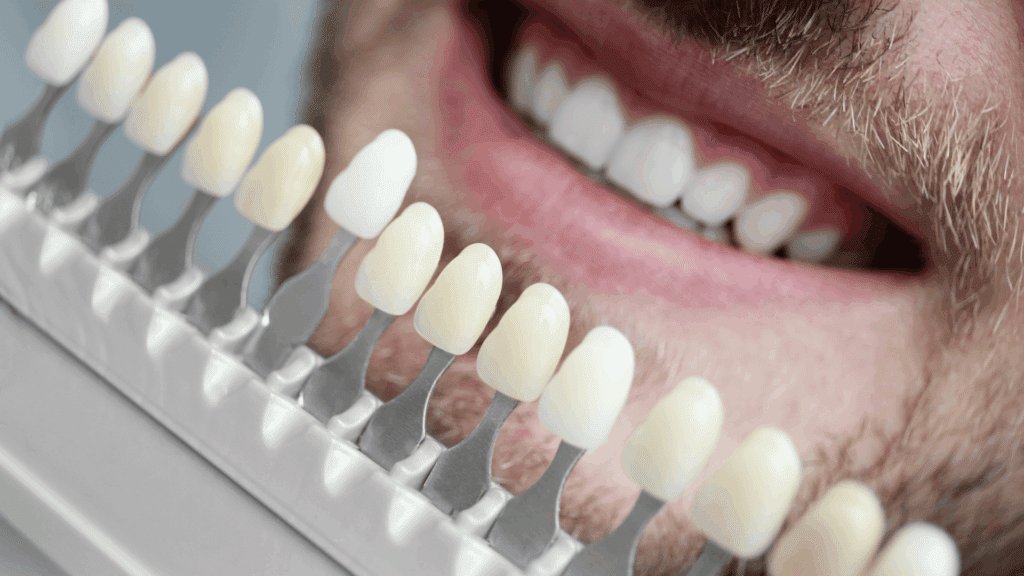
    Shade selection typically happens during your consultation or your preparation appointment, depending on your dentist’s process. Rather than matching veneers exactly to your current tooth color, many patients choose a shade that’s noticeably brighter, though how bright depends on what looks natural against your skin tone and the rest of your smile.

    If you’re still deciding between materials, comparing porcelain and composite veneers side by side can help clarify which fits your goals and budget before your consultation. Shape and length work similarly. Your dentist may use digital imaging or a mock-up to give you a general preview, though final results can vary once the lab has custom crafted each veneer.

    Caring for Your Smile Around Your Appointments

    In the days before your appointment, continue your normal oral hygiene routine rather than making drastic changes. If your consultation includes shade matching, limiting heavily pigmented foods and drinks like coffee, tea, or red wine for a day or two beforehand may help. Your natural tooth color plays a role when your dentist discusses shade options.

    After your dentist places your permanent veneers, care usually looks similar to caring for natural teeth. Continue brushing, flossing, and attending routine checkups. Your dentist may also recommend avoiding habits like biting your nails or chewing very hard foods, as these habits can affect veneer condition over time. Veneer maintenance and replacement needs vary from person to person. Your dentist can explain what to expect based on your specific case.

    Finding the Right Cosmetic Dentist in Woodland Hills

    A dentist’s experience with veneers matters as much as the material itself. This becomes especially important when matching shades, shaping veneers, and making the preparation process comfortable. Dr. Pearl Zadeh takes a cosmetic-focused approach to veneer treatment for patients in Woodland Hills. Her team supports each step, from your first consultation to your final placement appointment.

    If you are exploring cosmetic dentistry beyond veneers, our Woodland Hills cosmetic dentistry services cover a wider range of treatment options.

    Schedule Your Veneers Consultation With Dr. Pearl Zadeh

    Getting ready for a veneers appointment doesn’t need to feel like a guessing game. Knowing the general steps ahead of time, and coming in with a few questions, tends to make the whole process feel more collaborative from the start.

    Dr. Pearl Zadeh and her Woodland Hills team can walk you through your options, answer your questions directly, and help you understand what a treatment plan built around your specific teeth and goals might look like.

    Call (818) 716-6722 or click the button below to schedule your veneers consultation online.

    Schedule a Consultation

    Frequently Asked Questions

    1. How long does the veneers process take from consultation to final placement?

    This typically spans a few weeks in total, though it depends on how many teeth are involved, your dentist’s process, and the dental lab’s timeline for fabricating your veneers.

    2. Will I feel pain during tooth preparation?

    Local anesthesia is generally used during this step, so most patients feel pressure rather than pain. Some mild sensitivity in the days afterward is possible and typically manageable.

    3. Can I eat normally with temporary veneers?

    Generally yes, though your dentist may suggest avoiding very hard or sticky foods that could dislodge a temporary. Ask your dental team for guidance specific to your temporaries.

    4. What if I don’t like the shade once I see my temporary veneers?

    Mention it to your dentist as soon as possible. Adjustments are typically easier to make before the permanent veneers are finished at the lab than after they’ve already been fabricated.

    5. How many appointments does getting veneers usually take?

    Most patients need at least two appointments: one for consultation and preparation, and one for final placement. Some dentists split these into three visits depending on the case.

    Related Articles:

    1. Porcelain Veneers: A Practical Guide for Patients
    2. Composite Veneers: Everything You Need to Know
    3. Porcelain vs Composite Veneers: Choosing the Right Option for Your Smile
    4. Veneers vs Teeth Whitening: Which One Should You Choose?
    5. Dental Bonding vs Veneers: Which Option Is Right for You?
    6. Do Dental Veneers Look Natural or Fake? What Makes the Difference

  • Veneers for Teeth Grinders: Are You Still a Candidate?

    Veneers for Teeth Grinders: Are You Still a Candidate?

    Veneers for Teeth Grinders

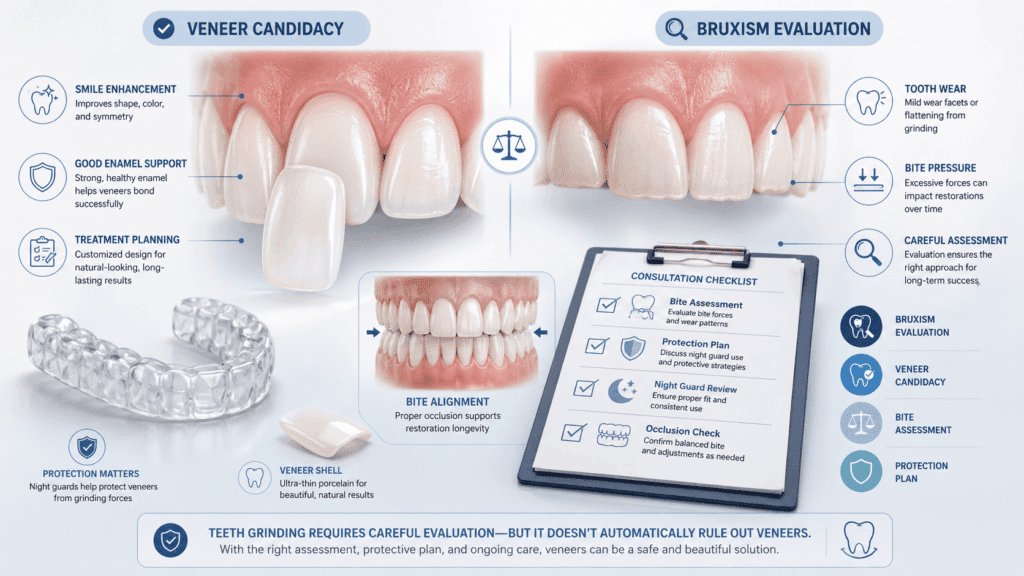
    You finally feel ready to improve your smile, then one question changes everything: what if you grind your teeth? It’s a common concern, and many patients wonder whether veneers are still an option after learning they have bruxism. Teeth grinding doesn’t automatically rule out veneer treatment, but it does affect how your dentist plans your care.

    Your consultation will focus on more than your smile goals alone. It will also consider your bite, tooth wear, and long-term oral health before recommending the right approach.

    What Bruxism Actually Is

    Bruxism refers to clenching, grinding, or gnashing your teeth, and it usually happens without you noticing. Cleveland Clinic describes it as a habit that can occur while you’re awake or asleep, and one that can put real strain on your teeth and jaw when it happens often enough. Plenty of people grind occasionally, especially during stressful stretches, without it becoming a lasting problem. The concern comes up more with frequent or forceful grinding over time.

    Nighttime Grinding vs Daytime Clenching

    Sleep bruxism, the kind that happens at night, tends to be harder to catch since most people aren’t aware they’re doing it. A partner mentioning the sound, or a dentist noticing unusual wear at a checkup, is often how it first gets flagged. Daytime clenching works differently. It’s more often tied to concentration or stress, and some patients notice it themselves once they start paying attention, like catching their jaw tight during a demanding meeting or a difficult drive.

    How Grinding Affects Natural Teeth

    Over time, frequent grinding can wear down enamel, flatten the biting edges of teeth, and in some cases lead to small chips or cracks. Jaw soreness and morning headaches are common complaints too, since the muscles doing the clenching work overtime while you sleep. None of this happens overnight, and plenty of people grind for years before it becomes noticeable enough to bring up at a dental visit.

    How Grinding Can Affect Veneers

    Veneers sit on the front surface of a tooth, and like the natural enamel they cover, they can absorb some of the force generated by grinding or clenching. That added pressure can, in some cases, increase the likelihood of chipping, cracking, or a veneer coming loose sooner than it might for a patient who doesn’t grind. This doesn’t mean damage is guaranteed. It means grinding is a factor your dentist weighs carefully when planning treatment and discussing what to expect.

    Can You Get Veneers If You Grind Your Teeth?

    In many cases, yes. Bruxism alone does not automatically rule out veneers. Your dentist will look at factors like the severity of your grinding, how well you manage it, and the condition of your teeth and bite. A patient with mild, controlled grinding may have a different treatment outlook than someone with severe, untreated bruxism and significant tooth wear.

    Your dentist can determine where you fall on that spectrum through an exam, and that evaluation is really what decides candidacy, not the presence of bruxism by itself.

    What Your Dentist Evaluates Before Recommending Veneers

    A thorough evaluation typically looks at several things together. Bite alignment matters, since an uneven bite can concentrate force unevenly across your teeth. Existing tooth wear gives your dentist a sense of how active and forceful your grinding has been over time, and how your teeth relate to alignment concerns more broadly can factor into that same conversation. Enamel condition, your jaw habits, general oral health, and your specific cosmetic goals all get weighed together, rather than any single factor deciding the outcome on its own.

    Why Treating Bruxism Matters Before or Alongside Cosmetic Treatment

    Placing veneers over teeth affected by active, unmanaged bruxism can set the treatment up for a harder road ahead. Many dentists recommend addressing or at least stabilizing the grinding first, whether that means a night guard, stress management, or treating an underlying cause like sleep apnea, before finalizing a cosmetic plan. This isn’t about delaying treatment unnecessarily. It’s about giving the veneers a more stable foundation to hold up against.

    Will a Night Guard Protect Your Veneers?

    A custom night guard, made specifically for your bite, can reduce the direct force your teeth and veneers experience during sleep. Many dentists recommend one for patients with bruxism who move forward with veneers, particularly for grinding that happens at night rather than during the day.

    A night guard can reduce the risk of damage, but it cannot eliminate it. Even with consistent use, some force still reaches your teeth. It also will not protect against daytime clenching if you only wear it while sleeping. Your dentist can explain what level of protection you can realistically expect and how consistently you should wear your night guard based on your specific situation.

    Porcelain vs Composite Veneers for Patients Who Grind

    Porcelain is generally considered more resistant to wear than composite resin, which is part of why it’s often discussed for patients with bruxism. That doesn’t mean composite is automatically off the table, or that porcelain is immune to damage from grinding. Our porcelain veneers guide and composite veneers overview both go into more detail on how each material tends to perform. Some patients also ask about no-prep veneers, which are thinner by design and generally considered less suited to heavier grinding forces, though your dentist can evaluate whether that’s true for your specific case.

    What Happens If You Grind After Getting Veneers

    If grinding continues after treatment, veneers can wear, chip, or occasionally come loose over time, similar to what can happen with natural teeth under the same forces. This is one of the reasons ongoing management matters, not just before treatment but afterward too. Routine checkups give your dentist a chance to catch early wear before it becomes a bigger repair, and to adjust your night guard or treatment plan if grinding patterns change.

    When Another Treatment Might Be Recommended First

    For patients with severe, active bruxism and significant existing tooth damage, a dentist may recommend stabilizing the bite or addressing the grinding before moving forward with veneers at all. In some cases, a more conservative option is considered first. Dental bonding compared with veneers is sometimes part of that conversation, since bonding can be simpler and less costly to repair if it’s affected by ongoing grinding. Once your bite and habits are more stable, veneers may become a more reasonable option to revisit.

    Lifestyle Habits That May Influence Veneer Longevity

    A few everyday habits tend to come up in these conversations. Chewing on ice, pens, or fingernails adds extra force beyond normal biting and can affect both natural teeth and veneers. High caffeine or alcohol intake has been associated with more frequent grinding for some people. Stress management, whether through better sleep, exercise, or simply identifying what triggers daytime clenching, can also play a role in how much force your teeth experience over time. None of these guarantee an outcome on their own, but they’re worth mentioning to your dentist as part of the bigger picture.

    Finding a Cosmetic Dentist in Woodland Hills Who Understands Bruxism

    Dr. Pearl Zadeh evaluates grinding and clenching as part of a complete workup before recommending veneers, rather than treating bruxism as an automatic disqualifier or ignoring it altogether. That evaluation looks at your bite, tooth wear, and your specific goals for treatment. Patients considering veneers in Woodland Hills can expect that same individualized approach, and our broader overview of cosmetic dentistry in Woodland Hills covers the full range of options if veneers turn out not to be the right first step.

    Schedule a Consultation With Dr. Pearl Zadeh

    Grinding your teeth doesn’t have to mean crossing veneers off your list before you’ve even had a conversation about it. Whether they’re a reasonable option for you depends on your specific bite, tooth condition, and grinding habits, not a blanket rule that applies to everyone with bruxism.

    Dr. Pearl Zadeh and her Woodland Hills team can evaluate your teeth directly and walk you through what’s realistic for your situation, including whether a night guard, treating the grinding first, or moving ahead with veneers makes the most sense.

    Call (818) 716-6722 or click the button below to schedule your consultation online.

    Schedule a Consultation

    Frequently Asked Questions

    1. Does grinding your teeth automatically disqualify you from getting veneers?

    No. Bruxism is one factor among several your dentist considers. Mild or well-managed grinding is generally viewed differently than severe, untreated grinding with significant existing tooth wear.

    2. Does teeth grinding damage veneers?

    It can, particularly if grinding is frequent or forceful and left unmanaged. The added pressure may increase the chance of chipping, cracking, or a veneer loosening sooner than expected, though this varies by patient.

    3. Will a night guard fully protect my veneers?

    A custom night guard can reduce the force on your teeth while you sleep, but it cannot eliminate the risk completely. If you also clench your teeth during the day, your dentist may recommend additional strategies, since wearing a night guard at night will not address daytime habits.

    4. Should bruxism be treated before getting veneers?

    In many cases, addressing or stabilizing grinding first gives cosmetic treatment a more stable foundation. Your dentist can determine whether that applies to your specific situation.

    5. Are porcelain veneers stronger than composite for people who grind?

    Porcelain may resist wear better than composite resin in some cases, so dentists often consider it for patients with bruxism. However, grinding can still damage either material over time.

    Related Articles:

    1. Porcelain Veneers: A Practical Guide for Patients
    2. Composite Veneers: Everything You Need to Know
    3. Porcelain vs Composite Veneers: Choosing the Right Option for Your Smile
    4. No-Prep Veneers and Traditional Veneers: What Is the Difference?
    5. Preparing for Your Veneers Appointment: A Complete Guide
    6. Veneers vs Teeth Whitening: Which One Should You Choose?
    7. Dental Bonding vs Veneers: Which Option Is Right for You?
    8. Can Veneers Fix Crooked Teeth? What They Can and Can’t Do
    9. Do Dental Veneers Look Natural or Fake? What Makes the Difference

  • Do Dental Veneers Look Natural or Fake? What Makes the Difference

    Do Dental Veneers Look Natural or Fake? What Makes the Difference

    Do Dental Veneers Look Natural or Fake

    Some veneers look incredibly natural. Others stand out immediately. In most cases, the final result depends on the planning, materials, and overall smile design.

    Modern porcelain veneers are made to closely resemble real teeth. When the shape, color, and proportions are customized carefully, most people will not even notice someone has veneers. On the other hand, poor sizing, overly white shades, or unnatural proportions can make veneers look artificial.

    The experience of the cosmetic dentist also plays a major role. Small details often determine whether veneers blend in naturally or draw the wrong kind of attention.

    Why Some Veneers Look Fake

    You have probably seen them before. Teeth that look too white, too big, or too perfectly even. Instead of blending in, they stand out right away.

    In most cases, the issue starts with poor planning. Some treatments skip proper smile design and use a standard veneer shape without considering the patient’s face, lips, or existing teeth. When that happens, the result often feels out of place.

    Color choice is another common problem. A shade that is too bright or too opaque can look unnatural, especially under different lighting. Real teeth have depth and slight variation in color, and they reflect light in a soft way. When veneers do not match that, they become noticeable.

    Size and proportion also matter. Veneers that are too long or too wide compared to natural tooth structure can create an unbalanced look that draws attention for the wrong reason.

    Sometimes the issue is not the veneers themselves, but how many are placed. If only a few teeth are treated without blending them properly with the surrounding teeth, the contrast becomes obvious.

    Good veneer work is never just about a single tooth. It is about how everything fits together as a smile.

    What Makes Veneers Look Natural

    When veneers are done well, they blend in so naturally that most people will not notice them at all.

    One of the biggest factors is porcelain quality. High-quality porcelain reflects light in a way that is very similar to natural enamel. It has depth and subtle translucency, which helps the tooth look real rather than flat or overly bright. Lower-quality materials often lack this effect and can appear dull or too uniform over time.

    Shape and size also play a major role. Natural-looking veneers are designed to match the proportions of your face, lips, and jaw. A skilled cosmetic dentist will consider your smile line, tooth width, and natural facial balance before finalizing the design.

    The gum line is another detail that is often overlooked. If the gums are uneven, even well-made veneers can look off. In some cases, minor gum reshaping is done before or during treatment to create a more balanced frame for the teeth.

    The number of veneers placed also matters. Treating only a couple of front teeth without blending them into the surrounding smile can create contrast. For a more natural result, veneers are usually placed across the visible smile zone so the color and shape stay consistent.

    The Role of Smile Design and Dentist Experience

    This is where the outcome is truly shaped. Smile design is the planning stage that happens before any treatment begins. A cosmetic dentist studies your facial features, natural tooth proportions, and overall smile goals before deciding how your veneers should look.

    In many cases, digital smile design tools are used to show a preview of the final result. This helps patients understand how their new smile may look and allows adjustments to shape or size before anything is made permanent.

    Experience also plays a major role. Cosmetic dentistry is not only about technical skill. It also requires an understanding of facial balance and natural tooth appearance. When these details are considered carefully, veneers blend in naturally rather than standing out.

    The provider you choose can have a major impact on the final result. While many dentists can place veneers, working with someone who focuses on cosmetic cases often leads to more natural and balanced outcomes.

    Choosing the Right Shade and Shape

    One of the most common mistakes is choosing the brightest white shade available. While it may look appealing in photos, it often appears too harsh in real life, especially when it does not match a person’s natural skin tone and facial features.

    A well-planned smile usually involves more subtle shades. Warm whites, ivory tones, and slightly softer shades tend to blend better with natural teeth. The aim is not to create an artificial brightness, but to achieve a healthy, balanced smile that still looks like you.

    Shape is just as personal as color. The right veneer shape depends on facial structure, smile style, and personal preference. Rounded edges often create a softer, more feminine look, while slightly straighter edges can give a more defined appearance. Some people prefer a youthful smile, while others want something more understated.

    A thoughtful cosmetic dentist will guide these decisions with you, not for you. Your input matters throughout the process, and the goal is always to create a result that feels comfortable and natural for your face.

    Can People Tell You Have Veneers?

    With modern porcelain materials and proper smile design, the honest answer is usually no. When veneers are done well by an experienced cosmetic dentist, most people simply notice that the smile looks better. They rarely pinpoint exactly what has changed.

    In most cases, that is the ideal result. Well-designed veneers should lead to comments like “your smile looks great,” not questions about dental work.

    Looking at before and after photos from real patients can help set realistic expectations. The best results usually show a smile that looks refreshed and more balanced, rather than overly dramatic or artificial.

    Of course, results can vary. Clear communication during the planning stage plays a big role. Patients who share their preferences and stay involved in the process often feel more satisfied with the final outcome.

    Are Natural-Looking Veneers Worth It?

    For many patients, the answer is yes. Veneers can improve a wide range of concerns, including discoloration, chips, cracks, spacing issues, and uneven tooth shapes. When planned and placed properly, they can create results that are both functional and visually appealing.

    What matters most is having realistic expectations and working with the right cosmetic dentist. Natural-looking veneers are not a rare outcome. In fact, they are what most patients receive when treatment is planned carefully from the start.

    Because veneers are a long-term investment, the provider you choose plays a major role in the final result. The goal is simple: a smile that feels natural, looks balanced, and gives you confidence without drawing unwanted attention.

    Schedule a Consultation with Dr. Pearl Zadeh

    If you have been thinking about veneers but still feel unsure about how natural they might look, understanding what really affects the final result can help you make a clearer decision. Good veneers should not change who you are. They should blend with your facial features, support your natural smile, and feel like a subtle improvement rather than a noticeable change.

    Dr. Pearl Zadeh focuses on creating veneers that look natural and suit each patient’s individual features. Her approach to smile design is careful, detail-focused, and centered on results that fit the person, not just the teeth. If you are considering porcelain veneers and want to know what would work for your smile, you can schedule a consultation or call the office at (818) 716-6722. Our team is available to answer your questions and guide you through the next steps.

    Click the button below to book your consultation.

    Schedule a Consultation

    Frequently Asked Questions

    1. Do veneers always look fake?

    No, veneers do not always look fake. When they are designed properly with the right shape, shade, and proportions, they can look very natural and blend in with your existing teeth.

    2. What makes veneers look natural instead of artificial?

    Natural-looking veneers depend on proper smile design, correct tooth proportions, suitable shade selection, and the skill of the cosmetic dentist. Small details make a big difference in the final result.

    3. Why do some veneers look too white or bulky?

    Veneers can look unnatural when the shade is too bright, the size is too large, or when there is poor planning before placement. Lack of customization is usually the main reason.

    4. Can people tell if you have veneers?

    In most cases, no. Well-designed veneers usually look like natural teeth. People often notice an improved smile but cannot tell that veneers were placed.

    5. How do I make sure my veneers look natural?

    The best way is to work with an experienced cosmetic dentist who focuses on smile design. Clear communication and proper planning help ensure the final result fits your face and looks natural.

    Related Articles:

    1. How to Choose the Right Cosmetic Dentist in Woodland Hills
    2. Porcelain Veneers: A Practical Guide for Patients
    3. Composite Veneers: Everything You Need to Know
    4. Porcelain vs Composite Veneers: Choosing the Right Option for Your Smile
    5. Veneers vs Teeth Whitening: Which One Should You Choose?

  • How Long to Wait to Eat After a Composite Filling

    How Long to Wait to Eat After a Composite Filling

    How Long to Wait to Eat After a Composite Filling

    Composite fillings are designed to harden during the appointment using a curing light, which means the material is already set before you leave the dental chair.

    Even so, what you can eat and when depends more on comfort than on the filling itself. Numbness and temporary sensitivity often play a bigger role in the first few hours.

    In the first few hours, it helps to be mindful of chewing on the treated side until normal sensation returns.

    When Can You Eat After a Composite Filling?

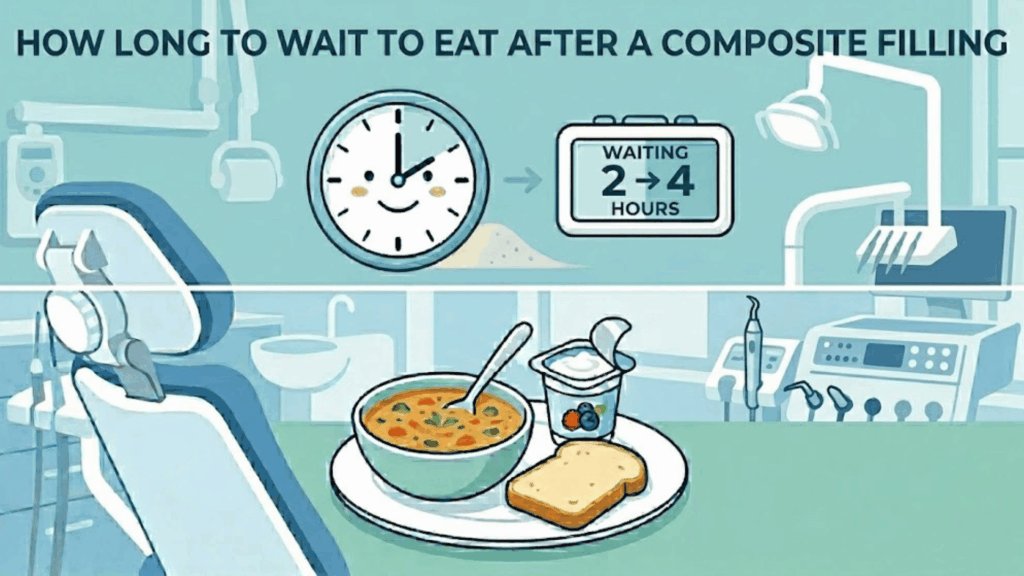
    You can usually eat once the numbness wears off, typically within two to four hours after treatment.

    At that point, the filling itself is fully set. The waiting period is mainly about avoiding accidental biting or injury while local anesthesia is still active.

    Why the Wait Is About Numbness, Not the Filling

    Local anesthesia numbs the treated area, including the teeth and surrounding soft tissues like the lips, cheeks, and sometimes the tongue.

    While the area is numb, it becomes difficult to feel pressure, temperature, or pain in a normal way. This is why people sometimes bite the cheek or tongue without realizing it.

    These small injuries can lead to soreness or swelling that lasts for a few days once the numbness wears off.

    Hot food and drinks can also be risky during this time, since reduced sensation makes it harder to notice when something is too hot.

    Why Composite Resin Hardens Differently

    Composite resin contains a light-sensitive material that begins to set when exposed to a curing light.

    During treatment, the dentist applies the material in thin layers and cures each layer before adding the next. This allows the filling to harden fully while it is being placed.

    Unlike older metal fillings, composite does not require time outside the dental chair to set. The hardening process is completed during the appointment itself.

    If you want a closer look at how the bonding process works, our composite filling guide covers the full steps from preparation to placement.

    How Long Numbness Typically Lasts

    Anesthesia Type Typical Numbness Duration
    Standard local anesthesia 2 to 4 hours
    Anesthesia with epinephrine Can last slightly longer due to constricted blood flow
    Lower jaw injections Often longer than upper jaw injections
    Children or smaller patients Sometimes shorter, but varies by individual response

    Lower jaw fillings often stay numb longer than upper jaw fillings, since the nerve block used for lower teeth affects a wider area of the lip and chin.

    What to Eat Once Feeling Returns

    Once numbness wears off, it’s best to start with softer foods that are easy to chew and gentle on the treated area.

    • Soup, broth, or other warm (not hot) liquids
    • Yogurt, mashed potatoes, or scrambled eggs
    • Soft fruits such as banana or cooked apple
    • Pasta or rice that doesn’t require much chewing

    The filling itself is fully set at this point. The reason for choosing softer foods is mainly comfort, since the tooth and surrounding area may still feel slightly sensitive after treatment.

    Foods to Avoid for the First Day

    It’s best to avoid foods that place extra stress on the treated tooth during the first 24 hours.

    • Ice, hard candy, or anything that requires strong biting pressure
    • Sticky foods like caramel or taffy that can pull on the filling
    • Very hot foods or drinks until normal sensation returns
    • Crunchy foods such as nuts or hard chips on the treated side

    After the first day, most patients can return to their normal diet without restrictions.

    What If Your Bite Feels Off After Eating?

    If a filling is even slightly higher than the surrounding tooth, it can place extra pressure on that spot each time you bite down.

    Because the area is still numb right after treatment, this may not be noticeable at first. Once normal sensation returns, some patients notice soreness on a specific tooth or a feeling that the bite no longer fits together properly.

    If this happens, it’s usually easy to correct. A quick bite adjustment at the dental office can smooth out the contact and relieve the pressure within minutes.

    Sensitivity After Eating: What’s Normal and What Isn’t

    Mild sensitivity to hot, cold, or sweet foods is common for a few days after a composite filling. It usually improves on its own as the tooth adjusts.

    Sharp pain that lasts more than 10 to 15 seconds after eating is less typical and should be checked by a dentist.

    If discomfort is getting worse instead of gradually improving, it may be related to how the filling is biting together or whether the restoration needs adjustment. Our article on when a composite filling should be replaced outlines the specific signs worth watching for.

    What If You Accidentally Eat Too Soon?

    Biting your cheek or tongue while still numb is fairly common and usually not serious, but it can feel sore once the numbness wears off.

    If this happens, a gentle rinse with warm salt water can help keep the area clean while it heals over the next day or two.

    If a new filling feels loose or becomes chipped while the area is still numb, it’s best to contact your dentist rather than waiting for your next appointment.

    If the filling comes out entirely, our guide on what to do if a composite filling falls out walks through the right steps to take immediately.

    What If Your Bite Feels Off After Eating?

    If a filling is even slightly higher than the surrounding tooth, it can put extra pressure on that spot each time you bite down.

    Right after treatment, this may not be noticeable because the area is still numb. Once sensation returns, some patients feel soreness on a specific tooth or notice that their bite feels slightly uneven.

    If this happens, it’s usually easy to fix. A quick bite adjustment at the dental office can correct the contact and relieve the pressure within minutes.

    Speak with Dr. Pearl Zadeh About Your Composite Filling

    If you have recently had a composite filling or are unsure about any part of your recovery, a quick check-in can help clear things up early.

    Dr. Pearl Zadeh’s Woodland Hills practice provides clear aftercare guidance for every patient and can assess any discomfort, bite changes, or sensitivity after treatment.

    Schedule a visit to make sure your filling is healing as expected and your bite feels completely normal. Call (818) 716-6722 or click the button below to schedule your consultation.

    Schedule a Consultation

    Frequently Asked Questions

    1. Can I drink water right after a filling?

    Yes. Cool or room-temperature water is generally safe to drink, even while the area is still numb.

    2. How soon can I drink coffee or hot tea?

    It is best to wait until the numbness wears off, usually within two to four hours. This helps prevent accidental burns to your lips, cheeks, or tongue.

    3. Does the type of filling material change the waiting time?

    No. Composite resin hardens during the procedure, so the waiting period is related to the anesthesia rather than the filling material itself.

    4. Why does my dentist’s advice differ from what I read online?

    The amount of numbness, the area being treated, and the type of procedure can vary from patient to patient. Your dentist’s instructions are based on your specific situation.

    5. Can I chew gum the same day as a filling?

    It is usually best to wait until the numbness has worn off and your bite feels normal. If the tooth feels sensitive after treatment, waiting until the next day may be more comfortable.

    Related Articles:

    1. What Is a Composite Filling? A Simple Guide for Patients
    2. When Should a Composite Filling Be Replaced?
    3. Mercury Fillings vs Composite Fillings. What’s the Difference?
    4. Dental Inlays vs Onlays vs Fillings: What’s the Difference?
    5. What to Do If a Composite Filling Falls Out

  • What Are Invisalign Refinements and Do You Need Them?

    What Are Invisalign Refinements and Do You Need Them?

    What Are Invisalign Refinements

    You reach the end of your Invisalign treatment plan expecting to see your final smile, but your dentist recommends additional aligners. For many patients, that moment creates the same concern: Why do I need more trays if treatment was supposed to be finished?

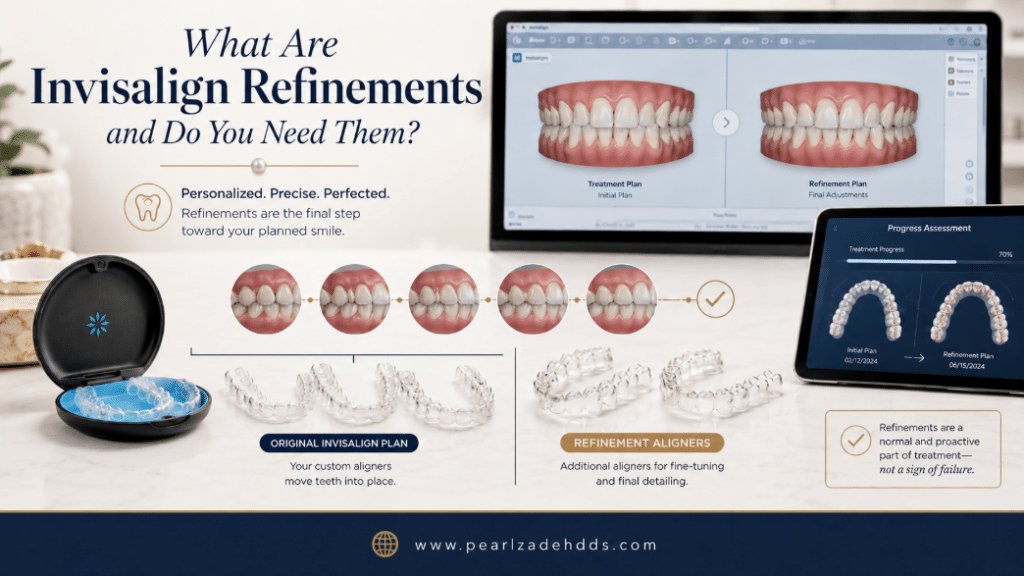
    The answer is often simpler than it seems. Invisalign refinements are additional aligners used to fine-tune tooth movement and help achieve the planned result. They do not automatically mean something went wrong or that your original treatment failed.

    Teeth do not always move exactly as predicted, and refinements allow your dentist to make adjustments based on how your smile responds during real treatment.

    What Are Invisalign Refinements?

    Refinements are an additional set, or sometimes a few sets, of aligners created after your original series to fine-tune movements that weren’t fully completed. Rather than starting your treatment over, refinements pick up exactly where your first series left off, targeting only the specific teeth or movements that still need adjustment.

    Why Would You Need Invisalign Refinements?

    Invisalign treatment plans are built from a digital prediction of how your teeth should move over the course of treatment. That prediction is detailed and generally reliable, but it’s still a prediction, and real teeth don’t always move in a perfectly straight line toward the planned result. Certain movements, particularly rotating a tooth or shifting it vertically, tend to be harder for aligners to execute with full precision compared to simpler tipping movements.

    Some teeth respond a little slower than expected, or an attachment, the small tooth-colored bump that helps an aligner grip a tooth, loosens partway through treatment. Any of these can leave a small gap between where your teeth were supposed to land and where they actually landed, which is exactly what refinements are designed to close.

    Do Refinements Mean Your First Treatment Failed?

    No. It’s worth saying directly, since this is the assumption that causes the most unnecessary worry. Refinements address the natural gap between a digital prediction and biological reality, not a mistake in your original treatment plan. Many providers factor the likelihood of refinements into their planning from the start, treating them as an expected part of achieving a precise result rather than an exception that signals something went wrong.

    How Common Are Invisalign Refinements?

    Quite common. A retrospective study published in the American Journal of Orthodontics and Dentofacial Orthopedics, which reviewed records from 500 Invisalign patients, found an average of about two and a half Invisalign refinement scans per treatment. Needing one or more rounds of refinement is a routine part of the process for a large share of patients, particularly those with more complex starting alignment or movements that are naturally harder for aligners to complete precisely.

    The same study found that about one in six patients ultimately switched from Invisalign to braces to complete treatment, which is worth knowing as one possible outcome in cases where aligners alone aren’t fully closing the remaining gap.

    How Dentists Decide Whether Refinements Are Necessary

    Near the end of your original aligner series, your dentist compares your current tooth positions against the plan’s intended final result. If everything landed where it was supposed to, no refinement is needed.

    If certain teeth still need a bit more movement, whether that’s a small rotation, a remaining gap, or a bite relationship that isn’t quite settled, your dentist recommends refinement aligners to close that specific gap. This decision is based on a direct comparison between plan and reality, not a general guess.

    When Do Refinements Usually Happen During Treatment?

    Dentists most often order refinements near the end of your original aligner series. This usually happens after you complete the full set and your dentist can evaluate your progress.

    In some cases, your dentist may recommend refinements earlier if your teeth are not tracking as planned. Starting adjustments sooner can help move treatment closer to your desired outcome instead of continuing with an ineffective sequence.

    What Happens During the Refinement Process

    The process begins with new digital scans or impressions of your current tooth position. Your dentist compares these results with your original treatment goals. They then create a shorter digital plan that focuses only on the remaining movements.

    The new plan goes to the aligner manufacturer, and your dentist receives the refinement trays after production. Once they arrive, you wear the new aligners on the same schedule as your original set. Most patients wear them around 20 to 22 hours a day and switch trays as directed.

    How Many Additional Aligners Might You Need, and How Long Does It Add to Treatment?

    The number of refinement aligners varies by case. Some patients need only a few additional trays to adjust one or two teeth. Others with more complex movements may need a longer refinement series or, in some cases, multiple rounds. Refinements often add a few weeks to several months to treatment, depending on the number of aligners needed and how consistently you wear them. Although refinements extend the timeline, they are usually shorter than the original treatment phase because they focus only on remaining adjustments.

    Do Invisalign Refinements Cost Extra?

    The cost of refinements depends on your treatment plan and provider agreement. According to Invisalign’s provider resources, some treatment packages include additional aligners within a specific timeframe after the original treatment begins. Other refinements, especially those requested after treatment has ended, may require an additional fee. The best way to understand your coverage is to ask your dentist how your specific plan handles refinements.

    What You Can Control: Wear Time and Regular Check-Ins

    Aligner wear time is one of the few variables that’s genuinely in your hands. Wearing your aligners for the recommended 20 to 22 hours a day gives each tray its full intended effect, while removing them too often lets teeth drift back slightly between wears, which can widen the gap between plan and reality over time.

    Attending your scheduled check-in appointments matters just as much, since these visits are when your dentist can catch a tooth that isn’t tracking as expected and make adjustments before the issue compounds. If your wear time has been consistent throughout treatment and you still need refinements, that’s simply the nature of how your specific teeth responded, not something to second-guess.

    Caring for Your Aligners Through an Extended Treatment Timeline

    Needing refinements means wearing aligners for longer than originally expected, which makes good aligner hygiene even more relevant. Our guide to cleaning Invisalign aligners the right way covers the daily routine that keeps trays clear and comfortable, which matters just as much for refinement aligners as it did for your original set.

    Can Refinements Fix Remaining Gaps or Crooked Teeth?

    Often, yes. Refinements are commonly used to address exactly these kinds of leftover concerns: a gap that didn’t fully close, a tooth that’s still slightly rotated, or a bite relationship that needs one more adjustment. Our explanation of how Invisalign closes gaps between teeth and our discussion of how Invisalign addresses overbite, underbite, and crowded teeth both cover concerns that sometimes carry into a refinement phase for extra precision.

    Refinements target real, remaining movement needs. They don’t change what Invisalign can address overall, so the same general expectations around facial and bite changes that applied to your original treatment still apply here.

    Getting Personalized Guidance From Dr. Pearl Zadeh in Woodland Hills

    As an Invisalign Premier Provider, Dr. Pearl Zadeh monitors treatment progress closely throughout each stage, so if refinements become part of your plan, you understand exactly why before moving forward. You can learn more about Invisalign treatment in Woodland Hills directly, and her background and treatment philosophy centers on explaining realistic expectations at every stage rather than leaving patients guessing why an extra step was added.

    Schedule a Consultation With Dr. Pearl Zadeh

    Needing refinements does not automatically mean something went wrong with your Invisalign treatment. In many cases, it’s simply the last step in getting your smile exactly where the original plan intended.

    Dr. Pearl Zadeh and her Woodland Hills team can evaluate your Invisalign progress, explain whether refinements may be needed, and help you understand the next steps for your smile.

    Call (818) 716-6722 or click the button below to schedule a consultation online.

    Schedule a Consultation

    Frequently Asked Questions

    1. What are Invisalign refinements?

    Refinement aligners are additional trays created after your original series. They fine-tune tooth movements that need further adjustment using updated scans of your current tooth positions.

    2. Are Invisalign refinements normal?

    Yes. Needing one or more rounds of refinement is common and doesn’t indicate that your original treatment plan failed.

    3. Does everyone need Invisalign refinements?

    No. Some patients finish their original aligner series with no further adjustments needed, while others, particularly with more complex cases, may need one or more refinement rounds.

    4. How long do Invisalign refinements take?

    Your total treatment time depends on your specific case. Refinements often add a few weeks to several months, depending on the number of additional aligners you need.

    5. Are refinement trays included with Invisalign?

    Often, yes, depending on your specific treatment package and timing, though this varies by provider agreement. Ask your dentist directly about how your plan handles refinements.

    This article is for informational purposes only and is not a substitute for professional dental advice. Please schedule a consultation with Pearl Zadeh DDS to discuss your specific situation.

  • What Are Dental Inlays and Onlays? A Complete Guide

    What Are Dental Inlays and Onlays? A Complete Guide

    What Are Dental Inlays and Onlays

    A cavity that is too large for a filling but not severe enough for a crown needs a different approach. Inlays and onlays are designed for these cases.

    The choice depends on how much healthy tooth structure remains after decay or an old filling is removed. It is not a preference-based decision. It is based on preservation and long-term strength.

    Dr. Pearl Zadeh’s Woodland Hills practice offers dental inlays and onlays to restore teeth while preserving as much natural structure as possible. These restorations help rebuild strength and function while avoiding unnecessary removal of healthy tooth. They also provide a durable option for teeth with moderate damage.

    Why Inlays and Onlays Exist as a Separate Category

    Tooth cusps take on most of the pressure when you chew. They help spread bite force across the tooth.

    A filling simply replaces missing structure inside the tooth. It does not reinforce the outer walls. When a cavity becomes too large, those remaining walls start to flex under pressure. A filling alone cannot prevent that stress.

    That repeated flexing often leads to cracks in large fillings. In some cases, it can even crack the surrounding tooth. Inlays and onlays address this by bonding to the tooth and reinforcing its structure. They help the tooth handle chewing forces more evenly.

    A crown can also solve this problem, but it requires reducing healthy enamel on all sides. Inlays and onlays preserve more of the natural tooth by treating only the damaged areas.

    How Dentists Decide Between a Filling, Inlay, Onlay, or Crown

    Dentists base the choice on how much healthy tooth structure remains after removing decay. The strength of the cusps and the size of the damaged area both play a key role.

    A filling works when the decay is small and enough natural tooth still supports the structure.

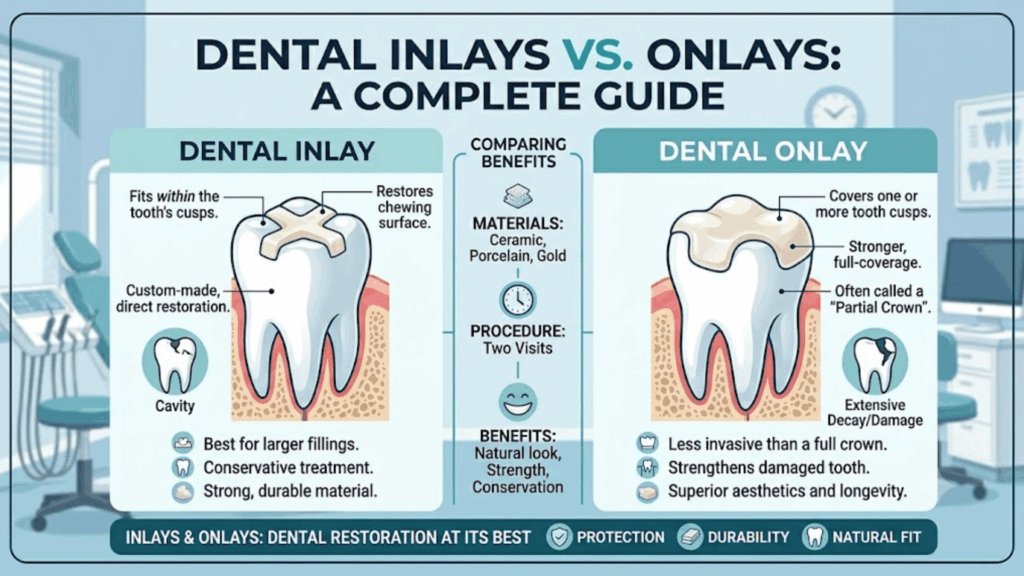
    An inlay fits when damage stays within the grooves of the tooth and the cusps remain strong.

    An onlay becomes the better option when one or more cusps need support, but the tooth does not require full coverage.

    A crown is used when the damage is extensive or when a tooth has undergone root canal treatment. In those cases, the remaining structure often needs full protection.

    Treatment decisions can change once the decay is fully removed. Some teeth that seem suitable for a filling may need an onlay after deeper decay becomes visible.

    Root canal treated teeth also shift the decision. These teeth tend to be more brittle, so dentists often recommend onlays or crowns for added strength, even when the damage appears moderate at first.

    What Is a Dental Inlay?

    A dental inlay is a restoration that fits inside the center of a tooth, within the grooves and chewing surface. It does not extend over the cusps of the tooth.

    Unlike a regular filling, an inlay is made outside the mouth from a strong material before being bonded into place. This allows for a precise fit and added strength once it is placed.

    Because it does not rely on packing material directly into the tooth, an inlay can preserve more natural structure. Dentists often choose it when a filling is too weak, but a crown is not needed.

    What Is a Dental Onlay?

    A dental onlay extends beyond the central grooves of a tooth and covers one or more cusps. It strengthens areas that are more likely to crack under chewing pressure.

    Cusps tend to fracture more often than the center of the tooth. When they lose support, they can flex with every bite. Over time, that stress can lead to a full break, sometimes extending below the gumline.

    An onlay protects those weak areas by covering and reinforcing them before damage occurs. It spreads chewing force more evenly across the tooth and the restoration, helping preserve the remaining structure.

    Inlays vs Onlays: The Key Differences

    Factor Inlay Onlay
    Coverage area Stays within the cusps Extends over one or more cusps
    Best for Decay confined to central grooves Decay or fracture involving a cusp tip
    Cusp structure Fully intact, no reinforcement needed Weakened, needs bonded reinforcement
    Bite force handling Tooth’s natural cusps absorb most of the load Restoration absorbs load across the capped cusp
    Compared to a crown Preserves the most natural tooth structure Preserves more structure than a crown, less than an inlay

    Materials Used in Dental Inlays and Onlays

    Material choice affects how a restoration looks and how it wears over time. The long-term success depends more on how well it bonds to the tooth than the material alone.

    Porcelain and lithium disilicate ceramic closely resemble natural enamel in color and light reflection. They also handle chewing forces in a way that is similar to natural teeth, which helps protect the opposing tooth. A resin cement bonds the restoration to the tooth, and once it is cured, it forms a strong connection that helps distribute bite pressure evenly.

    Composite resin is often used when cost or speed matters. It can sometimes be completed in a single visit. It bonds well to tooth structure but may wear faster in patients who grind or clench their teeth.

    Gold works differently. It does not bond chemically to the tooth. Instead, it stays in place through precise shaping and a strong cement layer. This approach has been used for decades and remains reliable because it holds up well over time.

    In many cases, the bite matters more than cosmetic preference when choosing a material. Patients who grind their teeth at night often benefit from stronger options like gold or high-strength ceramic.

    Same-Day Milled Restorations vs Lab-Made Restorations

    Some dentists can complete an inlay or onlay in a single visit using in-office milling systems. After scanning the tooth, the restoration is designed digitally and carved from a ceramic block while the patient waits.

    Lab-made restorations take longer because a dental technician builds them in a lab. This allows more control over shade and layering, which can create a closer match to natural enamel in certain cases.

    Same-day options work well for back teeth that are not highly visible. Lab-made restorations are often chosen when appearance plays a bigger role, especially in areas that show when you smile.

    How the Procedure Actually Works

    First Visit

    • Your dentist removes decay and any failing existing filling material
    • The remaining tooth structure is evaluated to confirm whether an inlay or onlay is still the right call
    • A digital scan or physical impression captures the prepared tooth’s exact shape
    • A temporary restoration protects the tooth and keeps it functional between visits

    Second Visit

    • The temporary is removed and the tooth is cleaned of any residue
    • The restoration is checked for fit, contact with neighboring teeth, and bite alignment
    • The bonding surface is treated, typically etched and primed, to maximize bond strength
    • Resin cement secures the restoration, then a curing light hardens it permanently

    That bite check matters more than patients usually realize. A restoration sitting even slightly high concentrates force unevenly and can cause pain that has nothing to do with the tooth itself, only the bite.

    Why Inlays and Onlays Sometimes Fail

    Inlays and onlays are strong restorations, but a few issues can still affect their long-term success.

    Bond failure can happen if moisture gets in during placement. Even small amounts of contamination can weaken how well the restoration attaches to the tooth.

    Decay can also return at the edges where the restoration meets natural tooth structure. This often develops slowly and may go unnoticed at first.

    Heavy grinding or clenching can place extra stress on the restoration. Without a nightguard, this pressure can eventually cause fractures.

    Sometimes, failure happens because a cusp was not fully covered when an onlay was needed. That weak area can break later under normal chewing forces.

    This is why careful diagnosis matters from the beginning. A tooth that actually needs an onlay may not do well with an inlay, since uncovered cusps remain vulnerable over time.

    How Long Do They Actually Last?

    Ceramic and gold inlays and onlays often last 15 to 30 years when they are placed well and cared for properly. Composite restorations usually last around 5 to 10 years before signs of wear start to appear.

    Longevity depends on bite strength, grinding habits, and how well the edges of the restoration stay sealed over time. A patient who clenches or grinds at night will usually see faster wear compared to someone without those habits.

    Regular dental checkups help spot early signs of wear or leakage at the margins. Catching these changes early can prevent more serious problems, like decay forming underneath the restoration.

    Caring for an Inlay or Onlay

    Daily care plays a big role in how long an inlay or onlay lasts. Brush twice a day using a soft-bristled toothbrush, paying close attention to the gumline around the restoration.

    Flossing once a day also matters, since decay often starts between teeth where plaque builds up unnoticed. It helps to avoid habits that put sudden stress on teeth, such as biting ice, hard candy, or popcorn kernels.

    If you grind or clench your teeth at night, a nightguard can protect the restoration from excess pressure and reduce long-term wear.

    Regular dental cleanings every six months allow your dentist to check the margins and catch early signs of leakage or decay before they become larger problems.

    The American Dental Association emphasizes that consistent oral hygiene and routine dental visits help extend the lifespan of bonded restorations like inlays and onlays.

    Schedule a Consultation Today

    Inlays and onlays can strengthen a damaged tooth while preserving more natural structure, but the right choice depends on what the tooth actually needs after a full evaluation.

    Many patients share their experiences through our patient testimonials, highlighting their comfort during treatment and long-term results.

    Dr. Pearl Zadeh’s Woodland Hills practice reviews each case carefully before recommending a treatment plan. If you are dealing with a damaged or sensitive tooth, call (818) 716-6722 or click the button below to schedule your consultation online.

    Schedule a Consultation

    Frequently Asked Questions

    1. Why would a dentist choose an onlay instead of just placing a bigger filling?

    A large filling may not provide enough support for weakened cusps. An onlay reinforces those areas by bonding across the tooth as a single unit.

    2. Can an inlay turn into needing an onlay during treatment?

    Yes. Once decay is removed, the tooth may show more structural damage than expected, which can change the plan to an onlay.

    3. Is a crown always the better long-term option than an onlay?

    Not always. Onlays preserve more natural tooth structure, and teeth with more remaining structure often stay healthier longer.

    4. Does grinding my teeth at night affect which material I should choose?

    Yes. Heavy grinding usually requires stronger materials like gold or high-strength ceramic. A nightguard also helps protect the restoration.

    5. Why does the bonding process matter so much?

    The bond holds the restoration in place and helps distribute bite forces. If moisture affects bonding, the restoration may fail earlier.

  • 6 Reasons Why Invisalign Is The Best Way To Boost Your Confidence

    6 Reasons Why Invisalign Is The Best Way To Boost Your Confidence

    If you’re considering Invisalign to help improve your confidence, you’re not alone. In fact, Invisalign is one of the most popular orthodontic treatments available today. Here are just a few reasons why Invisalign is the best way to boost your confidence:

    • Invisalign is practically invisible. 
    • Invisalign is comfortable. 
    • Invisalign treatment is quick and easy.

    If you’re looking for a way to boost your confidence and improve your smile, Invisalign is the perfect solution. Contact your orthodontist today to learn more about this life-changing treatment option!

    Reasons Why Invisalign Is the Best Way to Boost Your Confidence

    If you are considering Invisalign to help boost your confidence, there are many reasons why this treatment is the best way to achieve your goal. Invisalign is an excellent choice for those who want to improve their smile without anyone knowing they are undergoing treatment. The clear aligners are virtually invisible, so no one will be able to tell that you are wearing them. Additionally, Invisalign is a very effective treatment and can produce amazing results. You will be amazed at how much your confidence will increase once you see the final results of your treatment!

    Appearance

    Invisalign is the best way to boost your confidence because it is practically invisible. You can wear them while you are out and about, and no one will be able to tell that you are wearing them. This is a huge advantage over traditional braces, which can be very noticeable. With Invisalign, you can feel confident that your smile will look great, without anyone knowing that you are wearing aligners.

    Comfort

    If you’re not happy with your smile, Invisalign clear aligners can help. With Invisalign, you can achieve the smile you’ve always wanted without metal braces. Invisalign is also more comfortable than braces, and they won’t irritate your gums or cheeks like metal brackets can. And since they’re practically invisible, nobody will even know you’re wearing them!

    Healthier Teeth and Gums

    If you’re looking for a way to boost your confidence and improve your oral health, Invisalign is the perfect solution. Invisalign aligners are made of smooth, clear plastic that’s gentle on your teeth and gums. This means that you’re less likely to experience gum irritation or other problems associated with traditional metal braces.

    It’s easy to keep your teeth and gums clean with Invisalign, as there are no brackets or wires to trap plaque and bacteria. Simply brush and floss as normal, and use the provided cleaning kit to keep your aligners clean.

    Cheaper than Traditional Braces

    If you’re considering braces, Invisalign is a great option that’s more affordable than traditional braces. Invisalign uses clear, removable aligners that are virtually invisible, so you can feel confident about your smile without worrying about metal wires and brackets.

    In addition to being more affordable, Invisalign is also more comfortable than traditional braces. The aligners are made of smooth plastic, so they won’t irritate your gums or cheeks the way metal braces can. And because they’re removable, you can take them out for eating and brushing your teeth, making it easier to keep your mouth clean and healthy.

    If you’re looking for a way to boost your confidence and improve your smile without breaking the bank, Invisalign is the way to go.

    Easier To Maintain Oral Hygiene

    When it comes to oral hygiene, Invisalign is much easier to keep clean than traditional braces. With metal braces, food and plaque can easily get trapped in the brackets and wires, making it difficult to brush and floss properly. This can lead to an increased risk of cavities and gum disease. However, because Invisalign aligners are removable, you can simply take them out before eating and brush and floss as usual. This makes it much easier to maintain good oral hygiene and helps reduce the risk of dental problems down the road.

    Improved Self Esteem

    Invisalign can help to improve your self-esteem in a number of ways. Firstly, it can give you straighter teeth, which can lead to a more confident smile. Secondly, the treatment is virtually invisible, meaning that you can wear it without anyone knowing and feel confident that your appearance is not being affected. Finally, Invisalign is removable, so you can take it out when you need to and know that your teeth are still being straightened effectively.

    Conclusion

    Invisalign is an excellent choice for those looking to improve their smile without traditional braces. With its discreet design, convenience, and comfort, Invisalign can boost your confidence in no time. Plus, it’s affordable and easy to maintain! With all these advantages of Invisalign treatment available, there’s really no reason not to give it a try if you’re looking for the perfect way to get that beautiful smile you’ve always wanted.

  • In-Office Teeth Whitening vs At-Home Options: What Works Best

    In-Office Teeth Whitening vs At-Home Options: What Works Best

    Many people want a brighter smile, but choosing between in‑office teeth whitening and at‑home products can be confusing. Each approach has pros and cons, and the right choice depends on your goals, time, and the level of improvement you want.

    According to a national survey by the American Academy of Cosmetic Dentistry, most adults value a bright smile. In that study, 96% said an attractive smile makes someone more appealing, and 74% believe an unattractive smile can hurt career success. This shows why effective teeth whitening matters for both confidence and appearance.

    What In‑Office Teeth Whitening Involves

    In‑office whitening takes place under the supervision of a dental professional. A dentist or trained hygienist applies a strong whitening gel to your teeth and may use a light or laser to enhance the effect. Before treatment, your teeth are cleaned to remove surface build‑up and protect your gums.

    This method delivers results quickly. After one session, many patients see several shades of improvement. Because a dentist controls the process, the treatment stays safe and precise.

    According to dental sources, professional teeth whitening tends to deliver more consistent and noticeable results than over-the-counter options because dental professionals use higher-strength whitening agents and apply them under careful supervision. That makes in‑office whitening a reliable choice if you want effective teeth whitening with minimal guesswork.

    Common At‑Home Whitening Options

    At‑home whitening includes over‑the‑counter strips, whitening trays, toothpaste, and kits you can buy without a prescription. These products use milder bleaching agents compared with professional gels.

    Some patients like at‑home options because they are easy to use and more affordable upfront. Whitening strips and gels attach directly to the teeth and slowly lift stains over days or weeks.

    However, because the whitening strength is lower, at‑home kits usually take longer to show visible improvement. Results vary widely from person to person, and some products may not change the shade of deeper stains.

    Key Differences Between the Two Approaches

    Aspect In-Office Teeth Whitening At-Home Whitening Options
    Speed of Results Noticeable improvement often appears after a single visit. Results usually take one to four weeks of daily use.
    Whitening Strength Uses stronger formulas that lift deeper stains from enamel. Uses milder agents to reduce irritation risk.
    Supervision and Safety A dental professional oversees the process and manages sensitivity. No professional supervision, which may lead to uneven results.
    Cost Higher upfront cost due to professional care and materials. Lower initial cost but may require repeat purchases.

    Who Benefits Most From Each Option

    In‑office whitening suits people who want fast, predictable improvement, especially before a big event such as a wedding or graduation. It also works well for deeper stains that don’t respond to milder products.

    At‑home whitening fits those who want gradual change and prefer a lower initial cost. It may be a good step if your staining is mild or you want to maintain brightness between professional sessions.

    Caring for Your Whitening Results

    After any whitening treatment, good habits help your results last longer. Brush and floss daily, limit coffee or red wine that can stain teeth, and schedule regular dental cleanings. Research shows that professional teeth whitening results may last from six months up to two years or more, depending on your daily habits and care.

    Start Your Teeth Whitening Journey

    If you are thinking about teeth whitening, the best place to start is with a professional consultation. A dental visit helps you understand which whitening option fits your needs, how much improvement you can expect, and how to maintain your results.

    At Pearl Zadeh DDS, patients receive clear guidance and in-office teeth whitening designed to brighten smiles safely and effectively. Scheduling a visit gives you the chance to ask questions, review your options, and move forward with confidence.

    Book a consultation today and take a simple step toward a whiter, healthier-looking smile.

    Schedule a Consultation

    Frequently Asked Questions (FAQ)

    1. Does in‑office whitening hurt?

    Most patients feel little to no discomfort. Some people notice temporary sensitivity, which often fades within a few days.

    2. Will whitening work on old dental work like crowns?

    Whitening affects natural enamel but does not change the shade of crowns, veneers, or fillings.

    3. Can at‑home kits replace professional whitening?

    At‑home kits can improve mild stains, but they usually do not match the depth of whitening that in‑office treatment provides.

    4. How long will the whitening results last?

    Results from in‑office whitening can last several months to over a year, depending on your diet, oral habits, and follow-up care. Regular brushing and limiting stain-causing foods help maintain brightness.

    5. Are there any risks with in‑office whitening?

    When performed by a dental professional, in‑office whitening is generally safe. Some patients may experience temporary tooth sensitivity or mild gum irritation, which usually goes away within a few days.

    Related Articles:

    1. Professional Teeth Whitening: What to Expect From a Dentist

  • how much do dental veneers cost Thousand Oaks

    how much do dental veneers cost Thousand Oaks

    Leave a review

    how much do dental veneers cost Thousand Oaks

    In the past decade there has been a dramatic interest in cosmetic dentistry. We all realize that having a healthy, bright, beautiful smile enhances our appearance and allows us to smile with confidence. Thanks to the advances in modern cosmetic dentistry, we are able to improve our teeth and smiles with quick, painless and surprisingly affordable treatments.

    What can cosmetic dental treatments do?

    • Change the size, shape, and alignment of certain teeth.
    • Fill in unattractive spaces between teeth.
    • Improve or correct bites.
    • Lighten or brighten the color of teeth.
    • Repair decayed, broken, cracked, or chipped teeth.
    • Replace missing teeth.
    • Replace old, unattractive dental treatments.

    Remember, your smile speaks before you even say a word!

    Thousand Oaks cosmetic dental services:

    How Long Do Dental Veneers Last?

    Veneers are one of the most popular cosmetic dentistry treatments available, thanks to their ability to change the appearance of your smile quickly and effectively. If you have minor cracks and chips on your teeth, discoloration, or minor shape or spacing issues, dental veneers will cover those problems and give you an aesthetically pleasing smile. As with any kind of dental treatment, if you are considering veneers, you probably are wondering how long they will last. Here is what you need to know. 

    Veneers 101

    Veneers are thin, wafer-like shells that are bonded to the front of your teeth. They are made of porcelain, and are custom-designed to match the shape and shade you desire. Your dentist will work with you to create your veneers so that they address the concerns you have with your teeth while blending seamlessly with your natural teeth. Your dentist may recommend veneers to correct misshapen or worn teeth, crooked or widely spaced teeth, and severe discoloration that does not respond to whitening treatments. Veneers can also be used to create a more uniform smile if your teeth are noticeably different in size. 

    It usually takes two visits to get veneers. During the first visit, your dentist will remove a small amount of tooth enamel to make room for the veneers. He or she will make impressions of your mouth so that your veneers can be custom-sized. Your dentist will also help you choose the color of your veneers during this visit. At your second appointment, your veneers will be bonded to your teeth after any necessary adjustments are made. 

    The Longevity of Dental Veneers

    There are many factors that impact the longevity of veneers, including how you care for them and your overall oral health. Typically, veneers last for five to 10 years, though many people are able to get many more years out of them. Following your dentist’s care plan will dramatically increase the lifespan of your veneers. 

    To care for your veneers, maintain a high-quality oral hygiene routine, including brushing at least twice per day with a soft-bristled toothbrush and flossing at least once daily. Visit your dentist at least twice per year for a professional cleaning and check-up. If you grind your teeth, talk to your dentist about using a mouthguard to protect your veneers. 

    Could veneers give you the smile you’ve always wanted? Find out if you’re a good candidate for dental veneers by scheduling a consultation with Pearl Zadeh, DDS.

    At the office of Pearl Zadeh, DDS, we’re pleased to offer safe dental care during the pandemic to our patients from our Woodland Hills dental office.

    For any dental emergencies, please call us immediately.
    Schedule your appointment by calling
    (818) 716-6722

    Phone: (818) 716-6722
    Address: 6325 Topanga Blvd Ste 311, Woodland Hills, CA 91367

    © [current_year] Pearl Zadeh DDS – Dentist in Woodland Hills | Cosmetic Dentist Near Me | All Rights Reserved.

    Mon    8:00 am – 5:00 pm
    Tue     7:00 am – 4:00 pm
    Wed   7:00 am – 4:00 pm
    Thu    8:00 am – 5:00 pm
    Fri      (by appointment only)
    Sat     (by appointment only)
    Sun    Closed