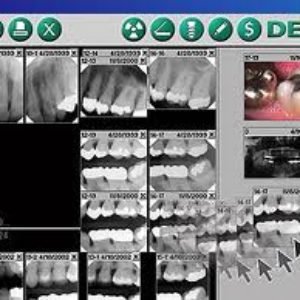
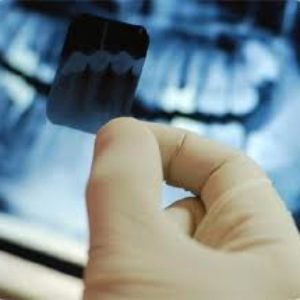
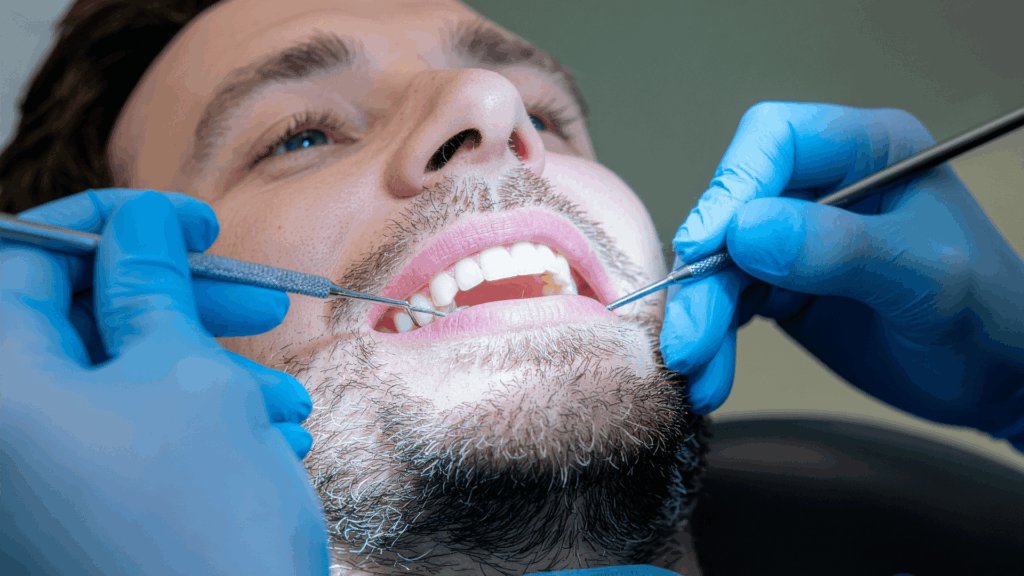
The physical process for digital radiography is actually similar to traditional dental X-rays that use film: With digital radiography, your dentist inserts a sensor into your mouth to capture images of your teeth, but that’s where the similarities between conventional and digital dental X-rays end. Although it resembles the film used for bitewings and other X-rays, the digital sensor is electronic and connected to a computer. Once the X-ray is taken, the image is projected on a screen for your dentist to view.
There are several benefits to using digital radiography over traditional film X-rays:
Less Radiation: The equipment used in digital radiography exposes dental patients to much less radiation. In fact, digital X-rays use up to 90 percent less radiation than film X-rays. While conventional dental X-rays are relatively safe, digital radiography is an excellent option for those who take X-rays on a regular basis or for those who are concerned about radiation.
Dental X-rays are an important part of the dental exam, used to diagnose problems with the teeth, gums and jaw. X-rays use electromagnetic radiation to produce these images, they form wavelengths that penetrate the soft tissue of the body and are absorbed by denser materials, creating pictures of your bones or teeth. And since your dentist doesn’t have X-ray vision, they’re necessary to distinguish dental problems not visible to the naked eye. Tooth decay, periodontal disease, impacted teeth, bite problems and even tumors are just a few of the dental conditions easily found with dental X-rays.
Bitewings are a type of dental X-rays used to check the back teeth. As they show the crown of the tooth, bitewing X-rays are extremely helpful in determining tooth decay located in between teeth, various stages of gum disease and problems with tooth alignment. Bitewings are also excellent for detecting a buildup of dental tartar, and are sometimes used to measure bone loss due to advanced periodontal disease.
Spreading Their Wings
Bitewings get their name from how they look: The film resembles a “T-shape” that’s placed on the interior side of the jaw. The film extends to cover both the upper and lower teeth, and the patient bites a tab in the middle to hold the film in place. After our dental assistant positions the bitewing in the mouth, the patient closes his or her teeth to secure the film. An X-ray camera is then used to photograph several teeth at once
How to find us!
.
Contact
Phone: (818) 716-6722
Address: 6325 Topanga Blvd Ste 311, Woodland Hills, CA 91367
Many patients notice small changes in their mouth before they ever think about a dental visit. A bit of blood when brushing, a slight sensitivity around one tooth, or breath that does not feel fresh later in the day.
These signs are easy to overlook, but they often point to early gum changes that develop quietly over time. Gum disease rarely starts with pain, which is why it can progress before it feels serious.
Dr. Pearl Zadeh and her Woodland Hills team often see patients at this stage, after symptoms have been present for a while. By then, early gum changes may already need professional care to prevent further progression.
Recognizing these signs early can make treatment simpler and help protect long-term gum health.
Why Early Detection Matters So Much
Gum disease often begins as gingivitis, which can still be reversed with proper care. Once it progresses to periodontitis, the damage becomes permanent, especially around the supporting bone.
The timing of treatment makes a real difference. Someone who responds early to bleeding gums may only need a professional cleaning. Waiting too long can lead to more advanced treatment, including deep cleaning or surgical care.
That difference is why small symptoms should never be ignored, even when they do not feel serious at first.
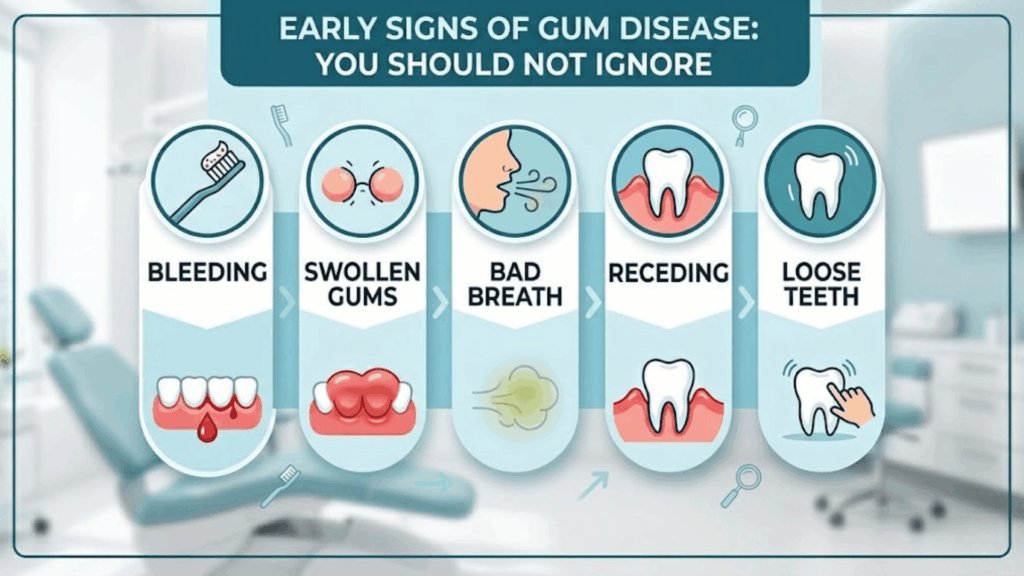
1. Gums That Bleed When You Brush or Floss
Bleeding gums are often the first sign of gum disease, but many people dismiss it as brushing too hard.
Healthy gums should not bleed during normal brushing or flossing. When bleeding does occur, it usually means plaque along the gumline is causing irritation and early inflammation in the tissue.
If bleeding shows up more than occasionally, it is worth paying attention to rather than adjusting your brushing technique and ignoring it.
2. Redness or Swelling Along the Gumline
Healthy gums are usually light pink and feel firm. When inflammation begins, they can look darker in color and appear puffy around the base of the teeth.
This change happens when bacteria along the gumline trigger an immune response. The swelling is part of your body reacting to that irritation.
If the gumline still looks swollen after a few days, even with regular brushing, it may point to early gum disease rather than temporary irritation.
3. Persistent Bad Breath
Bad breath after coffee or certain foods is normal and usually temporary. But breath that returns shortly after brushing can point to a deeper issue.
Bacteria along the gumline can release sulfur compounds that create an unpleasant smell. Mouthwash may cover it for a short time, but it does not remove the bacteria causing it.
If brushing, flossing, and rinsing still do not keep your breath fresh through the day, it may be linked to early gum disease.
4. Gums That Feel Tender or Sore
Sore or tender gums can appear even before any obvious redness or swelling. Some people notice a dull discomfort when chewing harder foods, while others feel sensitivity along the gumline when eating or drinking something cold.
This usually happens when inflammation has already started affecting the gum tissue. As it continues, the irritation can spread and become more noticeable over time.
5. Gums That Appear to Be Pulling Away From Teeth
This sign often points to a more advanced stage of gum disease. Healthy gums normally sit closely around each tooth with little visible space.
When gums begin to recede, more of the tooth surface becomes exposed, and teeth may start to look slightly longer than before. Small spaces can also form between the tooth and gum, which allows bacteria to collect more easily.
Once gum recession begins, it does not reverse on its own and usually needs professional care to manage and stabilize.
6. Loose or Shifting Teeth
Adult teeth should feel firmly stable in the gums. Even slight movement can be a sign that the bone supporting the tooth has started to weaken.
Some patients also notice changes in how their bite feels, almost as if their teeth are no longer lining up the same way. This can happen when the structures holding the teeth in place begin to break down.
Looseness in a tooth should be checked promptly, since it can progress more quickly than other early signs of gum disease.
7. A Bad Taste That Won’t Go Away
A persistent metallic or bitter taste in the mouth can sometimes point to bacteria collecting in gum pockets. It may improve briefly after brushing or rinsing, but often returns within a short time.
This tends to appear alongside bad breath, since both are linked to the same buildup of bacteria below the gumline.
8. Sensitivity to Hot, Cold, or Sweet Foods
Gum recession can expose the root surface of a tooth, which does not have the same protective enamel as the crown. This is why sensitivity may increase even without an obvious cavity.
A sudden sharp feeling when eating or drinking something that never used to cause discomfort can be an early sign of gum-related changes.
If that sensitivity appears suddenly or becomes more noticeable over time, it is worth mentioning at your next dental visit.
9. Pus Between the Teeth and Gums
Pus around the gums is a strong sign that an infection is present. It may appear when gently pressing the area near a tooth or sometimes become visible without any pressure.
This usually means the infection has progressed beyond early gum inflammation and needs professional care.
At this stage, brushing and flossing alone are not enough to resolve the issue, and a dental visit is important to treat the infection properly.
What Causes These Early Warning Signs?
Most early gum changes start with plaque. It forms as a sticky layer of bacteria on the teeth and can build up quickly, even after brushing.
Several everyday factors make this buildup more likely. Inconsistent brushing or flossing, skipping professional cleanings, smoking or vaping, and dry mouth from certain medications can all contribute. Health conditions like diabetes and hormonal changes during pregnancy or menopause can also increase sensitivity in the gums. Some people are simply more prone to inflammation due to genetics.
The American Dental Association notes that plaque buildup is the main driver behind gum disease at every stage. Keeping it under control through daily cleaning and regular dental visits remains the most effective way to prevent progression.
How Dr. Pearl Zadeh Checks for Early Gum Disease
At a routine visit, Dr. Pearl Zadeh measures the space between the gums and each tooth using a small periodontal probe. This helps identify changes that are not always visible during a basic visual exam.
In a healthy mouth, these spaces are usually shallow, around one to three millimeters. Deeper measurements can indicate early inflammation or bone loss, even before noticeable symptoms appear.
X-rays are also used to assess bone levels beneath the gums, giving a clearer picture of overall support around each tooth. Together, these evaluations help detect gum disease at an early stage, often before it becomes more advanced.
What to Do the Moment You Spot a Warning Sign
If you notice early symptoms, the best step is to schedule a dental visit rather than waiting for them to go away on their own.
Daily care also matters in the meantime. Brushing twice a day with a soft-bristled toothbrush helps reduce plaque along the gumline, and flossing once a day keeps buildup between teeth under control. Cutting back on frequent sugary snacks and drinks can also reduce irritation in the gums.
Tobacco use can slow healing and make early signs harder to notice, so avoiding it supports better gum health. Regular cleanings every six months, or more often if you have a history of gum issues, also play an important role in prevention.
The CDC notes that consistent brushing and flossing remain the most effective ways to control plaque between dental visits.
When a Symptom Needs Prompt Attention
Some symptoms should be checked sooner rather than later. These include pus around the gums, a tooth that feels loose, swelling that spreads beyond a small area, or pain that affects chewing or sleep.
At this stage, the issue may have progressed beyond early inflammation. Prompt care can still make a major difference and may help prevent more extensive treatment later.
Speak With a Dentist About Your Gum Health
Early signs of gum disease are often easy to overlook, especially when they do not cause pain. The concern is that waiting can allow a mild issue to progress into something more involved.
Dr. Pearl Zadeh’s Woodland Hills practice evaluates gum health through detailed periodontal screenings for both new and returning patients. If you have noticed any changes, scheduling a visit can help you understand what is going on and address it early, when treatment is still straightforward.
Call (818) 716-6722 or click the button below to schedule your consultation online.
Mild gingivitis can often improve with better brushing and flossing habits. Even so, a professional cleaning is important to remove hardened plaque that cannot be cleared at home.
2. How often should I watch for these signs?
It helps to be aware of your gums whenever you brush or floss. Small changes can develop gradually, so regular attention makes them easier to notice early.
3. Is bleeding during flossing always a bad sign?
Not always. Mild bleeding can happen if you have not flossed regularly. If it continues beyond several days to a week, it may indicate ongoing inflammation.
4. Can stress affect gum health?
Yes. Stress can weaken the body’s immune response, making it harder to control bacteria already present along the gumline.
5. Do electric toothbrushes help prevent these signs?
Electric toothbrushes can remove plaque more consistently than manual brushing for many people. When used twice daily with proper technique, they may help reduce the risk of early gum inflammation.
When Is It Better to Replace Teeth Instead of Repairing Them?
Pearl Zadeh DDSDentistry
A damaged tooth does not always mean it needs to be removed. In many cases, dentists try to save natural teeth whenever possible. However, there are situations where repairing a tooth may only provide a short-term fix. In those cases, replacing the tooth can offer a more stable and lasting solution.
Understanding the difference helps you make a better decision for your long-term oral health, not just a quick fix.
Repair vs. Replacement. What’s the Difference?
Repairing a tooth focuses on preserving what is already there. Treatments like fillings, crowns, bonding, or root canals aim to restore strength and function while keeping the natural tooth.
Replacement, on the other hand, involves removing a tooth that can no longer be saved and restoring it with an artificial option. This may include dental implants, bridges, or dentures.
Both approaches have their place. The key is knowing when one makes more sense than the other.
When Repairing a Tooth Makes Sense
In many cases, saving your natural tooth is still the best option. If the damage is limited and the structure of the tooth remains strong, repairs can work well and last for years.
For example, a small cavity or minor crack can usually be treated with a filling or crown. Even a tooth that needs a root canal can often be restored successfully if enough healthy structure remains.
The goal is to maintain stability. As long as the tooth can handle normal biting pressure without risk of breaking down, repair is often the right choice.
When It’s Better to Replace a Tooth
There are times when repairing a tooth may not hold up over time. In these cases, replacing the tooth can prevent repeated problems and additional cost.
Severe Tooth Damage
If a tooth is badly broken or has lost too much structure, it may not support a crown properly. Even if repaired, it can fail under pressure.
Advanced Decay
When decay reaches deep into the tooth and affects the core structure, removing the damage may leave too little healthy tooth behind.
Failed Previous Treatments
Some teeth have already gone through multiple fillings, crowns, or root canals. If these treatments continue to fail, it often means the tooth cannot provide long-term stability.
Infection or Bone Loss
Severe infections can spread beyond the tooth and affect the surrounding bone. In these cases, saving the tooth may not protect your overall oral health.
Loose or Unstable Teeth
Gum disease can weaken the support around a tooth. When a tooth becomes loose, repair alone cannot restore its stability.
Poor Long-Term Prognosis
Even if a repair is possible, it may not last. Choosing replacement early can help avoid repeated dental work and ongoing discomfort.
Comparing Long-Term Outcomes
Repairing a tooth is often quicker and less expensive at first. However, if the tooth continues to break down, you may need multiple treatments over time.
Replacement options, especially dental implants, tend to offer more stability in the long run. They are designed to handle daily pressure and reduce the risk of repeated issues.
The right choice depends on how long the solution is expected to last, not just the initial cost.
Tooth Replacement Options
When replacement is the better option, there are several ways to restore your smile.
Dental implants are often the most durable solution. They replace both the root and the visible part of the tooth, which helps maintain bone structure and provides a natural feel.
Bridges use nearby teeth to support a replacement tooth. They work well in certain cases but rely on surrounding teeth for support.
Dentures are used when multiple teeth are missing. They restore function and appearance, though they may not offer the same stability as implants.
Each option has its own benefits. The right choice depends on your dental condition and long-term goals.
How Dentists Decide What’s Best
Choosing between repair and replacement requires a full evaluation. Dentists look at how much healthy tooth structure remains, as well as the condition of the roots and surrounding bone.
Bite alignment also matters. If a tooth is under too much pressure, even a well-done repair may not last. Your overall oral health, habits like grinding, and long-term expectations all play a role in the decision.
This is why a personalized treatment plan is important. A quick fix is not always the best solution.
Some warning signs suggest that a tooth may not be worth saving.
You might notice repeated pain in the same tooth, even after treatment. In some cases, the tooth may feel weak when biting or appear visibly damaged.
Teeth that have been treated multiple times without lasting success often indicate a deeper issue. Ignoring these signs can lead to further complications.
Why Early Decision Matters
Waiting too long to replace a failing tooth can create bigger problems. Infection can spread, and surrounding teeth may shift into the empty space.
Bone loss is another concern. Once a tooth is lost, the bone in that area can begin to shrink. This may make future treatments, like implants, more complex.
Acting early helps protect both your oral health and your treatment options.
Make the Right Choice for Your Long-Term Oral Health
Choosing between repairing and replacing a tooth is not always simple. The right decision depends on stability, long-term outcomes, and your overall oral health.
Dr. Pearl Zadeh in Woodland Hills provides honest guidance and personalized treatment plans to help you choose the best option for your smile.
Call (818) 716-6722 or click the button below to schedule your consultation online and take the next step toward lasting dental health.
1. Is it better to save a tooth or replace it? Saving a natural tooth is usually preferred, but replacement may be better if the tooth cannot provide long-term stability.
2. How do I know if my tooth can be saved? A dental exam can determine how much healthy structure remains and whether the tooth can handle normal use.
3. Are dental implants better than crowns? They serve different purposes. Crowns restore existing teeth, while implants replace missing ones. Implants are often more durable when a tooth cannot be saved.
4. Does replacing a tooth hurt? Most procedures are done with anesthesia to keep you comfortable. Recovery is usually manageable.
5. How long do tooth replacements last? With proper care, dental implants can last many years. Other options like bridges and dentures also provide long-term function when maintained well.
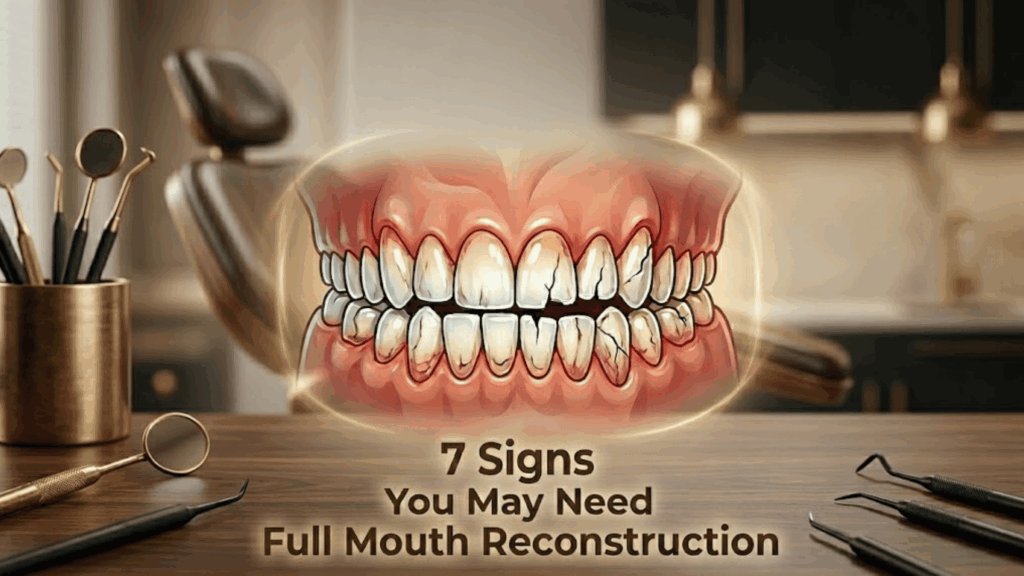
Your teeth and gums can show long-term wear over time. Small issues can build up when treatment gets delayed. In some cases, a single filling or crown cannot fix everything. Full mouth reconstruction treats multiple dental problems together. It focuses on restoring chewing ability, comfort, and everyday function.
Many patients only realize they need it after symptoms become harder to ignore. The seven signs below help you identify when a dental evaluation makes sense.
1. You Experience Chronic Jaw Pain or Headaches
Jaw pain that will not go away often points to a deeper problem. Many patients link this discomfort to temporomandibular joint (TMJ) issues. Misaligned bites place uneven pressure on your jaw joint. Over time, this strain triggers frequent headaches and facial soreness.
According to the National Institute of Dental and Craniofacial Research, TMJ disorders can stem from joint injury, arthritis, or bite problems. If your jaw clicks, locks, or aches daily, your bite may need correction. Full mouth reconstruction can realign your jaw and ease that constant tension.
2. Your Teeth Show Significant Wear or Erosion
Take a close look at your teeth in the mirror. Are they flatter, shorter, or more yellow than before? Enamel erosion happens gradually, often from grinding, acid exposure, or aging. Worn teeth lose their protective layer and become sensitive to hot and cold.
Severe wear changes your bite and facial appearance. It can also expose the inner layers of your teeth, raising your risk for decay. When wear affects most of your teeth, isolated fixes rarely last. A full reconstruction restores proper tooth height and protects what remains.
3. You Are Missing Multiple Teeth
Losing one tooth is a problem. Losing several changes how your whole mouth functions. Gaps shift surrounding teeth out of position. This shifting affects chewing, speech, and even your facial structure over time.
The American Dental Association notes that untreated tooth loss can lead to bone loss and further dental complications. If you are missing multiple teeth, your dentist may recommend implants, bridges, or dentures as part of a complete plan. Reconstructing your bite restores stability across your entire mouth.
4. You Have Ongoing Gum Disease or Bone Loss
Healthy gums hold your teeth firmly in place. When gum disease progresses, it weakens that foundation. Bleeding, swelling, or receding gums signal active infection beneath the surface. The Centers for Disease Control and Prevention reports that untreated gum disease can result in tooth loss and bone deterioration. If bone loss has already occurred, your dentist may combine periodontal treatment with restorative procedures. Addressing gum health early often prevents the need for more extensive reconstruction later.
5. You Struggle to Chew or Speak Comfortably
Eating should not feel difficult or painful. If certain foods cause discomfort, your bite alignment or tooth structure may be compromised. Some patients also notice changes in speech clarity due to missing or misaligned teeth.
These functional problems rarely improve on their own. They tend to worsen as more teeth shift or wear down. Full mouth reconstruction rebuilds your bite so chewing and speaking feel natural again.
6. You Have Multiple Damaged or Decayed Teeth
A single cavity calls for a simple filling. Widespread decay across several teeth is a different situation entirely. Repeated cycles of cavities, root canals, and crowns suggest a larger underlying issue.
Per MedlinePlus, untreated tooth decay can spread and cause infection or tooth loss. When decay affects most of your teeth, full mouth reconstruction offers a coordinated solution. It replaces damaged structures and protects healthy teeth from future harm.
7. You Feel Self-Conscious About Your Smile
Dental problems affect more than oral function. Many patients avoid smiling, speaking up, or socializing because of how their teeth look. Chips, gaps, discoloration, and uneven teeth can chip away at confidence over time.
Full mouth reconstruction often improves both health and appearance together. Some patients also explore dental veneers alongside reconstruction for a refined finish. Restoring your smile can rebuild confidence you thought you lost.
What Happens During Full Mouth Reconstruction
Every treatment plan looks different because every mouth is different. Your dentist will evaluate your bite, gum health, and tooth structure first. From there, treatment may include crowns, implants, bridges, or gum therapy.
Timelines vary based on the extent of damage and the procedures involved. Some patients complete treatment in a few months. Others with more complex needs may require treatment over a year. Your dentist will outline a realistic timeline during your consultation.
Is Full Mouth Reconstruction Painful?
Modern dental techniques prioritize comfort throughout treatment. Most procedures use local anesthesia or sedation as needed. Mild soreness after certain steps is normal and typically temporary.
Why Woodland Hills Patients Trust Dr. Pearl Zadeh
Dr. Pearl Zadeh brings years of restorative dentistry experience to every patient case. You can learn more about her background and approach before your first visit by visiting her professional background page. Many patients in Woodland Hills have shared their experiences after completing treatment. Read real patient testimonials to see how full mouth reconstruction has changed their daily lives. Call (818) 716-6722 or click the button below to schedule your consultation online.
Full mouth reconstruction is a treatment plan that restores or replaces most teeth. It combines restorative and cosmetic dental procedures to improve function and comfort.
2. How do I know if I need full mouth reconstruction?
You may need it if you have multiple damaged, missing, or worn teeth. Ongoing chewing difficulty or bite problems are also common signs.
3. Can constant tooth pain mean I need full mouth reconstruction?
Yes, ongoing tooth pain can signal deeper dental issues. When several teeth are affected, a full reconstruction may be needed instead of single treatments.
4. Is full mouth reconstruction only for severe cases?
It is usually recommended for complex dental problems. However, early evaluation helps prevent issues from becoming more severe over time.
5. What treatments are included in full mouth reconstruction?
Treatment may include crowns, bridges, veneers, implants, or fillings. Your dentist creates a plan based on your specific dental condition.
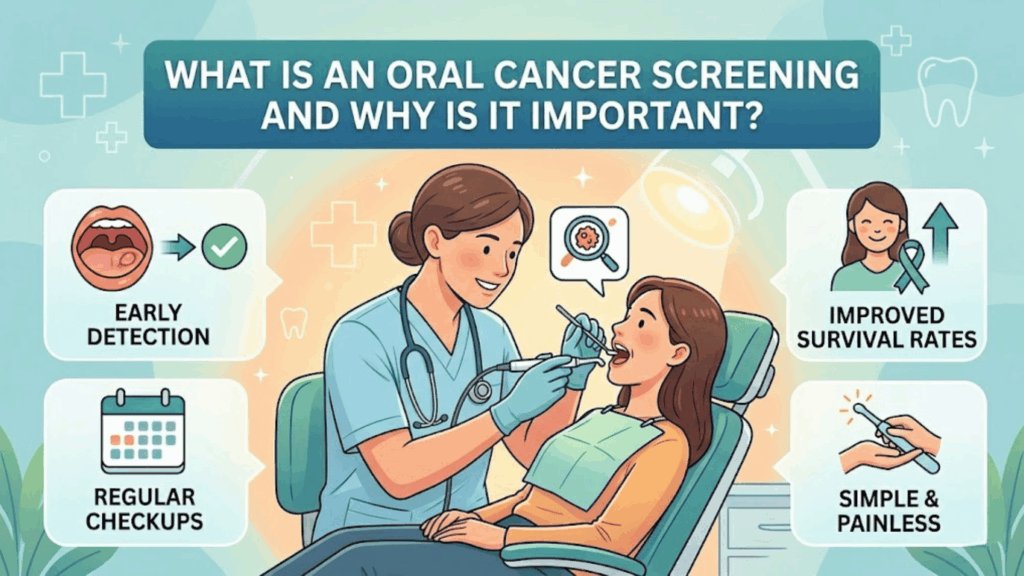
What Is an Oral Cancer Screening and Why Is It Important?
Pearl Zadeh DDSDentistry
An oral cancer screening is a quick check done during a routine dental visit that looks for early signs of abnormal tissue changes in the mouth.
In the early stages, oral cancer often does not cause pain, which is why many cases go unnoticed until they progress.
Because of this, screenings play an important role in detecting changes early, when treatment outcomes are usually more effective.
Why Oral Cancer Can Be Hard to Notice Early
Unlike many other conditions that produce clear early symptoms, oral cancer often develops without causing pain in its early stages.
Small patches of abnormal tissue or minor sores may appear on the tongue, cheeks, or floor of the mouth, and people often mistake them for something minor like a canker sore or simple irritation.
This is why routine dental exams matter. A trained dentist can often spot subtle changes in the mouth that patients would otherwise miss.
What Actually Happens During a Screening
An oral cancer screening usually takes only a few minutes and is done during a routine dental visit without any special preparation.
The dentist examines the lips, cheeks, tongue, and all areas inside the mouth, including the floor and roof, to look for any visible changes. They also check the throat and the back of the tongue.
To complete the exam, the dentist gently feels the jaw and neck to identify any unusual lumps or swelling in the lymph nodes.
If something looks unusual, the dentist records it and monitors it over time to see if it changes.
In some cases, dentists also use tools such as fluorescence light to help highlight tissue changes that are not easily visible under normal lighting. These tools support the clinical exam rather than replace it.
What Your Dentist Is Actually Looking For
Oral cancer can appear in several different ways, although many of the changes dentists look for are not cancer.
White patches that do not wipe away or heal, known as leukoplakia, are one example. Red patches, called erythroplakia, are less common but carry a higher risk of being precancerous.
Other warning signs include sores that do not heal within two weeks, areas that bleed easily, or lumps and thickened tissue anywhere in the mouth.
Dentists also pay attention to changes in movement or sensation, such as numbness in the tongue or difficulty moving the jaw or tongue without a clear cause.
Most of these findings turn out to be harmless irritation or minor injury. Screening is important because it helps identify the small number of cases that need further evaluation.
Who Faces the Highest Risk
Certain lifestyle and health factors can increase the risk of oral cancer, although the condition can still develop in people without any clear risk factors.
Tobacco use is one of the strongest contributors, including cigarettes, cigars, and chewing tobacco. Alcohol use also increases risk, and the combination of alcohol and tobacco raises it significantly more than either factor alone.
HPV infection has also become an important risk factor, particularly for cancers in the back of the mouth and throat. Other risks include long-term sun exposure on the lips, a previous history of oral cancer, and increasing age, especially over 40.
The Oral Cancer Foundation notes that the combined effect of tobacco and alcohol creates a much higher risk profile than either on its own. HPV-related cases are also rising, including in patients who do not have traditional lifestyle risk factors.
Why Early Detection Changes the Outcome
Oral cancer outcomes are closely tied to how early the disease is found. When detected at an early stage, treatment is often simpler and recovery is generally easier.
Stage at Diagnosis
General 5-Year Survival Outlook
Localized, caught early
Significantly higher, often cited above 80 percent
Spread to nearby lymph nodes
Moderately lower than localized cases
Spread to distant parts of the body
Substantially lower than early stage cases
The American Cancer Society reports that survival rates are significantly higher when oral cancer is diagnosed early, and this pattern remains consistent across studies.
Early detection also influences the type of treatment needed. When doctors catch oral cancer early, they can often remove small, localized areas with a minor surgical procedure. When diagnosis happens at a later stage, treatment often involves more extensive surgery and additional therapies such as radiation, along with a longer recovery period.
Why Symptoms Alone Aren’t a Reliable Warning System
Oral cancer does not always produce clear or painful symptoms in its early stages, which is why relying on discomfort alone can delay diagnosis.
Early changes in the tissue are often painless, so a person may not notice anything unusual until the condition has already progressed.
Self-checks at home can help with awareness, but they do not replace a professional screening. Dentists are trained to pick up subtle tissue changes that are easy to overlook without clinical experience.
What Happens If Something Looks Suspicious
Most unusual areas found during a screening are not cancer and often resolve on their own within a couple of weeks.
If a spot does not improve or shows features that raise concern, a biopsy may be recommended. This involves taking a small sample of tissue and sending it to a laboratory for analysis.
The results guide the next steps. In many cases, the findings are benign, and the area is simply monitored over time during routine visits.
Most patients receive an oral cancer screening during routine dental checkups, usually every six months.
For those with higher risk factors such as tobacco or frequent alcohol use, a dentist may recommend closer monitoring of specific areas over time.
Since screening is part of a standard dental visit, there is usually no need to book a separate appointment for it.
Speak With a Dentist About Your Oral Cancer Screening
An oral cancer screening is quick, but it can make a meaningful difference by identifying concerns early, when treatment is usually simpler and outcomes are often better.
Dr. Pearl Zadeh’s Woodland Hills practice includes oral cancer screening as part of routine dental exams, so it becomes a natural part of your regular visit.
Call (818) 716-6722 or click the button below to schedule your appointment and stay on top of your oral health.
No. An oral cancer screening is painless. It involves a visual exam of the mouth along with a gentle check of the jaw and neck to feel for any unusual changes.
2. Can young, healthy people get oral cancer?
Yes. While risk increases with age, HPV-related cases have been seen in younger adults as well, even in people without traditional risk factors like smoking or heavy alcohol use.
3. Is every white or red patch in the mouth a sign of cancer?
No. Most patches are caused by minor irritation and often resolve on their own. Any area that does not heal within about two weeks should be evaluated by a dentist.
4. How accurate is a visual screening alone?
A clinical visual exam is highly effective at identifying suspicious changes. If something looks unusual, a biopsy is the only way to confirm a diagnosis.
5. Should I get screened even if I don’t smoke or drink?
Yes. Although tobacco and alcohol significantly increase risk, oral cancer can still occur in people without either habit, particularly in HPV-related cases.
What are some of the most important daily practices for dental health that you suggest to your patients? Is there something that you feel makes the biggest difference for dental health?
The single most important thing that we all need to remember is that consistency is key. If we can consistently brush, floss, and stay aware that our daily nutrition is a big influencing factor, we can maintain stable and healthy oral health, which can directly also improve our overall systemic and heart health. When I discuss home care routines like brushing and flossing, I am typically met with the question, “if I need to only do one, which one should I do: floss or brush?” When I explain that the toothbrush and the dental floss serve to clean two totally different areas, patients are surprised. Floss is thought to be an adjunctive tool to brushing, and this is false. Floss cleans the surfaces in between the teeth, which are surfaces that the toothbrush bristles cannot access. This is why both toothbrushes and floss need to be used each morning and each evening.
Are there certain ingredients to avoid or look for in mouth washes and rinses?
Avoid products with alcohol! Believe it or not, many mouth rinses contain alcohol. Studies show that using mouth rinses with alcohol several times a day over extended periods of time can be linked to incidents of oral cancers. In addition, if you are a smoker, the mouth rinse with alcohol can have a synergistic effect and even increase the risk of oral cancers in smokers.
You should also avoid products with Triclosan! Triclosan is an endocrine disrupter and can weaken the immune system and lead to allergies and eczema in children when used from a young age.
Do mouth rinses with essential oils. They are great for reducing inflammation of the gums. Oil pulling is also a great option for decreasing gingival inflammation, and it whitens the teeth!
What questions would you suggest a patient ask a dentist before scheduling a visit? Any pointers on how to choose a dentist?
Find out if the dentist really listens to his or her patients. It is important that the dentist you see listens to you and understands your requests, concerns, and fears. Many times, dentists treat all patients the same, as if one size fits all, and this could not be further from the truth when it comes to dental care. It’s also important to find a dentist that is open-minded and will not get upset or frustrated by any of your questions. Ask questions that matter most to you, such as, “is your dentist open to not using fluoride-based polishing agents at your cleanings?” or, “is your dentist aware of the various carcinogens in the materials that are used in most dental offices, like BPA, Bis-GMA, and Triclosan?” or, “does your dentist still place amalgam fillings?”
Why would someone choose a composite compared to a silver filling?
There are many issues, concerns, and debates when it comes to the amalgam versus composite filling comparison. To simplify the situation, 50% of silver amalgam filling material is made of mercury. The other 50% is made of copper, tin, and other trace metals. These are toxic and deadly materials that have no place being anywhere near your mouth. (Drop the mic.)
Are there certain kinds of toothpaste or toothbrushes that you recommend?
Any one that you use! Just kidding. I prefer electric over manual toothbrushes. Among the electric toothbrushes available, Sonicare is my favorite! There is a timer that turns off when you have brushed for two minutes. In addition, if you press too hard, it stops working with the same force to prevent recession that most people tend to cause by brushing too hard. The newer models of Sonicare are Bluetooth-enabled, which I’m not crazy about. We have concerns with EMFs, so adding Bluetooth is another concern. However, the technology is incredible. If you download the Sonicare app, it will show you the specific surfaces on each tooth that you may not be accessing properly where plaque is accumulating, allowing you to improve your oral hygiene independent of a dentist. It will also monitor how many times a day you brush your teeth and how long you brush each time. All the information collected by the app can be forwarded to your dentist, as well.
If you are interested in learning more about how our dental services can help you, please call our Woodland Hills office at (818) 716-6722 for an appointment.
Signs of a Dental Abscess and When to See a Dentist
Pearl Zadeh DDSDentistry
A dental abscess is a sign of an active infection inside or around a tooth. It will not resolve on its own. In many cases, the condition can worsen quickly if it is not treated. The infection may spread to nearby teeth, gums, or deeper facial tissues.
Recognizing the early warning signs is important so you can seek care before complications develop. Below are the key symptoms, common causes, and when to contact a dentist.
What Is a Dental Abscess?
A dental abscess is a pocket of pus caused by a bacterial infection. It usually forms at the root of a tooth or in the surrounding gum tissue. Bacteria enter through a cavity, crack, or gum injury. Once inside, they multiply and trigger inflammation. The body tries to fight back, and pus collects as a result. This buildup creates pressure, which causes the pain most people associate with an abscess.
According to MedlinePlus, a tooth abscess often develops after untreated tooth decay, injury, or previous dental work. The infection can affect different parts of the tooth depending on where bacteria enter.
Periapical Abscess
This type forms at the tip of the tooth root. It often follows a deep cavity or a cracked tooth that exposes the inner pulp.
Periodontal Abscess
This type develops in the gum tissue beside a tooth root. Gum disease or a trapped piece of food can trigger it.
Early Signs of a Dental Abscess
Symptoms often start small and grow worse over a few days. Catching them early gives you more treatment options and less discomfort.
Persistent, Throbbing Tooth Pain
Pain from an abscess feels different than normal sensitivity. It throbs constantly and may radiate to your ear, jaw, or neck. The pain often gets worse when you lie down, since blood flow increases to the area.
Sensitivity to Hot and Cold
A tooth with an abscess often reacts sharply to temperature changes. The sensitivity can linger long after you finish eating or drinking. This lingering pain is a key clue that something deeper is happening inside the tooth.
Swelling in the Face, Cheek, or Jaw
As the infection grows, swelling often appears near the affected tooth. In more advanced cases, your whole cheek or jaw may swell visibly. This swelling can also make it harder to open your mouth fully.
A Foul Taste or Bad Breath
If the abscess ruptures, you may notice a sudden rush of salty or bitter fluid in your mouth. This often comes with persistent bad breath that does not improve with brushing.
Tender or Swollen Lymph Nodes
Lymph nodes under your jaw or in your neck may swell as your body fights the infection. Tenderness in this area often signals that the infection has started to spread beyond the tooth.
Fever and General Illness
A fever often points to a more advanced infection. You may also feel fatigued, achy, or generally unwell. These symptoms mean the infection has moved past the local area and needs urgent care.
When Symptoms Signal a Dental Emergency
Some signs mean you need care right away, not just soon. Recognizing these red flags can prevent a hospital visit.
Swelling that spreads toward your eye or down your neck
Difficulty breathing or swallowing
A fever above 101 degrees Fahrenheit
Rapid swelling that worsens within hours
Severe pain that does not respond to over-the-counter medication
The American Dental Association notes that untreated abscesses can spread infection to the jaw, neck, or even the bloodstream in rare cases. If you notice any of the symptoms above, seek emergency care immediately, since waiting can allow the infection to spread beyond the mouth.
What Causes a Dental Abscess?
Most abscesses trace back to one of a few common causes. Understanding them helps you reduce your own risk going forward.
Untreated tooth decay that reaches the inner pulp
Gum disease that creates deep pockets around the teeth
A cracked or chipped tooth that lets bacteria inside
Diagnosis usually starts with a clinical exam and an X-ray. The X-ray helps your dentist see how far the infection has spread. Treatment then depends on the abscess location and severity.
Draining the Abscess
Your dentist may need to drain the pus pocket to relieve pressure and pain. This step often brings fast relief, though it does not fix the underlying problem alone.
Root Canal Treatment
If the infection reaches the tooth pulp, a root canal often saves the tooth. During this procedure, the dentist removes infected tissue and seals the tooth to prevent reinfection.
Tooth Extraction
When the tooth cannot be saved, extraction may be the safest option. Your dentist will discuss replacement options afterward, depending on your needs and goals.
Antibiotics
Antibiotics may help control the spread of infection, especially if swelling has reached nearby tissue. They do not replace the need to drain or treat the abscess directly, though.
The Cleveland Clinic advises that antibiotics alone rarely resolve a dental abscess, since the source of infection still needs direct treatment.
Can a Dental Abscess Heal on Its Own?
No, a dental abscess will not heal without treatment. The infection may seem to improve if it drains temporarily, but the underlying cause remains. Bacteria continue to multiply unless a dentist removes the source. Waiting too long raises your risk of losing the tooth or developing a more serious infection.
How to Reduce Your Risk of a Dental Abscess
Good daily habits go a long way toward preventing infections. Small, consistent steps matter more than occasional deep cleaning.
Brush twice daily with fluoride toothpaste
Floss once a day to remove trapped food and plaque
Schedule regular dental checkups and cleanings
Treat cavities and cracked teeth promptly
Avoid frequent snacking on sugary foods and drinks
Patients who want to address both health and appearance often ask about dental veneers once an infection has resolved and the tooth structure is stable. Restoring damaged teeth after treatment can rebuild both strength and confidence.
Why Prompt Treatment Matters for Woodland Hills Patients
Dental infections can move fast, and access to timely care makes a real difference. Patients in Woodland Hills benefit from having a trusted local dentist who understands urgent dental needs. Quick action limits pain, protects the tooth, and lowers the risk of complications.
Dr. Pearl Zadeh brings years of clinical experience to every patient who walks through her doors. You can read more about her approach on the About Dr. Pearl page, or review feedback from her patients on the testimonials page.
Schedule a Consultation Today!
Do not ignore signs of a dental abscess or wait for pain to fade. Early care can prevent complications and protect your tooth. Request an appointment with Dr. Pearl Zadeh’s office in Woodland Hills today. Call (818) 716-6722 or click the button below to schedule your consultation online. Timely treatment can reduce discomfort and help preserve your natural smile. Our team will guide you through every step of your care with clear next steps.
You should never let an abscess go untreated. Even a few days of delay can allow the infection to spread further into surrounding tissue.
2. Is a dental abscess an emergency?
Yes, a dental abscess is a dental emergency. Swelling, fever, or spreading pain require urgent attention from a dentist.
3. Can I take antibiotics instead of seeing a dentist?
No, antibiotics alone do not remove the source of infection. You still need a dentist to drain the abscess or treat the affected tooth.
4. What happens if a dental abscess bursts?
A burst abscess often releases a rush of foul-tasting fluid and brings temporary pain relief. The infection still requires dental treatment, since the underlying cause remains.
5. Does a dental abscess always cause visible swelling?
Not always. Some abscesses stay hidden below the gum line with little outward sign besides pain. A dental exam and X-ray can confirm what you cannot see.
What Are Dental Inlays and Onlays? A Complete Guide
Pearl Zadeh DDSDentistry
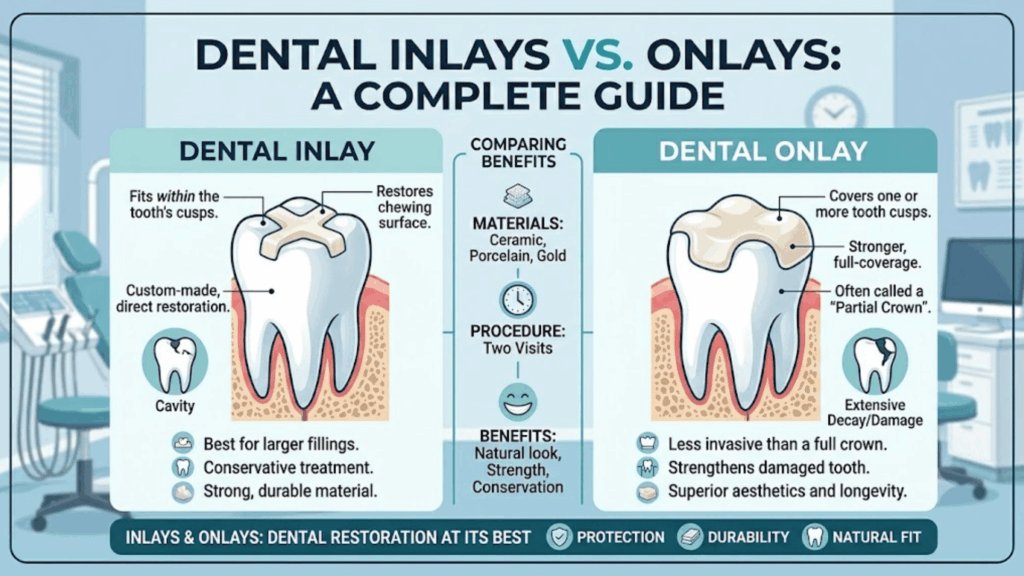
A cavity that is too large for a filling but not severe enough for a crown needs a different approach. Inlays and onlays are designed for these cases.
The choice depends on how much healthy tooth structure remains after decay or an old filling is removed. It is not a preference-based decision. It is based on preservation and long-term strength.
Dr. Pearl Zadeh’s Woodland Hills practice offers dental inlays and onlays to restore teeth while preserving as much natural structure as possible. These restorations help rebuild strength and function while avoiding unnecessary removal of healthy tooth. They also provide a durable option for teeth with moderate damage.
Why Inlays and Onlays Exist as a Separate Category
Tooth cusps take on most of the pressure when you chew. They help spread bite force across the tooth.
A filling simply replaces missing structure inside the tooth. It does not reinforce the outer walls. When a cavity becomes too large, those remaining walls start to flex under pressure. A filling alone cannot prevent that stress.
That repeated flexing often leads to cracks in large fillings. In some cases, it can even crack the surrounding tooth. Inlays and onlays address this by bonding to the tooth and reinforcing its structure. They help the tooth handle chewing forces more evenly.
A crown can also solve this problem, but it requires reducing healthy enamel on all sides. Inlays and onlays preserve more of the natural tooth by treating only the damaged areas.
How Dentists Decide Between a Filling, Inlay, Onlay, or Crown
Dentists base the choice on how much healthy tooth structure remains after removing decay. The strength of the cusps and the size of the damaged area both play a key role.
A filling works when the decay is small and enough natural tooth still supports the structure.
An inlay fits when damage stays within the grooves of the tooth and the cusps remain strong.
An onlay becomes the better option when one or more cusps need support, but the tooth does not require full coverage.
A crown is used when the damage is extensive or when a tooth has undergone root canal treatment. In those cases, the remaining structure often needs full protection.
Treatment decisions can change once the decay is fully removed. Some teeth that seem suitable for a filling may need an onlay after deeper decay becomes visible.
Root canal treated teeth also shift the decision. These teeth tend to be more brittle, so dentists often recommend onlays or crowns for added strength, even when the damage appears moderate at first.
What Is a Dental Inlay?
A dental inlay is a restoration that fits inside the center of a tooth, within the grooves and chewing surface. It does not extend over the cusps of the tooth.
Unlike a regular filling, an inlay is made outside the mouth from a strong material before being bonded into place. This allows for a precise fit and added strength once it is placed.
Because it does not rely on packing material directly into the tooth, an inlay can preserve more natural structure. Dentists often choose it when a filling is too weak, but a crown is not needed.
What Is a Dental Onlay?
A dental onlay extends beyond the central grooves of a tooth and covers one or more cusps. It strengthens areas that are more likely to crack under chewing pressure.
Cusps tend to fracture more often than the center of the tooth. When they lose support, they can flex with every bite. Over time, that stress can lead to a full break, sometimes extending below the gumline.
An onlay protects those weak areas by covering and reinforcing them before damage occurs. It spreads chewing force more evenly across the tooth and the restoration, helping preserve the remaining structure.
Inlays vs Onlays: The Key Differences
Factor
Inlay
Onlay
Coverage area
Stays within the cusps
Extends over one or more cusps
Best for
Decay confined to central grooves
Decay or fracture involving a cusp tip
Cusp structure
Fully intact, no reinforcement needed
Weakened, needs bonded reinforcement
Bite force handling
Tooth’s natural cusps absorb most of the load
Restoration absorbs load across the capped cusp
Compared to a crown
Preserves the most natural tooth structure
Preserves more structure than a crown, less than an inlay
Materials Used in Dental Inlays and Onlays
Material choice affects how a restoration looks and how it wears over time. The long-term success depends more on how well it bonds to the tooth than the material alone.
Porcelain and lithium disilicate ceramic closely resemble natural enamel in color and light reflection. They also handle chewing forces in a way that is similar to natural teeth, which helps protect the opposing tooth. A resin cement bonds the restoration to the tooth, and once it is cured, it forms a strong connection that helps distribute bite pressure evenly.
Composite resin is often used when cost or speed matters. It can sometimes be completed in a single visit. It bonds well to tooth structure but may wear faster in patients who grind or clench their teeth.
Gold works differently. It does not bond chemically to the tooth. Instead, it stays in place through precise shaping and a strong cement layer. This approach has been used for decades and remains reliable because it holds up well over time.
In many cases, the bite matters more than cosmetic preference when choosing a material. Patients who grind their teeth at night often benefit from stronger options like gold or high-strength ceramic.
Same-Day Milled Restorations vs Lab-Made Restorations
Some dentists can complete an inlay or onlay in a single visit using in-office milling systems. After scanning the tooth, the restoration is designed digitally and carved from a ceramic block while the patient waits.
Lab-made restorations take longer because a dental technician builds them in a lab. This allows more control over shade and layering, which can create a closer match to natural enamel in certain cases.
Same-day options work well for back teeth that are not highly visible. Lab-made restorations are often chosen when appearance plays a bigger role, especially in areas that show when you smile.
How the Procedure Actually Works
First Visit
Your dentist removes decay and any failing existing filling material
The remaining tooth structure is evaluated to confirm whether an inlay or onlay is still the right call
A digital scan or physical impression captures the prepared tooth’s exact shape
A temporary restoration protects the tooth and keeps it functional between visits
Second Visit
The temporary is removed and the tooth is cleaned of any residue
The restoration is checked for fit, contact with neighboring teeth, and bite alignment
The bonding surface is treated, typically etched and primed, to maximize bond strength
Resin cement secures the restoration, then a curing light hardens it permanently
That bite check matters more than patients usually realize. A restoration sitting even slightly high concentrates force unevenly and can cause pain that has nothing to do with the tooth itself, only the bite.
Why Inlays and Onlays Sometimes Fail
Inlays and onlays are strong restorations, but a few issues can still affect their long-term success.
Bond failure can happen if moisture gets in during placement. Even small amounts of contamination can weaken how well the restoration attaches to the tooth.
Decay can also return at the edges where the restoration meets natural tooth structure. This often develops slowly and may go unnoticed at first.
Heavy grinding or clenching can place extra stress on the restoration. Without a nightguard, this pressure can eventually cause fractures.
Sometimes, failure happens because a cusp was not fully covered when an onlay was needed. That weak area can break later under normal chewing forces.
This is why careful diagnosis matters from the beginning. A tooth that actually needs an onlay may not do well with an inlay, since uncovered cusps remain vulnerable over time.
How Long Do They Actually Last?
Ceramic and gold inlays and onlays often last 15 to 30 years when they are placed well and cared for properly. Composite restorations usually last around 5 to 10 years before signs of wear start to appear.
Longevity depends on bite strength, grinding habits, and how well the edges of the restoration stay sealed over time. A patient who clenches or grinds at night will usually see faster wear compared to someone without those habits.
Regular dental checkups help spot early signs of wear or leakage at the margins. Catching these changes early can prevent more serious problems, like decay forming underneath the restoration.
Caring for an Inlay or Onlay
Daily care plays a big role in how long an inlay or onlay lasts. Brush twice a day using a soft-bristled toothbrush, paying close attention to the gumline around the restoration.
Flossing once a day also matters, since decay often starts between teeth where plaque builds up unnoticed. It helps to avoid habits that put sudden stress on teeth, such as biting ice, hard candy, or popcorn kernels.
If you grind or clench your teeth at night, a nightguard can protect the restoration from excess pressure and reduce long-term wear.
Regular dental cleanings every six months allow your dentist to check the margins and catch early signs of leakage or decay before they become larger problems.
The American Dental Association emphasizes that consistent oral hygiene and routine dental visits help extend the lifespan of bonded restorations like inlays and onlays.
Schedule a Consultation Today
Inlays and onlays can strengthen a damaged tooth while preserving more natural structure, but the right choice depends on what the tooth actually needs after a full evaluation.
Many patients share their experiences through our patient testimonials, highlighting their comfort during treatment and long-term results.
Dr. Pearl Zadeh’s Woodland Hills practice reviews each case carefully before recommending a treatment plan. If you are dealing with a damaged or sensitive tooth, call (818) 716-6722 or click the button below to schedule your consultation online.
Many people think missing teeth are mainly a cosmetic issue. While appearance certainly matters, the bigger concern often involves what happens beneath the surface over time.
A missing tooth changes far more than your smile.
Once a tooth disappears, the surrounding teeth, jawbone, bite alignment, and chewing patterns begin adapting to that empty space. Unfortunately, those changes rarely improve oral health. In most cases, they gradually create additional dental problems that become harder and more expensive to treat later.
Some patients lose a tooth and feel fine for months or even years. However, the absence of immediate pain does not mean the bite remains stable.
Knowing how missing teeth affect your bite helps explain why dentists recommend replacing missing teeth sooner rather than later.
Your Bite Depends on Balance
Your bite works like a connected system.
Every tooth supports surrounding teeth and helps distribute chewing pressure evenly across the mouth. Upper and lower teeth also stabilize each other during biting and chewing.
When one tooth disappears, that balance changes immediately.
The remaining teeth must suddenly handle forces they were not designed to absorb alone. Over time, the mouth begins compensating for the missing space.
Those compensations often create long-term problems involving:
Tooth shifting
Bite misalignment
Jaw strain
Uneven tooth wear
Bone loss
Difficulty chewing
Even losing a single tooth can eventually affect the entire bite system.
Teeth Naturally Shift Into Empty Spaces
One of the most common consequences of tooth loss is tooth movement.
Teeth constantly experience small pressures from:
Chewing
Swallowing
Tongue movement
Jaw function
Normally, neighboring teeth stabilize each other. However, once a tooth goes missing, nearby teeth lose that support.
As a result, adjacent teeth may begin:
Tilting
Drifting
Rotating
Leaning into the gap
This shifting may happen slowly, which is why many patients do not notice it right away.
However, over time, even small movements can significantly alter bite alignment.
Opposing Teeth Can Over-Erupt
Missing teeth also affect the tooth directly above or below the empty space.
Normally, opposing teeth contact each other during chewing, which helps maintain proper positioning.
Without that contact, the opposing tooth may gradually move outward into the gap. Dentists call this supraeruption or over-eruption.
For example:
A missing lower molar may allow the upper molar above it to drift downward
A missing upper tooth may allow the lower tooth to rise upward
Over-erupted teeth can create several problems:
Bite interference
Tooth sensitivity
Gum exposure
Increased wear
Difficulty restoring the missing tooth later
This process often complicates future dental treatment because the bite no longer fits together properly.
Missing Teeth Change How You Chew
Most patients naturally avoid chewing on the side with the missing tooth.
At first, this may feel harmless. However, uneven chewing patterns place extra pressure on certain teeth and jaw muscles.
Over time, this imbalance can contribute to:
Excessive tooth wear
Jaw fatigue
Muscle tension
Bite instability
Cracked teeth
Patients sometimes develop habits they do not even realize they have. For example, consistently chewing on one side may overload specific teeth for years before symptoms appear.
The longer the imbalance continues, the more stress the bite system absorbs.
Bite Changes Can Lead to TMJ Problems
Your temporomandibular joints (TMJ) help coordinate jaw movement during speaking, chewing, and swallowing.
When missing teeth alter bite alignment, the jaw joints may also begin functioning differently.
This does not mean every missing tooth causes TMJ disorder. However, long-term bite instability can increase strain on the jaw muscles and joints.
Some patients eventually notice:
Jaw clicking
Jaw pain
Facial tension
Headaches
Difficulty chewing
Limited jaw movement
The risk becomes higher when multiple teeth are missing or when bite collapse progresses over time.
Bone Loss Begins After Tooth Loss
One of the most important changes happens below the gums.
Tooth roots stimulate the jawbone whenever you chew. That stimulation helps maintain healthy bone density.
Once a tooth disappears, the jawbone in that area no longer receives normal stimulation.
As a result, the body begins reabsorbing bone tissue gradually.
This process can lead to:
Shrinking jawbone volume
Changes in facial structure
Reduced support for neighboring teeth
Difficulty placing dental implants later
Bone loss often progresses silently. Many patients do not realize how much bone disappeared until they seek tooth replacement years later.
Missing Teeth Can Accelerate Tooth Wear
An uneven bite changes how chewing pressure spreads across the mouth.
Certain teeth may suddenly absorb more force than before.
This increased pressure can lead to:
Flattened enamel
Cracked teeth
Chipped restorations
Tooth sensitivity
Fractures
Patients who grind or clench their teeth often experience even faster wear after tooth loss because the bite no longer distributes forces evenly.
Over time, the bite may gradually collapse further as more teeth become damaged.
Speech Can Change Over Time
Teeth play an important role in speech clarity, especially front teeth.
Missing teeth may affect pronunciation of sounds involving:
“S”
“F”
“T”
“V”
Some patients adapt quickly, while others develop speech difficulties or altered tongue positioning.
As teeth shift further over time, speech changes may become more noticeable.
Facial Structure May Gradually Change
Many patients do not realize missing teeth can eventually affect facial appearance.
When multiple teeth remain missing for years, bone loss and bite collapse may contribute to:
Sunken facial appearance
Reduced lip support
Thinner facial profile
Premature facial aging
Shortened lower face height
These changes tend to develop gradually, especially when several back teeth are missing.
The effect often becomes more visible after long-term untreated tooth loss.
Missing Back Teeth Still Matter
Some patients ignore missing molars because they are less visible when smiling.
However, back teeth handle most chewing pressure.
Losing molars can significantly affect:
Bite stability
Chewing efficiency
Jaw alignment
Pressure distribution
Additionally, missing back teeth often increase stress on the front teeth, which are not designed for heavy chewing forces.
Over time, front teeth may begin wearing down or shifting as compensation occurs.
Replacing Missing Teeth Helps Protect the Bite
Replacing missing teeth helps restore balance within the mouth before more changes occur.
Among these options, dental implants provide one major advantage because they stimulate the jawbone similarly to natural tooth roots.
That helps reduce ongoing bone loss.
Why Early Treatment Matters
The longer a tooth remains missing, the more the bite changes.
Early tooth replacement often allows for:
Simpler treatment
Better bite preservation
Less tooth shifting
Reduced bone loss
Lower risk of future complications
Waiting several years may require additional procedures such as:
Orthodontics
Bone grafting
Bite reconstruction
Gum treatment
In other words, delaying treatment usually increases complexity.
Some Bite Changes Happen Slowly and Silently
One reason patients delay treatment is because the changes often occur gradually.
You may not notice:
Slight tooth drifting
Minor bite shifts
Early bone loss
Uneven pressure changes
However, dentists can often identify these problems early during routine exams and X-rays.
Addressing missing teeth before major bite collapse develops usually leads to better long-term outcomes.
Restore Your Bite Before More Problems Develop
Missing teeth affect much more than appearance alone. Over time, they can change how your teeth fit together, how your jaw functions, and how pressure spreads throughout your bite.
As teeth shift, bone loss develops, and chewing patterns change, the risk of additional dental problems continues increasing. What begins as one missing tooth can eventually affect the stability of the entire mouth.
Replacing missing teeth early helps protect your bite, preserve jawbone health, and reduce the risk of future complications.
If you are missing one or more teeth and want to explore your treatment options, call (818) 716-6722 or click the button below to schedule your consultation online.
1. How quickly do teeth start shifting after a tooth is lost?
Teeth can begin shifting within a few weeks to months after a tooth is lost. The speed depends on bite pressure, location of the missing tooth, and overall dental health. In many cases, small movements happen gradually, so patients do not notice them right away.
2. What happens if I don’t replace a missing tooth?
If you don’t replace a missing tooth, nearby teeth may drift into the empty space, the opposing tooth may over-erupt, and your bite may slowly become misaligned. Over time, this can also lead to bone loss, uneven chewing, and increased stress on other teeth.
3. Can one missing tooth really affect my entire bite?
Yes. Even a single missing tooth can disrupt bite balance. Since every tooth works as part of a system, the loss of one tooth can change how pressure distributes across the mouth and lead to shifting, wear, and long-term alignment changes.
4. Is bone loss after tooth loss permanent?
Bone loss in the jaw can become permanent if it is not treated early. Once the jawbone starts shrinking due to lack of stimulation, it may continue to deteriorate over time. Dental implants can help preserve bone by providing stimulation similar to a natural tooth root.
5. What is the best way to replace a missing tooth?
The best option depends on your situation. Dental implants are often preferred because they replace both the tooth and root, helping maintain bone health. Bridges and partial dentures may also be suitable depending on the number of missing teeth, bone condition, and bite alignment.
The Future is Now: The Use of AI Technology in a Dental Office
Pearl Zadeh DDSDentistry
The Future is Now: The Use of AI Technology in a Dental Office
Imagine walking into a dental office where your diagnosis is faster, your treatment plan more accurate, and your overall experience smoother, all thanks to artificial intelligence (AI). This isn’t science fiction. AI technology is already transforming dental practices across the globe.
From improving diagnostic precision to streamlining administrative tasks, AI is helping dental professionals deliver better care, faster and more efficiently. In this article, we’ll explore how AI is being used in dental offices today, what benefits it offers patients and practitioners alike, and what the future might hold.
How Is AI Used in a Dental Office?
Artificial intelligence in dentistry isn’t about replacing dentists, it’s about enhancing their capabilities. Here are the main ways AI is being used in modern dental offices:
1. AI in Dental Diagnostics
One of the most powerful applications of AI is in diagnostic imaging. Dental AI software can analyze X-rays, 3D scans, and intraoral images with remarkable accuracy.
What it does:
Detects cavities (caries), fractures, bone loss, and infections
Flags abnormalities that may be missed by the human eye
Compares historical data for changes over time
Example: AI platforms like Overjet and Pearl are FDA-approved tools that analyze dental radiographs in real time, offering insights within seconds. This helps dentists confirm their findings or spot issues earlier.
Benefits:
Faster and more accurate diagnoses
Reduced human error
Enhanced patient trust through visual, AI-backed reports
2. Treatment Planning and Case Presentation
AI can support dentists in creating highly personalized treatment plans.
How it helps:
Maps out ideal treatment sequences based on patient history and current condition
Suggests options for restorative or cosmetic procedures
Creates 3D simulations to show expected outcomes
This is especially useful in orthodontics, where AI-driven platforms like Invisalign’s ClinCheck software use predictive modeling to forecast tooth movement and treatment length.
3. AI-Powered Scheduling and Office Management
AI isn’t just clinical, it’s also transforming the business side of dentistry.
Smart scheduling tools use machine learning to:
Optimize appointment slots
Reduce no-shows through predictive analytics
Suggest ideal follow-up times for specific procedures
Revenue cycle management tools powered by AI can also:
Verify insurance coverage in real time
Automate billing and coding
Reduce administrative workload
4. Virtual Assistants and Patient Communication
Think of AI chatbots or voice assistants like Siri or Alexa, but tailored for dentistry.
AI can:
Answer patient questions 24/7
Handle appointment requests or reminders
Provide post-op care instructions
Collect feedback automatically
This improves patient experience while reducing the time staff spend on routine calls and emails.
5. Clinical Decision Support
AI tools can assist clinicians with evidence-based decision-making.
For example, AI systems can:
Suggest alternative treatments based on success rates
Alert clinicians to drug interactions or contraindications
Analyze large datasets from similar cases to guide decisions
This kind of decision intelligence can be particularly valuable for complex or rare cases.
Benefits of Using AI in a Dental Practice
Implementing AI technology in your dental office can lead to measurable improvements in both patient outcomes and practice efficiency.
For Patients:
Faster, more accurate diagnoses
Customized treatment plans
Improved communication and transparency
Reduced wait times
For Dental Professionals:
Enhanced diagnostic support
Streamlined workflows
Less time on admin, more time with patients
Data-driven decisions for better care
Is AI Replacing Dentists?
This is a common concern, but the answer is no.
AI is not here to take over. It’s here to assist. While AI can process data faster and more consistently than a human, it lacks the nuanced understanding, empathy, and manual skills that only a trained dental professional can provide.
Think of AI as a powerful tool, not a replacement. It enhances clinical judgment, improves operational efficiency, and allows dental professionals to focus more on patient care.
What Does It Take to Integrate AI in a Dental Office?
Implementing AI doesn’t mean overhauling your entire practice overnight. Many AI solutions are designed to integrate with existing dental software, such as:
Practice management systems (Dentrix, Eaglesoft, Open Dental)
Imaging software
Patient communication platforms
Key steps include:
Assess your needs Identify where AI could offer the most impact, diagnostics, scheduling, billing?
Choose the right tools Look for FDA-cleared AI software with proven results and strong customer support.
Train your team Ensure your staff understands how to use the tools and communicate the benefits to patients.
Educate your patients Patients may be intrigued, or skeptical. Explain how AI enhances their care and privacy is protected.
What’s Next? The Future of AI in Dentistry
As AI continues to evolve, we can expect even more advanced applications:
Predictive analytics for patient outcomes and disease progression
Robotics integration for surgical assistance
Real-time chairside decision-making tools
Voice-command charting and documentation
AI will also play a critical role in teledentistry, making remote consultations more robust and accessible.
Conclusion: Embracing AI for a Smarter Dental Practice
The use of AI technology in a dental office isn’t just a trend, it’s a strategic move toward better patient care and smarter business operations. From enhancing diagnostics to automating office tasks, AI allows dental professionals to work more efficiently and deliver a superior patient experience.
At Dr. Pearl Zadeh DDS, we’re committed to staying ahead of the curve. We’ve integrated AI-powered tools to ensure every patient receives accurate, timely, and personalized care.
Ready to see the future of dentistry in action? Contact us today to schedule your appointment or request a demo of our AI-enhanced services. Let’s redefine your dental experience, together.