What Happens If You Delay Replacing a Damaged Crown?
Dental crowns protect weakened teeth, restore chewing function, and help prevent further structural damage. However, crowns do not last forever. Over time, they can crack, loosen, wear down, or develop problems around the edges.
Many patients delay replacing a damaged crown because the tooth may not hurt immediately. Others assume a small chip or loose feeling is not serious enough to require urgent attention. Unfortunately, waiting too long can turn a relatively simple dental issue into a much larger problem.
A damaged dental crown no longer protects the tooth properly. Once that protective barrier fails, bacteria, pressure, and daily chewing forces can begin affecting the underlying tooth structure.
Understanding what happens when you delay crown replacement can help you avoid more expensive and invasive treatment later.
What Counts as a Damaged Dental Crown?
Not all crown problems look dramatic. Some issues start subtly and gradually worsen over time.
A crown may need replacement if it becomes:
- Cracked
- Chipped
- Loose
- Worn down
- Broken
- Leaking around the edges
- Uncomfortable while chewing
- Discolored near the gum line
Sometimes the crown itself still looks intact, but the tooth underneath develops decay or structural damage.
That is why even minor symptoms deserve professional evaluation.
Why a Dental Crown Matters So Much
A dental crown acts like a protective shell over a weakened tooth.
Dentists often place crowns after:
- Root canal treatment
- Large fillings
- Cracked teeth
- Severe tooth decay
- Dental implants
- Broken teeth
Without proper protection, these teeth become much more vulnerable to fracture and bacterial invasion.
Once a crown becomes damaged, the underlying tooth loses much of that protection.
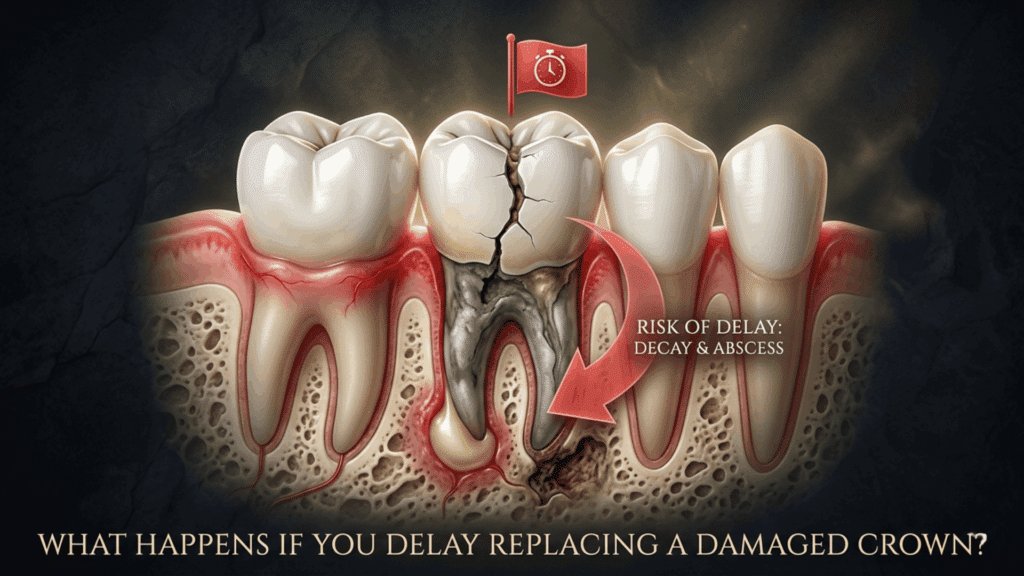
1. Bacteria Can Enter Under the Crown
One of the biggest risks of delaying crown replacement is bacterial leakage.
When a crown cracks or loosens, tiny gaps can form between the crown and the tooth.
Those openings allow:
- Food particles
- Saliva
- Oral bacteria
to enter underneath the restoration.
Unfortunately, decay beneath a crown often develops silently. Many patients do not notice symptoms until the cavity becomes advanced.
By that point, the tooth may require:
- A root canal
- Extensive rebuilding
- Tooth extraction
Early replacement helps prevent bacteria from reaching deeper tooth structures.
2. The Tooth Can Crack Further
A damaged crown cannot distribute biting pressure properly.
As a result, the tooth underneath absorbs more stress during:
- Chewing
- Grinding
- Clenching
- Daily bite pressure
Small structural weaknesses can quickly become major fractures.
For example, a tooth with a cracked crown may initially only need a crown replacement. However, if the tooth fractures deeper below the gum line, the dentist may no longer be able to save it.
That can eventually lead to tooth extraction and replacement with:
- A dental implant
- A bridge
- A partial denture
Replacing a damaged crown early often prevents this chain reaction.
3. Tooth Decay Can Spread Rapidly
Decay underneath a crown behaves differently than a typical cavity.
Since the crown covers most of the tooth, the damage often remains hidden from view.
Meanwhile, bacteria continue spreading beneath the restoration.
Patients may only notice symptoms when they experience:
- Sensitivity
- Pain while chewing
- Swelling
- Bad taste
- Gum irritation
At that stage, the decay may already involve the nerve of the tooth.
In some cases, dentists must remove both the crown and large portions of damaged tooth structure before rebuilding the area.
4. Gum Problems May Develop Around the Crown
A damaged or poorly fitting crown can also irritate surrounding gum tissue.
When the crown margin no longer fits properly, plaque and bacteria accumulate more easily around the edges.
That increases the risk of:
- Gum inflammation
- Bleeding gums
- Gum recession
- Chronic irritation
- Periodontal infection
Additionally, bacteria trapped around the crown may create persistent bad breath or unpleasant taste.
Healthy crown margins help protect both the tooth and the surrounding gums.
5. Bite Problems Can Get Worse
Even small crown damage can affect how your bite functions.
For example:
- A cracked crown may change pressure distribution
- A loose crown may shift slightly during chewing
- A worn-down crown may alter bite height
Over time, these changes can create:
- Jaw discomfort
- Tooth sensitivity
- Uneven tooth wear
- Clenching habits
- TMJ-related strain
Patients sometimes focus only on the damaged crown itself and overlook how it affects the entire bite system.
6. A Loose Crown Can Fall Off Completely
Loose crowns rarely tighten back on their own.
Instead, they usually continue weakening until they eventually detach.
When a crown falls off completely, the exposed tooth becomes extremely vulnerable.
That tooth may experience:
- Sensitivity to temperature
- Pain while chewing
- Rapid decay exposure
- Increased fracture risk
Additionally, if the crown remains off for too long, surrounding teeth may gradually shift position.
That movement can complicate crown replacement later because the original crown may no longer fit correctly.
7. Delaying Treatment Often Increases Costs
Many patients postpone crown replacement hoping to avoid dental expenses.
Ironically, waiting often leads to more complex and expensive treatment.
For example:
| Early Treatment | Delayed Treatment |
| Crown replacement | Root canal + crown |
| Minor repair | Tooth extraction |
| Simple recementing | Dental implant |
| Limited decay removal | Extensive tooth reconstruction |
Addressing problems early usually preserves more natural tooth structure and lowers long-term treatment costs.
How Long Can You Safely Wait?
There is no universal timeline because every situation differs.
However, patients should never ignore:
- Pain
- Looseness
- Cracks
- Visible damage
- Swelling
- Bite changes
- Sensitivity around a crown
Even if symptoms seem mild, the underlying problem may still progress silently.
The earlier your dentist evaluates the crown, the better the chance of saving the tooth with conservative treatment.
Signs Your Crown May Need Immediate Attention
Certain symptoms deserve prompt dental evaluation.
Persistent Pain
Pain often signals decay, infection, or structural damage beneath the crown.
Crown Movement
A crown should never feel loose or unstable.
Swelling Around the Tooth
Swelling may indicate infection.
Bad Odor or Taste
This can occur when bacteria collect under a leaking crown.
Difficulty Chewing
Pressure discomfort may signal cracks or bite imbalance.
Visible Cracks or Chips
Even small visible damage can weaken the entire restoration.
Can a Damaged Crown Be Repaired Instead of Replaced?
Sometimes, yes.
Minor cosmetic chips may allow simple repair. In other cases, dentists can recement a crown if:
- The crown remains structurally sound
- The underlying tooth stays healthy
- The fit remains accurate
However, replacement becomes necessary when the crown has:
- Major cracks
- Poor fit
- Decay underneath
- Structural instability
- Advanced wear
A clinical examination and dental X-rays help determine the best option.
What Happens During Crown Replacement?
The process depends on the condition of the tooth underneath.
Your dentist may:
- Remove the old crown
- Evaluate the underlying tooth
- Remove decay if present
- Rebuild damaged tooth structure if needed
- Take digital or physical impressions
- Place a temporary crown
- Fit the final custom crown
If the underlying tooth remains healthy, replacement may be relatively straightforward.
However, delayed treatment often increases complexity.
How to Make Dental Crowns Last Longer
Although crowns eventually wear over time, proper care significantly improves longevity.
Maintain Good Oral Hygiene
Brush and floss carefully around crown margins.
Avoid Excessive Grinding
Nightguards help protect crowns from clenching and grinding forces.
Attend Regular Dental Exams
Routine visits help dentists detect small problems before they become major ones.
Avoid Using Teeth as Tools
Opening packages or chewing hard objects increases fracture risk.
Address Small Symptoms Early
Minor discomfort today may prevent major treatment later.
Get Your Damaged Crown Evaluated Early
Delaying replacement of a damaged crown can lead to far more than cosmetic concerns.
Once a crown loses its seal or structural stability, the underlying tooth becomes vulnerable to decay, fractures, infection, and bite complications. What starts as a small crack or loose feeling can eventually result in root canal treatment, tooth loss, or the need for a dental implant.
The earlier you address crown damage, the more treatment options you typically have available. Early intervention also helps preserve natural tooth structure and reduces the risk of more invasive procedures later.
If you suspect your dental crown is damaged, loose, or no longer fitting properly, call (818) 716-6722 or click the button below to schedule your consultation online.
Frequently Asked Questions
1. How do I know if my dental crown needs to be replaced?
A dental crown may need replacement if you notice pain, sensitivity, looseness, visible cracks, swelling around the tooth, or discomfort while chewing. In some cases, decay develops underneath the crown without obvious symptoms, which is why regular dental exams are important.
2. What happens if I ignore a cracked dental crown?
Ignoring a cracked crown can allow bacteria to enter underneath the restoration and damage the tooth. Over time, this may lead to decay, infection, tooth fractures, root canal treatment, or even tooth loss if the damage becomes severe.
3. Can a loose dental crown become an emergency?
Yes. A loose crown can shift while chewing or fall off completely, leaving the tooth exposed and vulnerable to fracture and infection. If the crown comes off, patients should contact their dentist as soon as possible to avoid further damage.
4. Is it cheaper to repair a damaged crown early?
Usually, yes. Early treatment may only require a simple repair or crown replacement. However, delaying treatment can lead to more expensive procedures such as root canals, tooth reconstruction, extractions, or dental implants.
5. Can tooth decay develop under a dental crown?
Yes. Even though crowns protect teeth, bacteria can still enter underneath damaged or poorly fitting crowns. Since the decay often stays hidden beneath the restoration, patients may not notice the problem until it becomes more advanced.