“You need a crown.” Three words, and suddenly you’re driving home wondering if that tooth really needs one, whether a filling could have handled it, or whether you should just ask someone else. That’s a completely reasonable reaction, especially when the treatment costs real money and permanently changes a tooth you can’t undo.
A second opinion can genuinely help when you’re uncertain. It isn’t about shopping around until someone tells you what you want to hear. It’s about understanding your situation well enough to make a decision you actually feel good about.
What Does a Crown or Bridge Actually Do?
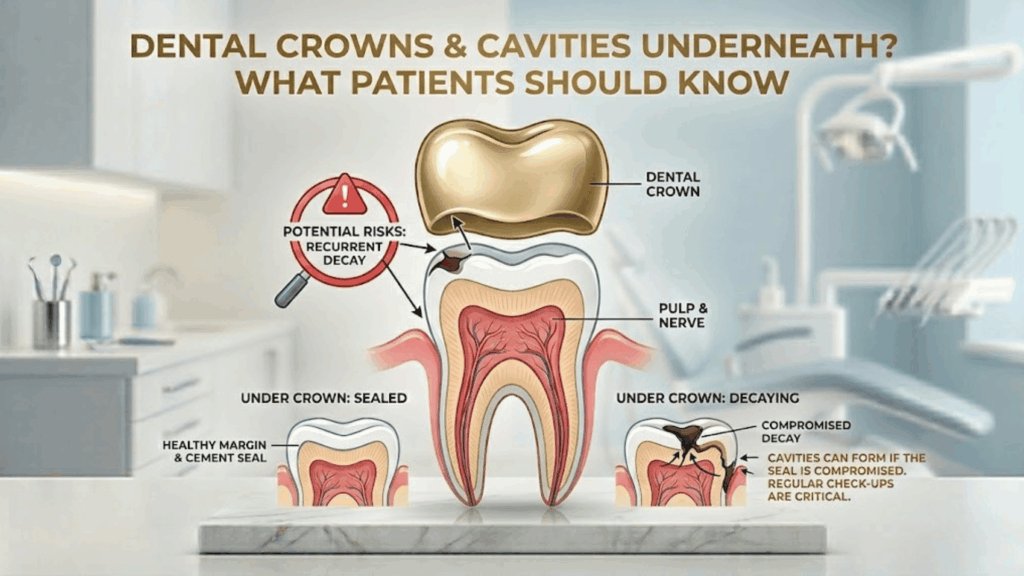
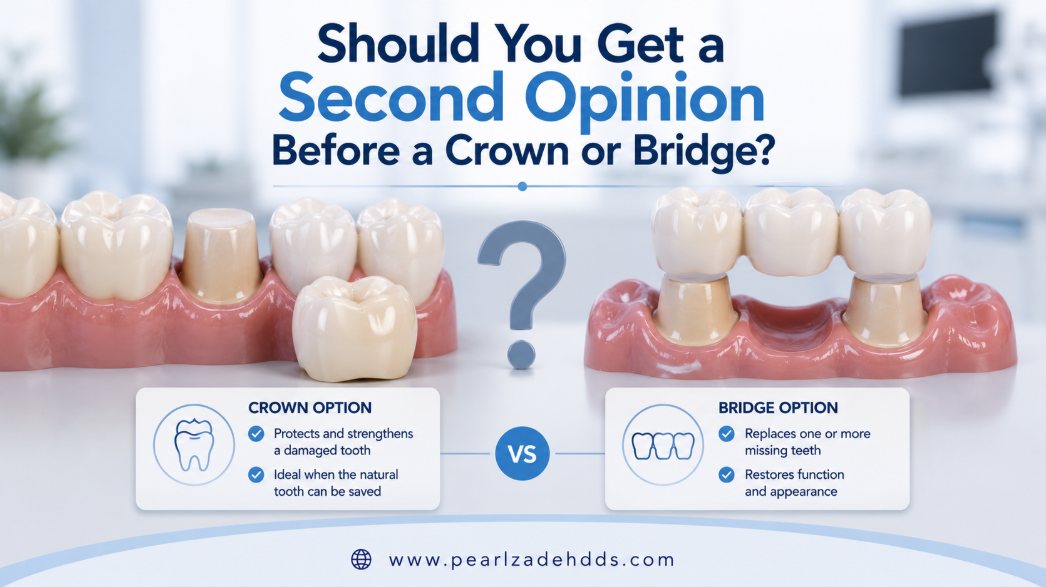
A crown covers and protects a damaged or weakened tooth, essentially capping it with a new outer surface. The American College of Prosthodontists notes that crowns are commonly considered for teeth with very large fillings, teeth that have had root canal treatment, fractured teeth, teeth worn down from grinding, and teeth that are misshapen or discolored. Having one of these conditions doesn’t automatically mean a crown is the only answer for every tooth in that situation. It just means a crown becomes a reasonable option worth discussing.
A bridge replaces a missing tooth by anchoring a replacement to the teeth on either side of the gap, or occasionally to other supporting structures. The American College of Prosthodontists describes this straightforwardly: neighboring teeth typically act as anchors holding the replacement tooth in place. It’s a well-established, routine procedure, though the same organization is direct about consulting a dental professional before deciding, which is really the whole point of this article.
Do You Really Need a Second Opinion?
Not always, but sometimes it genuinely makes sense. A few situations where seeking another opinion is reasonable:
- The recommended treatment is extensive
- The procedure can’t be undone
- You don’t fully understand why treatment is necessary
- More than one treatment option came up without a clear reason to prefer one
- The diagnosis feels unclear
- You’ve gotten conflicting explanations somewhere along the way
- You feel rushed into a decision
- The cost is significant enough that you want to understand your options
- The tooth has a complicated history behind it
On the other hand, a second opinion may not add much if the diagnosis and plan are straightforward, your dentist has answered your questions clearly, and you already feel comfortable moving forward. Getting one isn’t mandatory just because a tooth needs work.
Why Can Two Dentists Recommend Different Treatments?
Dentistry sometimes has more than one reasonable path forward for the same tooth. Two dentists examining the same situation might weigh:
- Remaining tooth structure
- Cracks or fractures
- Wear patterns
- Bite forces
- Gum health
- Existing fillings or restorations
- The condition of neighboring teeth
- Aesthetic goals
- Long-term prognosis
- Your own preferences
- How realistically the tooth can be maintained going forward
A different recommendation between two dentists doesn’t automatically mean one of them got it wrong. It often just reflects a genuinely different, reasonable read on the same set of factors.
When Is a Crown More Appropriate Than a Filling?
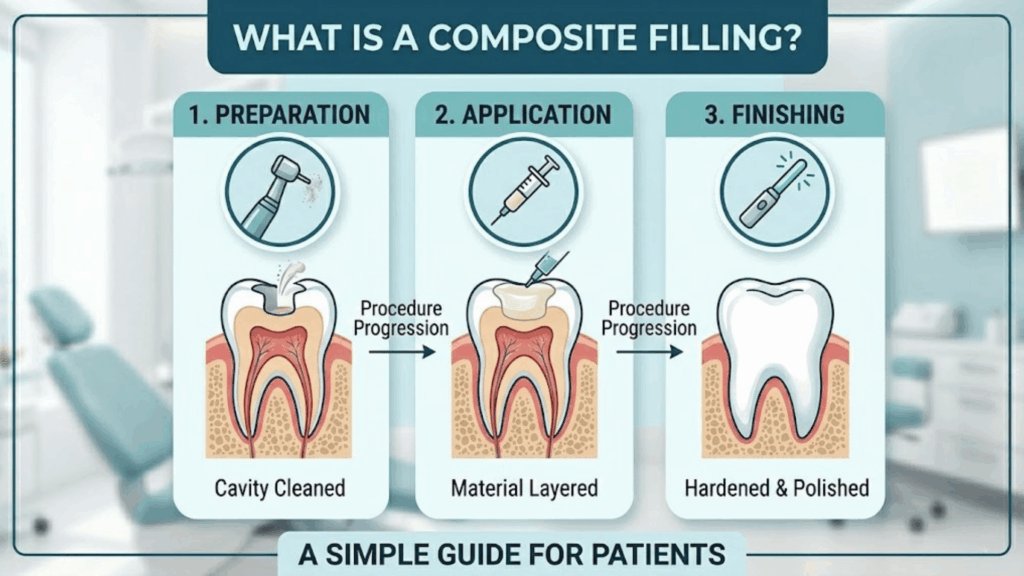
A filling replaces tooth structure that’s been lost, typically to decay. A crown covers the tooth entirely when more protection or coverage is actually needed, not just a patch for a specific spot. The real decision comes down to how much healthy tooth structure is left and how that tooth holds up under normal bite forces, not simply how large a cavity happens to look on an X-ray. A large cavity doesn’t automatically mean a crown, and a small one doesn’t automatically rule one out.
When Might a Bridge Be Recommended?
A bridge tends to come up as an option depending on where the missing tooth is located, the condition of the neighboring teeth that would anchor it, gum and bone health, your bite, how many teeth are actually missing, your own preferences, and what long-term maintenance would realistically look like. Whether a bridge, an implant, or another approach fits your situation depends on an evaluation of your specific mouth. No single replacement option is universally the better choice for every patient.
What Should You Ask During a Second Opinion?
A few genuinely useful questions to bring with you: What exactly is wrong with the tooth? Why do you recommend this specific treatment? What happens if I wait? Is there another option that could work? How predictable is each approach? How much healthy tooth structure is actually left? Is the tooth cracked? How does my bite factor into this? What are the risks involved? How long might this realistically last? What maintenance will it need? What happens if it eventually fails? And what’s actually included in the quoted cost? You don’t need to ask every single one verbatim. Picking the ones that address your actual uncertainty is enough.
What Should the Second Dentist Examine?
A useful second opinion involves an actual clinical evaluation, not just a quick look or a conversation based on your description. Depending on your situation, that might include reviewing:
- Dental X-rays
- Existing restorations
- The tooth’s structure
- Any cracks or fractures
- Your bite
- Gum health
- Neighboring teeth
- Your symptoms
- Previous dental treatment
A dentist shouldn’t hand you a definitive recommendation based solely on a photo you texted over or a verbal description of what the first dentist said.
Should You Bring Your X-Rays and Dental Records?
Bringing relevant records tends to make a second opinion considerably more useful, since it saves the second dentist from having to start from scratch. You can ask your original dental office directly about transferring or sharing the appropriate records and radiographs. Most offices handle this as a routine request.
What If the Two Dentists Disagree?
Don’t automatically choose whichever dentist recommended the cheapest or least invasive option. Instead, take the disagreement back to both dentists directly: Why do you recommend this? What are the alternatives? What are the risks? What happens if I wait? What’s the expected long-term outcome? What would actually change your recommendation? For a genuinely complicated case, a third opinion or a referral to an appropriate specialist can sometimes clarify things further.
Is It Okay to Wait Before Getting a Crown or Bridge?
There’s no universal answer here. Some situations can tolerate a short period while you gather more information. Others need prompt treatment, since the tooth could fracture further, become infected, or continue deteriorating the longer it waits. The most useful question to ask your own dentist directly is simply: “Is it safe for me to wait while I get another opinion?” Their answer tells you a lot about how much time you actually have.
What About Cost?
Cost is a legitimate part of this decision, but it shouldn’t be the only factor driving it. When comparing treatment plans, look at:
- What’s actually included
- The materials being used
- Laboratory fees
- How many visits are involved
- Expected maintenance
- How long the result is likely to last
- Follow-up care
- What happens if the restoration eventually needs adjustment or replacement
The most expensive option isn’t automatically the best one, and the cheapest option isn’t automatically the better value. Sometimes it is. Sometimes it isn’t.
Can a Crown or Bridge Be Avoided?
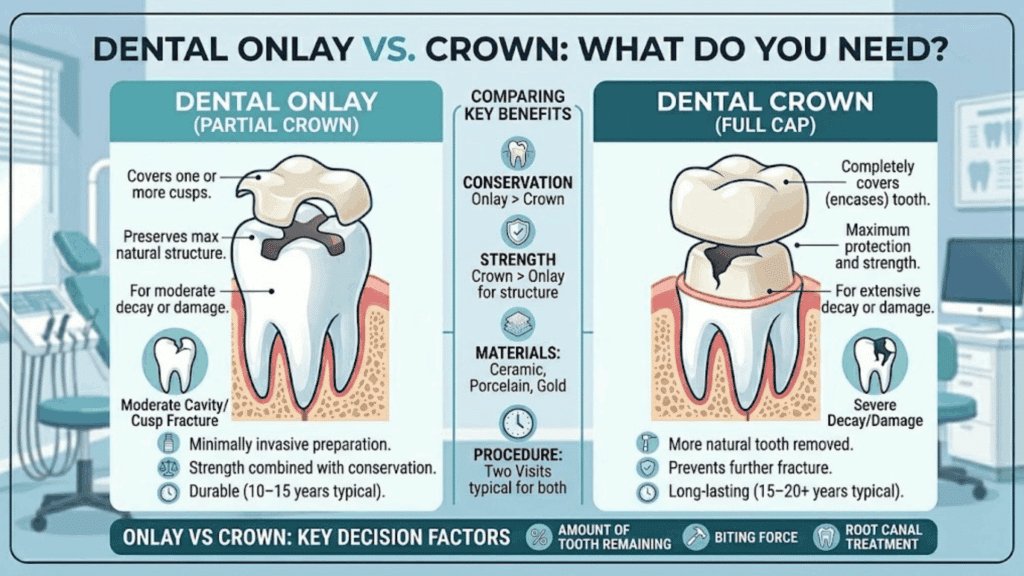
Sometimes, depending on the actual condition of the tooth or the missing-tooth area. Possible alternatives can include a filling or bonded restoration, an onlay or other partial-coverage restoration, monitoring in certain selected situations, or a different tooth-replacement approach entirely. None of these fit every patient. Once a significant amount of tooth structure has already been lost, delaying treatment or choosing a less protective option can carry its own real risks, which is worth weighing honestly rather than assuming a smaller intervention is automatically the safer choice.
What If You Already Have a Crown or Bridge?
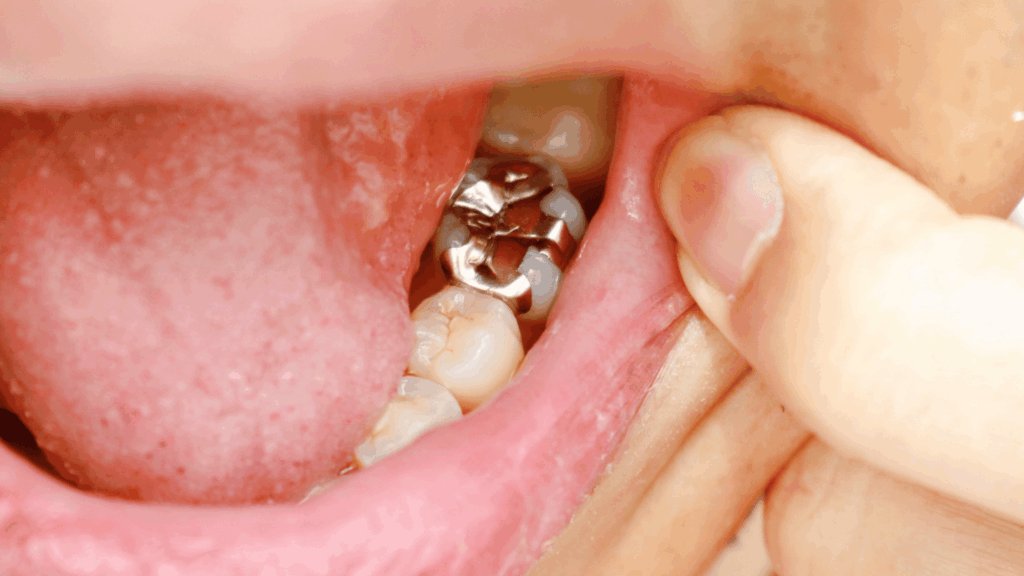
A second opinion sometimes comes up because an existing restoration is causing problems rather than a new tooth needing one. Reasonable prompts include persistent pain, sensitivity, a restoration that feels loose, a chip, discomfort with your bite, decay showing up again around the restoration, concern about a possible crack, or difficulty chewing normally. These are worth a direct evaluation rather than assuming they’ll resolve on their own.
When a Second Opinion Is Especially Worth Considering
To pull it together: extensive restorative work, an unclear diagnosis, an irreversible procedure, conflicting recommendations, significant cost, complex tooth damage, a complicated dental history, or simply not understanding why treatment is necessary are all reasonable triggers for seeking another perspective.
When You May Not Need Another Opinion
If the diagnosis is clear, the recommendation makes sense to you, your dentist has answered your questions directly, and you feel genuinely comfortable moving forward, a second opinion isn’t something you owe anyone. The decision belongs to you, not to a general rule about always getting one more opinion before any dental work.
Frequently Asked Questions
Does getting a second opinion mean my first dentist was wrong?
Not necessarily. Dentists can reasonably reach different conclusions based on the same tooth, depending on how they weigh factors like structure, bite, and long-term prognosis.
Should I choose whichever treatment costs less?
Not automatically. Cost is a legitimate factor, but understanding what’s included, expected longevity, and maintenance matters just as much as the price itself.
Is it safe to wait for a second opinion before getting a crown?
It depends on your specific tooth. Ask your dentist directly whether waiting is safe for your situation before scheduling another consultation.
Can a filling replace a crown if the tooth qualifies for either?
Sometimes, depending on how much healthy tooth structure remains and how the tooth functions under bite forces. This isn’t a decision based on cavity size alone.
What should I bring to a second opinion appointment?
Recent X-rays and relevant dental records make the evaluation more useful. Your original dental office can typically help transfer or share them.
This article is for informational purposes only and is not a substitute for professional dental advice. Please schedule a consultation with Pearl Zadeh DDS to discuss your specific situation.
Speak With Dr. Pearl Zadeh About Your Treatment Options
A second opinion isn’t about assuming another dentist will automatically disagree with the first one. It’s about understanding your tooth well enough to feel confident in whatever you decide. Dr. Pearl Zadeh, a member of the American Dental Association and California Dental Association, can evaluate the tooth or missing-tooth area in question, walk through the clinical reasoning behind a recommendation, and explain what options genuinely apply to your situation.
Schedule a consultation if you’d like another professional perspective before moving forward with treatment.
Call (818) 716-6722 or click the button below to schedule a consultation online.