Your crown may look fine, but chewing might feel different. The gum around it may be irritated, or you may notice a chip, crack, or gap along the edge.
An old crown does not always need replacing, and one unusual sensation does not automatically mean something is wrong. Your dentist needs to examine the crown and the tooth underneath it to determine whether it needs repair or replacement.
What Are the Signs Your Dental Crown May Need to Be Replaced?
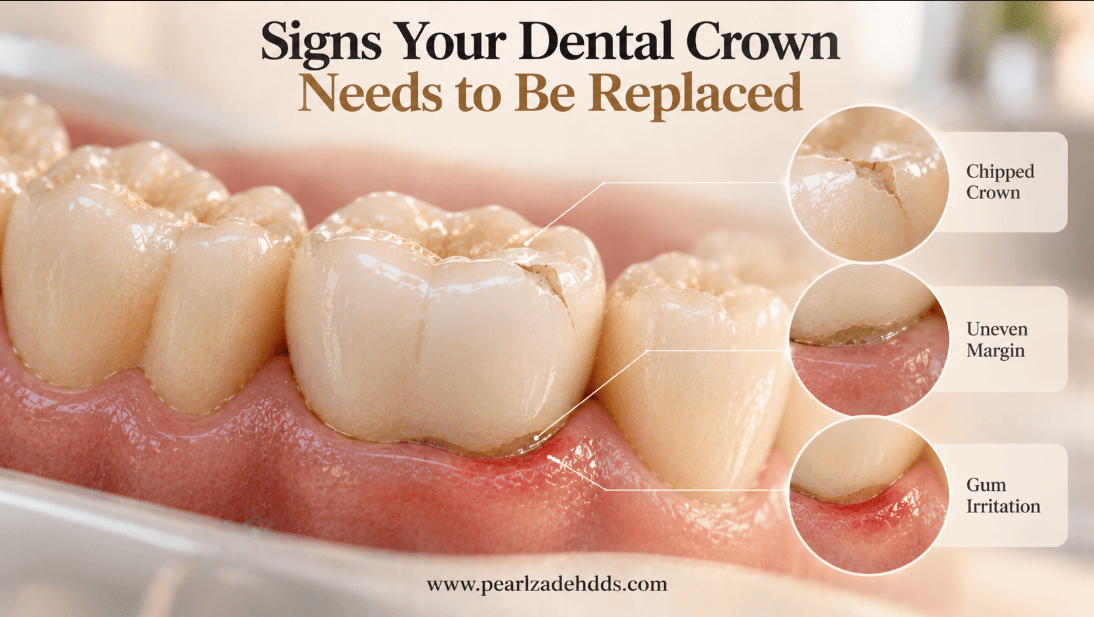
Some signs come from the crown, such as a chip or a loose fit. Others point to the tooth or the gums, such as pain or a changed margin. Telling them apart is part of the exam. These signs warrant evaluation:
- A crown that feels loose or moves.
- A visible chip, crack, or broken section.
- Persistent or worsening pain or sensitivity.
- Changes around the crown margin, where the crown meets the tooth.
- Repeated food trapping or difficulty cleaning around the crown.
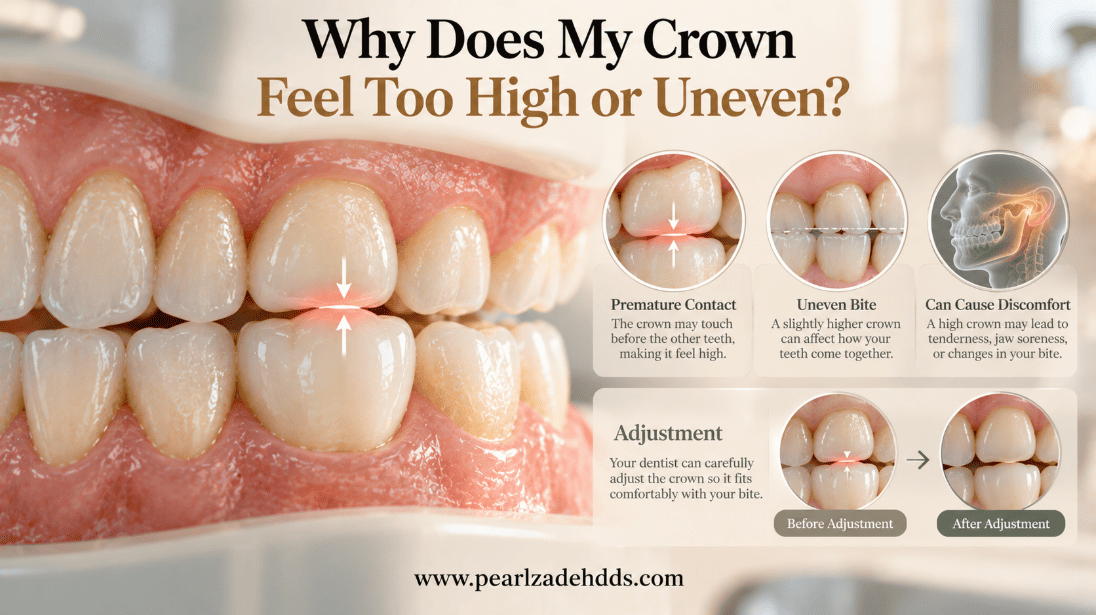
- A noticeable change in how the crown fits or meets the opposing teeth.
None of these automatically means replacement. Some come from the crown, some from the tooth beneath it, and some from the gums. Cleveland Clinic lists a loose crown, cracks or chips, and sharp edges among reasons to call your dentist. A crown that moves slightly deserves a call even if it has not come off.
Can a Loose Dental Crown Be Saved?
Sometimes. A crown may loosen for several reasons. The cement may lose its hold, the underlying tooth may change, or the crown itself may be damaged. Your dentist may also check how much natural tooth remains to hold the crown.
Loss of retention is a recognized problem. One retrospective study of 1,037 tooth-supported single crowns found loss of retention and recurrent caries the most common complications. The authors counted a crown as failed if it was removed or replaced. Loss of retention accounted for 26.5% of the 230 failures. That study reflects one dental school clinic, so it cannot predict your crown.
Your dentist will examine the crown and the supporting tooth. Depending on the findings, the crown may sometimes be recemented. In other cases, another treatment may be needed.
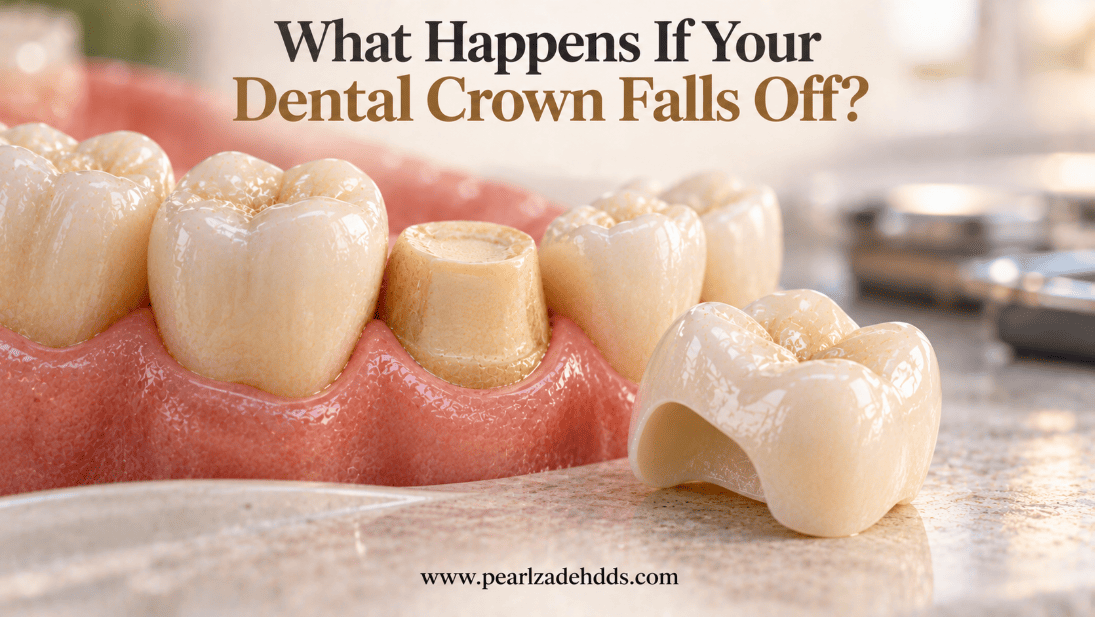
Do not wiggle the crown, use household glue, or try to recement it yourself. If it comes off, save it and call your dentist. Our article on what to do if your dental crown falls off explains the steps.
Does a Cracked or Chipped Crown Need Replacement?
Not always. The extent and location of the damage matter. A minor surface defect may be managed differently from a deeper crack. Damage that affects the crown’s integrity or exposes the tooth underneath is a different situation.
Material plays a role. The ADA’s page on indirect restorative materials describes fracture and chipping as common complications of all-ceramic crowns. It also calls veneer chipping a common complication of porcelain-fused-to-metal crowns. Our article on how zirconia and porcelain crowns compare covers material differences.
Repair is sometimes an option. A 2016 Operative Dentistry article says repair of restorations is mainly indicated for localized shortcomings. It says replacement is indicated when problems are multiple or severe and repair is not feasible. A Dental Update article on defective restorations says repair may be of value for porcelain loss or fracture.
Your dentist weighs the crown material, the size of the damaged area, and the condition of the supporting tooth. A chipped crown cannot always be repaired. Not every visible defect needs a new crown. Mention any rough spot your tongue notices. A small rough area can still matter if it catches food or irritates your cheek.
Can Pain or Sensitivity Mean a Crown Needs Replacing?
Pain and sensitivity have several possible causes:
- Bite contact that needs assessment.
- Irritation of the tooth following treatment.
- Decay or damage affecting the underlying tooth.
- A crack in the tooth.
- Gum or surrounding tissue problems.
- A loose or damaged restoration.
The AAE says sharp pain on biting may reflect decay, a loose filling, or a crack. It also notes that cracked-tooth pain may come and go, which can make the tooth hard to find. A dentist-focused Dental Economics article says complaints soon after placement are frequently caused by a high spot.
MouthHealthy lists decay, fractured teeth, worn fillings, and gum disease among causes of sensitivity. Several of those involve the tooth or gums, not the crown.
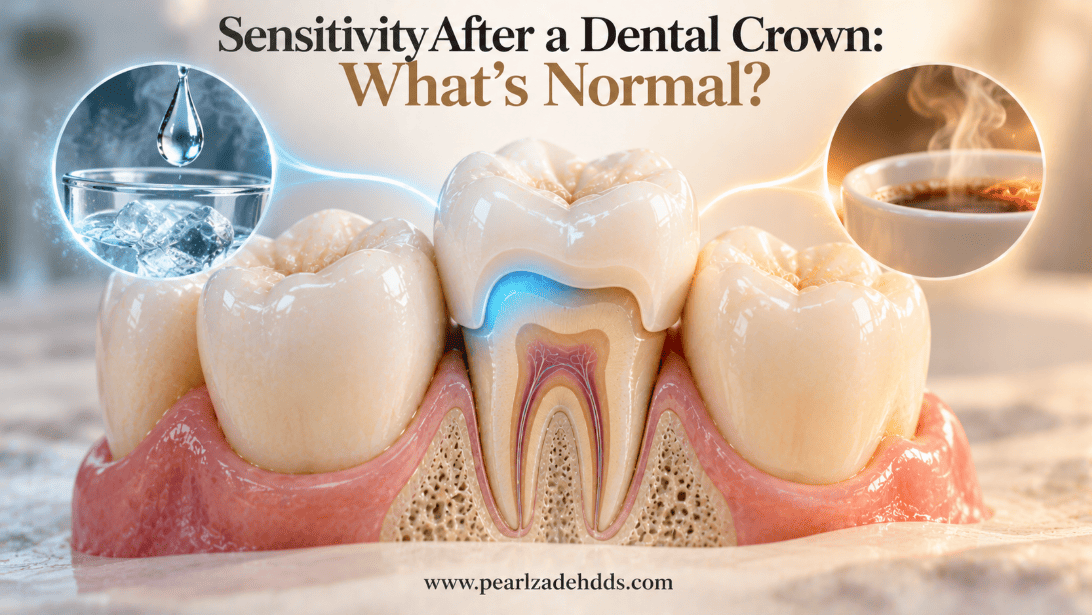
Describe when it hurts: with cold, with heat, when you bite, or with no trigger. Those details help narrow the cause. Pain alone does not prove a crown needs replacing. Your dentist must identify the cause before recommending treatment. Severe, worsening, spontaneous, or persistent pain warrants prompt evaluation.
What If There Is Decay Under the Crown?
A crown does not make the underlying tooth immune to decay. Decay can develop around the crown margin or in exposed natural tooth structure. In the Hawthan study, recurrent caries affected 8.6% of crowns. Cleveland Clinic notes that a poorly fitting crown can trap bacteria and lead to decay. Warning signs worth a check include a rough edge, food catching at the margin, or a bad taste. They do not prove decay.
Your dentist may examine the margins, the surrounding tissues, and the tooth. X-rays can reveal damage or disease not visible during an exam, according to MouthHealthy. That means appearance alone cannot always show decay.
Decay does not always mean the crown must be replaced. Treatment depends on the extent of the decay, the remaining tooth structure, and the condition of the crown. Daily cleaning matters here, as our article on caring for a new dental crown explains.
What Do Changes Around the Crown Margin Mean?
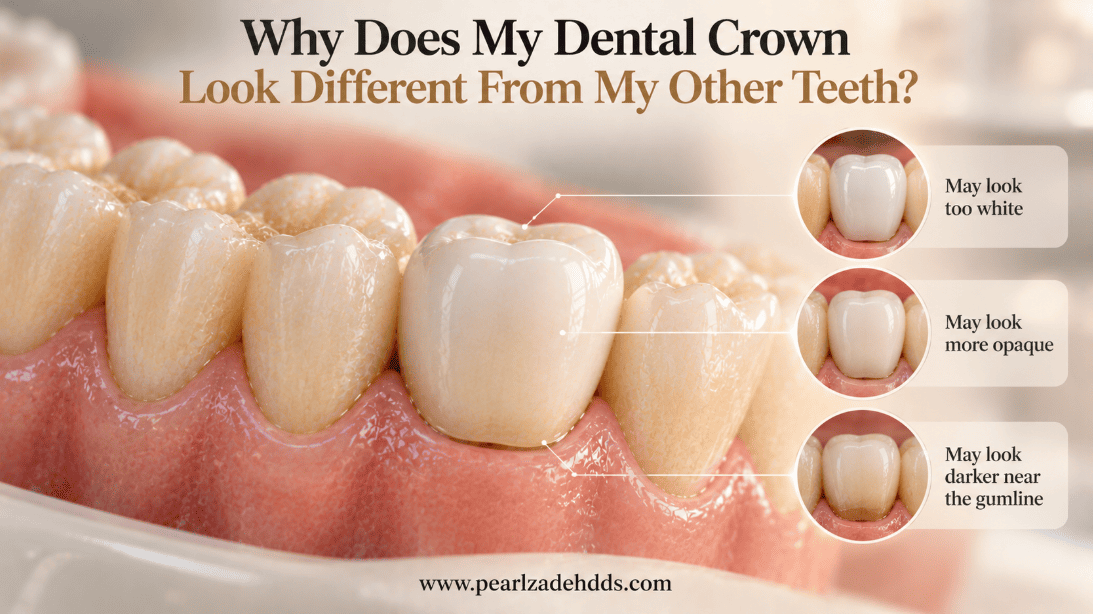
A dark line, a visible margin, or gum recession can have different explanations. Some changes relate to the crown material or how the crown meets the tooth. Others involve the gums or the underlying tooth. WebMD lists gum disease, aggressive brushing, and grinding or clenching among causes of gum recession.
A dark margin does not automatically prove decay. Gum recession does not always require crown replacement. A dental evaluation can separate an esthetic concern from a structural or biological problem. Note what you see and when you first noticed it. Photos taken in the same light over time can help.
What If Your Crown No Longer Fits Comfortably?
You may notice a change in your bite. Chewing may be uncomfortable, food may keep trapping, or the crown may feel shifted.
These symptoms have several possible causes. The restoration, the tooth, or the surrounding tissues may have changed. Your dentist can check the bite and the fit before deciding what suits you.
Depending on the findings, the answer may be an adjustment, a repair, recementation, or replacement. Not every bite concern requires a new crown. If you recently had other dental work, mention it, since changes nearby may affect how your bite feels.
Does an Old Dental Crown Always Need to Be Replaced?
No. Age alone does not decide whether a crown needs replacement. The crown’s condition, fit, and margins matter more than a fixed age. So do the supporting tooth, your gums, and your symptoms.
Regular exams let your dentist watch the margins and the surrounding tissue over time. Some crowns stay serviceable for many years. Others develop problems sooner. No universal replacement schedule applies, and a crown does not follow a predictable timetable. Our article on how long porcelain crowns last discusses lifespan in more depth.
What Happens If Your Dentist Recommends Replacing a Crown?
Your dentist will assess the situation first. The process usually includes these steps:
- Reviewing your symptoms and dental history.
- Examining the crown, margins, gums, and underlying tooth.
- Checking your bite when indicated.
- Taking X-rays when clinically appropriate.
- Deciding whether repair, adjustment, recementation, or replacement is suitable.
Replacement means removing the existing crown and placing a new one. The details depend on your tooth and your treatment plan. If the underlying tooth needs treatment, that may need to be addressed before a new crown is placed. Ask what the exam found, which options apply, and what each involves. Your dentist may also discuss the material and design for a new crown. Those choices depend on your tooth and your bite.
When Should You Contact Your Dentist About a Crown?
Arrange an evaluation if a crown is loose, damaged, painful, or noticeably changed. You do not need to wait until it falls off or breaks completely. If you are unsure whether a problem is urgent, call and describe it. The office can advise your next step.
Seek prompt assessment for worsening pain, swelling, or signs of infection. Facial swelling with difficulty breathing or swallowing needs emergency medical attention. Mayo Clinic advises going to the emergency room for trouble breathing or swallowing, in its guidance on tooth abscess.
Have the Crown and the Tooth Examined Together
A loose crown, visible damage, persistent discomfort, or changes around the crown can warrant an exam. None of them automatically proves that replacement is necessary. Your dentist must assess both the crown and the tooth underneath to choose the right treatment. Even mild or unclear changes deserve a look, since an exam can reassure you or catch a problem early. Dr. Pearl Zadeh can evaluate your crown and explain your options. You can learn more about dental crown treatment at Pearl Zadeh DDS.
Call (818) 716-6722 or click the button below to schedule your consultation online.
Frequently Asked Questions
You cannot tell from symptoms alone. Looseness, damage, pain, or margin changes warrant an exam. Your dentist decides whether repair or replacement fits.
No fixed schedule applies. Replacement depends on the crown’s condition, the tooth, the gums, and your symptoms, not on age alone.
Sometimes. It depends on the material, the size of the damage, and the condition of the tooth. Some damage cannot be repaired.
Yes. A crown does not make the tooth immune to decay. Regular cleaning and exams help your dentist catch problems.
It should be evaluated promptly. Replacement is not always needed. Your dentist may recement the crown or recommend another treatment.
The information above is for informational purposes only and is not a substitute for professional dental advice. Please schedule a consultation with Pearl Zadeh DDS to discuss your specific situation.