Pearl Zadeh DDS

Tag: Dentist in Woodland Hills

  • Should You Rinse After Brushing? A Simple Honest Answer

    Should You Rinse After Brushing? A Simple Honest Answer

    For most people, spitting out extra toothpaste and skipping a thorough water rinse is the better habit. You probably grew up brushing, rinsing with water, and moving on with your day, maybe even swishing a big mouthful around a few times just to feel like your mouth was truly clean. Current dental guidance suggests a slightly different approach, mainly because of fluoride.

    It’s a small change, and it doesn’t mean you did anything wrong for years. Here’s the actual reasoning behind it, along with what to do about mouthwash, eating, drinking, and brushing with kids, so you can adjust the habit without overthinking it every single morning.

    Should You Rinse After Brushing?

    For most people, no, not with a thorough water rinse. Spitting out excess toothpaste is fine and expected. The difference matters between spitting out extra paste, rinsing thoroughly with a mouthful of water swished around several times, and simply leaving a small amount of fluoride toothpaste residue around your teeth.

    The NHS recommends spitting out excess toothpaste but not rinsing with water or mouthwash afterward, specifically because this helps fluoride stay in contact with your teeth longer. This isn’t because water itself damages teeth or reacts badly with fluoride. It’s simply about timing and maximizing how long fluoride actually stays where it can help, rather than washing it down the drain right after it’s applied.

    Why Is It Better to Spit Than Rinse?

    Fluoride toothpaste leaves a thin layer of fluoride around your teeth after brushing, and that fluoride continues supporting your enamel for a while afterward by helping it resist the acid attacks that lead to cavities. Rinsing thoroughly with a big mouthful of water right after brushing washes some of that fluoride away before it has a chance to do its work. Longer fluoride contact after brushing appears to support its cavity-fighting effect more than a quick rinse allows for, since saliva naturally clears fluoride out of your mouth over time regardless of what you do, and a thorough rinse simply speeds that process up.

    This is really a matter of degree rather than an all-or-nothing switch. None of this means you need to keep a mouthful of toothpaste foam sitting in your mouth for any length of time. Spitting out the excess is completely normal. The goal is simply not washing it all away immediately afterward with a big gulp of water.

    Is Rinsing With Water After Brushing Bad?

    No, and it’s worth being clear about that. Rinsing with water isn’t bad or dangerous, and someone who prefers to rinse can absolutely still maintain good oral hygiene overall. The actual issue is narrower than that. Thorough rinsing removes some of the toothpaste and fluoride that could otherwise remain around your teeth a bit longer, nothing more dramatic than that.

    That’s a difference in degree, not a health risk. If you’ve rinsed after brushing your whole life, you haven’t been doing something harmful, and you haven’t undone years of brushing. You’ve simply been missing out on a small, optional benefit that’s easy enough to start capturing going forward.

    What About Mouthwash After Brushing?

    This is where things get genuinely useful to understand. Using a mouthwash immediately after brushing can wash away the same fluoride toothpaste residue that a water rinse would, particularly if the mouthwash itself doesn’t contain fluoride. Picture someone brushing carefully with fluoride toothpaste, then immediately swishing a non-fluoride mouthwash marketed for fresh breath. That second step can undo much of the fluoride benefit the brushing just provided. A Caries Research study found this distinction mattered directly.

    Rinsing with a fluoride mouthwash after brushing didn’t reduce salivary fluoride the way a non-fluoride mouthwash did. Mouthwash generally serves a different purpose than brushing, such as freshening breath or targeting bacteria, and it isn’t meant to replace brushing itself. Many dental sources suggest using mouthwash at a separate time of day from brushing, such as after lunch, specifically so it doesn’t interfere with the fluoride your toothpaste just left behind. This doesn’t mean every single patient must use mouthwash, or that mouthwash timing is identical for everyone. It depends on the specific product and your own routine.

    Should You Wait Before Eating or Drinking?

    Plain water is generally fine shortly after brushing. For other foods and drinks, coffee, tea, breakfast, snacks, the practical reasoning is the same idea as rinsing: giving fluoride some uninterrupted time before introducing something that could wash it away or add new residue to your teeth. The NHS specifically advises trying not to eat or drink for 30 minutes after brushing, since this can wash away fluoride and reduce its benefit.

    This is guidance worth following as a general habit rather than a strict rule you need to panic about breaking. Having your morning coffee slightly sooner than that isn’t going to undo your brushing, and rushing out the door with a piece of toast in hand occasionally isn’t a dental emergency. Building the habit of brushing a little earlier in your morning routine, before you actually need to eat, is a practical way to make this easier without feeling like you’re rationing your breakfast.

    What If You Don’t Like Leaving Toothpaste in Your Mouth?

    You don’t need to tolerate an uncomfortable amount of toothpaste residue to get the benefit here. Spitting thoroughly after brushing is completely normal and expected. The actual habit worth building is simply not following that up with a big mouthful of water swished around and spit out repeatedly, the way many people were taught growing up.

    A light rinse, a small sip of water swished briefly, or no rinse at all, followed by getting on with your day, is the realistic version of this advice. If a full skip feels genuinely unpleasant, a quick light rinse still leaves you better off than several thorough ones. The goal is a routine you can actually stick with consistently, not a strict ritual that feels unpleasant every morning.

    Does This Advice Apply to Children?

    Children’s brushing guidance genuinely differs by age, and this applies to fluoride amounts as much as rinsing habits. Younger children generally need a smaller amount of fluoride toothpaste, sometimes described as a smear or rice-sized amount for the youngest kids, moving up to a pea-sized amount as they get older, with adult supervision to help them spit rather than swallow. Encouraging children to spit rather than rinse follows the same general fluoride-retention reasoning as adults, once they’re old enough to reliably spit instead of swallowing toothpaste.

    Very young children who haven’t developed reliable spitting yet are actually the reason smaller toothpaste amounts matter so much, since swallowing a smear of toothpaste is a very different amount than swallowing a full adult-sized dose. Parents should follow age-specific guidance from their child’s dentist rather than applying one blanket instruction to kids of very different ages, since what’s appropriate for a toddler and what’s appropriate for an eight-year-old genuinely differ.

    What If You Accidentally Rinse After Brushing?

    It’s not a wasted brushing session. Occasionally rinsing out of habit doesn’t undo the benefit of brushing itself, and it isn’t something to feel anxious about. Old habits take time to change, and slipping back into a quick rinse now and then while you’re adjusting is completely normal. Consistency over time matters far more than doing every single brushing session perfectly. If you rinse today and remember not to tomorrow, you’re still building the habit that actually helps.

    The Bigger Part of Brushing That Matters

    Skipping the water rinse doesn’t make up for the fundamentals that actually do most of the work. Brushing twice daily, using fluoride toothpaste in the first place, cleaning every tooth surface, brushing along the gumline, and cleaning between your teeth all matter more than this one detail. Someone who rinses thoroughly but brushes twice a day, reaches every surface, and flosses regularly is still doing far better than someone who skips the rinse but brushes hastily once a day and misses half their teeth. Regular dental checkups round out the picture.

    Our breakdown of proper brushing technique and common mistakes covers those fundamentals in more depth. This spit-versus-rinse habit is a genuine, evidence-based improvement, but it’s a small piece of a much bigger picture.

    When Should You Ask Your Dentist About Your Brushing Routine?

    Personalized guidance genuinely helps in certain situations: if you get cavities frequently, deal with significant tooth sensitivity, notice gum problems, struggle to tolerate fluoride toothpaste, have questions about the right toothpaste for your child’s age, experience dry mouth, or have any other concern affecting your daily routine.

    Someone with a dry mouth condition, for instance, may benefit from a different fluoride approach entirely, since reduced saliva changes how fluoride behaves in the mouth compared to someone with typical saliva flow. Our discussion of early signs of gum disease covers what’s worth watching for specifically. The point of asking isn’t to create unnecessary appointments. It’s getting advice tailored to your actual teeth rather than general guidance meant for everyone.

    Make the Most of Your Daily Brushing Routine

    You don’t need a complicated routine to protect your teeth. Small changes, such as spitting out excess toothpaste instead of rinsing immediately, can help you get more from your fluoride toothpaste.

    Your ideal routine may still depend on your teeth, gums, sensitivity, cavity risk, and overall oral health. Dr. Pearl Zadeh can assess those factors and help you make practical changes based on your specific needs.

    Call (818) 716-6722 or click the button below to schedule your consultation online.

    Frequently Asked Questions

    Should you rinse your mouth after brushing?

    For most people, spitting out excess toothpaste without a thorough water rinse afterward helps fluoride stay in contact with your teeth longer.

    Is it better to spit or rinse after brushing?

    Spitting is generally preferred. Rinsing thoroughly with water can wash away some of the fluoride your toothpaste left behind.

    Should I rinse toothpaste out with water?

    A light rinse or no rinse is generally better than a thorough one, so fluoride can stay around your teeth a bit longer.

    How long should you leave toothpaste on your teeth?

    There’s no need to leave a mouthful sitting there. Spit out the excess and simply avoid a big water rinse right after.

    Can I drink water after brushing?

    Plain water shortly afterward is generally fine, though giving fluoride some time before eating or drinking anything is a reasonable habit.

    Should I use mouthwash after brushing?

    It depends on the mouthwash. A non-fluoride mouthwash used immediately after brushing can wash away toothpaste fluoride, so many people use it at a different time of day.

    This article is for informational purposes only and is not a substitute for professional dental advice. Please schedule a consultation with Pearl Zadeh DDS to discuss your specific situation.
  • Is There an Age Limit for Invisalign? What Adults Should Know

    Is There an Age Limit for Invisalign? What Adults Should Know

    You’ve thought about straightening your teeth for years, and now you wonder if you waited too long. Maybe you’re in your 40s, 50s, or 60s and assume Invisalign suits younger patients with healthy, straightforward mouths. Maybe you had braces decades ago and your teeth have shifted since then. Or perhaps you never addressed crowding that has bothered you throughout adulthood.

    There isn’t a simple upper age cutoff for Invisalign. Adults can potentially receive treatment later in life, and age by itself doesn’t determine whether you’re a candidate. What actually matters is your oral health, tooth stability, gum health, bone support, bite concerns, and treatment goals. Those factors, not your birth year, are what a provider actually looks at.

    Is There an Age Limit for Invisalign?

    Invisalign is used for adults just as often as younger patients, and being older doesn’t automatically rule out treatment. The real question isn’t about a specific birthday. It’s about whether your teeth and the tissues supporting them can safely undergo the kind of movement Invisalign involves. There’s no universal maximum age written into how the treatment works or how providers evaluate candidates.

    Teeth remain capable of moving throughout adult life, since the bone surrounding each tooth continuously remodels in response to steady pressure, the same biological process that allows orthodontic movement to work at any age in the first place. What changes over decades isn’t that ability itself. It’s the surrounding conditions: whether gum disease has affected the bone supporting your teeth, whether decades of wear or previous dental work have altered how your teeth actually fit together, and whether any of that needs attention before orthodontic movement makes sense. Those are individual clinical questions, not automatic disqualifiers tied to a particular age.

    Can You Get Invisalign in Your 40s, 50s, or 60s?

    Often, yes, depending on your specific situation. Adults commonly seek treatment later in life for crowded teeth, spacing that’s opened up over the years, certain bite problems, teeth that have gradually shifted, or relapse after orthodontic treatment they had decades earlier. The reasons tend to shift somewhat by life stage. Patients in their 40s often notice teenage orthodontic work slowly relapsing after years without a retainer. Patients in their 50s and 60s more often bring in decades of gradual shifting, wear, or spacing that developed without any prior treatment at all, sometimes alongside restorations placed years earlier that now factor into planning. Not every bite problem can be corrected with Invisalign, though, and whether it’s the right fit depends entirely on your individual case rather than which decade of life you’re in.

    What Matters More Than Your Age?

    A handful of clinical factors matter more than how old you are.

    Healthy Gums

    Active gum disease may need attention before orthodontic treatment starts, since teeth need healthy supporting tissue to move safely and predictably. Our discussion of early signs of gum disease covers what to watch for if you’re unsure where your gum health currently stands.

    Stable Teeth and Supporting Bone

    Teeth need adequate bone support underneath them to handle the gradual pressure orthodontic movement applies. When that supporting bone has been reduced, whether from past gum disease, bone loss, or other factors, a tooth can become more mobile than it should be, which changes what’s safe to attempt. There’s no specific bone-density number that determines candidacy on its own. This is something your provider evaluates directly, often with imaging that shows the bone level around each tooth, rather than something that can be estimated from age alone.

    Cavities and Existing Dental Problems

    Untreated decay or other active dental problems generally need to be addressed before starting orthodontic treatment. Moving a tooth that has an unresolved cavity, a crack, or an infection underneath it can complicate both problems at once, and aligners can make certain areas harder to keep clean if decay is already present. Getting a clean bill of dental health first tends to make the orthodontic phase considerably more straightforward.

    Your Bite and Treatment Goals

    The type and complexity of your bite problem genuinely affects whether Invisalign is the appropriate tool for the job. Our comparison of Invisalign for mild versus more complex cases goes further into how treatment can differ depending on what you’re actually trying to correct.

    Does Invisalign Work Differently as You Get Older?

    Adult treatment tends to involve considerations that simply aren’t relevant for a teenager. Existing dental restorations, current gum health, previous orthodontic treatment, natural tooth wear, bite changes that have accumulated over years, and other dental work that may need attention all factor into planning for adult patients in a way they typically don’t for younger ones. A teenager’s treatment plan usually starts from healthy, unrestored teeth and gums. An adult’s plan more often starts from a mouth with some combination of fillings, a crown or two, and years of normal wear, all of which the provider needs to account for before deciding how teeth can safely move. This doesn’t mean Invisalign becomes less effective with age, and it doesn’t mean older adults automatically need longer treatment. It means the planning process accounts for a more complete dental history.

    Does Invisalign Take Longer for Older Adults?

    Treatment time genuinely varies from person to person, and age alone doesn’t determine how long it takes. What actually influences duration includes how complex the required tooth movement is, your starting bite, how consistently you wear your aligners, missed appointments or interruptions along the way, whether refinements become necessary, and whether any oral-health issues need attention during treatment. A peer-reviewed study examining orthodontic patients over 40 found that greater periodontal bone loss was associated with more irregular tooth positioning and higher orthodontic treatment need, which suggests that gum and bone health, not age by itself, can meaningfully affect how complex a case turns out to be. There’s no fixed timeline that applies to every adult patient.

    Can You Get Invisalign If You Already Have Crowns, Bridges, or Other Dental Work?

    Existing dental work does not automatically rule out treatment, but you should discuss it during your evaluation. Crowns, bridges, fillings, veneers, and previously treated teeth can respond differently to orthodontic pressure than natural teeth. A crown or filling generally moves with the tooth it covers, but the material and bonding method can affect treatment planning. Bridges require more consideration because they connect neighboring teeth. They cannot move independently like a single tooth, which can affect what treatment can achieve in that area.

    The American Association of Orthodontists notes that adults often present with restorations, missing teeth, or periodontal concerns that need to be stabilized before tooth movement begins, which is a genuine difference from most younger patients, whose teeth are typically unrestored. Your provider needs to assess the condition, position, and function of each restored tooth before building a treatment plan around it.

    What About Invisalign After Previous Braces?

    Plenty of adults had braces as teenagers and later noticed their teeth shifting, often after retainer use stopped years ago. Teeth don’t stay locked in place forever after braces come off. Natural forces from chewing, tongue and lip pressure, and simple aging keep exerting a gentle pull toward their original positions over decades, which is exactly why relapse happens even in patients who had genuinely successful orthodontic results the first time.

    This kind of relapse is a common reason adults return to orthodontic treatment later in life. What actually makes sense for you depends on where your teeth currently sit and what you’re hoping to accomplish this time around. Our comparison of Invisalign and other clear-aligner options goes further into the differences worth understanding before deciding.

    What Should Older Adults Expect During an Invisalign Evaluation?

    A thorough evaluation typically covers your dental and oral-health history, your current gum health, the condition of your teeth, any existing restorations, your bite and current alignment, and what you’re actually hoping to achieve. Your provider considers whether Invisalign can realistically address your specific concern, and whether any other dental treatment, such as treating a cavity, addressing gum inflammation, or repairing an aging restoration, should happen first.

    This often includes photographs, digital scans or impressions, and sometimes X-rays to see the bone and root structure beneath the gumline. The exact process varies somewhat between providers, so this is a general description rather than a fixed protocol every practice follows identically.

    What If You Need Invisalign Refinements?

    Refinements are additional aligners sometimes used partway through or near the end of treatment to fine-tune movements that need a bit more adjustment. Our explanation of how Invisalign refinements work covers this in more depth. Needing refinements isn’t something older adults automatically run into more than anyone else. It depends on the specific case, not the patient’s age.

    Is Invisalign a Good Option for Older Adults?

    For appropriate candidates, yes, Invisalign can be a good fit. Removable aligners are less noticeable than traditional braces. They also make it easier to maintain your normal oral hygiene routine. Your dentist can plan treatment around your specific dental needs rather than using a one-size-fits-all approach. That flexibility can benefit adults who already have dental work or gum health considerations that teenagers typically do not.

    That said, Invisalign isn’t automatically the right choice for every adult or bite problem. Some complex bite discrepancies, significant bone loss, or tooth movements may not respond well to aligners. In these cases, another orthodontic approach may work better. Some patients may also need coordinated care between a general dentist and an orthodontic specialist.

    An honest evaluation can help determine which option fits your needs. Your dentist should assess your teeth before recommending Invisalign.

    When Should You Talk to a Dentist Before Starting Invisalign?

    A few situations deserve attention before you pursue orthodontic treatment. These include bleeding or swollen gums, loose teeth, significant tooth sensitivity, untreated cavities, existing dental pain, concerns about previous dental work, or a noticeably changed bite.

    None of these automatically rule out Invisalign down the road, but they’re reasons to have your oral health evaluated first rather than starting orthodontic treatment on top of an unresolved issue. Bringing these concerns up early, rather than waiting until an Invisalign consultation, generally makes the whole process more straightforward for everyone involved.

    Speak With Dr. Pearl Zadeh About Invisalign

    If you’ve been wondering whether you’re too old for Invisalign, age alone does not answer that question. Your gum health, tooth stability, bite, dental history, and treatment goals all play a role in determining whether Invisalign is appropriate for you.

    As an Invisalign Premier Provider, Dr. Pearl Zadeh can evaluate your overall oral health and discuss whether Invisalign or another treatment approach fits your needs.

    Call (818) 716-6722 or click the button below to schedule your consultation online.

    Frequently Asked Questions

    Is there really an upper age limit for Invisalign?

    No specific age limit exists. Candidacy depends on the health of your teeth, gums, and supporting bone rather than your age alone.

    Can you get Invisalign after age 50?

    Many adults over 50 can be good candidates, provided a dentist evaluates their gum health, tooth stability, and bite first.

    Can you get Invisalign in your 60s?

    Many patients can benefit from it, but your dentist still needs to assess factors like gum health, bone support, and existing dental work individually.

    Does Invisalign work differently for older adults?

    Planning often accounts for more dental history, including existing restorations and gum health, but the treatment itself doesn’t fundamentally change based on age.

    Does Invisalign take longer as you get older?

    Not automatically. Treatment length depends on the complexity of the case and oral health factors more than age itself.

    This article is for informational purposes only and is not a substitute for professional dental advice. Please schedule a consultation with Pearl Zadeh DDS to discuss your specific situation.
  • How to Brush Your Teeth Correctly: Technique and Common Mistakes

    How to Brush Your Teeth Correctly: Technique and Common Mistakes

    You brush every day, probably twice. But you might still be scrubbing a little too hard, rushing through it while thinking about your morning commute, focusing mostly on the teeth you can see in the mirror, or skipping past the spot where your teeth actually meet your gums.

    None of that means you’ve been doing it wrong your whole life. Brushing regularly matters, but so does technique, and small adjustments tend to make a bigger difference than people expect.

    Why Brushing Technique Matters

    Effective brushing removes plaque, food debris, and bacteria that build up around the gumline, the spot where teeth meet gums and where problems most often start. Brushing isn’t about scrubbing as hard as possible. It’s a balance between removing that buildup, protecting your enamel, and protecting your gums at the same time. More pressure doesn’t mean cleaner teeth. Past a certain point, it just means more wear on your gums and enamel for no real cleaning benefit.

    How to Brush Your Teeth Correctly

    Choose the Right Toothbrush

    The American Dental Association recommends a soft-bristled brush, since medium bristles can effectively remove plaque but carry more risk of gum irritation. A smaller brush head often makes it easier to reach your back teeth and awkward angles that a larger head simply can’t access. One systematic review the ADA cites found that brushes with multi-level or angled bristles outperform flat-trimmed bristles at removing plaque, so the bristle pattern matters more than the brand name on the handle. Electric brushes aren’t universally better than manual ones. What matters most is whether you’re actually using good technique with whichever one you pick.

    Use the Right Amount of Toothpaste

    A pea-sized amount of fluoride toothpaste is enough for an adult. Fluoride strengthens enamel and helps it resist the acids that cause decay. Specialty toothpastes can be reasonable choices for specific concerns like sensitivity, but there’s no need to assume you need one unless your dentist actually recommends it.

    Hold the Brush at the Right Angle

    Angle the bristles at roughly 45 degrees toward your gumline, not straight into your teeth. This lets the bristles reach just above and below where your gums meet your teeth, which is exactly where plaque tends to collect. Move the brush gently in short strokes rather than long sweeps across multiple teeth at once. For the inside surfaces of your front teeth, tilt the brush vertically and use small up-and-down strokes instead.

    Use Gentle Pressure

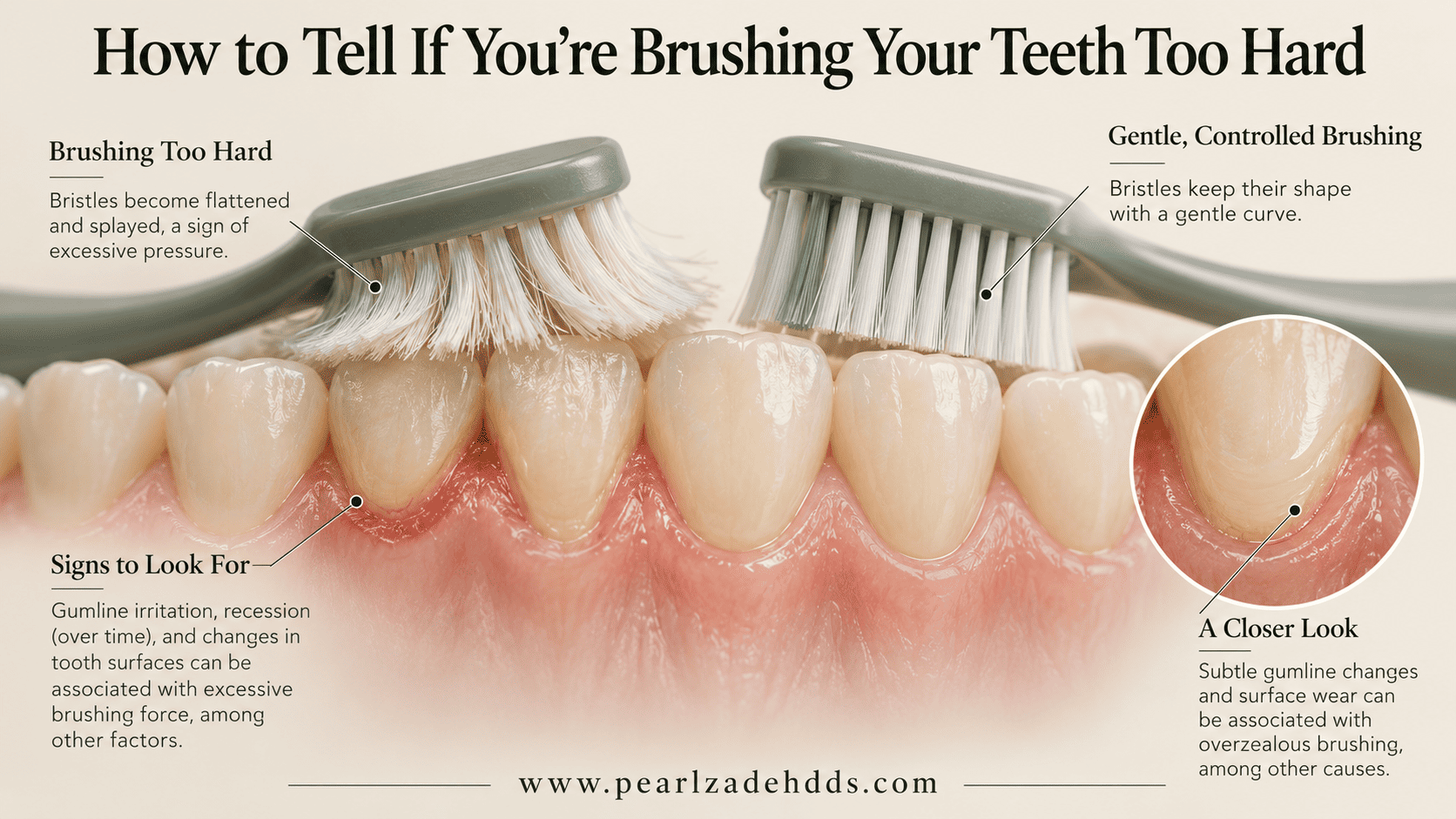
    Let the bristles do the work rather than pressing hard against your teeth. If you’re gripping the brush tightly or your bristles look flattened and splayed out within a few weeks, that’s usually a sign you’re pressing harder than you need to.

    Clean Every Tooth Surface

    Every tooth has an outer surface, an inner surface, and a chewing surface, and all three need attention. It’s easy to focus mostly on the outer surfaces you see in the mirror and rush past the inner surfaces and back teeth, simply because they’re harder to see and reach.

    Brush the Gumline

    Plaque collects right where your teeth meet your gums more than almost anywhere else in your mouth, since it’s an easy spot to brush past quickly. Spending a few extra seconds angling the bristles into that junction on each tooth makes a real difference for gum health over time.

    Don’t Forget the Tongue

    A light brush across your tongue can help reduce bacterial buildup and contribute to fresher breath. It’s a helpful habit, not a dramatic one, so there’s no need to scrub it aggressively.

    Brush for Long Enough

    Two minutes is the commonly recommended duration, and it’s genuinely easy to underestimate how slowly that time passes when you’re not paying attention. Most people brush closer to 45 seconds without realizing it. One practical fix dentists suggest is mentally dividing your mouth into four sections, upper left, upper right, lower left, and lower right, and spending about 30 seconds on each one before moving to the next.

    How Much Pressure Should You Use?

    Aggressive scrubbing doesn’t clean teeth any better than gentle, controlled brushing, since plaque is a soft film that comes off easily without much force at all. Technique, meaning the angle and motion of the brush, does far more of the actual work than sheer pressure. Toothbrush condition offers a useful clue here: bristles that splay outward within just a few weeks usually mean you’re bearing down harder than necessary. Aggressive brushing over years has been associated with gum recession, enamel wear, and increased sensitivity in some patients, though all three of these can have several other causes as well, including genetics, grinding, and gum disease itself. If you suspect you’ve been brushing too hard, switching to a soft-bristled brush, loosening your grip, and consciously using shorter, gentler strokes are the practical changes worth making.

    Common Brushing Mistakes

    A few patterns show up again and again. Brushing too quickly is probably the most common one, since two minutes feels longer than it is, and rushing tends to leave the same surfaces undertreated every time, usually the inner surfaces and back teeth. Missing the gumline is a close second, often simply because the angle feels less natural than brushing straight across the tooth. Focusing mainly on visible front teeth while neglecting chewing and inner surfaces is another frequent pattern, along with skipping the back molars entirely since they’re harder to reach and easy to forget.

    Using a worn-out brush is its own issue. Once bristles fray or splay, they clean less effectively regardless of your technique, which is why replacing a brush every three to four months, or sooner if it looks worn, actually matters. Choosing hard bristles over soft ones on the assumption that harder means more effective is a common misconception, when the opposite is closer to true for most patients. Aggressive back-and-forth scrubbing, as opposed to short, controlled strokes, is really the same pressure problem covered above showing up as a technique habit. And brushing inconsistently, thorough one day and rushed or skipped the next, matters more for long-term oral health than the occasional less-than-perfect session. Consistency beats occasional intensity by a wide margin.

    Can Brushing Too Hard Damage Your Teeth?

    It can contribute to gum irritation, gum recession, tooth sensitivity, and enamel wear in some circumstances, though none of these conditions has a single cause, and it would be inaccurate to say hard brushing automatically leads to permanent damage for everyone who does it. If you’re noticing recurring sensitivity, gums that seem to be pulling back from your teeth, or gums that feel irritated after brushing, those are worth mentioning to your dentist rather than just switching brushes and hoping it resolves on its own.

    Should You Brush Before or After Breakfast?

    Both approaches have a reasonable case behind them, and the better choice depends partly on what you’re eating. Brushing before breakfast clears overnight plaque and gives fluoride a chance to strengthen enamel before it faces the day’s first acid exposure. Brushing after breakfast can leave lingering food particles in place a bit longer, but if breakfast includes something acidic, like citrus or coffee, brushing immediately afterward can wear down enamel that’s temporarily softened. If you eat something acidic, the more reasonable approach is waiting roughly 30 to 60 minutes before brushing rather than treating this as a fixed rule that applies to every breakfast.

    Should You Rinse After Brushing?

    Fluoride toothpaste leaves a protective residue on your teeth after brushing, and rinsing immediately with a large amount of water washes a good portion of that away before it can finish doing its job. An American Dental Association spokesperson has recommended spitting out excess toothpaste and either skipping the rinse or using just a light sip of water, delaying a fuller rinse by around 20 minutes if you prefer one. It’s a small adjustment, but it lets the fluoride actually stay in contact with your teeth a while longer.

    Manual vs. Electric Toothbrushes

    Either type can work well when used with good technique, so this isn’t really a question of one being categorically better. A Cochrane systematic review of 56 studies found that powered brushes using a rotation-oscillation motion reduced plaque by about 11% at one to three months and 21% after three months, with a smaller reduction in gingivitis as well. That’s a real but modest benefit, specific to that particular type of powered brush rather than electric brushes generally. Electric brushes can also make consistent pressure and timing easier for people who tend to scrub too hard or rush, since many include built-in timers or pressure sensors. A manual brush used with careful technique, the right angle, gentle pressure, and full coverage of every surface, can absolutely deliver comparable results. This mostly comes down to which one you’ll actually use consistently and correctly.

    How to Brush Around Dental Work

    Crowns, bridges, veneers, fillings, and Invisalign attachments or other orthodontic components all still need thorough cleaning, though a bit of extra care around the edges helps. The margin where a restoration meets your natural tooth can collect plaque just as easily as anywhere else, sometimes more so. Gentle, thorough brushing works better here than aggressive scrubbing, which can wear at the margin or irritate surrounding gum tissue over time. If your dentist has given you specific instructions for cleaning around particular dental work, those instructions should always take priority over general guidance like this.

    What If Your Gums Bleed When You Brush?

    Bleeding shouldn’t automatically be chalked up to brushing too hard. It can also point toward plaque buildup, gingival inflammation, early gum disease, a technique issue, or other oral health factors entirely. Occasional light bleeding after a more thorough cleaning or a new flossing habit isn’t necessarily concerning on its own. Bleeding that keeps happening, though, especially alongside puffy or tender gums, is worth having evaluated rather than assumed away. Our discussion of early signs of gum disease goes further into what else to watch for.

    A Simple Brushing Routine to Follow

    1. Use a soft-bristle toothbrush.

    2. Apply a pea-sized amount of fluoride toothpaste.

    3. Start at the gumline, angled at roughly 45 degrees.

    4. Use gentle, controlled short strokes.

    5. Clean the outer, inner, and chewing surfaces of every tooth.

    6. Spend real time on the back teeth, not just a quick pass.

    7. Brush your tongue if you’d like fresher breath.

    8. Spit out toothpaste and skip an immediate heavy rinse.

    When Should You See a Dentist?

    A few patterns are worth getting evaluated rather than adjusting your brushing on your own and hoping it helps:

    • Recurring bleeding gums
    • Gum recession
    • Tooth sensitivity
    • Tooth pain
    • Persistent bad breath
    • Visible enamel wear
    • Loose teeth
    • Gums that stay swollen or tender

    A dentist can tell whether what you’re noticing actually relates to brushing technique or points to something else that needs its own attention. Not every minor issue with your brushing routine needs an appointment, but a pattern that keeps showing up does.

    Frequently Asked Questions

    What is the correct way to brush your teeth?

    Use a soft-bristled brush angled at 45 degrees toward the gumline, with gentle short strokes covering the outer, inner, and chewing surfaces of every tooth, for about two minutes.

    How hard should you brush your teeth?

    Gently. Let the bristles do the work rather than pressing hard. Bristles that splay within a few weeks usually mean you’re brushing too aggressively.

    Is a soft toothbrush better for your teeth?

    Yes, for most patients. Soft bristles clean effectively while carrying less risk of irritating gums or wearing down enamel than medium or hard bristles.

    How long should you brush your teeth?

    About two minutes, twice a day. Dividing your mouth into four sections and spending roughly 30 seconds on each helps you actually reach the full two minutes.

    Should you brush your teeth before or after breakfast?

    Either can work. If breakfast includes something acidic, waiting 30 to 60 minutes after eating before brushing helps protect enamel that’s temporarily softened.

    Should you rinse after brushing?

    A light rinse or none at all is preferable to a heavy rinse right away, since it lets fluoride from your toothpaste stay on your teeth longer.

    Can brushing too hard damage your gums?

    It can contribute to gum irritation and recession over time, though these issues can also have other causes, so recurring symptoms are worth having evaluated.

    Why do my gums bleed when I brush?

    Bleeding can come from plaque buildup, gum inflammation, early gum disease, or brushing technique. Bleeding that keeps recurring is worth mentioning to your dentist.

    This article is for informational purposes only and is not a substitute for professional dental advice. Please schedule a consultation with Pearl Zadeh DDS to discuss your specific situation.
  • Acid Reflux and Tooth Erosion: What You Should Watch For

    Acid Reflux and Tooth Erosion: What You Should Watch For

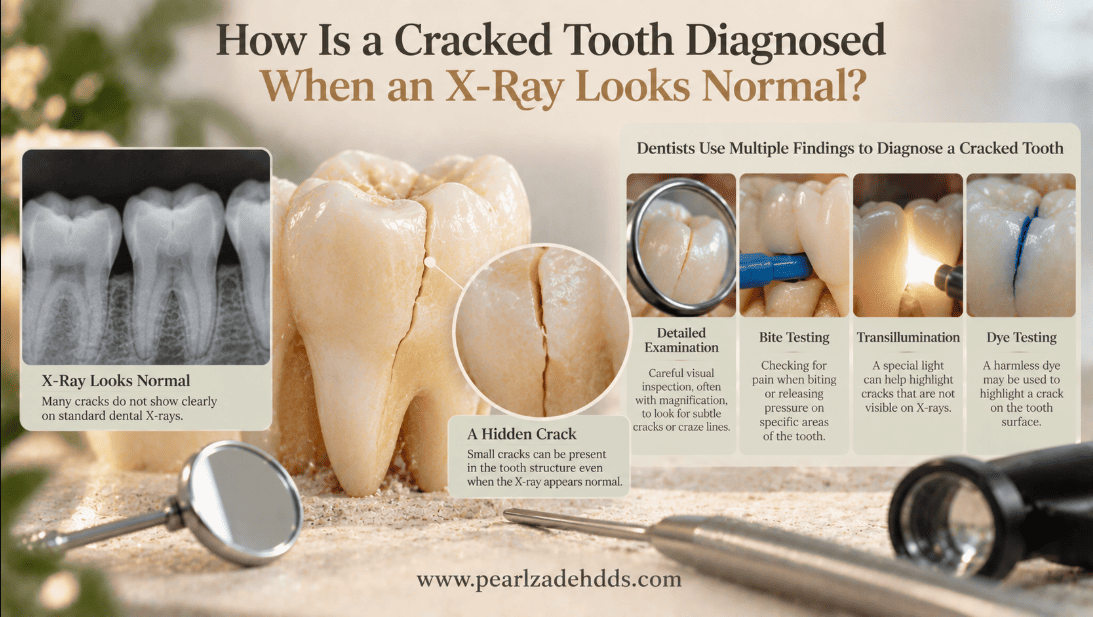
    You’ve had reflux for a while now. Lately you’ve noticed your teeth feel a little more sensitive to cold water, and one of your front teeth looks slightly thinner at the edge than it used to. Maybe your teeth seem a shade more yellow, or a small chip has appeared on a tooth that never gave you trouble before.

    These changes can point toward tooth erosion, the gradual chemical loss of enamel from repeated acid exposure. Reflux is one possible source of that acid, though not everyone with reflux develops noticeable erosion, and erosion can happen for reasons that have nothing to do with reflux at all.

    What Is Tooth Erosion?

    Enamel is the hard outer layer covering each tooth, made almost entirely of a mineral called hydroxyapatite. It’s tough, but it isn’t acid-proof. Once oral pH drops low enough, that mineral structure starts to dissolve, a process the American Dental Association describes as erosive demineralization, a progressive and irreversible loss of tooth mineral substance. This is chemical, not mechanical. Grinding wears teeth down through physical contact between opposing surfaces.

    Erosion happens through acid dissolving mineral directly, with no contact involved at all. It’s also different from a cavity, which involves bacteria rather than acid alone. Enamel doesn’t regenerate once it’s genuinely lost, which is why repeated acid exposure matters so much more than any single acidic episode. A single exposure is brief and unlikely to cause meaningful damage on its own. The real risk comes from that pattern repeating often enough that your mouth never fully recovers between episodes.

    How Can Acid Reflux Damage Your Teeth?

    During reflux, stomach acid moves backward up the esophagus and can reach the mouth, briefly dropping oral pH well below the level where enamel mineral stays stable. The ADA lists gastroesophageal reflux among the intrinsic causes of erosion, distinct from extrinsic causes like acidic drinks, citrus fruit, or carbonated soda. That distinction matters clinically. Extrinsic acid tends to affect the front, outer surfaces of teeth first, since that’s where it makes contact. Intrinsic acid coming up from the stomach typically reaches the back surfaces of the upper front teeth first, and if the pattern continues over time, the chewing surfaces of the back teeth can become involved as a later stage. A dentist can sometimes use that progression to help figure out where acid is actually coming from.

    It’s worth being honest about how settled this connection actually is. A peer-reviewed review examining the association between GERD and dental erosion noted that only 7 of 32 studies it reviewed found a statistically significant link, and that establishing clear causality has remained difficult given small sample sizes and inconsistent diagnostic criteria across studies. Reflux is a recognized, plausible contributor to erosion, not a guaranteed one, and it’s far from the only cause.

    What Does Acid Erosion Look Like?

    A handful of changes tend to show up, often gradually enough that patients don’t connect them to reflux at first.

    Increased sensitivity

    As enamel thins, the dentin underneath, which contains microscopic channels leading toward the nerve, becomes easier to stimulate. This can make cold drinks, hot foods, sweets, and acidic foods all feel more noticeable than they used to.

    Changes in tooth shape

    More advanced erosion can leave teeth looking shorter, flatter, or thinner at the edges, particularly on the front teeth. The natural texture and slight ridges enamel normally has can smooth out.

    Yellowing or a darker appearance

    Dentin underneath enamel is naturally more yellow. As enamel thins, more of that color shows through. This looks different from ordinary surface staining from coffee or wine, which sits on top of intact enamel rather than reflecting a change in the tooth’s actual structure.

    Rounded or worn edges

    Acid softens the outermost layer of enamel before actually dissolving it. That softened surface is more vulnerable to everyday physical forces, which can round off edges that used to be sharper.

    Chipping or structural weakness

    Weakened enamel can make teeth more prone to chipping, especially when erosion overlaps with grinding, clenching, or an existing crack. Reflux alone doesn’t automatically cause a chipped tooth. It’s the combination of softened structure and everyday mechanical stress that tends to matter most.

    Acid Erosion vs. Cavities: What’s the Difference?

    Patients often use these terms interchangeably, but the underlying processes are genuinely different. Erosion is a chemical process: acid dissolving mineral directly, with no bacteria involved. Cavities develop through a bacterial process, where oral bacteria metabolize sugars and starches and produce acid as a byproduct, concentrated in the specific spots where plaque accumulates. Erosion tends to affect broader, smoother surfaces, while cavities often start in pits, grooves, and between teeth. You can have one, the other, or both at the same time, and telling them apart usually takes an actual clinical exam rather than a guess based on symptoms alone.

    Can Acid Reflux Cause Tooth Sensitivity?

    It can, when enamel loss has progressed enough to expose the dentin layer underneath. That exposed dentin tends to react more to cold drinks, hot foods, sweets, acidic foods, and sometimes even brushing itself. Sensitivity has plenty of other possible causes too, including gum recession that exposes a tooth’s root surface, cracks, cavities, and enamel wear unrelated to acid at all. Noticing new sensitivity doesn’t automatically confirm reflux is the cause. It’s simply one detail worth mentioning if you’re also dealing with reflux symptoms.

    How Reflux Can Affect Your Teeth at Night

    Nighttime reflux deserves particular attention for a few overlapping reasons. Lying down removes gravity’s usual help keeping stomach contents where they belong, which can make reflux episodes more likely or more prolonged. Saliva flow also drops significantly during sleep, and saliva does real protective work while you’re awake, diluting acid, clearing it off tooth surfaces, and buffering pH through its own chemical makeup. A study examining salivary pH and buffering capacity in GERD patients with dental erosion points to that buffering capacity as one of the more clinically relevant factors in how vulnerable someone’s teeth actually are to erosion.

    With less saliva working overnight, acid that does reach your mouth has more time sitting against your teeth before anything neutralizes it. Waking with a sour taste, noticeable dry mouth, or morning sensitivity can all reflect that pattern. None of this means every person with nighttime reflux develops dental erosion. It means the timing itself carries some added risk, and persistent nighttime symptoms are worth discussing with an appropriate healthcare professional rather than just tolerating them.

    What Should You Do After Acid Reaches Your Mouth?

    Brushing right away might seem like the obvious response, but it’s actually one of the less ideal moves. Acid temporarily softens the outer layer of enamel, and brushing while it’s in that state can wear away mineral that would otherwise have had a chance to re-harden. The Journal of the American Dental Association’s own patient guidance on dental erosion specifically recommends rinsing with water or milk and waiting at least an hour before brushing after vomiting, eating acidic food, or drinking acidic beverages.

    Rinsing with plain water first helps clear residual acid and gives your saliva a chance to move your mouth back toward a normal pH before you introduce a toothbrush. Beyond that, keep up your normal brushing and flossing routine, use a fluoride toothpaste, and try to limit how often acidic foods and drinks come up throughout the day, since frequency matters more than any single exposure. Following whatever treatment plan your physician has set up for the reflux itself matters just as much as anything happening at the sink. Skip anything unproven, including using baking soda or similarly abrasive substances as a routine habit, since there isn’t reliable dental evidence supporting that as a regular practice.

    Can You Prevent Acid Reflux From Damaging Your Teeth?

    This really involves two separate efforts working together. On the dental side, consistent daily hygiene, fluoride toothpaste, regular dental exams, appropriate management of sensitivity if it develops, and generally reducing unnecessary acid exposure from food and drink all help protect what enamel you have. None of that addresses where the acid is actually coming from, though. Dental care alone can’t resolve reflux itself. If reflux symptoms are frequent, significant, or simply not improving, that’s a conversation for a physician or another appropriate healthcare professional, not something to manage through dental habits alone.

    What If You Already Have Enamel Erosion?

    Lost enamel doesn’t grow back on its own, so catching erosion early gives you more options than catching it late. A dentist can monitor changes over time, comparing how your teeth look now against how they looked at a previous visit. What treatment actually involves depends heavily on how much structure has already been lost. In some cases, that means protecting what remains and managing sensitivity. In others, it might mean restoring a tooth that’s been more significantly affected.

    Addressing the reflux itself is part of this picture too, since protecting a tooth without addressing ongoing acid exposure just means treating the same problem again later. Not every patient with some erosion needs restorative work. The right approach depends entirely on what’s actually found during an exam.

    When Should You See a Dentist?

    A dental evaluation is worth scheduling for persistent or worsening tooth sensitivity, visible changes in tooth shape, unusual enamel wear, chipped or weakened teeth, recurring tooth pain, unexplained yellowing that seems tied to thinning enamel, or symptoms that continue even after reflux itself has been addressed. During an exam, a dentist typically looks at:

    • Wear patterns
    • Areas of exposed dentin
    • Sensitivity
    • Cracks or chips
    • Bite-related wear
    • Cavities
    • Gum recession
    • Other possible causes of tooth damage

    That combination of findings is really what determines whether erosion is actually the explanation, rather than something else entirely.

    When Should You Discuss Acid Reflux With a Doctor?

    Persistent reflux symptoms shouldn’t be managed through dental care alone. Frequent heartburn, regurgitation, a chronic sour taste, or reflux that keeps recurring despite lifestyle changes are all reasons to bring the pattern to a physician or another appropriate healthcare professional. This isn’t about diagnosing GERD from a dental article or laying out a medical treatment plan. It’s simply that dental and medical care genuinely overlap here, and treating the teeth without addressing the reflux itself only solves part of the problem.

    Speak With Dr. Pearl Zadeh About Tooth Erosion

    If reflux has left you wondering what’s actually happening to your teeth, an exam can tell you far more than guessing at symptoms ever could. Dr. Pearl Zadeh, a member of the American Dental Association and California Dental Association, takes a patient-centered approach to evaluating tooth wear, sensitivity, and the other possible causes behind what you’re noticing, and can help you understand what’s actually going on before recommending anything.

    Call (818) 716-6722 or click the button below to schedule a consultation online.

    Frequently Asked Questions

    Can acid reflux damage your teeth?

    Yes, it can contribute to enamel erosion in some patients, though not everyone with reflux develops noticeable dental damage.

    How does acid reflux cause tooth erosion?

    Stomach acid reaching the mouth during reflux can lower oral pH enough to dissolve enamel mineral gradually, especially with repeated exposure over time.

    What does acid erosion look like on teeth?

    Common signs include increased sensitivity, teeth that look shorter, flatter, or thinner at the edges, a yellower appearance as dentin shows through, and smoother or rounded edges.

    Can acid reflux cause sensitive teeth?

    It can, once enamel loss exposes the dentin underneath, though sensitivity has many other possible causes as well.

    Can enamel grow back after acid reflux damage?

    No. Enamel doesn’t regenerate once it’s genuinely lost, which is why catching erosion early and addressing the underlying acid exposure matters.

    This article is for informational purposes only and is not a substitute for professional dental or medical advice. Please schedule a consultation with Pearl Zadeh DDS to discuss your specific situation.
  • How Poor Sleep Actually Affects Your Teeth and Gums

    How Poor Sleep Actually Affects Your Teeth and Gums

    You wake up and your mouth feels dry and sticky. Your jaw aches a little. Maybe a tooth feels sensitive when you drink your coffee, or your gums bleed slightly while you brush. A headache is settling in behind your eyes.

    Any of these can have several explanations unrelated to sleep. But sleep quality and the habits that come with a rough night, mouth breathing, clenching, skipping your usual routine, can genuinely play a role in what you’re noticing.

    Can Poor Sleep Affect Your Oral Health?

    It can, though not through one single mechanism. A systematic review and meta-analysis examining oral health and sleep disorders found a significant association between poor sleep quality and worse oral health outcomes, including dental pain and periodontal issues. An association across a body of research isn’t proof that poor sleep alone damages a specific patient’s teeth. Sleep connects to your mouth through several separate pathways at once: saliva production, mouth breathing, nighttime clenching, and how exhaustion changes daily habits. Most patients only deal with one or two of these, not all of them at once, which is why the sections below treat each one separately.

    How Sleep and Your Mouth Are Connected

    Saliva production naturally slows during sleep for everyone, leaving less protection overnight than during the day. Mouth breathing, from congestion, anatomy, or habit, dries that reduced saliva out further. Nighttime clenching adds mechanical stress on top. Separately, being tired changes behavior: rushed brushing, skipped flossing, a late-night snack. Sleep-disordered breathing, a category that includes snoring and obstructive sleep apnea, can tie several of these threads together in some patients, though not everyone with disrupted sleep has it. The sections below walk through each pathway individually, since lumping them together doesn’t help you figure out what applies to you.

    Poor Sleep and Teeth Grinding

    Sleep bruxism, the clinical term for grinding or clenching your teeth during sleep, can happen without you ever being aware of it, since nobody consciously chooses to grind while asleep. Stress and disrupted sleep patterns may contribute to or be associated with this in some patients, though the exact reasons vary and aren’t fully settled in the research. Our discussion of why people grind their teeth at night goes further into the contributing factors involved. Morning signs worth noticing include a tired or sore jaw right when you wake up, unusually sensitive teeth, and a tightness in your face that takes a while to ease off. This doesn’t mean every restless sleeper grinds. Plenty of people sleep poorly without grinding at all, and plenty grind without any obvious sleep problem.

    How Grinding Can Damage Your Teeth

    When grinding does happen regularly, the physical effects build slowly rather than all at once. Repeated contact between upper and lower teeth can wear down enamel over months and years, showing up as flattened or slightly shortened front teeth. Some patients develop small chips or cracks, particularly on teeth with an existing filling or thin edge. Sensitivity often follows once enough enamel has worn away to expose the layer underneath, and jaw soreness tends to travel with more forceful grinding. In some patients, how the upper and lower teeth contact each other shifts slightly over time. Our overview of signs your bite may be causing dental problems covers that pattern in more depth. How much damage actually shows up varies enormously between people, with no fixed timeline that applies to everyone.

    Poor Sleep, Mouth Breathing, and Dry Mouth

    Saliva does more work than most people realize. The American Dental Association describes it as providing several protective functions at once: cleansing the mouth, aiding speech and swallowing, protecting oral tissue against physical and microbial harm, and maintaining a neutral pH. Your mouth naturally produces less saliva while you sleep than while awake, which is one reason morning dryness feels more noticeable, even in people with otherwise normal saliva production.

    Mouth breathing makes that natural overnight dip more pronounced, since air moving across oral tissue evaporates moisture faster than nasal breathing does. Nasal congestion from allergies or a cold can force temporary mouth breathing, while chronic congestion can turn it into a nightly pattern. A range of medications, including many for blood pressure, allergies, depression, and anxiety, list dry mouth as a side effect, and the ADA specifically names medication use among the recognized causes of xerostomia, the clinical term for chronic dry mouth. Dehydration compounds all of this, since there’s less fluid available to produce saliva in the first place.

    Can Dry Mouth Increase Your Risk of Cavities?

    It can contribute to that risk, though one dry night won’t cause a cavity on its own. The American Dental Association notes that reduced salivary flow can increase the chance of developing dental caries, demineralization, and sensitivity. Saliva normally neutralizes acids that bacteria produce after eating and carries minerals that repair minor enamel damage. With less saliva doing that work, acid sits longer and repair happens more slowly. This is about persistent dryness, not one rough night.

    If you regularly wake up genuinely dry-mouthed, staying hydrated during the day is a reasonable start, along with noticing whether you’re breathing through your mouth at night. This isn’t something to self-treat with a pharmacy product. Persistent dry mouth deserves an actual evaluation, since the cause might not be sleep at all. Medications, an untreated sinus issue, dehydration habits, or another health condition can all present the same way.

    Sleep and Your Gum Health: What Does the Research Show?

    This connection deserves real caution. Sleep problems and periodontal health have shown up together in research, but the relationship is genuinely complex. An umbrella review examining periodontal disease and sleep-disordered breathing was direct about the limits of that evidence, noting that some individual investigations find no significant association once factors like obesity, smoking, and aging are properly accounted for. Inflammation appears to be one shared thread researchers keep returning to, alongside sleep duration and quality and the same broader health factors that independently affect gum health regardless of how anyone sleeps. Poor sleep shouldn’t be presented as a standalone cause of gum disease. Plaque buildup and the inflammatory response it triggers remain the more established drivers behind gingivitis and periodontitis. Our discussion of early signs of gum disease worth watching for covers what those warning signs look like. Sleep may be one factor woven into a larger picture, which is exactly why regular dental care still matters regardless of how well you’ve been sleeping.

    How Poor Sleep Can Affect Your Oral-Care Habits

    This part has less to do with biology and more to do with behavior under fatigue. Skipping brushing at night because you’re too exhausted to stand at the sink happens to nearly everyone occasionally. Rushing through the two minutes you do spend, forgetting to floss, reaching for a late-night snack, and leaning more heavily on caffeine or a sugary drink to get through the next day are all realistic patterns when sleep has been consistently poor. This isn’t “poor sleep” damaging your teeth directly. It’s exhaustion quietly eroding the consistency that protects your teeth day to day. An occasional lapse isn’t worth guilt. A pattern that keeps repeating is worth noticing, since accumulation matters more than any single skipped night.

    What Your Morning Symptoms May Be Telling You

    A handful of symptoms tend to show up together, each pointing toward a slightly different set of possibilities rather than one clear answer.

    Dry mouth

    Can suggest nighttime mouth breathing, dehydration, a medication side effect, or simply the normal overnight dip in saliva production.

    Sore jaw or facial muscles

    Often associated with nighttime clenching or grinding, and can overlap with symptoms sometimes linked to TMJ disorder, a broader term covering problems with the jaw joint or surrounding muscles.

    Tooth sensitivity

    Can come from enamel wear, exposed dentin, gum recession, or other dental issues entirely unrelated to sleep.

    Morning headaches

    Sometimes occur alongside nighttime clenching, though headaches have plenty of other causes, and it isn’t accurate to automatically attribute one to a dental source.

    Bad breath

    Can be associated with dry mouth, bacteria that accumulate more easily when saliva flow is reduced, gum disease, or causes unrelated to sleep.

    Bleeding gums

    Shouldn’t be chalked up to a bad night of sleep. Bleeding often signals gum inflammation that needs evaluation, regardless of what else is going on.

    Taken together, these are clues worth noticing, not a self-diagnosis tool. A single symptom rarely tells the whole story on its own.

    Could Sleep-Disordered Breathing Be Affecting Your Mouth?

    This is worth its own section since it’s genuinely easy to overlook. Sleep-disordered breathing is a broader category that includes snoring and obstructive sleep apnea, where breathing becomes partially blocked or irregular during sleep. A literature review examining oral health implications of obstructive sleep apnea found associations between OSA and heightened risks of bruxism, dry mouth, periodontal disease, and jaw joint disorders, noting that mouth breathing linked to airway obstruction was a particularly significant factor worsening dry mouth. This is a review of associations across research, not a claim that everyone with dry mouth or bruxism has sleep apnea.

    If you regularly wake with a genuinely dry mouth, mouth-breathe consistently, snore loudly, or experience disrupted, unrefreshing sleep, that combined pattern is worth mentioning to an appropriate healthcare professional rather than assuming it’s purely a dental issue. This isn’t something to self-diagnose, and a dental visit alone can’t confirm or rule it out. A dentist can look at the oral signs, tooth wear, dry mouth, gum changes, and help you understand whether what’s showing up lines up with a pattern worth discussing with a physician or sleep specialist.

    What Can You Do If Sleep Is Affecting Your Oral Health?

    A few practical steps connect directly back to what’s covered above, rather than generic wellness advice:

    • Keep up consistent brushing and flossing, especially when you’re most tempted to skip it
    • Pay attention to persistent nighttime dry mouth rather than assuming it will resolve on its own
    • Stay hydrated throughout the day, not just before bed
    • Bring up ongoing nasal congestion with a healthcare professional if it’s pushing you toward mouth breathing
    • Notice signs of grinding or clenching, like morning jaw soreness, rather than dismissing them
    • Avoid letting recurring symptoms go unmentioned simply because they aren’t severe
    • Keep up with regular dental exams, since they catch changes you might not notice yourself
    • Discuss symptoms that persist despite improved sleep habits directly with your dentist

    None of these steps guarantee a specific outcome, and a night guard isn’t automatically the right answer for every patient who grinds. What actually helps depends on what’s driving your specific symptoms.

    When Should You See a Dentist?

    A few patterns are worth bringing up rather than waiting them out:

    • Recurring or worsening jaw soreness
    • New or worsening tooth sensitivity
    • A cracked or chipped tooth
    • Unusual or accelerating tooth wear
    • Persistent dry mouth
    • Ongoing bad breath
    • Bleeding or swollen gums
    • Morning symptoms that continue despite genuinely improved sleep habits

    A dentist can assess your teeth, gums, bite, and any signs of grinding directly, and help determine whether something beyond sleep might be involved. Not every sleep-related symptom needs an appointment right away, but a repeating or worsening pattern is a reasonable prompt for an actual look.

    Speak With Dr. Pearl Zadeh About Your Oral Health

    Morning jaw soreness, tooth sensitivity, dry mouth, or gum concerns can have several possible causes, and sleep may be part of that picture for some patients. Dr. Pearl Zadeh, a member of the American Dental Association and California Dental Association, can evaluate your teeth, gums, jaw, and bite to help identify what may actually be contributing to what you’re noticing.

    Call (818) 716-6722 or click the button below to schedule a consultation online.

    Frequently Asked Questions

    Can lack of sleep cause teeth grinding?

    Sleep disruption may be linked to nighttime grinding in some patients, though it isn’t the only factor and doesn’t affect everyone who sleeps poorly.

    Can poor sleep make dry mouth worse?

    Saliva production naturally drops during sleep, and mouth breathing or congestion during a disrupted night can make dryness more noticeable, though poor sleep alone isn’t necessarily the direct cause.

    Can sleeping with your mouth open affect your teeth?

    Mouth breathing can dry out saliva faster than nasal breathing, which may reduce the mouth’s natural protection against bacteria and acid over time.

    Can poor sleep affect your gums?

    Research has linked sleep problems with periodontal health, though the evidence is mixed after researchers account for other factors. Plaque and inflammation remain the more established drivers of gum disease.

    Why do my teeth or jaw hurt when I wake up?

    Morning jaw soreness or tooth sensitivity often comes from nighttime clenching. However, other dental issues can cause these symptoms too, so your dentist should evaluate them.

    When should I see a dentist about morning jaw pain or dry mouth?

    If either symptom is persistent, worsening, or continues despite improving your sleep habits, that’s a reasonable reason to schedule an evaluation.

    This article is for informational purposes only and is not a substitute for professional dental or medical advice. Please schedule a consultation with Pearl Zadeh DDS to discuss your specific situation.